
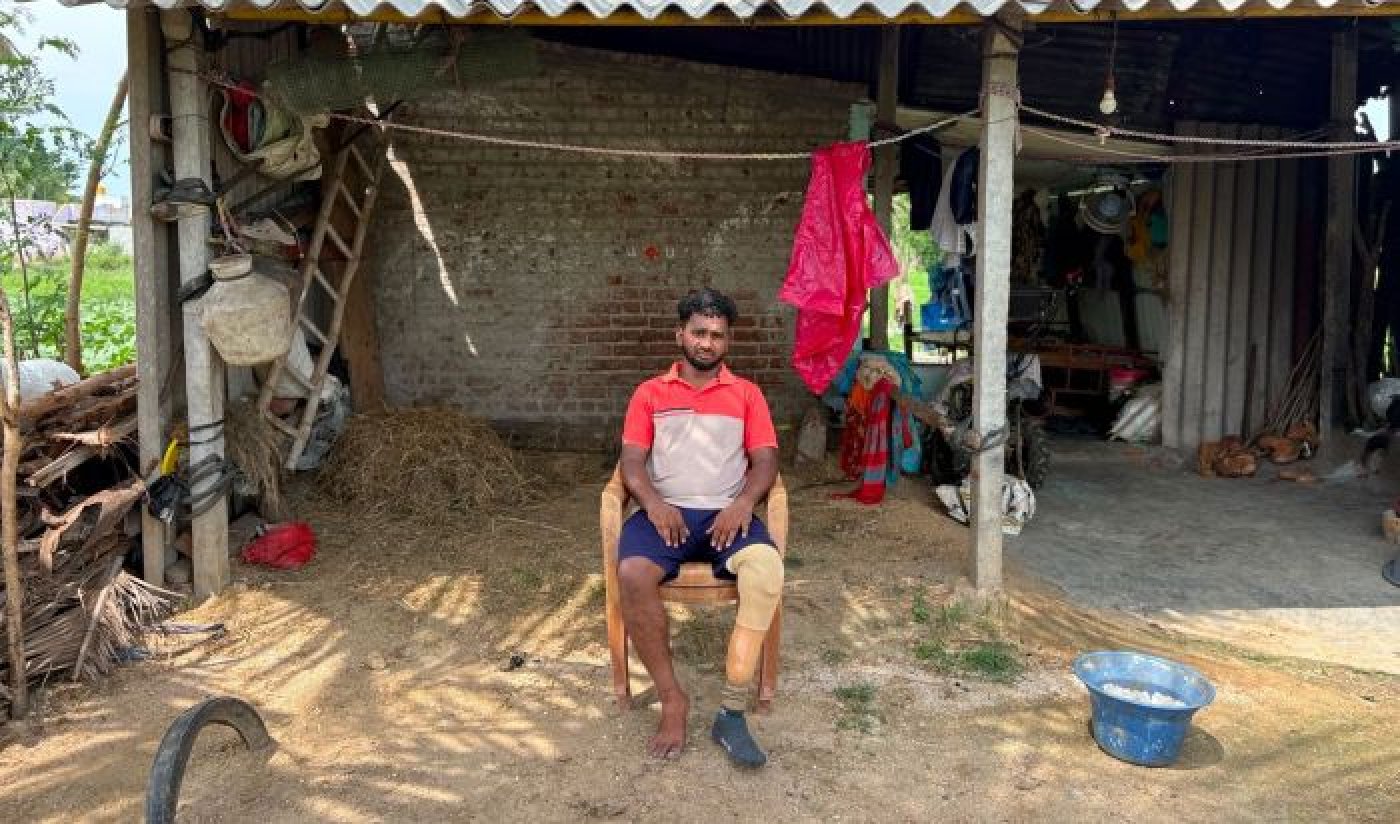
Chennai, Raipur, and Jodhpur: “I practically grew up in hospitals. I went in as a boy with an infected foot and came out after 11 surgeries as a grown man,” said the broad-framed, curly-haired M Ravichandran, now 28.
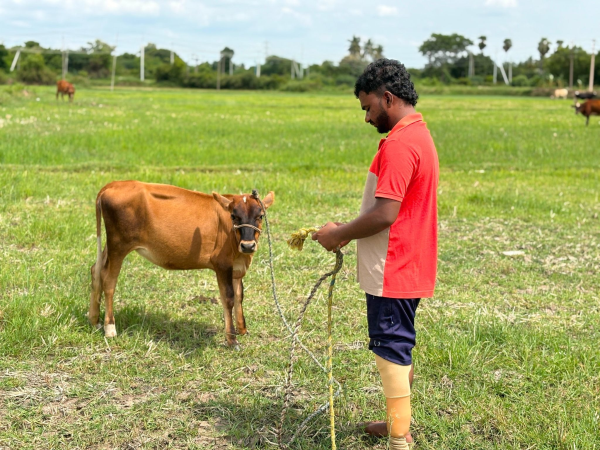
“But I still couldn’t save my leg,” he said as he tended to a cow that his family owns. His family of five lives in a modest house with a bright blue facade, a corrugated metal roof, and a cattle shed beside their farmland.
Despite his prosthetic leg, he still helps with farm work during the day before his night shift at a phone assembly unit in Sriperumbudur, a town in northern Tamil Nadu.
His childhood was interrupted by a disease that seemed like a minor injury at first.
When he was 12, a thorn from a black babool tree pierced his left foot while he was working in his family’s fields in Arakkonam, northern Tamil Nadu. The thorn broke off inside his foot, deep near the bone. Within weeks, his foot began to swell.
Ravichandran and his family had no idea he had contracted mycetoma, a debilitating disease that also had others across India trapped in a similar silent ordeal.
Caused by soil-dwelling fungi (eumycetoma) or bacteria (actinomycetoma) that enter the body through a minor cut or thorn prick, this infection slowly burrows into the tissue, destroying skin, muscle, and bone.
The WHO added mycetoma to its official list of Neglected Tropical Diseases (NTD) in 2016.
A Decade Long Battle
In Ravichandran’s case, seven wounds developed across his foot, repeatedly discharging pus and black grains, signifying a fungal origin. As the disease got worse, he said it caused a stabbing pain that “struck like a crowbar at night”, causing severe insomnia and deep depression.
He neglected the infection for a few weeks, and by then the foot began to swell, forcing him to visit a local doctor. The doctor couldn't diagnose the problem.
A few months later, a hospital in Chennai diagnosed the infection as mycetoma, and Ravichandran began treatment.
Over the next nine years, Ravichandran underwent 10 surgeries before his leg was amputated.
At one private facility, doctors harvested bone from his hip to rebuild his foot. He then sought treatment at Chennai’s Stanley Government Hospital, where he underwent repeated surgeries to remove infected tissue from his foot.
But the infection kept returning.
He was forced to drop out of school after Class 10, while his family spent an estimated Rs 6,00,000 on treatment, much of it borrowed from moneylenders.
By age 21, Ravichandran had had enough. “I couldn’t bear it anymore. I met the chief orthopaedic doctor at Stanley Hospital and begged him to amputate my leg,” he said. “When the procedure was done, I felt I had come out of hell.”
Today, he wears a prosthetic limb and works on the assembly line at a phone manufacturing plant in Sriperumbudur, about 45 km away.
A Hidden Epidemic
Ravichandran’s nine-year medical nightmare highlights the diagnostic and treatment gaps surrounding mycetoma across India.
Those infected with mycetoma shared the same ordeal: delayed diagnosis, years of pain and treatment, lost work, disrupted lives, repeated hospital visits, debt and mounting treatment costs.
The many reasons for the delayed diagnosis of the disease include a people's reluctance to visit hospitals as they fear losing their jobs, low awareness, including among doctors, particularly in smaller hospitals in rural areas, and a lack of the required diagnostic tools in primary healthcare centres.
Another gap is the lack of an accurate picture of the disease’s prevalence.
A 2024 review, published in the journal Clinical Microbiology Reviews, of more than 12,000 eumycetoma cases worldwide placed India among the highest reporting nations.
Global Burden of Human Mycetoma: A Systematic Review and Meta-analysis, a 2013 review, documented 1,392 published cases from India in an analysis of 11 studies from 1961 onwards.
MycoNet—a national network established by the Indian Council of Medical Research (ICMR) in 2020 to map fungal infections and monitor antifungal resistance across India—has started systematically identifying rare fungal infections, including mycetoma, in hospitals across the country.
In response to an RTI filed on April 16, the ICMR said that through surveillance by its eight Advanced Mycology Diagnostic and Research Centres (AMDRC) across the country, MycoNet has registered 49 eumycetoma cases since January 2023.
The ICMR stressed that this count “should not be considered a population-based estimate” and does not indicate the country’s total mycetoma burden. Follow-up data was not captured in the registry, it said.
"We are still relying on passive surveillance," said Dr Arunaloke Chakrabarti, former president of the Switzerland-based International Society for Human and Animal Mycology (ISHAM). "We only have numbers of patients reporting at tertiary hospitals. What we really need is active surveillance, where we go into the field and conduct surveys."
Mycetoma is one of the most overlooked NTDs globally. According to the G-Finder report published by Impact Global Health, global R&D funding for mycetoma totalled just $5,850,000 between 2018 and 2024, averaging about $836,000 per year. Funding crossed 1 million dollars in only two years—2019 and 2024. The data does not identify any specific investment in mycetoma R&D by India.
Fear Of Lost Livelihoods
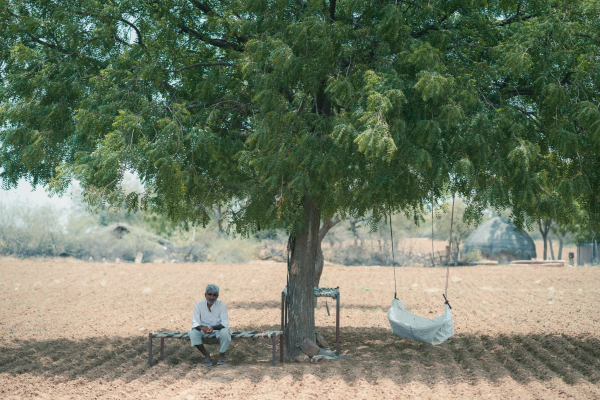
The disease, which mostly affects farmers and other manual labourers, often leads to late treatment-seeking because people fear losing their livelihoods.
In Jodhpur district’s Bhakhron ki Dhani village, farm labourer Achala Ram lived with a wound on his left buttock for about 16 years before visiting a speciality hospital.
“The wound kept draining fluid and ruined my clothes,” the 58-year-old said. “But I kept ignoring it until the pain was unbearable.”
The infection began as a small lump around 2001, slowly grew, and eventually burst, discharging pus. “I still didn't go to a doctor as I feared they would perform surgery and I won’t be able to work,” Ram said.
Pradeep Singh, the doctor who heads the sub-divisional hospital in Osian, Jodhpur, sees this diagnostic breakdown firsthand.
“Awareness about mycetoma is still very poor, even among many doctors. Fresh graduates often don't recognise it, which is why training on early identification is extremely important,” he said.
Patient delays worsen the damage.
“Many apply soil or old cloth over the wound and continue heavy labour,” said Singh. “By the time they reach us, some have already received months or years of injections and antibiotics from informal providers without ever receiving a definite diagnosis.”
Not Just Limbs
By 2016, when he reached the state-run Mathura Das Mathur Hospital in Jodhpur where he finally got diagnosed, he had spent Rs 200,000 to 300,000 in private facilities on failed diagnosis and medication.
“The doctors couldn't identify it for years,” he said. “The wound was right in front of them.”
Ram’s case was complicated by the fact that he had extrapedal (outside the hand and legs) mycetoma, a rarely diagnosed form of the disease, as nearly 77% of reported cases affect the lower limbs.
He has since undergone three surgeries, but the sinuses and pus discharge keep recurring.
According to clinical studies from Sudan’s Mycetoma Research Centre, a WHO collaborating centre on mycetoma, recurrence rates in eumycetoma cases reach 40% after surgery.
"When we talk about worsened mycetoma cases of the foot, we think of amputation as the last option," said Kenya-based Borna Nyaoke-Anoke, who has worked on NTDs in Africa for over 15 years and heads the global mycetoma programme at the Drugs for Neglected Diseases initiative (DNDi), a nonprofit involved in drug research and development.
"But what happens when it's in the buttocks, the perineum, armpit, or abdomen? The outcome is usually profound deterioration in quality of life and subsequent mortality."
Hurdles In Diagnosis And Treatment
The country sees marked regional variations in mycetoma types. Bacterial cases (Actinomycetoma) predominate in wetter, more humid regions such as Tamil Nadu, West Bengal, Madhya Pradesh, and Andhra Pradesh. Fungal eumycetoma, by contrast, dominates hot, arid belts like Rajasthan. The latter is more difficult to treat, and often fails to respond to standard anti-infective regimens.
Left untreated, both bacterial and fungal forms of mycetoma result in severe, permanent physical disability.
“Actinomycetoma is easier to treat because antibiotics penetrate well and the disease is fully curable in most cases,” Dilip Kachhawa, a doctor at the Mathuradas Mathur Hospital, Jodhpur, said.
“In eumycetoma, the pathogen forms capsules that protect the fungus and prevent antifungal drugs from reaching the infection effectively,” explained Kachhawa, the senior dermatologist who treats Ram. "Surgery is often necessary to reduce the fungal burden before medicines can work.”
The case of 23-year-old Taruna Rathia from Hati village in Raigarh district, Chhattisgarh, illustrates how actinomycetoma can respond well to treatment.
Rathia was diagnosed with actinomycetoma at AIIMS Raipur in 2022. Her consulting dermatologist, Satyaki Ganguly, an associate professor at the institute, said she responded well to targeted treatment, with her lesions healing within six months.
Yet, it took Rathia years to get the right treatment. She first noticed small bumps on her back as a child. By 16, the lesions were discharging pus and pain had begun radiating down her arm. The Covid-19 lockdowns disrupted access to hospital care, delaying her diagnosis. When she was finally admitted to AIIMS, she missed her annual exams and lost a year of college.
The treatment allowed her to return to college and resume her studies.
Missing The Right Tools
Chakrabarti of ISHAM pointed to another gap in mycetoma management: primary health centres often lack the diagnostic capacity needed to identify the infection.
“As primary healthcare centres often lack desired conventional diagnostic tools such as microscopy, fungal cultures or specialised drug-sensitivity testing, mycetoma is frequently misdiagnosed or treated piecemeal with ineffective interventions,” he said.
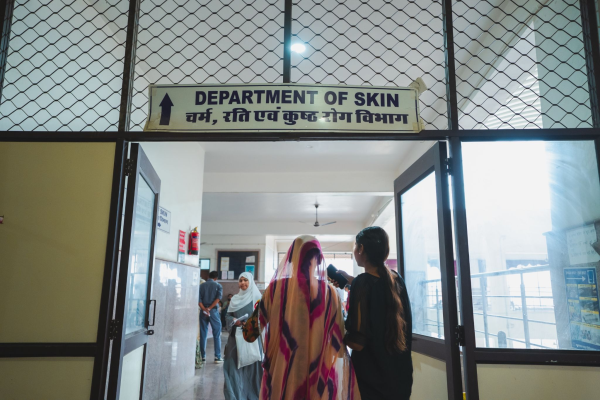
“Mycetoma patients live in remote areas where healthcare is limited. Even when they reach a primary health facility, it may not have the capacity to diagnose mycetoma,” said Nyaoke-Anoke.
A mycetoma diagnosis requires fine-needle aspirates, tissue biopsies, or fungal cultures, and rural primary healthcare centres (PHCs) in India mostly lack these tools, added Nyaoke-Anoke, pointing out that weak medical infrastructure only delays treatment further.
In response to a RTI question on mycetoma diagnosis, the ICMR said molecular diagnostic tests for the disease “are not being provided under NEDL”. The National Essential Diagnostics List (NEDL) guides required medical tests and devices across different levels of healthcare. It added that these facilities exist for eumycetoma diagnosis at the eight AMRDCs under MycoNet.
Financial Stress
For Ram, the delay in diagnosis had financial and medical consequences. With his own income now at zero and his son earning Rs 10,000–12,000 a month at a grocery shop, he often has to borrow from relatives.
The family has cut back on everyday expenses, he said. “We cook simple meals with whatever is available and try to spend as little as possible”.
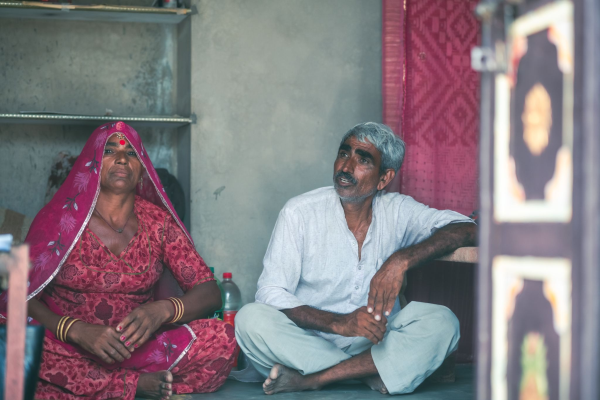
In Ram’s case, just like in Ravichandran’s, the surgeries have not been able to eliminate the infection, and his medication needs to be readjusted every month at the hospital at which he’s being treated, forcing him to make monthly 140-km round trips to Jodhpur, as rural healthcare centres often don't have the specialised knowledge to treat mycetoma.
After one of his surgeries in 2024, he had to make the long trip every alternate day for eight months to have the wound dressed.
“I only wish treatment were available closer to villages like ours,” he said. “Travelling such long distances for years is expensive and difficult for poor families.”
Ram received free medicines and surgery through Rajasthan government health schemes, but he said the government system did not always have the medicines in stock. He sometimes had to buy them from private pharmacies, adding to the cost of a treatment that has already consumed years and much of his family's income.
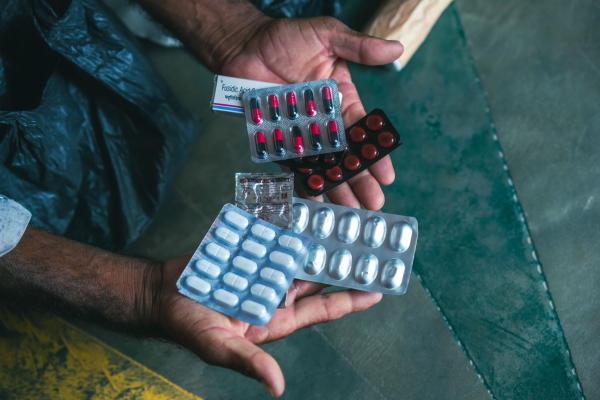
Ravichandran also benefited from state health schemes—the amputation and hospital procedures were covered at different points through the public health system, but the prosthetic limb he needed afterwards cost about Rs 80,000, adding another expense to a family already burdened by medical debt.
Yet for both, mycetoma left a substantial financial burden, through years of treatment, lost earnings, and related expenses that government coverage did not fully absorb.
Four years into his job at the phone manufacturing plant, Ravichandran is gradually repaying his medical debt, with about Rs 300,000 still to go.
‘How Will I Raise My Kids?’
For construction worker Suresh from Vellore, who goes by the single name, the fear of losing that income arrived before the disease had progressed to amputation.
He was admitted to Chennai’s Rajiv Gandhi Government General Hospital in May 2026 with a swollen foot and draining wounds. The doctors diagnosed it as eumycetoma.
Suresh was terrified that doctors would amputate his leg. “How will I raise my kids if they chop off my foot?” asked the 49-year-old, who makes around Rs 14,000 in a “good month” and supports a family of five, including his wife, two children and mother.
His infection began about a year earlier after a brick fell on his right foot. He initially received a tetanus injection and ointment at a Vellore hospital. When doctors later wanted to collect pus from the wound for examination, he got frightened and stopped visiting the hospital.
“Now the condition has worsened, I am lying here in the hospital, out of work,” he said. “Contractors don’t give me work seeing my foot.”
While he remained in the hospital for around two months, his wife, who earns around Rs 5,000 a month as a domestic worker, supported the household.
Social Isolation
Fears like Suresh’s often prevent patients from seeking timely care, noted Satyaki Ganguly, a senior dermatologist at AIIMS Raipur.
“Apart from the associated stigma with physical impairment or skin disease, mycetoma patients undergoing amputation also face poor quality of life as India is not a disability-friendly country,” Ganguly said. That is a reality Ravichandran now knows well.
“I felt society started treating me differently after I lost my leg,” he said. “Finding employment as a person with a disability was extremely hard. I got it only after a referral.”
Apart from chronic morbidity and disability, NTDs lead to stigmatisation, social exclusion, discrimination, and place considerable financial strains on patients and their families, the WHO has noted. As of 2024, the WHO found that 1.4 billion people required interventions for at least one NTD, such as chikungunya, leprosy, and lymphatic filariasis.
Limited awareness of NTDs can also leave patients vulnerable to misunderstanding, even within healthcare settings. Ram’s experience shows how quickly a lack of knowledge can lead to fear and isolation.
When hospital staff told Ram his test was "positive", they mistakenly instructed him to wear a mask. Believing he had a contagious disease, Ram stopped eating meals with his family until senior doctors clarified that mycetoma is not transmitted through human contact.
The Path Forward
Experts say mycetoma patients require prolonged treatment and follow-up, but no national patient-tracking system exists, unlike for leprosy (Nikusth 2.0), while dengue has a national programme for case-based surveillance alongside aggregate reporting.
Making mycetoma a notifiable disease—one that healthcare providers and laboratories must report to public health authorities—could be a first step toward closing that gap.
"It's time mycetoma becomes a notifiable disease,” said Mani Suryakumar, a senior dermatologist at Government Stanley Medical College, Chennai. “Unless we have a registry that mandates a systematic follow-up, we won't know the disease’s real burden or whether patients are developing recurrent disease.”
“Mycetoma symptoms can recur even years after treatment. I've seen patients come back almost ten years later,” added Suryakumar, who had treated Ravichandran.
Currently, Sudan is the only endemic country with a mycetoma-specific surveillance mechanism.
Yet, addressing India’s mycetoma crisis does not require creating an expensive standalone health initiative. Instead, public health strategists advocate for an integrated approach.
"Last mile strategies for other NTDs, most notably leprosy and yaws, rely on active case-finding via community health workers," said Suman Rijal, director of Health Promotion, Disease Prevention and Control at WHO’s South-East Asia Regional Office.
Rijal added that community health workers were being trained to look for skin anomalies that could identify mycetoma early, which would significantly improve cure rates.
India is already beginning to build pieces of such a system, through ICMR’s MycoNet network. Expanding such surveillance into a system with wider coverage and consistent patient follow-up could help ensure fewer patients fall through the cracks.
Reporting for this story was supported by the MSF-DNDi Grant on Neglected Tropical Diseases as part of MSF’s Without Borders Media Fellowship. The fellowship encourages independent, impartial and neutral reporting on health and humanitarian crises.
(Rituparna Palit is an independent journalist who reports on health, environment and technology.)
Get exclusive access to new databases, expert analyses, weekly newsletters, book excerpts and new ideas on democracy, law and society in India. Subscribe to Article 14.