
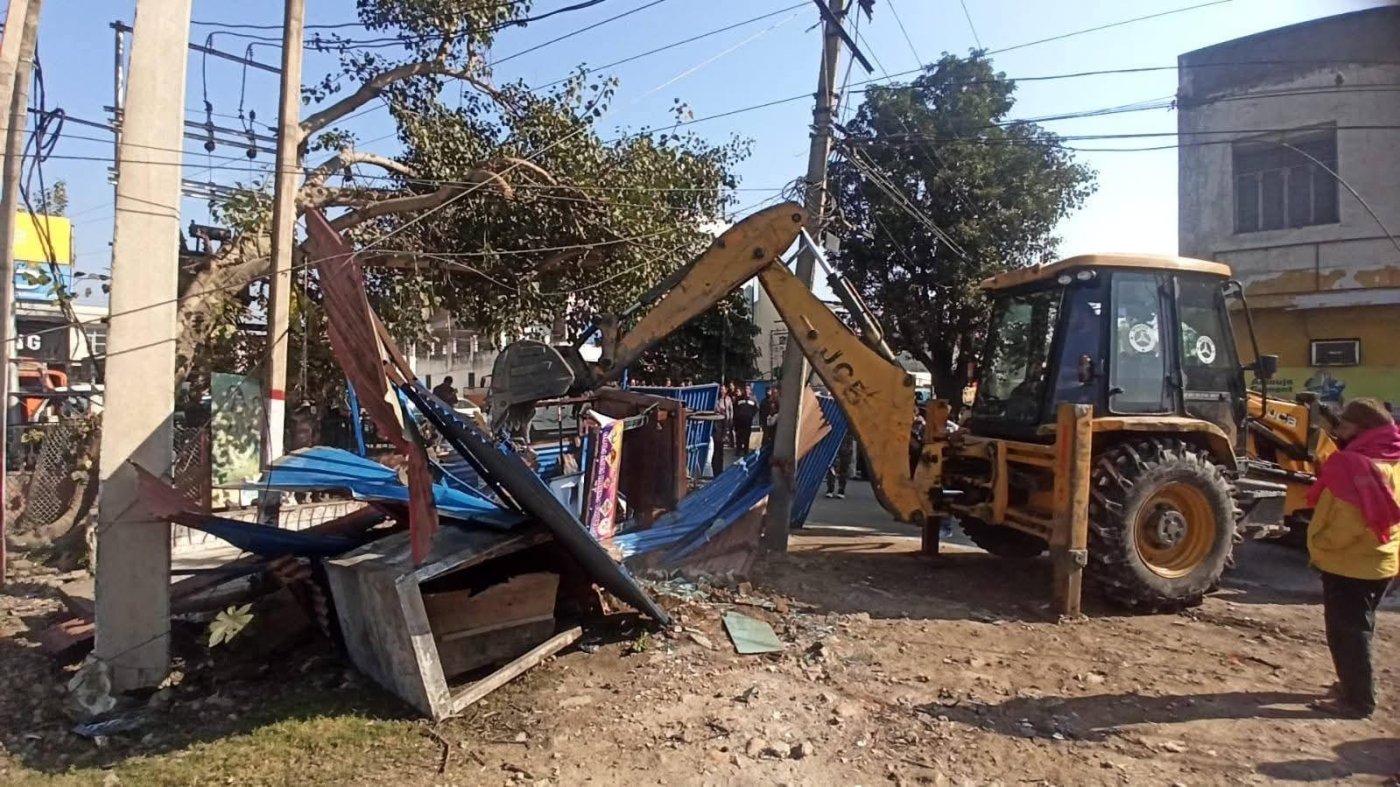
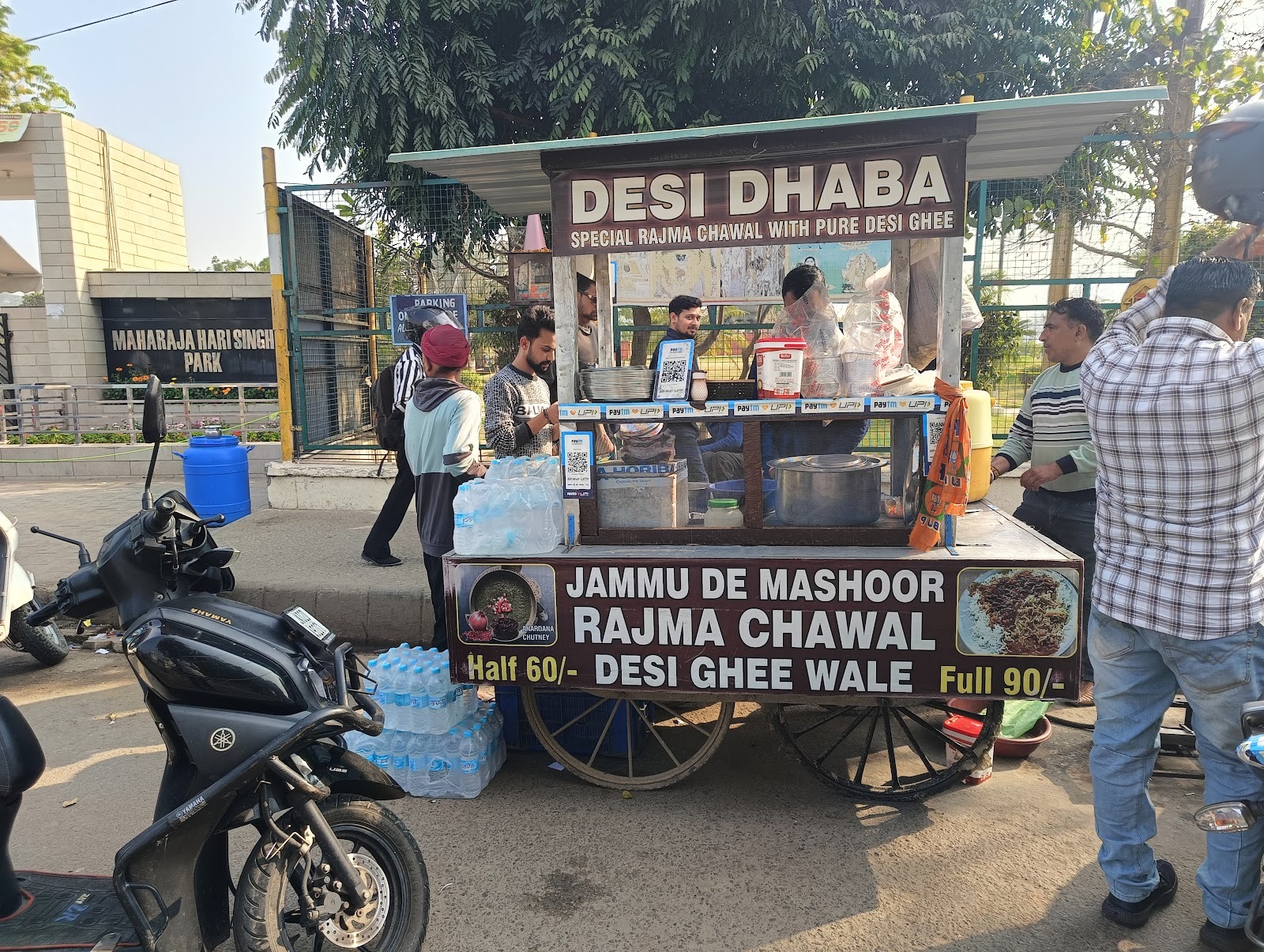
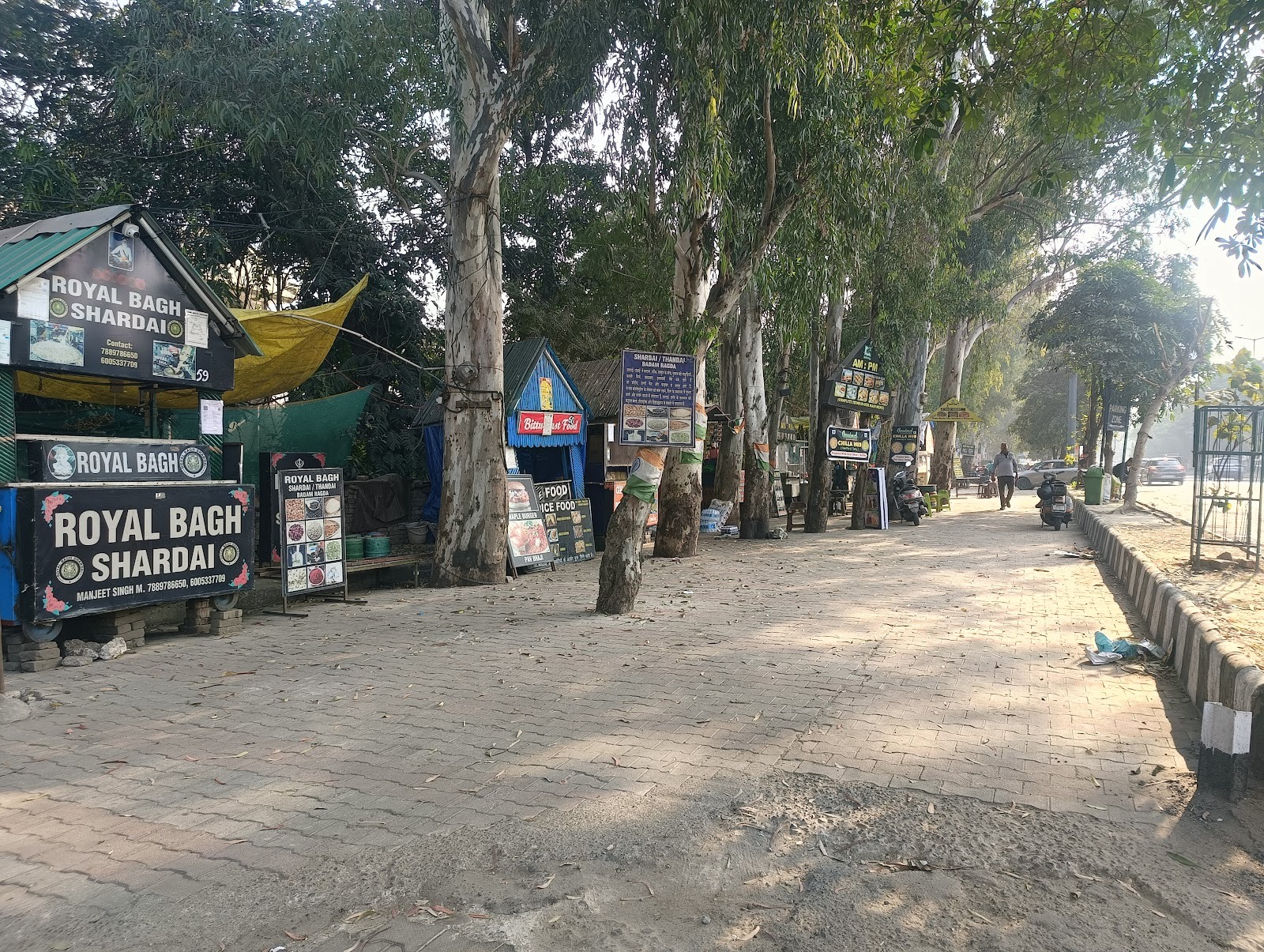
Jammu, Jammu & Kashmir: An early-morning eviction drive by the municipal corporation of Jammu (JMC) on 5 February in a spot so popular with street vendors selling fast food that it is unofficially called the Rehri zone (cart zone) has left many of them struggling to survive.
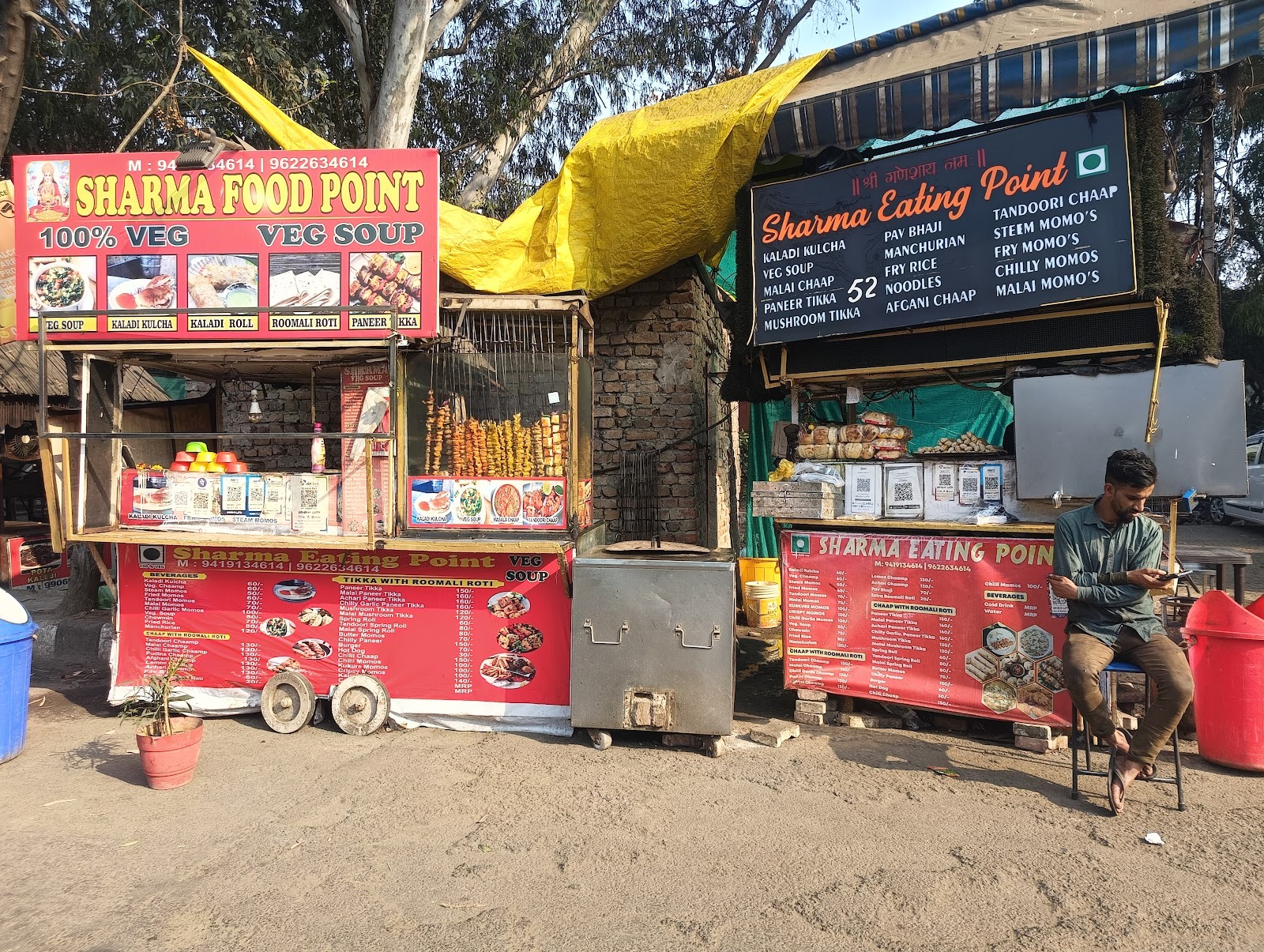
The president of the cart zone in the popular commercial hub of Gandhi Nagar, Mohan Sharma, told Article 14 that nine carts were allegedly removed.
“This cart is our only source of livelihood. I have been serving food to customers for years. We started at Gole Market in Gandhi Nagar, said Sharma. “Ten years ago, the commissioner of JMC assured us that we would be provided a vending zone.”
“We were allotted this place and have been here for the last ten years. Now they are evicting us. I am back on the road. There are 122 carts here—what will we do?” he said.
The municipal corporation commissioner, Divyansh Yadav, has claimed that many vendors are operating without licences issued by the JMC.
Yadav said that citywide enforcement drives are underway and that, in Gandhi Nagar, complaints from residents about nuisance in residential areas led to action against unlicensed carts.
Yadav said that a smart city-led beautification project in the area has necessitated such regulatory measures, and that new vending zones would be designated.
Without Due Process
Vendors claim the eviction drive was carried out without due process under the Street Vendors (Protection of Livelihood and Regulation of Street Vending) Act, 2014—which safeguards the right to earn a livelihood—passed by the Congress-led United Progressive Alliance (UPA) government.
The Act recognises street vending as a legitimate means of earning, prohibits eviction without a proper survey of vendors and due process, and mandates the formation of Town Vending Committees (TVCs) with vendor representation.
The Act also requires the issuance of Certificates of Vending and provides for the creation of designated vending zones.
Under the Act, every local authority must constitute a TVC, with at least 40% representation from elected street vendors, including mandatory representation of women and marginalised groups, to issue certificates of vending (licenses).
Mohan Sharma said no TVCs exist in Jammu.
Further, the law prohibits eviction or relocation from the place in the certificate of vending without 30 days' notice, and only the TVC can issue eviction notices. With the vendors alleging that no such committee is functioning in Jammu, there is no framework for such evictions.
Furthermore, the carts were in a vending zone designated by the municipal corporation.
The protesters gathered on the lawn of the municipal corporation commissioner’s office to submit their representation on 11 February 2026, asking for an immediate stop to the eviction drives, a survey of vendors, disclosure of the constitution, composition and functioning of the TVCs and regulation of street vending by law and not by force.
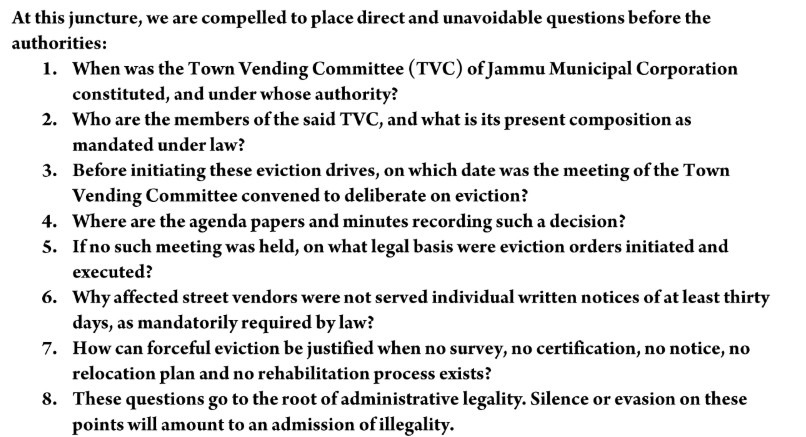
It would appear that one such TVC was established and a meeting held in 2016, but the vendors’ representation—asking who the current members of the TVC are, when it met to decide on these evictions, and where the minutes recording such a decision were published—raises doubt as to whether it is functioning.
The representation further asked how the eviction could be “justified when no survey, no certification, no notice, no relocation plan and no rehabilitation process exists”.
Mohan Sharma said that municipal corporation authorities have damaged and vandalised around 2,500 carts in the Jammu division in recent months, and that these vendors were never given any notice.
Article 14 cannot independently verify this figure.
‘What Is Our Future Now?’
Among the evicted was Honey Dogra, a 28-year-old resident of Nai Basti, a kilometre from where he works, a low-income neighbourhood in the south eastern part of the city, made up of shopkeepers, vendors and drivers, mostly from the Dogra community, the largest in Jammu, with a history linked to the former Dogra rulers of Jammu and Kashmir.
Dogra alleged that the municipal corporation vandalised the cart from which he sold momos, chaap, Maggi, veg rolls, veg tikka and kaladi kulcha in Gandhi Nagar.
“The irony is that we were never informed why we were evicted? Is there no rule or law? We were not given any notice,” said Dogra. “Under which law are they allowed to vandalise and seize our material in our absence?”
Dogra, who was trying to save enough to get married, now works as a daily wage labourer at wedding functions, earning Rs 500-600 a day.
Wearing a white apron stained with turmeric and oil, like the other workers employed on contract to cook food and serve at a wedding, he described the day his cart was vandalised.
“It was early in the morning, around 5:30 am, when the municipal corporation came and vandalised our carts, leaving us in uncertainty,” he said. “We have a WhatsApp group. Someone shared a message there. By the time we reached, after an hour, nothing was left. Not even a single disposable plate.”
Dogra said that he had bought the cart for Rs 30,000 three years ago. The night before the eviction drive, he had ingredients and food worth Rs 5,000, while the utensils and equipment cost Rs 10,000–15,000.
He said he has a server whom he pays Rs 5,000, a cost he is still bearing after the eviction in the hopes that the authorities would permit him to go back to work as a street vendor.
Even if he is allowed back, Dogra will have to buy another cart.
Dogra is the third of five children. His father, 65, is also a street vendor in Gandhi Nagar.
“I started this business in 2023 because I realised it was not right to depend on my father and brother for money,” said Dogra.
“For the past two years, my parents were asking me to get married, which pushed me to become financially independent and a responsible member of the family,” he said. “But I never expected that I would have to wander daily in search of work.”
“What is our future now? I kept thinking,” said Dogra. “Three years had gone into building my cart’s name and reputation, and everything was suddenly destroyed.”
No Notice Was Given
Advocate Sushil Gupta, who has been working for the rights of street vendors in Kathua district of the Jammu division region, 70 km from Jammu city, told Article 14 that the law clearly protects vendors from arbitrary action.
Gupta added that the J&K government has framed its own rules and scheme under the Act. “As per the law, only the Town Vending Committee has the authority to issue a notice for eviction, and that too with a mandatory notice period of one month. No other authority is empowered to take such action.”
Gupta, who represents a forum of nearly 250 street vendors in Kathua, stated that authorities frequently evict them from the markets, disrupting their ability to earn a livelihood.
Gupta added that none of his 109 vendor clients received prior notice of the eviction.
Criticising the implementation of welfare legislation, Gupta remarked, “The laws meant for the welfare of poor people are rarely implemented effectively, while those favouring capital interests are enforced strictly. That is the irony.”
On 23 February 2026, a video circulating on social media showed Dilawar Singh Manhas, president of the Yuva Rajput Sabha, an organisation linked to the Bharatiya Janata Party in Jammu, threatening street cart vendors to vacate the area or face repercussions.
The urban development and housing portfolio is currently under the chief minister of Jammu and Kashmir, Omar Abdullah.
Article 14 attempted to seek his comments but received no response from him or his advisor, Nasir Aslam Wani, despite repeated calls and messages on 24 and 25 February.
We sent questions via WhatsApp to the chief secretary, urban development and housing, Mandeep Kaur on 25 February 2026, and this report will be updated if a response is received.
We also attempted to meet the JMC Commissioner, Devansh Yadav. However, during two visits to his office, on 12 and 13 February, he was unavailable and did not respond to follow-up calls and messages.
‘We Don’t Know What We Will Do’
Sunil Kumar, 45, a cart holder from the Bakhshi Nagar area of Jammu, who supports a family of four, expressed anguish over what he described as repeated eviction drives and harassment by the authorities.
When asked what he would do in the future if their vending zone was cleared, Kumar said, “We don’t know what we will do. An idle man’s mind is the devil’s workshop. Here in our Union Territory, unemployment is already high. Those who have to feed their families are trying to do something on their own, but the authorities restrict us.”
“Our children will face hardships if we remain idle. Earlier, we were earning rupees 1,000 to rupees 1,500 a day and living with dignity. But it feels as though our happiness troubles them, as if we are not even considered human,” he added.
Kumar said that he was evicted without notice.
Sharma said that before taking such action, authorities must give them a notice so that they can at least save some of their belongings.
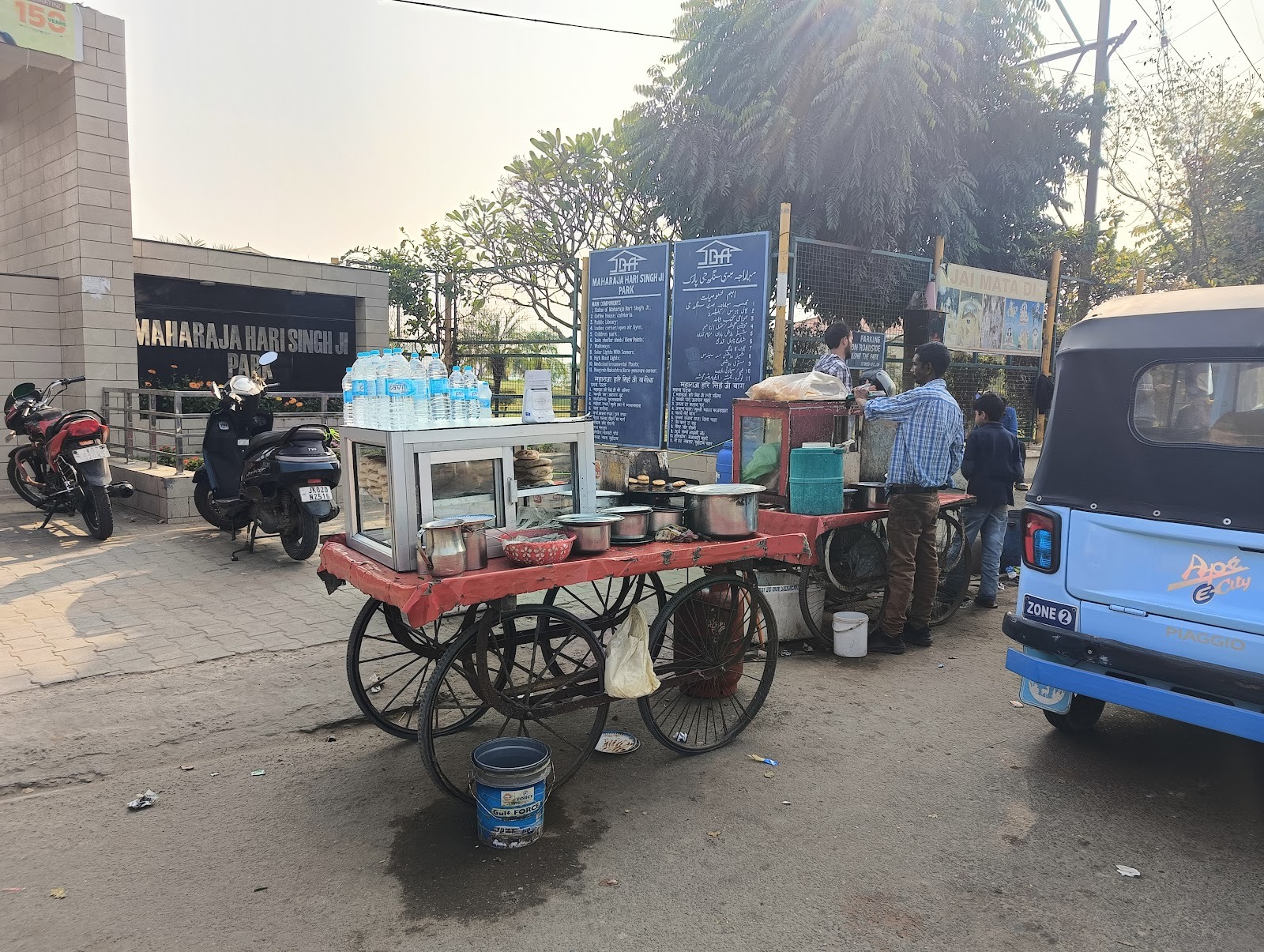
Sharma said that an eviction drive was carried out on 24 February outside Maharaja Hari Singh Park in Jammu city, during which around 20 to 25 carts were removed, leaving the vendors without a source of livelihood.
During the drive, a woman vendor was seen crying and visibly distressed over the decision, appealing to the government, saying, “We gathered the courage to step out and earn our livelihood despite being women, and now you are asking us to leave.”
She questioned what an unemployed youth is supposed to do in such circumstances. She said she has to support her family, and the eviction has taken away her only source of income. She asked whether the authorities expect her to sell her body or get involved in the drug trade to survive.
The woman's video has since gone viral on social media.
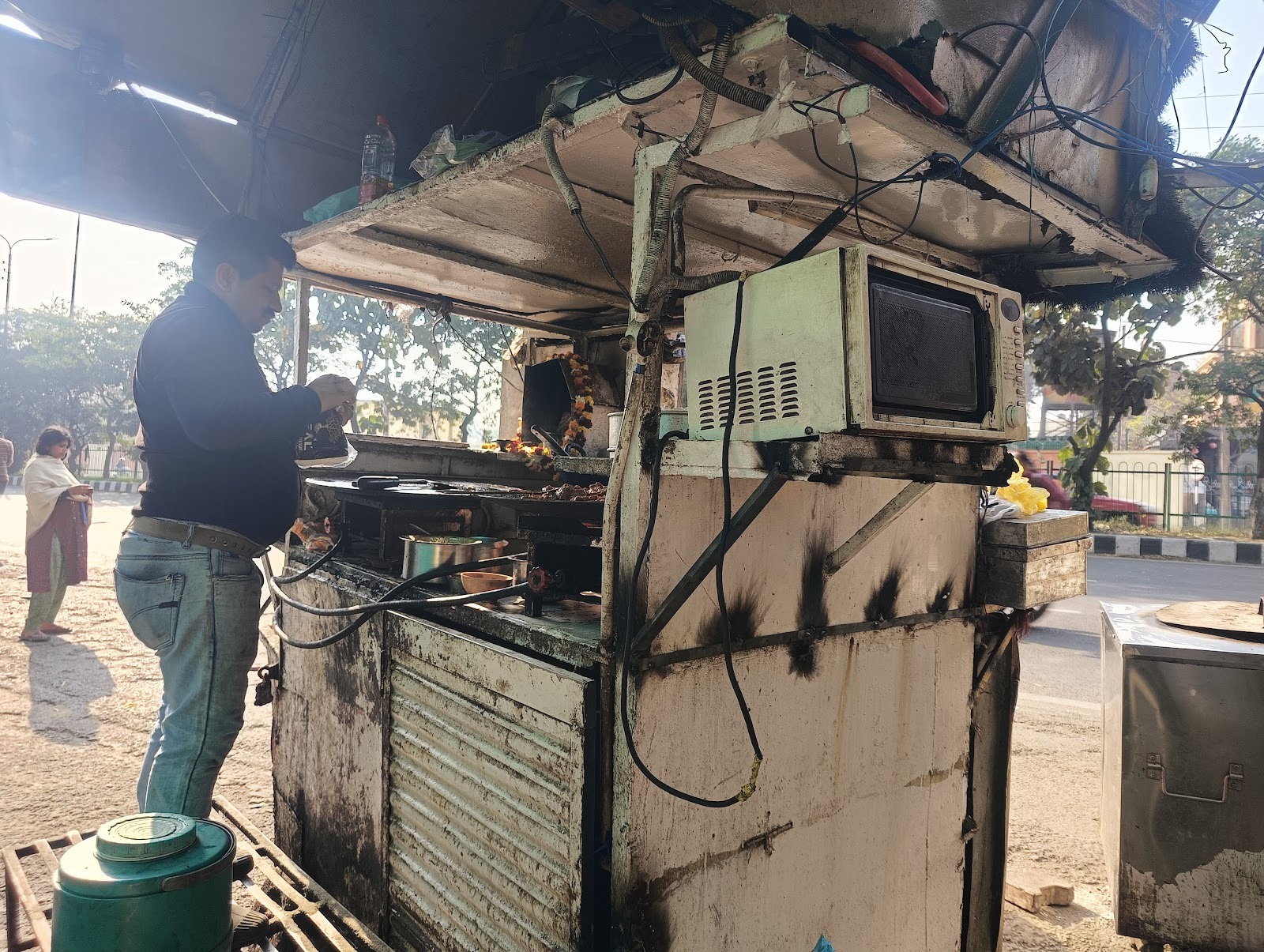
Rashpal Singh, 42, who has five family members including an ailing mother to support, was another cart holder whose stall was seized by the Jammu Municipal Corporation on 5 February 2020.
“I did not receive my materials back, except for a gas cylinder. They are claiming that this is all they seized,” he said.
Singh said that he was not given any notice.
To make ends meet, Singh now works as a daily wager, occasionally driving a small commercial vehicle or someone else’s car.
Singh was one of the vendors who took part in the protest on 11 February 2026.
“We were licence holders. I was issued a licence in 2017, but after 2023, they stopped accepting my annual fee. Some licences have been renewed, while others, like mine, have not,” said Singh.
“I am a poor man. It costs between Rs 40,000 and Rs 50,000 to restart from scratch,” he said. “After a few weeks, they may come again to vandalise and seize everything. It is better to wait for a permanent solution.”
(Basharat Amin is a multimedia freelance journalist from Jammu and Kashmir. He covers human rights, politics, environment, religion and marginalised communities.)
Get exclusive access to new databases, expert analyses, weekly newsletters, book excerpts and new ideas on democracy, law and society in India. Subscribe to Article 14.