
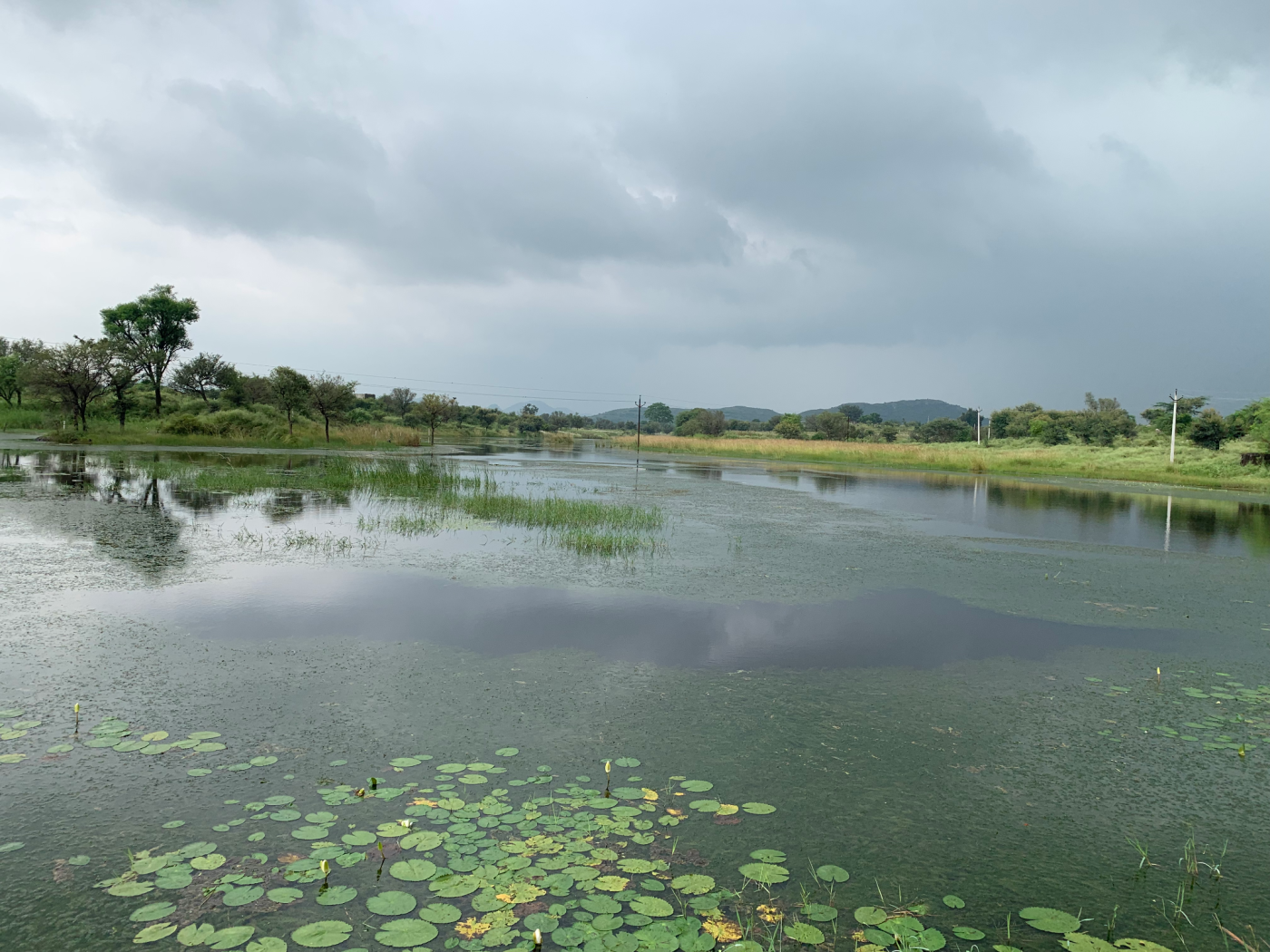
Neem ka Thana, Rajasthan: Mamraj Meena lost his sleep the day the first yellow backhoe excavator trundled into his village on the banks of Girjan river in the eastern district of Sikar here in one of India's most arid states.
For three generations, said the lanky 40-year-old Mamraj, his tribal family had lived on this land surrounded by one of the subcontinent’s oldest mountain ranges, the Aravallis, in a mostly self-sustaining economy.
“Wheat, millets, mustard, chickpea, you name it,” said Mamraj. “We grow everything here.”
On that day, in December 2024, the machine that came to their village carried an unspoken message: the state government had leased the land to a mining company. And 35 Adivasi families, including Mamraj’s, could be displaced, losing their farms, animals, and homes.
“My first reaction was: “We have to fight. But where do we go?” Mamraj recalled. “We didn’t even get to know when they did it.”
Ojaswi Marbles and Granites Private Limited, a company registered in Rajasthan’s Udaipur district, proposes to build a steel plant on 180 hectares of land in and around Mamraj’s village of Deepawas. Of this, almost 150 hectares is forest land.
Residents alleged that this includes several hectares of land registered in their names, as well as a large piece of land they have been living on but lack sufficient paperwork for. “In those days, Adivasi people used to settle wherever they found fertile land,” explained Hari Kishan, another Adivasi.
The company has since fenced off the area; they added, felled hundreds of native khejri trees, and restricted farming and animal grazing.
“They said we will give you a job and a house,” said Mamraj, who is aware of the ravages of mining on livelihoods and the environment in other parts of Rajasthan. “But we don’t need a job. Today you are hiring me; tomorrow you might fire me. Who knows! You are destroying a whole ecosystem.”
Not too far from his dhani (settlement) is evidence of what might be: a once-thriving river called the Sota—its destruction recorded in this December 2024 Article 14 story—is struggling to survive, as illegal mines dynamite the hills and loosen the soil.
In 2018, the Supreme Court expressed shock over the disappearance of 31 Aravalli hills, directing the Rajasthan government to immediately stop illegal mining.
“If hills will disappear (sic) in the country, what will happen?” the Court asked the state counsel. “Have people become Hanuman that (sic) they are running away with hills.” It was a reference to the god who carried away an entire mountain in the ancient epic, the Ramayana.
The Search For Minerals
For decades, this mineral-rich state in northwest India has attracted mining interests from around the world.
Natural stones, zinc, lead, copper, and over 50 other metallic and non-metallic materials are mined—often manually—from deep pits and rocky hills of the Aravallis, which traverse the state in a diagonal line, before spreading out into the neighbouring states of Gujarat, Haryana, and the National Capital Territory of Delhi.
Rajasthan is estimated to have 2,621 million tonnes of iron ore reserves, a natural mineral that is refined and processed to make steel.
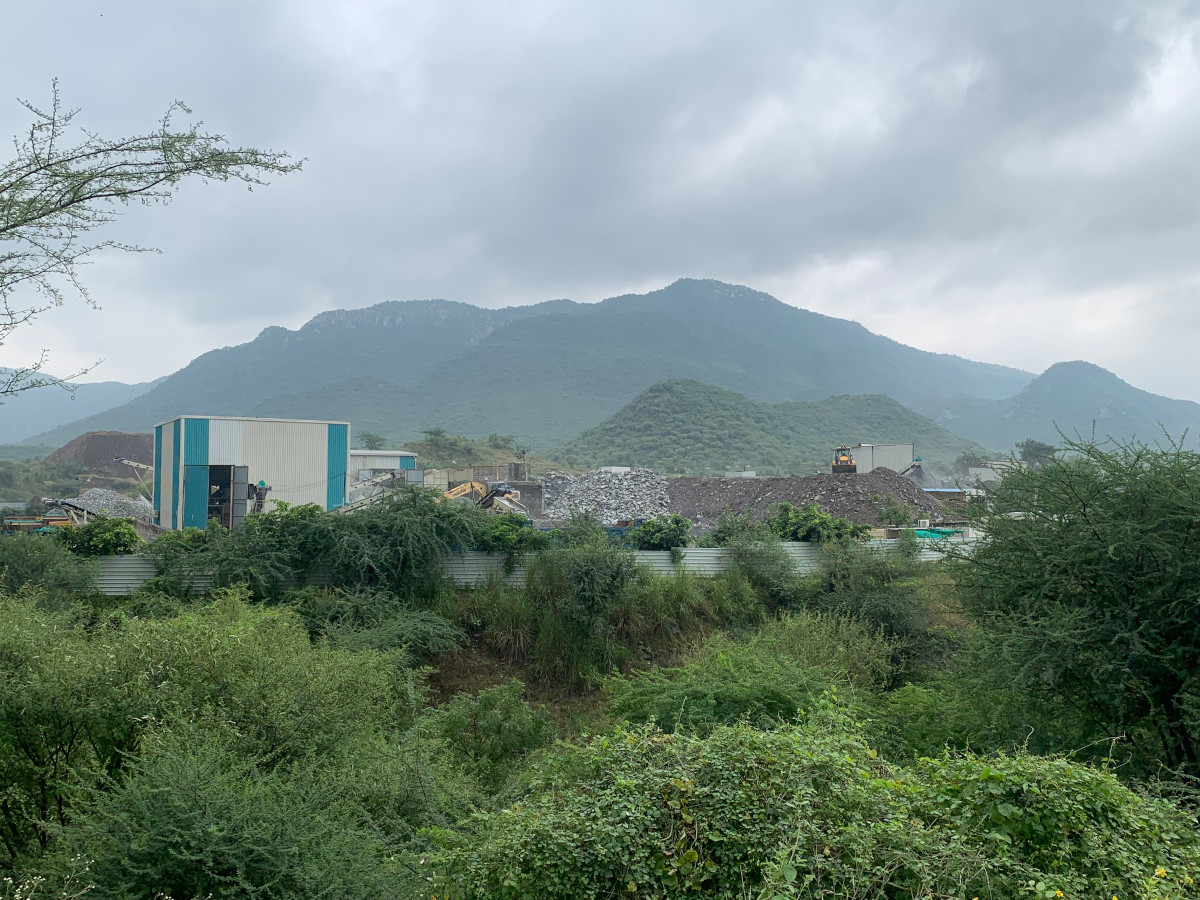
In Neem ka Thana tehsil, an administrative area where Mamraj’s family lives, the proposed steel plant sits at the mouth of the Girjan river.
The company, in environmental compliance documents accessed by Article 14, claims the Girjan is a nallah, a stream that flows only during the monsoon season. Locals insist it is a river that sustains at least 17 villages.
Article 14 sought comment from Ojaswi Marbles and Granites Private Limited on the villagers’ allegations and the current status of the machinery in Deepawas. There was no response. If there is, we will update this story.
Years ago, the people of the village said they worked with a nonprofit to build check dams across the river to keep it flowing year-round and better sustain the farming community.
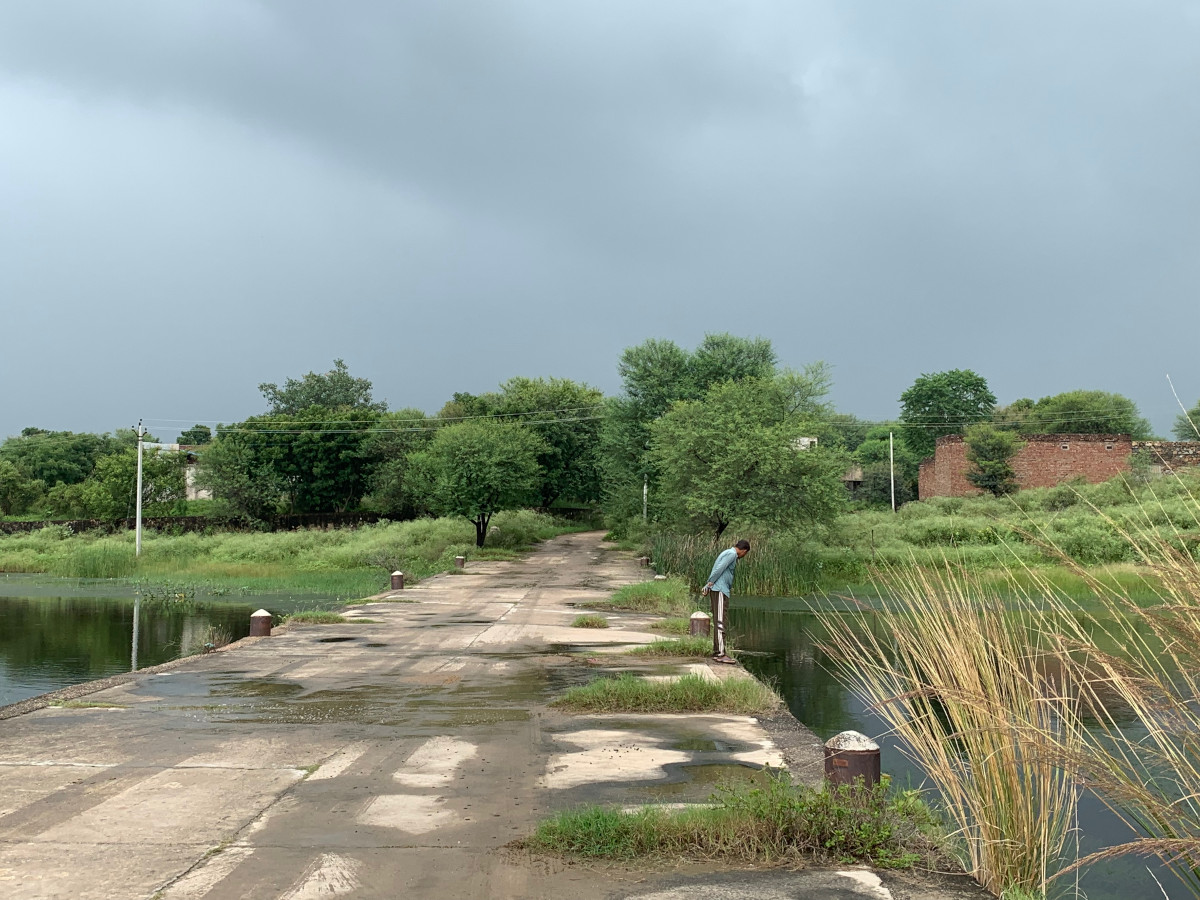
“Look at this beautiful river, does it look like a nallah to you?” Mamraj said, as we stood overlooking Girjan one rainy afternoon in September 2025.
Glistening khejri, dhok (button tree), and babool (acacia) trees lined its length as the rain pitter-pattered into its blue-grey water. “Over 60,000 people from five panchayats could get affected if this river is killed,” he continued.
Since Independence, at least three million people have been directly displaced by mining-related projects in India, according to a 2015 report in the International Journal of Social Science and Humanities Research. Most of them are Adivasis, due to their close proximity to forest areas.
But this village, with a population of around 5,000, decided to resist.
‘Kanooni Aur Maidani’
A month after the first excavator entered the village of Deepawas, one morning, Mamraj left for the home of Kailash Meena, an experienced tribal activist known for his relentless work against unregulated mining in Rajasthan.
Kailash’s message to the community was clear: “We need a strategy for the courts as well as the ground. Kanooni aur maidani.”
He advised the villagers to retrieve official documents related to the project. That took them six months. “I stood in the mining department’s office for the whole day before they finally gave them to me,” Mamraj recalled. “The forest department is yet to give us the papers.”
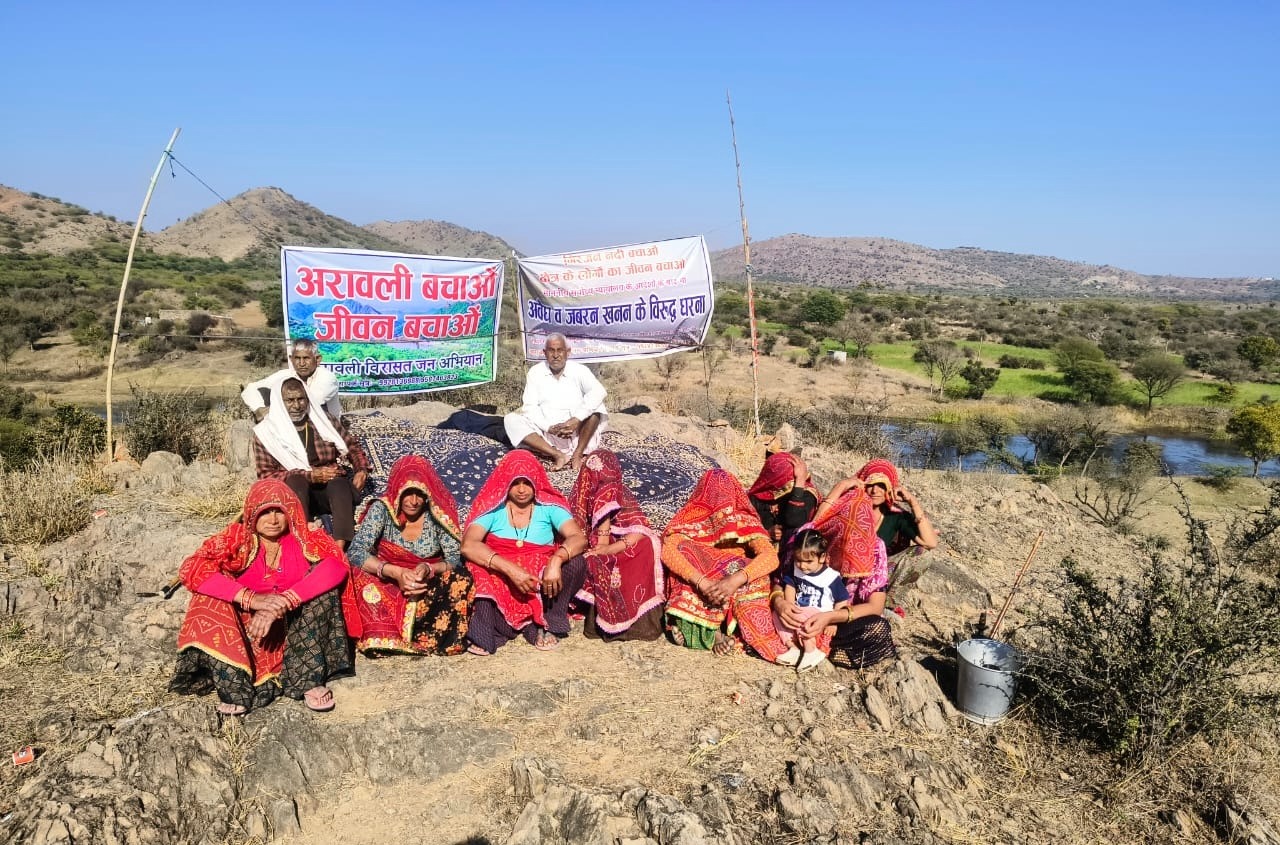
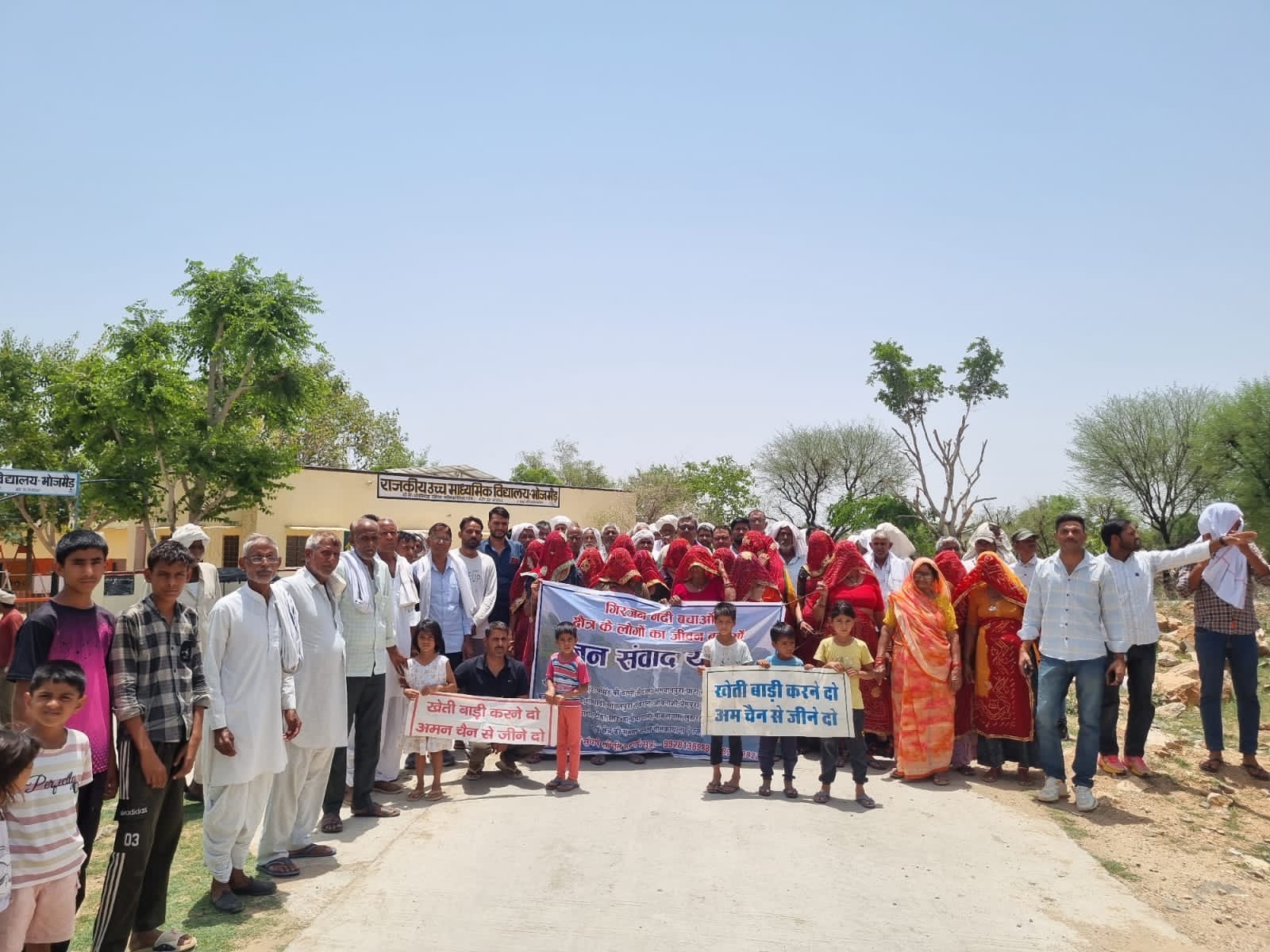
Soon after, in July 2025, around 500 people from at least three villages marched onto the top of a hill and launched the Girjan Nadi Bachao Aandolan (Save the Girjan river campaign). They sat on the hilltop in protest, toured the neighbouring villages, held community meetings, learnt how to take geo-tagged photographs, and met lawyers, activists, and government officials.
In 2025, they took two small buses full of people from the affected areas to voice their concerns before Rajveer Yadav, the sub-divisional magistrate (SDM) at Neem ka Thana.
In early 2026, they joined the Aravalli Sanrakshan Yatra, a 700-km march by environmentalists, activists, and Aravalli communities to spotlight the damage industrial activity is inflicting on India’s oldest fold mountain range.
“[The iron ore project] completely flouts the environment impact assessment process,” said Neelam Ahluwalia, the founder of People for Aravallis, a citizen collective that organised the march.
Despite Violations, Clearance
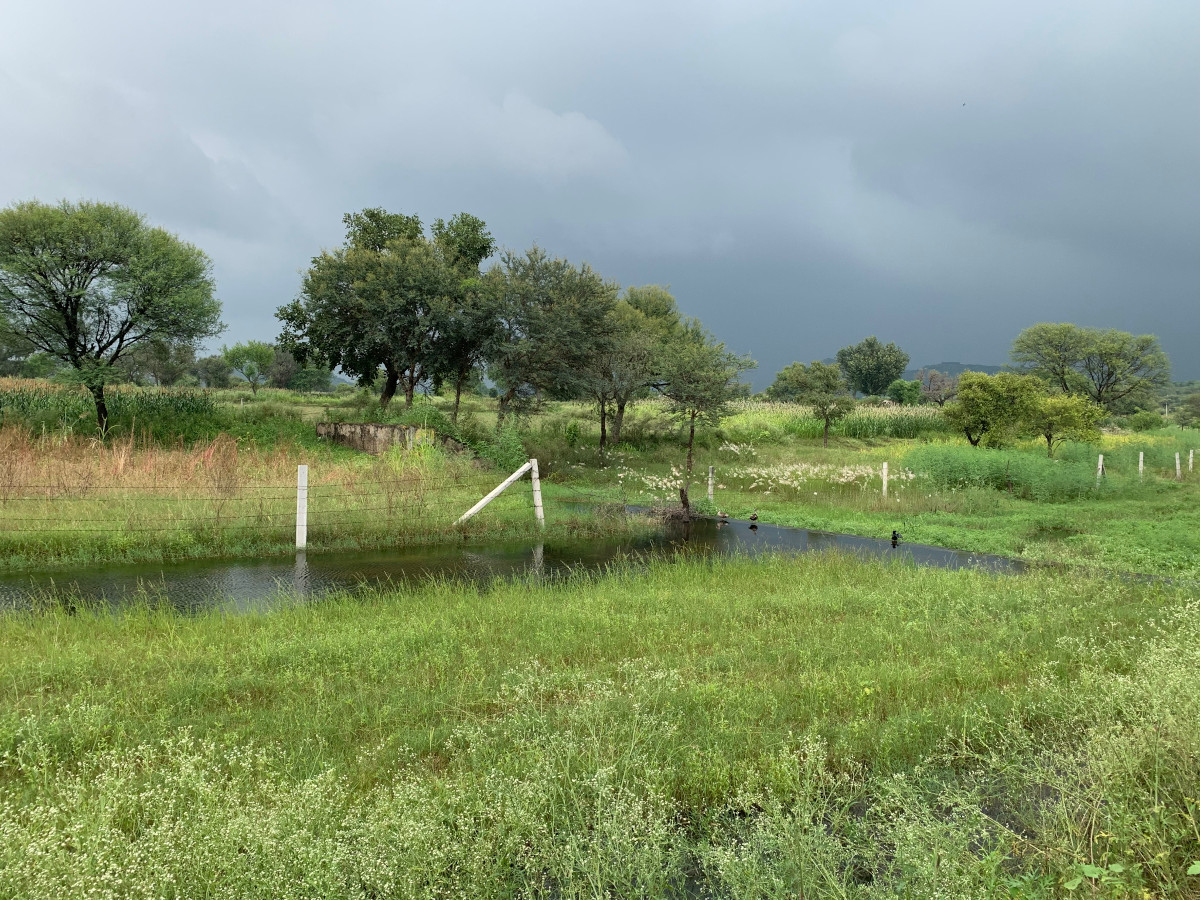
Upon reviewing the documents, Ahluwalia and her team, who work with rural communities across the Aravallis, found that the project lies within 5 km of a protected zone and, as per the law, the environment clearance needed to be granted by higher officials, after a complex multi-level assessment of its impact on the local ecology.
However, the clearance was granted to the company by the State Level Environment Impact Assessment Authority (SEIAA), a regional body which, Ahluwalia explained, wasn’t authorised to do so.
In October 2025, aided by Ahluwalia and Kailash, members of the Adivasi community moved the National Green Tribunal, requesting the removal of fencing and restoration of the locals’ rights to use the land for cattle grazing and farming.
Apart from pointing out loopholes in the environment clearance process, they raised the issue of the company's tree-felling and shared that Girjan’s water was found to be in a “near-pristine condition” when a resident had it tested in early 2025.
The pollution caused by toxic mine sludge could impact local animal and human life, the petition further emphasised. “In the summer months when other villages of Neem Ka Thana face water shortages, tankers come to fill water from the Girjan river,” said the petition.
While the tribunal acknowledged gaps in the environmental clearance, it dismissed the petition, holding that the petitioners should have challenged it by way of appeal rather than filing an original application.
Under the National Green Tribunal Act, 2010, the time period to file an appeal against an environmental clearance is 30 days from the date the decision is communicated, which the lawyer argued had passed in this case as the villagers were unaware of the land lease.
“How are the villagers supposed to know,” Ahluwalia said. “Typically, villagers come to know when [the companies] arrive with their machines. But the judge wasn’t willing to listen. I was really disappointed.”
The Fightback
In January 2026, the company officially began mining operations in Deepawas, raising panic among people involved in the case.
But days later, the community moved the Supreme Court (SC) by filing an intervention application, a legal procedure that allows a third party to join an ongoing lawsuit or appeal.
While the SC was hearing a case on how the Aravallis should be defined, the residents put forth a petition, arguing that as per the criteria defined under the 2010 Forest Survey of India report, the lease area fell within the mountain range, where any new mining operations need the apex court’s approval, as a per a 2024 order, but the company hadn’t sought it, making the operations illegal.
The Rajasthan mining department admitted that the area fell within the Aravalli range and ordered the company to halt mining immediately. Subsequently, SEIAA also sent a letter to the company, directing them to seek approval from the Supreme Court before commencing mining operations.
The company challenged it by filing a fresh intervention application in the case, “but the Supreme Court refused to intervene,” Ahluwalia said, bringing much relief to the residents and activists.
This was a rare win for a mining-affected community in the region—or so they thought.
Nothing Beyond Assurances
In April 2026, around seven community members, accompanied by Kailash, reached the local panchayat block office to meet SDM Yadav and other senior district-level officers.
Despite the recent orders from the Rajasthan mining authorities, the villagers said, the company hadn’t removed its gate, machines, and fencing around the land.
“The continued presence of these structures and machines creates genuine apprehension among the villagers that illegal mining activities may resume at any time,” they said in a letter submitted to the officers, requesting urgent intervention.
Yadav demanded an answer from the mining department that assured the residents of help, but the machinery was not removed, said Kailash. In May 2026, another batch of residents visited Yadav and were met with the same assurance followed by no action.
Yadav did not respond to my phone call and WhatsApp texts requesting an update on the matter, as did Ashok Verma, the assistant mining engineer at Rajasthan’s department of mines and geology.
A Waiting Game
Mamraj said that many residents fear the company isn’t removing the equipment because it might be waiting for a favourable order in the ongoing Supreme Court case over the definition of the Aravallis.
In November 2025, the apex court had accepted a restrictive, elevation-based definition of the Aravallis, submitted by the union ministry of environment, forest, and climate change.
While the union government sought to redefine the Aravallis as landforms rising 100 metres or above, a series of protests swept across north India over fear that this would open a large part of the mountain range to unregulated mining.
Some environmentalists claimed that the new definition would exclude as much as 90% of what is today considered as the Aravallis, leaving vast swathes of forested areas as well as communities like Mamraj’s, who depend on them for survival, much more vulnerable.
In the light of the protests, the Supreme Court stayed the judgement in January this year and constituted a five-member committee to review the definition recently.
However, scientists and environmentalists have sent letters to the Chief Justice of India, urging him to reconstitute the committee as many of the members are current or former government officials, which would hamper independent decision-making.
If the final court-approved definition excludes Deepawas and its neighbouring villages from the Aravalli range, it might reverse the community’s almost two-year-long struggle.
‘Such A Beautiful Place’
“They have created the whole confusion around what is Aravallis and what is not,” Ahluwalia said. “It’s such a beautiful place. There are mountains, forests, and a river—if this isn’t Aravallis, then what is! I can’t think of a place more representative of the Aravallis.”
Kailash is more worried about the socio-ecological impact.
“They used to show us big dreams,” he said. “They said mining would bring development. Instead, it killed the rivers, destroyed people’s natural occupations, and pushed children towards criminalisation. They have sucked everything out of the region.”
Mamraj said the case has changed his life.
“We didn’t know a thing about legal-administrative processes back then. We were easy targets,” he said recently over the phone. “But now, we have decided to join the larger fight—for our river, for our hills. Like Kailash Ji, we will work to protect the Aravallis even after our own case is over.”
For now, they sit on the hilltop, six hours a day, raising slogans, holding placards, shouting, “Aravalli bachao, jeevan bachao”. Save the Aravallis, save life.
(Romita Saluja is an independent journalist based in Delhi/NCR.)
Get exclusive access to new databases, expert analyses, weekly newsletters, book excerpts and new ideas on democracy, law and society in India. Subscribe to Article 14.