
Goalpara, Assam: "If we are Bangladeshis, why do they need our votes?"
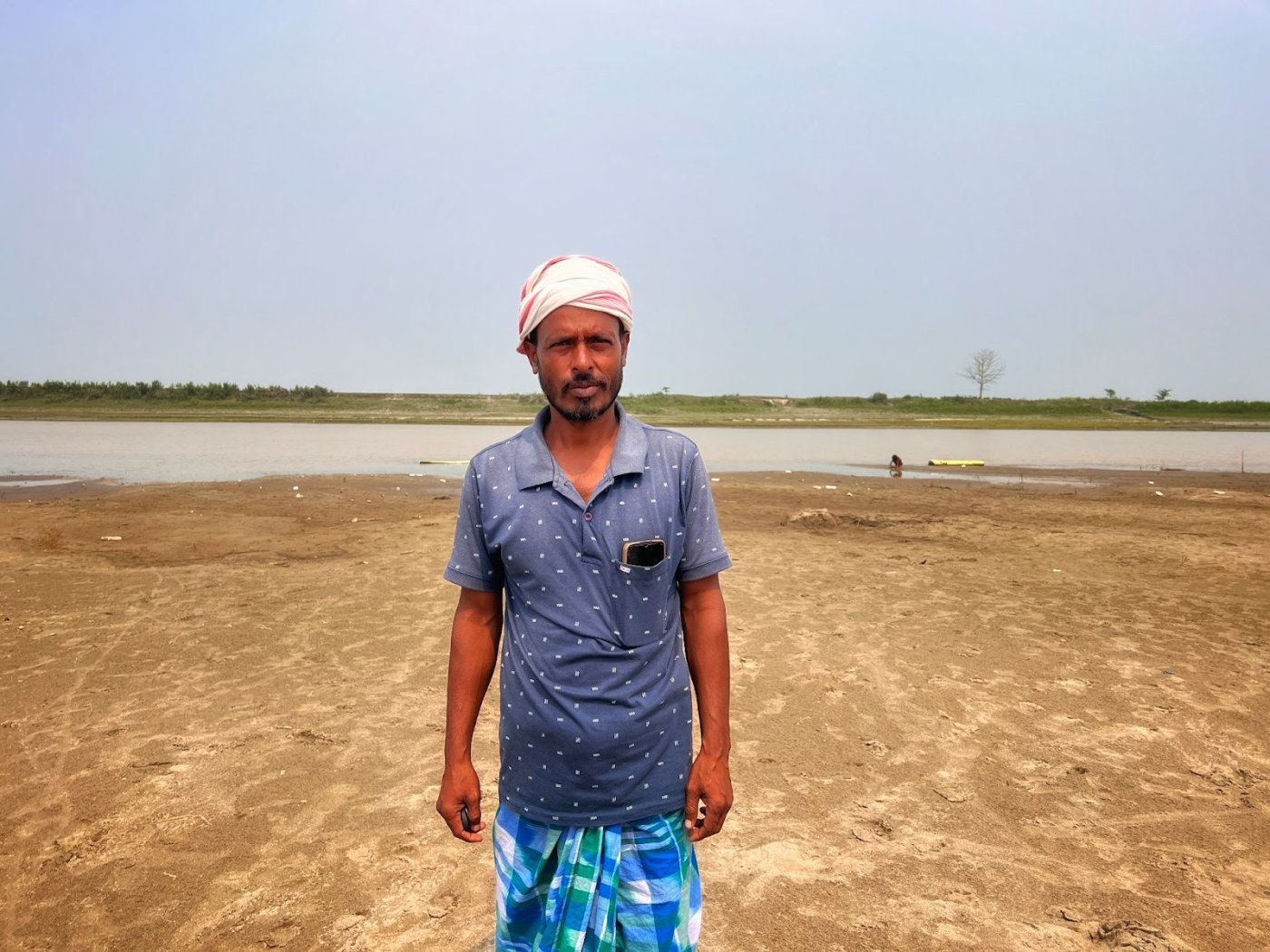
Abul Kalam, 39, stood on a shifting sandbank—locally called a char—in Goalpara district, western Assam. Around his head, he had tied a traditional Assamese gamusa, a thin, handwoven cotton cloth, one of the state’s most recognisable cultural symbols. He wore a faded blue shirt, a phone tucked into his pocket.
"And if they need our votes, why have they not given us a place to live?" said the father of six, describing how workers from multiple political parties had come asking for votes.
Among them: the Raijor Dal, a Congress ally, and the Asom Gana Parishad (AGP)—an ally of the ruling Bharatiya Janata Party (BJP), which oversaw the demolition of thousands of Muslim homes.
Behind Kalam, the Jaljali River flowed, a tributary of the Brahmaputra. The char was once his home. Erosion swallowed his village in 2004, forcing his family of ten to Dahikota Reserved Forest, about a kilometre from the local market.
They stayed for nearly 25 years—until, four months ago, their home was demolished in an eviction drive by the BJP-led Assam government, which described the residents as "infiltrators" encroaching on forest land. The term is shorthand for Bengali-speaking Muslims, the insinuation being that they are Bangladeshi.
Across Assam, thousands of evicted people have found their names missing from the electoral rolls, meaning they cannot vote. Around 97,000 others cannot vote because their names carry the 'D'—or doubtful—voter marker, a designation unique to Assam's citizenship-verification machinery.
Futility Of Documents
At Dubapara Luptachar, some residents faced objections to their inclusion on the voter list during the “special intensive revision” of rolls, on the grounds that they had relocated after being evicted. Some told Article 14 they received notices but had their names retained after hearings.
Assam chief minister Himanta Biswa Sarma has publicly said he encourages party workers to file such objections to trouble “miyas” — a term widely used as a slur against Bengali-origin Muslims in Assam.
Kalam has multiple documents to prove his identity, including a voter ID card, Aadhaar, PAN card, and his name on the electoral rolls. This will be the fourth time he votes. He said his father’s name appeared in the 1966 voter list.
Kalam, whose income has dropped to zero from Rs 600-800 per day after the demolition of his home on 9 November 2025, is one of nearly 600 Muslim families evicted from 1,143 bighas (around 153 hectares) of land in the Dahikata Reserve Forest.
Unable to work due to many health issues and a recent surgery that cost him around Rs 3,00,000, Kalam now relies on his elder brother, a daily wage worker, for food.
Their father, who was unwell at the time of the eviction and had to be brought to the char, about a kilometre away, in a hired car, has since passed away—two days after Article14 visited.
Homeless Before Elections
According to a 24 March 2026 report by The New Humanitarian, published in Article 14, over 20,387 families, or about more than 100,000 people, were displaced and rendered homeless across Assam due to eviction drives between May 2021 and 2026.
As Assam goes to the polls on 9 April 2026, Muslims, who make up 34.22% of the state’s population and were around 31% of the electorate in the last election in 2021, are more embattled than ever.
Apart from thousands without a home, a relentless tide of Islamophobia has flowed downwards from the chief minister (here, here and here), and the number of Muslim-majority constituencies is down from 35 to 29 since the last election in 2021, as Al Jazeera reported on 1 April.
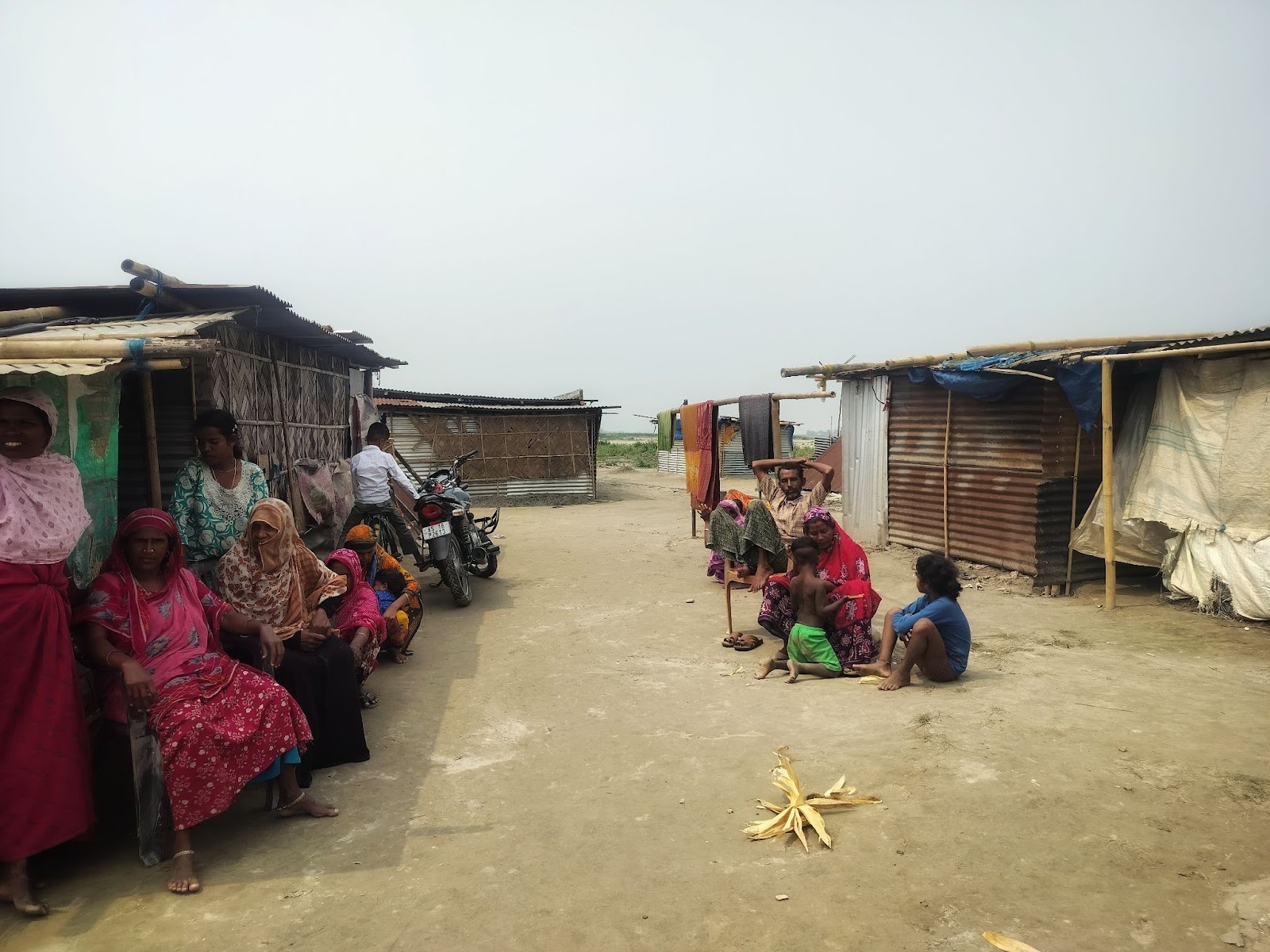
Our reporting shows Bengali Muslims surviving through charities and daily labour, living in tents, lean-tos and on open ground, saying they would vote for anyone who gives them a home. Many were still voters on paper and said they would vote, calling it their right, but added that they had no party preference.
Article 14 spoke to eight residents of Dubapara Luptachar, all of whom said they remain on the electoral rolls, even though they are still without rehabilitation following the eviction.
‘The Govt Broke Our House’
Asiya Khatun, whose husband died during the Covid-19 pandemic, said her family moved from the char to the Dahikata Reserve Forest about two decades ago after erosion swallowed their homes.
“Then, the government broke our house,” she said. She now lives with her daughter, Asma Khatun, and Asma’s two children. Both said they remain on the electoral rolls, adding that, to their knowledge, no one from the char has been removed from the rolls.
Kalam said workers from the AGP said that if voted back to power, they would take up the matter and try to provide relief to the affected families, even though the eviction was carried out under their current government.
“Party workers came—not to ask how we are living, but to ask for our votes,” said Kalam.
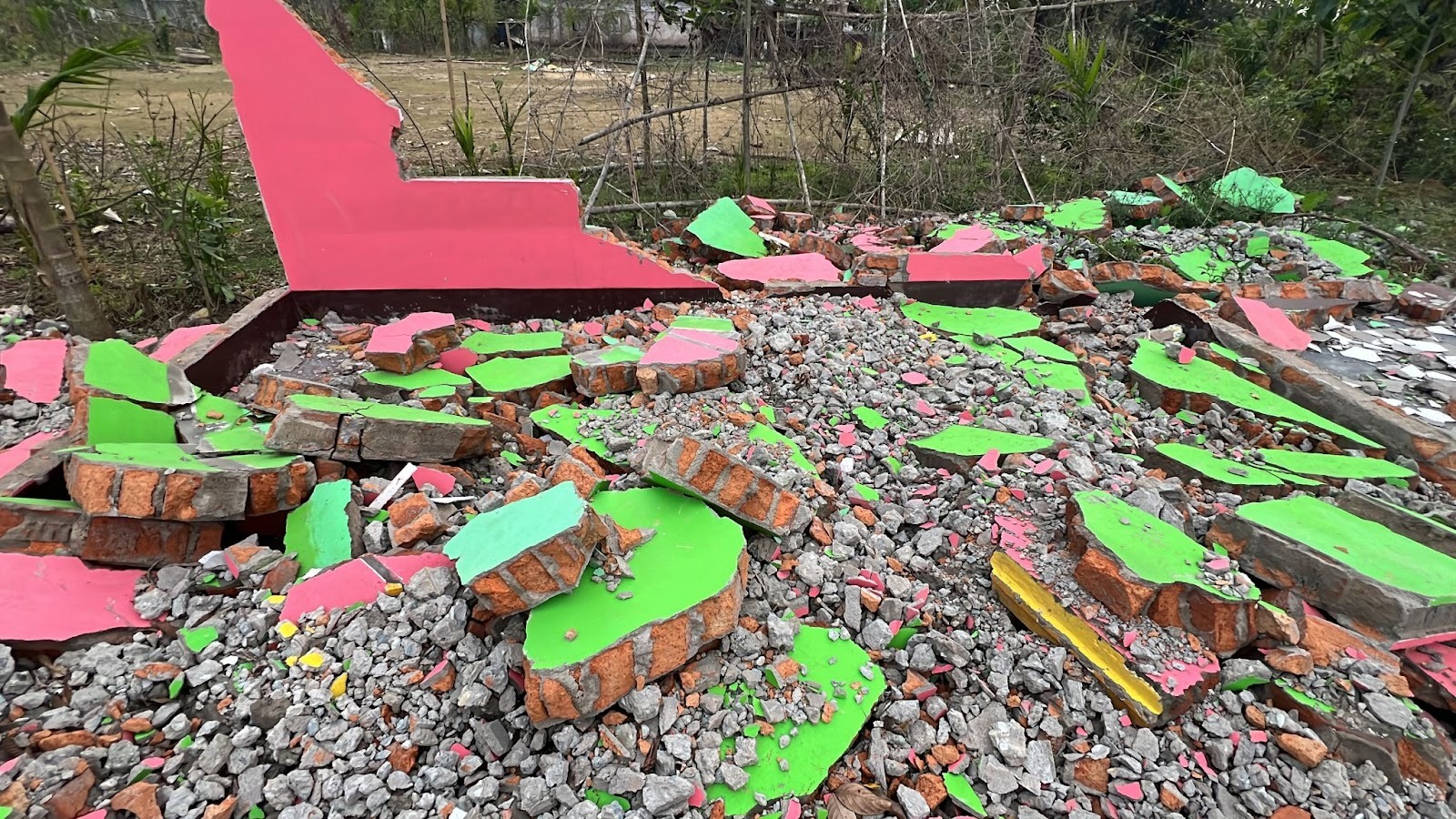
All had greater worries than the election, though. With the monsoon already underway, they feared rising waters would again swallow their makeshift homes of tarpaulin and broken tin.
Homes Demolished, Lives Unsettled
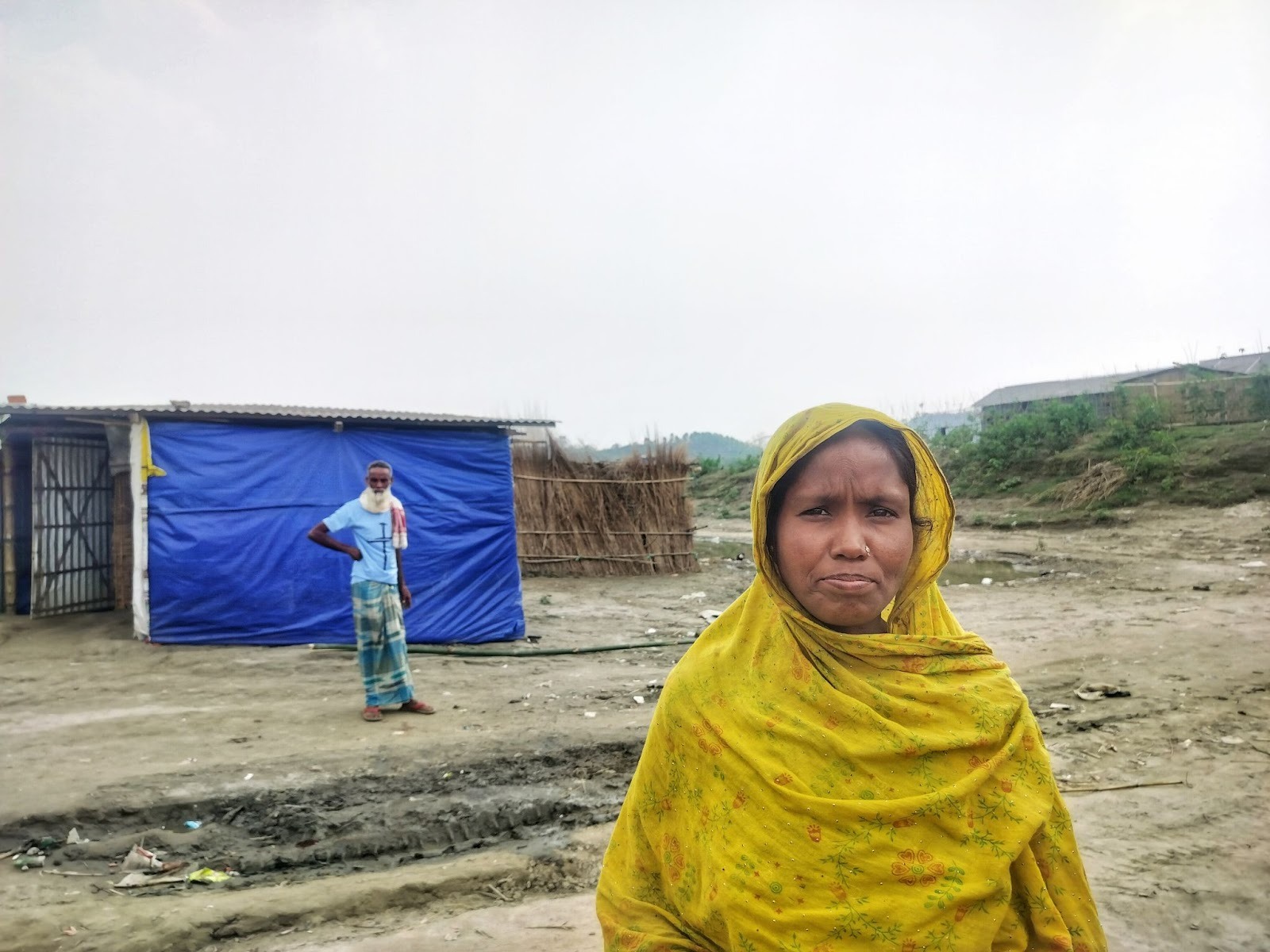
In Dahikata Reserve Forest, the remains of demolished homes lie scattered — slabs and walls broken into jagged pieces, mixed with crushed bricks and rubble. About a kilometre away, the displaced families now live on the char.
The Assam government has often cited judicial backing for its eviction drives.
On 10 February 2026, in Abdul Khalek vs The State of Assam, the Supreme Court allowed the State to go ahead with evictions in notified reserve‑forest areas, while stressing that such exercises cannot be carried out mechanically, particularly where residents claim long‑term settlement, and must involve case‑by‑case consideration, including speaking orders and a 15‑day notice period.
In November 2025, the Supreme Court ruled that demolishing property as a punitive measure is illegal, observing that “bulldozer justice” is unacceptable under the rule of law and that due process must be followed.
However, many residents of Dahikata Reserved Forest, now residing in Dubapara Luptachar, said they were hardly given any notice. Kalam said they were given just a day’s notice.
They managed to move some of their belongings the day before. Kalam estimates his overall losses at around Rs 10 lakh.
Unconstitutional Demolitions
“The issue is not whether the state has the power to evict, but how that power is exercised,” said Guwahati-based advocate Santanu Borthakur. “In many cases, people have been living there for 20 to 30 years with the knowledge of the authorities. Evictions carried out without proper notice raise legal questions.”
On rehabilitation, Borthakur said the absence of any resettlement raises constitutional concerns. “Shelter is part of the right to life under Article 21. Displacing people without providing an alternative undermines that constitutional guarantee.”
For 48-year-old Abu Chufiyan, the question is not just of eviction, but of how many times a life can be rebuilt.
“Just think about it—if the land keeps eroding, how many times will we rebuild our homes?” he asked. “No one would live here at night—not even a dog—and yet we have to. There is no one to speak for us.”
Like others in Dahikata, his family had lived there for over two decades. “We lived there for 25 years. Then the bulldozers came. They broke our homes—tin roofs, water pumps, everything. We could only take what little we could save.”
Four months on, Chufiyan and his family of five continue to live under tarpaulin sheets, without electricity, clean water, and toilets. A recent storm tore through their temporary shelters. “We couldn’t sleep. We can’t fully explain how we’ve been living,” he said.
Despite this, he said, no government assistance has reached them.
“During the rains, the water rises. In winter, it dries and forms sandbars,” said Chufiyan. “That’s why we came here. But when the rains come again, where will we go?”
From Displacement To “Illegality”
Eviction drives in Assam have intensified since chief minister Sarma took charge in 2021, with demolitions covering nearly 160 sq km (about 1.5 lakh bighas) of government and forest land, according to data cited by the chief minister himself during a recent election campaign in Bajali district.
Wazed Ali, secretary of the Goalpara Lawyers’ Association, said, “We do not oppose evictions in forest areas if they are carried out with due process and if those affected are rehabilitated. But that has not happened.”
Ali pointed to persistent disputes over land classification and multiple public interest litigations and writ petitions before the Gauhati High Court.
“There is often confusion between what is revenue land and what is forest land,” he said. “Evictions are carried out without proper demarcation.”
Ali added that a large proportion of those affected in Goalpara are people displaced by floods and erosion. “Many have taken shelter on government and forest land because they have no other option,” he said.
Assam loses an estimated 8,000 hectares of land annually to riverbank erosion, while over 4.27 lakh hectares—about 7.4% of the state’s total area—have been lost to the Brahmaputra and its tributaries since 1950. Nearly 40% of the state is flood-prone, according to the government.
Anthropologist Bhargabi Das, assistant professor at Shiv Nadar University, who studies migration and citizenship in Assam’s char areas, said, “Char populations have always been mobile because of the fluvial nature of the landscape.”
“But what we are seeing now is that environmental displacement is being folded into a narrative of illegality, and eventually, eviction,” said Das.
Das pointed to the increasing intensity of floods and erosion, driven not only by climate factors but also by state-led interventions.
“Floods have become more unpredictable and erosion more rapid,” said Das. “At the same time, embankments and other infrastructure projects, often built without consulting local communities, have altered the river’s flow, sometimes worsening these conditions.”
“As this state-induced systemic landlessness and displacement increases, people are pushed towards government land, grazing reserves and forest areas,” said Das. “Framing them as ‘illegal’ subjects aligns with the dominant political narrative.”
Evictions in Assam are tied to a longer history of migration and citizenship politics. Refugee influxes into the state after 1947, during India’s Independence, and in 1971, during the Bangladesh Liberation War, shaped anxieties around “foreigners,” culminating in the Assam Accord, which set 24 March 1971 as the cut-off date for citizenship.
In 2019, the updated National Register of Citizens excluded around 1.9 million people, leaving their citizenship status uncertain. Critics say these processes have disproportionately impacted the Bengali-origin Muslim community.
Evictions As Electoral Strategy
In the run-up to the 2026 Assam Assembly elections, chief minister Sarma, along with senior BJP leaders, including Prime Minister Narendra Modi and home minister Amit Shah, has foregrounded the issue of “illegal migrants” and “outsiders” in campaign speeches.
Sarma has said that if re-elected, his government would clear five lakh bighas of land of alleged encroachment, pointing to the 1.5 lakh bighas already cleared in the past five years.
He has repeatedly described Bengali-origin Muslims as “encroachers” and “illegal immigrants,” and framed eviction drives as necessary to address demographic change.
BJP’s manifesto in Assam has promised to strengthen the enforcement of the Immigrants (Expulsion from Assam) Act, 1950, to expedite the detection and removal of those identified as illegal immigrants.
In his campaign speeches, Sarma often reiterates a commitment to protecting “jaati, maati and bheti” (community, land and base).
Social scientist Hiren Gohain said, “There is little doubt that by spreading such hatred and alarm on the eve of a fraught election, the Assam chief minister is hoping to sway native Assamese and the tribes to vote for the BJP, no matter what the damage to law and order and social peace in the delicately poised border state.”
Changing Constituencies
Along with eviction drives, changes to electoral boundaries have also reshaped political representation in Assam.
Following a 2023 delimitation exercise by the Election Commission of India, the state redrew the boundaries of its 126 Assembly and 14 parliamentary constituencies using 2001 Census data.
The exercise increased the number of seats reserved for scheduled tribes and scheduled castes, while also altering the composition of several constituencies.
Critics, including opposition parties and civil society groups, have argued that these changes have reduced the number of Muslim-majority constituencies—from roughly 29–35 earlier to around 22—reducing their electoral influence.
After delimitation, Goalpara now has two constituencies reserved for scheduled tribes—Dudhnoi and Goalpara West—compared to one earlier. Goalpara West was previously a Muslim-majority constituency.
Sanidul Islam, a journalist based in Goalpara town, said contests were likely to be closely fought.
“Congress may have a chance in Goalpara East and Jaleswar, but the reserved constituencies will see tougher competition,” he said, adding that Goalpara has historically produced outcomes that do not always align with the party in power at the state level.
According to the 2011 Census, Muslims make up 57.52% of Goalpara’s population, shaping the district’s electoral dynamics. “There is also a sense of fear among people that more evictions could follow,” Islam said.
Raijor Dal candidate Abdur Rashid Mandal, the sitting MLA from Goalpara West who recently left the Congress, is contesting from Goalpara East after delimitation reserved his earlier seat for scheduled tribes.
Asked about claims from the evicted people that political parties had sought votes but offered little assistance after the evictions, Mandal said, “The affected families have received no compensation. Whatever little help they have got is far less than the damage they have suffered. Their anger is justified.”
Back on the char, Abu Chufiyan crosses the Jaljali river every day to graze his cattle, swimming across the water that has shaped his life.
“How can we be Bangladeshis?” he asked.
“Chief minister, you evicted us—that’s done,” he said, making an indirect appeal. “But you are still our guardian. If you take our votes, you are responsible for us. We don’t belong to any party. Whoever gives us land to live on, we will vote for them. We fold our hands—please just give us a place to stay.”
(Sanskrita Bharadwaj is an independent journalist from Assam.)
Get exclusive access to new databases, expert analyses, weekly newsletters, book excerpts and new ideas on democracy, law and society in India. Subscribe to Article 14.