
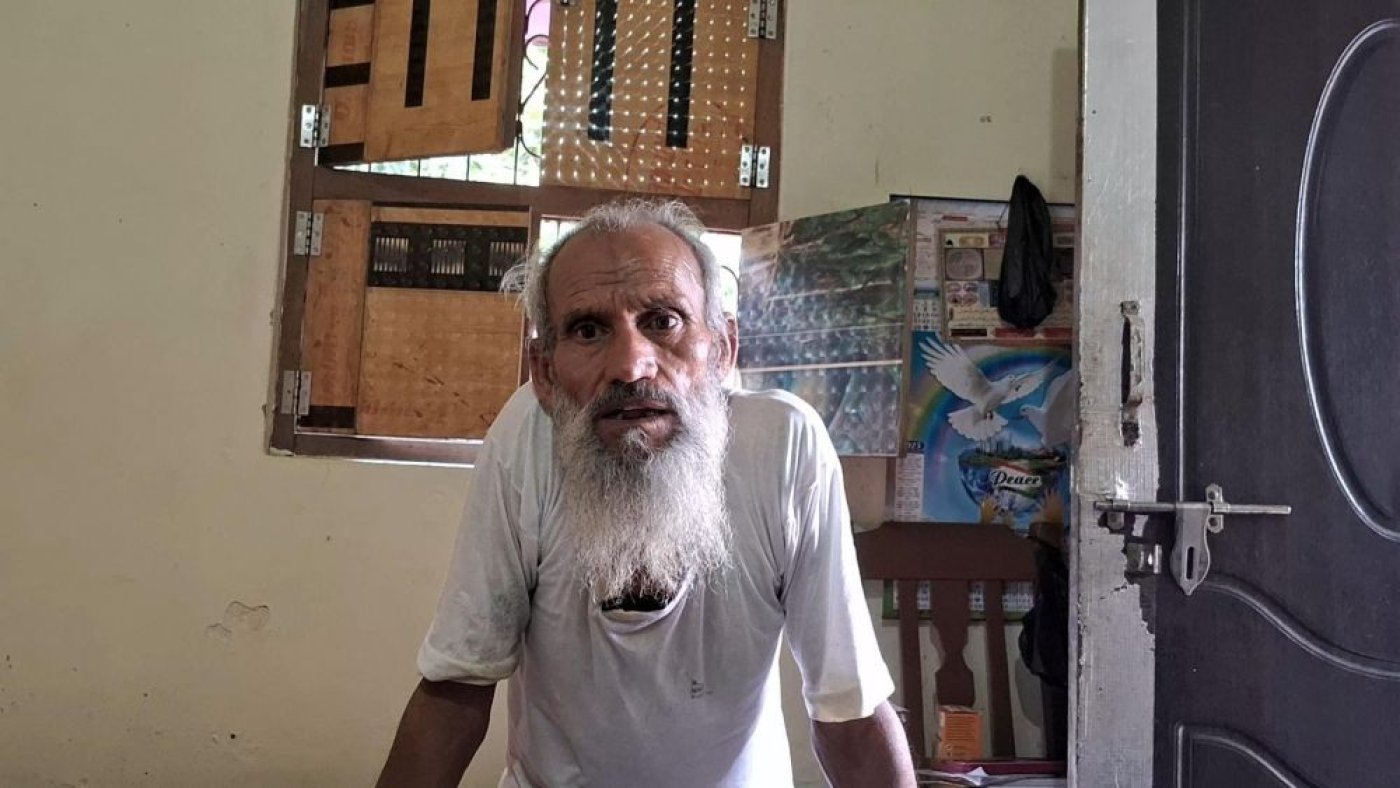
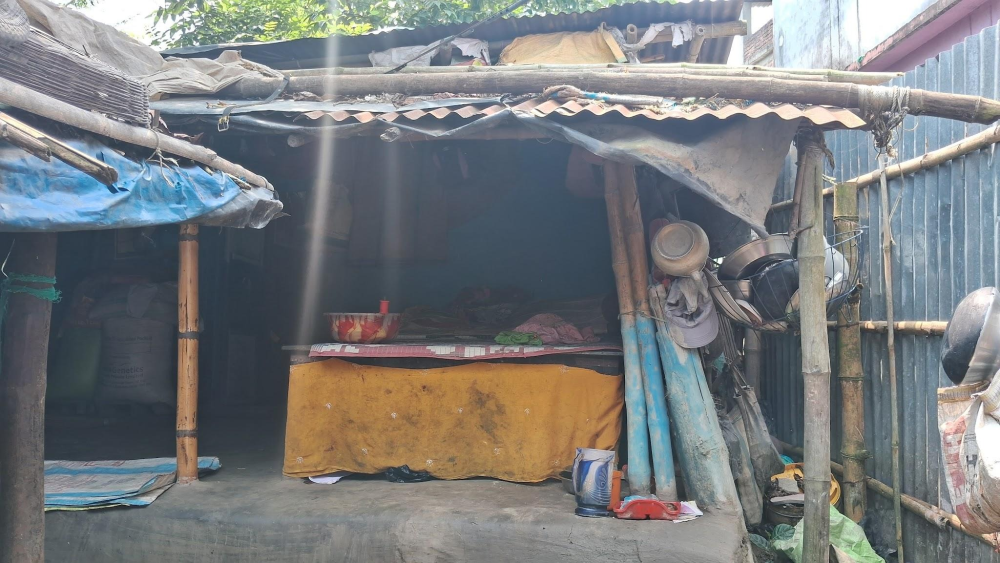
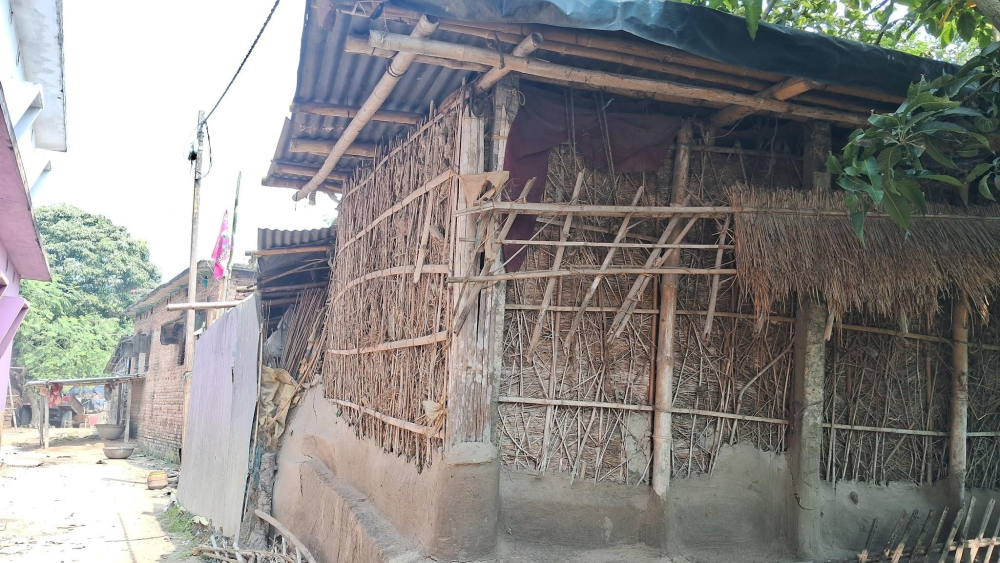
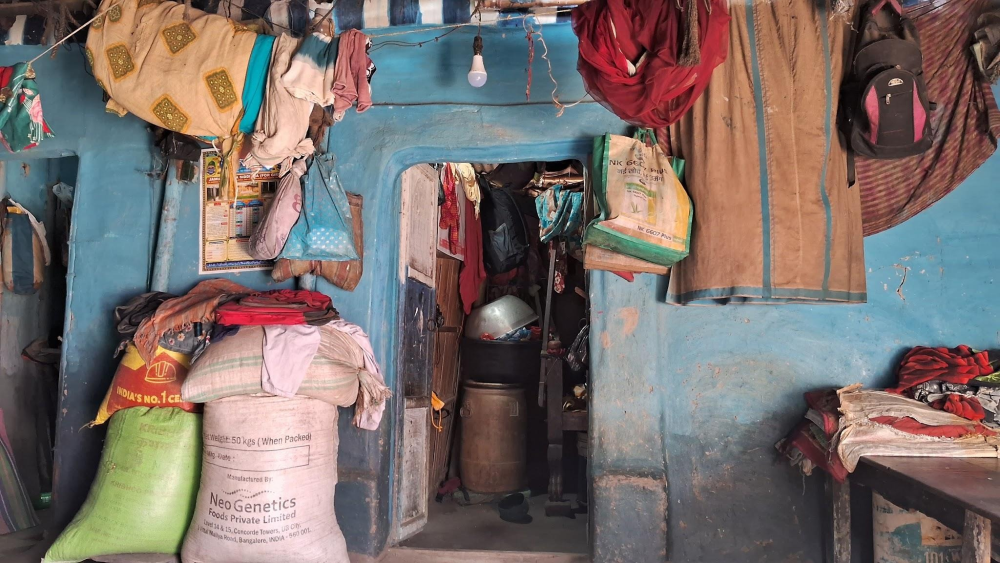
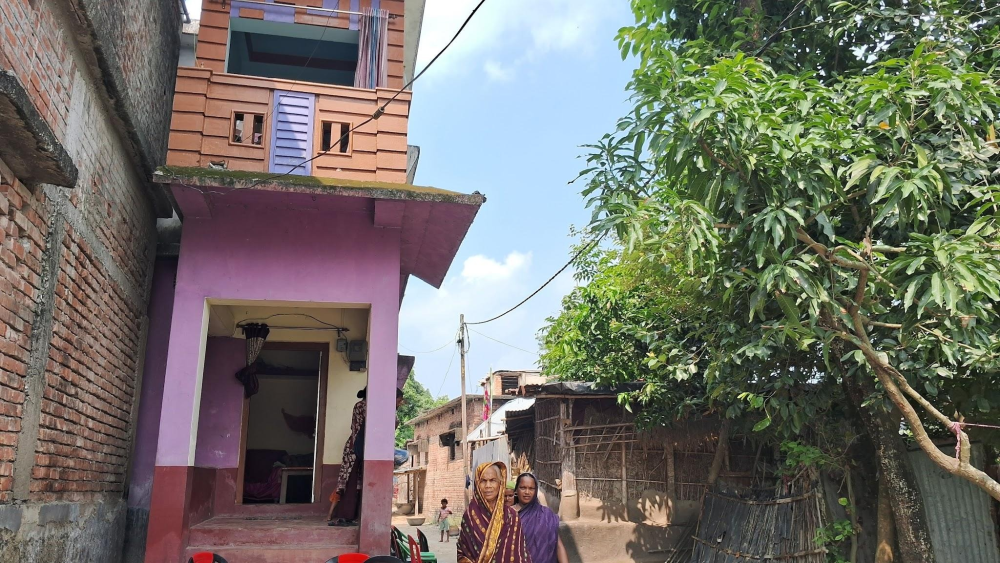
Uttar Dinajpur, West Bengal: In Bagrail village in Uttar Dinajpur district, Jalil Akhtar and his wife, Taupha Bibi, share a small, rickety one-room home made of mud and tin. The couple had a settled life, relying on money sent home by their two sons, daily labourers in Hyderabad.
Then came the night of 19 June 2026, when, Akhtar said, his life was turned upside down after the police picked him up on suspicion of being Bangladeshi.
The 66-year-old spent 87 days being moved between jail and holding centres, where foreigners suspected of living illegally in the country are detained, and was almost deported twice, while his family ran from pillar to post with his documents, trying to prove he was Indian.
Speaking to Article 14 after his release on 15 September 2026, Akhtar described his ordeal.
"It was midnight, around 12.30 or 1. The police arrived quietly. They simply called out to me. I opened the door, and then one of them grabbed me by the shoulder and took me away. They had guns with them. Some six or seven policemen were there. It was just like a kidnapping," said Akhtar.
"There was no conversation. They put me in the vehicle and drove off,” he said. “They didn't let me tell anyone in my house or the neighbourhood. They told me not to utter a single word and to remain completely silent."
Three months later, judicial magistrate Jamshed Shaikh ordered Akhtar's bail, finding that the detention was “unfortunate” and his documents, including electoral rolls from 1995, 2002, 2026, voter, ration and Aadhaar cards, were not “forged or fabricated”.
"At the same time, allegation involving nationality cannot by itself, and without supporting material indicating a concrete threat, justify indefinite detention of an undertrial,” the magistrate wrote.
Akhtar said he and his family cleared the scrutiny of the special intensive revision (SIR), an exercise to verify and update electoral rolls, and voted in the Assembly election. He has land deeds linked to his father, Rousan Ali, and a permanent resident certificate issued by his Gram Panchayat.
"Three months have passed dealing with this precarious situation. It has left me completely shattered both physically and mentally,” Akhtar said. “Our family has never known such pain and despair.”
“I want proper justice. I want to know what the government and the police administration are doing,” he said. “I demand justice for what happened to me.”
Persecution Of Bengali Muslims
Jalil Akhtar's story is not an isolated case.
At least 15 Bengali Muslims have been picked up from West Bengal's border districts like Murshidabad, Uttar Dinajpur, and Malda on suspicion of being Bangladeshi after the Bharatiya Janata Party (BJP) came to power in West Bengal.
Some detainees cleared the SIR and cast votes in the Assembly election.
The BJP government has ordered the tracing of illegal immigrants and announced the construction of holding centres to detain and deport them to Bangladesh.
It directed that police can detain suspected people and need not produce them before any court or Foreigners Tribunal and that they should be handed directly to the border security force (BSF).
Since last year, Bengali-speaking Muslim migrant workers have also been detained in other BJP-ruled states including Chhattisgarh, Maharashtra, and Rajasthan.
In Congress-ruled Karnataka, police detained them during a special drive, “Operation Mukta”, directed by the Bengaluru city police commissioner.
Motiur Rahman, a retired teacher and Akhtar’s neighbour, said, "This kind of injustice is happening all around. That police officer said one shouldn't argue—that the 'government has changed'. My point is, just because the government has changed, does that mean our Constitution has changed too?”
Looking For Akhtar
Akhtar's wife Taupha Bibi said, "When I woke up in the morning, I did not see him. I thought he had gone to offer fazr (morning prayer), but I saw his kurta hanging on the rope. I found it strange because he never goes to offer prayer without wearing his kurta."
Rahman began a search.
"His wife was crying inconsolably,” said Rahman. “I gathered some people from the neighbourhood, and we started searching–after all, where could an elderly man possibly go?”
After a fruitless search, Rahman called the police camp in Bazargaon, a village six kilometres from Bagrail village, where the police informed him that a Bangladeshi national had been detained the previous night.
Rahman then went to the police station in Dhalkola, a town 25 km from Bagrail.
The officer explained that the individual suspected of being a Bangladeshi had been brought in, adding that if verification established that he was not Bangladeshi, he would be released shortly.
Exchange With A Senior Official
After being picked up from his home, Akhtar was held at the Bazargaon police camp and then taken to the Chakulia holding centre, 18 km from his village, where, he said, he and six others were kept for 15 days.
"I repeatedly asked why I had been brought there. They didn't tell me,” he said. “The person handling the paperwork there asked for my age and then questioned why I had been brought in if I possessed the necessary documents.”
“I told him I didn't know why I had been brought there. He then mentioned that I had been declared a Bangladeshi national,” he said. “I replied that I was not Bangladeshi and that I had all my documents."
The officer handling paperwork initially didn't file a case because Akhtar told him he had all his documents and even mentioned he had cleared the SIR and voted, Akhtar said.
"He asked if I had a voter ID card. I told him I did, but it was at home, and he asked if I could have it brought over. He then handed me his mobile phone and told me to call someone at home and send a photocopy,” said Akhtar. “Then, after checking my voter card and searching the computer, they confirmed that I had indeed voted here.”
“Initially, the officer said he wouldn't file a case,” he said. “However, after some exchange with a senior officer near the doorway, he proceeded to register the case against me and declared me a Bangladeshi."
Blindfolded & Pushback
Akhtar alleged the police tried to forcefully make him say that he was a Bangladeshi and made two attempts to deport him.
"After fifteen days in Chakulia holding centre, I and six other people were taken to Kaderganj holding centre and from there to the border at night, where we were handed over to BSF for pushback,” he said. “I don't know which border it was or where exactly we were. It was night, and they blindfolded everyone.”
“They pushed the other six, but they couldn't do the same to me because I clung to their feet, pleading that I wasn't Bangladeshi and had no one there," he said.
Akhtar said that the BSF verified him as Indian and the police took him back to the Chakulia holding centre after five days.
"I stayed there for another week. Here, the police tried to intimidate and frighten me and were forcing me to admit that I was Bangladeshi,” he said. “They kept asking who I had there and where my home was."
A Second Attempt
Akhtar said the police took him back to the Kaderganj holding centre to try and push him into Bangladesh again.
This time, they did not blindfold him.
Akhtar said that when he asked a BSF officer where he was being taken, he was told Baharail.
Baharail is a village in Uttar Dinajpur, a few kilometres from the India-Bangladesh border.
Upon reaching the centre, Akhtar said BSF personnel remarked that they had sent him away just six days earlier and questioned why he had been brought back.
The Dalkhola police subsequently filed an FIR (first information report) under the Immigration and Foreigners Act, 2025, which said Akhtar was a resident of "AndhaRahamatpur" village in Thakurgaon district, Bangladesh. He entered India illegally about 24 years ago and settled here.
Akhtar told us that was false and fraudulent.
"I spent one night there, and the next morning, I was taken back to the Chakulia holding centre. After staying there for another week, a senior police officer from Dalkhola police station told me I had to go to Islampur (a town 60 km from Bagrali village) for a court hearing,” he said.
No Contact
Akhtar said he was not allowed to contact his family for about a month.
"I told the police that no one in my family even knew where I had been or what I was doing all this time. They were completely unaware that I was being taken to the Islampur court,” said Akhtar.
“I asked them to call my home so my family would know I was being taken to court. I spoke to my brother and told him where I was. My brother said they were already on their way to the court. That is where I saw them for the first time after such a long while," he said.
"A lawyer was arranged for me. I was told I would have to go to jail for one week,” he said. “Those seven days in jail eventually stretched into two months."
Ahmed, his lawyer, said the police attempted to delay hearings
by submitting different reports about the identity documents they had submitted for verification, seeking multiple extensions and delaying the start of the hearing.
The Rules
Under guidelines in a 2025 union government notification, the Immigration and Foreigners Order requires a Foreigners Tribunal to serve the detainee with a show-cause notice in English and the regional language. The notice must state the grounds of the allegation and inform them that the burden of proving that they are not a foreigner rests on them. They are given 10 days to produce evidence and may appear before the tribunal in person or through counsel.
They may also be released on bail upon submitting the required documents. If they fail to establish that they are not foreigners and cannot arrange bail, they may be detained in holding centres. The tribunal must decide the case within 60 days.
West Bengal has never set up any Foreigner Tribunals, quasi-judicial bodies that operate in Assam and decide whether a person should be declared a foreigner.
On 31 August, a Supreme Court bench of Chief Justice Surya Kant, Justice Joymalya Bagchi and Justice V. Mohana said that in the absence of Foreigner Tribunals in Bengal, alleged illegal migrants could approach a judicial magistrate for bail.
‘These Are All Lies’
The FIR said that Akhtar said that he had come from Bangladesh, worked as a rickshaw puller in Delhi, married in West Bengal, and stayed as a “ghor jamai” (stay-at-home son-in-law).
He said the police invented this account.
"These are all lies, and a conspiracy by the police. We were all born right here. I have never been to Delhi or Bangladesh. Back then, Bangladesh didn't exist,” Akhtar said.
“During the 1971 conflict, I was staying at my nana naani’s (maternal grandfather and grandmother) house. That is where I married my wife. She had no other family, just her mother and grandmother. Everyone knows that," Akhtar said.
"Everyone here knows about the work we used to do. We worked for one paisa back then, labouring for two days for that single penny. Over the years, that rate rose to two paise, then five,” he said.
Family & Friends
His sons, Tariq and Tahir Anwar, were daily wagers in Hyderabad and couldn't come to meet their father because the journey would have cost money they didn't have, and they couldn’t risk losing earnings.
Akhtar's elder daughter, son-in-law, his neighbour, and a few villagers gave testimony in court.
He said that a family had to bribe the police to visit any detainee, especially if someone is labelled as a Bangladeshi.
"My daughter, son-in-law, and brother made many efforts to visit me in jail. However, since I was declared a Bangladeshi national, they wouldn't even allow a meeting at the gate,” Akhtar said. “Permission was simply denied.”
“They would only allow a visit if a sum of money like a thousand or eight hundred rupees was paid,” he said. “How could a daily wage labourer possibly afford such an amount?"
"All that travelling back and forth; it costs a fortune,” he said. “My son-in-law somehow managed to scrape together the money to visit the jail. But in this day and age, where would one find that kind of money?”
(Antara Swarnakar is an independent journalist from West Bengal, reporting on human rights, crime, climate and the environment.)
Get exclusive access to new databases, expert analyses, weekly newsletters, book excerpts and new ideas on democracy, law and society in India. Subscribe to Article 14.