
Murshidabad: Standing against a brick kiln wall smeared with Lakshmir Bhandar graffiti in Murshidabad’s Chhabghati village, Afsana Begum, 30, held the hem of the black-and-white dupatta draped over her head. She spoke in a tone that suggested she had just fought an intense psychological battle.
“Those 14 days did not feel like 14 days,” she said. “They felt like 14 years.”
Afsana Begum’s husband, Alauddin Sk, was among 23 Bengali-speaking Muslim migrant workers from West Bengal’s Murshidabad district detained in Chhattisgarh by Raipur police on 4 September. All 23 had found their names deleted in the March 2026 Special Intensive Revision (SIR) of electoral rolls in West Bengal, the apparent basis of police suspicion that they were undocumented Bangladeshi nationals.
Police released 19 of the 23 from detention on 18 September. These men had their names restored in the electoral roll after an adjudication process in April.
At least three of the 19 even voted in the April 2026 Assembly election. The remaining four men, whose appeal seeking restoration of their names is pending before a tribunal, continued to be kept in a Raipur holding centre for suspected undocumented foreigners for over a month. They were finally released on 7 October.
On 6 October, the Calcutta High Court, hearing a petition (WPA 28565 of 2026, Mostakim Sk Vs The Election Commission of India & Others, filed on behalf of Nasiruddin Sk, Laltu Sk, Sadiqul Islam, and Shafiq Sk), asked how the Foreigners Regional Registration Officer (FRRO) in Chhattisgarh could determine the nationality of the four men whose appeals against the SIR deletion were to be heard by an appellate tribunal.
Justice Krishna Rao directed the detained men’s counsel to implead the Chhattisgarh FRO as a party.
‘You Are Playing With… Lives’
“If your authority is simultaneously deciding [the issue], what will the Appellate Authority do?” Justice Rao asked. “You are playing with people's lives.”
During the hearing, counsel for the detained men submitted that their parents’ names appeared on the electoral rolls, including in the 2002 rolls. The parents had voted in the April 2026 Assembly election.
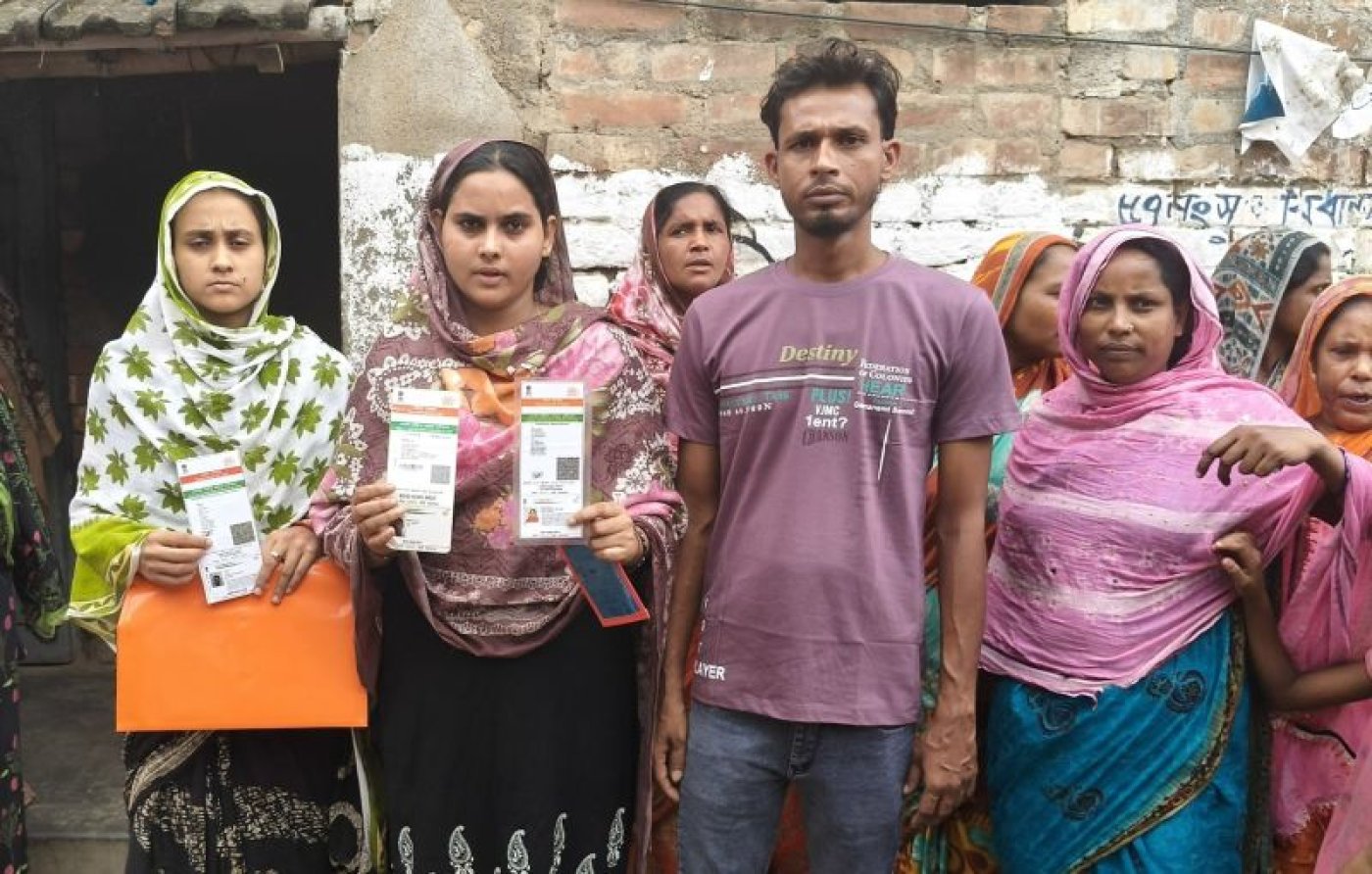
In Chhabghati village, Afsana Begum, a 30-year-old mother of two, described the weeks of uncertainty and humiliation while her husband was uncontactable. She spoke in Bengali, with a smattering of Urdu words, her hands moving emphatically.
Police summoned Alauddin Sk and 22 others, all itinerant vendors, from their rented accommodation in Bilaspur city’s Chunchiapara-Ganesh Nagar neighbourhood to Sirgitti police station, 7 km away.
At Sirgitti, police bundled the men into a police van and took them to Bilaspur’s Civil Line police station and, from there, to a holding centre in the state capital of Raipur, 140 km away, where they were detained until 18 September.
Sirgitti police personnel gave no reason to the mahajan (labour contractor) when they summoned the men over the phone. It was routine for the migrant workers to be summoned to the nearest police station for verification, an increasingly common occurrence since the May 2025 terror attack in Pahalgam, in Jammu and Kashmir, and Operation Sindoor, the subsequent military response by India.
Only at the Civil Line police station, when they learned they would be transported to the Raipur holding centre, did they start asking why. Officers told them they were being taken in for questioning.
Article 14 emailed the station house officer, Sirgitti police station; the city superintendent of police, Civil Line police station; the superintendent of police, Bilaspur; the director general of police, Chhattisgarh; and the state’s deputy chief minister and home minister, seeking comment.
We sent reminders on 3 and 4 October, asking what the grounds for suspicion had been, and whether the SIR deletion was the basis for their detention. We received no response.
Held As Illegal Immigrants
At the Raipur holding facility, a woman officer they addressed as “jailer madam” explained to them that they were being held as suspected Bangladeshi illegal immigrants; the men told Article 14. They said the van driver had used the same term.
Sabera Khatun, 25, standing opposite the Chhabghati Masjid, rushed in to join the conversation after hearing that a journalist was interviewing families of the men held in detention for 18 days. Her husband called her on 5 September, around 9 am.
“He said we would not be able to talk anymore,” Sabera Khatun said. Her husband, Laltu Sk, 28, asked her to find somebody who could help. “He said that there would be no more communication with me.”
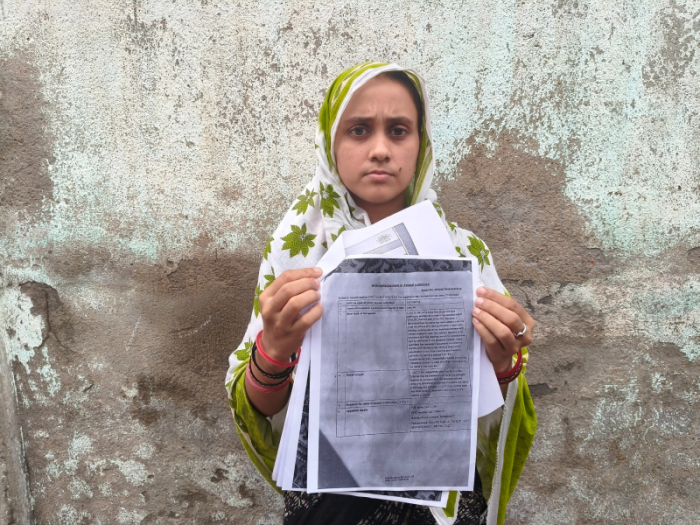
On 3 October, her husband was still in the holding camp. “I miss him; I feel so helpless and lonely,” said the frail bidi worker, a young mother of twin daughters. Her voice faltered as she spoke, and tears filled her large eyes.
Over the phone on 3 October, the mother of two sons and twin girls was inconsolable. “It has been almost a month since we heard anything from my husband,” she said. “Can anyone help us?”
The detention of the 23 men failed to follow due process well established by law—an arrest memo, a hearing before a magistrate within 24 hours of arrest, and legal aid.
Violating Supreme Court Orders
West Bengal’s March 2026 SIR left 2.7 million registered voters awaiting adjudication by tribunals.
With the state government conflating electoral roll revision with citizenship, those excluded by the SIR now face loss of personal liberty as well as exclusion from government welfare schemes—despite the Supreme Court holding that the removal of a person’s name from the electoral roll does not automatically result in the loss of their citizenship status.
The case of the Murshidabad migrants detained in Chhattisgarh is only one of dozens of similar cases. Starting in June 2026, 66-year-old Jalil Akhtar from Murshidabad spent 87 days in jail and holding centres and was almost deported twice before being released.
In July 2026, Sahida Fakir from North 24 Parganas, who migrated to Mumbai 20 years earlier, was forcibly deported to Bangladesh. On 17 September, the Calcutta High Court sought an explanation from the West Bengal government for Sahidul Sk's detention since August.
His family said he had cleared the SIR and had even voted in the April 2026 Assembly election. Justice Saugata Bhattacharya ordered the state to explain the basis of its action, and questioned the prolonged confinement without stated reasons.
Fears Of Losing Their Country
For all of them, the SIR has sparked a saga of suspicion, weeks of illegal detention, exclusion, and fear of statelessness.
Article 14 met eight of the 19 workers released from a Raipur facility and their families in Kumarpara in Murshidabad’s Suti II block. The others were from neighbouring Suti I and Raghunnathganj blocks under Jangipur subdivision, also in Murshidabad.
On 30 September, Trinamool Congress Rajya Sabha MP Samirul Islam wrote on X that the four men still detained in Raipur were awaiting adjudication following the SIR deletion. He wrote that this led the Chhattisgarh police to suspect they were Bangladeshi nationals.

In a post on X on 8 October, Islam wrote that although the Chhattisgarh administration had sought a verification report from the Murshidabad district magistrate, the West Bengal government failed to furnish the report.

2 Weeks Without A Call
Afsana Begum’s ordeal began on the evening of 4 September, when her husband called. The police had sent word through their mahajan, summoning all 23 migrant workers to Sirgitti police station.
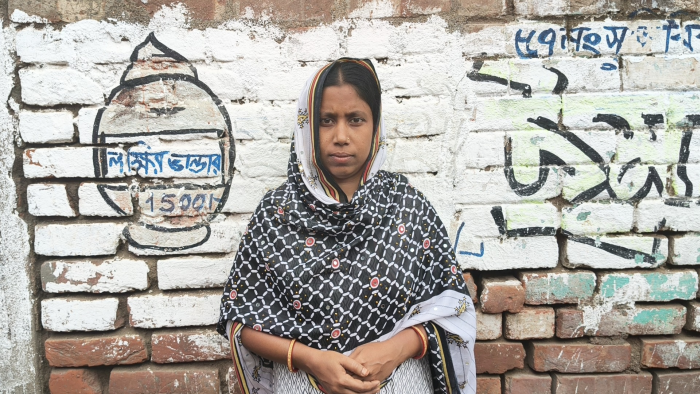
Around 10 pm, he made a video call. “Look, we are eating at the police station,” he told her. Afsana Begum’s heart sank. “They have gone to the police station many times on being summoned, and they never gave them food before,” she recalled.
Rahul Khan, a Kumarpara resident who has worked in Bilaspur for nearly 12 years, said migration to Chhattisgarh has long been a practice among families in his village. His father had lived and worked in Bilaspur and had died there. “We all went there together from here—our neighbours, everyone in our locality,” Khan said.
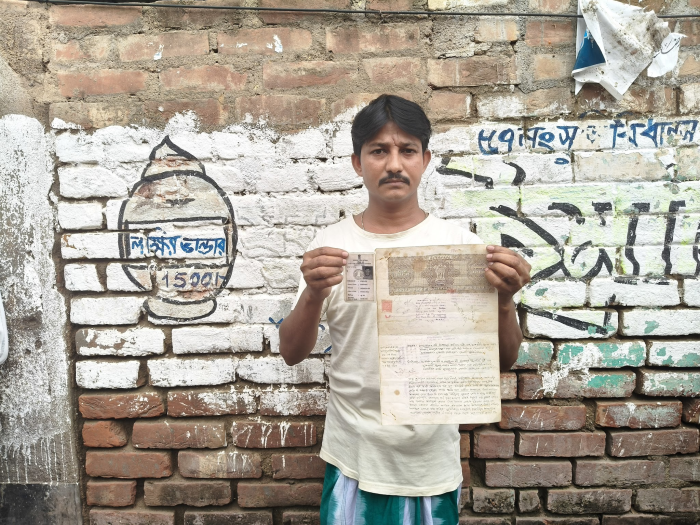
Migrant workers routinely submitted identity documents including their Aadhaar cards and photographs for police verification and were issued what they called a musafirnama—a Hindi-language registration document bearing the house owner’s details, room number and a police stamp.
“Everyone from our village has these papers,” he said. In recent years, workers were even required to appear in person for verification. “We did everything we were supposed to do. But this time they detained us.”
Around 8 am the next day her husband called again, the last call for the next two weeks. They confiscated the workers’ phones before taking them to the holding camp in Raipur.
Between 5 September and 18 September, the families received no information of the men’s whereabouts. “We had no proper food, no sleep, no peace of mind. We were not mentally well,” said Afsana Begum.
Her husband's next call came on 18 September, after the men were released.
Summoned, Detained Without Procedure
Alauddin Sk, 35, shared a room and toilet with seven other Kumarpara migrant labourers in Chuchuhiyapara. The men split the Rs 10,000 rent, took turns cooking rice and lentils, and sent the rest of their earnings home.
Alauddin Sk worked as a pheri (itinerant) seller, buying pots, utensils, vessels and other sundry items wholesale and selling them from house to house and village to village. He earned roughly Rs 15,000 a month, with daily earnings ranging between Rs 500 and Rs 800.
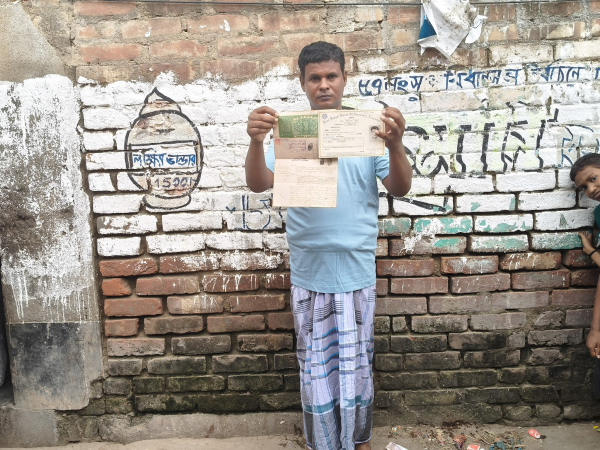
“Four men came to pick us up in plain clothes,” he told Article 14, wearing a light blue T-shirt paired with a lungi, still shaken by the ordeal but remaining composed. For the two weeks he could not be contacted, his wife, mother, sister, a pre-teen daughter and a teenage son in Chhabghati remained on tenterhooks.
The policemen spoke to the workers’ mahajan, Zakir Haque. That was around 4 pm. They left, instructing the mahajan to bring the workers’ group to the Sirgitti police station later, with their documents. Three hours later, the mahajan received a phone call and the men made their way to the police station, approximately seven km away.
Though the Supreme Court laid down safeguards for citizens being arrested as far back as 1996, none were followed. There was no arrest memo produced for the 23 men held for two weeks; the workers were not produced before a magistrate; no relative or friend was informed; no medical examination was conducted; and the men were not provided access to legal aid—all expressly laid down in the landmark D K Basu Vs The State of West Bengal.
Any person arrested and detained in custody must be produced before the nearest magistrate within 24 hours of arrest, excluding the time necessary for the journey to the magistrate’s court, Calcutta High Court advocate Raghunath Chakraborty, who works on repatriation and cross-border deportation cases, told Article 14.
“In this case, however, the workers were effectively arrested: they were picked up and detained without any apparent lawful procedure or documentation,” he said. “Describing the action as a ‘pickup’ cannot be used to circumvent the safeguards that apply to an arrest.”
Even if the ministry of home affairs (MHA) guidelines concerning the identification and handling of persons suspected of being foreign nationals were applicable in this case, police could not justify taking the workers into custody and detaining them without a documented legal basis and without following the safeguards applicable to arrest and custody, Raghunath Chakraborty said.
The manner of their detention, he added, raised serious concerns under Articles 14 (equality before law), 19(1)(d) (the right to move freely anywhere in India), and 21 (protection of life and personal liberty) of the Indian Constitution.
“Even if the workers were suspected of being Bangladeshi nationals, they could not be deprived of their liberty arbitrarily,” the advocate said.
‘You Could Be Bangladeshi’
Between 5 September and 18 September, the 23 men had no contact with anyone outside the holding centre.
Officers at Civil Line police station said they would question them and release them. “But when we got there, they straightaway put us into that detention camp,” said Rahul Khan, 31, his hair parted in the middle, wearing a cream-coloured shirt over a tie-and-dye lungi.
Run by the Chhattisgarh Prisons and Correctional Services Department, the holding camp is located within the Raipur Central Jail complex. Mostakim Sk described it as a 40-45-foot-long room, about 18 feet wide. The 23 Murshidabad men were housed there with three other inmates, all in a single room with one door and one window.
Speaking to Article 14 on the phone, Mostakim Sk said it was the van driver who first told them to anticipate a long detention as suspected “Bangladeshis”.
A woman official at the holding centre later reinforced the message, whom he referred to as “jailer madam”. He said four other officials, including a senior officer, would take turns checking on the detainees and arranging their food.
In Murshidabad, Azgar Sk, 46, who has worked in Chhattisgarh for 17 years, also recalled that the suspicion of them being illegal immigrants was expressed explicitly.
“The jailer told us, ‘You are from Murshidabad; you could be Bangladeshi,’” he said.
The woman official at the holding camp told them they might have to stay for six or seven months unless they had someone with connections who could help secure early release, Azgar Sk said.
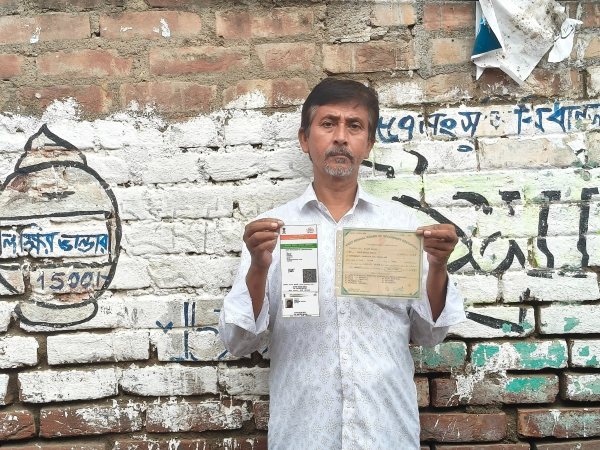
Mostakim described the 14 days in detention as being like a caged bird, “jaise pinjre mein qaid panchi”.
Local Police Waited For An Email
By 6 September, news of the detention had spread through the village. “The ground had disappeared beneath our feet,” Afsana Begum said.
Families approached local journalists, police, the block development officer (BDO) and the pradhan (the elected village chief). At Suti police station, about seven km away, officials told the families no action could be taken until the Chhattisgarh police sent an email.
“We are residents here, and our own police station is telling us that they will act only when an email comes from there,” Afsana Begum said. “When will that email come from there? When will something be done about our husbands?”
On 17 September, the BDO sought the names and documents of 16 people from family members and asked them to furnish them immediately. Families submitted voter cards, Aadhaar cards, PAN cards, ration cards, school-leaving certificates, and acknowledgement records of their appeals against deletion in the SIR with the tribunal.
The families said they had already suspected the detention was due to the SIR deletion. They had been constantly seeing social media content regarding detentions and deportations of Murshidabad citizens. “I learnt everything from YouTube,” said Sabera Khatun, “how they were targeting Muslims from Murshidabad.”
Article 14 emailed the office of the superintendent of police, Jangipur police district, and the officer-in-charge, Suti police station, seeking comment. We sent a reminder on 4 October. However, we did not receive a response from either.
Thousands Similarly Vulnerable
Bilaspur Senior Superintendent of Police Rajnesh Singh told The New Indian Express that authorities released 19 of the 23 men after verifying their names against voter lists, electoral rolls, local administrative records, records of legacy link to father’s/mother’s/grandfather’s name in the 2002 electoral roll, and documents, such as ration, voter card, Aadhaar, school-leaving certificate, bank passbooks, photo voter slips, SIR application forms, tribunal appeal forms, as applicable, that established their permanent residence.
West Bengal's SIR deleted or placed as many as 9.1 million voters’ names in the “under adjudication” category, about 12% of the state’s 76 million voters. This included deletions across different categories, including voters classified as dead. .
Of the 60.06 lakh voters placed under adjudication, 27.16 lakh were subsequently deleted after being found ineligible.
Muslims accounted for 3.11 million, or about 34%, of those deleted or placed under adjudication, considerably higher than their 27% share in the state’s population according to the 2011 census.
In Murshidabad district alone, The Wire’s analysis of the final electoral roll found that more than 1.1 million electors were placed under adjudication. Of these, 455,137 were later found ineligible, the highest such figure among Bengal’s districts. In Jangipur, one of Murshidabad’s Assembly constituencies, 75,720 electors were sent for adjudication, and 36,581 were subsequently marked not eligible.
Excluded As Voters & Beneficiaries
In an unprecedented move, and contrary to the Supreme Court’s observations that the SIR data could not be used to render citizens ineligible for government welfare schemes (see here and here), West Bengal’s first Bharatiya Janata Party government, under chief minister Suvendu Adhikari, has linked state social protection schemes with the electoral roll revision.
In May, days after the government was formed, minister for women and child welfare Agnimitra Paul was quoted as saying women whose names were still being verified by tribunals for inclusion in the electoral rolls would not be beneficiaries of a key welfare scheme.
The Annapurna Yojana, a cash-payment scheme for women, was launched on 1 June to replace the former Trinamool Congress-run government’s Lakshmir Bhandar scheme.
On 17 June, the Supreme Court observed that removing a person’s name from the electoral roll after the SIR exercise does not automatically result in the loss of citizenship.
The West Bengal BJP government, however, has appeared to conflate electoral roll status with citizenship.
After the first tranche of welfare payments under the Annapurna Yojana was released, Adhikari said on 1 July that 1.6 crore applications had been received and 2.6 million rejected because their citizenship and domicile status were in doubt. He said taxpayer money could not be transferred from government coffers to non-Indians.
In Kumarpara, Ruby Bibi, 35, a bidi worker who earns a meagre sum of Rs 50-Rs 200 a day for rolling 1,000 bidis in a 12-hour shift, was among those deleted from the electoral rolls.
With a light pink floral-patterned dupatta draped over her head and a blue plastic bangle on each wrist to match her blue salwar kameez, Ruby Bibi was among several women in Chhabghati who were suddenly removed as Annapurna Yojana beneficiaries.
“Every month, with the Lakshmir Bhandar money, we could buy a kilogram of meat on a Sunday for the children, and have something better to eat,” she said. “Occasionally, we could buy clothes for the children or for ourselves.”
Ruby Bibi maintained eye contact steadily as she spoke, smiling softly only after resting her case.
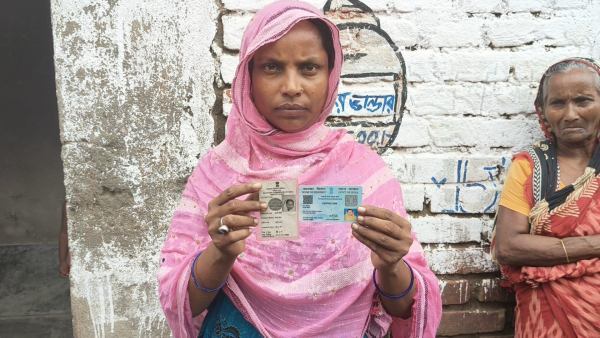
A native of Kumarpara, Ruby Bibi’s husband, Mintu Sk, went to Bilaspur on 5 September to return to his street-vending work, but rushed back to Murshidabad upon hearing what had happened.
For nearly a decade, he could earn Rs 500 a day as an itinerant daily wage-earner in Bilaspur. Without that work, he has borrowed, but is unsure how to sustain their “Bandhan Bank micro-loan instalments”.
“The ill-thought-out, poorly designed, and mechanically and unthinkingly implemented SIR is the cause of all such problems,” said Venkatesh Nayak, director at the Commonwealth Human Rights Initiative (CHRI) India, an international non-profit organisation working on research and advocacy.
Courts must step in to prevent such occurrences and adequately compensate citizens for lost liberty and livelihoods, Nayak said. Governments must “impress upon the law enforcement agencies not to compound the errors that the electoral bureaucracy is making under the directions of an uncaring and stubborn Election Commission of India”, Nayak said.
Jangipur’s Member of Parliament Khalilur Rahaman (formerly with the Trinamool Congress, and among the 20 Lok Sabha MPs who defected from the party after the 2026 poll verdict), who was instrumental in facilitating the release of the 19 men, said Indian citizens enjoy the right to migrate to any part of the country for livelihoods.
“Why should they be treated in this discriminatory manner and subjected to an inhumane ordeal simply for speaking in their mother tongue, Bangla, and for being Muslims?” asked Rahaman.
“Detect, Delete, Deport”
On 20 May, chief minister Adhikari announced a plan under which state police would identify and arrest undocumented immigrants and hand them over directly to the Border Security Force (BSF). Three days later, on 23 May, the government directed all districts to set up holding centres, delivering on its election pledge to crack down on infiltrators.
The Union Home Minister’s anti-infiltration policy, ‘Detect, Delete and Deport’, was to serve as the basis for the drive. Prime Minister Narendra Modi and Amit Shah have repeatedly referred to alleged illegal Bangladeshi infiltrators as “ghuspaithiya” during successive elections in West Bengal.
The detention in Chhattisgarh also raised concerns under international labour and human-rights standards.
The International Labour Organization’s Discrimination (Employment and Occupation) Convention, 1958, ratified by India in 1960, defines discrimination as unequal treatment in employment based on race, colour, sex, religion, political opinion, national extraction or social origin.
“This is relevant because those suspected of being foreigners are poor Muslim families, most of them belonging to the labouring classes, including people engaged in agriculture, workers who build houses and other structures, and migrant labourers,” said Rahul Chakraborty, district secretary of the Association for Protection of Democratic Rights (APDR) in Murshidabad and assistant secretary of its central secretariat.
“The actions of the authorities also betray a classist bias; if you are a Bangla-speaking Muslim working as a labourer in any other state, you are automatically suspected as a Bangladeshi migrant,” said Nayak. “The burden of proving that one is a bona fide citizen then falls on the person hauled up and incarcerated.”
The Law On Citizenship, Expulsions
In its October 2024 judgment upholding the constitutionality of Section 6A of the Citizenship Act, 1955 (which grants citizenship to immigrants who entered Assam from Bangladesh before 24 March 1971), the Supreme Court held that a person is treated as a foreigner only after the question is referred to a foreigners tribunal and after the tribunal gives its opinion.
In Md Rahim Ali v. State of Assam (2024), the Court held that persons accused of being foreigners must be informed of the basis of the accusation and the supporting material against them, and given a meaningful opportunity to respond.
Article 13 of the International Covenant on Civil and Political Rights, to which India is a party, requires expulsion proceedings to follow lawful process and to permit review by a competent authority.
International non-profit Human Rights Watch has documented expulsions of ethnic Bengali Muslims from India to Bangladesh without following due process or verification of citizenship claims.
Calcutta High Court advocate Raghunath Chakraborty said Section 3 of the Citizenship Act, 1955 covers citizenship by birth. “The overarching premise is that citizenship cannot be determined by an electoral roll-revision exercise,” he said.
For SIR-deleted Ayesha Khatun, 28, whose husband Nasikul Sk was among the 23 men detained in Raipur, the fear is now urgent. “We are very frightened because our names have not been included. How many times do we have to prove that we are not Bangladeshi? And how do we prove? Who will listen?” asked an agitated Ayesha Khatun, holding out her West Bengal School of Secondary Education matriculation certificate.
Ayesha Khatun said she has heard reports of people without voter cards being kept in camps. “I am terrified. What if they take us away?” she said. “What will happen to our children?”
The fear did not dissipate when 19 of the 23 detained men returned.
Despite assurances that there was nothing to fear, Afsana Begum said, there was “fear in their hearts”. Her husband Alauddin Sk was ever more vulnerable now, she said, having been viewed by authorities as a suspect citizen.
(Sanhati Banerjee is an independent journalist who reports on human rights, communalism, citizenship and gender.)
Get exclusive access to new databases, expert analyses, weekly newsletters, book excerpts and new ideas on democracy, law and society in India. Subscribe to Article 14.