
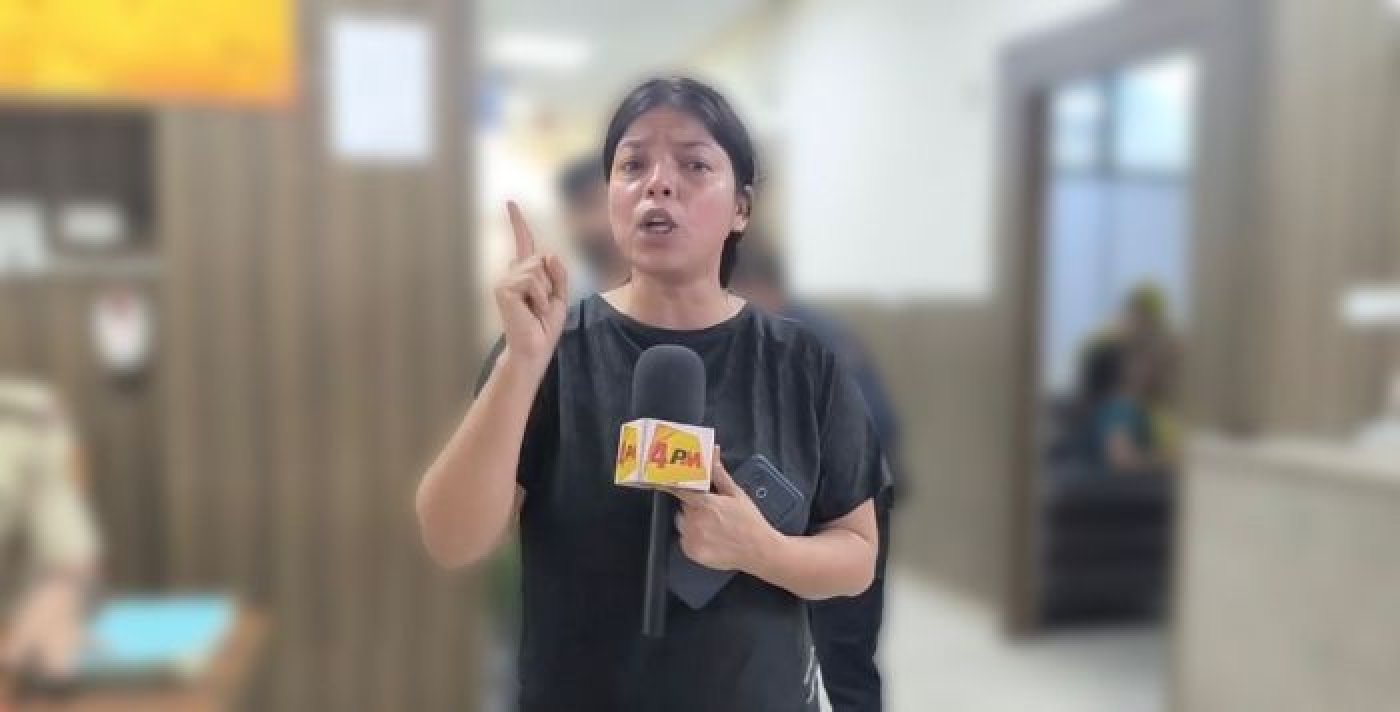
New Delhi: Shaheen Khan and her younger sister say they were kicked, slapped, punched and beaten with a baton inside a Delhi police station on 3 September 2026.
They thought things could hardly get any worse.
Then the name Mohammed Khan flashed on their mobile phone.
What happened next, Shaheen Khan, a 27-year-old journalist, said, was worse. The policewoman who was allegedly beating her and her younger sister, a 24-year-old journalist, had not known they were Muslim. But when she saw the caller’s name, she realised they were, and the assault became something more.
Shaheen alleges that the beating intensified and was accompanied by anti-Muslim abuse.
“Her body language changed,” said Shaheen. “Her face turned red and filled with hate. She said, ‘You are Muslim. I’m going to hit you more.’ That is what she literally said.”
“Nafisa said, ‘We are Muslim. What is wrong with it? Is it a crime?’” Shaheen recalled.
“Taking my phone, that is a crime. Beating women inside a police station, that is a crime. Hitting us in a closed room, that is a crime,” she said. “How are they committing so many crimes in a police station? It was crime after crime.”
Delhi Police have denied allegations that the two Muslim women journalists were assaulted inside Saket police station in south Delhi, with the deputy commissioner of police (DCP), Anant Mittal, calling the claims “factually inaccurate and misleading”.
The Escalation
Police said the women were taken to the station after they allegedly parked their scooty on a “VVIP” route—a road designated for “very, very important people”—and refused to move it.
Among those arriving for the inauguration of a new wing at Max Super Speciality Hospital were home minister Amit Shah and Delhi chief minister Rekha Gupta.
Shaheen told us that the sisters were from the area. They noticed that a place that was normally quite unclean had suddenly been cleaned up for the event. They were taking a video of the event hoarding and wanted to highlight the presence of the home minister and chief minister at the inauguration of a private hospital.
There may have been a brief issue with where the scooty was parked. But Shaheen said nothing justified what allegedly happened over the next hour: getting shoved into the police van and taken to a police station, their phone being taken away, the assault, and then the assault intensifying after their Muslim identity became known.
When we asked why they would even get into the police van over an issue like where the scooty was parked, Shaheen said they eventually got in because the police pressured them too much.
When, she said, she told the policemen they were “manhandling” her and asked them to back off, they called in women personnel, who forced her and her sister into the van, assuring them that they would take them home.
‘It Was Horrifying’
Almost from the beginning, Shaheen alleged, there was an insistence and attempts to take away the one mobile phone the sisters had between them, from the time they entered the van to when they reached the reception of the police station, until a policewoman eventually snatched it away.
“We kept saying, ‘Why are you trying to take our phone? What law lets you take our phone?’” said Shaheen. “We kept asking, ‘What have we done?’”
One detail Shaheen repeatedly recalls from their time at the police station is that they kept asking for water, but were not given any.
“It was horrifying,” she said.
Shaheen released videos showing bruises on their arms and legs.
She said CCTV footage from inside the police station would corroborate their account. At a press conference, Sanjay Sharma, the editor of 4 PM News Network, the digital news outlet where Shaheen works, said he would move the Delhi High Court for footage and action against the police personnel involved.
Press bodies and political parties have criticised the alleged beating.
Shaheen told us she had tried to file a complaint at the police station in Saket, naming the police personnel from the station. But she said the police refused to record her complaint or register an FIR (the First Information Report), which is the first formal step in putting an alleged crime on record and initiating a criminal investigation.
On Saturday, she said, “Two days have passed, and we have not heard from one police officer.”
The Other CCTV Case
The sisters’ demand for CCTV footage comes against the backdrop of another Delhi case in which allegations of police violence against Muslim men became entangled with missing or malfunctioning CCTV footage.
The Geneva-based World Organisation Against Torture has classified India as “high risk” for torture and ill-treatment in both its 2025 and 2026 Global Torture Indexes, including in police custody and interrogation.
During the 2020 Delhi riots, five Muslim men were beaten by police personnel after they were attacked on the road. Police forced them to sing the national anthem. One of them, 23-year-old Faizan, was allegedly taken to the Jyoti Nagar police station, where he was beaten again. He died two days later.
More than six years later, no police personnel have been punished.
The Delhi Police initially claimed that the CCTV system at the police station had malfunctioned on the day Faizan was allegedly beaten. The Delhi High Court rejected that explanation and transferred the case to the Central Bureau of Investigation (CBI), which concluded that the system had been unplugged and that this was “likely an act of damaging (sic)” the cameras.
Videos of the first assault, showing policemen beating the Muslim men on the road, had gone viral. Yet it took six years to file charges against two policemen.
The Faizan case does not establish what happened to Shaheen and Nafisa. But it explains why their demand for the CCTV footage matters: the cameras may provide independent evidence in a case where the police deny the central allegation.
Shaheen’s position is unequivocal: release the footage. If it contradicts her account, she says, she will apologise to the Delhi Police.
‘Release The CCTV Footage’
Shaheen alleged they were first assaulted near the reception of the Saket police station and then dragged up a staircase to a room where the assault continued and intensified.
If not tampered with or destroyed, Shaheen is sure the CCTV footage would have at least captured the assault at the reception.
“She started beating us. She kept slapping us. Slap after slap,” said Shaheen, referring to a policewoman. “There are CCTV cameras. They will show.”
“We were shocked. Why are two women, two women journalists, getting slapped in a police station?” she said. “Why are they hitting us?
“Release the CCTV footage. If it turns out that I’m lying, then I will apologise to the nation. I will apologise to the Delhi police,” she said. “They can put any FIR on me they want.”
There were remarks like “Badee PT Usha ban rahee thee” (she was trying to be like PT Usha–one of India’s most famous women runners).
The station house officer (SHO), Shaheen alleged, said, “Get an FIR registered. Register so many FIRs that no one can save them,” and did nothing to stop the assault. He has declined to comment to the media.
Calling Police—From The Police Station
Inside the room, Shaheen said that as Nafisa’s condition worsened and they were left alone for a few minutes, she acted quickly and determinedly, pulling her sister back to the reception.
She said she felt terrible doing so, as Nafisa was in pain and semi-conscious, but she knew she had no choice. There, she demanded to make a call, warning that the police would be responsible if anything happened to her sister.
After she made the call from a landline, family members arrived at the police station with lawyers.
Even though they were already at a police station, Shaheen said she called 112, the number of the police control room, to get to a hospital and obtain an MLC—a medical-legal record in which a doctor records the injured person’s account of events and documents their injuries.
Later that day, she returned to the police station to file a complaint.
“When I started narrating the complaint and started talking about the SHO, they said they wouldn't write it. How can they refuse to take my complaint?” said Shaheen. “It is their duty towards me. Tomorrow, if I believe a crime has taken place and even if I name the prime minister, they have to take it down. Then, they can investigate.”
The physical wounds will fade, Shaheen said, but the sisters will never forget how enraged the policewoman became when she saw the name Mohammad Khan on the phone.
“It was just seeing that name. She didn’t even know our name or relation,” she said. “She got so triggered just seeing the name. Can you imagine the hate inside her?”
(Betwa Sharma is managing editor of Article 14.)
Get exclusive access to new databases, expert analyses, weekly newsletters, book excerpts and new ideas on democracy, law and society in India. Subscribe to Article 14.