
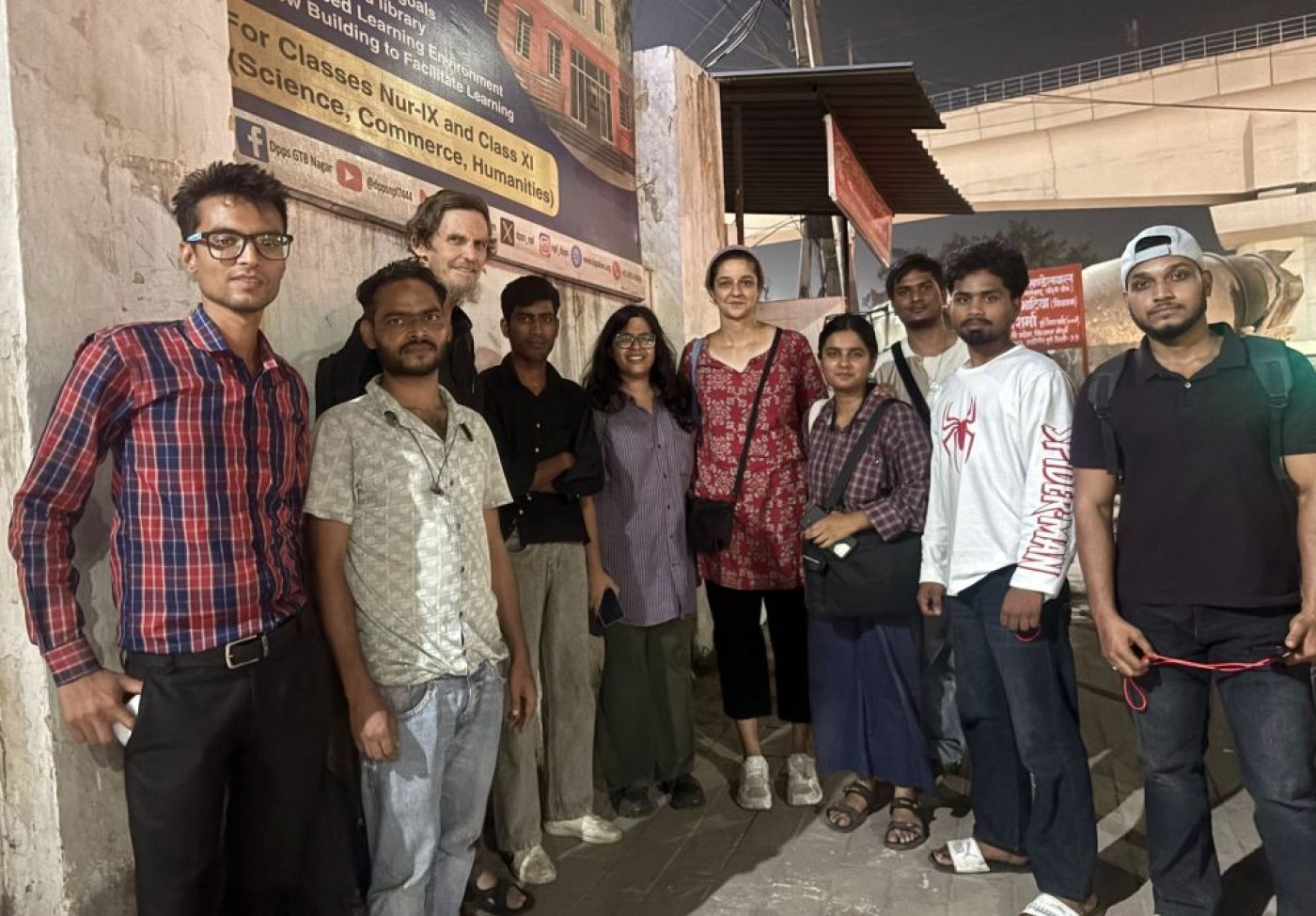
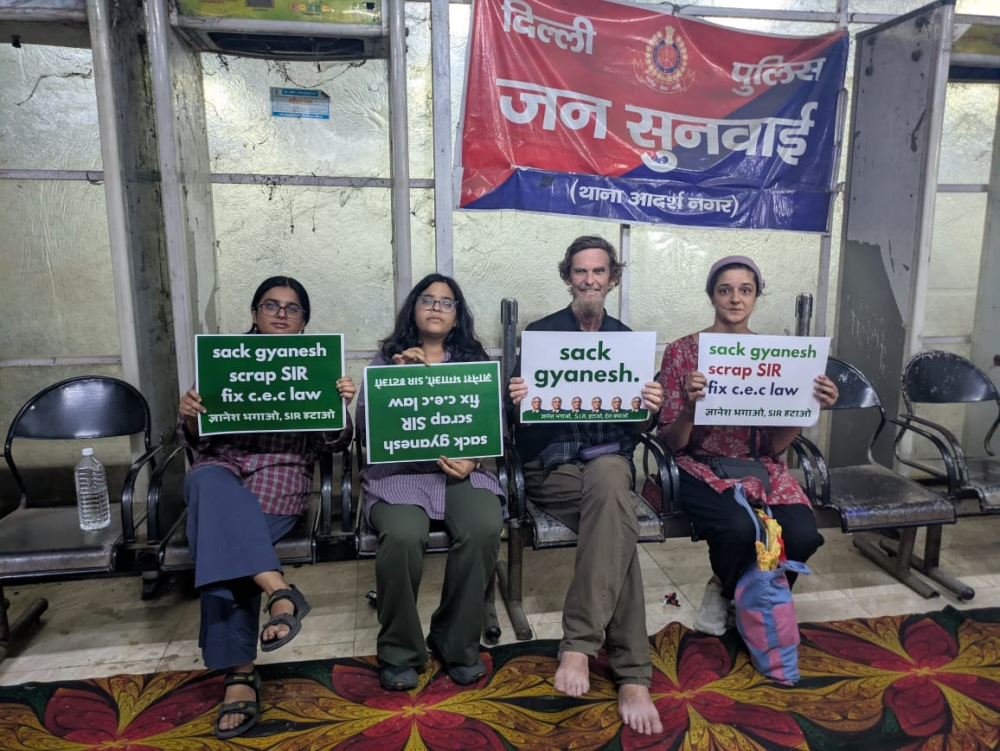
New Delhi: After economist Jean Drèze was bundled up in a police van and detained along with three other civil society activists near Jantar Mantar on 10 October 2026, they were taken about 16 km away to the Adarsh Nagar police station in North West Delhi.
At the station, the 67-year-old economist met other detainees, mostly men, most from Assam and West Bengal.
They’d been detained outside the New Delhi Railway Station, and many told him they weren’t even in the city to protest, or knew about it. One was on his way to the hospital, another was out for breakfast, and others were just going about their lives.
Drèze, who works on poverty and welfare issues, was astounded to hear their stories. He and his comrades were detained after they held up a banner against the contentious special intensive revision (SIR) of electoral rolls and the Election Commission.
About four hours after their detention, police told Drèze and his colleagues—Paran Amitava, Anjali S and Aban Raza—were told by the police that they were free to leave. But the award-winning economist, born in Belgium and an Indian citizen for over two decades, decided against it.

“We told the police that either all the detainees are released together, or we continue to stay here,” Drèze told Article 14. They also submitted a written application to the police station addressing this issue.
“We want to note the disparity in the attitude that the Police displays towards different socio-economic classes,” said Drèze. “They keep assuring they are here for citizens, yet their actions do not depict the same.”While Drèze and his team were detained in the afternoon, the others said they’d been detained since 9 in the morning.
Finally, around 8 pm, after nearly 11 hours of detention, authorities released all the detainees. They walked out along with Drèze and his team. As they left, they spoke to Article 14.

“I am so grateful to Jean sir,” said Shamim Jafar. “He told the police that he won’t leave till they release us too.” The others joined in expressing their gratitude for Drèze.
“It’s very important that all people of this country speak up for one another,” said another detainee, who did not want to be named. The police refused comment.
‘This Doesn’t Feel Like A Democracy’
As the protestors walked out of detention, they recalled how they were caught unaware by the police.
“I was on my way to look for lunch with my wife. They caught hold of me, snatched my mobile, and started putting me on their bus. I was terrified,” said Mohammad Rahim, one of the detainees.

Another detainee, Moin Khan, said he thinks he was targeted because of his religion. “They asked me my name before detaining me,” Khan, 25, said. “I am very sure I was detained because I am Muslim.”
Another man, Mohammad Gulfam, said he was coming from Loni in Ghaziabad to go to the Bangla Sahib Gurdwara when police detained him. Another detainee, Shankar Sahu, said he travelled from West Bengal to join the protests. He had hardly stepped out of the railway station before police detained him.
“This doesn’t feel like a democracy,” said Sahu, who is part of a citizen-awareness group.
Police detained thousands of people from across Delhi on 10 October. The Cockroach Janata Party (CJP) leadership, including Abhijit Dipke, Saurav Das and Ashutosh Ranka, were detained from their aircraft, and protestors struggled to reach the Jantar Mantar on barricaded roads. Journalists too were detained.
Drèze said he had never seen anything like it. “I have been in this country nearly 50 years, but haven’t witnessed this level of force being deployed to oppress a protest,” he said. In a viral video of his detention, a journalist asks Drèze who he is and where he’s from; he says he only realised this after watching it.
“That was hilarious,” he said, laughing.
(Fatima Khan is an award-winning independent journalist covering politics and society.)
Get exclusive access to new databases, expert analyses, weekly newsletters, book excerpts and new ideas on democracy, law and society in India. Subscribe to Article 14.