
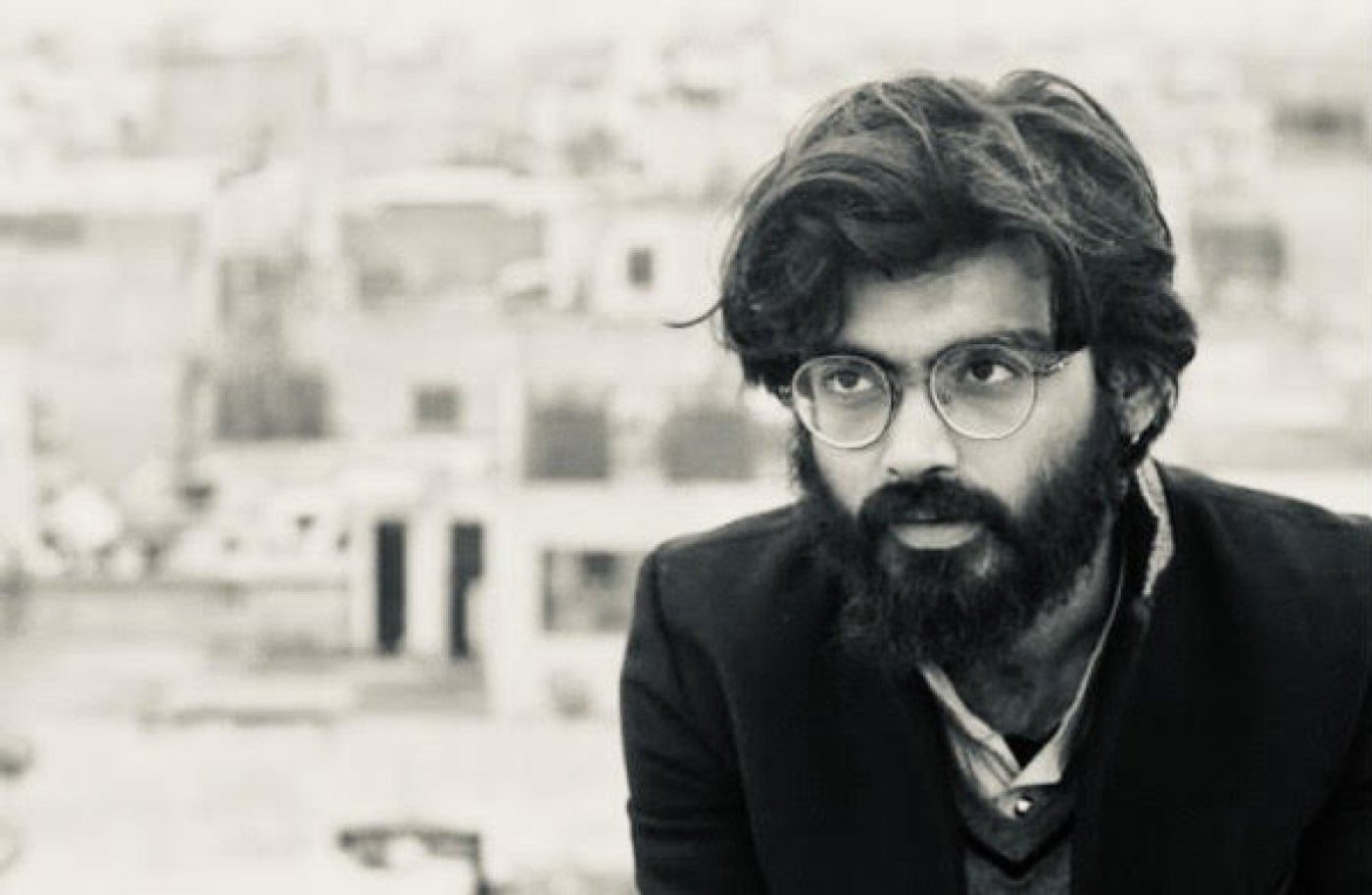
New Delhi: There wasn’t much time, and this was our third attempt to speak.
Squeezed between conversations that Sharjeel Imam had with his lawyer about interim bail to attend his brother’s wedding, and the delivery of some new books to Tihar jail, this reporter asked him about the speeches he made during the protests against the Citizenship Amendment Act (CAA), 2019—speeches which had landed him in jail, and more bluntly, if he regretted them.
Those speeches, I pointed out to Imam—the son of a deceased politician from Jehanabad, Bihar, a graduate of the Indian Institute of Technology, a PhD candidate at Jawaharlal Nehru University—had become something of an albatross around his neck.
They appeared to have formed the cornerstone of the State’s case under India’s anti-terrorism law, the Unlawful Activities Prevention Act (UAPA),1967, in what the police call the “larger conspiracy case” of the Delhi riots, keeping Imam in jail for six years.
So much so that a film featuring a character based on Imam used portions of that speech in its promotional material; although the movie, entangled in legal proceedings and the censor board, has not been released because of its prejudicial nature.
Some of the most infamous lines are reproduced in the Supreme Court’s order denying Imam bail in January 2026: “...if we have 5 lakh people, then we can permanently cut Hindustan from the northeast… cutting Assam is our responsibility, if we cut Assam and India, then they will listen to us… chicken neck is of the Muslims.”
Imam has been jailed for six years and three months, including five years and eight months without bail or trial in the so-called larger conspiracy.
Article 14 has for many years reported that this case is built on conjectures, fabrications, and, in the absence of evidence, the testimony of anonymous witnesses, to reinforce the police’s resolve to pin the riots in northeast Delhi in February 2020 on the anti-CAA protests and their mostly Muslim leaders.
No Call For Violence: Lawyers
Many have found Imam’s speeches distasteful and unpalatable, a tone quite different from that of his better-known and arguably more popular co-accused, Umar Khalid, who is also jailed without bail or trial.
Imam’s lawyers have argued that there was no call for violence.
In the landmark five-judge ruling, in Kedar Nath versus State of Bihar (1962), the court said, “…criticism of public measures or comment on government action, however strongly worded, would be within reasonable limits and would be consistent with the fundamental right of freedom of speech and expression. It is only when the words, written or spoken, which have the pernicious tendency or intention of creating public disorder or disturbance of law and order that the law steps in to prevent such activities in the interest of public order.”
In addition to the now infamous lines about cutting off India from the northeast, the Supreme Court justices, Aravind Kumar and N V Anjaria, noted the prosecution's contention that Imam’s speech “articulated a strategy of choking Delhi through organised chakka jams (roadblocks), including blocking roads and disrupting essential supplies such as water and milk”.
They went on to observe that a “terrorist act” under the UAPA “encompasses acts which disrupt supplies or services essential to the life of the community, as well as acts which threaten the economic security of the country”.
While acknowledging Imam’s argument that he has never called for any violence, the court observed, “Whether this ultimately crosses the final line from protected expression to criminal conduct, and whether the prosecution’s interpretation withstands trial scrutiny, are matters for final adjudication.”
Imam was jailed as early as 28 January 2020—four weeks before the riots —for speeches he made in December and January. Police alleged these formed the first two phases of a so-called conspiracy. During this period, he also formed WhatsApp groups, helped establish the Shaheen Bagh protest site by blocking a thoroughfare, and distributed pamphlets campaigning against the CAA.
The pamphlets also addressed what Imam saw as the systematic persecution of Indian Muslims and the failure of institutions to protect them, pointing specifically to the Supreme Court's ruling on the Babri Masjid, which acknowledged that the demolition was illegal yet still awarded the disputed property to the Hindu parties.
His lawyers have argued that the speeches, his other activities, as well as the violence that erupted in and around Jamia Millia Islamia University on 13 and 15 December 2020, are the subject of other criminal cases for which he has already received bail, so why is he being prosecuted twice for them?
The Supreme Court concluded that recent precedents granting bail in UAPA cases due to trial delays did not apply here, and rejected the claim that Imam deserved parity with co-accused who had been granted bail.
It held that the State had made out a prima facie case against him, that Imam and Khalid were central to the alleged conspiracy, and that they must remain in custody for another year, while directing the State to expedite the proceedings.
‘Where Is The Crime?
When we spoke briefly, Imam insisted that the Supreme Court had refused him bail not because of his speeches, but because of the prosecution’s allegation that he had laid the foundation of the so-called conspiracy in early December and January, before being arrested on 28 January.
“The bail rejection is not because of my speech,” said Imam. “They rejected bail because they identified my role as a central figure in the JNU chapter of the mobilisation. It is because we kick-started the protest, as the Jamia students did.”
“We worked tirelessly on the roads and mosques of Delhi, and similar things were happening independently by the Jamia students,” said Imam. “But my question is, where is the crime?”
“What is wrong is that they extrapolate it to the Delhi riots and say that this is all for the planning of the Delhi riots, and that chakka jam is terrorism because we are trying to precipitate riots,” he said. “This is what is wrong with the judgment. This is my limited point.”
Of the 53 people killed in the riot, three-quarters were Muslim. Of the 18 people accused, 16 are Muslim.
With the exception of a division bench of the Delhi High Court, which granted bail to Devangana Kalita and Natasha Narwal in 2021, and said there was no prima facie case of terrorism made out, and the state had blurred the line between terrorist activity and protest, court after court (here and here) has accepted the State’s case to be prima facie true.
A Question of Relevance
When Imam spoke, it was quickly, almost urgently, because he had a lot to say, and with the jailer hovering ever more frequently as the clock wound down, there was very little time to say it.
As with his writings, what emerged was a worldview shaped by a deep scepticism: that India’s institutions and even its Constitution, as currently structured, do not fundamentally work for Indian Muslims.
This marks a divergence from figures like Umar Khalid, a PhD from JNU, who had framed his opposition to the CAA as a defence of the Constitution itself, and arguably endeared himself to a larger audience.
Imam, by contrast, appears to speak to a narrower audience.
When I said this, he said his writings were aimed at specific linguistic and regional communities—Bengali, Urdu, Malayalam, and Tamil speakers. The letters of support he has received, he added, reinforced his sense of having an audience.
Steering the conversation back to the speeches, I asked Imam whether he regretted them, especially the part about cutting India from the northeast.
“You could say I could have used a better word,” he said. “One word could have been changed in that phrase, and it could have sounded less distasteful, as a senior advocate said (in court), but the larger speech is about chakka jam, my whole work in those two months is about chakka jam.”
He continued: “The speech is about Indian history and the oppressed and marginalised classes, so in my opinion, even today, a word could have been changed, but the more important issue is this of how this one phrase was decontextualised, and not just by the prosecution but also by the sympathisers who talk about liberalism, secularism. It shows some kind of hypocrisy is involved here, even as far as the liberals are concerned.”
We also spoke of his relevance in today’s political climate.
‘My Task Is Unique’
Despite criticism over governance issues, ranging from inflation and unemployment to foreign policy missteps, Prime Minister Narendra Modi remains a dominant and popular political figure. Discontent is growing, evident in private conversations and across digital platforms, but it has yet to coalesce into a coherent political alternative.
Meanwhile, the BJP continues to notch electoral victories across states.
In that landscape, voices like those of the Imam, contested, polarising, and often marginalised, are arguably peripheral in shaping the broader political discourse. But as a social scientist, as he sees himself, this did not seem to bother him.
“There are subaltern movements that are following me,” said Imam. “I get letters in jail from people, sometimes, one every couple of months. I get interview questions from many journalists. What I’m writing, let's say even 5,000-10,000 people are reading.
“My task is unique,” he said. “I am niche because I want to be niche. I am niche because I’m doing something, because we are starting something from zero.”
When I asked Imam why he did not tone down some of the rhetoric, given the political climate where freedom of speech and expression was stymied and came with dangerous consequences, he said his friends had advised him to be cautious, but he had other ideas.
“When my friends told me to tone down a bit, my answer was point-blank,” said Imam. “We, as scholars of social science and the history of Muslims in India and the Republic of India, it is our responsibility to put our necks on the line by clarifying the issues for the masses. We have to get out of our comfort zone.”
“We don’t have to repeat the whole nonsense about secularism that has been done and dusted for us,” he said. “We have to start from a fresh point of view, and a fresh narrative has to take root in the hearts of millions and millions of oppressed people.”
A Choice Of Words
The conversation veered back to the line about cutting off the northeast from Assam—what if he had just not said it?
“When you speak about that Aligarh speech specifically, I do realise later, when I came to jail and read it over and over again, instead of using the word cut, I should have used the word block, blocking the highways, made it even more explicit, even though in the very next sentence I say even for a week or 10 days we can shut it down,” said Imam.
“But just because they take a 10-second clip out and the word cutting is used in it, all that follows becomes irrelevant,” he said.
“So I could have replaced the word cut with block because in the context it is clear that I’m talking about a temporary blockage and not secession or anything else. Decentralisation has been my call but not secession,” said Imam. “That word cut could have been replaced with a block. That is the only thing I felt. It is not something you can micro-manage when you are giving 100s of speeches.”
My next question was whether he prepared his speeches.
“I have been a speaker all my life, and even when I was studying at IIT, I would debate these topics with myself for hours and hours. That part of speaking is instinctive and instantaneous, based on the thousands of hours I have spent talking about these things. There is nothing that is planned or needs to be planned, like I’m speaking to you right now,” said Imam.
“My daily practice is to keep talking to myself for thousands of hours, and to other friends who are willing to listen to me,” he said. “I do not plan, I do not write. Sometimes I would jot down bullet points.”
I asked again whether the infamous line defined him.
“I understand your question. It is not a binary black-and-white thing. Once, when the Delhi police were interrogating me for the Delhi riots, the DCP himself asked me why I said it. My immediate answer was that because of this line, I have been saved. If I had not said this, you would not have arrested me immediately; you would have arrested me after the Delhi riots and the case against me would have been much stronger,” said Imam.
“As soon as the Delhi riots happened, I realised it. Fate works in mysterious ways. I am in jail, I am an accused, but everyone ignores that this is a false case,” he said.
“I’m Prepared’
Finally, I asked him whether he felt supported.
“When I was arrested, a lot of people who threw me under the bus apparently said I was harmful for the movement, etc., without realising that if JNU had not moved initially, major things of this movement would not have happened at all,” said Imam. “So, I was obviously angry about that.”
“But my friends from IIT helped with my legal costs, all of them non-Muslims. They knew I was being wronged. Then there is a group of scholars at JNU, Aligarh, and Jamia who offered help. There are the masses and the intellectual class. I can say for sure that the intellectual class threw me under the bus, but the masses did not,” he said.
I asked what he hoped to achieve.
“One is sensitisation of the masses; they need to be aware of the real issues of Partition and why it happened, because there was a Brahminical centralising force that forced Partition on us,” he said. “The other issue is creating a vanguard of scholars. That will not happen in one day. That will happen slowly. Every day, I will win over one scholar.”
Imam said he planned to spend the next year reading and writing, but the inevitable question was: what if he was not acquitted?
“If I’m sentenced to whatever time in jail, I’ll spend that time in jail,” said Imam. “That is what I can do. I’m prepared for that.”
“We have already given our lives for it. What we are trying to do is get one fellow traveller one day,” he said. “We are fighting a very difficult battle. There are no easy answers here.”
(Betwa Sharma is managing editor of Article 14.)
Get exclusive access to new databases, expert analyses, weekly newsletters, book excerpts and new ideas on democracy, law and society in India. Subscribe to Article 14.