
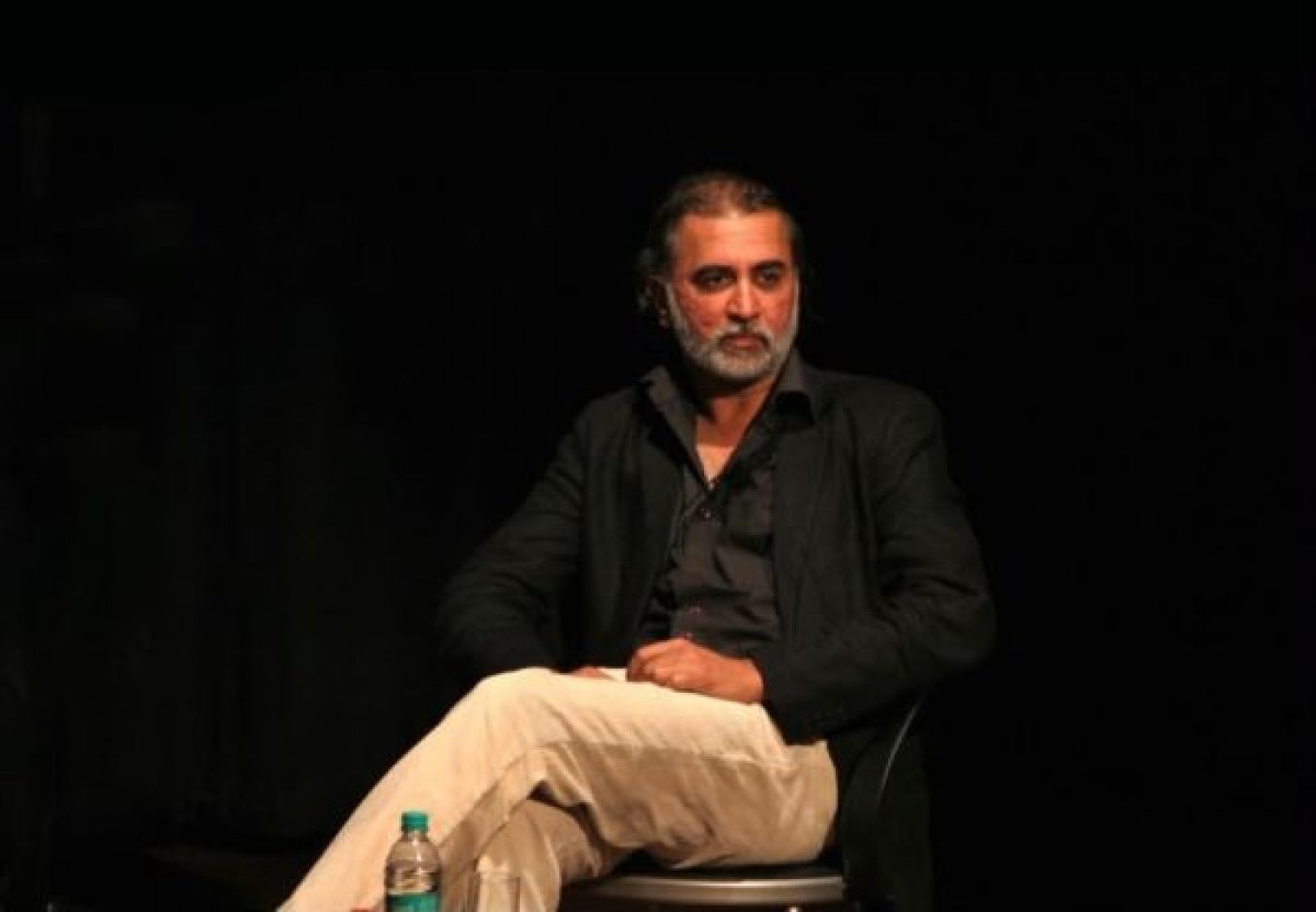
New Delhi: Whatever the outcome of his appeal to the Supreme Court, there is a larger societal stake in preserving one crucial aspect of the Bombay High Court’s conviction of journalist Tarun Tejpal.
It relates to the high court’s condemnation of the further trauma that the rape survivor was subjected to in the trial court during her cross-examination, in the teeth of statutory safeguards.
The safeguards ensued from a long and hard-fought struggle against a misogynist provision targeting those who alleged that they had been raped.
Reflecting the mores of the Victorian era, section 155 (4) of the Indian Evidence Act 1872 (IEA) said that “when a man is prosecuted for rape or an attempt to ravish, it may be shown that the prosecutrix was of generally immoral character”.
The implication of this overly broad expression, “generally immoral character”, was that only such a survivor stood any chance of securing justice whose life perfectly conformed to the conservative norms of her time.
The licence given by the colonial law to attack the character of the aggrieved woman during trials of rape or molestation remained in force for over three decades even after Independence.
It erupted into controversy in 1978 because of the infamous Supreme Court judgment in the Mathura case. The highest appellate court exonerated two Maharashtra police constables of the charge of raping Mathura while she was in custody.
The Supreme Court cited the lack of body injuries, resistance, or a loud alarm as proof of consent. In the process, it reversed the Bombay High Court’s judgment, which had held that Mathura’s “passive submission” due to fear could not be construed as consent.
The high court had in turn reversed the trial court’s reading of the case as a consensual encounter on the ground that Mathura was “habituated to sexual intercourse”.
It was in this fraught context that the Law Commission for the first time recommended in 1980 that the archaic provision of section 155(4) should be amended so as to “exclude evidence of sexual relations with persons other than the accused”. This was based on a long-overdue evolution in thinking: “It is wrong to assume that a female witness is less likely to tell the truth when she has a generally immoral character.”
More importantly, the Law Commission proposed the insertion of a safeguard to prevent the accused from trying to prove consent by cross-examining the victim“as to her general immoral character or as to her prior sexual experience with any person other than the accused”.
In the event, when the government of then Prime Minister Indira Gandhi in 1983 introduced a slew of reforms in the rape law on the basis of this Law Commission report, it incorporated neither of these recommendations relating to the cross-examination of the victim.
It took almost two more decades, the Supreme Court’s departure from its Mathura logic in more than one case and another radical report from the Law Commission for at least part of the necessary reform to the cross-examination aspect to be finally made.
In 2002, much to its credit, the Atal Bihari Government repealed section 155 (4), the root cause of the victim’s morality tending to be on trial rather than the accused’s guilt. As a corollary, it introduced a proviso to the IEA's section 146, which dealt with the questions that were “lawful” in cross-examination. The proviso stated that in a prosecution for rape or attempted rape, “it shall not be permissible to put questions in the cross-examination of the prosecutrix as to her general immoral character”.
But since the 2002 amendment left out the Law Commission’s recommendation for an express ban on questions even about her prior sexual experience with other men, the loophole was exploited in the cases that followed. The prohibition only on the questions about her character proved insufficient to save her from interrogation about her sex life.
The Justice J S Verma Committee, which had been set up in the wake of the Nirbhaya gang rape, was instrumental in plugging the loophole in 2013. Acting on its suggestions, the Manmohan Singh Government added two further safeguards to the proviso to section 146. One, it inserted “or previous sexual experience” after “general immoral character”. Two, the amendment mandated that it shall be impermissible to “adduce evidence”, not just “to put questions in the cross-examination” about the prohibited subjects.
Besides these improvements to the Evidence Act, the amendment, which came into effect in February 2013, famously widened the ambit of rape in the Indian Penal Code to include insertion of “a part of the body, not being the penis, into the vagina”. Later that same year, Tejpal’s was the first high-profile case to be registered under the new definition of rape.
The high court judgment on 6 August 2026 confirms that even the latest restriction, which is pointedly about sexual history, has failed to have the intended effect. Though the high court blamed the trial court for allowing the defence to “harass and humiliate” the survivor, the problem also had to do, ironically enough, with a Supreme Court intervention in the case in 2015.
In deference to his right to a fair trial, the Supreme Court, on Tejpal’s plea, directed the Goa police to hand him a clone of the survivor’s mobile phone. Since it contained all kinds of personal and intimate data of a 27-year-old metropolitan journalist stored over an extended period, the defence counsel weaponised it, flagrantly violating her right to privacy, besides, of course, her protection under section 146 IEA.
Little wonder then that the high court pulled no punches while analysing the conduct of the trial court in this regard. “Most glaringly, the Court permitted an invasive, humiliating cross-examination into the victim’s past sexual history, moral views, and personal WhatsApp messages, directly violating statutory embargoes under the IEA that prohibit questioning a survivor’s character or past relationships.”
Having allowed the defence counsel to confront the survivor again and again with legally forbidden evidence and questions, the trial court, in its judgment, went through the motions of disallowing them at that belated stage. Given what was clearly a damage control exercise, the high court invalidated its methodology: “The Trial Court appears to be influenced by extraneous, inadmissible material and testimony, including graphic details of the victim’s past sexual history, which are prohibited by law, and used them to censure her character and discredit her evidence.”
So much was the line between the trial court and defence lawyers blurred that during their cross-examination even the husband and mother of the survivor were not spared similar interrogation. For instance, as the high court put it, “Suggestions were made to her regarding her daughter’s loose morals.” In the case of the partner who went on to marry her subsequent to the assault, the high court said, “It appears to us that the questions in the cross-examination not only were aimed at discrediting (the survivor’s) version of the sexual assault but also intended to portray her as an unchaste woman in the eyes of her husband. This, in our view, was intended to create a chilling effect and demoralise (the survivor) and this witness.”
Despite the admissions that have been taken by the high court to be implicit in his apology and atonement letters, as well as his text or WhatsApp messages to the survivor, the question of whether Tejpal could have committed rape in the peculiar circumstances of the case has remained a subject of debate. This is especially true given the complexities of the evidence, including the CCTV footage of movements outside the lift (the crime scene) and the mechanics of the lift door.
What is undeniable, though, is the plethora of transgressions as pointed out by the high court in the very first test to hard-won statutory safeguards.
This act of vandalism stands independent of the merits of the case.
It is also distinct from the “perfect victim” fallacy concerning her post-assault behaviour, another aspect on which the high court has sharply criticised the trial court.
At stake is the civilisational progress India has achieved in making its rape law survivor-sensitive.
(Manoj Mitta is a member of the Article 14 editorial board and an author whose most recent book is Caste Pride: Battles for Equality in Hindu India.)
Get exclusive access to new databases, expert analyses, weekly newsletters, book excerpts and new ideas on democracy, law and society in India. Subscribe to Article 14.