
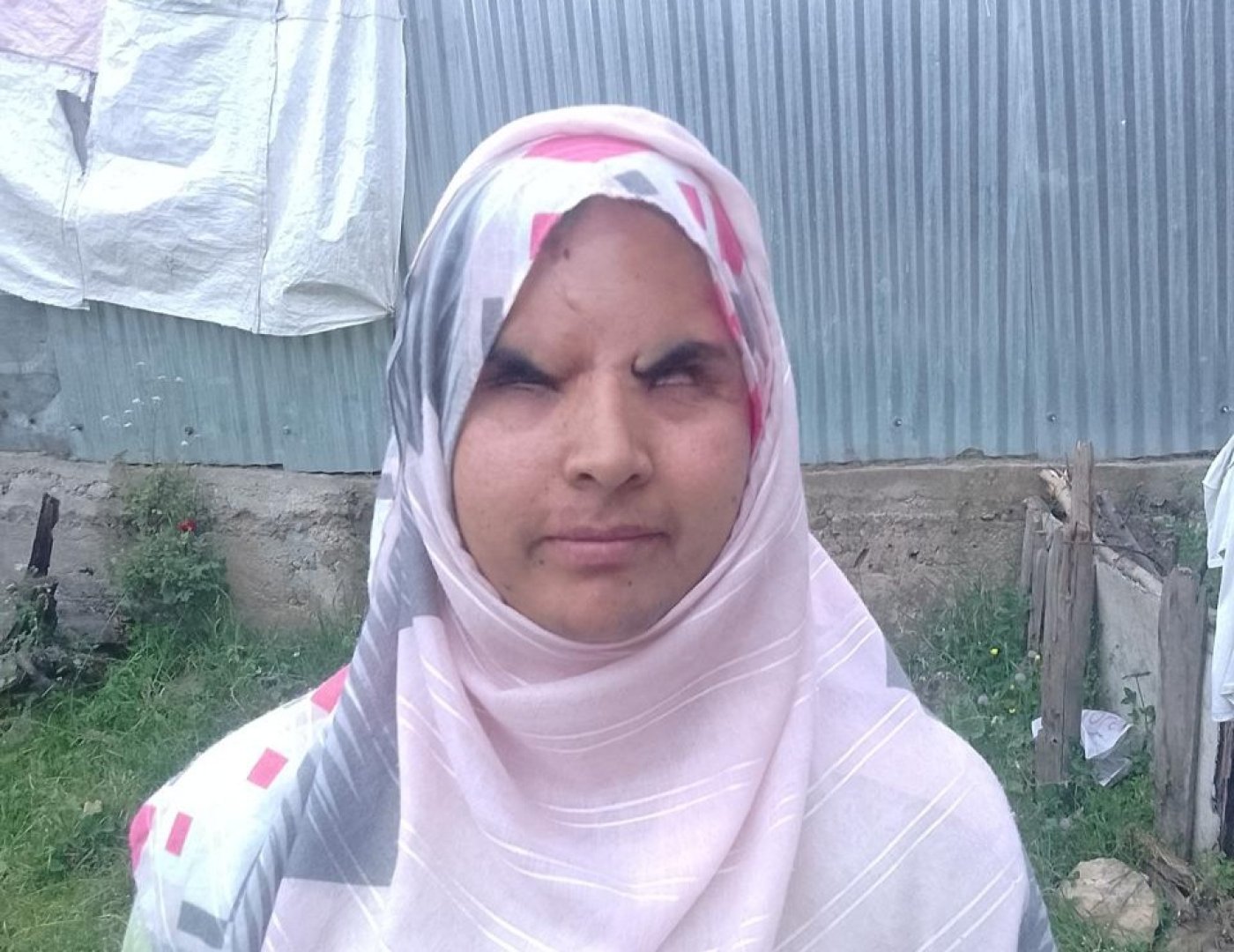
New Delhi: She no longer stands by a window.
She lives in 'paradise on earth' but can no longer see the emerald-green fields, the apple orchards, the rivulets, the tulips, the shikaras, the peaks or the valleys.
Insha Mushtaq made that mistake once.
In 2016, when Kashmir was rocked by protests following the killing of Hizbul Mujahidin commander Burhan Wani, sheer curiosity made Insha open the kitchen window after she heard noise on the street. In an instant, she was hit by pellets—tiny iron balls that pierced her eyes, chest, throat, nose and jaw.
The 14-year-old student fell to the floor, screaming and bleeding.
Now 23, Insha became the face of the bloody protests that kept the Valley on the boil. She had taken a burst of pellet fire and her X-ray—a pockmarked film—went viral on social media. It came to symbolise the damage pellet guns—a "non-lethal" weapon that is really a pump-action shotgun used by security forces to quell protests—can inflict on an individual and on a society.
I have met and spoken to Insha at regular intervals over the years. That same year, she lost sight in both eyes even as doctors put her under the knife multiple times in a desperate effort to save some vision. She is one of countless Kashmiris who measure their lives through a single word: halaat.
The halaat, or ground reality, changes more often than the seasons in Jammu and Kashmir. It is also measured differently by different people.
The Age Of Chauhaan
If you are a non-combatant like Insha, halaat can take you from ordinary life into a world inhabited by darkness. If you are part of the government and its many agencies, the ground situation is measured by the number of tourists descending on jannat. It is measured by the tulips blooming in Kashmir's gardens and by the myriad colours for which the Valley is famed.
Today, that "ground reality" is being portrayed in the propaganda film Chauhaan, in which Bollywood star Ajay Devgn portrays mass blinding as heroic. It matters little that the film, ironically, takes viewers into a deep, dark and uncivilised space that mocks victims and justifies the use of the pellet gun as a legitimate weapon of crowd control.
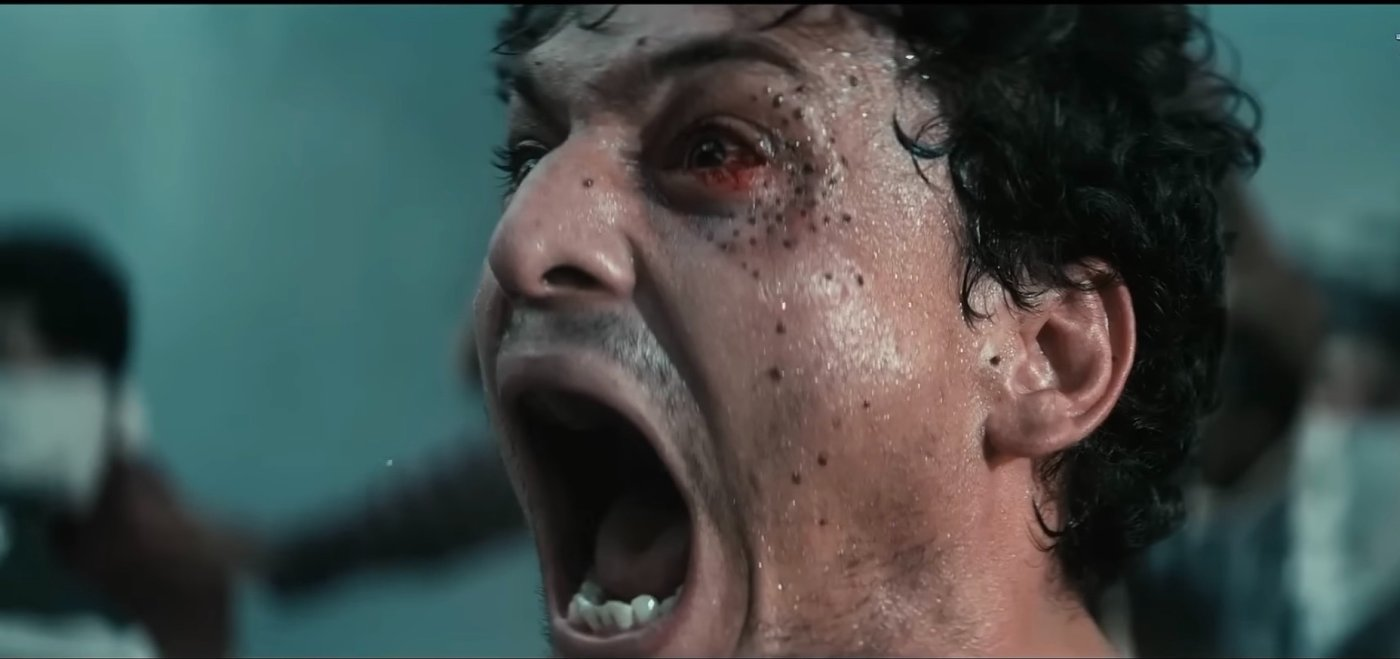
Would anyone in Bollywood care to make a film on Insha and tell a story that is both devastating and inspiring? Would anyone—anyone at all—paint the portrait of a pellet victim for the big or small screen?
Insha is no ordinary victim. Inshas cannot be reduced to cinematic caricatures. They make each day count as they move from victimhood to resilience.
The Girl In The Hospital Bed
Let me start from the beginning.
Jog your memory. Conjure up the image of a teenager lying in a hospital ward in Srinagar with pockmarks all over her face. Stretch your memory a little further, and you might recall the then chief minister Mehbooba Mufti visiting Insha's bedside. The visit came after multiple surgeries and the final confirmation that she had lost sight in both eyes.
In 2016, I went to meet her at her home in Shopian, an hour's drive from Srinagar.
Her courage struck me when she spoke about that meeting with Mehbooba.
"She (Mufti) told me she was willing to give me her eyes, if she could."
"What did you say?" I asked.
"Why don't you?"
The reply was woven with grit and determination.
She told me something else that has stayed with me: how she pulled out her school bag, which her mother, Afroza, had hidden in a cupboard.
Insha was not on the streets protesting when she was shot. Yet she chose to make those streets part of her journey back to life. The family hired a tutor, and in 2018, she cleared her class 10th examinations. Soon, she moved to Srinagar, rented a home not far from Lal Chowk, the city's centre, and continued her education.
She has learnt Braille, dictates her answers during examinations and even uses an old-style mobile phone.
"I'm not on WhatsApp," she tells me, "because I can't operate a smartphone."
Learning To Live In Darkness
Insha’s will is made of metal—stronger than the metallic balls that blinded her.
When I call her again after watching the Chauhaan promo, she says matter-of-factly: "One should never give up."
Her parents have moved from Shopian to Srinagar, but she has learnt to navigate the dark.
"I can cook,” Insha tells me. “Come and see me when you are in Srinagar.”
Then she explains: “I know where the masalas are kept, and I can reach out for the containers, but I don't know which one has salt and which one has the red chilli. I first put some in my mouth before I add it to the cooker on the stove.”
She completed her class 12 examinations in 2023, scoring 373 marks out of 500, and is now pursuing a Bachelor of Arts degree. She is allowed online classes and has become adept at using Braille on a computer.
She is also a little forlorn.
The Mehbooba Mufti government allotted her a gas agency but, as so often happens in Kashmir, halaat intervened.
The Bharatiya Janata Party (BJP) pulled the rug from under Mehbooba's government in June 2018. A year later, the Narendra Modi government abrogated Article 370, stripped Jammu and Kashmir of its special status, and split the state into two union territories headed by a lieutenant governor. Elections were finally held in 2024, and Omar Abdullah became chief minister.
Insha and her family have spent years pursuing the promised gas agency.
"Hukumat hi badal gaye (the government itself changed)," she said. "We have met everyone from Omar Abdullah to the chief secretary. My mother even fell at the feet of Ruhullah Mehdi, the member of Parliament."
She remains unafraid of moving forward. Her ambition is to attempt the national Union Public Service Commission (UPSC) examination to take a shot at the elite Indian Administrative Service (IAS).
The Statistics Of Blindness
It would, however, be a disservice to Insha—and to the many others whose lives were upended by a trigger-happy force that used pellet guns liberally against its own citizens in 2016—to tell only her story.
A 2022 study published in the Indian Journal of Ophthalmology focused attention on how the brute force of the State can shatter lives. The study found that a significant majority of 777 victims who were hit in the eyes with pellets suffered some degree of vision loss. About 80% were left with vision limited to “counting fingers”.
The study “strongly advised” against the use of pellet guns on civilians. The damage to the eyes imposed a “significant physical, emotional, and socio-economic burden” because of poor vision, the high cost of medical care and long-term rehabilitation.
Hundreds of other Inshas continue to bear that physical and emotional burden as they rebuild their lives, step by step.
The days following Wani's death in 2016 were among the bloodiest Kashmir had witnessed since the armed insurgency began in 1989. The 777 patients with pellet injuries to their eyes were admitted to hospitals within just four months.
The Indian Journal of Ophthalmology draws chilling comparisons with war zones. A 2010 study about the British armed forces in Iraq and Afghanistan recorded 63 cases of ocular injury between 2004 and 2008.
Compare that with figures released by Kashmir's health department for the five weeks following Wani's killing: 10,000 people injured in protests, 6,205 hit by pellets and 1,100 with pellet injuries to their eyes.
In 2016, responding to a public interest litigation filed by the Kashmir Bar Association seeking a ban on pellet guns, the CRPF told the Jammu and Kashmir High Court that it had fired 3,765 cartridges. Each cartridge contains 450 metallic balls.
Do the mathematics.
Nearly 1.7 million pellets were fired at protesters throwing stones at security forces.
Noted Mumbai retina surgeon Dr Sundaram Natarajan made five trips to Srinagar between July and November 2016. Accompanied by two other surgeons, he helped conduct more than 550 primary eye repairs and over 370 vitreoretinal surgeries.
“In comparison, 797 cases of severe eye injuries were reported in the war in Iraq from 2003 to 2005, of which 116 eyes were removed,” the study notes.
The difference lies not only in the numbers but also in the timeframe—four months versus two years.
There is another, even more crucial difference. The pellet guns were used by Indians on Indians.
Insha’s Question
Insha lives in Kashmir, India.
Political parties across the spectrum ought to listen to Insha and learn from the force of both her story and the statistics. Bollywood's scriptwriters and directors are welcome to dwell on the numbers too.
A decade has passed since Insha stood at the window.
She still has only one question: “Tell me why I was shot. Give me one reason why you aimed your guns at me?”
The government might like to answer that.
(Harinder Baweja is an independent, investigative journalist and the author of A Soldier’s Diary: Kargil the Inside Story and They Will Shoot You Madam: My Life Through Conflict.)
Get exclusive access to new databases, expert analyses, weekly newsletters, book excerpts and new ideas on democracy, law and society in India. Subscribe to Article 14.