
KAVITHA IYER: With the proposed Rs 92,000-crore infrastructure mega project in the Great Nicobar Island final stages of statutory approvals, the Andaman and Nicobar Islands administration has prepared a map for the de-notification of tribal reserve land and has readied transit accommodation for project staff, even as courts hear challenges to the forest and environment clearances granted for the project.
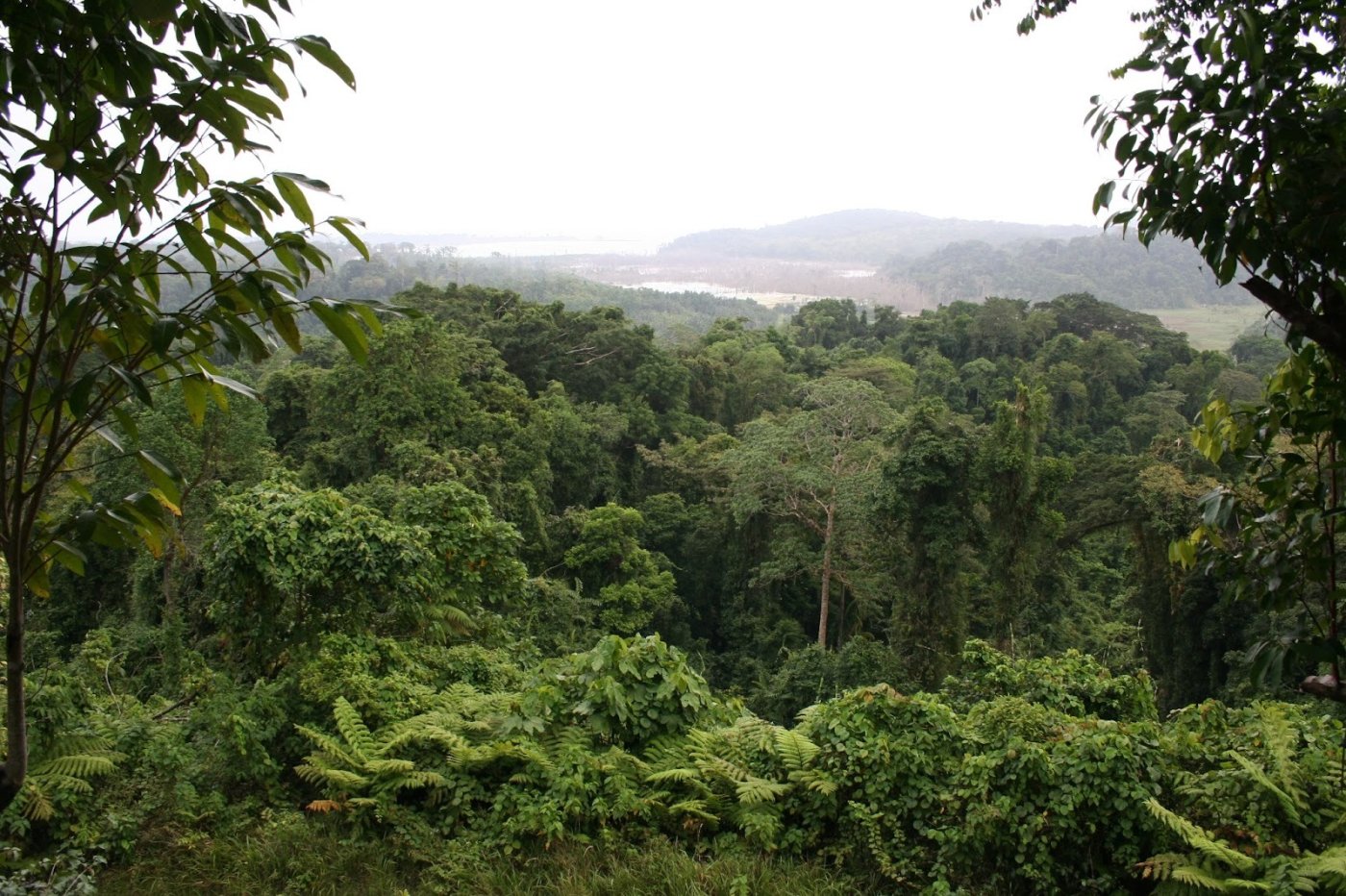
Set to raze 130 sq km of rainforest—over a million trees—the project includes a transhipment port, an airport, a power plant, and a township, being developed by the Andaman and Nicobar Islands Integrated Development Corporation (ANIIDCO).
Article 14 reported in July 2025 earlier that despite warnings about irreversible biodiversity loss and threats to endangered species, scientists were pressured to report that translocation of certain flora and fauna is possible, and that the ecological impact of the project would be minimal.
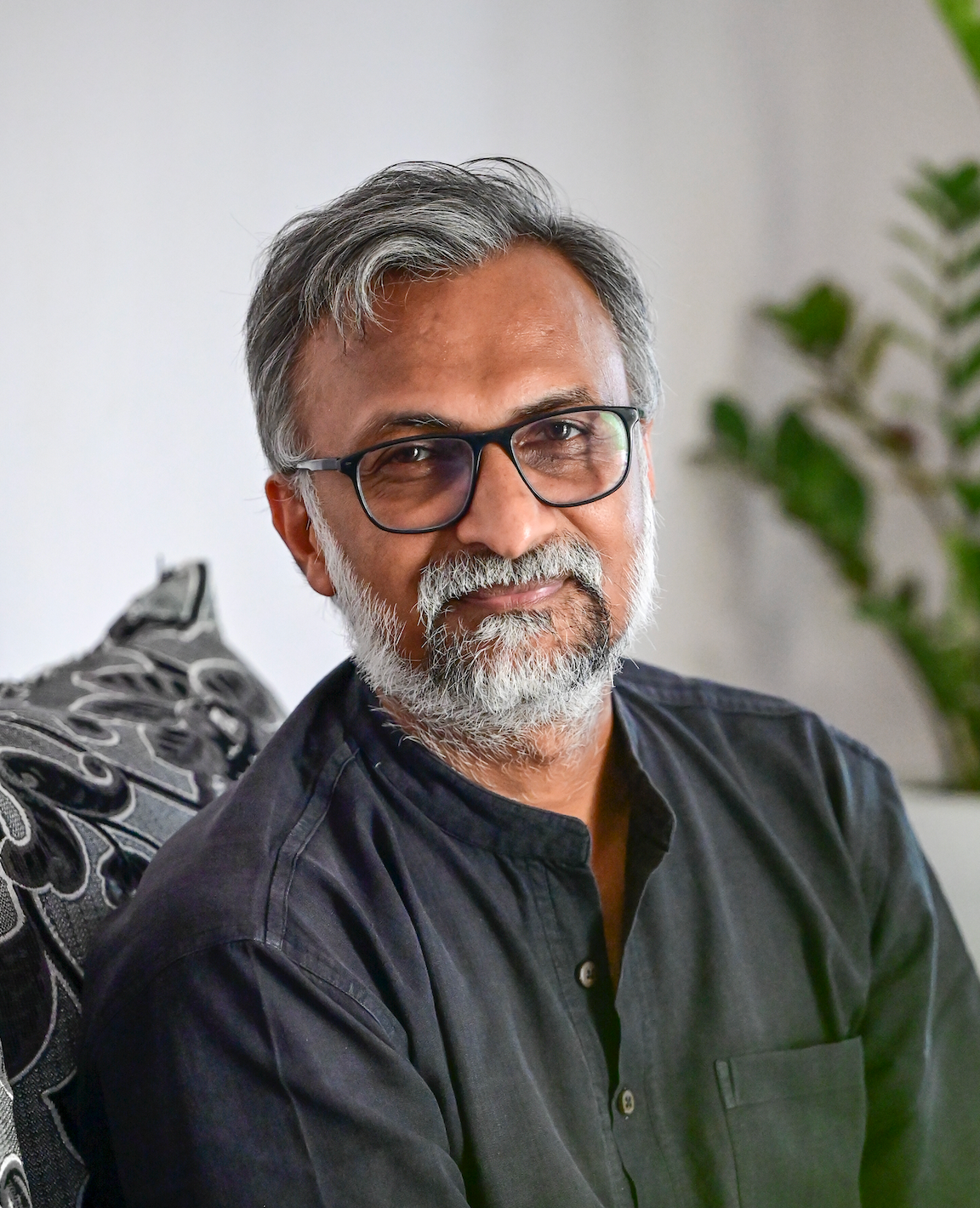
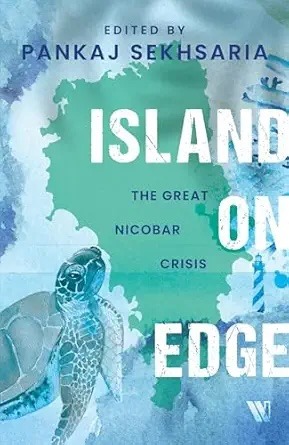
A new volume of essays by top environmental writers and researchers now exposes the legal, ethical and ecological blind spots surrounding the project. From the displacement of indigenous communities to the procedural irregularities in granting clearances, Island on Edge, edited by environmental researcher Pankaj Sekhsaria, offers a fact-rich look at the project’s many fraught aspects—ecology, procedure, indigenous rights and commerce. The contributors to the volume span disciplines from economics to linguistics to environmental science, and lay out a picture of unresolved questions and risks.
Sekhsaria, who has worked on issues of the Andaman and Nicobar Islands for over three decades and has authored/edited seven books on the islands, tells Article 14 in an interview that bringing this material together is yet another effort to keep alive a national conversation on the project.
Island on Edge follows up a previous compilation titled The Great Nicobar Betrayal. If the first book signalled trouble, this one arrives in the shadow of far more urgent warnings: the catastrophic Myanmar earthquake of March 2025, recent tremors in the Nicobar arc, and a project cost that has grown 20% in four years.
Sekhsaria argues that the “betrayal” cuts far deeper than the island itself. It extends to the law, to science, to indigenous rights, and to citizens across India.
Excerpts from an interview:
This volume, Island on Edge, is presented as a second volume of writings after the previous volume, titled The Great Nicobar Betrayal. Who is being betrayed, is it just the island?
No, I think all of us are being betrayed. Of course, the land and its people, local people, local ecology, but also this development is being carried out in our name.
On a larger scale, it is also the law that is manipulated, bypassed, that feels like a betrayal. One wonders what is the purpose of the law? A wildlife sanctuary is denotified. Suddenly one day a Coastal Regulation Zone (CRZ) 1A land is turned into CRZ 1B land, to allow for the port to come up. Then what is the purpose of these laws? How do they operate? There is that larger sense of disappointment and betrayal.
A second volume on the Great Nicobar island’s proposed mega infrastructure project so soon after the first one, barely about 18 months. Was it the urgency of the subject that promoted you to compile a second volume so rapidly or was there new material that demanded public attention?
Well, both. For one, the concerns and extensive questioning, in the media, in Parliament and by scientists, continue even as a massive earthquake in Myanmar in March 2025 took 3,000 lives, for the Andaman and Nicobar islands are vulnerable to quakes, and experience regular earthquakes.
But we have also covered new ground in investigating the Great Nicobar mega project, which has uncovered layers and layers of information and new insight.
M Rajshekhar has written the first in-depth analysis of the financial premise for the entire project. Only a small component of the entire project is a defence-related project. This is an out-and-out commercial project with the biggest investment in the port. There is also a 130-square kilometre new township, and the defence component is only in the airport, which was earlier just a commercial airport, and made dual purpose subsequently. The unpacking of the commercial viability of the project is a critical new piece.
We have a very interesting piece by Ajay Saini and Anvita Abbi, a teacher and researcher who works with indigenous communities and a well-known linguist respectively. They write about the larger context of what happens when communities go, when languages go, and the relationship between language, culture, ecology and stuff like that.
Another very interesting piece is by Rishika Pardikar, who has a fantastic piece on how the formal maps of this island have no mention of the settlements of the Shompen community. They've never been mapped. So our maps do not show these people. It is not even amnesia, it's not an erasure—they’re not even considered.
So actually we have a lot of new material, but new insights to old issues as well.
The first volume had great outreach and we were quite surprised. One felt that there was more information, and an opportunity to communicate our concerns again, with new material.
I must give credit to Westland for, at really short notice, such a quick turnaround. We have this book out in just a few months, so I’m deeply grateful to Karthika and the team at Westland.
Did you plan ahead for such an interdisciplinary volume? One doesn't pick up a book about an infrastructure project anticipating work on language, culture, poetry and more.
The multi-dimensionality of this volume emerges from within the nature of the project and the related issues and concerns. There are at least four clear axes of concern with the Great Nicobar Project. One is the ecological and environmental. The second is the procedure, in terms of how the environmental clearances and the forest rights clearances were granted. The third is the issues of the indigenous communities, their rights and their cultural heritage. Fourth is the geological dimension—we are sitting on one of the most tectonically active fault lines on the planet, and this project seems completely oblivious to that reality. It is important to note that the huge investment that is supposed to go in is itself at huge risk.
The scale of this project is of Rs 1 lakh crore, and it is bound to have impact over a large landscape. So, from the very beginning, it was very clear to us that there are these multiple dimensions to the project.
And there are different sets of people who have been looking at those dimensions.
In the first volume, we had a very detailed piece by scholars at TISS, Janki Andharia and her team who work at the Jamshetji Tata School of Disaster Studies. They have experience working in the islands.
So, to answer your question, engaging with this project would necessarily mean that we have to look at all these multi-dimensionalities. So it kind of emerged from that, from within. What's very fascinating, and I'm thinking that could be the next project, is to bring together the different artists and others who have actually responded to this project.
Tansy Troy’s work is in this volume, a collection of poems and drawings. So these are different people responding to what they are seeing. There are young researchers, young artists doing work on social media. It could be interesting to bring them together in the future.
The multidimensionality and the diversity of this volume clearly emerges from the context of the project. The people who work with indigenous communities have their own set of concerns. A marine biologist has his own set of concerns. Lawyers and legal researchers are flummoxed at the scale and speed at which clearances are coming.
How do you feel about the complete lack of response from the government and the planners of the project to the very grave concerns raised by professionals from so many different disciplines? Despite the issue being raised in Parliament, in the media and by the scientific community, the government has not engaged with these concerns.
I believe that all our efforts, books such as this one and all the other work on the subject, have forced at least a conversation on the project. As citizens and researchers in the public domain, a lot of people are asking what can be done about it, and my answer is that we can do what we can do, which is to confidently highlight our concerns.
This book is one way of bringing out some of those concerns. What is in our hands is to communicate what we know, our research, and to bring this research together. As we slowly go forward, one by one, we are beginning to understand the many dimensions of the project.
Already, for instance, the project's budget escalations are phenomenal—from Rs 72,000 crore to Rs 92,000 crore within four years. Recently they said the cost of the new port alone will be Rs 1 lakh crore. Overall, from the initial estimate of Rs 40,000 crore or Rs 50,000 crore, we are at twice that projected cost.
The concerns are very visible. Now, how the authorities and the project proponents respond is something that we can't say, but it's very clear that they know what these very serious concerns are.
I'm hopeful, let me put it that way. I'm hopeful there will be a rethink because the evidence is so compelling on various aspects. And that is why we are doing what we're doing, because we think these islands are a place the world cannot afford to lose. And like I said even the investment that will go in is at huge risk because of the tectonic risks and like Rajshekhar points out from a business point of view as well
What was the thought behind adding the annexures including correspondence between former environment minister Jairam Ramesh and the present union minister for environment Bhupendra Yadav? How did you decide that this is actually a significant contribution?
The correspondence and exchanges between the former minister and the incumbent minister is a good sign. As Jairam Ramesh writes in his letter, it was a nice thing to have a discussion. The exchange between them is in the nature of good debate, including information and perspective on what the concerns of the project are, what the state is thinking about.
Besides that, there is so much material— we have hundreds of all kinds of interesting documents, such as government letters, minutes of meetings and more. One had to make a choice, and I thought there were two or three prominent ones that were worth including.
One is a very detailed letter by the Association of Indian Primatologists (AIP), a very substantial communication by scientists about a conservation and management plan for the Nicobar long-tailed macaque, the robber crab and other endemic species for which neither the plan nor the detailed budget are available in the public domain and were denied under the Right to Information Act, 2005. The letter said no conservation plan is capable of mitigating the large-scale deforestation and land use alterations purported by the project.
In the first volume, we had published a letter by the Constitutional Conduct Group, a joint letter to the National Commission For Scheduled Tribes, urging for action to ensure that the project does not result in the extinction of highly vulnerable tribal communities. To be able to include these in an article would be difficult, but here was a very substantial scientific opinion on a very important dimension. So, we thought it would be worth including the AIP’s letter as an annexure.
Subsequent to that, there have been 70 sociologists and others who have written an open letter to the minister in response to his article in The Hindu. So, there is so much material. We selected two or three that we thought would be interesting.
Tell us about M Rajshekhar’s piece, titled The Numbers Don’t Add Up, on the economic rationale of such a project. What are the top two or three things from your reading of the evidence that Raj has presented?
Without going into the specifics, broadly, Rajshekhar questions, for one, whether this port project can generate the kind of traffic it will need to be viable. At the heart of the investments is a port, starting in 2021 as a Rs 72,000-crore project (this has already escalated by over 20% is less than four years) with about 50% to 55% of the investments on the port; and now, there are projections of how the port will be built, how much traffic, the revenues from that traffic, etc. Raj says very clearly in his piece that that's not going to happen.
One thing is the volume of traffic needed to justify the investments, itself challenging. Then there is the cost of construction in Nicobar—more than twice the cost on the mainland—and the likelihood that port revenues will not even cover interest payments. Without strong revenues from the port to recover investments, the business model would focus on the land, township, tourism, cruise terminal, etc, all plans that will also have significantly higher construction costs and worries about competitiveness.
The city and the port may not pay for themselves, and this would require the government to pitch in with viability gap funding, adding to overall costs. While local people will not benefit, a few conglomerates will gain.
Just cutting the rainforest trees will come at a huge cost. It is not an easy thing to cut a rainforest tree. You don't have the infrastructure in that place to do that. Nicobar has never had history of any commercial felling—all the felling happened in the Andaman Islands. There is skill involved; there are elephants involved; there is big machinery involved. Then you have to cut the tree and dispose of it before you can use the land. Where will you take it? Where will you transport it? The forest will have to be burnt because you have these huge stumps that you simply cannot cut away. That's going to take time, that's going to take skill, that's going to take money. Are you going to transport them as logs? Are you going to cut them and transport them as sawn timber? Where are the sawmills? Where is the transport to bring it from the forest to the coast for shipping? All those costs have barely been considered.
From the ecological point of view, if the project goes ahead as envisaged right now, what do you think will be the cost we will pay 50 or 80 years from now?
I think we will lose one of the most pristine landscapes in this country.
This is one island, 920 square kilometres, of which even today, 95% is tropical rainforest. We have only 5,000 people living here, or 8,000 people as per Census numbers, of which about a thousand are indigenous people and 7,000 are settlers from the mainland.
The project envisages bringing in 3.5 lakh (350,000) people from the outside. If 8,000 people become 3 lakh people, even if they don't seek to destroy natural resources, remember that they will need resources. You cannot stop them from entering other parts of the forest, not just this 130 square kilometer area. They will move with families, they will need water, their waste will have to go somewhere. They are going to go into tribal territories.
Here is a landscape in which there are new species waiting to be discovered. It is a case of an unknown unknown. Surveys have not been done. New species are being discovered on a regular basis in these lands. Two new species, one a snake and another a bird, have been described from here just in the month of November 2025. The marine life here is completely undocumented. It is one of the least documented marine landscapes in the country, in the world actually.
We don't know what is in those forests, but we know there are a large number of endemic species. Where the port is coming up is the most important nesting site of the Giant Leatherback turtle in the northern Indian Ocean. In the last three years, we've seen the highest recorded nestings in this place. After the tsunami, nestings had dipped, but now there are 600-700 nestings—the numbers are in the book. It will be a phenomenal loss. There is no doubt about it.
There's this bird called the Nicobar Megapode that is found in three or four islands in the Nicobar. The Great Nicobar is one of its strongholds. It has a unique nesting-breeding behavior; it makes a mound of earth in the coastal forest as a nest, and it lays its eggs inside that.
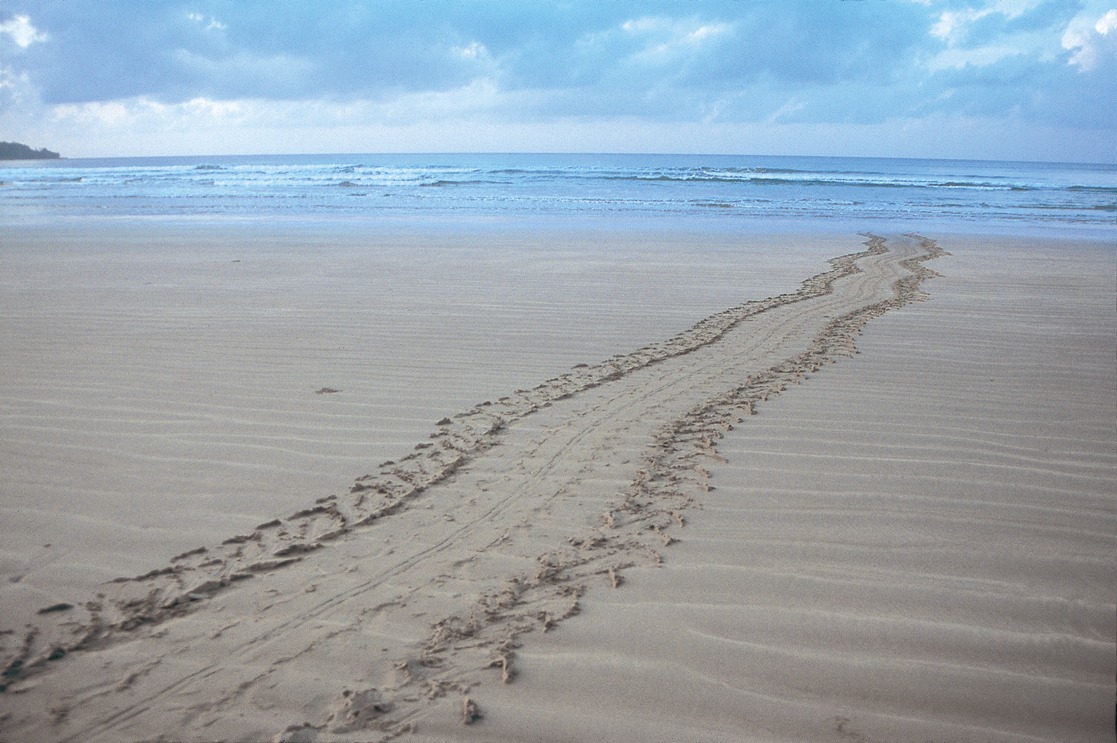
There is a good cause for the global community to also be concerned. The Giant Leatherback nests off the Andaman and Nicobar waters on the beaches, and then it goes to Australia, the same turtle. They've been satellite-tracked travelling 10,000 kilometres to the eastern coast, and another set of female turtles went 12,000 kilometres to the African coast. This is a global species.
And, and I'm just talking of some of the more iconic, charismatic, big species. It is incredible what we will lose.
The people who are the original inhabitants and stewards of these islands, the particularly vulnerable tribal groups including the Shompen who are uncontactable and about whom little is known, how have their concerns been recorded and responded to? You write in your introduction to the book about tree felling by the colonisers in the 1900s. All these decades later, is the same extractivism repeating itself?
The Shompen, like you said, are not contactable. So how do we really understand their concerns?
In a detailed article in Frontline, Chennai-based lawyer T Mohan writes on how authorities falsely certified that the rights of the Shompen and the Nicobarese under the Forest RIghts Act, 2006, have been settled and that they have consented to the diversion of their forest lands for this project.
Committees under the FRA should have representation from that community when the matter concerns a PVTG, but that community remains unrepresented. It becomes procedurally and legally null and void, but authorities have gone ahead and done it.
The process of the settlement of rights under FRA was not undertaken in the 18 years since the law was enacted, because these communities had free access to the forest, and the lands had been declared tribal lands, so FRA was never implemented.
Then when the project came up, they realised that they require clearances under the FRA to be given. Within 21 days of the constitution of committees under the FRA, the administration said all claims over land were settled, and that the tribal communities had consented to the diversion of forest land for the project. The tribal council of Little Nicobar and Great Nicobar then wrote to authorities saying the claim was false, that their rights had not been settled, and that they had not consented to the diversion of forest lands.
So there are grave problems in how the law protecting tribal people’s rights was not followed.
The Shompen are uncontactable, nobody speaks their language, so we have a situation of how to even understand what they want. Then you have the Nicobarese, the other community who have clearly expressed wide concerns with the project. A letter they wrote is in the annexures to volume 1, stating that they were withdrawing a no-objection certificate they had given to the project.
There are interesting histories to these lands on which they have lived forever. The Nicobarese were moved after the tsunami, and they now want to go back to their original lands. They live currently in shanties in the main administrative headquarters area, and they’re unable to go back to their lands though it has been 20 years now. Now suddenly they find that their lands are actually part of the project.
Also, a large part of this island is a tribal reserve under a local regulation. A large part of this tribal reserve is going to be de-notified. There is actually a document by the tribal welfare department to the project proponents, saying they can help facilitate access to that land. This is the irony, a department whose mandated job and purpose is tribal welfare and protection, actually writes to the project proponent offering to help get access to tribal lands.
About denotifying the tribal reserve, the claim is that they will renotify some other land as a tribal reserve, but these are their lands anyway. Saying that net-net the land under the tribal reserve will increase does not undo the dispossession.
There are 300 Shompen people, who have never been exposed to outside diseases, outside culture, modern lifestyles, housing, sewage. More than three lakh people are set to arrive on their lands from the outside.
If you look at the environment impact assessment report and the environment impact assessment conditions, they are just unimplementable, illogical. So all the paperwork is done, the boxes have been ticked, but if you look at the details, there are huge gaps at every level. So not only have they not been considered and consulted, but their rights have been violated.
Is there a book three on the anvil or is there another project that you have in mind next?
Certainly, there is a lot of very new interesting material that people have been writing and researching, such as a detailed letter that a group of researchers have sent out to the environment minister; then the article in Frontline by Advocate T Mohan on the FRA violations; I wrote something just a few days ago in The Hindu on how what the environment ministry is claiming in the National Green Tribunal and what is actually happening on the ground are in contradiction to each other.
There has been concern in the creative arts community, particularly with illustrators, photographers, etc about the impact of the project and about the ways in which it is proceeding. It's too early to think of a third volume, but maybe what would be nice is a different kind of engagement, a more visual product. Maybe even an exhibition of photographs, art work, documents... Let's see.
(Kavitha Iyer is a senior editor with Article 14 and the author of ‘Landscapes of Loss’, a book on India’s farm crisis.)
Get exclusive access to new databases, expert analyses, weekly newsletters, book excerpts and new ideas on democracy, law and society in India. Subscribe to Article 14.