
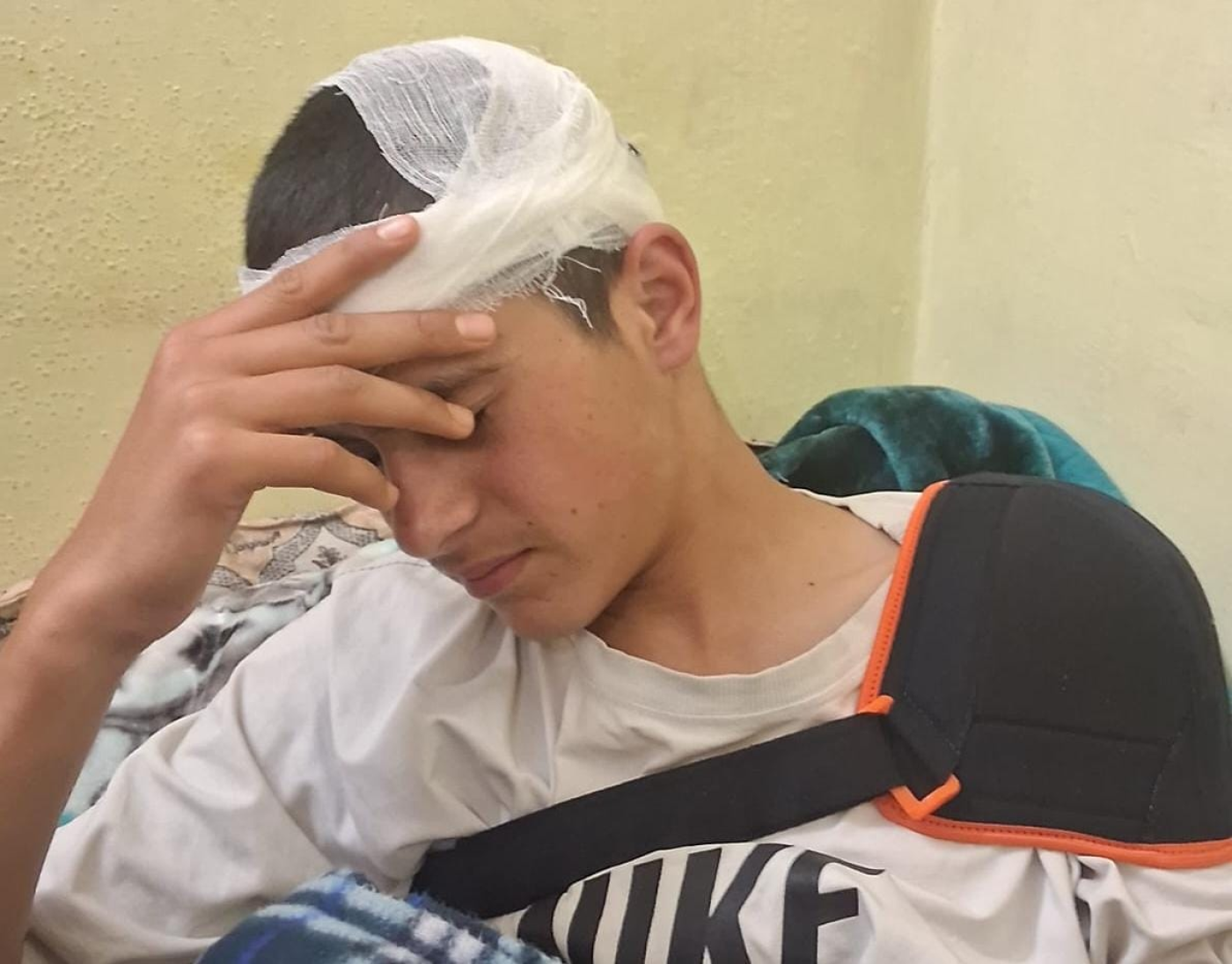
Srinagar: His head is bloodied and bandaged. A hand broken by an iron rod is in a sling. Despair and shock are evident on his baby face.
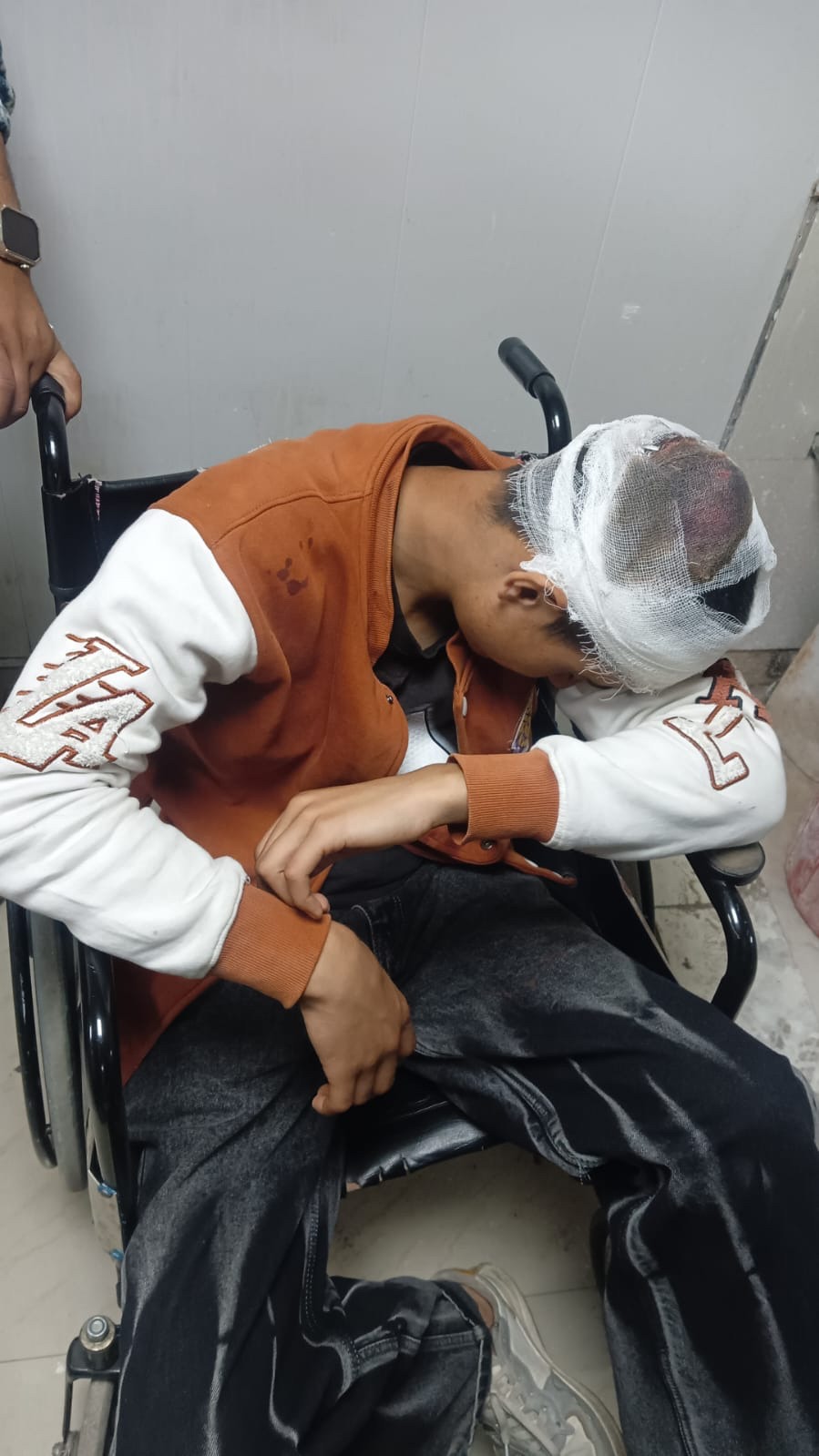
This was the photo of a 10th-standard Kashmiri student, 18-year-old Tabish Ahmad Ganie, that went viral after he and his brother, Danish Ahmad Ganie, a 10th-standard dropout, were battered by a shopkeeper and two others in the town of Vikasnagar, 40 km west of Dehradun, the capital of Uttarakhand, on 28 January 2026.
Speaking over the phone from his temporary home in a rented room in Himachal Pradesh, Tabish, who accompanied his father to Uttarakhand during the winter holidays, told Article 14 he was struggling to come to terms with not just the attack but the religious and ethnic profiling.
“Tu Kashmiri Muslamaan hai (You are a Kashmiri Muslim)?” the shopkeeper, identified by police as Sanjay Yadav, said, according to Tabish, who had 12 stitches on his head, his left arm in a sling.
Like thousands of salesmen and labourers who stream out of Kashmir to earn a livelihood in a state with one of India’s highest youth unemployment rates, the Ganie brothers had joined their father over the last four years in the 17-hour journey from their home in the north Kashmir frontier district of Kupwara to Vikasnagar.
The attack on the Ganie brothers was the latest of many by Hindus and Hindu groups since the 22 April 2025 Pahalgam terror attack on Kashmiris in north Indian states, especially in Uttarakhand and Haryana, both governed by the Bharatiya Janata Party (BJP) and Himachal Pradesh, run by the Congress.
A ‘Small Quarrel’
Uttarakhand inspector general of police (law and order) Sunil Kumar Meena described the attack on the Ganie brothers as a “small quarrel”.
There was no "selected target”, Meena told Article 14, pointing to the hundreds of Kashmiri students in Uttarakhand who did not face harassment.
But Kashmiri shawl vendors, students, labourers and others have indeed been singled out for intimidation, harassment and violence, as the videos proliferating on social media, usually shot by the attackers, make clear (here, here, here, here, here and here.)
According to Nasir Khuehami, national convenor of the Jammu and Kashmir Students Association, which tracks such attacks, more than 200 Kashmiris faced harassment or assault after the Pulwama attack. In Himachal Pradesh alone, at least 17 such incidents were recorded in 2025, he added.
These are reported incidents. Many may not be.
Although police have registered cases and arrested some accused, the recurrence of attacks suggests little effective deterrence.
“We don’t tolerate such nonsense, especially based on caste, location or religion,” said IGP Meena. “These things happen… and nobody was targeted because of their particular location (meaning region).”
Khuehami said assailants often appear to enjoy “institutional backing”, with charges framed so weakly that accused persons secure bail within days or weeks.
Meena said Yadav had been arrested, and he and another attacker faced charges of voluntarily causing grievous hurt and provoking a breach of peace.
In several cases, said Khuehami, victims are pressured to compromise, discouraging them from pursuing complaints and allowing perpetrators to walk free.
One example is Surjeet Rajput Guleria, a former soldier from Himachal Pradesh. On 17 January, Guleria harassed and humiliated a Kashmiri hawker, livestreaming the incident on Facebook.
The video shows him making sexual and communal remarks about Kashmiri Muslims, accusing them of supporting Pakistan and of stone-pelting.
"Tumari behan, betiya waha pe bolti thi na… Pakistan jayenge pet me bachha layenge? (Your sisters and daughters used to say there, right… they will go to Pakistan and return pregnant)." Guleria says in the video. “Aap toh fouj ko dekh ke ye Hindu ko pathar marte the na, Kashmir me…. aur love jihad kartay ho (You used to see the army in Kashmir and throw stones saying they are Hindu… and you do love jihad)."
Although, as per Khuehami, the police summoned Guleria, no first information report (FIR), the starting point of a criminal investigation, was registered. On 1 February, Guleria allegedly harassed another Kashmiri hawker and again livestreamed the incident on Facebook.
Emboldened Attackers
Three days after the attack on the Ganie brothers. Guleria allegedly harassed and attacked Mohammad Ramzan, a Kashmiri hawker in Kangra district, Himachal Pradesh and livestreamed the assault.
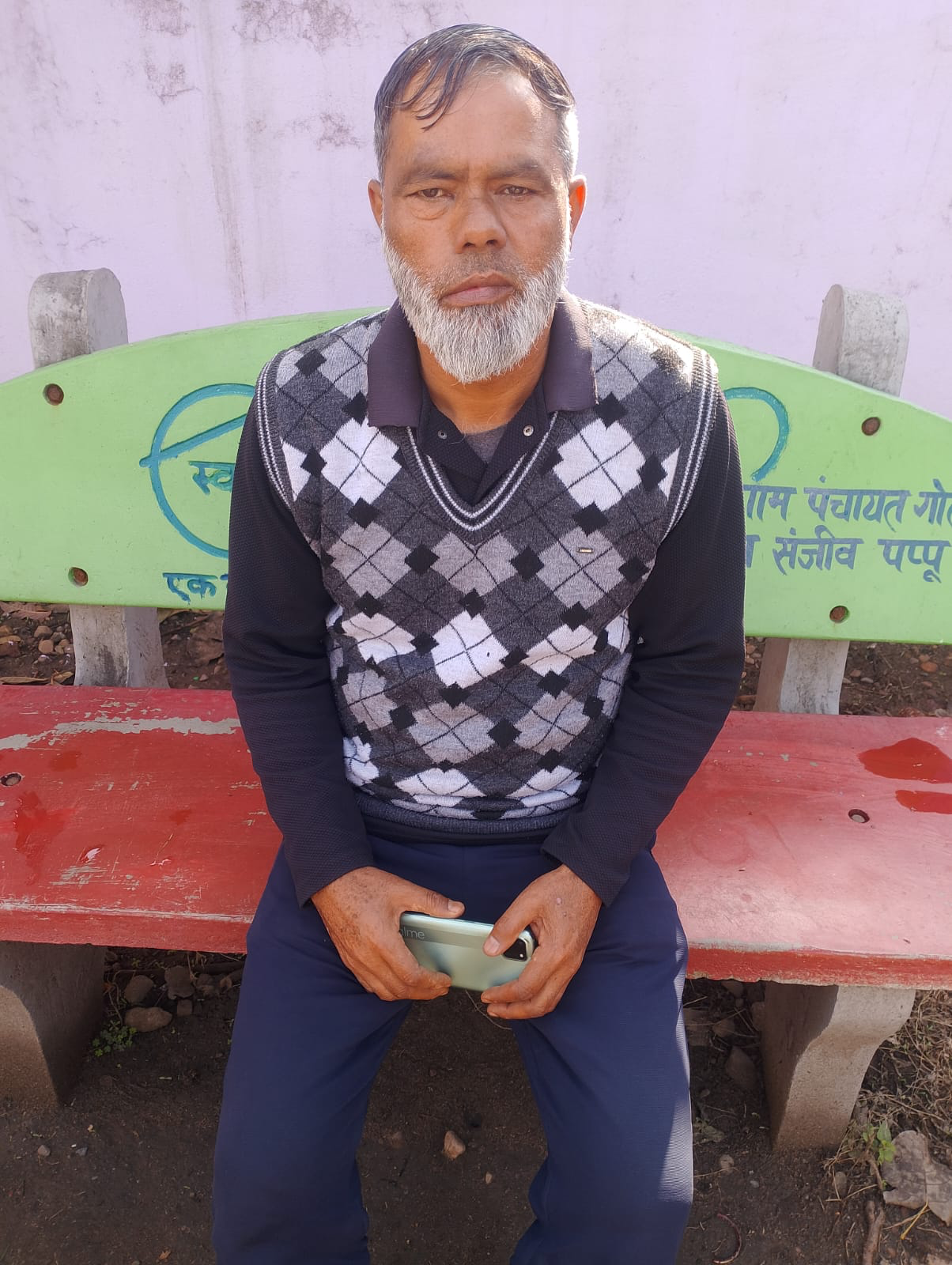
“He (Ramzan) was reportedly threatened and given an ultimatum to leave the state, while his shawl bundles were checked and he was mockingly accused of carrying an AK-47 instead of Kashmiri shawls,” said Khuehami.
Ramzan told Article 14 that he received a call from the police station, Rehan in Jawali, Himachal Pradesh, seeking details about the harassment.
“They assured me that the accused will be summoned, but didn’t register any FIR,” said Ramzan.
“Guleria does not specifically target Kashmiri hawkers,” said Sunil Kumar, the station house officer. “He does this (asks questions and livestreams it on his Facebook account) with all non-locals, including those from Uttar Pradesh and Bihar.”
“The police are verifying things, we are trying to maintain peace in the area,” said Kumar.
That such attacks are a pattern is evident by a spate of them over the last two months alone. While Khuehami said violence against Kashmiri is particularly common after a terror attack, there is often little provocation—except that the victims are Kashmiri.
On 25 December 2025, shawl vendor Bilal Ahmad was beaten by right-wing Hindu extremists in Kashipur, Uttarakhand, for refusing to chant “Bharat Mata Ki Jai” (hail mother India). The Indian Express reported that the attackers posted the video of the assault online.
On 31 December, the Haryana and Himachal Pradesh police registered two separate cases after alleged assaults on Kashmiri shawl sellers were reported in both states.
The attacks on Kashmiris come despite the Indian Constitution guaranteeing the right to freedom of movement under Article 19(1)(d) throughout the territory of India and Article 19(1)(g), which guarantees all citizens the fundamental right to practice any profession or carry on any occupation, trade, or business.
‘I Thought He Would Kill Me’
The attack on the Ganie brothers came when Yadav, the shopkeeper, ignored their attempts to get his attention and buy snacks because he was on the phone.
“I told my brother in Kashmiri… let’s leave and buy snacks in another shop,” said Tabish. As they turned to leave, the owner, furious when they spoke Kashmiri and realised they were Muslim, attacked them with an iron rod, soon joined by another man and woman.
“Ye Kashmir nahin hain, Uttarakhand hain (this is not Kashmir, this is Uttarakhand),” the shopkeeper yelled, according to Ganie. “I thought he would kill me.”
Yaseen Ganie, father of Tabish, told Article 14 that the family had been travelling to Himachal Pradesh and Uttarakhand for 12 years, trying to make a living, and had never faced such treatment before.
Ganie said he travelled to Himachal Pradesh this year with his family—his wife, daughter and two sons—after his wife was injured in an accident and he wanted to keep her close.
His sons later went to Uttarakhand to collect business dues. Ganie alleged that the attackers also stole Rs 22,000 in cash and shawls worth about Rs 70,000.
“I was devastated when I learnt about the incident,” said Ganie, who added that such hostility had become routine in Uttarakhand over the past year.
With no winter employment in Kashmir due to heavy snowfall, he said, there was no alternative to travelling outside the state.
Khuehami said approximately 100,000 Kashmiris were trying to make a living outside the Muslim-majority region, despite the surge in hate crimes.
“I have to feed my family,” said Ganie. “This is our only source of income.”
Kashmir’s Employment Drought
With the onset of winter, thousands of Kashmiris—mostly from rural areas—set out to other states to sell handmade goods such as shawls, suits and papier-mâché items, often door-to-door or on the streets. Most arrive in November and return after March, though some stay on to work year-round.
Amid the growing hostility, vendors said they faced mounting challenges, including boycott calls linked to their regional and religious identity, often by right-wing groups. Several shawl sellers told Article 14 that the hostility had intensified over the past year and that there appeared to be a coordinated attempt to drive them out.
Ejaz Ayoub, a Srinagar-based economist, said most shawl vendors come from Kupwara district in north Kashmir, a heavily militarised region near the Line of Control, the de facto border between India and Pakistan. Many work as Army porters during the summer or engage in farming.
“In winter, when there is no work, they travel outside the state for survival,” Ayoub said. “They have sold shawls, dry fruits and handicrafts for generations. This is the only skill many of them have.”
On 15 December 2025, the union government told Parliament that Jammu and Kashmir (J&K) recorded an unemployment rate of 6.1% in the July–September 2025 quarter, higher than the all-India average of 5.2%.
In March 2025, Article 14 reported that despite promises from Prime Minister Narendra Modi and other members of the ruling party that economic and job opportunities would rise after J&K’s special constitutional status was deleted on 5 August 2019, many youth, including PhD and MBA holders, could not find work that matched their qualifications.
We found many working as roadside vendors and gig workers in a region with India’s highest unemployment amongst urban youth and young urban women since April 2024.
J&K’s unemployment rate, as per the official Periodic Labour Force Survey, was lower than the national average before it lost its statehood and has been higher since, from 5.1% against a national average of 5.8% in 2018-19 to 6.1% against 3.2% in 2023-24.
Ayoub said many young people had no option “but to go out in a hostile territory”.
Take the example of Shabir Ahmad Dar, also a resident of Kupwara. Dar, along with his colleague, Iqbal Ahmad, was attacked on the Mall road in the heart of the Uttarakhand resort town of Mussoorie and asked to leave on 23 April 2025, after the Pahalgam terror attack.
After that incident, around 16 to 20 Kashmiri shawl vendors left Mussoorie and returned home. After only 15 days, they returned.
“We remained idle at home… had no work,” said Dar, who now sells shawls in Uttarakhand’s holy Hindu town of Haridwar, from which Hindu groups now want non-Hindus banned. “We all have families, so we decided to return and work again.”
‘Wilful Neglect Of Public Duties’
The ruling J&K government appeared helpless in addressing the growing hostility towards its residents. Soon after the attack on the Ganie brothers, chief minister Omar Abdullah said that Kashmiris were living in fear in other parts of the country.
“…It can’t be claimed that J&K is an inalienable part of India while people from Kashmir, in other parts of the country, live in fear for their lives,” he posted on his X handle.
Abdullah told reporters it was important to create a “strong ecosystem” for employment within J&K.
“Unlike other States, I cannot ask my people to leave J&K and seek employment elsewhere,” said Abdullah. “We have seen what our people have faced outside in recent times, whether in Himachal Pradesh or what happened recently in Uttarakhand. As a result, our people are now looking inward rather than going outside.”
Imran Nabi Dar, spokesperson of the ruling Jammu and Kashmir National Conference, said Abdullah had reached out to Uttarakhand Chief Minister Pushkar Singh Dhami and sought “strict action”, but warned that such incidents were unlikely to stop amid a worsening “communal environment” in the country.
“When those at the top use language that is openly genocidal, what do you expect?” Dar said, referring to BJP leaders (here, here and here). “Unless the Bharatiya Janata Party controls its leaders, these attacks will continue.”
Former union minister Yashwant Sinha said that, barring a few voices, civil society remained largely indifferent. “Nobody is concerned about what is happening to Kashmiris—inside Jammu and Kashmir or outside it,” he told Article 14, warning that growing hostility would further alienate the Valley.
Ravi Nair, director of the South Asia Human Rights Documentation Centre, said existing criminal laws on assault, intimidation, confinement and theft must be applied without exception, adding that political hate speech should invite prosecution.
“In the absence of accountability from the Centre and the states,” Nair said, “what we are seeing is not a failure of law—but a wilful neglect of public duty towards citizens.”
(Auqib Javeed is an independent journalist based in Jammu and Kashmir.)
Get exclusive access to new databases, expert analyses, weekly newsletters, book excerpts and new ideas on democracy, law and society in India. Subscribe to Article 14.