
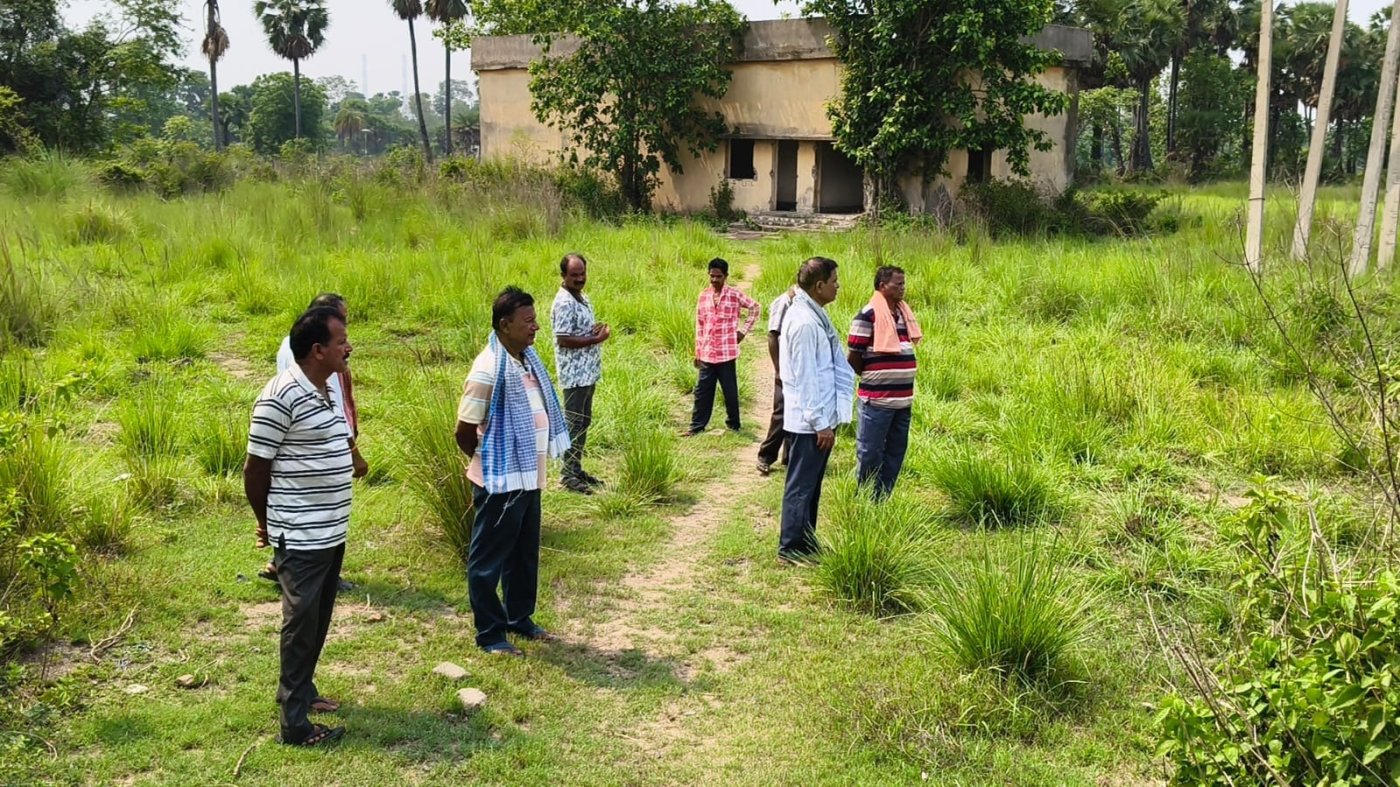
New Delhi: Pramod Nayak, 62, once owned nearly 14 acres of farmland in Kurunti village on the banks of the Brahmani river. The land yielded paddy during the monsoon and moong (green gram) and urad (black gram) in the months that followed. Mango and banana trees supplemented the family's income.
Like many farmers in the area, the Nayaks relied on shallow wells for irrigation. Seasonal flooding from the Brahmani periodically deposited fresh silt on the fields.
"In 2005, floodwaters submerged everything," recalled Pravin Nayak, Pramod's son, now 38. "When the water receded, the land became even more fertile."
Between 2008 and 2010, the Nayaks were among hundreds of families in Kurunti and the neighbouring village of Kharagprasad who surrendered land for a thermal power project proposed by the Hyderabad-based Lanco Group.
Nearly two decades later, their ageing parents and unemployed children are struggling to rebuild their lives.
The farms that sustained them are gone. The future they were promised in the form of jobs never arrived. Instead, they watched as the project stalled and its machinery was dismantled before operations could begin in earnest.
Dhenkanal is part of a much larger pattern of contested development across India.
Land Conflict Watch, a think tank, has documented over 921 ongoing land conflicts related to renewable-energy projects alone, affecting more than 10.5 million people and involving over 2 million hectares of land.
India has no official estimate of development-induced displacement over the past two decades. However, scholars estimate that between 50 million and 60 million people were displaced by dams, mines, industries and other development projects between Independence and the early 2000s, making India one of the world's largest sites of development-related displacement.
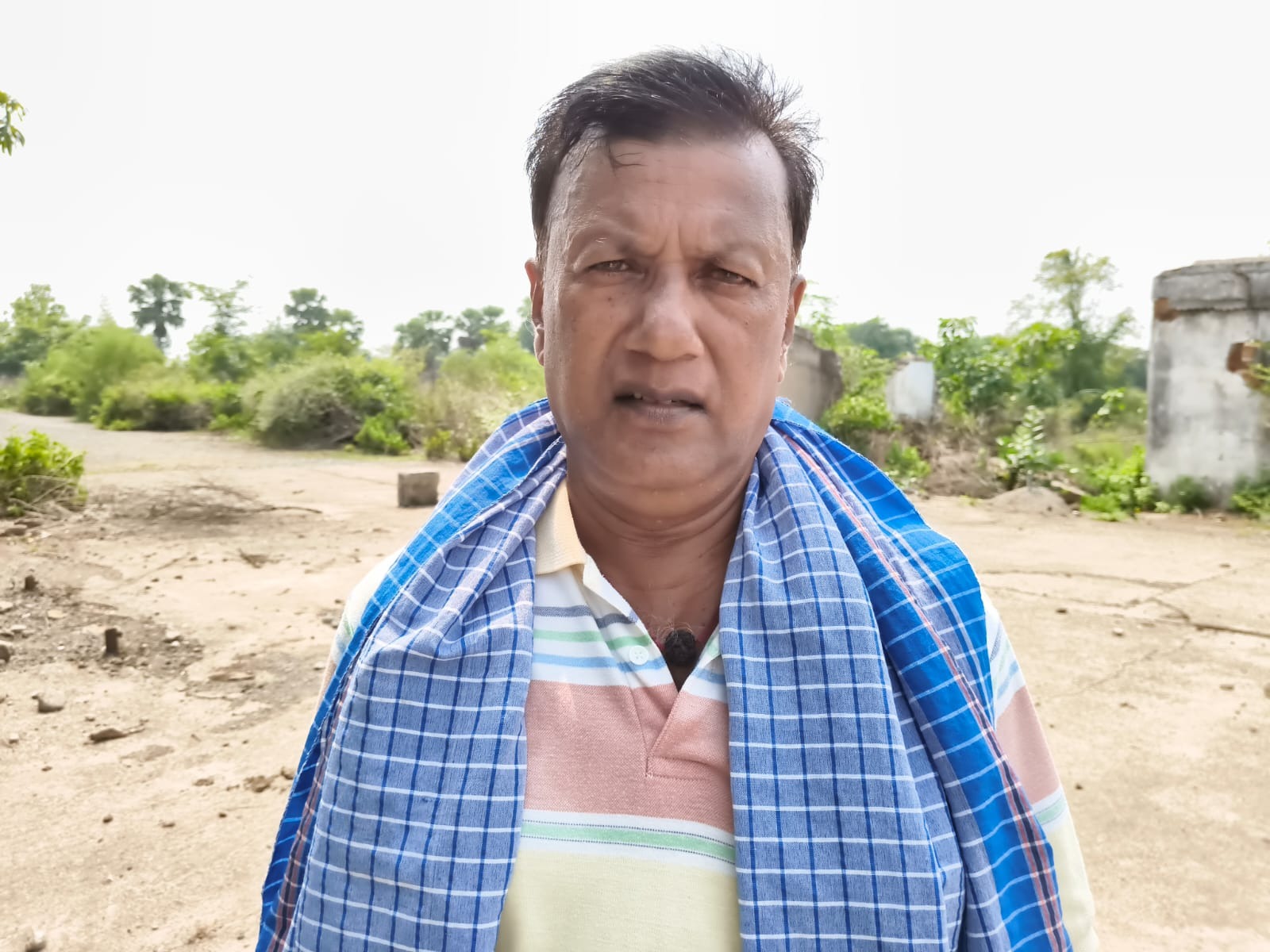
“The company had promised jobs to my brother and me,” said Pravin Nayak. “Many young men in the area received similar assurances. I still have the letter from Lanco in a tin trunk at home.”
“We agree to offer suitable placement to the above-mentioned person on operationalization (sic) of our power plant/coal mines/auxiliary units which (sic) is likely to be in March 2012,” reads Lanco’s letter. “The candidate will be placed in suitable (sic) position in any of the above divisions depending on his qualification, experience and being found suitable in the departmental selection process.”
Pravin Nayak completed a B.Tech in 2010 but remains unemployed, getting by on odd jobs or “business,” as he calls it. The compensation has largely run out.
A Jindal Resurgence
Today, the land that farmers say they lost for nothing is set to host a Rs 35,000-crore steel project involving JSW Steel and South Korean steelmaker POSCO—part of a sweeping expansion by the JSW Group across Odisha under the state's new BJP government, with investments running into nearly Rs 1 lakh crore across Keonjhar, Dhenkanal, Jagatsinghpur, and Sambalpur.
The agreement with POSCO marks the company’s return to Odisha nearly a decade after it withdrew from its proposed 12-million-tonne steel project in Jagatsinghpur district.
That project, announced in 2005 as a proposed US$12-billion investment, was abandoned after prolonged disputes over land acquisition and opposition from local communities.
For many of those who gave up land nearly two decades ago, the announcement has revived questions that remained unanswered after the collapse of the original project.
The dispute dates back to September 2006, when the Odisha government signed a memorandum of understanding with the Lanco Group to establish a thermal power plant in Dhenkanal district.
From Thermal Power To Steel
Through the Odisha Industrial Infrastructure Development Corporation (IDCO), 887 acres were acquired across the villages of Kurunti and Kharagprasad—plots acquired from farmers as well as leasehold land transferred through the state industrial development agency.
In February 2010, the union environment ministry granted clearance for a project comprising two 660-megawatt units. Construction began, and substantial infrastructure was created.
Government records show that by the end of 2016, more than Rs 7,400 crore had been spent on the project.
Documents submitted to the environment ministry in 2017 showed civil construction at 56% completion and engineering works at 93%, with electrical and mechanical installations also at advanced stages. Some media reporting estimated that nearly 80% of the project had been completed before work stopped.
But the finances of the Lanco Group deteriorated rapidly.
Liquidation
In August 2018, the NCLT ordered the liquidation of Lanco Infratech. Within days, insolvency proceedings were initiated against its subsidiary, Lanco Babandh Power Limited (LBPL), which held the Dhenkanal project. The Hyderabad bench of the NCLT ordered the liquidation of LBPL on 27 November 2019. The power plant was never commissioned.
In August 2021, the 887-acre land parcel was sold through an electronic auction.
Auction documents show the reserve price was initially fixed at Rs 90 crore for an e-auction scheduled in April 2020, later revised to Rs 100.18 crore—about Rs 12.5 lakh per acre. The successful bidder was Saffron Resources Private Limited, which acquired the land for about Rs 92 crore.
No public documents indicate the final reserve price at which the land was sold.
Four years later, JSW Steel acquired Saffron Resources. In January 2026, the Odisha government announced that JSW Steel would establish a greenfield steel plant at the site.
What The Villagers Lost
When Lanco's thermal power plant collapsed into insolvency, it left behind a trail of broken livelihoods.
Local residents who had invested their savings as contractors, suppliers and labourers on a project that was nearly 80% complete found themselves with neither work nor recourse. The land they had helped build on was quietly auctioned off with no public record of the final sale price.
As work progressed, residents say they provided civil, electrical and mechanical services, investing substantial sums in equipment, materials and transport. Much of the construction activity relied on local workers and businesses.
Documents submitted by the company to the union environment ministry in 2017, while seeking an extension of environmental clearance, showed that civil construction had reached 56% completion and engineering works 93%. Electrical and mechanical installations were also at advanced stages.
The plant's machinery and equipment were also sold during the liquidation process. Auction documents indicate that the sale of machinery and equipment as scrap may have generated more than Rs 200 crore—including equipment installed at the project site as well as imported machinery lying at the ports of Paradip in Odisha and Visakhapatnam in Andhra Pradesh during 2020-21.
Records further indicate that equipment imported through Paradip port by the Lanco subsidiary was purchased by another JSW Group company, Jindal Steel, through an e-auction conducted on 27 August 2021.
The proceeds from land and equipment sales were used to repay creditors. In December 2022, the project's 265-metre chimney—among the last visible remnants of the unfinished plant—was demolished by a third-party contractor.
In a letter to the Securities and Exchange Board of India (SEBI), the farmers' organisation Anchalika Silpanchala Khyatigrashta Prajasangha said local contractors, suppliers and workers are owed between Rs 250 crore and Rs 300 crore for services rendered to the project.
“Despite assurances given in the presence of district authorities, Lanco representatives and the official liquidator, no relief ever materialised,” the letter stated.
Auction documents show that the reserve price for the 887-acre land parcel was initially fixed at Rs 90 crore for an e-auction scheduled in April 2020. By April 2021, the reserve price had been raised to Rs 100.18 crore, or about Rs 12.5 lakh per acre.
No public documents indicate the reserve price at which the land was eventually sold in August 2021.
Questions Over Land Transfer
The proposed steel project has drawn attention to how the land moved from the original project company, Lanco, to its present owners.
According to filings with the Registrar of Companies, Saffron Resources was incorporated in December 2014 with a paid-up capital of Rs 100,000. Company records indicate it reported no turnover during the three financial years preceding its acquisition by JSW Steel.
Its principal asset was the 887-acre land parcel acquired through the insolvency auction.
In a stock exchange filing in July 2025, JSW Steel disclosed that it had acquired Saffron Resources at an enterprise value of Rs 679.34 crore. That transaction has since become the focus of complaints filed by local residents and a forum representing families who lost land for the original project.
In a letter sent to SEBI in January 2026 and in our possession, the forum alleged that the land had been sold during insolvency proceedings at a fraction of prevailing market prices. The forum claimed the effective sale price worked out to roughly Rs 10 lakh per acre and argued that industrial land in the region was valued significantly higher at the time.
Article 14 could not independently verify these claims.
An application filed under the Right to Information Act seeking details of the 2021 auction—including the number of bidders and competing bids—was rejected by the NCLT, which said information relating to judicial proceedings had to be obtained through procedures prescribed under court rules.
The absence of publicly available details about the auction has become one of the central issues raised by villagers and those who lost land.
Article 14 emailed questionnaires on 28 May to JSW Steel chairman Sajjan Jindal, representatives of POSCO, and senior officials of IDCO, including chairperson Usha Padhee and managing director D Prasanth Kumar Reddy.
The companies and officials were asked about the valuation of the land, the acquisition of Saffron Resources, compliance with lease conditions attached to portions of the land, and the approvals granted for subsequent transfers.
There were no responses at the time of publication. We will update this story if they do.
IDCO's Approvals
Documents reviewed by Article 14 show that IDCO approved the transfer of leasehold land associated with the project after the insolvency sale. In December 2022, it approved the transfer of nearly 300 acres of leasehold land to Saffron Resources, as well as 18.38 acres of forest land.
Subsequently, IDCO executed a lease agreement with Saffron Resources for the forest land parcel, stating it was being allotted for industrial development for an integrated steel project.
The lease contained conditions requiring construction to commence within six months and the land to be fully utilised within three years, with unused land liable to revert to IDCO.
On 28 May, Article 14 asked IDCO whether these conditions had been complied with and whether any review had been undertaken when construction did not proceed within the stipulated timelines. There was no response. We will update this story if they do.
Some of the original landowners have approached the Odisha High Court seeking resumption of land acquired for a project that was never completed.
In January 2026, the court disposed of a petition after recording that the petitioners had submitted representations to district authorities arguing that commitments associated with the original project had not been fulfilled. In May, the court granted additional time to enable discussions between the landowners and the district administration.
Those discussions are continuing.
Environmental Questions
Residents of villages near the proposed steel project have also raised concerns about its environmental impact, particularly given its proximity to the Brahmani river—Odisha's second-largest, formed by the confluence of the Sankha and South Koel rivers.
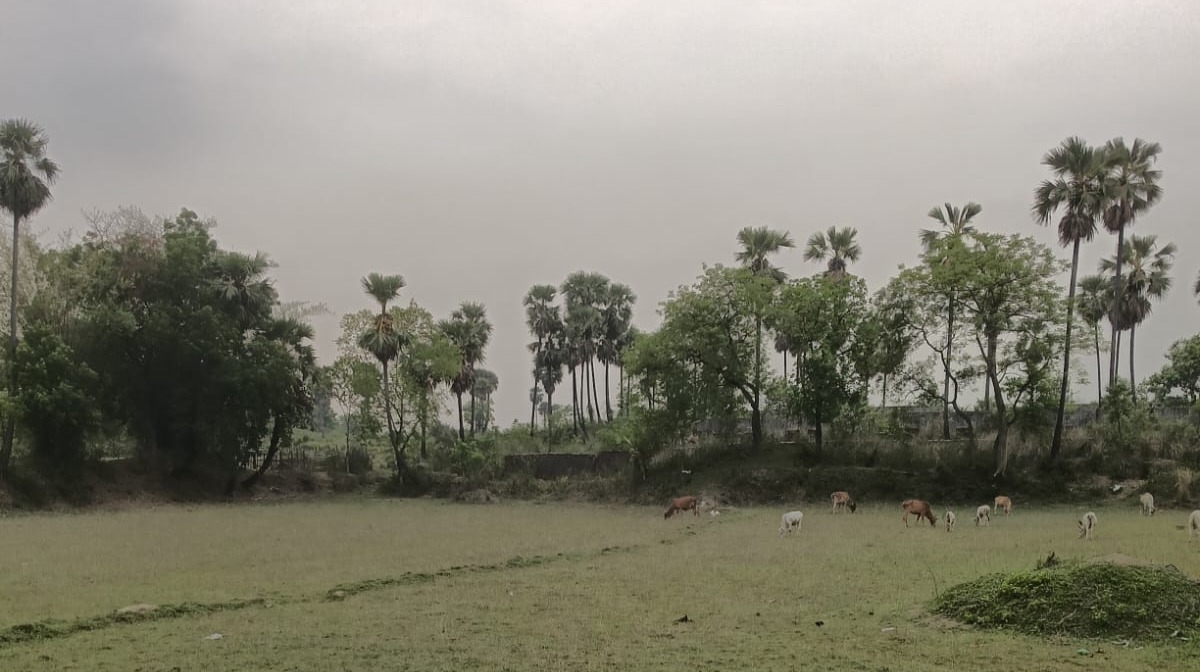
Environmental documents prepared for LBPL's abandoned thermal power project indicate the river flows within a kilometre of the site.
Local residents say environmental conditions in the region have deteriorated since the thermal power project was first proposed. Air quality data indicate annual average PM2.5 levels exceeding 30 micrograms per cubic metre — around six times the WHO's annual guideline value. (PM stands for particulate matter.)
The project site also lies less than 50 km from the Angul-Talcher industrial belt, designated a "critically polluted area" by the Central Pollution Control Board in 2009-10.
Concerns about the Brahmani's water quality predate the proposed steel project. A 2004 report by Odisha's water resources department estimated that industries in the Angul-Talcher region discharged nearly 198,701 cubic metres of wastewater into the river daily, with domestic sewage from riverside townships identified as an additional source.
More recent studies published in international scientific journals (here and here) have linked pollution largely to industrial and human activity, with some reporting contamination levels that make the water unsuitable even for irrigation in certain stretches.
In 2010, the Odisha government permitted Lanco to draw 40 cusecs of water from the Brahmani for the thermal power project. The company later modified its fly ash disposal plans, proposing to transport the slurry by pipeline to an ash pond across the river to minimise the risk of contamination.
No equivalent environmental assessment for the proposed steel plant is publicly available yet.
‘Who Cares If We Live Or Die?’
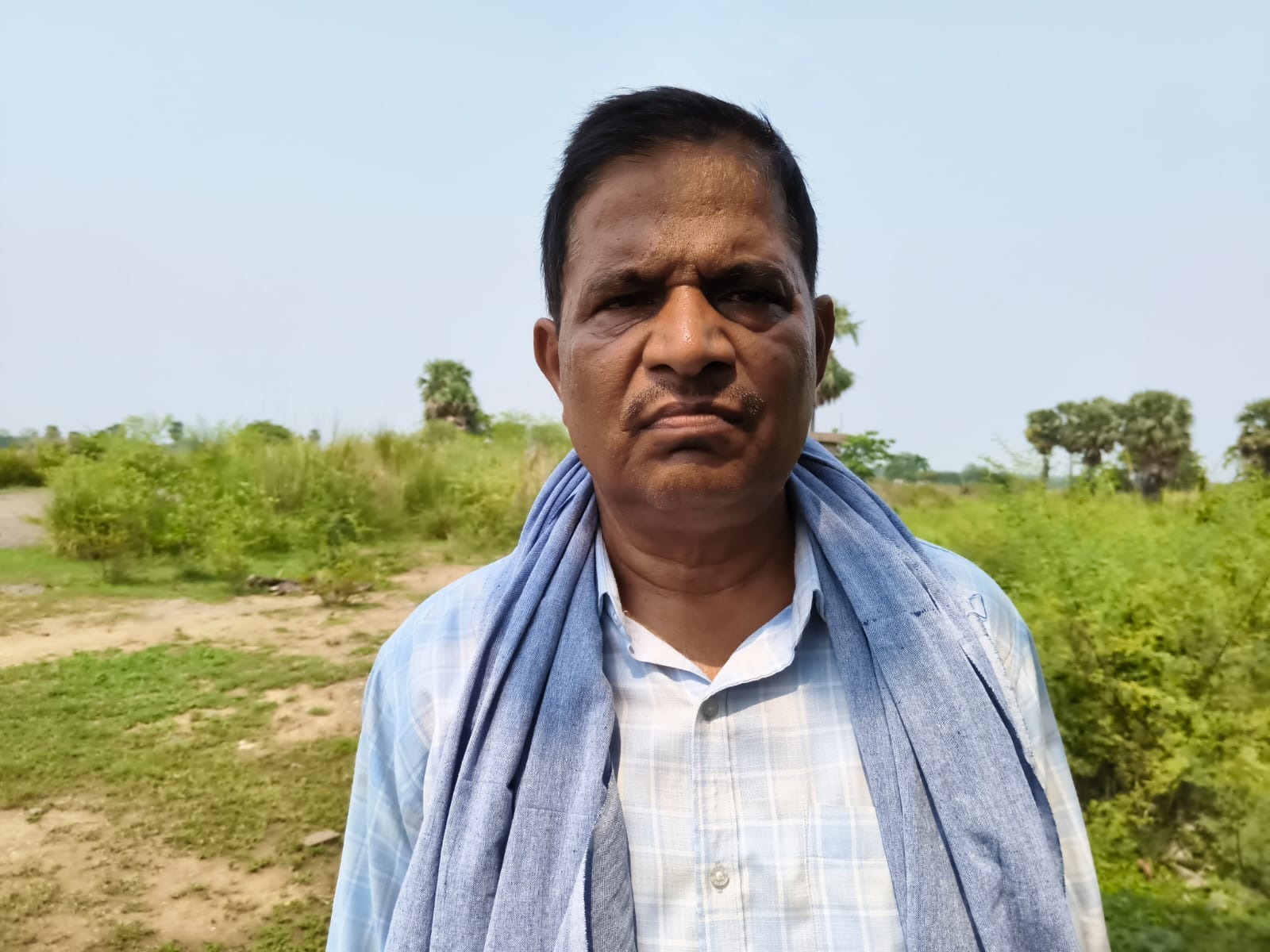
Back in Kharagprasad, Kailash Rout, 67, said his eldest son, then freshly out of college, got a job as a coordinator in the human resources department of the under-construction power plant. He lost his job when the project stalled. His dues from the company were never cleared.
“Many of his friends, whose families had lost farmlands to the project, also lost their jobs at the same time,” said Rout. “Even they are awaiting their dues.”
Rout's family lost two parcels of land to the project. One, measuring about 2.5 acres, included ponds and other water bodies.
“The assessment was not conducted properly when land was acquired,” he claimed. “The water bodies were never taken into consideration for the purpose of determining compensation. The amount was deposited by the government in the treasury office of Dhenkanal. But we never accepted the compensation amount, and it continues to lie there.”
Rabi Narayan Nayak, 62, of a nearby village called Kurunti, voiced similar concerns. His family lost 3.74 acres of farmland. He alleged several flaws in the acquisition process, but villagers eventually relented because of promises of jobs and the broader development the project was expected to bring.
Assessments were “never done properly” when farms were acquired, Rabi Narayan Nayak, too, alleged.
“There were trees upon our ancestral farmland and a well that I had dug with financial help from the irrigation department,” said Rabi Narayan Nayak. “These were not taken into consideration at the time of land acquisition.
“The private companies that have successively claimed ownership over the land are well-off,” he said. “Who cares if those who lost land live or die?”
(Ayaskant Das and Paranjoy Thakurta are independent journalists.)
[Please note FYI: Hyperlinks (Certified Copy Lanco and Information Memorandum) on this document will take you to a shared Google Drive which contains hard copies of information of the assets to be auctioned. There are pictures of the chimney and a map showing the exact location of Lanco’s power plant near the Brahmani River in these documents. These are three small PDF files only.]
Get exclusive access to new databases, expert analyses, weekly newsletters, book excerpts and new ideas on democracy, law and society in India. Subscribe to Article 14.