
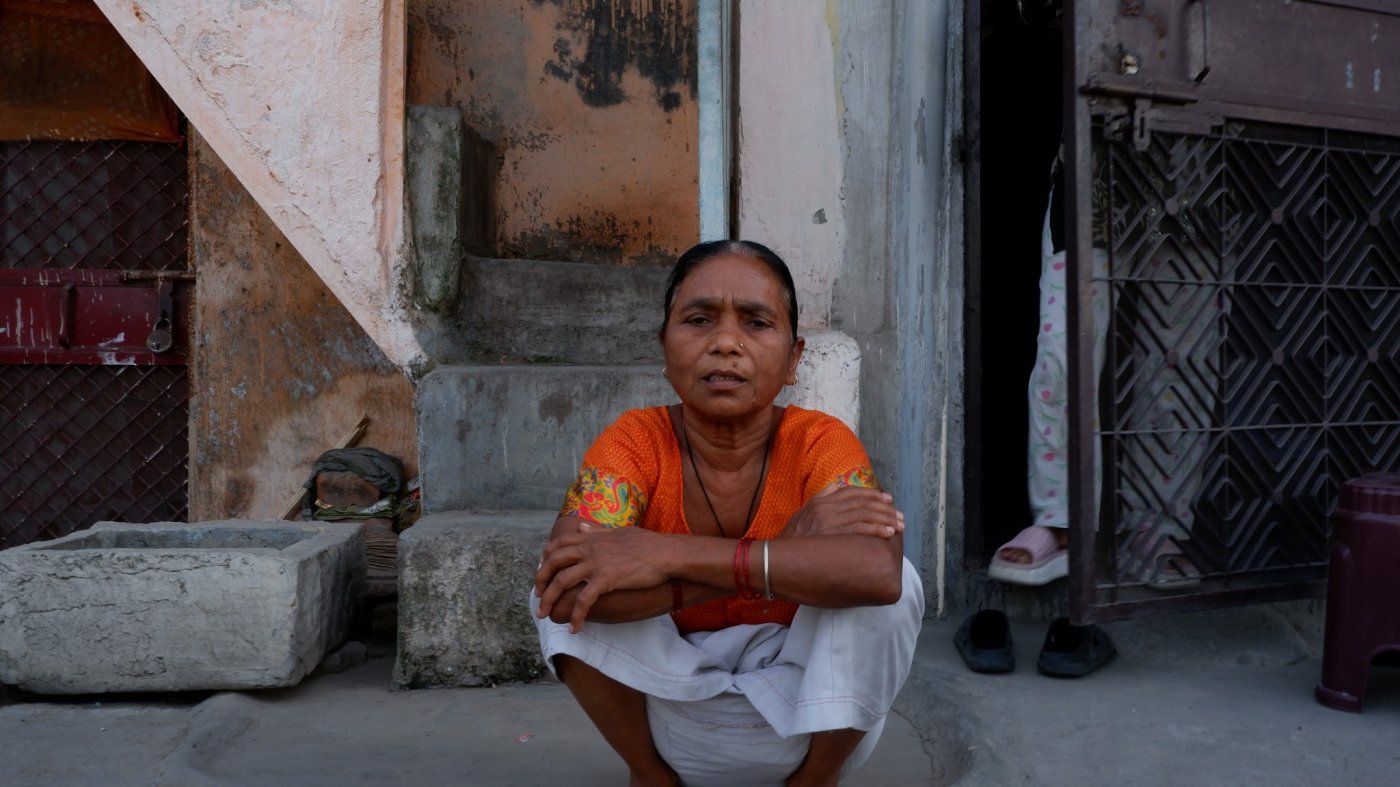
New Delhi: “I’m so scared that I cannot work, I cannot sleep. I will not leave my home and live on rent somewhere else.”
As she spoke, Chandrakala, a 50-year-old domestic worker who goes by a single name, sat outside her house in North Delhi’s Shalimar village.
Houses and shops in Shalimar village— an unassuming cluster of apartment buildings, right across a railway track and named after the adjacent Mughal era Shalimar Bagh—were marked for demolition in January 2026 when residents received government notices labelling the properties “encroachments”, stating that the state had taken over the land in 1980, after giving notice of the acquisition in 1959 and 1961.
The land is part of the right-of-way (RoW) for road number 320 in the 1987 Master Plan of Delhi, according to the notice. RoW refers to an area of land acquired by the government for utilities (such as roads).
/Shalimar%20Bagh%20Blk%20C&D-A.jpg)
On 6 April, the Delhi High Court upheld the demolition order of almost 150 houses and shops in the area, and set an eviction date of 30 May. Officials began demolishing the 143 structures on 31 May after the Supreme Court upheld the Delhi High Court order on 29 May.
Residents questioned the government’s right to take possession of the land more than 45 years after it was acquired.
“I was born here,” said 48-year-old Karan Singh, who had been skipping work to join the sit-in protest in the locality. “My family has been living here for the past five decades. If they evict us, we’ll end up on the streets.”
The Fight To Save Home
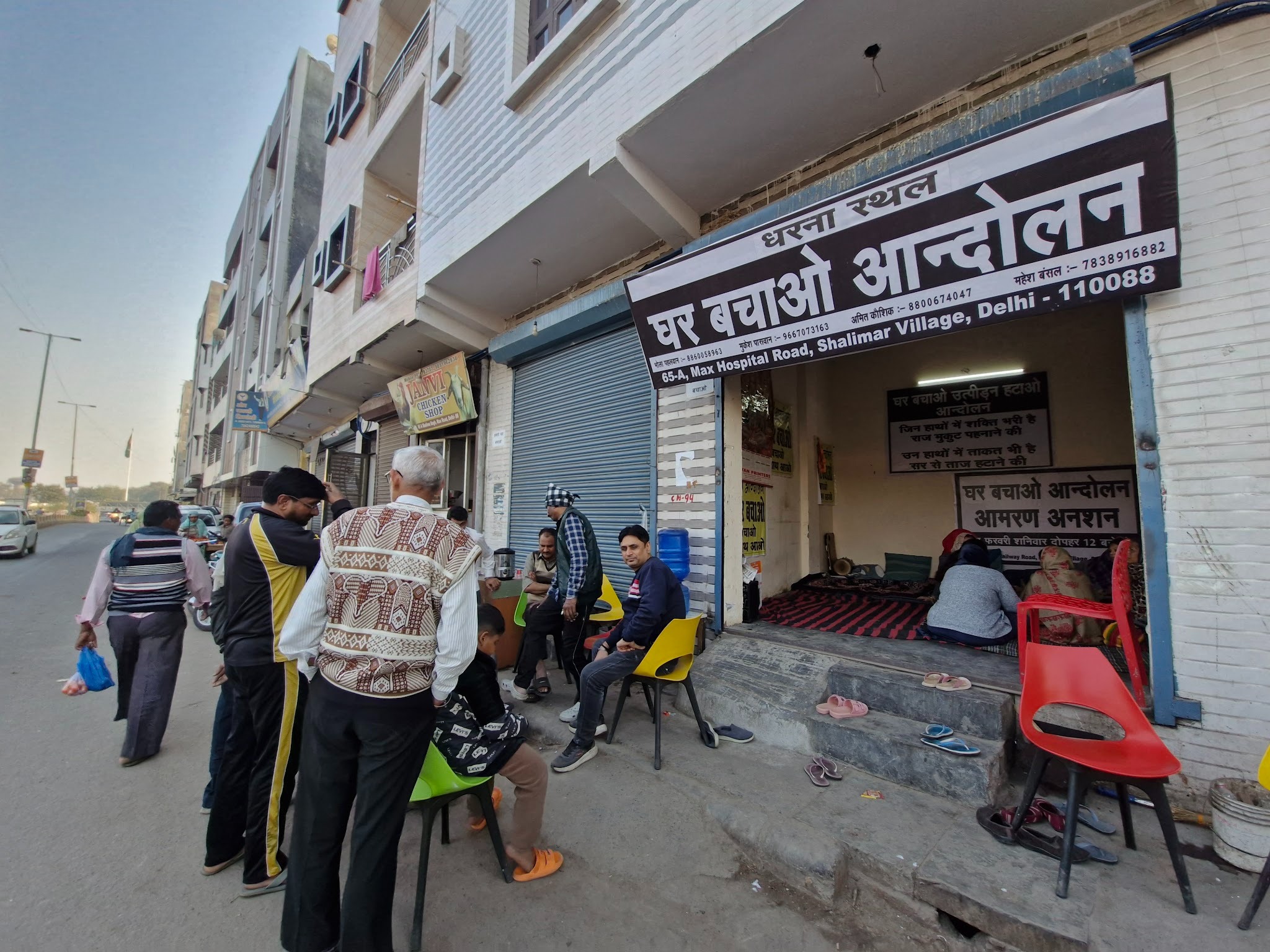
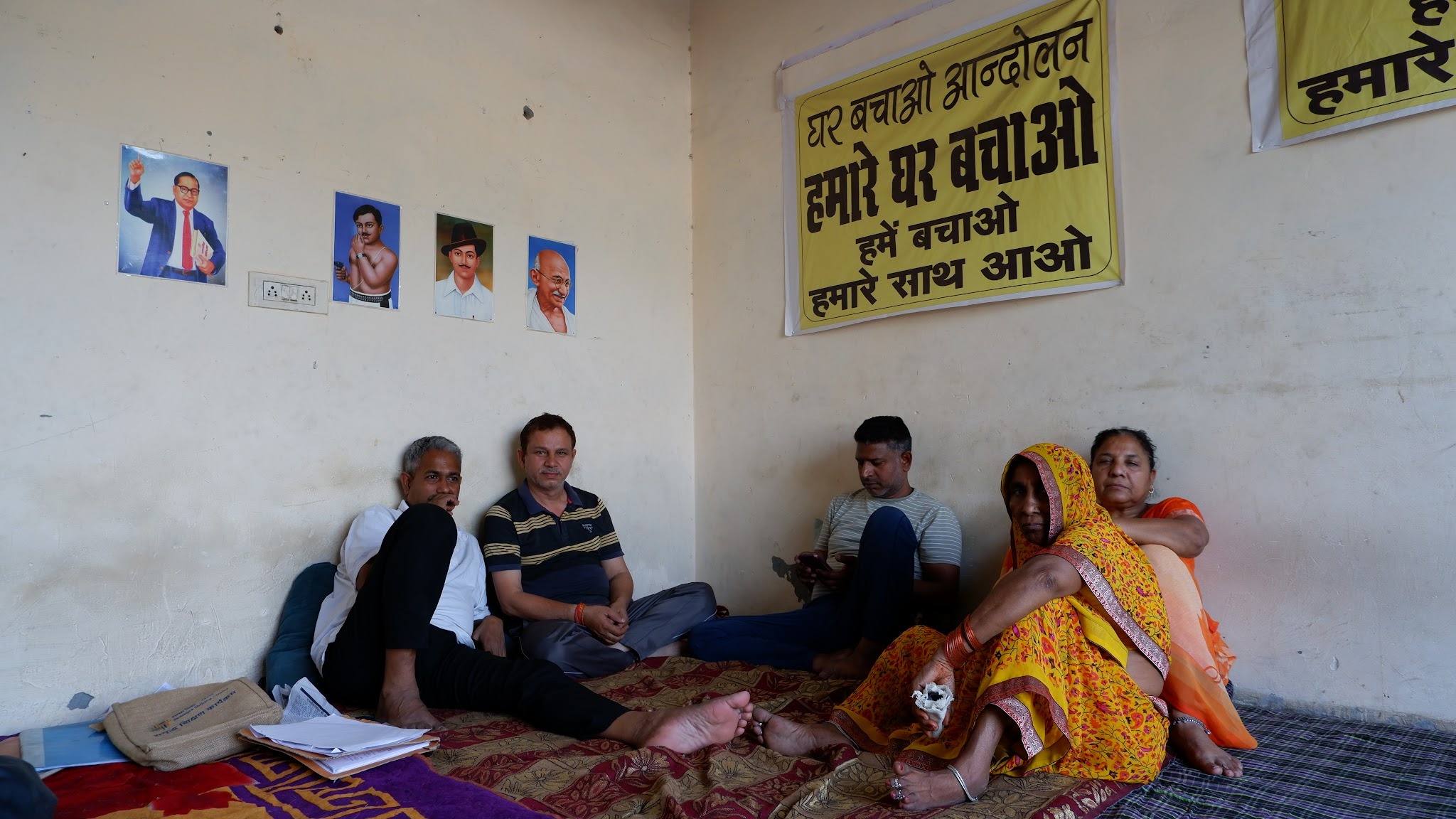
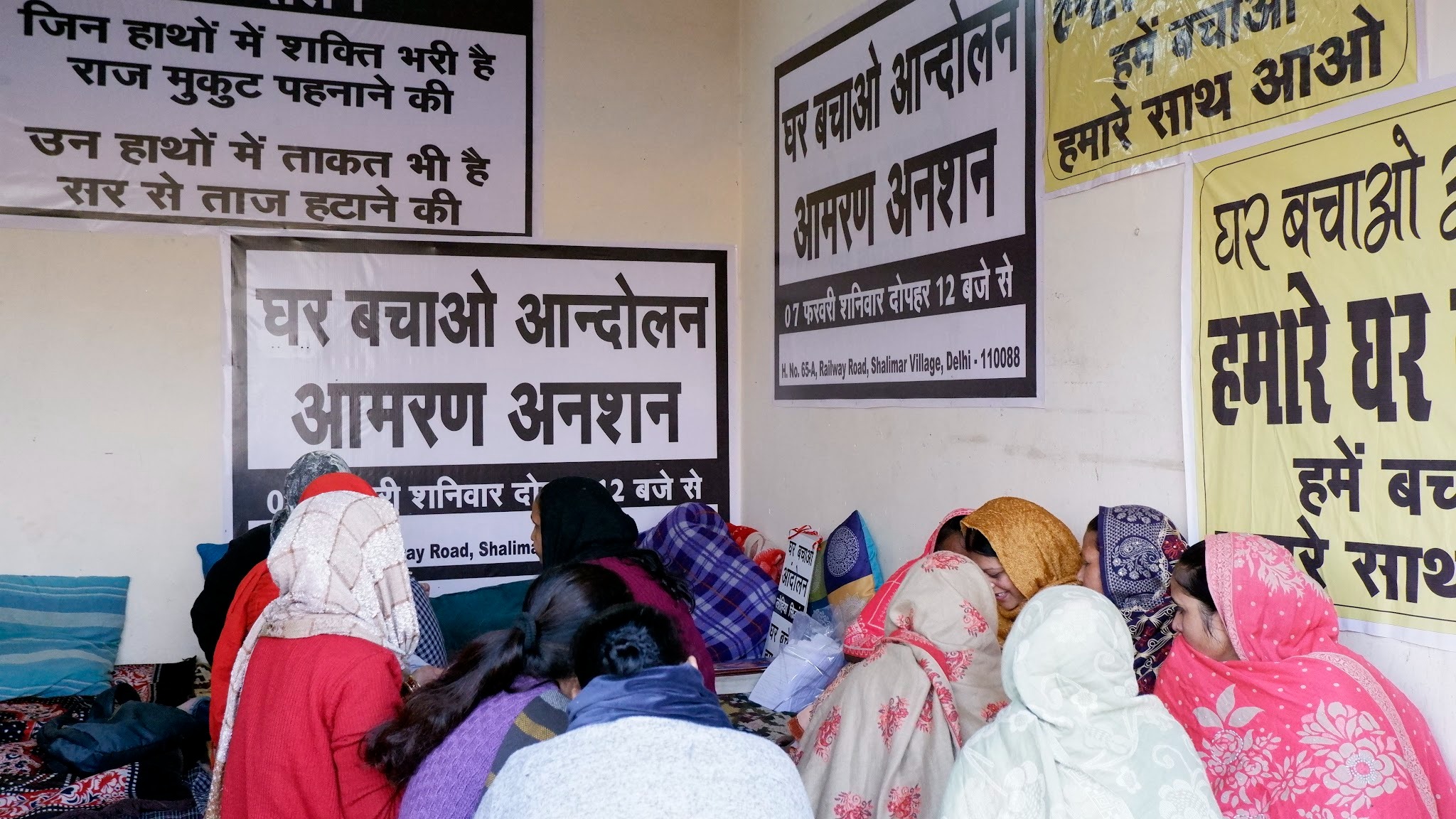
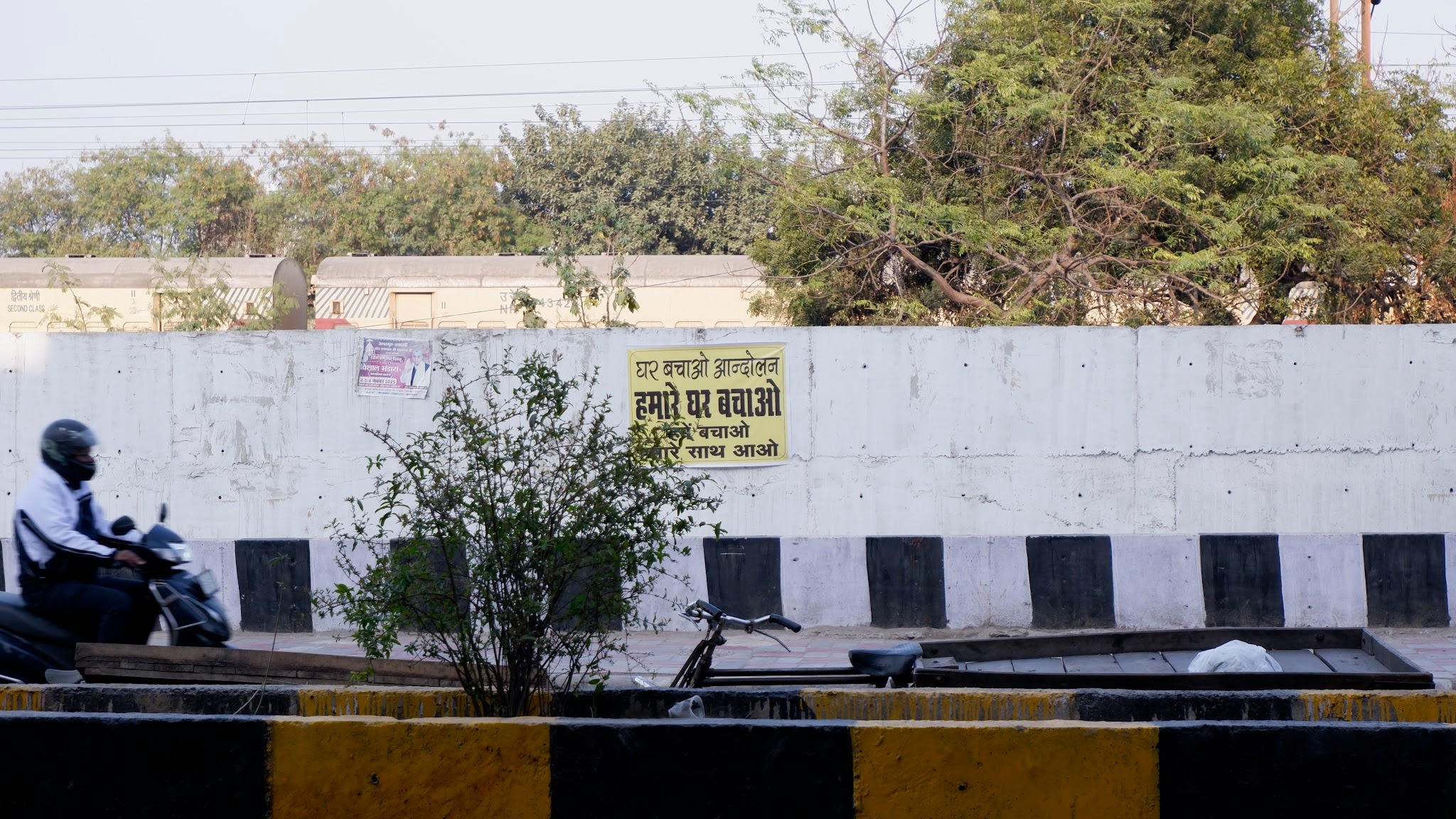
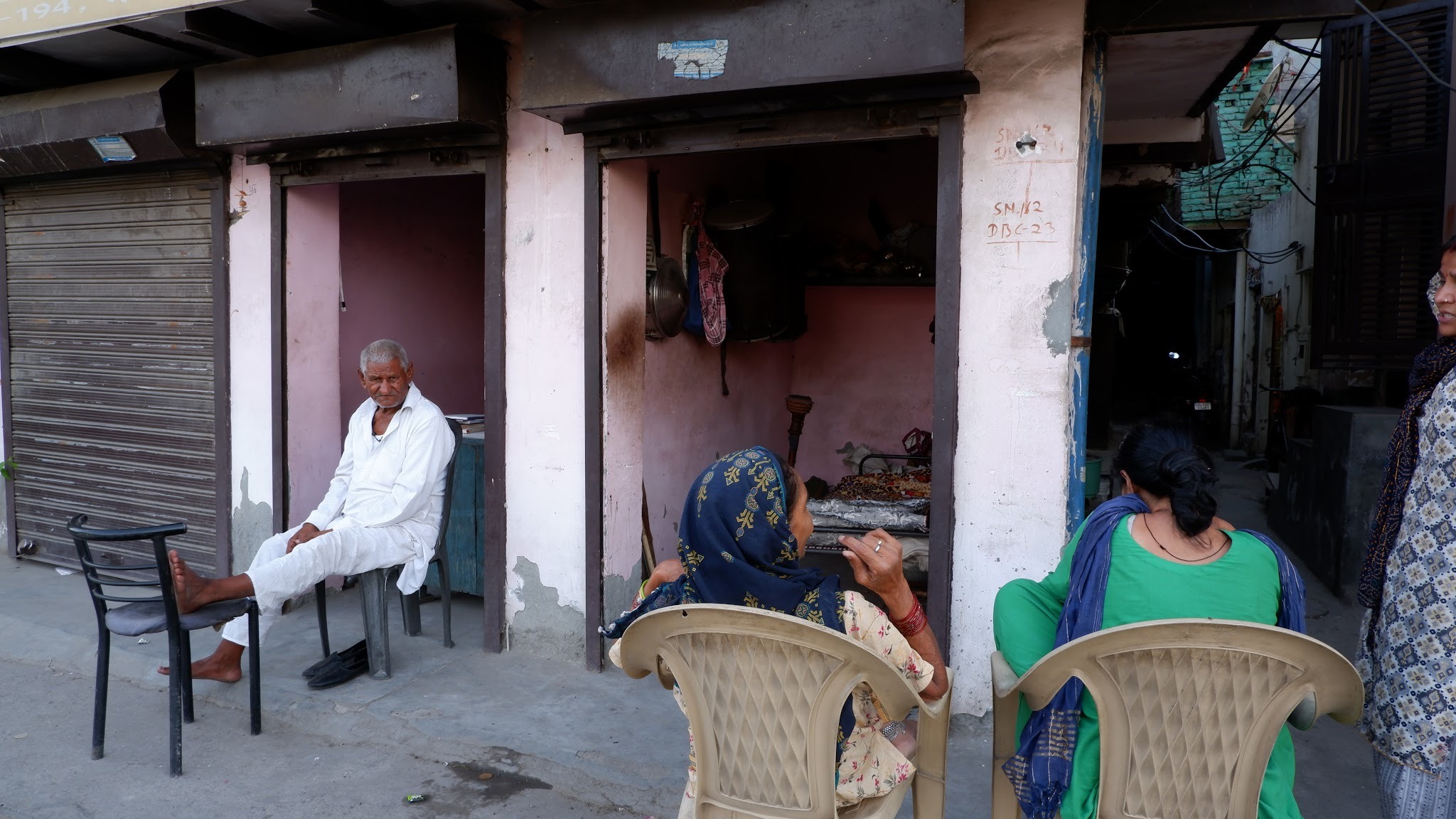
The people of Shalimar village had been on an indefinite sit-in in a small shop on the road proposed for widening since they received the show-cause notice. Walls at the site of the protest were covered with posters that say, “hamare ghar bachaye” (save our homes) and “ghar bachao andolan” (save houses campaign).
The April judgment was passed after a petition filed by the residents, challenging the demolition order and asserting legal ownership of the land.
Judges Pratibha Singh and Madhu Jain upheld the demolition notice, citing “broader public interest” and the importance of the road for “critical emergency vehicles”, noting that the road was an important route for ambulances from the hospitals about half a kilometre down the street.
The notice also stated that due compensation (under the Land Acquisition Act 1894) had been transferred to the revenue department for disbursement in 1981.
“The farmers [who owned the land] never received the compensation. We have bought the land directly from them, so how are we living illegally?” asked Mukesh Kumar, another resident, who is spearheading the ground-level mobilisation against the demolition
“If they are claiming that they have given compensation, then show us who has received this compensation,” said Singh. “Give us a list of those people.”
Requests for comment from the revenue department via email on 27 May 2026 remained unanswered when this story was published. We will update the story if they respond.
The court advised the government to take “appropriate decision regarding the grant of ex gratia compensation” for the current residents, who remain ineligible for compensation (under the original acquisition) otherwise.
The Delhi government announced a one-time payment of Rs 3,00,000 for each eligible affected family and temporary licence-based housing for up to 11 months for those without alternative accommodation.
The residents' review petition was dismissed on 18 May without a formal hearing.
The government asserted that documents like general power of attorney (GPA), wills and Lal Dora certificates do not establish ownership over the land, whereas the residents produced government issued documents, including property tax receipts, utility bills and even Prime Minister–Unauthorised Colonies in Delhi Awas Adhikar Yojana (PM-UDAY) conveyance deeds, claiming that they were made to believe that they had legal possession of the land.
With all documents declared void by the court, the residents have no choice but to give up their homes.
Govt Ignores Own Rules
In response to a claim of ownership raised by one of the residents, the official response (accessed by this reporter) from the additional district magistrate (ADM) and land acquisition collector for the zone, Rajiv Ranjan, reads, “The Hon'ble Supreme Court of India in ‘Suraj Lamp & Industries Pvt. Ltd. Vs State of Haryana’ held that transactions through Agreement to Sell, GPA or Will do not convey ownership rights in immovable property. Therefore, the claim of lawful transfer of ownership cannot be accepted.”
GPAs are legal instruments that authorise one person to act on behalf of another and have been misused in India to avoid paying taxes and duties. However, transferring authority and possession of property using a GPA without a registered sale deed does not transfer ownership.
“We have a registered sale deed from the original owner, and a government-issued khatauni (register for agricultural land, with details of owners and their landholdings), both dating back to 1972, and all the documents thereafter that establish ownership,” said 48-year-old Gulzar Ahmad, a resident who runs a small-scale dyeing business.
The owner inherited the land before 1950, according to the sale deed. Ahmad also holds a will, an agreement to sell and a GPA covering the property.
Other residents who had agreements to sell and a GPA said they believed they were legally purchasing the land from the original owners, unaware that the land had already been acquired by the government.
The 2019 PM-UDAY scheme, which aims to confer ownership rights to residents of “unauthorised colonies” in Delhi, recognises documents such as general powers of attorney, agreements to sell, and wills as an exemption from the Suraj Lamp precedent.
Shalimar village is one such colony that has been listed and mapped for regularisation under the scheme, codified in the National Capital Territory of Delhi (Recognition of Property Rights of Residents in Unauthorised Colonies) Act in December 2019.
Prem Singh, a retired Delhi Transport Corporation (DTC) employee, received the PM-UDAY conveyance deed, which he thought gave him official ownership of his recently bought shops in December 2021. The 70-year-old has lived in the area for 50 years.
“I bought two shops towards the road two years ago, both of which have been marked for demolition,” said Singh.
His house, farther away from the road, is safe for now.
Cancellation Of Deeds
Around the same time as the demolition notice, residents with PM-UDAY registration received a show-cause notice for the cancellation of their deeds.
The notice claimed that since the properties fall within the RoW for Master Plan Road 320, the deed is being cancelled on account of “false declaration” by the applicant, on the basis that the residents had declared that “the subject property does not encroach upon any Right of Way”.
Under the PM-UDAY Act, the Delhi Development Authority (DDA) must physically verify the property. This includes “field inspection” and “upload of inspection reports by the officer,” which would usually preclude such a “false declaration”.
Singh received the show-cause notice on 24 January, three days after the demolition notice.
“If the government has given an official deed, why would they take it back?” said R K Verma, a lawyer familiar with the case. “There is no such provision.”
“Why did they even give the PM-UDAY to the people?” said Mukesh Kumar. “What’s the value of a written document then? They just click pictures for their schemes and make a fool out of us.”
In a recent development, the power to confer conveyance deeds was handed over to the department of revenue, Delhi.
Requests for comment from the concerned ADM, the deputy director of planning for DDA, and PM-UDAY officials via phone calls and email on 10 May remained unanswered at the time of publication. We will update the story if they respond.
A Lack Of Formal Records
The official response of the ADM also asserts that “Lal Dora and extended Lal Dora certificate merely indicates that a particular property or structure falls within the Lal Dora or extended Lal Dora limits of the village abadi area.”
Lal Dora refers to the British-era practice of demarcating residential and agricultural land with a lal dora (red line), which helped with land records and revenue administration.
However, according to Delhi’s Department of Revenue’s website, a Lal Dora certificate “establishes that a person is the owner of a particular property/land in the ‘Abadi’ area of a village (i.e. area demarcated for habitation).”
“The whole of Delhi has been developed from agricultural land,” said Verma, the lawyer. “So most documents are either Lal Dora certificates, or transfers have been made through GPAs, because of a lack of formal records.”
Official Promises
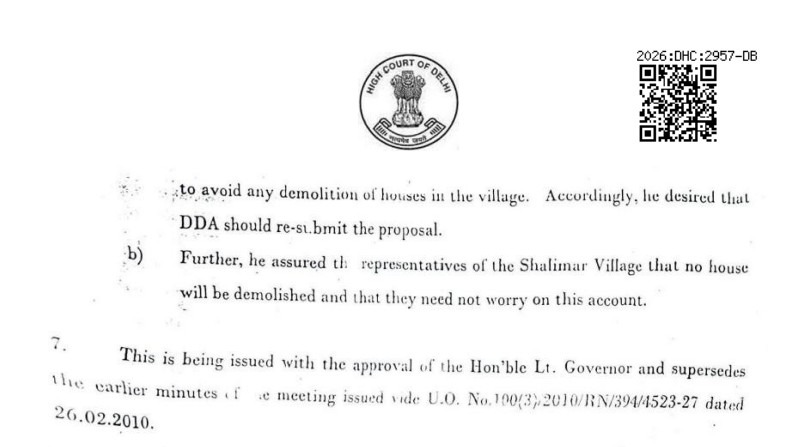
The residents also possess an official guarantee from the then lieutenant governor (LG) of Delhi in 2010 with the assurance that their houses will not be demolished.
The residents approached the LG, who is the chairperson of the DDA, when their area was notified for demolition as part of a road-widening project in 2010.
The statement, signed by the officer on special duty to the LG, Ranjan Mukherjee, reads that the “area had already been issued provisional regularisation certificate by the Delhi government”, and that “no house will be demolished.”
In 1981, the then-LG had also ordered the government to leave the settlement as it was.
The letter, from the then DDA deputy director (NL), K.K. Satyapalan, directed to the land acquisition collector (North), reads, “Lt. Governor had decided that the built-up residential area around village [Haiderpur, Shalimar and Harapur] abadi prior to 30th June, 1977 may be left from awards for the present terms of Government of India letter dated 16.2.1977 as subsequently notified vide their dated 6.12.78.”
These documents were also submitted to the court.
Many residents also express their disappointment towards BJP’s Chief Minister of Delhi, Rekha Gupta, who is the member of the legislative assembly for the Shalimar Bagh constituency. Residents claim they have tried multiple times to visit Gupta’s residential office, her jan sunwais (public hearings for grievance redressal) and her party’s office, to request intervention, but to no avail.
“We have visited her office. We have tried to ambush their party workers with gheraos, but we aren’t so sure now whether there’s any value to our efforts,” said Soni Upadhyay, 40, a housewife who was participating in the sit-in. “We just sit here now with the hope that our homes will not be broken.”
Gupta has not made any official comments on the demolitions but has linked an accident in the area to the “encroachments”.
Attempts were made to seek a response from the CM’s office via email on 10 May, but received no response. We will update the story if she responds.
‘We Won’t Leave’
“The government is claiming that this is their land. But if that is so, why did they not take hold of the land till now?” asked Verma. “If they have acquired the land and not claimed it for 30 years, the law of adverse possession confers ownership to those in possession.”
The doctrine of adverse possession, under the Limitation Act 1963, allows a person in possession of another's land to acquire a valid title if they maintain continuous, open, exclusive, and hostile occupation for a statutory period—12 years for private property and 30 years for government land in India.
Courts have held, though, that mere long-term possession does not automatically confer ownership or title unless the ingredients of adverse possession are strictly pleaded and proved.
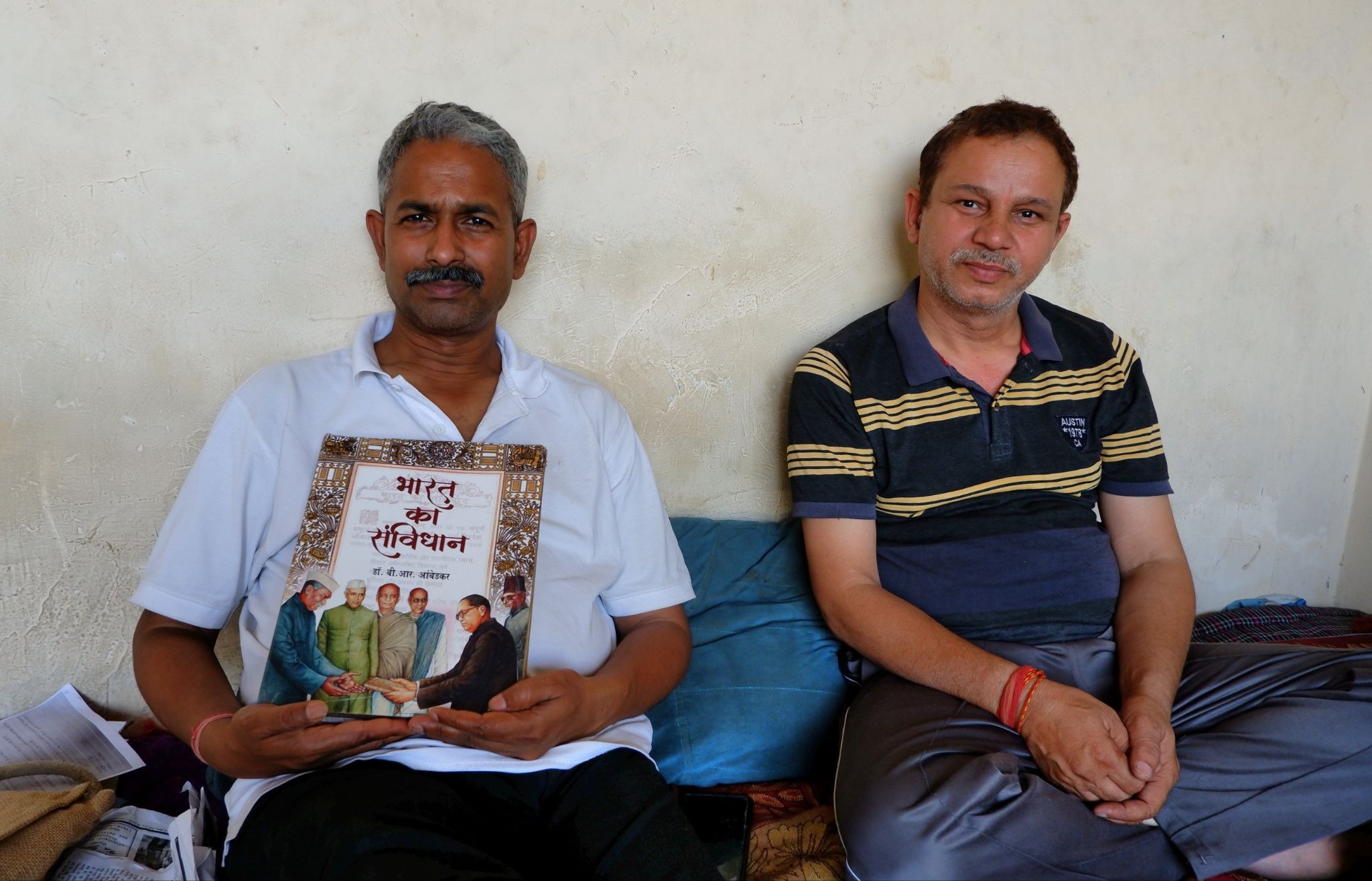
Mukesh Kumar, the social activist, asked why they had been provided government services and utilities at those addresses if they were believed to be living illegally.
“Why were we given electricity and water connections by the government? Why was our SIR mapping done from this address then?” asked Kumar. “The government facilitated the settlement—they made the roads and sewers, they provided the electricity and water. How is it our fault when they helped us settle?”
Kumar said he had sat at the protest site every day, from 8 am to 10pm. With four children, the eldest of whom is 22, Kumar refuses to think about what would happen if the government goes ahead with the demolition.
“We don't even think about leaving, because we have no options. We are helpless, and finding another place to live is not possible for us,” said Kumar. “We won't leave.”
An Uncertain Future
Women, most of them housewives, and children sat at the protest site during the day and were joined by their husbands at night after returning from work.
“Our husbands are daily wage workers, they take up work as they find it—as gardeners, drivers or factory workers. We are housewives and have hardly ever left our homes. We’ve been forced to come out on the streets,” said Geeta Tak, from behind her ghunghat (traditional veil).
Apart from anxiety about their future, residents are also burdened by the financial cost of fighting a legal battle against the government.
Kumar, who owned a factory that manufactured laser cutters, which has now closed due to financial difficulties, said, “I have daughters at home, but I am using my savings to fight against the government.”
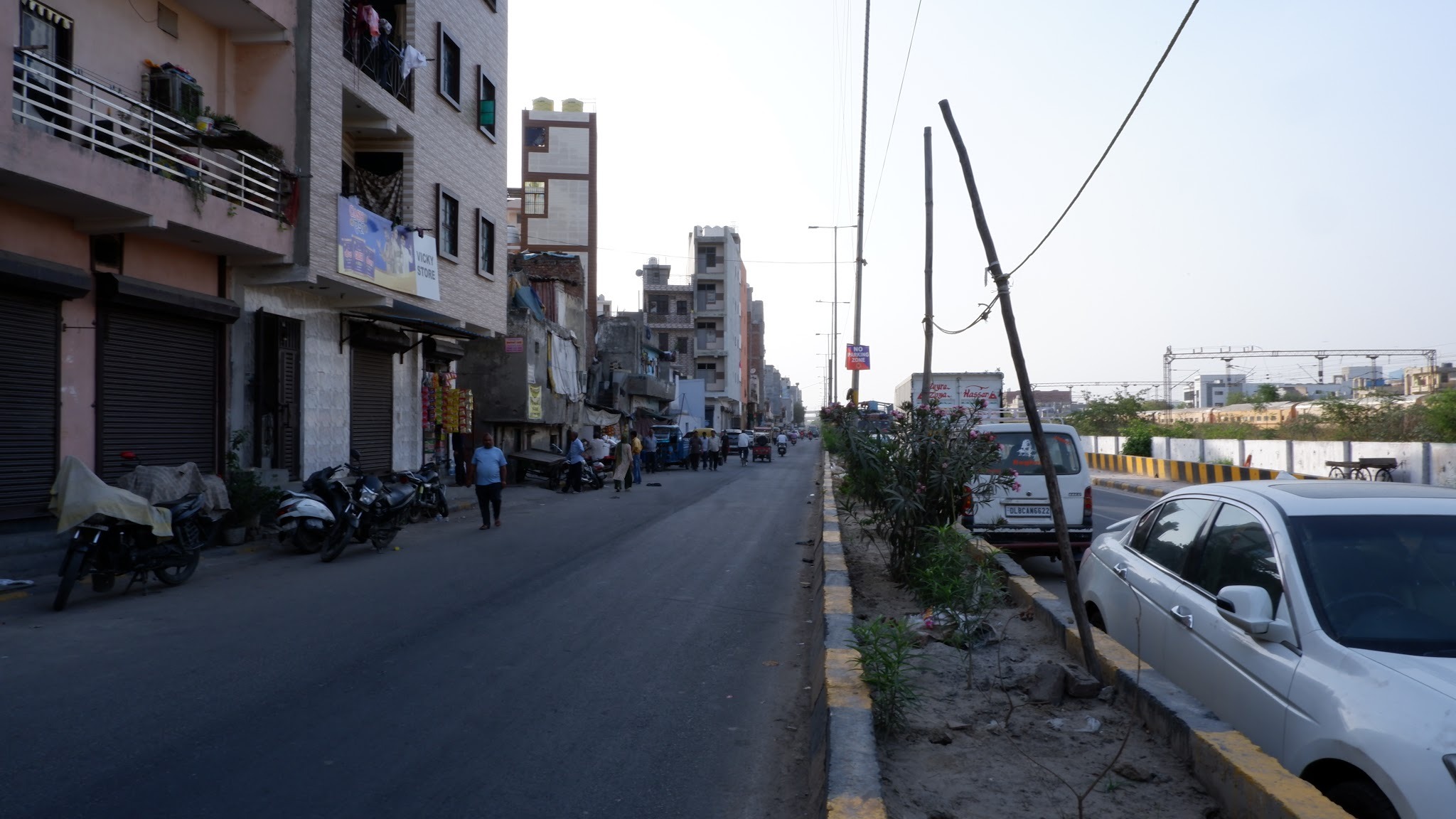
Residents say that the public good being claimed by the court is far from beneficial to them. The ADM and the Court have referred to a nearby hospital, and cited the need for smooth traffic flow near the hospital as a reason to widen the road.
“Look at the traffic, it moves unobstructed. The hospital is of no use to us, we don’t have the means to go there either way. No one is really concerned about us,” added Chandrakala, echoing a common sentiment among the residents about the road.
“Vikas ke naam pe aap vinash kijiyega, aisa kaise chale ga (This is destruction in the name of development),” lamented Kumar.
Verma insisted that the government should have looked for alternatives for the residents, who have lived in Shalimar village for more than five decades.
“We have talked to multiple town planners, and the common suggestion is to build a flyover instead, which would ease the traffic and also create two pathways, for small and big vehicles," said Verma.
While most residents were trying to fight the order, some had given up the dream of a better life in the city.
Jai Bhagwan, a band owner, sat dejected outside his shop. He said he had decided to take the family back to their village in Gohana, Haryana.
“All these plans are made for the citizens,” said Verma. “What good is it if you’re giving them a road by displacing them?”
(Mukaram Shakeel is a freelance journalist and a student at AJK MCRC, Jamia Millia Islamia)
Get exclusive access to new databases, expert analyses, weekly newsletters, book excerpts and new ideas on democracy, law and society in India. Subscribe to Article 14.