New Delhi: On 23 February 2026, an unwelcome mail landed in my inbox—not marketing spam or a phishing attempt of the sort we all grapple with these days, but a communication signed by the support team of X (formerly Twitter) and sent from its legal team’s e-mail address.
“In the interest of transparency,” it read, “we are writing to inform you that X has received a blocking order from the Indian Ministry of Electronics and Information Technology citing Section 69A of the Information Technology Act, 2000, regarding your X account...” This was followed by a link to a tweet I had posted three days earlier, along with advice on how I could contest the order if I wished.

“This is what the IT ministry has just blocked,” The Hindu reporter Aroon Deep tweeted on 23 February 2026.
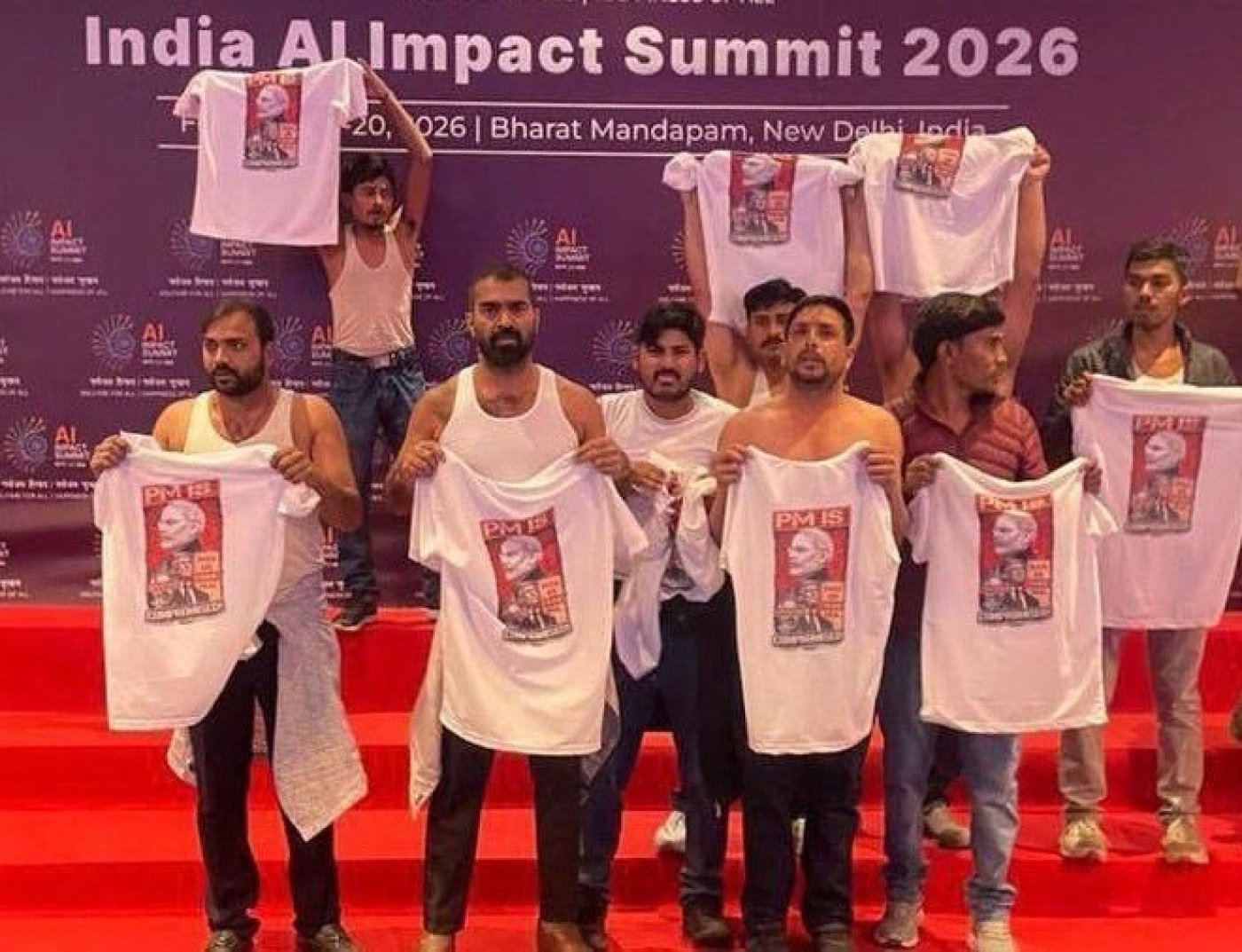
The tweet that irked the ministry was my response to liberals and government supporters who accused Indian Youth Congress workers of “embarrassing India” by holding a shirtless protest at the AI Summit in February in Delhi. Across the world, it is standard practice for activists to stage demonstrations at or near high-profile public events. The aim is to use the visibility of such events to spotlight pressing concerns.
In an India where large swathes of the news media either do not acknowledge dissenters or misrepresent and vilify them, it’s logical for protesters to pick a space where the global media are present. In my tweet, I simply asked why a democratic protest should embarrass India, and listed out things that actually do, in my view: violence against Muslims and Christians, persecution of Dalits, the imprisonment and murder of activists and journalists, and hate speech by members of the government.
These are matters that trouble every decent human being. But the government got the tweet blocked in India using the authority vested in it by the Information Technology Act 2000 to enforce such takedowns “in the interest of sovereignty and integrity of India, defence of India, security of the State, friendly relations with foreign States or public order or for preventing incitement to the commission of any cognizable offence relating to above...”
Obviously, nobody is happy to receive an email that reminds us how closely the government monitors us. This was not a first for me, though, and I was struck by the difference between this latest communication and another I got in 2021.
That one, too, had come from the same legal department, informing me that they had received “a legal request from an authorised entity (such as law enforcement or a government agency)” for a tweet in which I condemned the outright hate speech by a far-right journalist. The fellow had accused Muslims of waging what he called a “UPSC jihad”, alleging that Muslims were writing the civil service exams as part of an organised conspiracy to infiltrate India’s bureaucracy. The mail from Twitter added that they had “not taken any action” against my tweet.
To my mind, the point of such orders is not so much to get social media posts pulled down as it is to intimidate the receiver—and all like-minded people who hear of their experience—into self-censoring. I’m angry, of course. But the sad truth is that this is hardly the worst form of censorship I have faced on social media in the past 12 years.
The Modi era has been one of online threats, abuse and psychological warfare against anyone who does not overtly support right-wing thought and government actions. If you are a woman, it’s worse. If you belong to a minority community that is on the RSS-BJP’s hate list, even more so. And if you, as a woman from one of these minorities, are openly critical of the government and the right wing, well…
Let’s just say that “rice bag Christian” and “Chrislamocommie bitch” are among the milder pejoratives I have faced on social media since the atmosphere shifted around 2012. During this period, I have received diagrams from people illustrating what they would like to do to me.
At one point, in a week in which I filed a review that was critical of a sycophantic new release directed by a right-wing male star, one man got so furious with me that he stripped on camera, filmed himself masturbating and sent me the video as punishment for my write-up, while claiming in his DM that his ire was directed at another review I had written six years earlier about a film by a director known to be liberal.
This may not technically count as censorship, but it is, if you consider that the goal of such orchestrated harassment is to bully people into curbing themselves or falling completely silent. It’s mentally exhausting to deal with such animosity. It’s also tiring and time-consuming to write and speak about these experiences.
Nevertheless, until a few years back, I would routinely do so, as an awareness-building exercise, because the liberal public was not yet aware of the magnitude of anti-Christian sentiment in Hindutva ranks, and because even today, few people realise how enraged the right wing gets with journalism that draws attention to the politics of films and film industries.
That said, I was somewhat surprised by the recent government order to block my tweet about the protest at the AI Summit. The reason for my surprise was that, as far as I can tell, I have been facing some form of what appears to be a shadow ban on X/Twitter since 2018. At that point, many liberals had already been discussing the algorithm reducing their visibility. Like them, I too had been wondering about this.
Then, in 2018, I happened to publicly clash with a senior functionary from Twitter’s international office who was seen to be pandering to the right wing, and I wrote on the platform that she did not care and was unaware of caste issues. Is it a coincidence that soon afterwards, I began to notice that my Twitter follower count had virtually frozen? Literally.
In the eight years since, though I receive regular notifications about new followers, my follower count has not risen by even a notch—until last year, when it dropped by several thousand. Worse, the engagement from my existing 100,000-plus followers is minuscule, and most people I know tell me they never see my tweets. Never.
In this situation, tweeting often feels pointless. The only reason why I have not stopped is that I am determined not to cede a single space available to me as long as I have a choice. Besides, on any given day, if what I have to say reaches even one human being, whether on a social networking site or from a live stage, I believe that one person counts.
The government's order to pull down my recent tweet has had the opposite effect on me than what I assume was intended. Because if someone has taken the trouble to block a tweet by a journalist whose tweets the public barely gets to see due to a hostile social media algorithm, then I have to assume that I count for something in their eyes.
People don’t get to positions of such immense power without being smart. If opponents of free speech are so meticulous as to try to cut off even those whose voice has already been stifled, then it’s important for us to recognise what they do: that every word spoken or written, every article, every newsletter, every tweet, every speech, and every single person who hears us counts for something.
In such circumstances, persistence itself is an act of resistance.
(Anna M M Vetticad specialises in the intersection of cinema with feminist and other socio-political concerns. She is the author of The Adventures of an Intrepid Film Critic.)
Get exclusive access to new databases, expert analyses, weekly newsletters, book excerpts and new ideas on democracy, law and society in India. Subscribe to Article 14.