
Majalgaon (Beed), Maharashtra: On a cold metal bench in a corridor outside a row of hushed courtrooms, two slender teenage girls waited for hours on 3 January. Both wore pants and loose-fitting cotton blouses on scrawny frames, with scarves around their necks. The younger girl, tall and lanky, wore knockoff white Crocs adorned with little pink plastic flowers. The elder girl was barely 4 ft 6 inches tall, her long hair in an elaborate crown-braid and top-knot.
Accompanied by a woman constable, they were in the nondescript court complex in Majalgaon town, 500 km east of Mumbai, to appear before a magistrate who would record their statements. Aged 13 and 14, the girls, Adivasis from a village set in dense forests 750 km to the north-east in Chhattisgarh, were raped in a village near Majalgaon, where they were living with family, who had migrated to work on Maharashtra’s sugarcane harvest, spread across more than 1.6 million hectares.
As lunch hour came and went, somebody in the waiting party offered to buy chocolates. The constable chaperoning the girls declined politely.
“They’ve never eaten chocolates,” she said. “All they want is rice and dal.”
The girls, belonging to the Gond community, one of India’s largest indigenous groups who live mostly in central and south central India, were returning to their tented living area after delivering lunch to the menfolk who were cutting cane about a kilometre away when they were accosted on the afternoon of 24 December 2025.
First Time Harvesters
According to the first information report (FIR), a local shop-owner and a truck driver who ferried harvested cane to a factory, who had become familiar with the girls’ routine over several weeks, dragged the girls into thick bush around the deserted camp of tents. One girl was raped in a cane field, the other in an adjoining cotton field.
Both girls told investigators that their assailant threatened to hurt them and their families if they reported the crime, according to the FIR registered five days later, on 29 December, after the girls finally spoke up.
The men were arrested under sections 64 (1) (rape), 65 (1) (rape of a girl aged 16 years or less, which attracts a prison term of not less than 20 years) and 351 (criminal intimidation) of the Bharatiya Nyay Sanhita, 2023, and provisions of the Protection of Children from Sexual Offences (POCSO) Act, 2012, and the Scheduled Castes and Scheduled Tribes (Prevention of Atrocities) Act, 1989. Both the men, from non-SC/ST communities, were later released on bail.
In the court complex, the 13-year-old’s father told Article 14 this was the first time they had worked as sugarcane harvest labourers.
“Our income from farming has never been adequate,” said the wiry, self-conscious man, who owns 10 acres of rain-fed land in Chhattisgarh that yields a single, annual crop of paddy, sold through a village cooperative. Migrating for work is now a seasonal rhythm. “We’ve gone as far as Chennai to work in a packaging unit,” he said.
In November 2025, he was paid a cash advance of Rs 5,000 to travel to Majalgaon. That is at least 70% to 80% lower than average advance payments made to the nearly 1.2 million cane labourers of Maharashtra who migrate to various districts in the state and in Karnataka and Tamil Nadu during the annual harvest season.
Each worker in the Chhattisgarh group will earn Rs 30,000 to Rs 35,000 for three to four months of work. In the current 2025-26 season, average advance payments for sugarcane cutting, traditionally made to a couple or a koyta (a two-member unit of labour named after the machete used to hack cane stalks), were Rs 100,000 to Rs 120,000.
The labour contractor they accompanied to Majalgaon has scouted for workers in this region of south-eastern Chhattisgarh for the past three or four years, he said.
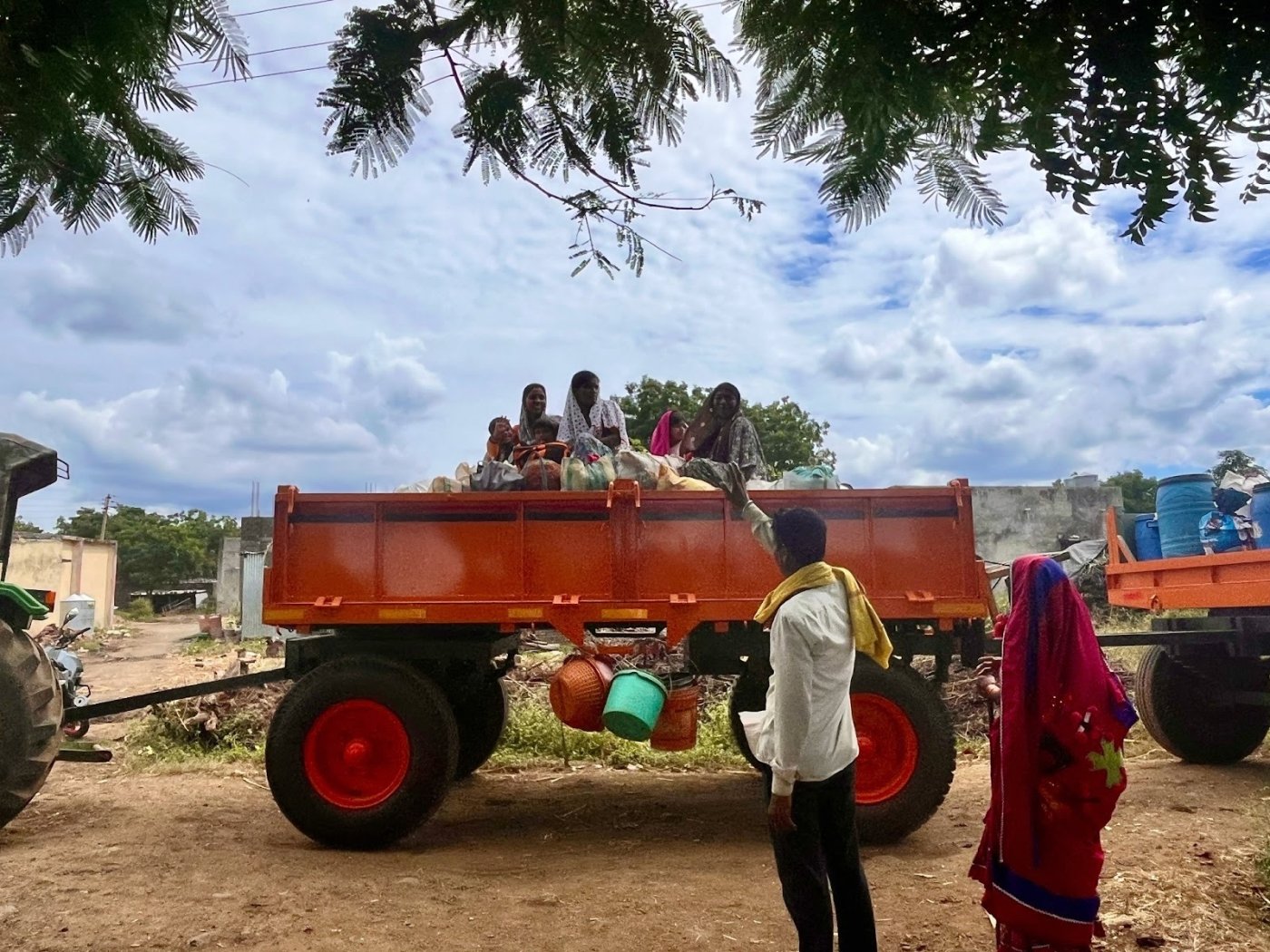
Out of school, living in tarpaulin and bamboo tents called kopis in a clearing in the dense foliage of cane fields, with no sanitation facilities, with no medical or accident insurance, and with neither the labour contractor nor the sugar factory held to account for providing a minimum standard of living and fair wages, the two minor girls are among the growing numbers of migrant labourers in India’s Rs 80,000-crore sugar industry rendered vulnerable to crime, exploitation, accidents, climate-related health risks, sexual violence and intimidation.
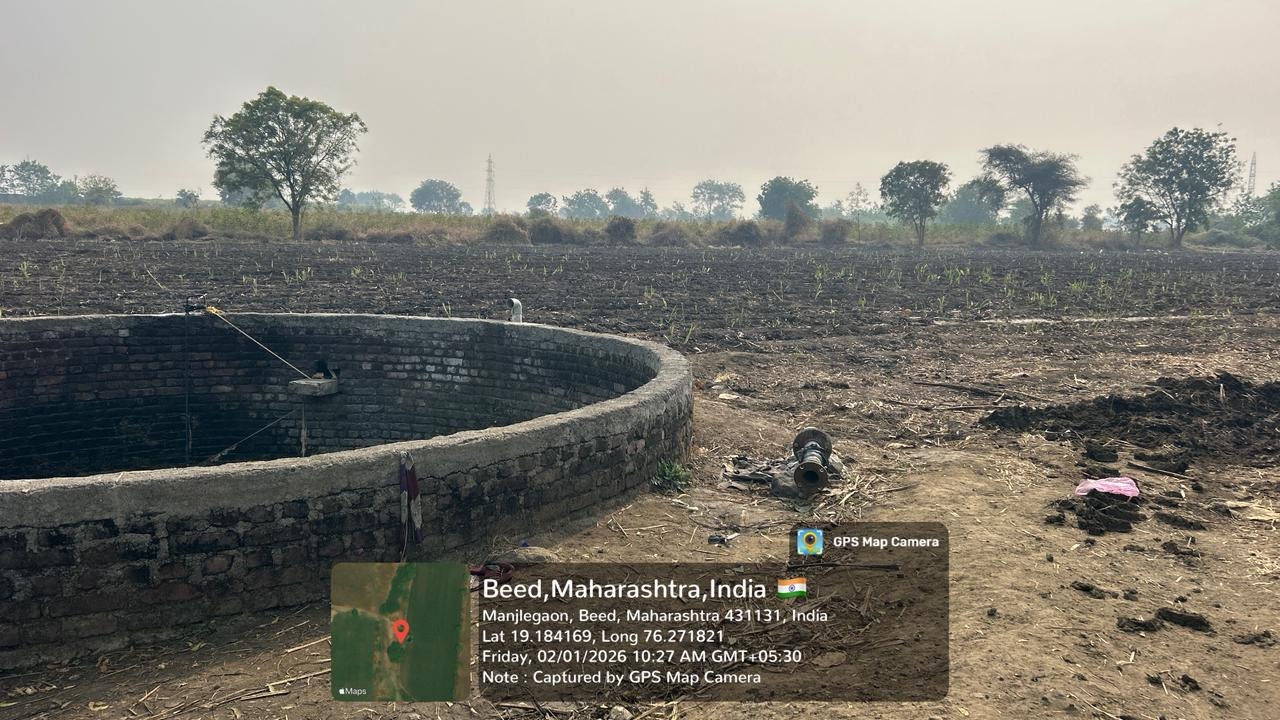
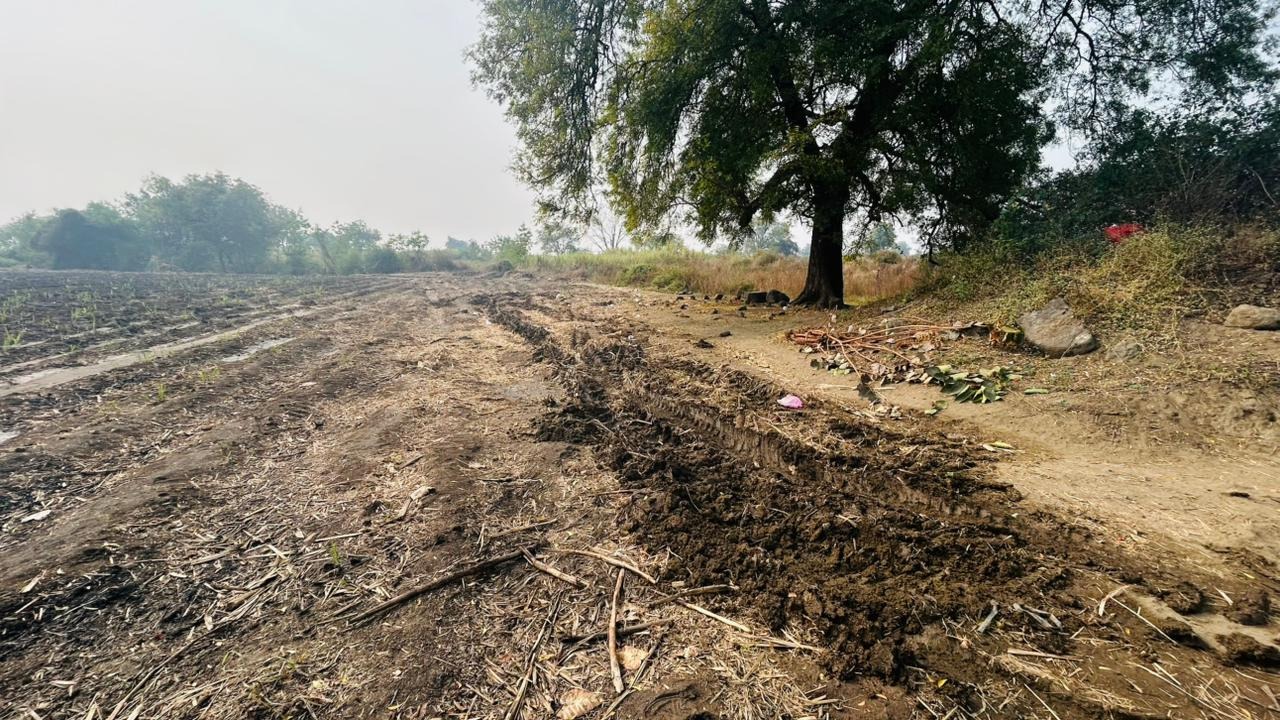
The traditionally arid central Maharashtra region known as Marathwada, for decades a hub of outbound sugarcane workers, has over the past decade also begun to attract inbound migrants harvesting the large swathes of cane growing in irrigated patches here. Pushed by socio-economic hardship to migrate long distances to undertake arduous manual labour, these workers are denied protections they are legally entitled to.
“This is one case that was reported,” said Jeevan Rathod, founder of the Maharashtra Shramik Ustodni Va Vahtuk Kaamgaar Sanghatana (literally, the Maharashtra Labour Sugarcane Cutting & Transport Workers’ Union).
“The number of cases that go unreported is much higher,” said Rathod. Informal efforts, including monetary inducements, to prevent cases from being filed are also not uncommon, he said.
Paper Laws
On 17 March 2025, the Bombay High Court ordered a series of measures to “ameliorate the working conditions” of migrant workers in Maharashtra’s sugarcane fields, directing that these be “strictly adhered to” in the subsequent cane-cutting season from October 2025 to March 2026.
These measures were based on a report submitted by the amicus curiae in the case, Mumbai-based lawyer Mihir Desai.
The March 2025 HC order noted the government pleader’s acknowledgement that the government had accepted all these suggestions and that they would all be implemented. “All of those protections remain on paper,” said Rathod.
A key measure to be implemented was individual registration and identity cards for every cane worker, including women and children, to assess what resources would be needed to provide welfare measures during the cane-crushing season. Contractors procuring labour for the cane harvest were to be registered under the
Contract Labour (Regulation and Abolition) Act, 1970. Neither were the Gonds working in Majalgaon registered anywhere nor was the labour contractor licensed.
The report to the HC said the registering body must also raise awareness among workers about legal protection, such as the Factories Act, 1948, the Industrial Disputes Act, 1947, and the effects of defying such statutory provisions.
“…the registering body must be entrusted with the task of informing the workers of the Bonded Labour System (Abolition) Act, 1976 and the rehabilitation scheme and package available to them,” the report said. Other items workers were to be made aware of were an insurance scheme, a hostel for students not out-migrating with their parents, the closest health centres, anganwadis, the ‘sakhar shalas’ (literally translated as sugar schools), or temporary on-site educational centres for children accompanying workers in the cane fields, etc.
“The recommendations of the report read like a list of all the protections which, had they been in place, could have protected these girls,” said Rathod, the unionist, who is also a party in the suo motu petition.
Other promised measures, none implemented on an extensive scale, included sanitation facilities and sanitary napkins for women; a children’s creche wherever sugar factories employ 50 or more employees, as mandated by Section 11 the Maternity Benefit (Amendment) Act, 2017; and community kitchens for labourers so that women workers are not required to bear the additional burden of preparing meals.
A circular dated 3 July 2025 issued by the sugar commissionerate listed the benefits to be extended to seasonal migrant workers, including registration, specific registration of pregnant/lactating women, electricity and sanitation amenities at the tent site, and advocacy regarding government schemes, schools, etc.
“A preventive measure against any exploitation of migrant women workers during the harvest season will be temporary police chowkeys erected by the home department in the vicinity of the sugar factories,” the circular said. It also promised a committee, comprising a woman doctor and local women officials, to hear complaints of sexual harassment at the workplace.
On New Year’s Eve, the workers from Chhattisgarh were relocated to a new spot after the crime, still living in their kopis, but now only a few hundred metres from the jaggery factory. Later that week, gathered around the warmth of an open wood fire, on which the women were cooking rice and a sabzi of green bell peppers, the workers said the four females in the group, including the two minor survivors, had been brought along specifically to handle the cooking and washing chores.
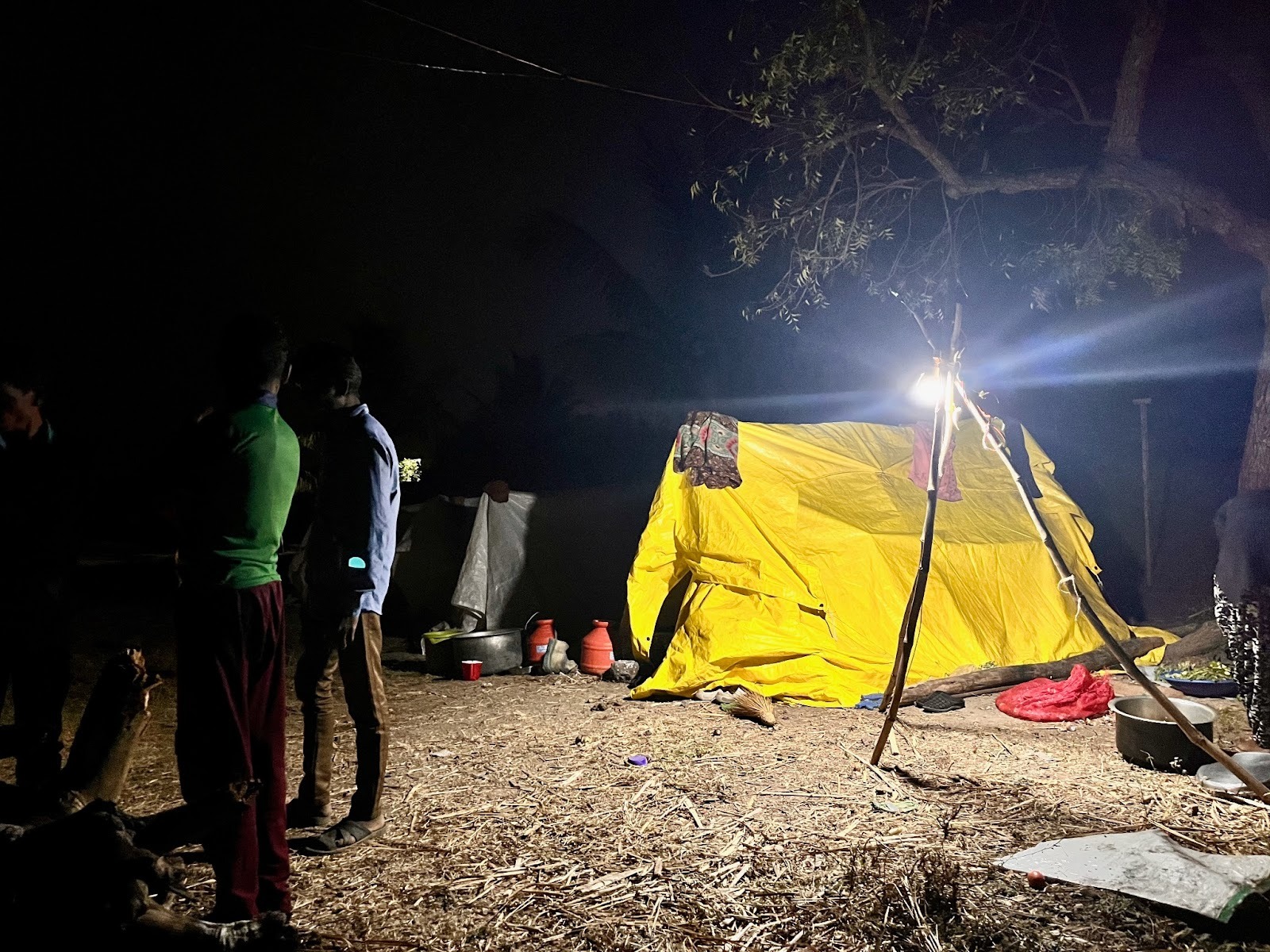
They had no information about any police presence besides the police station, 13 km away, nor any idea where the local primary health centre or anganwadi was.
The minor survivors had been out of school in Chhattisgarh for more than a couple of years. The younger girl came with her father, the other with a maternal uncle. Both have male siblings at home who are attending school.
“We didn’t have some documents the school wanted,” said the father of the 13-year-old, on why she had dropped out after Class 7. “As she was anyway out of school, I brought her along to support us.”
The girl’s mother ran away a few years back with another man, he said, and he had remarried. The 14-year-old girl’s maternal uncle said her mother is mentally ill; he had raised the girl along with his other children.
A Data Desert
In Beed, the collector’s office began registering sugarcane workers in 2022-23. After tens of thousands signed up, and about 100,000 ID cards were issued, the job was abruptly handed over to the Gopinath Munde Us-tod Kamgar Mahamandal, a state corporation set up weeks before assembly elections, in September 2019.
In subsequent years, the board announced an accidental and death insurance scheme, but until workers are registered, the major schemes remain non-starters.
Across sugarcane-growing districts, officials told Article 14 they were handicapped without useful data on the large numbers of migrant workers arriving for the harvest and cane-crushing season.
District-wise committees were formed at the direction of the Maharashtra sugar commissioner’s office, to implement the HC order, comprising top officials of the police, Zilla Parishad and departments including revenue, health, women and child welfare, labour and education, among others.
“The committee for Beed has met regularly and we have undertaken programmes for social welfare and health camps,” district collector Vivek Johnson said.
Medical camps have tried to reach migrant workers when they arrive and before they leave, and seasonal hostels for children of out-migrating workers continue to operate, he said.
A Season Of Violence
The current cane crushing season in Maharashtra’s sugar factories, expected to continue until early March, has unfolded amid recurring incidents of violence and abuse of workers.
Days before the Majalgaon incident, on 22 December 2025, a team of the Rajasthan police rescued 53 cane-cutting labourers including women, from multiple locations in Akluj, in Solapur, one of western Maharashtra’s major sugarcane-growing districts. All tribals from south-eastern Rajasthan’s Pratapgarh district, they had been forced to cut cane for long hours, often into the wee hours of the morning, and had not been paid for several weeks.
According to the FIR filed at Pratapgarh’s Ghantali police station, the men had demanded the agreed rate of Rs 500 per day. With no sign of the payment coming, some workers fled. A couple of the remaining men, upon asking to be paid their wages or relieved from work, were kicked and beaten by a labour contractor, an attack captured on video.
Earlier, in November 2025, just weeks after factories began crushing operations, 30 cane-cutting workers were rescued from Majalgaon’s Kawathgavthadi village, where they had been kept forcibly. The men belonged to Jalgaon district in north Maharashtra. At least one among them was a Bhil Adivasi.
Between August 2025 and January 2026 alone, Beed’s district collector led operations to rescue bonded workers from four different sites. Many of those rescued were Adivasis, including those from particularly vulnerable tribal groups (PVTGs), a category of indigenous groups who face acute challenges in food security, health, education, etc.
In July 2025, officials rescued 14 members of an Adivasi Bhil family from Shirur in western Maharashtra’s Pune district—they had arrived 18 months earlier from Jalgaon to work off a loan of Rs 85,000 by cutting sugarcane, and were kept in captivity since, denied permission to leave or use a phone or access medical aid. In August 2025, several children were among labourers rescued from similar circumstances.
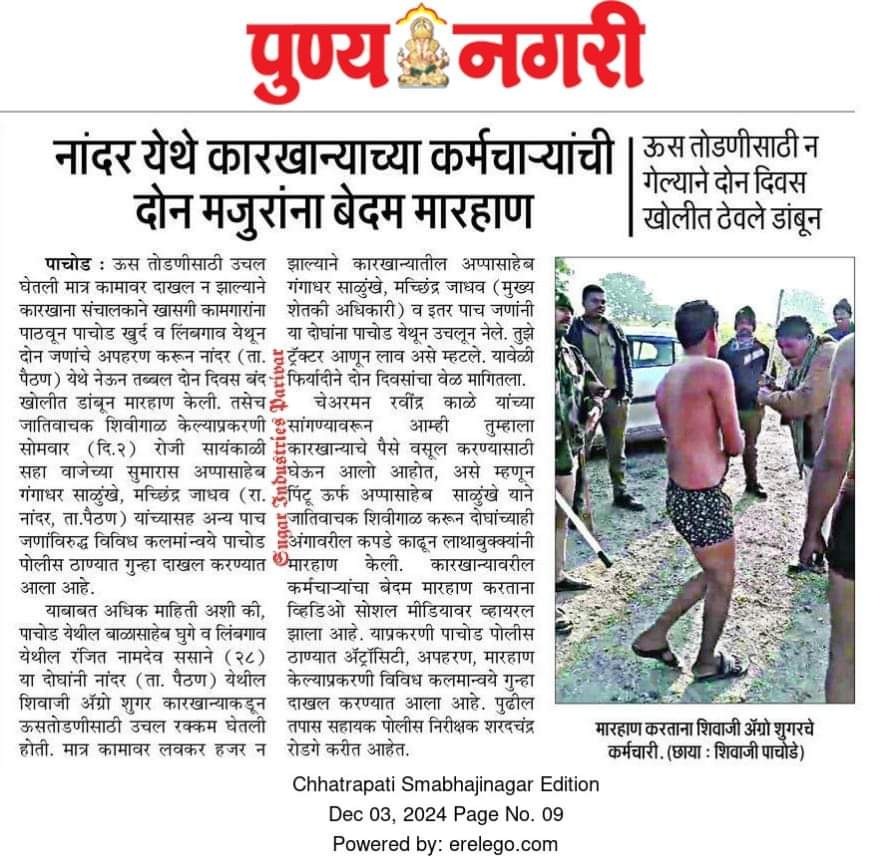
In another incident in December 2024, labour contractors in Chhatrapati Sambhajinagar district kidnapped two workers who did not show up for cane-cutting work in Paithan taluka’s Pachod village. The workers were kept forcibly locked up for two days and later stripped to their underwear and assaulted, according to a complaint filed with the Pachod police station.
Meanwhile, accidents involving cane workers have continued, leaving labourers vulnerable to bodily hazards and unplanned medical expenses.
On 3 January, sugarcane worker Ganesh Dongre was killed on the spot when a tractor-trolley laden with freshly cut cane tipped over and crushed him, just outside a cane-crushing factory in Marathwada’s Latur district, 130 km south-east of Majalgaon. His wife Ashwini was in a FacebookLive session when the accident occurred, and was captured on her phone camera crying out and rushing in the direction of the collapsed trolley. The Dongre couple, who belong to Dongrewadi village in Beed, regularly posted reels and photos on social media capturing their lives as cane labourers.
In May 2023, Article 14 reported a sharp rise in the frequency of such accidents. In December 2025 and January 2026, fatal accidents have continued (see here, here).
Multinational Majors Buy This Sugar
After Brazil, India is the world’s second-largest producer of sugar. Buyers of sugar produced in Maharashtra, Uttar Pradesh, Karnataka and Tamil Nadu include several multinational majors. Increasingly, workers’ unions have called for such companies sitting atop supply chains of sugar to reject produce manufactured on the backs of forced migration, debt bondage, child labour and exploitation of women.
“… despite the widespread and confirmed suffering and exploitation of workers who harvest their sugar, leading consumer-facing brands—including some of the largest corporations in the world—continue to oppose solutions that workers put forth to address the root causes of the conditions they suffer,” said a statement by the Indian Sugar Workers Association (ISWA), a coalition of labour and human rights organisations, including trade unions that represent sugarcane harvesters.
Labour union organiser Chandan Kumar, a member of the National Human Rights Commission’s core group on bonded labour, said the blame for Maharashtra’s sugar sector using debt-bondage as a system of employment should be shouldered by major food and beverage brands.
“They look the other way despite us having documented and described the exploitative practices in great detail,” said Kumar. “Until brands refuse to purchase produce from farms that do not maintain an adequate level of protection for the human rights of men and women working there, this abuse of farm labour will continue.”
The ISWA has proposed a worker-driven social responsibility program, modelled on the award-winning Fair Food Program, run in the US by the Coalition of Immokalee Workers (CIW), a Florida-based nonprofit that fights abuse of farm labour. Under this human rights partnership program, brands certify that the produce they use comes from farms that follow labour laws and internationally accepted standards of working conditions. ISWA’s representatives said global food and beverage companies should publicly disclose their sugar-sourcing regions in India.
“It is no longer credible for consumer brands to claim adherence to strong human rights commitments while sourcing from sugarcane farms where minors may be raped, tribal workers held in bondage, women pressured into life-altering surgeries to keep working, and children forced to labour in the fields,” read ISWA’s statement, issued on 6 January.
Millions Work, But Not ‘Employees’
Ashok Tangade, chairperson of Beed district’s Child Welfare Committee and a long-time social activist, said he has noticed a rising number of Adivasi families, the indigenous ‘scheduled tribes’ who are among India’s most marginalised people, working in harsh conditions as sugarcane workers.
“Maharashtra’s sugarcane workers have grown smarter over the years, and they now negotiate better advances or better amenities at the work site,” he said. “Labour contractors from here travel to neighbouring states from where they find Adivasi workers willing to work for lower pay.”
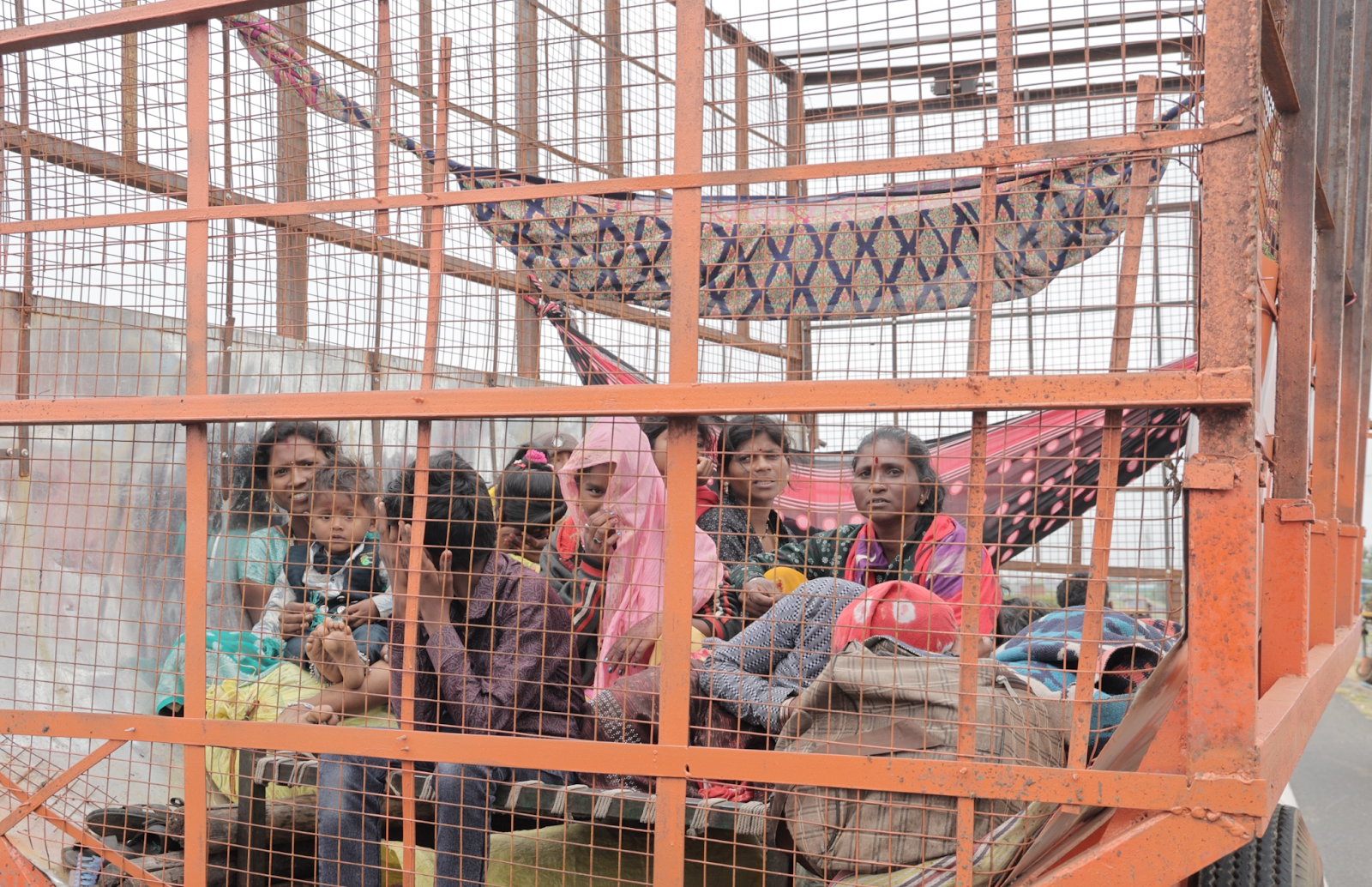
In the informal labour market these seasonal migrants enter, the deeper their marginalisation, the higher the profitability for employers, or labour contractors in the case of the sugarcane harvest. The contractor who brought the 14-member Chhattisgarh team of workers to Majalgaon told Article 14 the men had no cash and no savings, “not even enough money to go into town in search of work”.
Already impoverished, untoward incidents such as crimes and accidents during the course of their months as migrant workers come as huge setbacks, said Rathod. Not being ‘employees’ of either the sugar factory or the contractor means there may be little or no compensation for work accidents. “Many also belong to oppressed castes and tribes, which makes them even more ill-equipped to understand their rights.”
The Indian sugar industry, with an annual turnover of more than Rs 80,000 crore according to government think-tank NITI Aayog, accounts for about 1.2 million outbound migrant workers from Maharashtra alone. These workers, traditionally migrating from Marathwada to the lush sugarcane fields of Solapur, Sangli, Satara and Kolhapur in western and south-western Maharashtra, have over the past two decades also begun to migrate as far as Karnataka and Uttar Pradesh, states that have large areas under sugarcane. For five to six months of the year, these workers live 300 km to 700 km from their native villages.
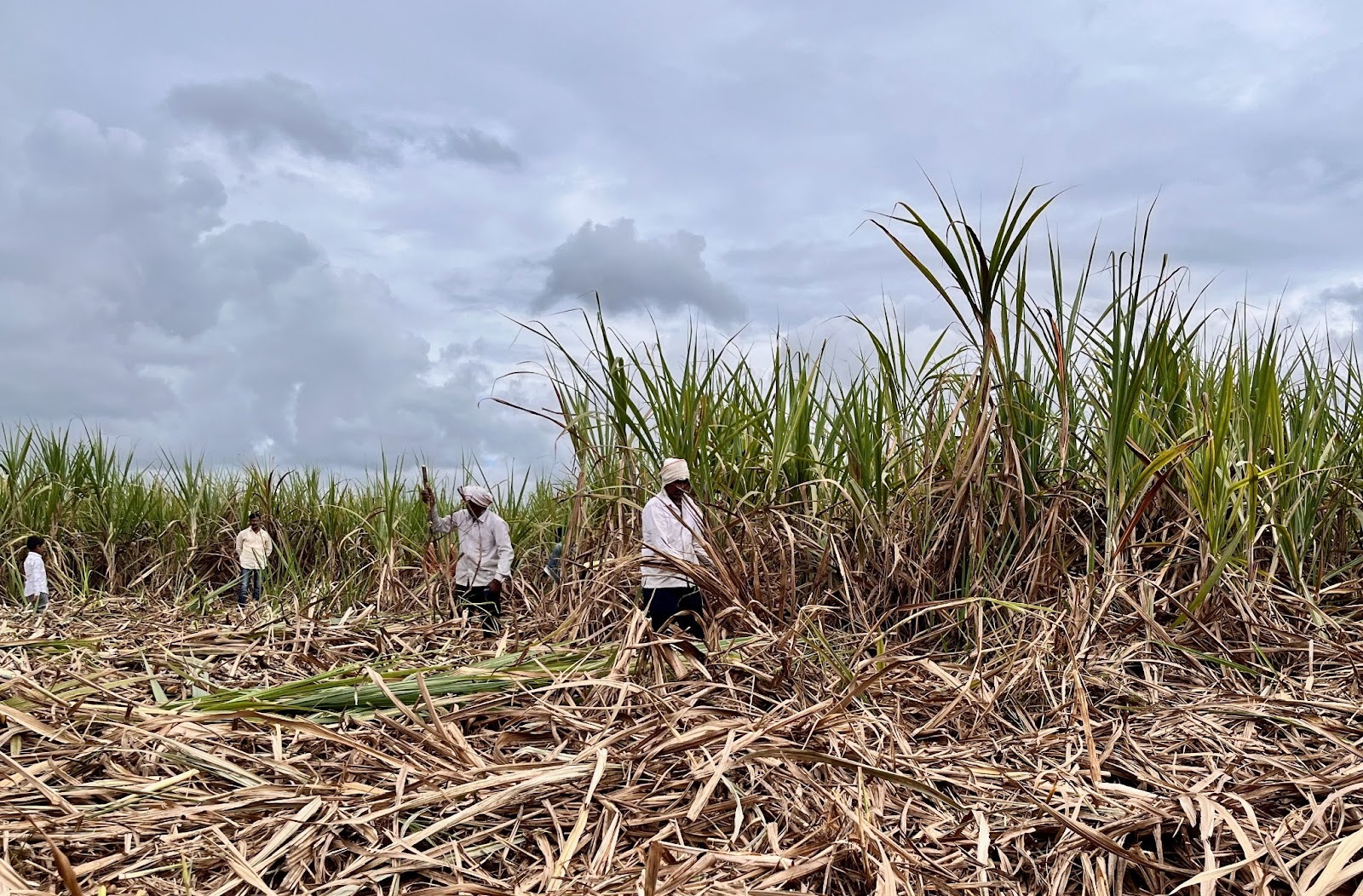
Sugarcane harvest workers in Maharashtra continue to be employed and paid under a traditional system called an uchal (literally translated as a ‘lifting’) or advance payment in a lump sum given to a unit of labour called a ‘koyta’, the name given to a husband-wife couple working in tandem. It is a debt bondage system, where the advance must be ‘worked off’. Though the practice was outlawed through the Bonded Labour System (Abolition) Act, 1976, the amicus’s report to the Bombay HC said it was not practical to foresee a change in that system for now.
The tonnage of sugarcane harvested is then recorded in the notebooks of labour contractors, at a payment of approximately Rs 360 per tonne. A couple usually manages to cut 1.8 tonnes to 2.5 tonnes of cane per day, slicing the stalks close to the earth, removing the foliage by hand, bundling the stalks and hauling them in bullock carts or tractor trolleys to the crushing unit.
This is where the two accused in the Majalgaon case spotted their minor victims. One was a truck driver ferrying sugarcane to the jaggery factory; the other was a shop-owner who also owned farmland and would visit the workers’ living area to ask for foliage from the harvested cane, for use as fodder for farm animals.
Informal Sugarcane Processing
More informal systems leave workers even more vulnerable.
In most sugarcane-growing regions of the state, farmers in the ‘command area’ of a sugar/ jaggery/ ethanol/ bagasse/ molasses factory—the geographical catchment from where the factory sources sugarcane, its primary feedstock—have contractual purchase agreements with the factory, an assurance of their produce being procured at the state-fixed fair and remunerative price (FRP). In the Majalgaon case, the workers were harvesting cane for farmers who did not have such a purchase agreement.
For all practical purposes, their labour existed outside any enforceable obligation on the part of the contractor and factory.
Officials confirmed to Article 14 that jaggery units tend to undertake informal processing operations, without agreements, and remain out of the purview of monitoring. As the area under sugarcane continues to grow and more factories operate each season, this informalisation of processes renders workers even more vulnerable. They may not be able to demand the same wages per tonne, and they may not be eligible for welfare schemes.
Despite its traditional water-scarce climate, Marathwada is itself now a major sugarcane hub, with at least 40 cane-crushing factories located here. (Of India’s 700-odd installed sugar factories, more than 200 are in Maharashtra.)
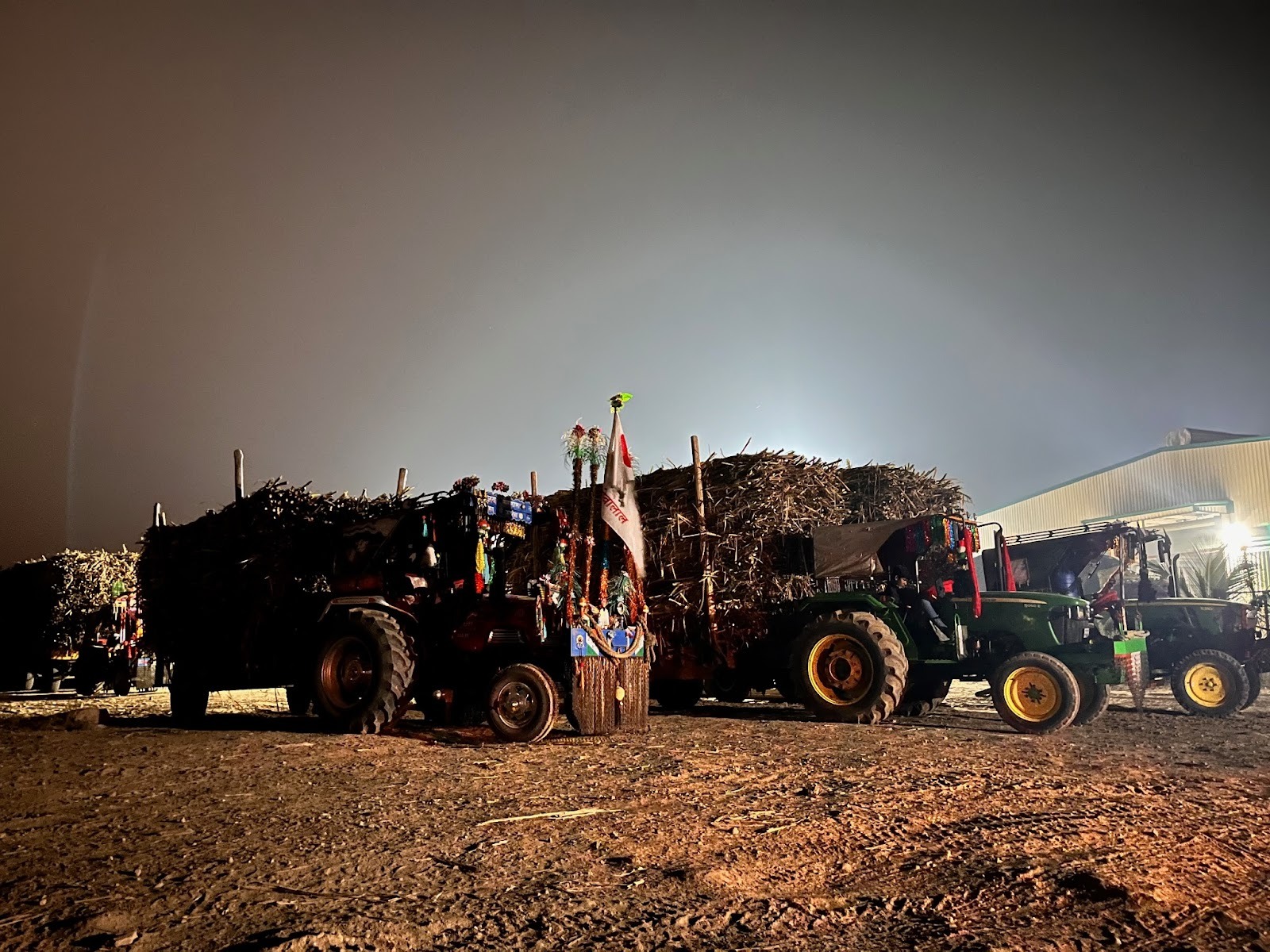
“The government built barrages across the Sindphana river over the past decade,” said a local Bharatiya Janata Party leader, requesting anonymity. Majalgaon taluka, through which the 122-km Sindphana snakes its course eastwards to Parbhani, where it joins the mighty Godavari, has 18,000 hectares of irrigated land under sugarcane. “Some of Maharashtra’s best quality cane is in Majalgaon,” the BJP leader said.
The village where the two Adivasi girls were raped sits alongside the Sindphana. The dammed river has helped transform Majalgaon’s agriculture and agri-businesses. The safeguards meant to protect the labour sustaining that growth, however, remain largely out of view.
(Kavitha Iyer is a senior editor with Article 14 and the author of ‘Landscapes of Loss’, a book on India’s farm crisis.)
Get exclusive access to new databases, expert analyses, weekly newsletters, book excerpts and new ideas on democracy, law and society in India. Subscribe to Article 14.