

Ahmedabad/Vadodara: “It’s been four months now—we’ve lost a sibling, a daughter, and a home,” said 28-year-old Rifat Jahan, her voice tightening as she fought back tears.
A bespectacled woman whose voice shook with anger as she spoke, Jahan was seated in a corner of her aunt’s two-room home in Ahmedabad’s Gomtipur, part of a cluster of compact, concrete homes running parallel to each other along a narrow lane in the Choksi ni Chali settlement in the eastern part of Gujarat’s capital city.
As she spoke, she pointed across the narrow lane toward a house. It was there, on the afternoon of 9 August, 2025, that her 15-year-old sister, Saniya Ansari, was found hanging.
She had died by suicide, leaving behind a note naming six people. Her family believes that her decision to take her own life was not an isolated tragedy but the culmination of sustained harassment, violence, and institutional apathy.
This harassment, said lawyers, was in part enabled by a law that continues to shape housing and segregation in Gujarat: the Disturbed Areas Act, officially known as the The Gujarat Prohibition of Transfer of Immovable Properties & Provision for Tenants from Eviction from Premises in the Disturbed Areas Act, first enacted in 1986, after communal riots in Ahmedabad.
Initially intended as a temporary measure to prevent distress sales of properties by communities fleeing an area during times of unrest, it was reintroduced permanently in 1991 and has remained in force ever since, spreading across major towns and cities.
When this story was written, the Act was in force in 18 of 33 districts in Gujarat, entrenching religious segregation, empowering vigilantes, and making the process of buying a house in a Hindu area, said experts, a form of punishment for Muslim buyers.
A Slew Of Restrictions
Under section 3 of the Act, the state government can declare an area as a “disturbed area” based on any mob violence or riots resulting in the breakdown of public order at any point in time (even if it’s any incident in the past).
Property transactions in such areas require prior approval from the district collector, who must conduct an inquiry (usually accompanied with police involvement or their own inquiry).
The law mandates that any transactions or sale of property in a “disturbed area”, must pass the approval of the revenue department or collector’s office, subject to an inquiry made by the Collector as to whether the transaction was made by “free consent” and for a “fair value”.
The widespread misuse of the law, meant to apply during continuous riots or violence, can be seen in how areas are notified as “disturbed”. Areas across Gujarat continue to be notified as “disturbed” even without any present, continuing or recent instances of serious violence since the 2002 riots.
This is evident in periodic notifications issued by the state’s revenue department, as newer localities—even standalone buildings or housing societies—are declared as “disturbed”.
Other BJP-ruled states, such as Assam, have also replicated the law. The government of chief minister Himanta Biswa Sarma announced in August 2025 that property transactions between people of different religions would first be verified and approved by the State.
More recently, as of January 2026, the BJP-led government in the state of Rajasthan approved a bill to demarcate certain areas as “disturbed areas”, in order to address so-called “demographic imbalance”.
The Expansion Of ‘Disturbed Areas’
In January 2025, the Gujarat revenue department issued a notification declaring 312 locations in Vadodara as disturbed for the next five years. As of 2014—when Narendra Modi was chief minister of Gujarat—reports suggest that at least 40% of the capital city of Ahmedabad was classified as “disturbed”.
More recently, a 2022 study by Dr. Sheba Tejani, a senior lecturer at King’s College London, found that Ahmedabad’s disturbed areas expanded by 51% between 2013 and 2019.
While little is available detailing segregation in Gujarat overall, in his 2017 study titled ‘Muslims in Indian cities: Degrees of segregation and the elusive ghetto’, academic Raphael Susewind, who teaches at the London School of Economics, described Ahmedabad as the “most segregated” city in India for Muslims, followed by Hyderabad and Delhi.
Such segregation is furthered by the Disturbed Areas Act, and leads to a decline in interreligious mingling and limited social relations between communities.

Writing in The Indian Express, political scientist Christophe Jaffrelot and research scholar Sharik Laliwala noted how it meant that “Hindus and Muslims no longer live next-door, their children cannot meet daily or play together, limiting social relations.”
“They are strangers to each other, a phenomenon that perpetuates myths about each other’s communities,” they added. “Like children, adults also see worsening of relationships on communitarian lines…”
An Ahmedabad-based lawyer whose office has been handling several such cases, said that at least 18 of Gujarat’s 33 districts, “if not more”, are under the Act, including notified areas in major cities and towns such as several parts of Ahmedabad, Surat, Vadodara, Rajkot, Bhavnagar and Bharuch.
“The big cities are all definitely there—Ahmedabad, Vadodara, Surat, Rajkot,” the lawyer said, speaking on condition of anonymity. “More and more districts and cities are getting added into the mix.”
Weaponised Against Muslims
Today, it is these provisions which have disproportionately affected property sales involving Muslim buyers, especially transactions between Hindus and Muslims. For families like Ansari’s, the law became a weapon used against them.
Ansari’s parents, Shah Jahan, 54, and Mohammad Jaleel, 55, had lived for decades in Choksi ni Chali. In 2024, they decided to purchase their neighbour’s house – directly opposite their own – to improve their living conditions.
The seller, Sumanben Sonawane, agreed to sell the house for approximately Rs 1,550,000. The full payment was completed by December 2024.
However, soon after, Sonawane’s son, Dinesh Sonawane, moved back into the house with his wife Sarla and their adult son Manav, and refused to vacate.
“From the day my mother finalised the deal, they made life hell for us,” Jahan said.
Though the Ansari family technically owned the house, they were only allowed to access the ground floor. The Sonawanes continued occupying the upper storey. When Jahan or her family visited to clean or repair the property, they were met with abuse.
“They would throw dirty water at us, shout, and follow us down the lane,” Jahan recalled. “Manav even harassed Saniya and followed her to the main road when she went to school.”
Despite Sonawane repeatedly asking her son and grandson to leave, they refused. They began claiming the sale was illegal under the Disturbed Areas Act.
“They kept saying, ‘How can Muslims buy property here? Leave. This is a disturbed area’,” Jahan said. The father-son duo claimed that no real sale had happened, citing the “Ashaant Dhara (Disturbed Areas Act)”.
Police Inaction & Escalating Violence
Jahan said the harassment persisted for months. Shah Jahan approached Gomtipur police station several times but was allegedly turned away.
“The police told us, ‘This is a disturbed area. Why did you even try to buy a house here?’” Jahan said.
No complaints were registered against Dinesh or Manav Sonawane.
Article 14 sought comment from Inspector D V Rana at the Gomtipur police station, by phone and WhatsApp in November 2025 and January 2026, seeking comment on the same. The story will be updated if he responds.
On 7 August, 2025, the conflict turned violent. A physical altercation broke out between Dinesh Sonawane, his wife Sarla, their son Manav, and several others, and Saniya Ansari’s 20-year-old brother, Musaif Ansari.
“When Musaif was attacked, Saniya tried to intervene and joined in the argument,” Jahan said. “They pulled her hair and beat her. Musaif was hit on the back of his head until he started bleeding.”
The family attempted to file a complaint, including charges under the Protection of Children from Sexual Offences Act (POCSO), citing the assault on Saniya Ansari, a minor. Police refused to register the case.
Two days later, on Raksha Bandhan, a traditionally Hindu festival where sisters tie a talisman on their brothers' wrists, Ansari was found dead.
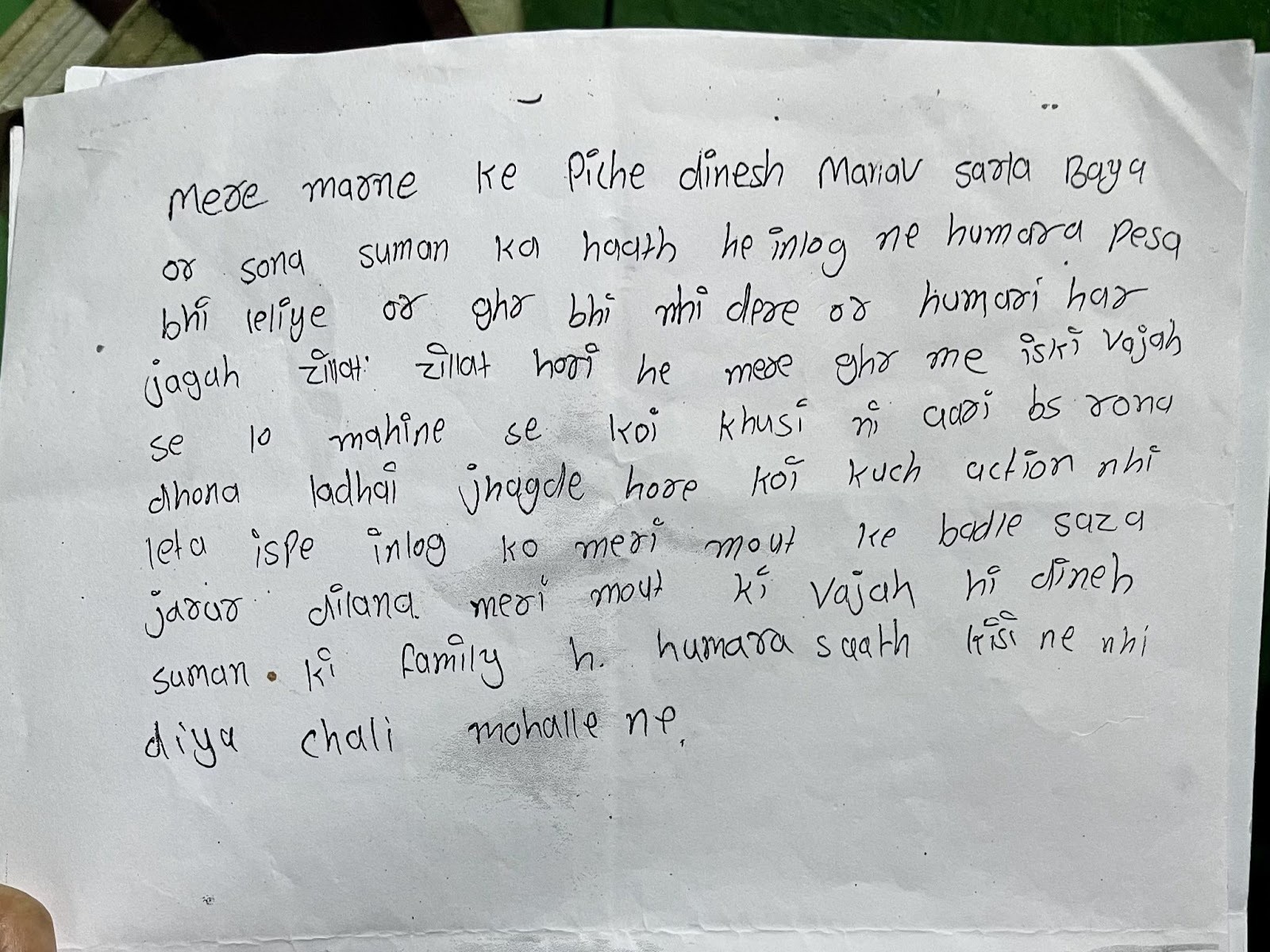
“My mother went to the new house and found her hanging in the inner room on the ground floor,” Jahan said.
In the moments of shock and confusion that followed as the family tended to Ansari’s body, Dinesh and Manav Sonawane fled. More than four months later, they remain absconding.
According to the family’s lawyer, Nitish Mohan, a First Information Report (FIR) was registered only on 14 August—five days after Ansari’s death—after the family approached Ahmedabad’s Commissioner of Police.
The accused had, meanwhile, filed for interim protection from arrest, which was later granted by the Gujarat High Court. No chargesheet has yet been filed.
“Interim protection was given to them, which we have appealed and the matter is still being heard,” said advocate Mohan. “The chargesheet has also not been submitted in this case.”
“Forget about making arrests, the police weren’t even willing to file an FIR at first,” said Mohan. “They were going to dismiss it as an accidental death.”
Legalising Apartheid
Saniya Ansari’s family awaits the arrest of those accused in her suicide note, but her death exposes a wider issue: the unforeseen, deep-rooted impact of the Disturbed Areas Act in Gujarat.
Academic Sheba Tejani, in her 2022 study titled ‘Saffron Geographies of Exclusion: The Disturbed Areas Act of Gujarat’, noted how the law was supposed to be temporary and not something that was supposed to be used “to prevent any perceived outbreak of communal violence or riots.”
Tejani found that the law was being used to limit the outward expansion of segregated Muslim localities and prevent desegregation of Hindu and Muslim-dominated areas.
Tejani cited the case of Geeta Goradia (a businesswoman and Gandhian), who sold a flat in Vadodara to a Muslim businessman despite the opposition of her neighbors, who attempted to use the Act to block the sale. “So this law can be used to prevent such desegregation, and prevent the formation of truly mixed neighborhoods,” Tejani said.
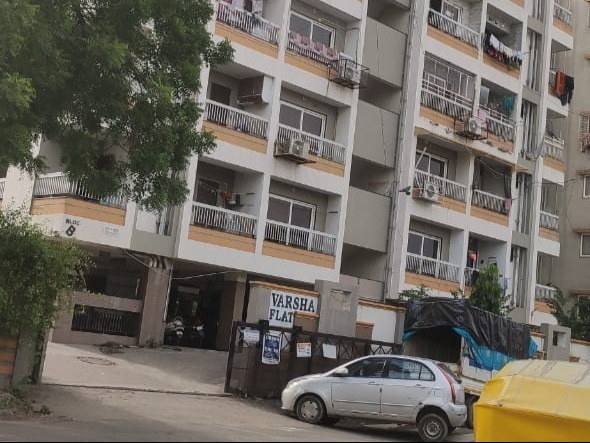
Right-wing groups and vigilantes have fought against such desegregation. In 2018, far-right Hindu organizations such as the Vishwa Hindu Parishad (VHP) spread rumours of a purported “land jihad” in Ahmedabad after a bulk of the newly redeveloped houses in the Varsha Flats housing complex in the upscale Hindu-dominated neighbourhood of Paldi were bought by Muslims.
A Hindu Veto
Property developer Ruknuddin Sheikh, 66, one of the builders involved, said the project has since been stalled—with a court case pending for years now—after objections from individuals affiliated with the VHP and Hindu Jagran Manch.
Led by two men named Apoorv Shastri and Jigar Upadhyay, who claimed to be from a group called ‘Nagrik Sewa Samiti’, the groups alleged that some 125 flats were being “taken over” by Muslims in a so-called “disturbed area”, driving Hindus away.
Sheikh and his colleagues had made an application under the Disturbed Areas Act for the redevelopment, and had received permission from the revenue department, but the opposition from rightwing groups halted everything.
“These people never even lived here, they don’t belong from this area but they managed to stall our case,” a weary Sheikh said.
Under the Act, even unrelated individuals can object to property transfers. Sheikh said this routinely prevents Hindu-to-Muslim sales.
“For an approval under the law, the collector is only supposed to check the free consent of the parties to a transaction and if there’s a fair value according to market prices,” he said. “Instead, they entertain vigilante complaints.”
Sheikh has been involved in property redevelopment and building since 1996, for close to three decades. Over the past thirty years, he said, he has seen the legislation mutate into one used to “target” one community.
‘Process Is the Punishment’
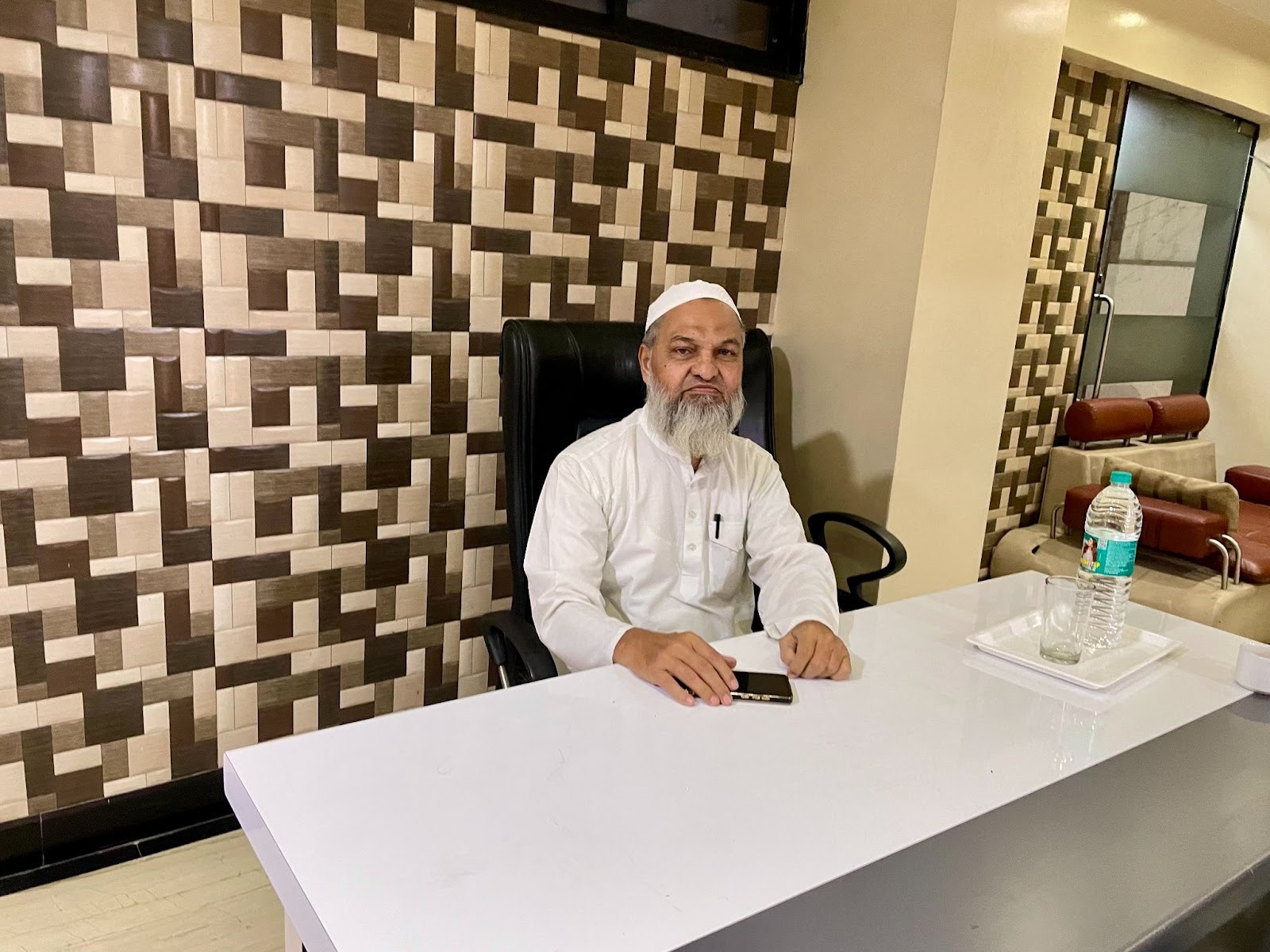
Sheikh’s fate is shared by many others. For property developer Nabiullah Pathan, it meant suffering from losses of over a crore rupees and prolonged court visits, as the fate of one of his transactions continues to hang by a thread.
The 45-year-old Pathan bought an industrial shed in the Rakhiyal area of Ahmedabad for Rs 11,160,000 in an open auction in 2023, organised by the Gujarat Industrial Co-operative Bank.
“My plan was to redevelop this property,” Pathan said. “But because I’m Muslim, I was told that I need to get the Disturbed Areas Act permission from the collector, and only after that the sale deed would be registered.”
Pathan applied for permission in November 2023, and after repeated follow-ups with the revenue department, he was informed that his application was rejected in August 2024.
While the sellers of the property had no issue with Pathan’s bid and purchase, the owners of the neighbouring ‘karkhanas’, or industrial sheds, protested.
“The owners of the 44 sheds in that area opposed my bid. They even made an application to the police of that jurisdiction, and claimed that occupying this place as a Muslim would ‘disturb’ the area," said the property developer.
Pathan’s case is now being heard in court, with the last hearing on 25 November 2025, and a new hearing upcoming on 23 January this year.
Though he remains hopeful, he doesn’t expect to acquire the property any time soon. “It’s an endless quagmire of bureaucratic hurdles—the process is really the punishment,” Pathan said.
Courts Are Not The Solution
Buyers can approach the high court if the deputy collector and then the collector reject their application.
“Even there, there are too many cases pending,” Pathan said. “It’s us (Muslim buyers) who are actually the ones being ‘disturbed’ here.”
While the Gujarat High Court has often allowed the sale of the properties to Muslim buyers, the process is long-winded.
For example, in the case of Vadodara-based businessmen Onali Dholkawala and Iqbal Tinwala’s attempts to first purchase, and then safely settle, into a shop, the court battle has gone on for nine years.
Dholkawala first bought the property, which is in a Hindu majority area, in 2016, after the owners, the Modi brothers agreed to sell it. In 2017, a deputy collector rejected Dholkawala’s purchase and ordered a police inquiry into the matter. Dholkawala approached the Gujarat High Court, which ruled in his favour in the year 2020.
But getting legal permission didn’t stop the threats from far-right groups and some Hindu neighbours in the locality. “We had to go to court again and in February 2023, we got an order in our favour again and a fine was imposed on the people harassing us,” Dholkawala said. “But there were some Hindu groups who still did not allow us to use the shop. I kept asking the police for protection. Once again, we approached the court.”
In June 2025, nine years after the original purchase, a bench led by Justice HD Suthar directed the state government to ensure that Dholkawala be able to safely conduct his business from the shop.
No End In Sight
The Disturbed Areas Act’s original intent was to help prevent distress sales of property during a conflict, and ensure that persons—especially from minority groups—be given a fair price for their properties. But in spite of this positive intent, the legislation has been misused as a political tool.
Sheba Tejani pointed to how the promise of bringing in certain areas under the ambit of “disturbed” was a way to build political capital for politicians.
“Two BJP MLAs, for instance, in Surat, Sangitaben Patil and Purnesh Modi made this a political issue in the 2017 assembly elections, promising to enforce the law if they were elected,” said Tejani. “More recently the Act was expanded in Vadodara at the behest of Manishaben Vakil, who is also a BJP MLA.”
Right-wing vigilante groups also use the Act to harass, intimidate and threaten Muslim occupants, even in areas where the Act is not in force.
When Article 14 sought comment from BJP’s leaders in Gujarat, none appeared to see any problems with the legislation.
Surendra Patel, a former Rajya Sabha member and veteran BJP functionary from Gujarat, who serves as the party’s state treasurer, told this reporter that the law was needed due to so-called “dietary preferences” and different eating habits amongst communities.
“If people from the Muslim community eat non-veg food and prefer to be amongst themselves, then why do they need to mix?” asked Patel.
“Earlier, many parts of Ahmedabad city where Hindus lived in the majority, have now been taken over by Muslims… that’s why it’s important to regulate this.” Patel declined to respond to questions of whether the law furthered religious discrimination and its constitutionality.
Expanding Segregation
Others from the BJP, including elected MLA such as Ellis Bridge MLA Amit Shah have taken a more hostile stance. In November 2025, Shah opposed the sale of nine houses to a Muslim man, in the Nutan Sarvodaya Society in Ahmedabad, and approached the west deputy collector of Ahmedabad city to halt the transaction, citing the Disturbed Areas Act.
When Article 14 sent him questions regarding his views on the legislation, Shah replied saying that one must “[V]isit Kalupur area’s Bhoivada ni Pol surrounding area where our 350 years old Jain temple [has been] shifted, you will get [your] reply.”
Contrary to the question of lack of political will by Gujarat’s BJP-led government, the government has sought to expand its scope.
An amendment to the Act, proposed in 2020, went so far as to incorporate provisions for collectors to reject applications simply on grounds of “likelihood of polarization”, “disturbance in demographic equilibrium”, or even a “likelihood of improper clustering”, based on religious or other identities.
These amendments were challenged by the Jamiat Ulema-e-Hind, a socio-religious group of Islamic scholars from the Deobandi school. The High Court stayed the amendments in 2021.
In 2023, Congress MLA Imran Khedawala, from Ahmedabad’s Jamalpur assembly—the sole Muslim MLA in the state—introduced a private member’s bill to repeal the law, but the bill was defeated by a voice vote.
‘Now, We Are Scared’
Vadodara-based former general secretary of the Gujarat Pradesh Congress Committee Narendra Rawat, who was to contest against Narendra Modi in 2014 from Vadodara before withdrawing his candidature, felt that the Act thrives owing to the “fear” amongst police, collectors, and revenue authorities.
“Inko maalum parha ki Muslim ki favour mein kuch kiya hai, toh BJP ki taraf se char councillor ya char log inke ghar ke baahar aa jaate hai (If people come to know that a decision favouring Muslims has been made, then at least four councillors or people affiliated to the BJP will show up outside their house),” he said.
In Ahmedabad’s Gomtipur, Saniya Ansari’s family remains unsure if they will ever safely occupy the house they bought. They are still waiting for arrests, for accountability, and for a sense of security.
Rifat Jahan pointed to how “multiple Muslim families had purchased homes in this area before”, and the mixed religious nature of their settlement. “This area has always been mixed,” Jahan said. “But now we’re scared.”
The Congress’s Rawat finds reason to echo their sentiment, cautioning about the law being used to further threaten or resettle the community.
“They (the BJP) do not care about whether this causes segregation. The system indirectly supports this,” Rawat said. “If the government in Gujarat continues to go on this path, the conditions of Muslims here will be like displaced Kashmiris (Pandits) in camps. The country is going to be divided up further.”
(Sabah Gurmat is an independent journalist and writer based in New Delhi.)
Get exclusive access to new databases, expert analyses, weekly newsletters, book excerpts and new ideas on democracy, law and society in India. Subscribe to Article 14.