
Srinagar, Jammu & Kashmir: As she usually did before starting her work at night, 28-year-old A* was absentmindedly browsing through her phone after her dinner on a cold evening on Monday, 29 December 2025, in Srinagar.
Suddenly, a video on her social media feed jolted her heart. It said that Virtual Private Networks (VPNs) had been banned in multiple districts in the union territory of Jammu and Kashmir (J&K).
Alarmed, she immediately called her friends. Within minutes, her worst fear was confirmed: the news was true.
“I felt my world collapsing in front of me,” she said. “I had dreams, hopes, and responsibilities—all shattered with just one news update.”
A* earns Rs 20,000 to Rs 30,000 a month as a freelance reporter for local and international media outlets, and VPNs have been critical to her work.
VPNs encrypt Internet connections, hiding activity from ISPs, advertisers, and intruders. They protect sensitive data on public networks, access company systems remotely, bypass geo-blocks, or keep location and browsing history private.
They enable secure, anonymous communication with sources, access to blocked international news databases, and protection against surveillance in a region where journalists have faced the ire of authorities (here, here and here).
Without a VPN, said A, her investigative reporting was risky and inefficient—emails lose encryption and tools like Signal (an encrypted messaging service) struggle under restrictions.
“VPN was my shield for investigative and sensitive reporting,” she said.
Two assignments have already been delayed by the ban, she said, costing her Rs 10,000.
“Now every story risks exposure or delay, hitting my income badly,” said A.
Origin & Enforcement
The crackdown began on 29 December 2025.
Authorities in nine of J&K’s 20 districts—Srinagar, Budgam, Pulwama, Shopian, Kulgam, Kupwara, Kathua, Rajouri, and Poonch—issued orders prohibiting the unauthorised use of VPNs for a period of two months.
Framed as a safeguard against "threats to national security," the orders claimed that VPNs were being misused to spread misinformation and organise unrest.
The orders were issued under Section 163 of the Bharatiya Nagarik Suraksha Sanhita, 2023, India’s Criminal Procedure Code, which allows preventive measures for public safety.
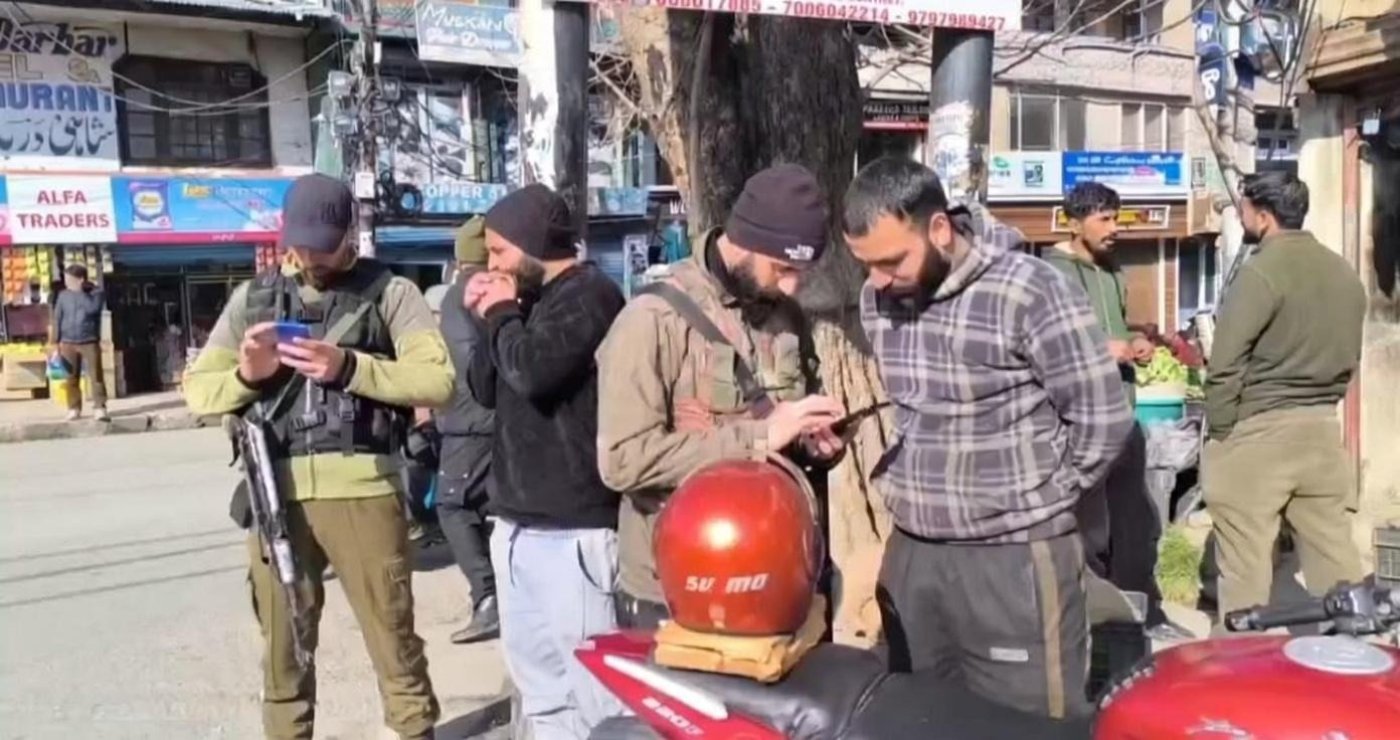
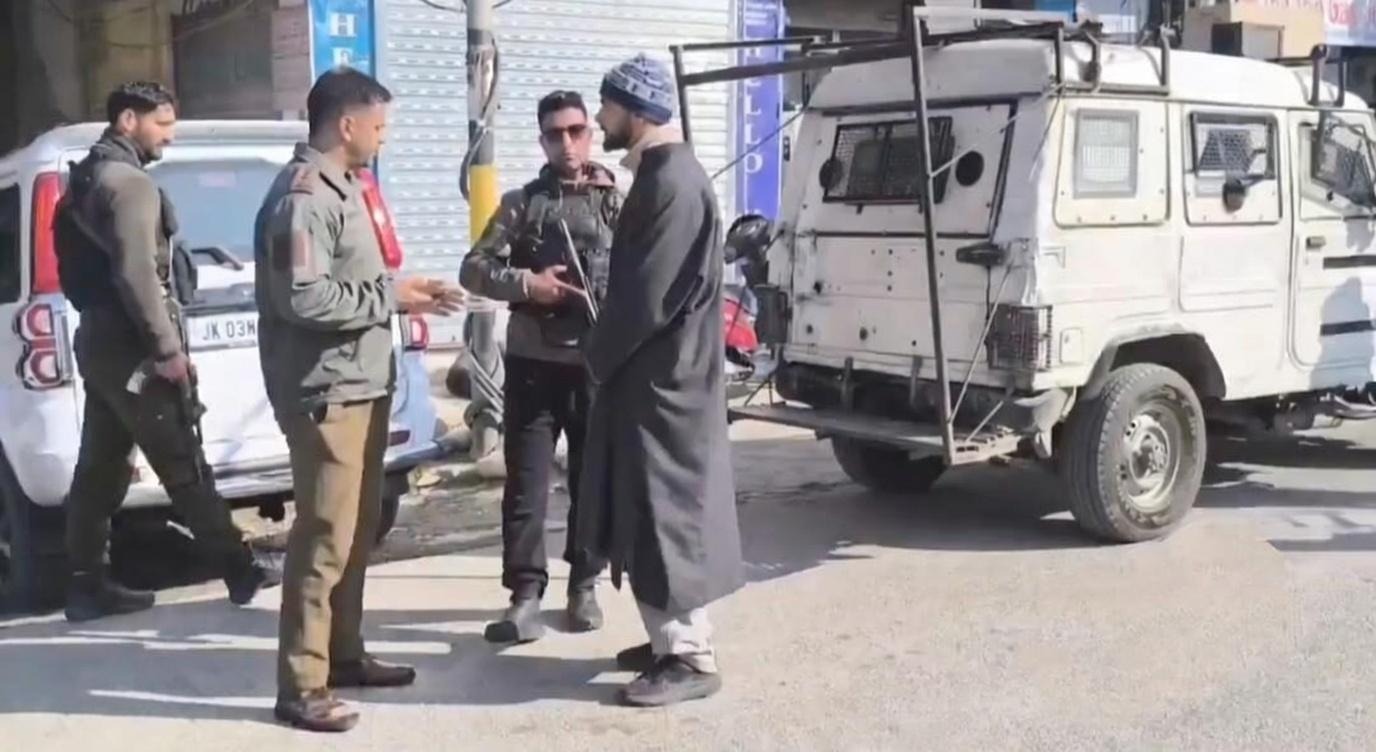
Days after the ban. J&K police officials were seen conducting street-level verifications and checks, identifying 800 to 1,100 users by early January, leading to First Information Reports (FIRs), security proceedings, and even parental counselling for teenagers.
In central Kashmir’s Budgam, one of the districts where VPNs were banned, just four days after the ban on 3 January 2025, 24 individuals were identified as allegedly using VPNs. This resulted in two FIRs and preventive bindings against 11 people.
“Security procedures were launched against 11 individuals, aged between 18 and 40 years, for non-obedience and violations with (sic) the prohibitory orders,” police said in a statement on 3 January 2026.
According to the police, all 24 were released after they signed a bond.
“They were bound down under Sections 126/170 of the Bharatiya Nagarik Suraksha Sanhita (BNSS) and later released after due warning," police said.
Intensive street-level mobile phone verification was also launched in other districts. In the district of Kulgam, in south Kashmir, across streets and marketplaces, police were seen stopping people and checking their phones and the applications installed on them.
The Tribune reported, on 6 January, that J&K police said that nearly 1,100 individuals had been identified over the previous days for using VPN services, while The Times Of India, on 3 January, reporting that the police had initiated action against more than 100 people for violating the prohibitory orders on the use of VPNs.
While intended to reduce dangers and threats, the blanket approach has drawn criticism from digital rights experts and analysts who argue that the events are emblematic of a broader, targeted crackdown, without clear evidence of widespread abuse.
"As per Indian law, VPNs are not illegal,” said Hyderabad-based advocate Krishna Kumar. “In the Anuradha Bhasin vs Union of India case, the Supreme Court said that internet access is part of freedom of speech and any restriction must be temporary, reasonable, and regularly reviewed."
"So, while such restrictions can be imposed, they should not be arbitrary or indefinite,” he added. “If they affect people’s livelihoods, they can be challenged legally."
In the 2020 Anuradha Bhasin vs Union Of India, the Supreme Court ruled that the “freedom to practice any profession or carry on any trade, business or occupation over the medium of internet enjoys constitutional protection.”
These bans are the first blanket bans on VPNs in India.
In 2022, India issued new cybersecurity rules requiring VPN providers with physical servers in India to retain user logs for at least 5 years, even after a user cancels their service.
Several VPN apps were removed from the Apple and Google app stores in India for failing to do so.
Why VPNs Are Indispensable
For journalists and IT workers, among others, VPNs provide an additional layer of security in a surveillance-heavy environment, enabling encrypted communications and access to restricted global resources.
The ban doesn't just inconvenience—it criminalises necessities, leaving users naked, exposed and highly unproductive in their respective fields.
B*, a 28-year-old from Shopian in Kashmir, works from home for a big tech company in Bengaluru.
He protects customers' private financial data worldwide, ensuring no one can steal or misuse it.
To do it safely, he always used a VPN. The VPN hid his location online and kept his work secret from hackers or anyone trying to track him online.
It created a secure connection so he can open his work email, company files, and special software without any risk. But now, without the VPN, he is locked out of his work email and company files.
“VPN is not something extra for my job,” B said. “But who will listen here?“
He said he can no longer do his job properly from home and fears he might lose his job or be compelled to leave Kashmir.
“It is a must to keep customer data safe and secure,” said B. “Without it, I cannot work the way the company needs me to work.”
Many young people in Kashmir depend on remote jobs like this because there are very few good job options at home.
The Need For Online Jobs
J&K has an unemployment rate of 6.7%, almost double the national average of 3.5%.
Unemployment is particularly high among urban youth, with the Periodic Labour Force Survey of the ministry of statistics and programme implementation showing that 32% of urban youth aged 15–29 in J&K were unemployed in the July–September 2024 quarter.
The region's youth are largely dependent on government-sector jobs because of a lack of an industrial base and limited private-sector investment.
Over the past five years, recruitment examinations notified by the J&K Services Selection Board—a government recruitment board that conducts examinations for administrative posts—and J&K Public Service Commission have yet to be completed.
On 9 February 2026, in response to a question from People’s Democratic Party MLA Waheed-ur-Rehman Para in the legislative assembly, it was confirmed that the Abdullah govt has collected up to 48.88 crores from unemployed youth of J&K through application form fees for government job exams.
Jobs remain scarce on the ground despite the thousands of vacancies.
As of 26 January 2026, a month into the two-month prohibition, the ban's grip is tightening, blending security measures with unintended hardships that invade privacy, halt education, and undermine livelihoods.
On 12 January 2026, Al Jazeera reported that the VPN ban in Kashmir was adding to residents’ mental stress. The report discussed how freelancers and others who work online are now considering leaving the union territory because they might lose their jobs without reliable internet access.
H*, a 32-year-old IT professional from Srinagar who works for a company outside Kashmir, said he is facing very tough choices right now.
He earns Rs 50,000 per month, but his job depends entirely on using a secure VPN to connect to the company's servers.
Many IT companies, including the one H works for, require remote employees to use VPNs when accessing client information and other sensitive data.
Accessing private company data, client files, and servers over a regular open internet connection may leave them vulnerable to hacking.
Because of the VPN ban, he cannot log in to his work and has been forced to take unpaid leave.
“VPN is not optional for IT work,” H said. “Without it, I am completely cut off from everything I need to do my job.”
H is the sole breadwinner for his family of more than eight—including his elderly parents, wife, and children—all of whom depend entirely on his monthly income.
With his salary now suspended due to the forced unpaid leave, the household's financial pressure has mounted.
He is now thinking about moving out of the region, but that would mean leaving his family behind in Kashmir, something he said he would rather not do.
Random Checks
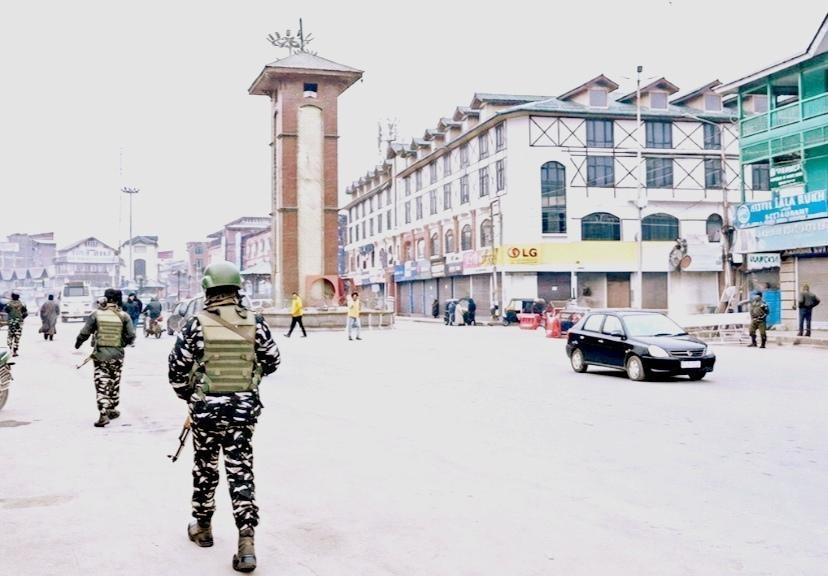
Across the nine districts, the ban has given rise to a new concern among civilians, particularly the youth.
Residents claimed they were stopped in markets or shops by the police and pressured to unlock their phones so that their internet history and activity could be scrutinised for VPN use, what they had watched on YouTube, and their personal image galleries.
“Sometimes they just randomly take your phone whether you have or haven't such a type of app in your phone and tell you to pick it up from the station or camp," a teenager from a village in south Kashmir, who asked not to be named, said. "Who is strong enough to go to the camp or police station and get his phone?”
Residents described police examining intimate family photos without regard for privacy.
“It is important to note that the Supreme Court has recognised privacy as a fundamental right under Article 21 of the Constitution,” said S*, a lawyer who asked to remain anonymous. “Therefore, indiscriminate checking of personal mobile phones or compelling individuals to unlock their devices without a lawful procedure may raise serious concerns regarding violation of privacy and personal liberty.”
The Supreme Court, in its 2017 Puttaswamy ruling, held that the right to privacy is a “fundamental”, “inherent” right under Article 21—that covers protection of life and personal liberty—of the Constitution.
“Any such inspection must be backed by a clear legal authority and must follow due process, otherwise it risks crossing the constitutional limits placed on state power,” said S, who practices in the J&K High Court.
Experts argue that the VPN ban goes too far. “Both security and liberty matter. The right to access cannot be taken off on the basis of suspicion alone,” S added. “The right to access information, to communicate privately, and to navigate the internet freely are not privileges granted by the state. They are fundamental rights. And these rights cannot be extinguished on the basis of suspicion alone.”
Authorities said security demands it, residents of the region tell a diametrically opposite story.
"Looking for VPN installation is one thing, but invading citizen privacy and checking family pictures in the mobile phone gallery is quite another," said another resident of south Kashmir, who also requested not to be named. “This isn’t a security matter...it is an invasion of privacy."
*Names withheld on request.
Get exclusive access to new databases, expert analyses, weekly newsletters, book excerpts and new ideas on democracy, law and society in India. Subscribe to Article 14.