
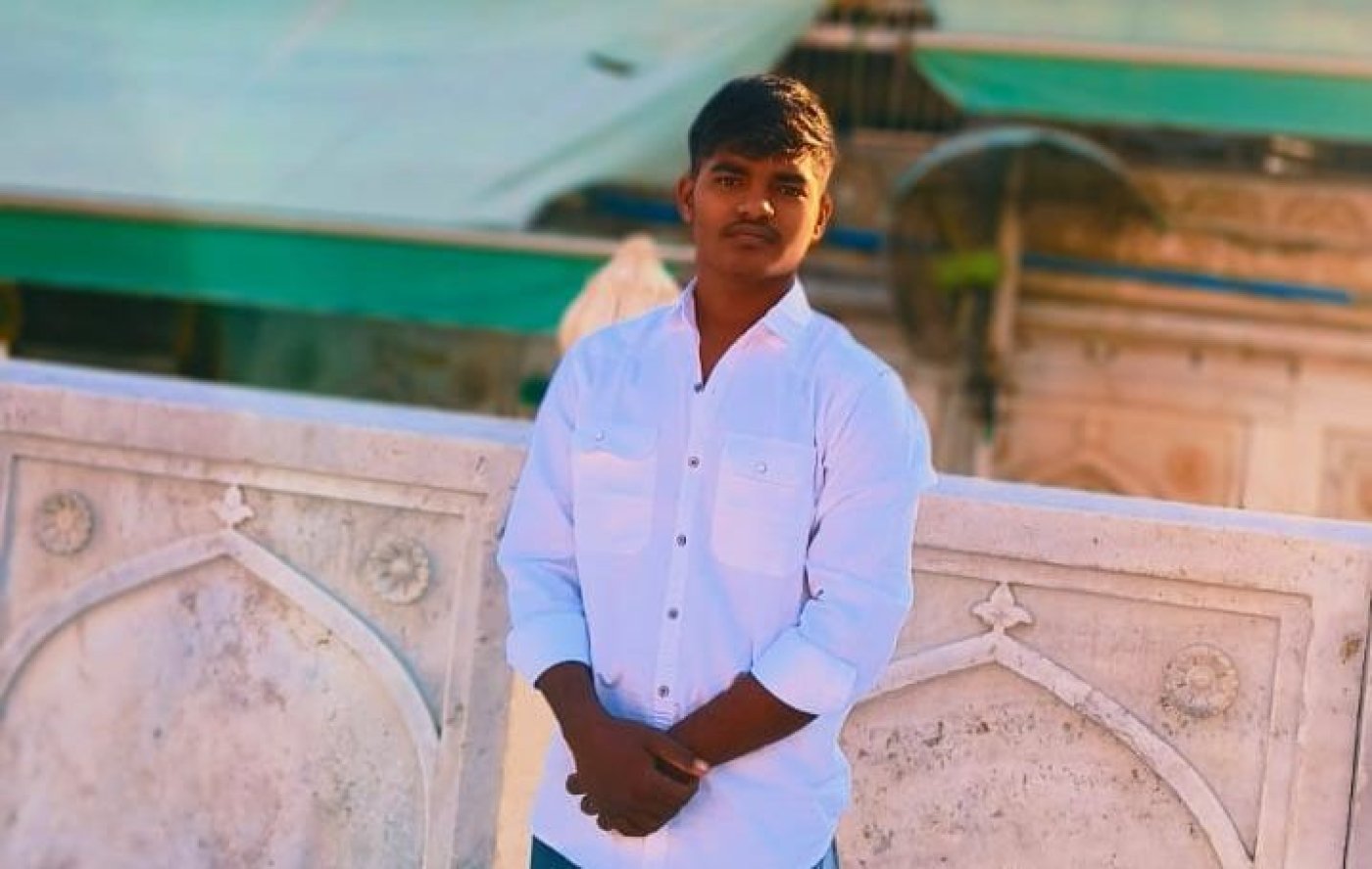
Mumbai: For the last year, Rahim Khan’s family kept urging him not to lose hope.
He reluctantly agreed each time—when his son was lynched by a mob that included his closest friends, when the main accused got bail in 90 days, and again when he was forced to leave their ancestral village in the face of threats from those who had lynched his son.
At each setback, Khan’s wife, their two daughters and their husbands would reassure him, and the crestfallen father, having lost his only son, would steel himself.
Now, a year after 20-year-old Suleman Pathan was lynched by a mob in Jamner, in northern Maharashtra’s Jalgaon district, Rahim Khan’s hope for justice is wilting away.
On 11 August 2025, Pathan was dragged out of a cafe where he was sitting with a Hindu girl. An aspiring policeman and head of a panel that organised the annual Ganpati festivities in his village, Pathan was murderously assaulted by a mob that included some of his closest childhood friends, including one he called his “jaan”, his life. His post-mortem revealed he had sustained 62 injuries.
More than a year later, the trial has yet to begin; one accused continues to abscond, and seven of the 10 accused were released on bail.
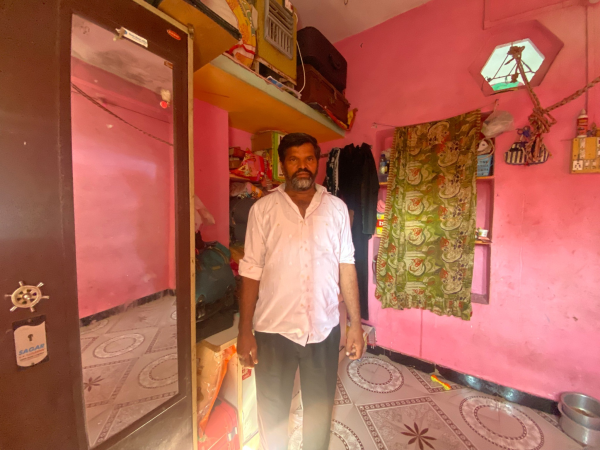
For Khan and his family, it has been a year of loss. “Aisa lag raha hai unko hi sab success mil raha hai. Hum log bas ruke hain,” said Khan’s son-in-law Mehboob Khan. “It feels like they are succeeding at everything, while we just wait.”
Mehboob and other family members no longer ask Khan to retain hope. “We just tell him that the cases are proceeding,” Mehboob Khan said. “We don’t tell him that there has been no update for months now.”
Not Being Heard
In a landmark ruling in Tehseen S Poonawala Vs Union of India (2018), the Supreme Court laid down guidelines for investigation and trial in cases of mob lynching.
The apex court directed that trials in lynchings and cases of mob violence be held in fast-track or designated courts, with hearings on a daily basis. “The trial shall preferably be concluded within six months from the date of taking cognizance,” the court said.
In the Suleman Pathan case, a year later, the accused still have not been charged, and the trial has not been assigned to a fast-track court. The Jalgaon district and sessions court has held 48 hearings, as per the Jalgaon court’s website, but charges were not framed.
For Pathan’s family, the delay in the trial is just the latest in a long list of grievances they harbour towards the authorities.
Around 11 am on 11 August 2025, a mob of men armed with iron rods and wooden sticks had dragged Pathan out of the cafe, located less than a minute from the local police station. He was bundled into a van that stopped at multiple locations along the 20-km journey back to Betawad Khurd, Pathan’s native village.
At each stop, the wiry youngster was pulled out and battered. The mob continued to assault him at the village bus stand even as his family rushed to the spot upon receiving a call from a villager. The attack lasted five hours. Pathan died that evening.
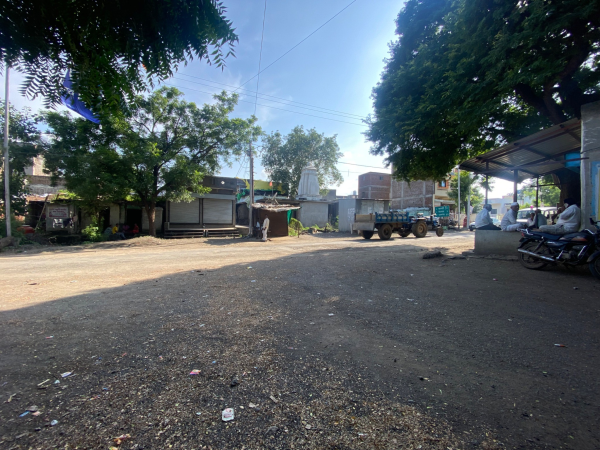
According to the family, they identified at least 17 people in the mob that assaulted Pathan. However, the police named only 11 people as accused in the chargesheet. One accused, Ghanshyam Mali, continues to be absconding. The police arrested the remaining 10, seven of whom are now out on bail.
The family said the accused's release is cause for concern.
Within three months of Pathan’s killing, on 11 November 2025, four of the accused—Abhishek Rajput (22), Suraj Sharma (25), Deepak Ghisadi (20) and Ranjan Matade (48)—were released on bail by the judicial magistrate first class in Jamner. The court said it granted bail because the Jamner police failed to file the chargesheet within the stipulated 90-day period after the crime.
Weeks later, on 15 January 2026, when Khan, his wife and their granddaughter were heading to the village on a bike, they crossed paths with Matade and Rajput. Khan was unsure how to react. After all, Matade was his classmate’s brother; Rajput had been his son’s closest friend. He had watched both of them assaulting his son, and then his family, just months ago.
As they came closer, Khan sensed aggression. A flurry of abuses followed.
“Tum hamari bail cancel ke liye bahut chakra kaat rahe ho. Tab toh tum bach gaye the lekin iss baar tumhara number hai. Tumko chodenge nahi. (You’ve been making the rounds to get our bail cancelled. You got saved last time, but now it's your turn. This time, we won’t spare you.)” they said, according to a non-cognisable complaint Khan registered with the Jamner police station the same day.
According to the complaint, a copy of which Article 14 has reviewed, the two accused also made light of their quick bail. “Hamara kuch nahi hota. Do teen mahine mein jail se chut ke aayenge. (Nothing will happen to us. We will be out of prison in two-three months).”
Khan rushed to the police station after the faceoff. “We asked the police to register an FIR against them, but they insisted they could only file a non-cognisable report,” said Mehboob Khan.
A non-cognisable report means the police have no authority to investigate the complaint unless a magistrate approves it, unlike an FIR, where the police can investigate and arrest the accused, if needed, without a warrant.
One Setback After Another
Since 2025, three other accused have received bail.
In May 2026, the Aurangabad bench of the Bombay High Court granted bail to Rishikesh Teli. He is one of the primary accused as per the police chargesheet, involved in abducting Pathan from the cafe and assaulting him repeatedly across different locations.
The court said in its bail order that it had gone through CCTV footage and concluded that “nothing incriminating is noted.” It also noted that the FIR did not name Teli. (The FIR named only five men; the remaining accused were listed as unidentified at the time.) “The allegations against him are omnibus in nature. He is not stated to be armed with any weapon,” the order said.
For the family, the order reinforced what they had feared—a shoddy police probe.
“The chargesheet clearly lays down the charges against him. Why did the police prosecutor not oppose bail?” Mehboob Khan asked. “It feels like the police were weak.”
In August 2026, the Bombay High Court's Aurangabad bench granted bail to another accused, Nitin Patil—a cousin of the girl Pathan was sitting with in the cafe.
The family said Patil was among those carrying out the assault, and that he had turned to assault Rahim Khan, his wife Tabassum and their daughter Muskaan when they tried to rescue Pathan.
According to the police chargesheet, Patil was part of the mob that stripped Pathan when he was brought to Patil’s village of Betawad Budruk, one of the locations where the van halted. Patil assaulted Pathan in a field outside the village and then went on to assault Pathan’s family in Betawad Khurd. At least two co-accused in the case confirmed Patil’s role in the violence.
The court granted Patil bail on 19 August 2026. “It is an undisputed fact on record that initially, the name of the accused no. 9 does not find place in the FIR. In the above stated say, the prosecution has nowhere stated for what sort of investigation, his further detention is must (sic),” the order said. Article 14 has a copy of the bail order.
With most of the accused out on bail, the family feared the case may weaken. Several of the accused live in the same village as key eyewitnesses. “What if they start influencing the witnesses to retract their statements?” Rahim Khan said. “We have left the village, but the eyewitnesses want to continue staying there.”
In November 2025, the Khans moved out of their three-bedroom home in Betawad Khurd, the ancestral property their family had occupied in the Hindu-dominated village for 150 years. Tormented by the memory of their son being lynched not far from their home, and fearful of the growing communalisation of the once harmonious village, they relocated to a rented property 25 km away.
Pathan’s family said these developments have come alongside a larger delay in the trial.
The state government had filed an appeal against the default bail granted to four accused on 11 November 2025. On 16 September, the Jalgaon sessions court rejected the government’s appeal, upholding the default bail granted to the four main accused.
The family had repeatedly asked the police to invoke stricter sections of the law, including the Maharashtra Control of Organised Crime Activities Act (MCOCA), 1999, stating grounds that the mob acted in collusion and had planned the killing. The police did not concur, and the family filed a writ petition in the Aurangabad bench of the Bombay High Court in September 2025, just weeks after the lynching.
The matter has had 15 hearings, but no ruling has come.
A Steep Cost And A Detour
The family’s quest for justice has come at a steep cost. Khan’s income from his farm is barely enough to make ends meet. His rented home, with its tin roof and walls, costs Rs 2,500 each month. The family has spent more than Rs 50,000 in legal expenses so far. “It feels like we are earning only so that we can foot these legal expenses,” said Mehboob Khan.
He quickly added that the family would borrow money if needed but would continue to seek justice from the court.
“What hurts is the feeling that there is no one listening to us,” said Mehboob Khan. “No matter what we do, we hit a wall. Apna kon hai, paraya kon hai, malum nahi pad raha hai. Who is to be trusted and who isn’t is difficult to tell.”
It has been especially hard for Rahim Khan.
The decision to leave the village forever wasn’t easy. The family now lives in neighbouring Buldhana district, in a home they can barely afford, while their ancestral village home remains locked.
As their three-acre soybean farm lies next to Betawad Khurd, he has to keep going back. Once, their neighbours were friends. They were the ones the family turned to in times of happiness and distress—be it rushing Khan to the hospital once following a farm injury or pooling in money for his treatment.
Since the lynching, most neighbours have kept away. No one stopped the family when they left the village in December 2025.
Khan, keen to keep himself busy, visits his farmland two or three times every week. It helps distract him from the year’s setbacks and instead hang on to hope. “Ummeed rakhna zaroori hai. Baaki hai hi kya apne paas?” he said over the phone while sitting in his farm one weekday afternoon. “It is important to hold on to hope. What else do we have any more?
One day early in September 2026, Khan and his wife were on their motorbike, heading to their farm. As they neared Betawad Khurd, Khan’s wife asked him to take a detour. She wanted him to take the longer route to the farm, one that avoids a ride through the village.
It would be a 20-minute detour, Khan tried to explain. She was insistent.
“She can’t bear the thought of us driving through the village,” he said. “It brings back memories of Suleman.”
(Kunal Purohit is an independent journalist based in Mumbai and the author of the book H-Pop: The Secretive World of Hindutva Popstars.)
Get exclusive access to new databases, expert analyses, weekly newsletters, book excerpts and new ideas on democracy, law and society in India. Subscribe to Article 14.