
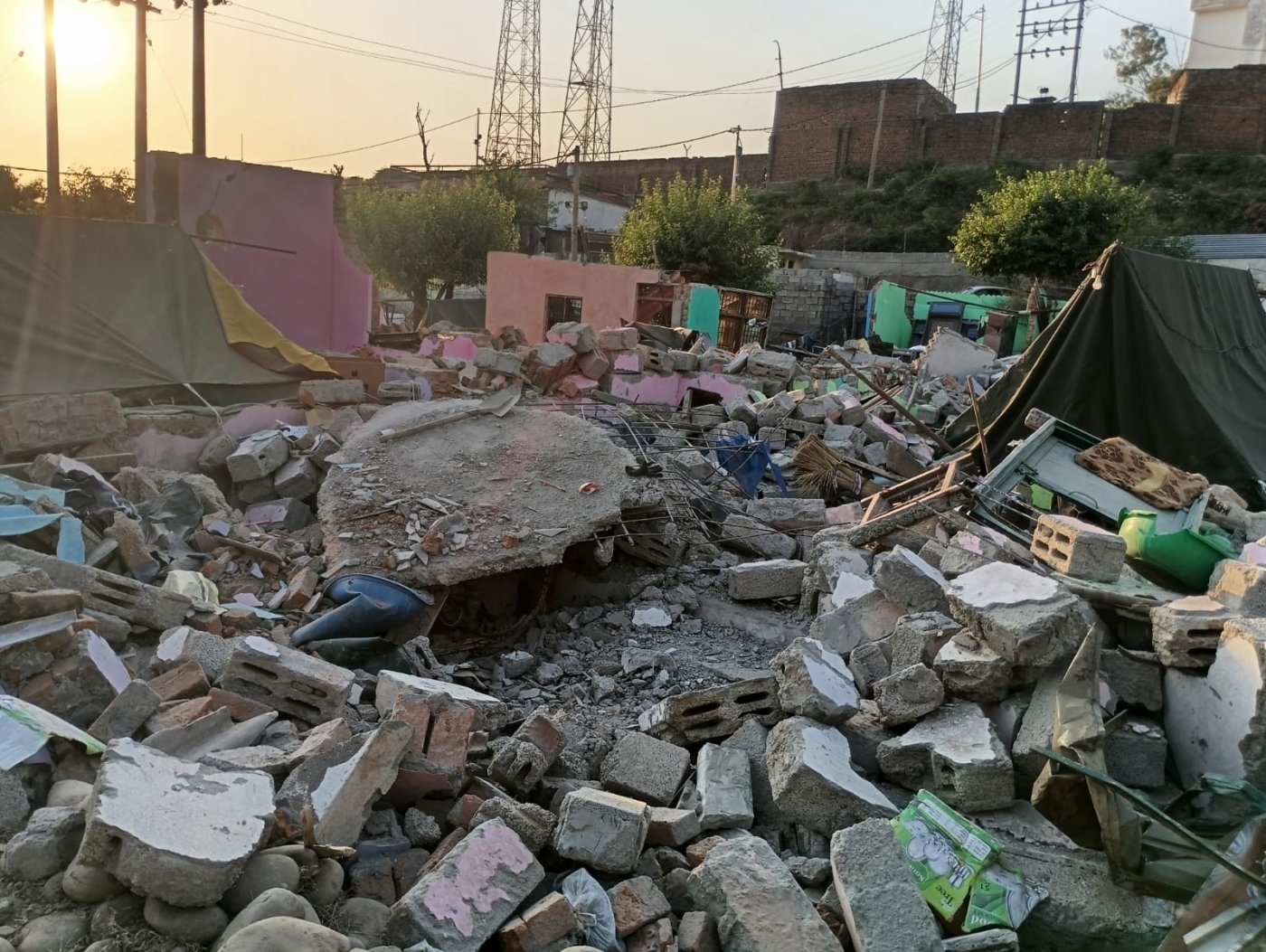
Sidra, Jammu: Ashraf Ali Kathana, 67, a retired employee of the Jammu and Kashmir sheep husbandry department, was offering his fajr namaz, or dawn prayers, on 19 May 2026, when police personnel and forest officials arrived at his home in Sidra Bandhi, on the outskirts of Jammu.
"I was not even allowed to fold my prayer mat,” said Kathana. “The police and forest officials dragged me out of my home. My wife was also praying on another mat. After completing her prayers, she was reciting the Holy Quran, but she too was not allowed to close it properly.”
The police and forest departments in J&K report not to the chief minister but to the lieutenant governor, who runs a parallel administration that reports to New Delhi.
Kathana said officials asked him to alert neighbouring households to leave immediately. Within hours, residents said, 28 homes belonging to Gujjar-Bakarwal families were gone.
"Within an hour, everything had been reduced to rubble,” said Amjid Hussain, 52, one of those displaced, “They did not allow us to take our documents or belongings that held special value for us.”
The Sidra evictions were the latest in a series of moves to evict Gujjars and Bakarwals, beginning in 2020, right after the union government removed J&K’s special constitutional status by deleting Article 370.
Hundreds of cattle-herding Gujjars and Bakarwals—also migratory people, they rear goats and sheep—received notices over November 2020 across the former state for “illegal encroachment”, as Article 14 reported that month.
The notices and evictions of these tribes—who form 15% of J&K’s population and at about 2 million are the union territory’s third-most populous community, after Kashmiris and Dogras—after decades of life led on land that once belonged to no one and since 1960 has been owned by the government, have sparked accusations of religious bias against the Muslim Gujjars and Bakarwals, who since 1991 are classified as scheduled tribes (STs).
The accusations of religious bias are especially relevant because the J&K government has consistently stonewalled demands to allow the Gujjars and Bakarwals the benefits of the Forest Rights Act (FRA), 2006, which they believed they would receive after the abrogation of Article 370.
‘A Chilling Negative Message’
About 1,500 people, including children and elderly residents, have been living in temporary tents since the Sidra demolitions. The tents were provided by J&K's forest minister, Javed Rana, while civil society groups and non-government organisations have supplied relief materials.
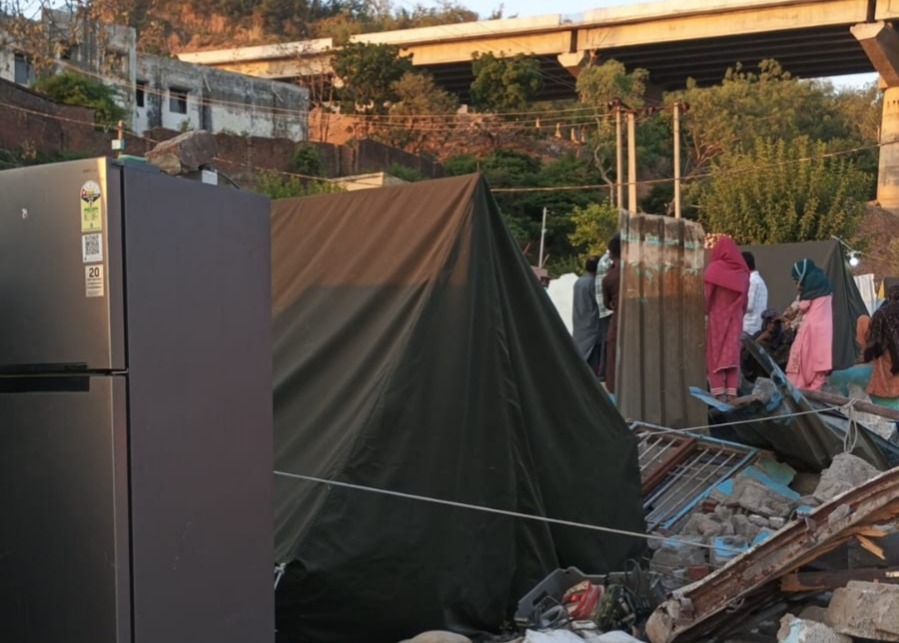
Residents said many of the 28 houses demolished that morning had stood for more than 35 years on what they described as private land and grazing commons.
Forest officials said the structures were built on forest land. Residents contend that, regardless of ownership, their rights as a nomadic tribal community are protected under the FRA.
Interviews with residents, community leaders, researchers, and activists found that this nomadic tribal community is struggling to preserve its place in J&K, amid recurring evictions, shrinking grazing commons, blocked migration corridors, insecure land tenure, weak implementation of legal protections, and growing social and political marginalisation, often driven by communal rhetoric.
For decades, Gujjar-Bakarwals have occupied a distinctive place in Jammu and Kashmir's politics and security landscape. Community leaders, experts and successive governments (here, here and here) have frequently highlighted the role played by Gujjar and Bakarwal families living in remote border and forest regions during the insurgency years, when many were regarded by security agencies as important sources of local intelligence and logistical support against militant groups.
Former chief minister Mehbooba Mufti referred to Gujjar-Bakarwal allegiances when police arrested one of their leaders, Talib Hussain Choudhury, on 1 June after a protest against demolitions, charging him with nine crimes, including attempted murder and rioting.
“Treating him like a criminal simply for taking out a peaceful march… sends a chilling negative message to Gujjar Bakerwals (sic) who have always stood by India,” said Mufti.
Demolitions & A BJP Hand
Those from Sidra Bandi insist they were not occupying forest land, as officials claimed.
"We are migrants from Kashmir since 1990 and have been living here ever since," Hussain said. "This land does not belong to the forest department, nor is it state land. It is milkiyat (private property), while a few marlas are gaas charie (grazing land), and we have the relevant documents."
Those documents include electricity bills, ration cards and land allotment to some in 1990.
The government of chief minister Omar Abdullah ordered an inquiry into the Sidra demolitions. Article 14 sought comment from J&K tribal affairs and forest minister Javed Rana. There was no response. We will update this story if there is.
The demolition followed protests led by an MLA from the Bharatiya Janata Party (BJP) Vikram Randhawa, whom residents accuse of helping trigger the action.
“A week ago, around 50 to 60 persons led by Randhawa protested here and said that they had to pass through this area to reach the temple, but first they had to face these Muslims,” Hussain alleged. “Being Muslims, we have been targeted.”
Randhawa rejected the allegation, the latest made against the BJP and Hindu right-wing groups for fomenting anti-Muslim feelings (here and here).
"Show me a single piece of evidence that I ever used the words 'we have to face Muslims' during a visit to the temple," Randhawa told Article 14.
He said only five to six Gujjar families had legal allotments in the area and that their holdings remained untouched. According to Randhawa, all the demolished structures were illegal encroachments on forest land.
Referring to allegations that he orchestrated the demolition drive, Randhawa said those making such claims were attempting to give the issue a communal colour.
For residents, the demolition was about more than a dispute over land ownership. Many see it as part of a broader pattern of discrimination affecting one of J&K's largest tribal communities.
A 2025 study in the journal Asian Anthropology found that Gujjar-Bakarwals face multiple forms of marginalisation, including violence in parts of Jammu linked to their Muslim identity and exclusion linked to their tribal status.
Increasingly Constrained
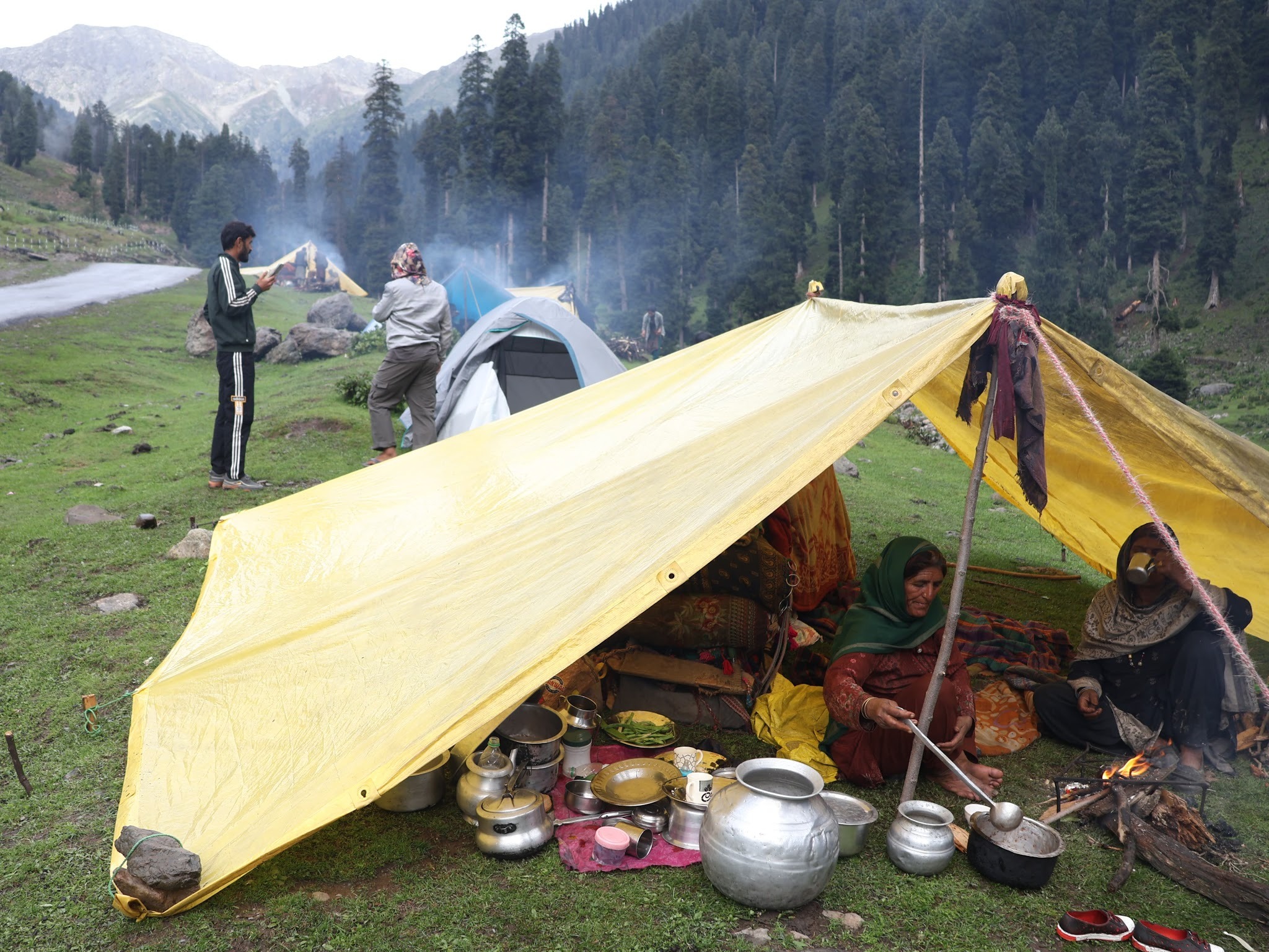
The Gujjar-Bakarwals are among Jammu and Kashmir's largest scheduled tribe communities. Many continue to practise transhumance, the seasonal movement of livestock between the plains of Jammu and the alpine pastures of Kashmir.
For generations, these migrations have shaped both livelihoods and landscapes.
An October 2025 University of Oxford study found that the seasonal migration of the Gujjar, Bakarwal, and other pastoralists, collectively known as the Gaddi, contributes to healthier rangelands, lower fire risks, improved soil fertility, and better water retention.
The study, as yet unreleased, written by Indian Administrative Service officer Shahid Choudhury at the Blavatnik School of Government, estimated the value of these ecosystem services at nearly Rs 6,000 crore.
Yet community leaders say the pastoral way of life is becoming increasingly difficult to sustain.
"The Bakarwal community is essentially a pastoralist community," said Faisal Raza Bodka from Samba.
"For generations, we have grazed our livestock, migrating to higher altitudes during the summer and to the plains in the winter,” said Faisal Raza Bodka from Samba district.
“However, over time, our traditional migration routes have been disrupted for various reasons,” said Bodka, who documents Gujjar-Bakarwal culture and promotes tribal crafts. “In Jammu and Kashmir, particularly after the abrogation of Article 370, security concerns and encroachments have made our lives increasingly difficult."
Bodka said the community's contribution to forests often goes unrecognised.
"The fact is that our community plays a role in sustaining the forests. Our livestock produce manure that contributes to the ecological health of these areas, helping keep the forests fertile and productive. Despite this, we are being evicted without prior notice."
He also spoke of social and religious discrimination.
"We have also faced discrimination in schools, colleges, and even while travelling on buses and trains, where derogatory remarks are often directed at us for being Gujjars,” said Bodka. “In Jammu, we also face discrimination on religious grounds. People driven by communal ideologies often politicise our very existence, particularly in the Jammu region.”
Bodka said the community feels increasingly marginalised and believes its concerns are often overlooked despite its long-standing presence and contributions to the region.
Shrinking Migration Routes
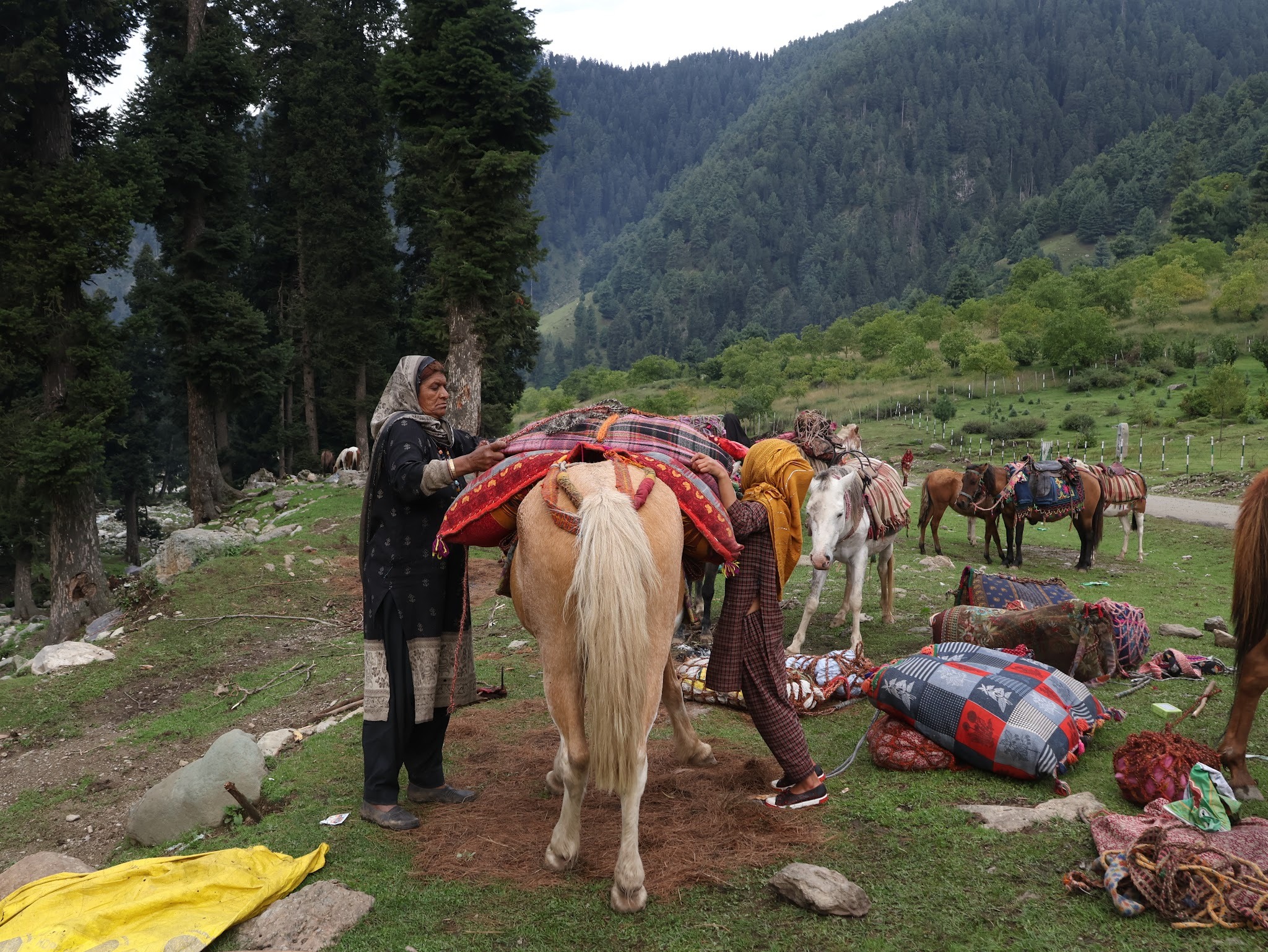
Beyond eviction drives, community members point to the shrinking network of traditional migration corridors as they set out every year on a 600-km journey that takes between 30 and 45 days.
Community members say traditional migration routes used for generations are steadily disappearing.
Fences erected by the Forest Department and the conversion of common grazing lands into private farms and holdings have narrowed or blocked many pathways once used by pastoralists moving livestock between J&K's high-altitude pastures.
As a result, many now transport animals by truck or undertake longer, more expensive journeys, often along busy highways.
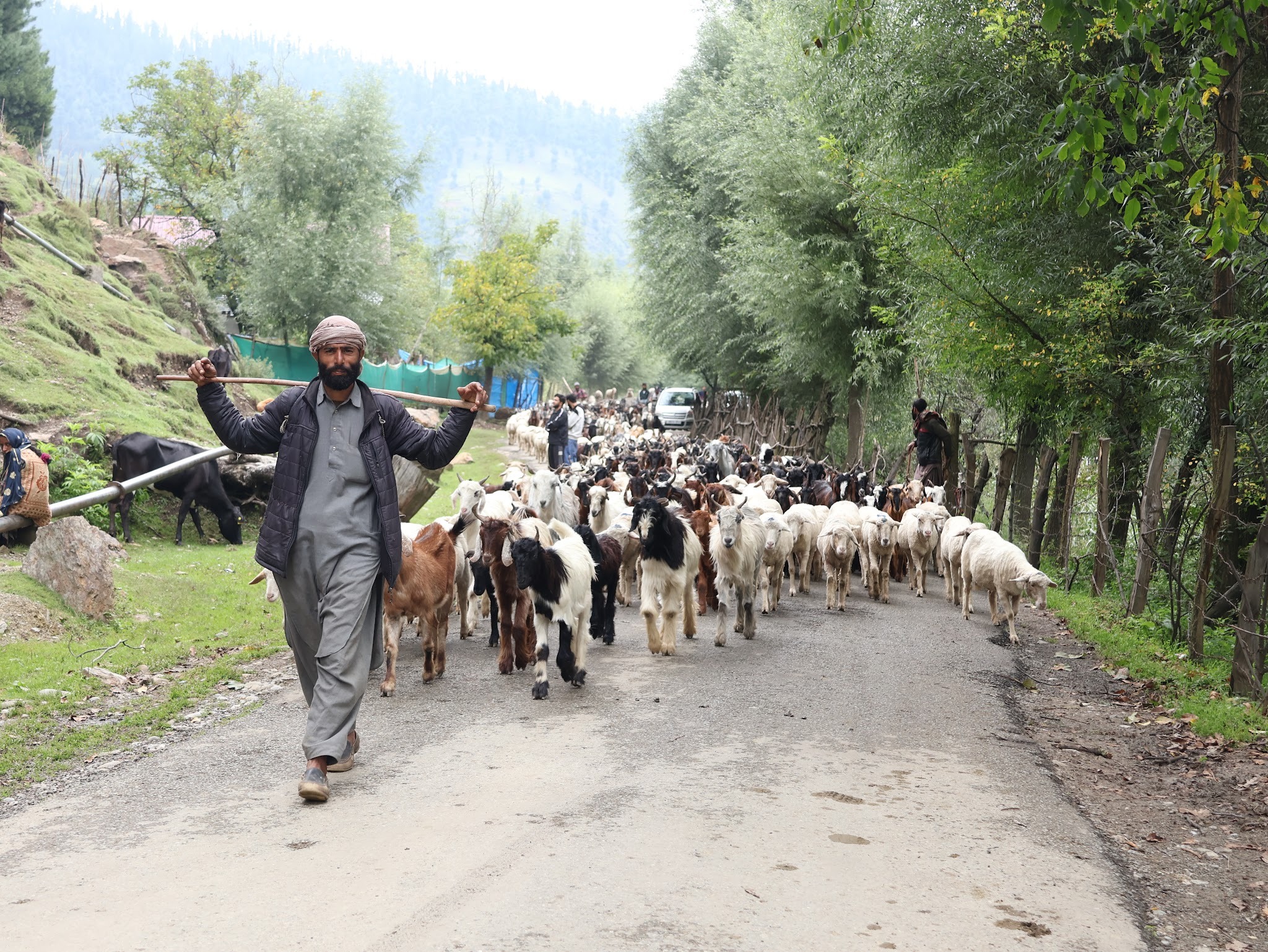
Talib Hussain, a member of the community from Qazigund, said migration has become more dangerous and expensive.
"Migration has become increasingly challenging. We face losses of livestock due to extreme weather events, road accidents on highways, attacks by wild animals, and restrictions arising from forest department nurseries and encroachment of grazing lands."
Evictions & Land Insecurity
Community leaders say the Sidra demolition is part of a series of confrontations between tribal communities and authorities.
In November 2020, more than 1,000 kanals (about 50 acres) of land in Lidroo near the tourist town were cleared by the forest department, although residents were given seven days' notice.
That month, Article 14 reported how the government was demolishing decades-old homes and serving eviction notices to forcibly reclaim forest land from the Gujjars and Bakarwals.
In May 2021, an eviction drive in the district of Shopian escalated into violence after Gujjar and Bakarwal families resisted the demolition of temporary shelters.
In February 2025, tribal residents in the district of Ganderbal alleged that forest officials used force against villagers protesting the construction of a forest nursery.
For many Gujjar-Bakarwals, the underlying issue is the absence of secure tenure.
"The biggest issue is that we do not have secure land to live on," said Amir Choudhary, spokesperson for the Gujjar Bakarwal Students Alliance. "Wherever we settle, we face the threat of eviction."
The Unfinished Promise Of Forest Rights
Many community leaders trace these conflicts to the incomplete implementation of the FRA.
Majid Majeed, 45, whose home was among those demolished, said residents had raised the Forest Rights Act when officials first informed them that the land belonged to the Forest Department.
"We told them that even if the land is recorded as forest land, we still have the right to live here under the Forest Rights Act because we are a nomadic tribal community," he said.
A week later, he said, officials returned with a large police contingent.
"They arrived early in the morning and demolished our houses within an hour," he said. "Where will our children go now, and how are we supposed to survive under the open sky in this scorching heat?"
Majeed's account reflects a wider grievance among Gujjar-Bakarwals, many of whom say the rights guaranteed under the FRA remain largely unrecognised on the ground.
Tribal researcher Javed Rahi said the dispute ultimately turns on whether authorities view Gujjar-Bakarwal families as encroachers or as forest-dwelling tribal communities protected under the FRA.
"These eviction drives are being carried out under the Indian Forest Act, 1927, which applies to encroachers," he said. "Forest dwellers and nomadic tribal communities do not fall under the category of encroachers."
Rahi argued that the FRA, which recognises the rights of tribal communities living in and using forest land, takes precedence over the 1927 law in such cases. He said any eviction without first determining those rights would be legally questionable.
For Gujjar-Bakarwal leaders, land insecurity is only one aspect of a wider problem.
They say the community's nomadic way of life continues to create challenges in accessing education, government services, and political representation, with even basic demographic data often failing to capture the scale of the population.
Undercounted, Disadvantaged
Amir Choudhary, spokesperson for the Gujjar-Bakarwal Students Alliance, said the community feared being undercounted in the ongoing census because many families are currently moving livestock through higher-altitude grazing areas.
"These days our people are on the move, having migrated to the higher hilly areas for seasonal grazing,” he said. “As a result, many community members are not being counted in the census.”
Amir Choudhary said an inaccurate count could affect policy-making and resource allocation for a community that already lags behind on several socio-economic indicators.
“The census should ideally be conducted during the winter months when the nomadic population returns, so that our actual numbers can be properly recorded,” he said. “These days, our people are on the move, having migrated to the higher hilly areas for seasonal grazing. As a result, many community members are not being counted in the census.”
He said the community continues to lag behind on several socio-economic indicators.
"We are a nomadic community and do not have a proper education system for our children,” said Amir Choudhury. “Although mobile schools exist on paper, they have largely failed on the ground. As a result, we have one of the highest school dropout rates among all communities."
Amir Choudhary said the situation had worsened after the Pahari community was granted scheduled tribe status in 2024. Paharis are not a single tribe but a collection of communities, largely united by their use of Pahari languages, concentrated in the Pir Panjal districts of Rajouri and Poonch.
The decision followed a decades-long campaign by Pahari groups seeking inclusion in the scheduled tribe list, which makes communities eligible for reservations in education, public employment and elected bodies, as well as scholarships, hostels, financial assistance and other welfare programmes targeted at tribal populations.
While some described it as a corrective measure for a historically disadvantaged population, Gujjar-Bakarwal organisations argued that it would dilute access to reservations and welfare benefits for communities that continue to face high levels of poverty, low educational attainment and insecure land rights.
(Basharat Amin is a freelance multimedia journalist covering human rights, politics, religion, and marginalised communities.)
Get exclusive access to new databases, expert analyses, weekly newsletters, book excerpts and new ideas on democracy, law and society in India. Subscribe to Article 14.