
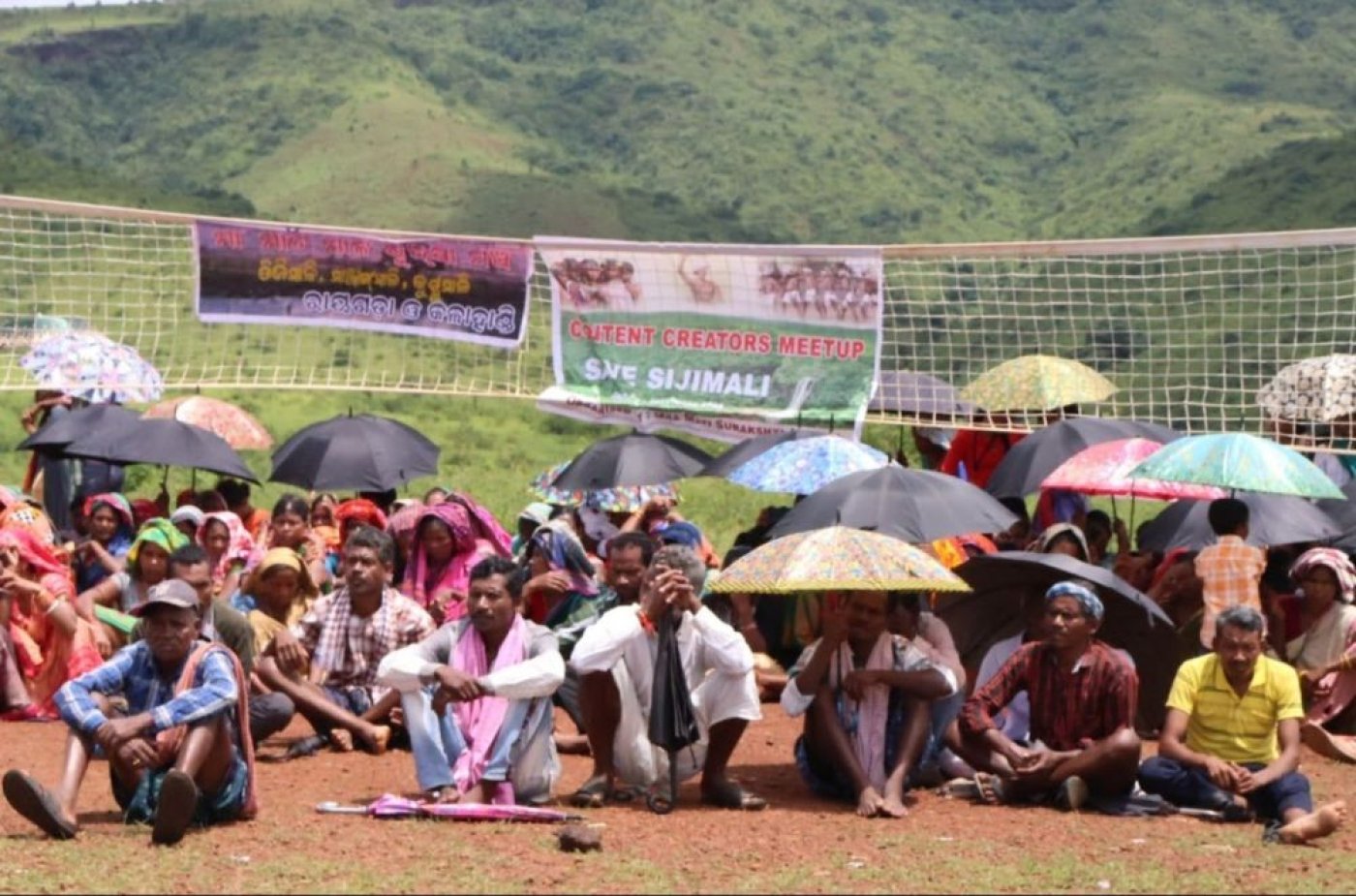
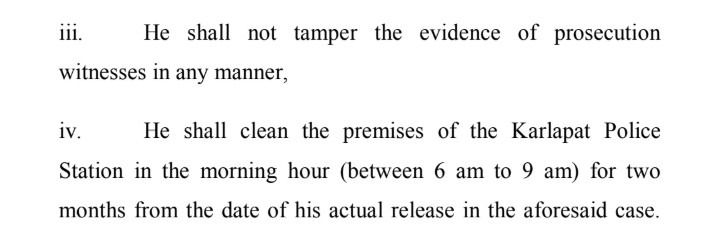
Tijimali, Odisha: “The petitioner shall clean the premises of the Kashipur Police Station every morning between 6:00 a.m. and 9:00 a.m.”
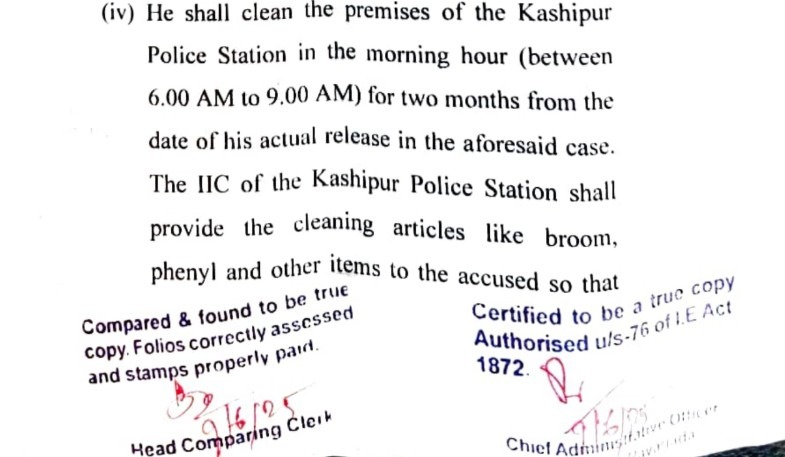
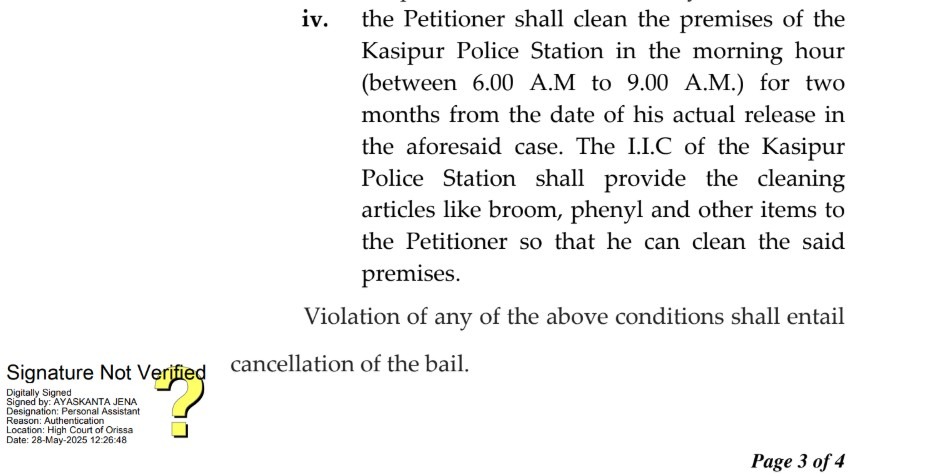
This was one of the bail conditions imposed by the Orissa High Court when it granted bail to Kumeswar Naik, a 26-year-old Dalit anti-mining protester from southern Odisha’s Rayagada district, on 28 May 2025.
This is one of eight such orders issued between May 2025 and January 2026, which Article 14 has accessed—seven by the Rayagada district by two judges—one from a dominant caste and the other from the other backward classes (OBC), and one by the High Court by a judge from a dominant caste.
Of the eight who have received bail under such conditions, perceived as casteist by largely Dalit and Adivasi protesters, six are Dalits, and two are Adivasis.
Naik, who owns a small neighbourhood grocery store, along with other Dalit and Adivasi residents of Rayagada district, who will be displaced, had been protesting the awarding of a bauxite mining contract by the Naveen Patnaik-led Biju Janata Dal government in 2023 to Vedanta Ltd., a 50-year-old, Mumbai-based multinational mining company that has operations in Goa, Karnataka, Odisha, Ireland, Namibia and Australia, among others.
The Bharatiya Janata Party (BJP) came to power in Odisha for the first time in June 2024, ending Naveen Patnaik’s 24-year tenure as chief minister of the state.
For nearly two months, from June to August 2025, Kumeswar Naik, who had spent five months in Kashipur jail, in Rayagada District, before being granted bail, had to sweep and clean the Kashipur police station, where he had once been detained, using brooms, phenyl and other supplies provided by the police.
What should have been a moment of relief after months in jail, instead, turned into something he says was meant to humiliate him.
"Walking to the police station knowing we would have to do this insulting job, I told my heart that the cause is bigger than this mere order,” said Naik. “However, I do want to point out that the judiciary itself gave this casteist order, which makes me wonder where we stand."
Naik, a resident of Kantamal village in the Kashipur block of Rayagada district, about 20 km away from the Kashipur Police station, was arrested on 6 January 2025.
Police alleged, in a first information report (FIR) accessed by Article 14, that he and around a hundred others had rioted, obstructed officials, damaged property and attacked public servants during protests outside the police station in September 2024.
When he was granted bail on 28 May 2025 by the Orissa High Court, his family and fellow villagers expected a celebration.
Instead, the bail order left them stunned.
“With this bail order, the authorities wanted to humiliate us for being part of an anti-mining movement that will not only displace us but also ruin these beautiful hills that provide us with basic necessities,” Naik said.
Naik said he remembers the first few days after his release clearly.
When he went to the Kashipur police station to comply with the court’s instructions, even the police appeared uncomfortable.
“In the beginning, the police did not say anything,” he said. “They even asked me to just sign some papers and leave. Some of them said they were also tribals and Dalits and did not like the bail condition.”
But things changed when 45-year-old Dalit activist and farmer, Hiramal Naik, was released on similar terms, with the Rayagada district court insisting the police and the protesters comply with the order.
“When Hiramal came out, and both of us went together, we were asked to follow the bail conditions and clean the police station,” Naik said.
Despite the humiliation, Naik insisted that the order would not deter the movement.
“They want us to leave our land,” he said. “We are Dalits, and many of us are landless, but we are still fighting for this land. Look around at these hills, and you will understand what this land means to us.”
Naik’s case is not an isolated one.
Casteist Bail Order, Pattern Of Arrests
Since 2023, the tribal and Dalit communities in the Tijimali region have been protesting against a proposed bauxite mining project by Andhra Pradesh-based Vedanta Ltd, after the company was allotted the Tijimali bauxite block to supply raw material to its alumina refinery at Lanjigarh—a town and tehsil in the Kalahandi district of Odisha.
The project involves a large-scale diversion of forest land in the Eastern Ghat's Tijimali hill range—about 46.37% of the proposed mining lease area of 1560.40 hectares is forest land.
The project will see two villages removed—Malipadar in Rayagada district and Tijmali in Kalahandi district—with a population of over 140 families.
The residents of the villages, traditionally herders or farmers, who grow rice and vegetables such as tomato, brinjal, onion, and capsicum, in plots of land ranging from one to 10 acres, will lose their homes and farmland and be forced to relocate.
Shubha Singh Majhi, a resident of Kantamal village in Tijimali and owns five to six acres of land, said there have been no talks of compensation yet. The acquisition of land is yet to officially take place.
Many of the Dalit residents of the village work other people’s land, so would not be eligible for compensation when the land is acquired.
Majhi said that the villagers had been told that they would be relocated to Karkatta village, about 25 km away.
Since 2023, at least 40 people have been arrested for opposing the project, according to Umakant Naik, one of the protestors who were arrested, and relatives of other accused villagers, with courts telling at least eight Dalit and Adivasi villagers to clean police stations as a condition for bail.
Article 14 has accessed the eight bail orders with this condition, one from the Odisha High Court and seven from two judges from the Rayagada district court, and has spoken to two villagers who have complied with the order, which activists have perceived as casteist.
On 28 May 2025, Justice S.K. Panigrahi of the Orissa High Court issued a controversial bail order directing a protester arrested in connection with protests against mining company Vedanta Ltd in the Tijimali region to clean police stations as a condition of their release.
According to activists and court records reviewed by Article 14, at least seven more such bail orders were issued by two judges of the Rayagada district court—Rayagada additional district judge (ADJ), Alpana Swain, and judicial magistrate of the first class (JMFC), Kashipur, Narmada Kar—between August 2025 and January 2026.
Five of the eight orders were enforced, according to Kumeshwar Naik and Sharanya Nair, an activist supporting the anti-mining movement in Tijimali.
All those who have received such bail orders are associated with Maa Mati Mali Surakhya Manch, a grassroots organisation formed by Kui-speaking Adivasi and Dalit residents of Rayagada district, to oppose mining in the Tijimali hills.
Civil society organisations and lawyers have described the orders as casteist and humiliating, arguing that these conditions effectively compel individuals to perform labour that is historically imposed on oppressed caste communities.
A September 2025 report by The Leaflet, that studied the orders from Odisha as well as similar ones from Madhya Pradesh from 2020 onwards, argued that such conditions exceed judicial authority because they are unrelated to the legitimate purpose of bail, ensuring the accused appears for trial, and instead replicate historically stigmatised caste roles.
The Bharatiya Nyaya Sanhita (BNS), 2023, introduced community service as an option for punishing certain offences, including Section 355, that covers misconduct in public by a drunken person and Section 356(2), that covers defamation.
Section 23 of the Bharatiya Nagarik Suraksha Sanhita (BNSS) defines community service as “the work which the Court may order a convict to perform as a form of punishment that benefits the community, for which he shall not be entitled to any remuneration”.
Kumeswar Naik's charges, though, included Section 109 of the BNS—attempted murder—and Section 191 of the BNS—rioting—which are serious, cognizable, non-bailable offences, and do not list community service as a condition for bail.
Sharanya Nair, the activist supporting the anti-mining movement, said the orders reveal deep-rooted prejudice within the justice system.
“The bail condition reeks of the caste prejudices of the High Court and Rayagada sessions court judges against Dalit and Adivasi communities,” she told Article 14. “I am absolutely sure that an upper-caste leader arrested in this or any similar case would never have been served this kind of bail condition.”
In July 2025, over 86 citizens, lawyers and activists wrote a letter to the Supreme Court, asking it to take up the matter suo motto and recall the bail conditions, describing them as “not free from the prejudice against the weaker sections of our society.”
However, according to Nair, the court did not intervene.
On 18 February 2026, three more protestors—Naring Dei Majhi, Ramakant Naik and Sundar Singh Majhi—walked out of jail after spending more than a year in custody.
But their release came with the same controversial condition.
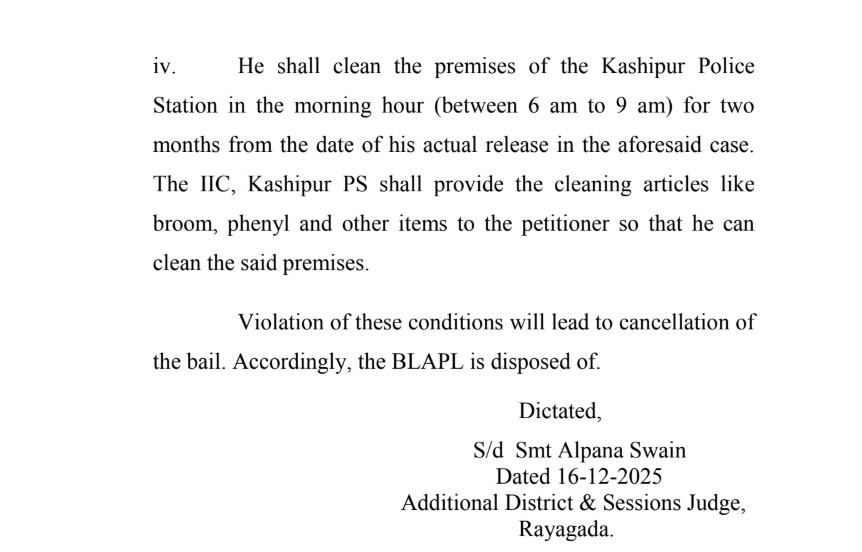
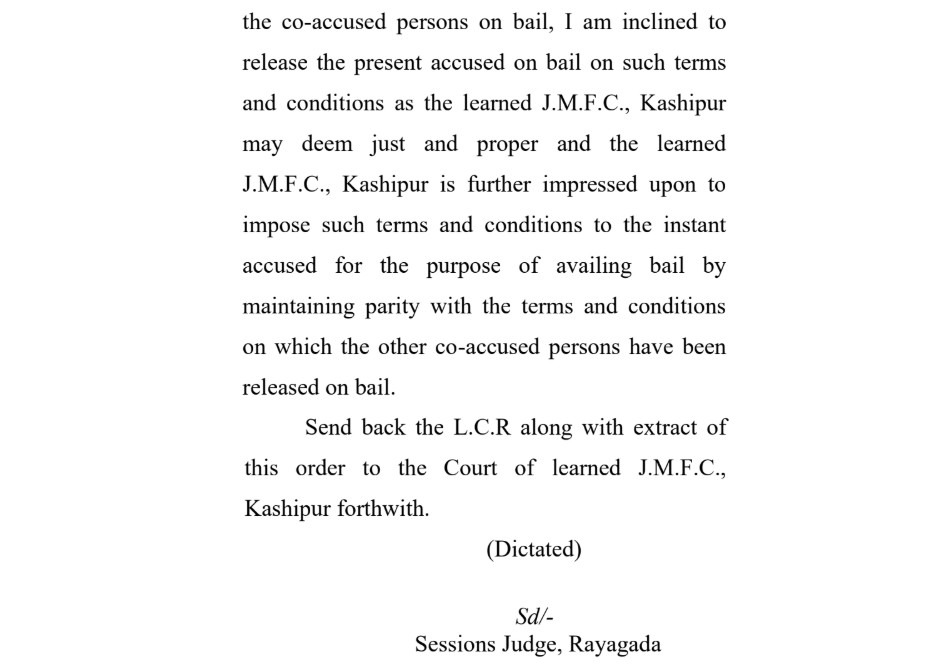
The order, by Rayagada additional district judge Alpana Swain, granted the petitioners bail on the same “terms and conditions on which the other co-accused persons have been released on bail.”
These terms and conditions include that they “shall clean the premises of the Kashipur Police Station in the morning hour (between 6 am to 9 am) for two months.”
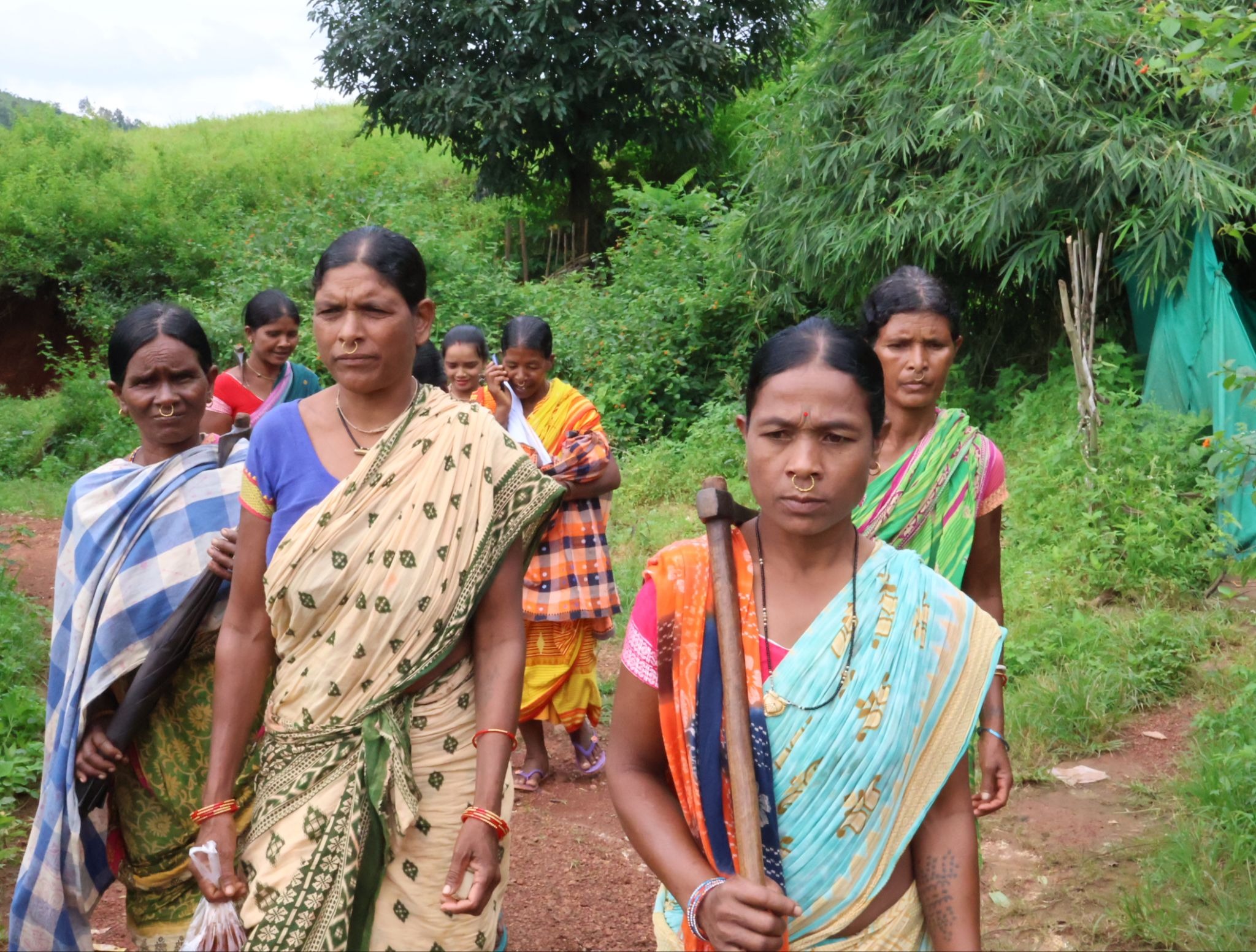
The day after they returned home to their village in Tijimali, they had to report to the Kashipur police station, 25 km away, and clean the premises for two months as part of their bail conditions issued by the Rayagada sessions court.
Umakant Naik, a 24-year-old Dalit activist and farmer, who had been part of the protest since the start, was arrested in 2023.
Reflecting on the bail conditions his fellow protestors were made to follow, he said the authorities had misunderstood the community.
“If they think this will stop us from dissenting and fighting for our rights, they are wrong,” he said.
Mining Resistance In Tijimali
The Vedanta-run bauxite mining project aims to mine nine million tonnes per annum (MTPA) to support its alumina refineries. The project, covering over 1,548 hectares—about 700 hectares of which is forest land—is a key strategic asset for the company.
A central issue in the protest is community consent.
Under Indian laws such as the Forest Rights Act (FRA) and the Provisions of the Panchayats (Extension to the Scheduled Areas) Act, 1996 (PESA), mining on forest land in Scheduled Areas requires the free, prior, and informed consent of Gram Sabhas.
Villagers alleged that not only was the law not followed, but fake consent records were presented as approval.
“Consent was forged or obtained under pressure, with Gram Sabha meetings conducted in the presence of police or without meaningful participation from the community,” said Umakant Naik.
Frontline reported in January 2026 that villagers said the meetings to obtain consent never took place, and the consent documents carried names of minors, deceased persons, and non-residents.
These allegations have intensified distrust of both the company and the administration.
This led to a massive protest by the community. In recent times, there has been a pattern of criminalising any form of dissent, with the judicial system ignoring the voices of protestors.
Chhattisgarh has seen a large number of arrests (here, here and here) of protestors for resisting various road and mining projects.
In Jharkhand's Hazaribagh tribal, Dalit, Muslim and OBC communities joined hands to protest, beginning in October 2024, against the proposed Adani mining project. Protestors were arrested and spent months in jail.
Meanwhile, protests in Arunachal Pradesh are intensifying against large-scale hydropower projects. Local communities fear displacement, loss of ancestral land, environmental devastation, and have demanded the withdrawal of security forces used for surveying.
Many activists who are protesting have faced criminal charges, with two of them not allowed to leave the country for work (here and here). Locals also alleged constant harassment by police.
Criminalisation Of The Protest
Between 13 August and 25 August 2023, 24 protesters were arrested, for stopping police and officials of a company subcontracted by Vedanta to gain consent from locals from entering the area.
On 20 September 2024, Kashipur police arrested Kartik Naik, one of the prominent leaders of the anti-mining movement.
According to the FIR filed by the Kashipur police station, around 200 villagers gathered outside the station demanding his release.
The police subsequently registered a case naming 58 individuals and 140 unidentified persons.
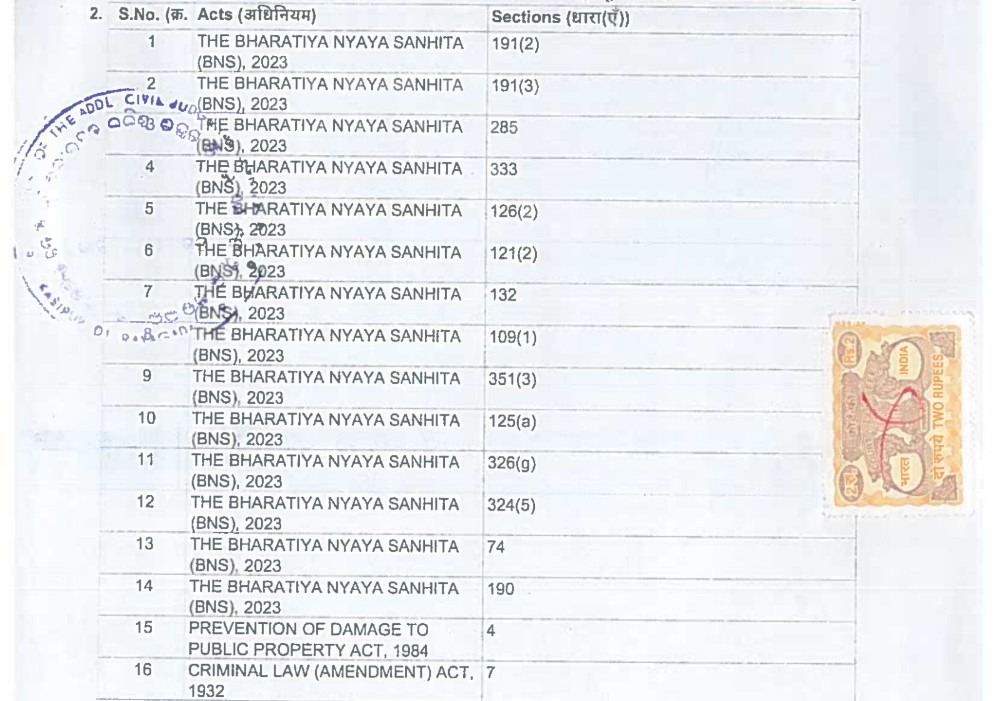
The FIR invoked numerous sections under the Bharatiya Nyaya Sanhita, including rioting, criminal intimidation, obstruction of public servants and attempt to murder.
Other charges included provisions under the Prevention of Damage to Public Property Act, 1984 and the Criminal Law (Amendment) Act.
Since September 2024, up to 50 people have been arrested for protesting, under various charges, according to Nair and lawyer Mangal Murti Beuria, who represents several of the accused.
Beuria said the charges themselves reflect a pattern of criminalising dissent.
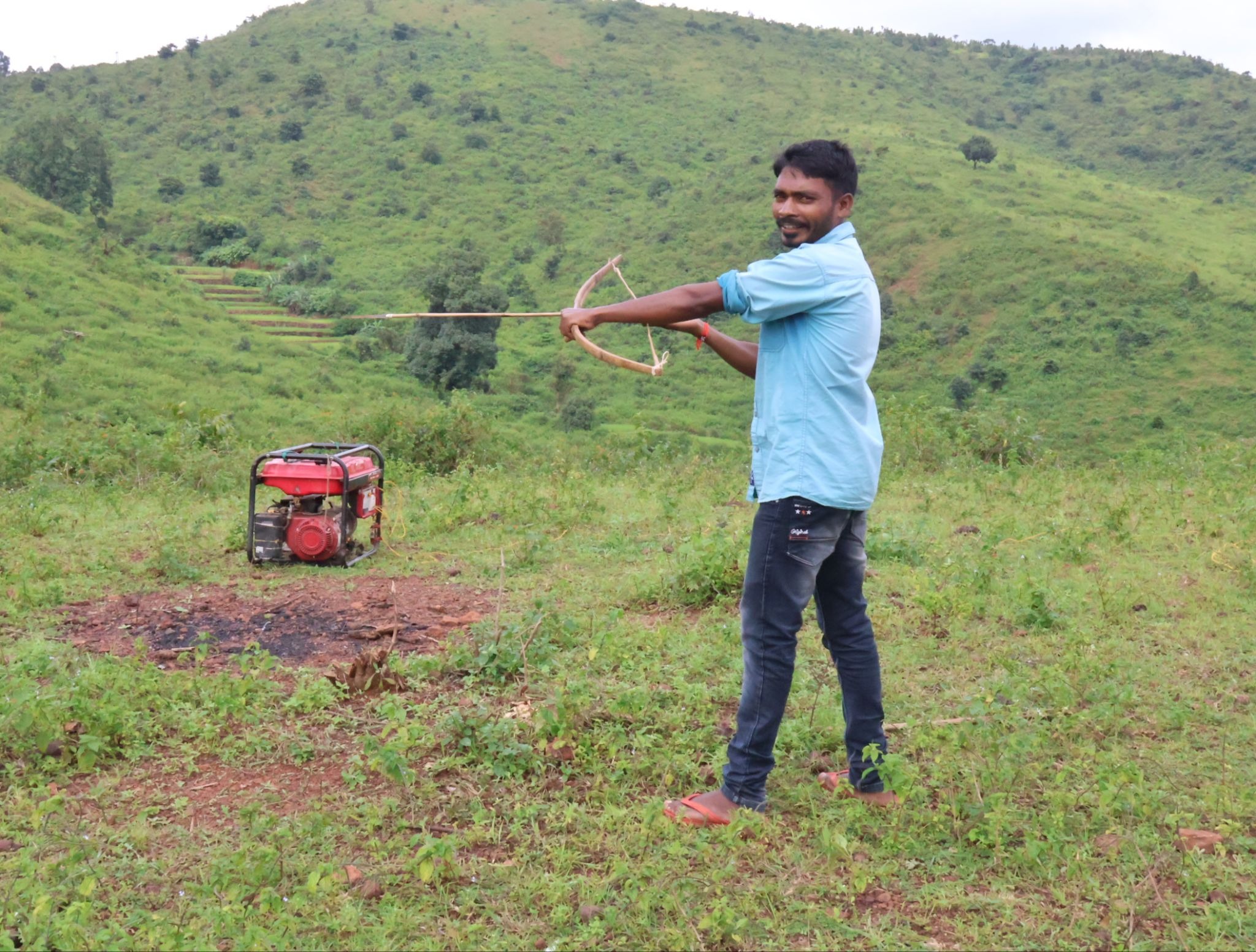
“The Adivasis traditionally carry axes and bows for hunting and ceremonial purposes,” said Beuria. “This is used against them by company representatives and police, who claim that villagers tried to attack them. None of it is true, but that’s how they build a criminal case—to make an example of them.”
Beuria added that those identified as leaders are often slapped with more serious charges.
The intimidation of protesters, however, is not limited to arrests.
Champa Majhi, a 26-year-old resident of Tala Ampadar village in Kalahandi District and youth leader of Maa Maati Mali Surakhya Manch, said that they have been given “rape threats by company goons”.
“As women, our vulnerability increases with acts of sexual violence. We are threatened by the goons of Vedanta, who threaten us with rape, and the police do nothing.”
Article 14 reached out to Vedanta via email in February and March 2026 for comment on allegations of intimidation, forced consent for mining, and fake cases being filed against protestors, but has not received a response.
We will update that story if they do respond.
For Naring Dei Majhi, who belongs to the tribal community, the experience has been particularly difficult, as she was the first woman to be arrested for taking part in the protests.
Her family alleges that she was detained while she was at the Rayagada district hospital caring for her daughter-in-law, who had just given birth.
Dei Majhi is currently facing seven criminal cases.
A frail woman in her early 50s with a fierce face, Dei has a soft voice.
When Article 14 spoke to her after her release on bail—carrying the same conditions—in all seven cases, she sounded exhausted but resolute.
“I will not stop fighting,” she said quietly. She had yet to comply with the bail order and did not comment on it, saying she is, at the moment, content. “I am finally home,” she added.
Continued Clampdown
Villagers we spoke to in Tijimali said the arrests have created a climate of fear and that they have stopped travelling outside their villages because they fear being detained.
“In one family, five out of six members have cases against them,” said Rukdai Majhi, Naring Dei Majhi’s sister-in-law.
Article 14 found that at least six of the seven members in a single family are facing criminal charges related to the protests.
Activists also claim that some individuals released on bail have later been arrested again in other cases.
Meanwhile, women have emerged as key figures in sustaining the movement.
“During the arrest spree in 2024 and 2025, women became the guardians of the villages,” said Kumeswar Naik. “They would keep watch and warn the men whenever police arrived.”
For many families, the arrests have brought emotional and financial strain.
Tulanti Naik, Kumeshwar Naik’s wife, who was pregnant when her husband was jailed, said those months were filled with anxiety.
“I was alone and worried all the time,” she said.
After a pause, she added quietly: “But we are not giving up.”
(Nikita Jain is an independent journalist based in Delhi.)
Get exclusive access to new databases, expert analyses, weekly newsletters, book excerpts and new ideas on democracy, law and society in India. Subscribe to Article 14.