
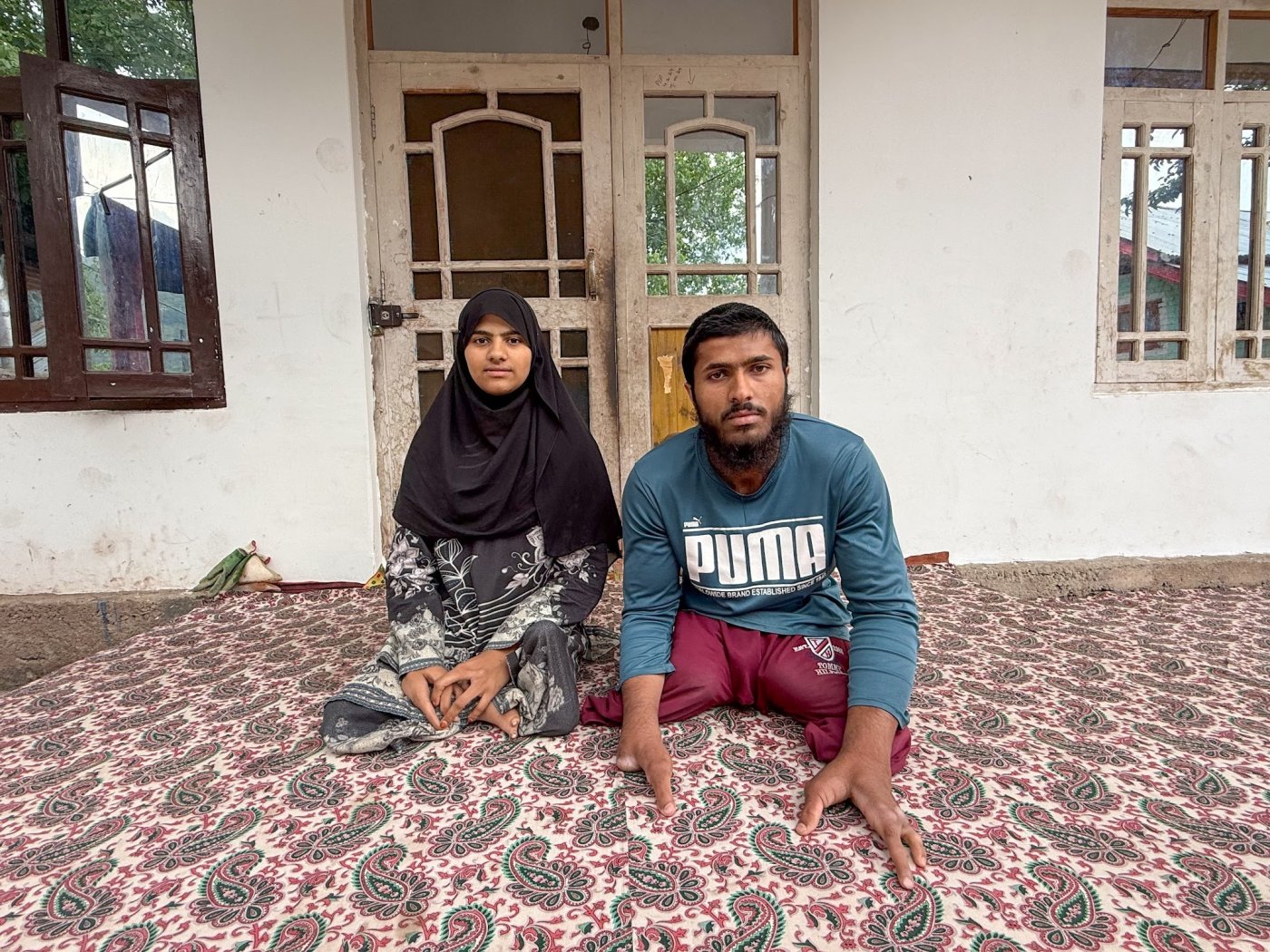
Uri, Jammu and Kashmir: Sixteen-year-old Aliza Bano lives in Pawdian, a remote village in Uri sector of north Kashmir’s Baramulla district, barely 3.5 km from the Line of Control (LoC), the de facto border between India and Pakistan.
She does not exist in the Jammu and Kashmir (J&K) administration’s official records.
She has no Aadhaar card, ration card, census listing, government health card, or identity papers. In this heavily militarised border area of Kashmir, where a single document decides your right to exist, Aliza has spent her entire life as a ghost in the system.
Born with a severe congenital disability, she cannot flatten her hands or fully extend her fingers. Her condition is visible to anyone who sees her, yet invisible to the machinery that governs access to welfare and citizenship.
When her father, Muzaffar Hussain, a 44-year-old daily wage labourer, took her to a local registration centre to secure an identity card, the biometric scanner failed to read her twisted fingers.
“She can’t place her fingers properly on the scanner,” the operator told him before turning the family away. That single rejection shut every door that followed.
“We don’t receive any disability pension or financial assistance for her,” said Hussain.
“Because she has no identity documents, she is excluded from schemes meant for persons with disabilities, including the monthly disability pension and access to free treatment under the government health insurance programme locally known as the ‘Golden Card’ scheme under Ayushman Bharat,” Hussain added. “We also could not add her to the family ration card.”
Without an Aadhaar card or disability certification, Aliza remains outside the welfare system that should support children with disabilities in J&K.
For the system, her disability was not proof enough of need.
To secure disability certification and related documents required to access government welfare schemes, Hussain said he had carried Aliza and her disabled brother, Mubashir, across difficult mountain roads to a district hospital hours away.
“We had to make the journey 12 times in nearly two and a half months,” he said. “Every visit meant more online forms, more office visits and more humiliation just to prove our children deserve help.”
Survival Under Attack
Along the border, where mountains often echo with sudden shelling (here and here), disabilities often hinder evacuation.
When firing erupted along the LoC during the May 2025 India-Pakistan escalation, villages slipped into panic within seconds.
A distant crack, a trembling wall, a mother shouting from outside, and people began to run.
But Abdul Rashid, a 52-year-old former labourer living with a spinal injury, could not run. He was left sitting near the doorway of his wooden home in the town of Salamabad in the Uri sector.
During an evacuation, every second matters. For a man who could not move his legs, even reaching the door was a struggle.
When the shelling began, his two sons—Nadim Ahmad, aged 24, and Sahil Ahmad, aged 26—lifted him by his shoulders and legs and carried him up a steep mountain path barely wide enough for a single person.
“I could not move on my own,” Rashid said. “My sons carried me to safety. If they had not been there, I do not know what would have happened.”
There were no ramps or bunkers. No specialised rescue teams. No emergency systems designed for people with disabilities.
The commitments to inclusion and protection for persons with disabilities contained in the Rights of Persons with Disabilities Act, 2016, felt impossibly distant in these mountains.
Where Survival Depends On Others
The border areas of J&K, including Uri, Karnah, Tangdhar and Poonch, are often described by officials and security agencies in military terms as “sectors.”
But for the people who live here, they are not sectors. They are homes, schools, farms and marketplaces where everyday life is shaped by uncertainty, shelling and dependence on state support during crises.
Residents living along the LoC said the boundary affects nearly every aspect of daily life, from when shops open to whether children can safely travel to school.
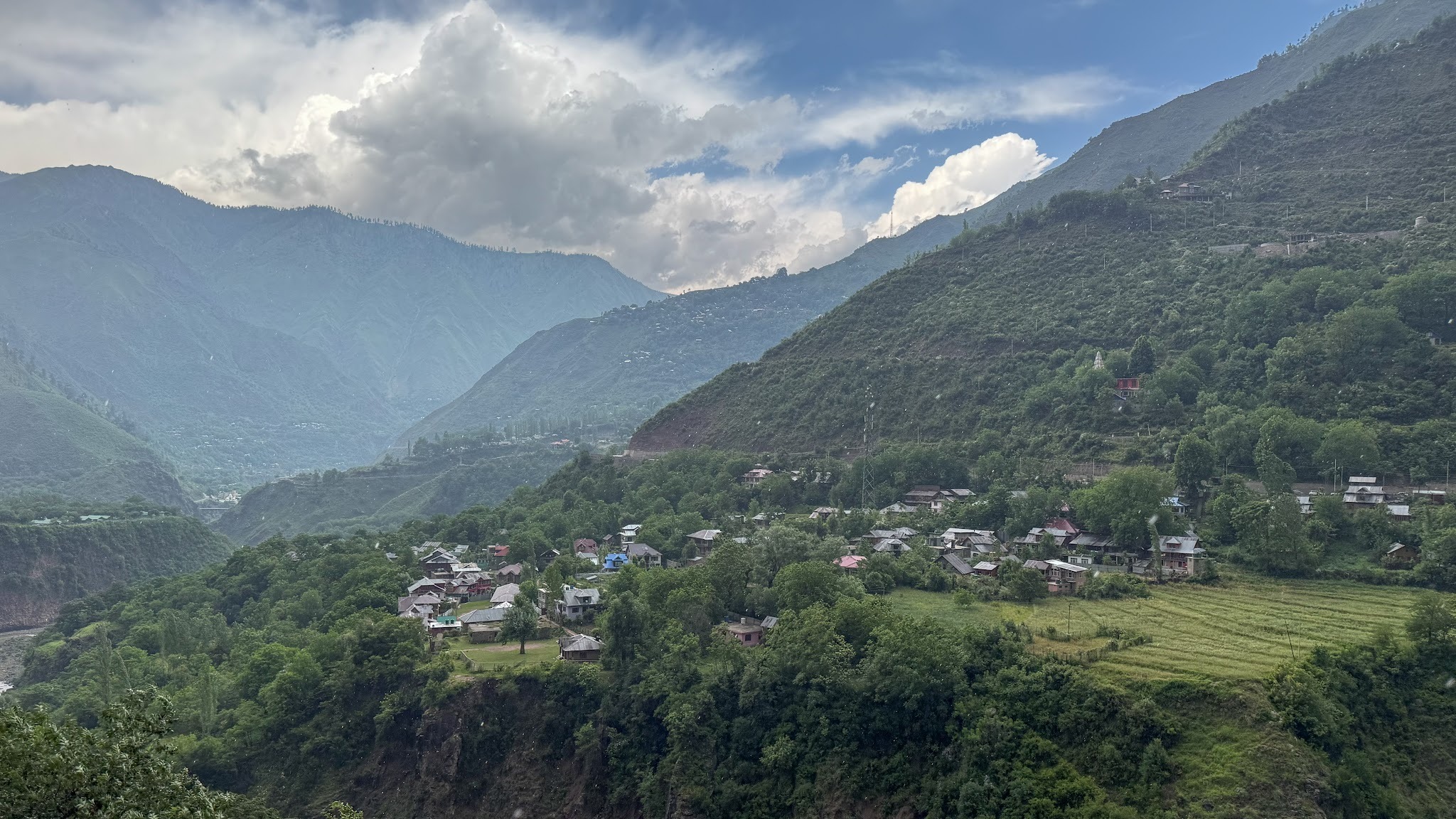
Despite repeated ceasefire agreements over the years (here, here and here), many families in frontier villages said the fear of sudden displacement remained constant.
Several residents of villages such as Charunda and Kamalkote, two villages in the Uri sector of Baramulla district, located close to the LoC, said they were forced to move into underground shelters multiple times within weeks in the lead-up to, and after, the May 2025 India-Pakistan conflict.
For persons with disabilities, these evacuations are especially difficult due to the steep terrain, narrow pathways and limited accessibility in villages built along mountain slopes.
“Even in normal times, I cannot move around without someone helping me,” said Mubashir Hussain, from Pawdian. “During shelling, these paths become even more dangerous. Someone has to carry me because the wheelchair cannot move on the rocky slopes.”
Abdul Rashid Bhat, the President of the J&K Handicapped Association, said most discussions about access in conflict zones focus on relief or medical assistance, while the everyday mobility barriers faced by persons with disabilities receive far less attention.
These challenges include navigating uneven roads during shelling, reaching shelters and responding quickly to emergency warnings.
Built For Protection, Not For Everyone
Thousands of community and individual bunkers have been constructed across J&K’s border districts over the years following repeated civilian deaths and injuries along the LoC.
A senior disaster management official in north Kashmir, speaking on condition of anonymity, said several bunkers lacked disability-friendly features.
“We recognise that accessibility remains a challenge in some older bunker structures, especially in remote hilly areas,” the official said. “The administration is reviewing requirements related to ramps, access pathways and basic facilities so that future infrastructure is more inclusive for persons with disabilities.”
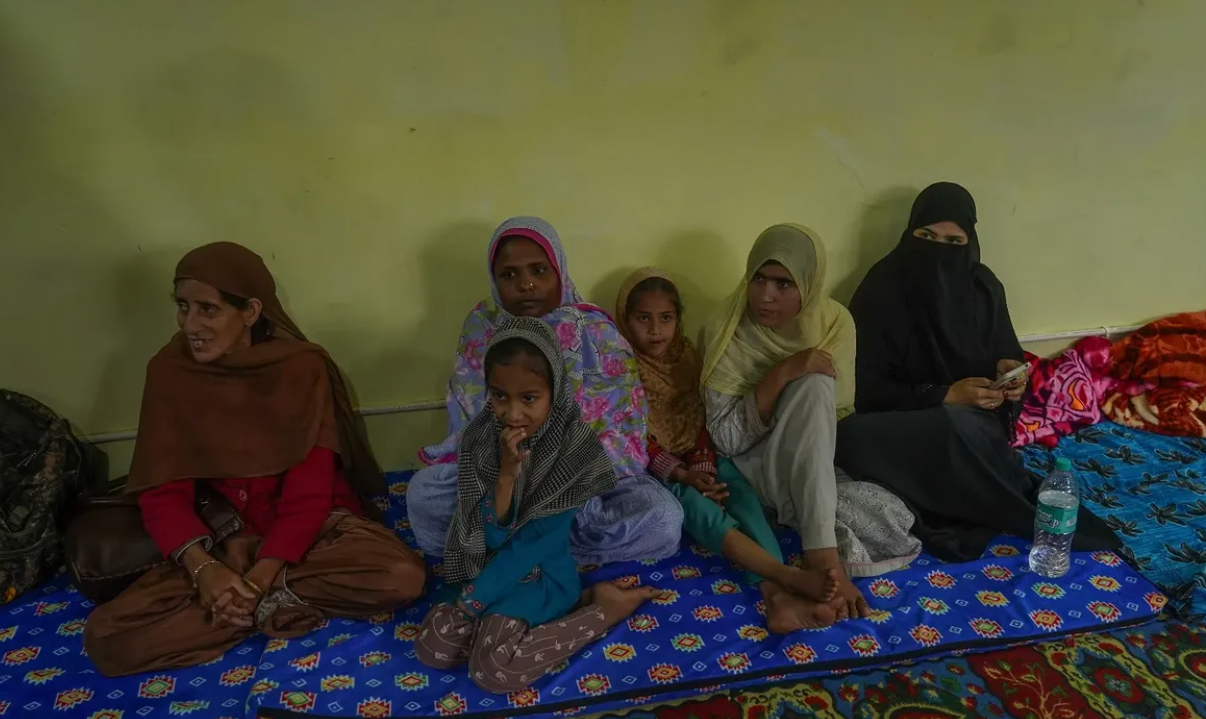
These bunkers were built to protect vulnerable civilians from shelling. But on the ground, many of these structures remain inaccessible to people with disabilities.
In Kupwara district’s Karnah, one community bunker sits partially buried beneath the earth. The only way inside was via a steep flight of narrow stairs, impossible for a person with a mobility disability to navigate.
During the 2025 India–Pakistan shelling, several elderly residents and persons with disabilities were forced to stay inside their fragile wooden homes.
Inside the bunkers, conditions were equally difficult. Many are dark, poorly ventilated and built without accessible toilets or basic facilities for disabled residents.
“We may be protected from shells,” said Bashir Ahmad, 65, a resident of Uri, who has a mobility impairment, “but the bunker itself defeats us.”
“Imagine sitting in a cold, dark room for 12 hours, unable to sit properly or use a bathroom,” Ahmad added. “Many of us stop eating and drinking the moment tensions rise because we know there is no place for our needs inside.”
Across the LoC, this has created what many residents described as a dignity crisis, where people are forced to choose between physical safety and basic human comfort.
When The System Cannot See You
A deeper structural failure in J&K’s border districts lies in what residents describe as a “data gap,” with studies from rural Kashmir highlighting low awareness and underutilisation of disability certification systems, leaving many persons with disabilities outside official records and welfare databases.
Officials in the J&K social welfare department said the administration has expanded disability-related welfare schemes in recent years, though implementation challenges continue in remote border regions.
A social welfare official, on condition of anonymity, said difficulties linked to documentation, medical certification and physical access often delay registration processes for welfare schemes in far-flung villages.
“Many remote areas face connectivity, transport and outreach constraints, particularly in border belts,” the official said. “However, the department is working to strengthen field-level identification and ensure eligible persons with disabilities are covered under pension, certification and welfare schemes.”
Registration for these government welfare schemes often require repeated journeys to district hospitals, sometimes hours away across harsh terrain, and navigating layers of paperwork and social stigma that discourages families from formally registering disability at all.
“Behind these mountain ridges, we're looking at a hidden human catastrophe,” said Abdul Rashid Bhat, President of the J&K Handicapped Association.
Bhat argued that while disability laws had expanded on paper, implementation had not kept pace. “The disability acts exist in legal form, but they are not designed for the realities of the ground.”
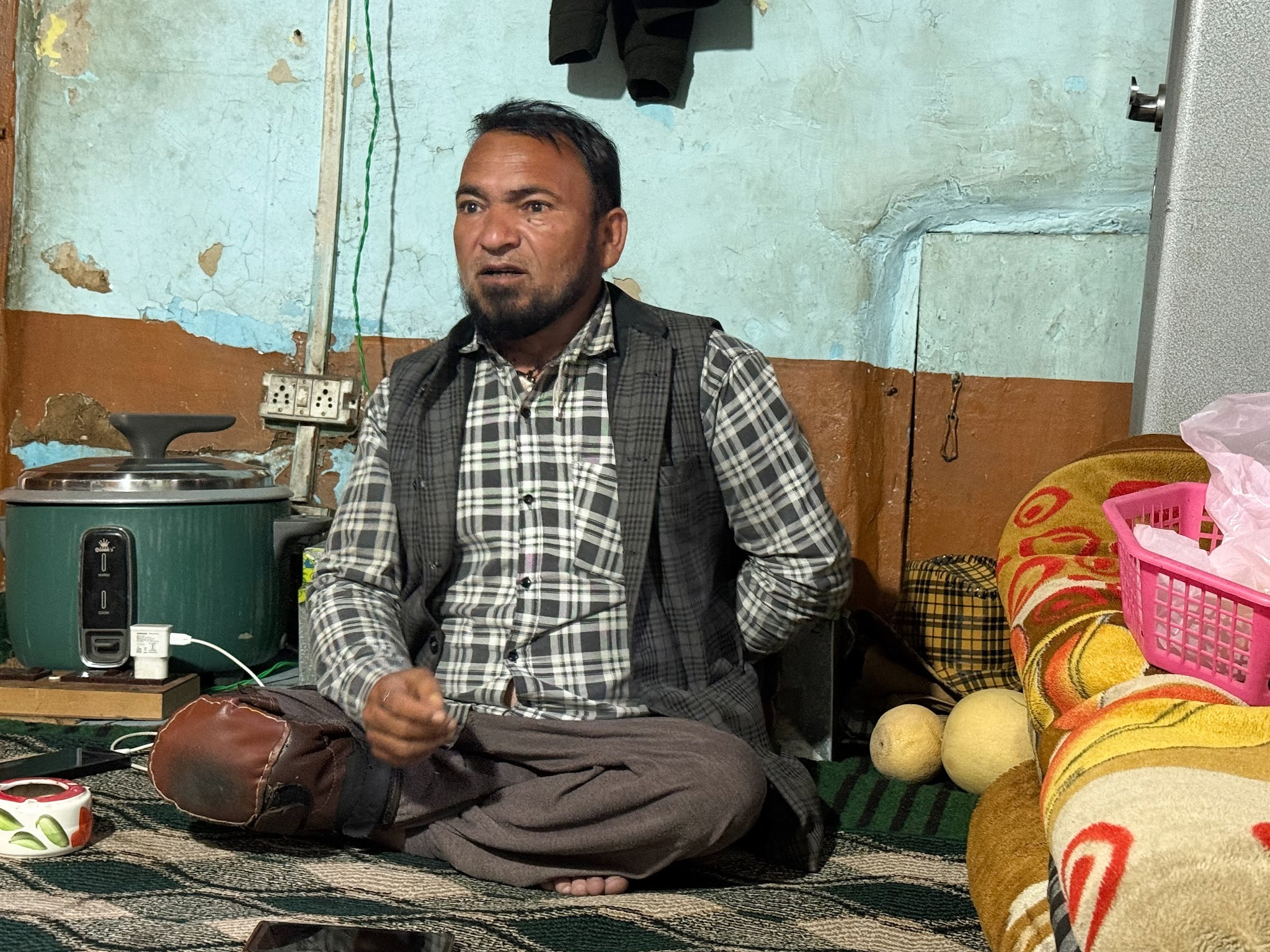
“The 2011 census counted over 300,000 persons with disabilities in J&K,” said Bhat. “But today, we estimate well over 800,000 people are living with disabilities across the region, including the blind, the deaf, dumb persons with locomotor and cognitive impairments and many more.”
He adds that in border belts alone, between 2% to 4% of the population may be living with some form of disability. “These are not statistics,” Bhat said. “These are hundreds of thousands of people who remain off the grid.”
“After the abrogation of J&K in 2019 into a Union Territory, central laws applied directly,” said Bhat. “There were no longer legislative barriers. Despite that, nothing has changed in practice.”
Survival ‘Left To Chance’
“The system is built for the ‘average’ person, someone who can hear alarms, see warnings and move quickly,” a local health official in Kupwara, speaking on the condition of anonymity, said. “If you fall outside that assumption, you are effectively left to chance until someone helps you.”
This gap is evident in early warning systems in border villages, which often relied on mosque loudspeakers or informal WhatsApp chains.
In Tangdhar, a family recalled how their deaf son continued eating dinner as shelling began nearby, unaware that the village was evacuating, as he didn’t hear the warning.
He was saved only when his mother physically pulled him out of the house moments before their windows shattered.
The Burden Of The Wheelchair
Even when the state does provide assistive devices, such as wheelchairs,they often fail to match the realities of life in J&K’s border villages.
In Pawdina, Mubashir Hussain, 22, Aliza’s brother, uses a basic manual wheelchair. To obtain it, his family had to go through a long and exhausting administrative process, travelling to a distribution centre in Uri town just to receive a standard model.
But on the steep, rocky terrain of the Himalayas, a standard wheelchair is barely functional.
“This one doesn’t work on these paths. Someone has to push it all the time, balance it over rocks,” Mubashir said, pointing at the worn wheels of his chair. “I cannot move even a step on my own.”
“I had applied for an electric wheelchair, but I didn’t get it,” he added. “I don’t know why.”
Mubashir said the absence of accessible infrastructure and reliable transport made regular attendance at the local government school impossible, as the building lacked ramps and required him to navigate steep, uneven paths.
He eventually shifted to private study, which reduced daily travel demands, though he still depended on his younger brother for mobility. “My younger brother has to take me to school and he has to take me to the hospital,” he said. “If I need to go anywhere at night, my father has to carry me. Even going to a bank or office becomes a struggle. I feel completely abandoned. Every simple task feels twice as hard.”
Economic Struggles
Mubashir’s family lives under constant financial pressure. His father, Muzaffar Hussain, works as a casual labourer and his small income supports a household of eight, including two children with disabilities.
The economic strain of disability in a conflict zone is relentless. For medical consultations, families from Pawdina must hire expensive private transport to reach hospitals in Uri (around 6–8 km away by road) or Baramulla town (around 45 km away), often costing thousands of rupees, far beyond what families such as Hussain’s can afford.
The government provides a disability pension of around Rs 1,000 every month for each eligible person with a disability, subject to certification and enrolment in welfare schemes. However, families said payments are often inconsistent, delayed and sometimes released in irregular lump sums after gaps of several months.
“We receive the pension only after long delays and sometimes it comes together for several months,” said Hussain, adding that though Mubashir receives the pension, Aliza is excluded as she does not have the required disability certification or identity documents.
Psychological Toll, Between Agency & Abandonment
For Shazia Akhtar, 34, from Tangdhar, the trauma of conflict is tied closely to the loss of her independence. During an evacuation in late 2025, she had to be lifted by four neighbours and carried toward a shelter.
In their haste, her custom-built walking frame, which is her only means of independent movement, was left behind.
“I wasn’t a person at that moment,” she recalled. “I was an object. Something to be carried, like a sack of grain. I was thankful to be saved, but I felt a deep shame that I couldn’t even hold on to my own legs, my walker.”
Across the border belt, the loss of assistive devices like wheelchairs, crutches, and hearing aids—often abandoned because they are heavy, fragile, or impossible to carry along narrow mountain paths and steep terrain—is a recurring and overlooked consequence of evacuation.
“When I reached the shelter, I couldn’t move on my own at all. Even going to the door required someone to carry me,” she added. “That feeling of helplessness stays longer than the sound of the shells.”
Erosion Of The Social Safety Net
In recent years, younger residents have been leaving border villages in large numbers, migrating to Srinagar, Jammu, or outside the region, in search of work.
The result is a steady disappearance of the very people who once provided physical support during emergencies, with the responsibility increasingly falling on ageing parents and neighbours.
When Pawdina was the target of intense shelling in 2025, Mubashir recalls, there was no official rescue; his parents had to carry him to safety.
“No government team or emergency vehicle came,” he said. “My mother, father, and a few remaining villagers physically carried me out and took me across rough terrain.”
Across the border belt, this pattern repeats itself, with survival depending on exhausted communities acting under fire, without institutional backup.
In Poonch district’s Mendhar, a mother in her 60s describes the fear of shelling while caring for her 25-year-old son with cerebral palsy.
“I love him more than my life,” she said, “but I am not strong enough to lift him anymore. My husband is old and our neighbours are also aging. Their children have left.”
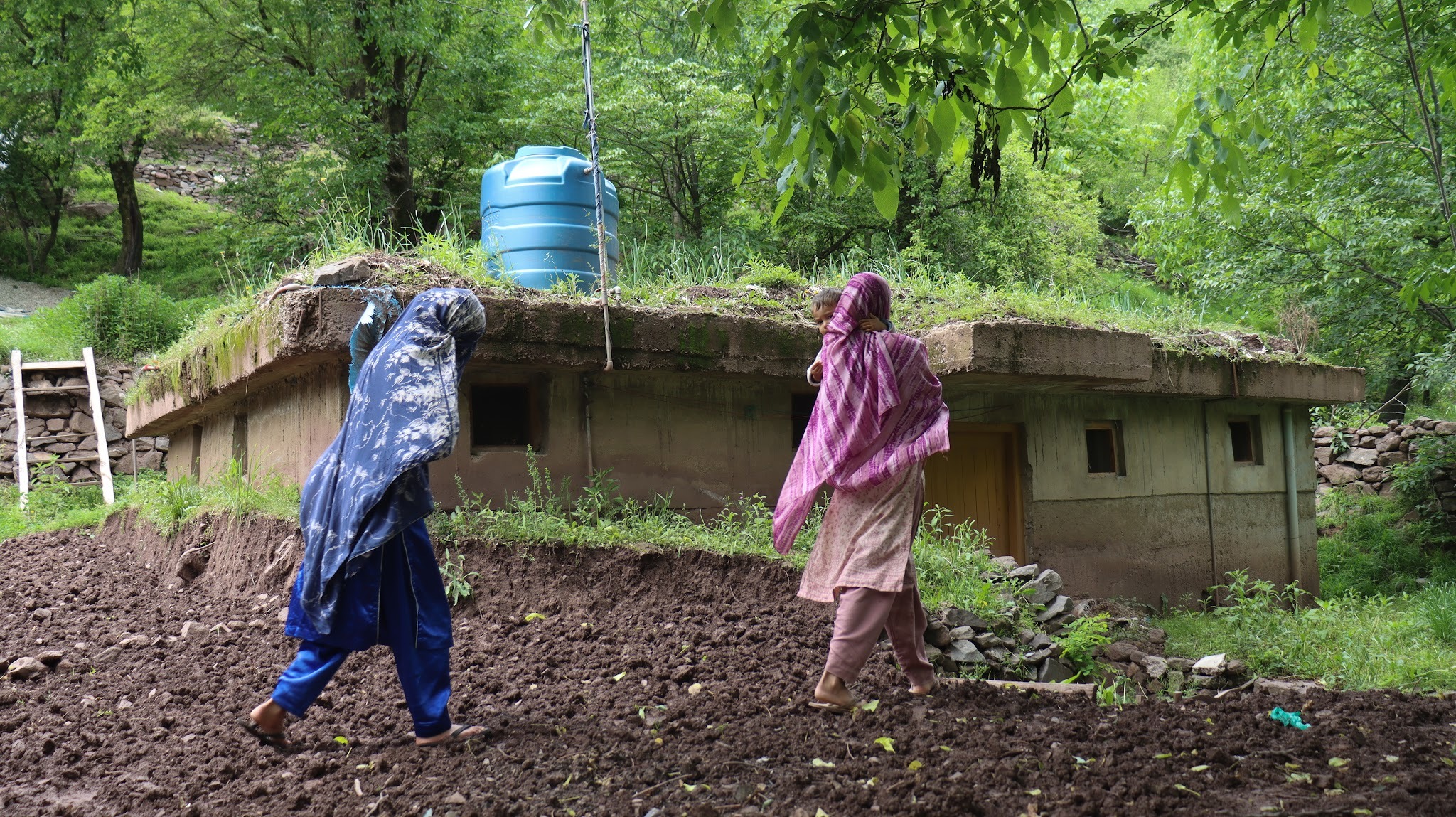
In the border villages along the LoC, residents say survival is shaped less by formal systems and more by distance, terrain and who is available to help when shelling begins.
For persons with disabilities, the lack of government support is even more severe, from inaccessible bunkers to dependence on family members for every evacuation.
This story was supported by the International Foundation for Disability Inclusion's Journalism Fellowship on Disability Inclusion.
(Sajad Hameed is an India-based visual journalist covering human rights, politics and technology in South Asia.)
Get exclusive access to new databases, expert analyses, weekly newsletters, book excerpts and new ideas on democracy, law and society in India. Subscribe to Article 14.