
Mumbai: On 26 April, the severe heatwave saw temperatures soar past 40 in several parts of the country. In Maharashtra alone, Akola and Amravati, both in the eastern part of the state, recorded 46.9 degrees Celsius and 46.8 degrees Celsius, respectively. By 10 am on Sunday, at least 10 towns had crossed 40 degrees, according to data published by AQI.in. Over the weekend, 95 of the world’s 100 hottest cities were in India.
Just weeks earlier, Columbia University’s International Research Institute for Climate and Society predicted a 70% likelihood of an El Niño year, and an up to 94% probability that El Niño conditions—the warming of the Pacific Ocean by one to three degrees Celsius, capable of triggering drought, heatwaves and a range of other climate disasters—will persist for the rest of the year. The fear of a ‘super El Niño’ is real, according to scientists, one that will break records on temperatures, storms and drought.
Elsewhere in the world, trees are seen as central to mitigating the various consequences of rising temperatures and heatwaves. Various scientific studies show the impact of trees and parks on temperatures in their vicinity (see here, here, here, and here). In 2024, researchers Harini Nagendra and Seema Mundoli wrote in Article 14 that their research revealed stark differences between roads lined with trees and those without.
Across India, meanwhile, state agencies, private developers, mining companies and others are felling tens of thousands of trees, including fragile mangrove ecosystems, wetlands, trees in biodiversity hotspots, in dense old-growth forests that have stood for centuries, along landslide-prone Himalayan slopes, in ever-more congested metropolitan hubs, along riversides in the name of ‘beautification’, and more.
Every City, Every State
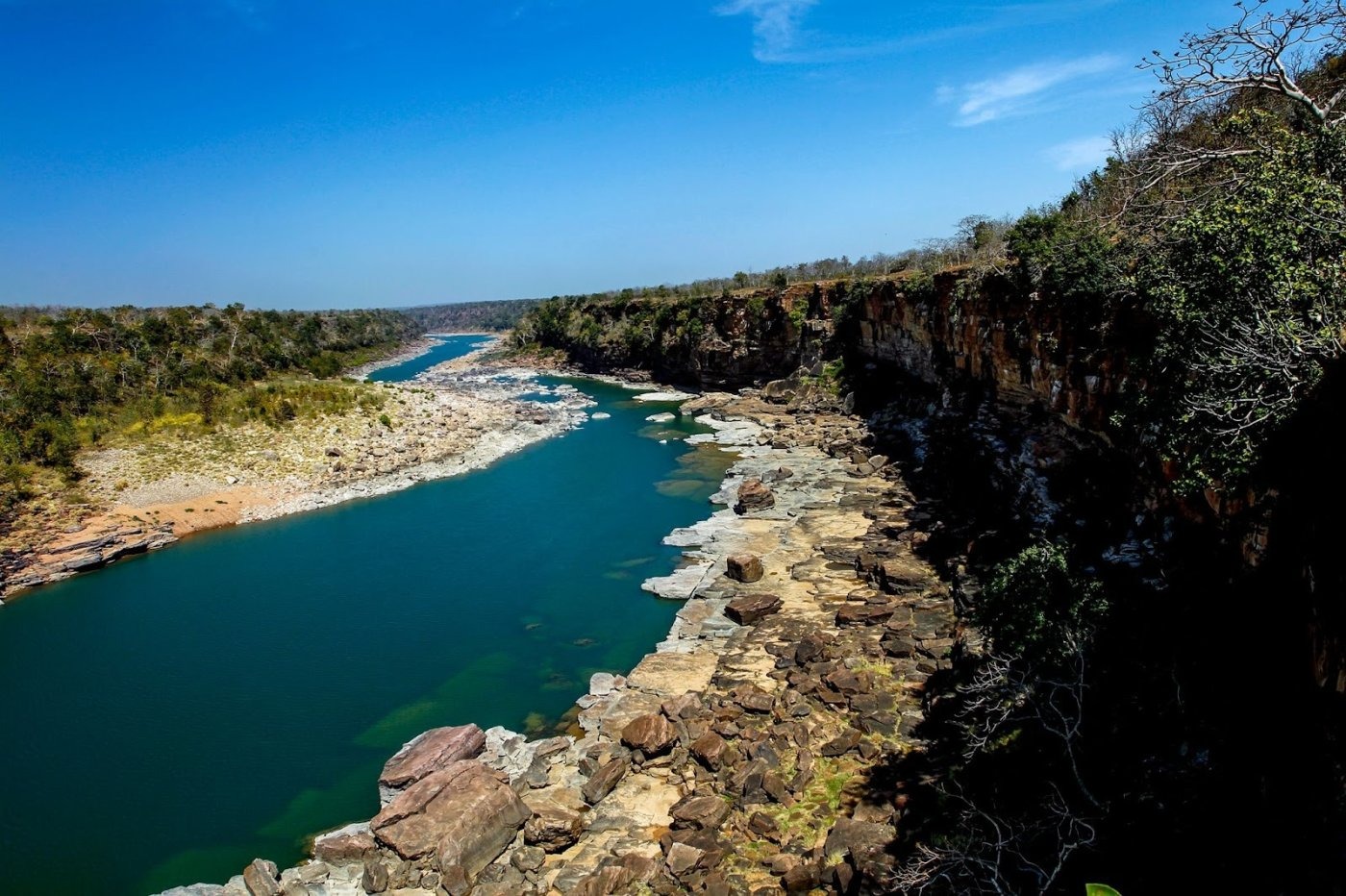
In the last few months alone, state authorities have green-lighted or faced public opposition to large-scale tree felling across the country. In Maharashtra’s Nashik, the National Green Tribunal imposed an interim stay on the cutting of thousands of trees—including ancient banyan trees—for various ‘development’ projects, including some related to the upcoming Kumbh Mela in the riverside town once famed for its cool climate.
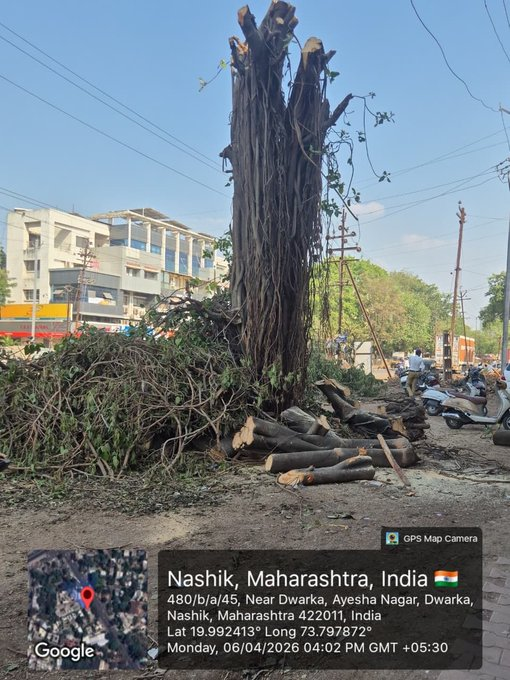
In Pune, residents have objected to the proposed felling of 689 trees for a riverfront development project between Wakad Bypass and Sangvi Bridge; a similar citizens’ movement emerged to protect heritage trees dating back hundreds of years in the Ganeshkhind area.

In Kashmir, beset by unprecedented heatwaves and shrinking rivers and glaciers, activists have desperately—and unsuccessfully—tried to stem an orgy of tree-cutting, including the state’s signature and ancient chinars, as well as mulberry and walnut trees.
In Bengaluru, obliged this summer to abandon claims of being clement all year long, the expansion of the metro rail will claim 6,800 trees, down from a previous estimate of 11,000; over 600 trees were to be axed in Okalipuram for a government building; a realty major was booked for illegal tree cutting—all headlines from 2026 alone.
In Delhi, 1,279 trees will be cut for the Bijwasan Rail Terminal project in Dwarka; a sports arena, also in Dwarka, has run into trouble with the law for cutting trees without environmental clearances (2,000 trees were to be cut); trees will be ‘transplanted’ or translocated to make way for the expansion of airside amenities at the airport and for the metro rail.
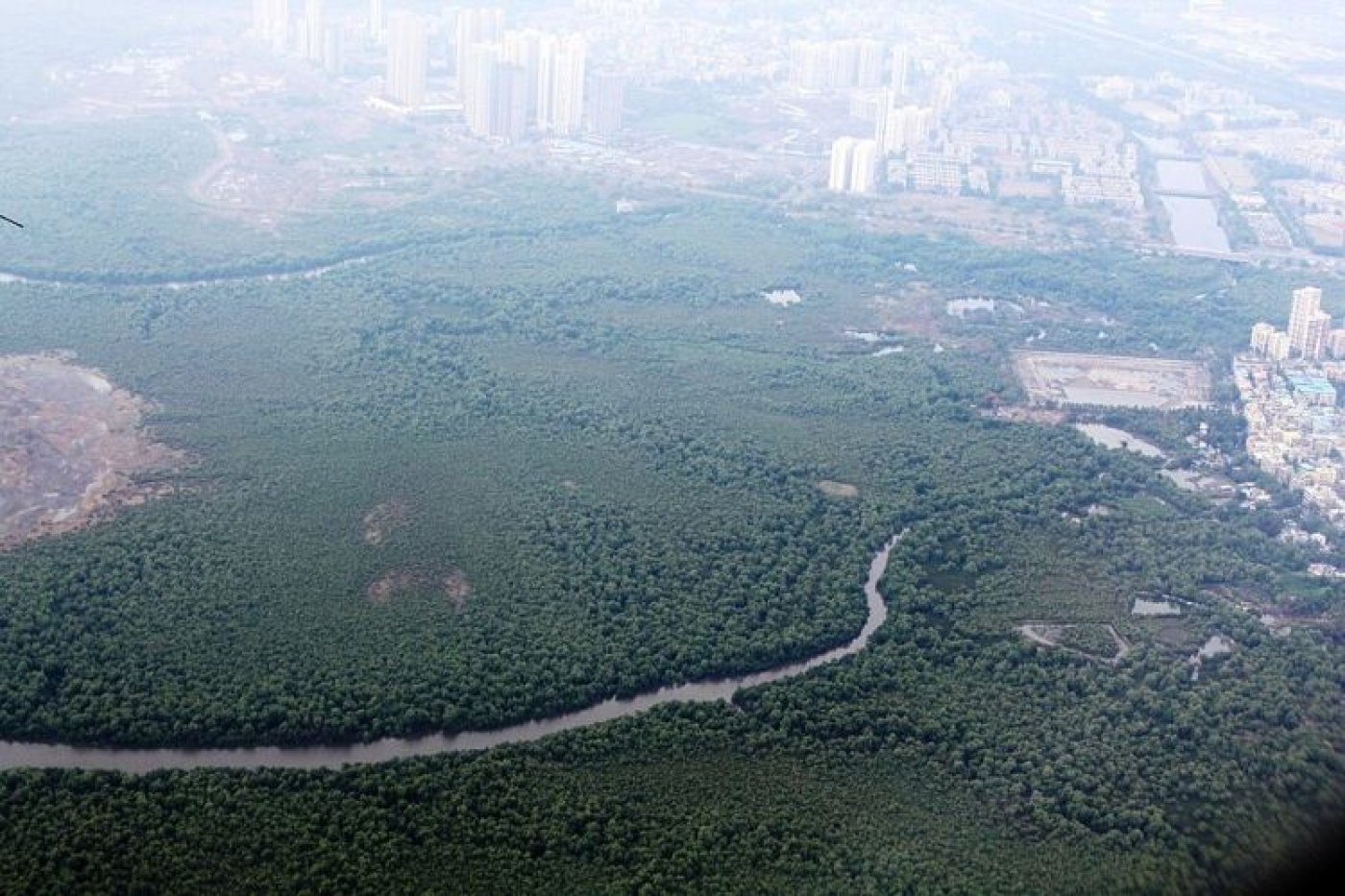
In Mumbai, trees are marked for removal to enable the coastal road and metro rail expansions, besides dozens of building projects. The Supreme Court permitted 46,000 mangrove trees to be cut for extensions to a coastal highway; 95 trees to be cut for the Goregaon-Mulund Link Road.
Maharashtra’s environment minister Pankaja Munde set the tone for discussions at the maiden ‘Mumbai Climate Week’ in February when she drew a parallel between the sacrifice of Indian armed forces’ personnel posted along the country’s borders and the cutting of trees, including mangroves.
Millions Of Trees, Gone
The razing of trees is now a fast-spreading rash, including in the country’s most pristine and picturesque regions.
Four thousand trees will go in Meghalaya for a road project; more than 260,000 trees were cut for highway expansion projects in Manipur over five years; activists staged a two-day fast earlier in April against the proposed cutting of trees in Aizawl; 95% of saplings planted under a Rs 20-lakh afforestation project in Assam’s Tinsukia did not survive; a hydroelectric dam project in Arunachal Pradesh will require 2.3 million trees to be cut—compensatory afforestation will take place in Madhya Pradesh; the impact assessment for the mega-dam project showed the presence of multiple species protected under the Wildlife Protection Act, 1972, including the clouded leopard, leopard cat, Assamese macaque, hoolock gibbon, slow loris, Indian pangolin, great hornbill and king cobra; another town near Arunachal’s capital Itanagar reportedly lost 17% of its tree cover in 20 years.
In Uttar Pradesh, more than 17,000 trees were cut for a ‘Kanwar Marg’ for pilgrims in the annual Hindu ‘Kanwar yatra’. About two-thirds of the 111 km road to Purkaji, near Uttarakhand, has already been built.
Uttarakhand’s state government, meanwhile, wants to cut 19,000 sal trees hit by a severe pest attack. The mountain state, ravaged by decades of environmental degradation, is witnessing a gradual decline in vegetation cover in its mountain ecosystems, suggesting that the seasonal revival of vegetation after the monsoon has been disrupted. Researchers who studied satellite data from 2001 to 2022 found growing stress on forests, grasslands and valley ecosystems critical to sustaining biodiversity and water resources in the region.
India is among the countries with the highest rates of tree loss in absolute numbers, even though official data shows a net gain in forest cover. This is an ecological disaster hidden behind a broader definition of what constitutes forests—the annual State of Forest report counts canopies from plantations, orchards, and bamboo, too. What we lose is old-growth forest, by and large, and what we gain are plantations, agro-forestry work, bamboo groves, etc.
The union and state governments are complicit in erasing India’s trees and forests. The biggest reason for the acceleration has been the union government’s wilful manipulation of protective laws and Supreme Court orders, as our two-part investigative series (Part 1, Part 2) revealed earlier this month.
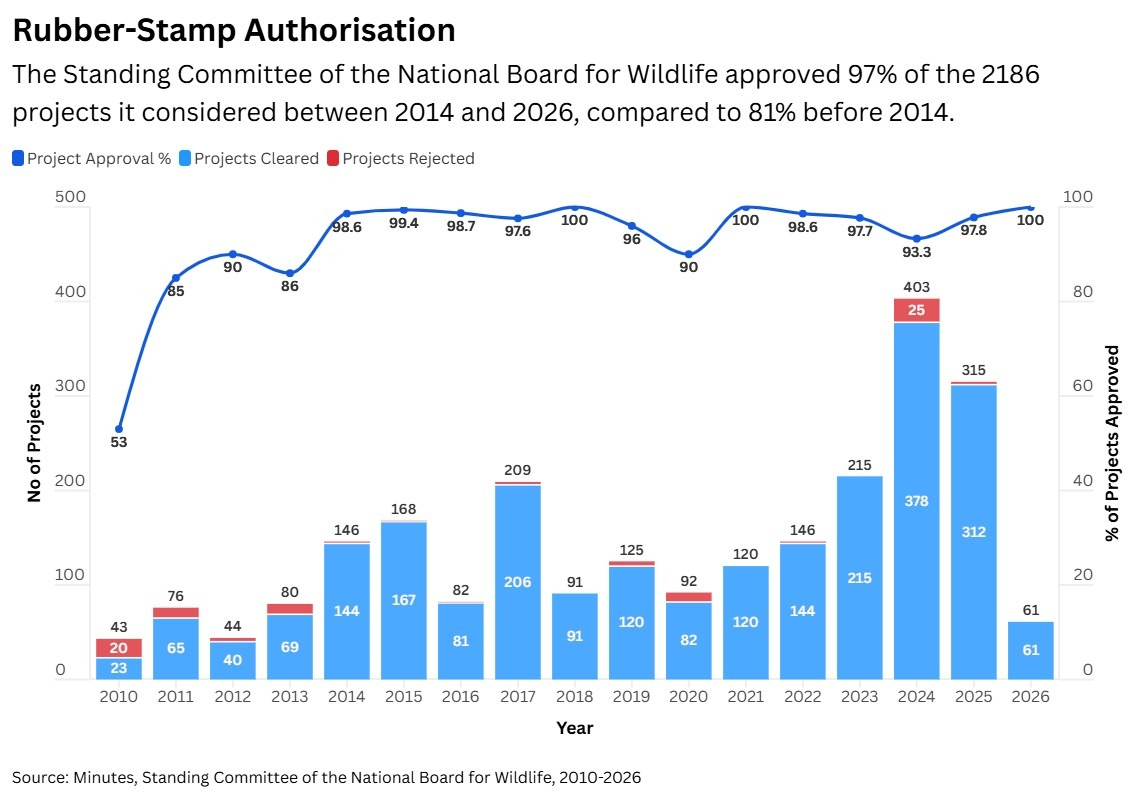
Over the last 12 years, the Standing Committee of the National Board for Wildlife, meant to safeguard India’s last wild areas, approved about 97% of projects—mines, dams, highways and other infrastructure—inside or near Protected Areas, most in ways that are unconstitutional, illegal and ecologically destructive, wrote former Board member Prerna Bindra and former Indian forest officer Prakriti Srivastava.
Vacillating Courts
The courts, meanwhile, have seen-sawed between expressing alarm at the extent of tree felling and reasoning that cutting trees may be unavoidable for infrastructure projects.
In Telangana, where students of the University of Hyderabad protested the impending cutting of trees in a 400-acre urban forest set for auction, the Supreme Court, on 3 April, took suo motu cognisance and directed that “no tree felling” would take place there.
In March 2025, the SC said there should be “no mercy” in environmental cases. “Felling a large number of trees is worse than killing a human," the top court said in the case of a man who cut 454 trees without permission in a protected area. In the case of a challenge to the proposed Rs 92,000-crore development of a port, township and other infrastructure in the Great Nicobar Island, the National Green Tribunal said, “…we do not find any good ground to interfere.” One million trees will be cut for the project, across 130 sq km of prime evergreen tropical forest in one of the planet’s last remaining undisturbed biodiversity-rich areas.
Indeed, the Indian state’s long-standing framing of the issue as a trade-off between ‘development’ and trees is a crude binary.
Ending Regeneration
Here is how we should look at trees and their destruction. We know now that forests are complex, interdependent networks. We know that mycorrhizae—the symbiotic association between plant roots and fungi—form vast underground networks connecting trees to one another and to the soil. Cutting down forest tracts does not merely clear land; it severs these vital networks, harming forests’ ability to regenerate.
It is well established that India’s compensatory afforestation programmes have been disingenuous, clearing lakhs of trees in forests that are hundreds of years old while planting saplings hundreds of kilometres away. We cannot rebuild a 100-year-old forest, and worse, we bring forest ecosystems close to the tipping point with every large-scale tree-cutting drive.
Researchers also believe that more than 90% of mycorrhizal hotspots—areas of high biodiversity and high concentrations of mycorrhizal fungi, critical for storing carbon—remain unprotected because they lie outside legally designated protected forests. India may well be destroying vast tracts of this mycelial network without ever identifying it or studying its impact.
Climate policy in India views ecological destruction as fungible—that we can destroy here and repair this wreckage elsewhere. In fact, science tells us, ecosystems are not interchangeable units. A mature banyan is not a unit; it is an ecosystem accumulated over decades, maybe centuries. Its canopy regulates temperature, its roots hold water, and its hollows host birds, insects and fungi. A sapling is not a replacement for the banyan any more than a foundation pit is a replacement for a multi-storey housing complex.
Trees As Infrastructure
It is time to reframe trees as biophysical infrastructure systems that provide cooling, air filtration, reduce the heat island effect, and offer flood control. They are also self-maintaining infrastructure, until they are removed. The economic argument against cutting trees is akin to that against dismantling any other public infrastructure without immediate and equal replacement.
The public health argument is already compelling: Heatwaves become deadlier without canopy cover, and mental health improves measurably with access to green spaces. The World Health Organization says biodiversity loss may have direct human health impacts, rendering the loss of forests a population-scale health risk.
The so-called trees-or-development dilemma also looks less knotted when you reframe what constitutes “public purpose”, or who public amenities such as expressways are built for, and at what cost. Equally, shade, good air quality, drought-proofing, and flood protection are not luxuries evenly distributed in India. Cutting a tree, then, seen through the prism of equity, is not a neutral act—it redistributes risk toward the vulnerable.
Finally, our defence of trees has typically depended on listing their many wonderful functions, that they cool our streets, store carbon, absorb floodwater, etc, almost as if their worth lies in service delivery. Persuasive as it is, that argument is incomplete. It maintains the illusion that there is a stable human society that can manage, optimise, or replace forest or climate ecosystems.
Remove the trees, though, and the basic conditions we rely on begin to unravel, whether it is breathable air, tolerable temperatures or predictable water. The living systems we depend on are being degraded by the systematic destruction of trees and forests. These are not systems we can dismantle and rebuild at will. India is destroying the conditions that make any rebuilding possible at all.
(Kavitha Iyer is a member of the editorial board of Article 14.)
Get exclusive access to new databases, expert analyses, weekly newsletters, book excerpts and new ideas on democracy, law and society in India. Subscribe to Article 14.