
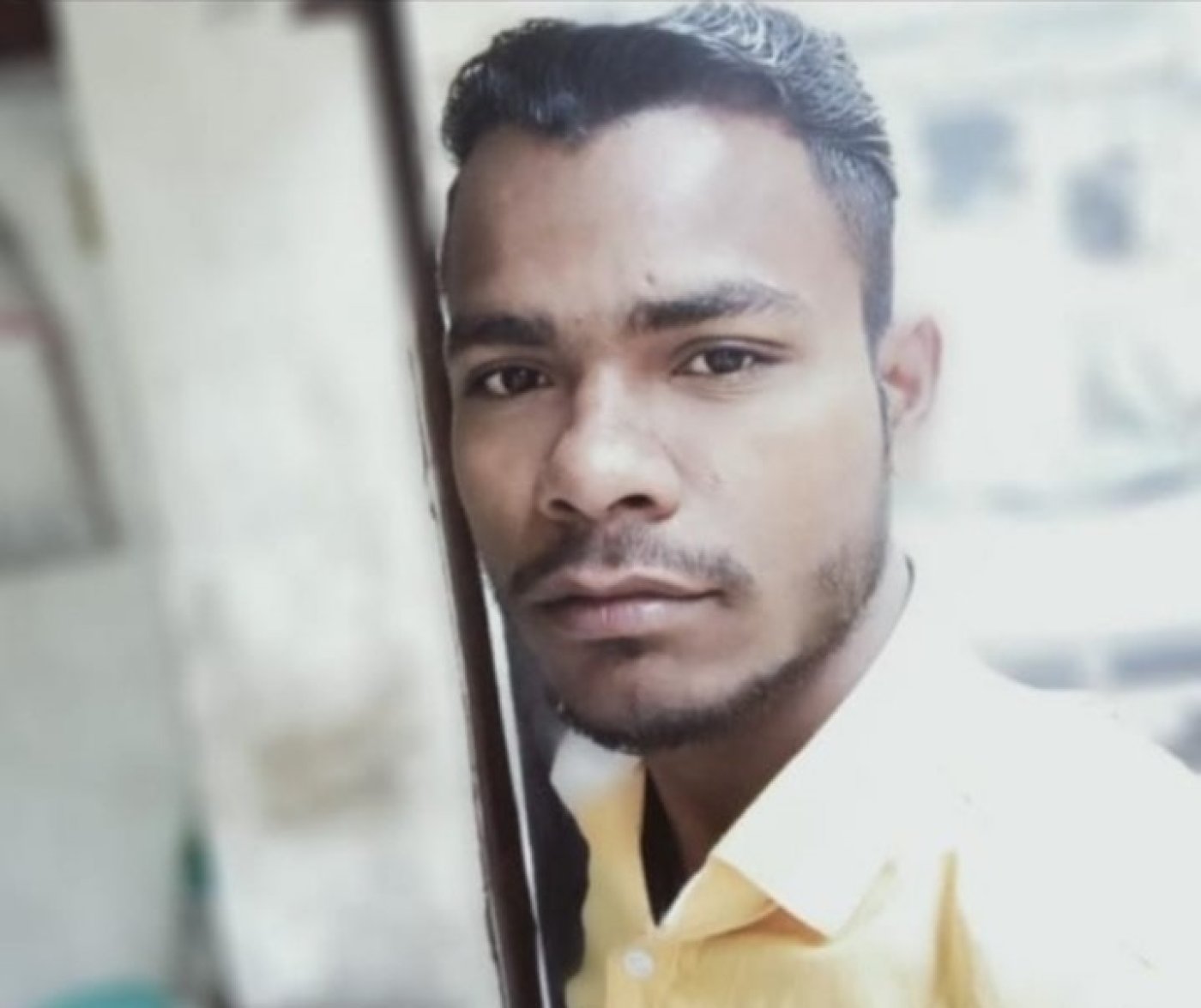
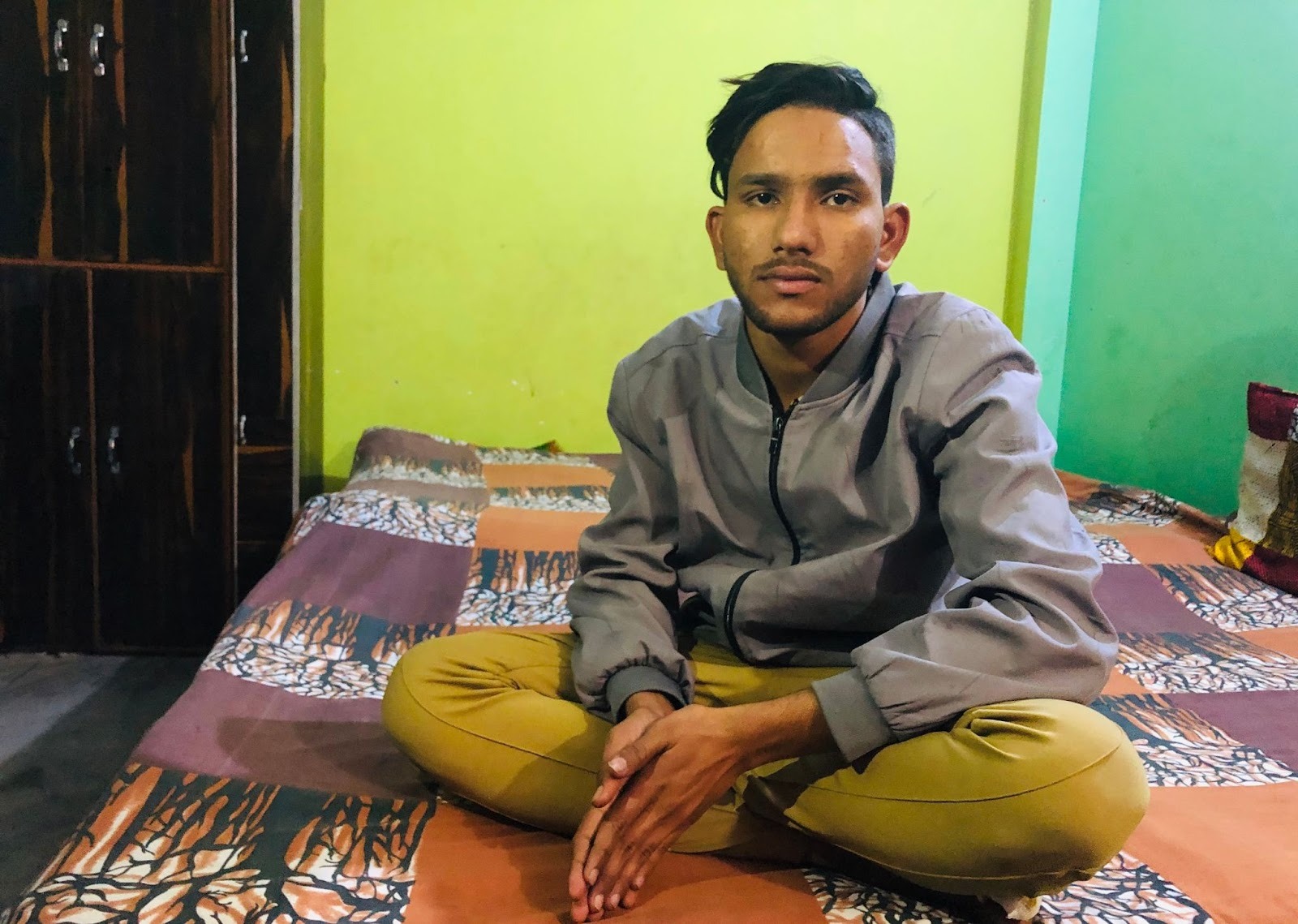
Delhi: “There were many people. You can see many people in the video,” said Shazia on learning that two police personnel were being prosecuted six years after her brother was killed during the communal riots in Delhi in February 2020.
Nadeem, Faizan’s brother, had a similar reaction: “This is not right. It is wrong. There were more policemen. You can see them in the video.”
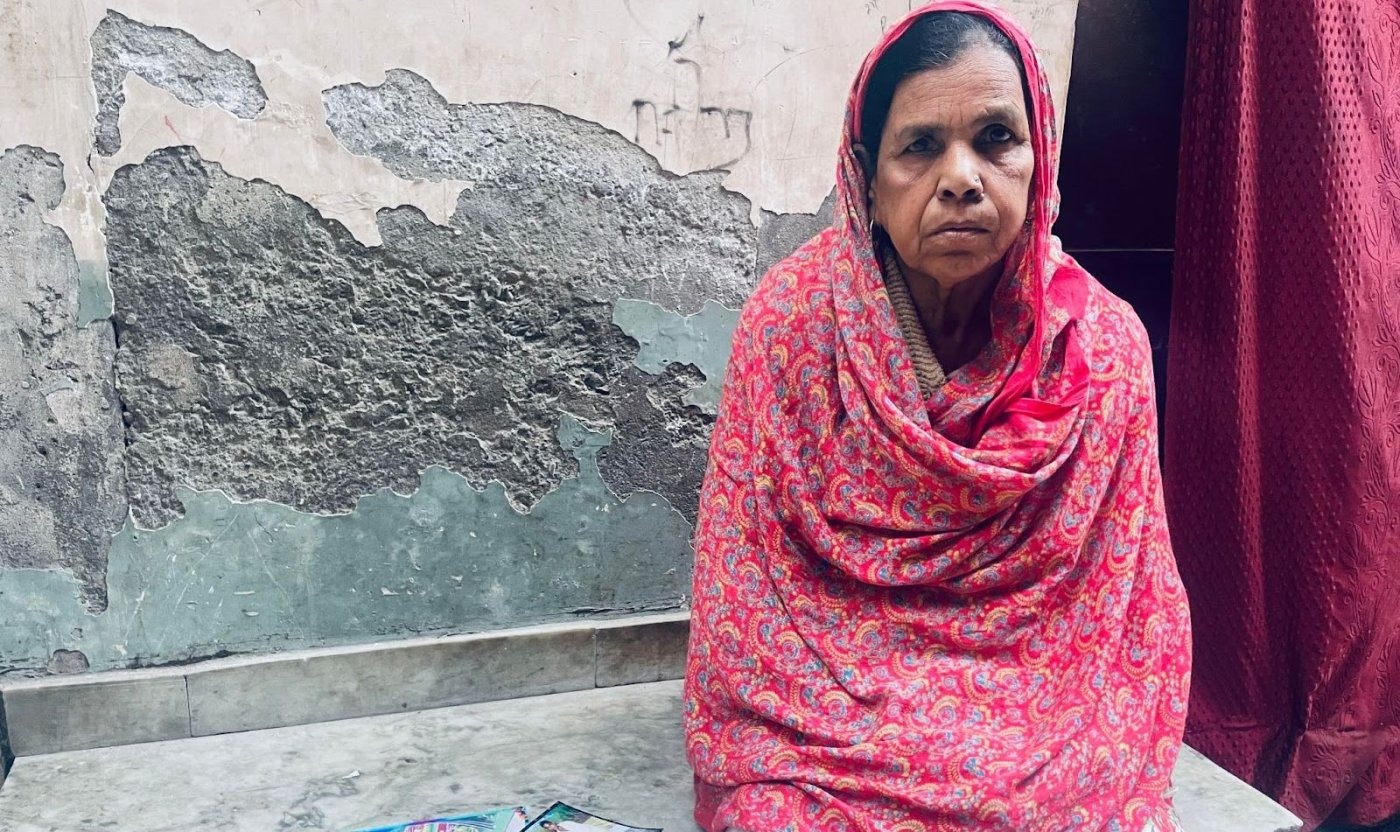
Kismatun, Faizan’s mother, said, “Why only two policemen? They must catch them all. I have not been well. There is a lot of pain in my heart. The shock has been too much to bear. If they catch them all before I die, then I can go with some peace.”
The riots that erupted in low-income neighbourhoods of northeast Delhi from 23 to 25 February 2020 left 53 people dead, the vast majority of them Muslims, amid a Muslim-led protest against the controversial Citizenship Amendment Act (CAA), 2019.
Rioters did not kill Faizan.
His death was a direct consequence of police violence, which also revealed a deep-seated anti-Muslim bias in the police force of the national capital.
Six years after the incident on 24 February 2020, widely known as the 'national anthem case’, the Central Bureau of Investigation (CBI) has filed a chargesheet against head constable Ravinder Kumar and constable Pawan Yadav, even though a viral video of the crime clearly showed several other policemen involved.
The two policemen have been named in a chargesheet under sections 323 (voluntarily causing hurt), 325 (punishment for causing voluntary hurt) and 304(II) (punishment for culpable homicide not amounting to murder) read with section 34 (acts done by several persons in furtherance of common intention) of the Indian Penal Code (IPC).
A chargesheet is a document in which the police formally present their findings to the court, after which the charges are decided, and the trial begins.
In the viral video, Faizan, a 23-year-old butcher, and four other severely injured and bleeding Muslims were seen lying on the side of the road near the Mohalla clinic at the Kardampuri bridge, and one of them was croaking out the national anthem.
The policemen (not their faces) were captured beating them, taunting them to show their patriotism and mocking the protests against a controversial citizenship law, the Citizenship Amendment Act, 2019, that Muslims had been campaigning against since December.
They are heard ordering the injured men to sing, “Sing Vande Mataram”, “Sing properly”, taunting them with the words that were used in the anti-CAA protest, “Azaadi, Azaadi, Azaadi”, along with expletives.
There are at least four policemen in this video.
In a second video, at least eight policemen have encircled Faizan and are kicking and beating him brutally with their batons and lathis, and almost 12 are close by.
Both the CBI and the Delhi police operate under the union home ministry.
The CBI spokesperson, Beena Yadav, did not respond to our calls for comment or our email on why the chargesheet was filed against only two police personnel.
The Delhi police spokesperson and assistant commissioner of police, Ranjay Atrishya, did not respond to our query about whether Kumar and Yadav had been suspended or dismissed from the force.
A Killing In Two Parts
The alleged crime took place in two parts: first, at the Kardampuri bridge, which was captured on video.
The second part was at the Jyoti Nagar police station, where Faizan was unlawfully detained for two days—as per the petition filed by Kismatun in the Delhi High Court—despite being in urgent need of medical care. It seems he was released to his family only when it became clear that he might die.
Faizan died on 26 February 2020 at Delhi’s Lok Nayak Jai Prakash Narain Hospital (LNJP).
The post-mortem report of 29 February said that Faizan died due to cerebral injury associated with multiple blunt injuries over the body. The injuries were caused by blunt force over two or three days.
So, the question is: who was on duty at that police station, as recorded in the police station register?
According to Kismatun’s petition in the High Court, the police also claimed that the CCTV cameras at the police station were not working on 24 and 25 February.
“Is it not elementary that through custodial interrogation and investigation, the rest of the policemen involved in this hate crime could be identified?” said Vrinda Grover, a prominent human rights lawyer who represents Kismatun.
“The identity of the policemen who illegally detained Faizan and denied him necessary urgent medical treatment is known,” said Grover.
“A corpse in a police station is highly inconvenient,” she said. “Faizan’s postmortem report notes that the number of injuries soars while he is held at the police station.”
Grover said she plans to file a protest petition on behalf of Kismatun after reviewing the chargesheet, questioning why the policemen at Jyoti Nagar police station, where he was allegedly held in “illegal detention,” his condition deteriorated, and he was denied medical treatment, ultimately leading to Faizan’s death, have not been booked.
Two days after Faizan died, on 28 February, the police registered a murder case against “unknown persons” at the Bhajanpura police station.
When the police failed to identify the culprits for almost a year, Kismatun filed a petition in the Delhi High Court in December 2020.
In July 2024, three and a half years after Kismatun had filed her petition, the high court called the incident a “hate crime” driven by “religious bigotry” and ordered the CBI to investigate.
The case in which head constable Ravinder Kumar and constable Pawan Yadav are being prosecuted was registered by the CBI on 6 August 2024, after the high court stepped in.
The Other Case
Five years after the incident, a judicial magistrate in February 2025 allowed the plea of Mohd Wasim, one of the five Muslims who were beaten on the Kardampuri bridge, to prosecute the station house officer (SHO) of the Jyoti Nagar police station at the time, Salender Tomar.
In his complaint, Wasim, who was a minor at the time of the incident, said that he was assaulted at the Kardampuri bridge, taken to Jyoti Nagar police station, and beaten there, including by the SHO.
In the weeks that followed, Wasim alleged that the SHO repeatedly called him in and pressured him to tell news channels that everything was fine. He said he complained to senior officers and even wrote to the home minister, but nothing came of it.
On 18 January 2025, judicial magistrate Udhbav Kumar Jain ordered a case be registered against SHO Tomar.
On 1 February, additional sessions judge Sameer Bajpai stayed judicial magistrate Udhbav Kumar Jain’s order.
Tomar has argued that an FIR already existed for the incident; the murder case that was registered against “unknown persons” on 28 February 2020 at the Bhajanpura police station after Faizan died.
The Kapil Mishra Part
In his complaint, Wasim also said that before the assault on 24 February, he saw Kapil Mishra, then a local leader of the Bharatiya Janata Party (BJP), leading a mob near the Kardampuri bridge, where Muslims had been protesting the CAA.
He alleged that Mishra fired gunshots, his supporters threw stones and petrol bombs, and the police backed him, even joining in by pelting stones at the protesters.
A day earlier, on 23 January, hours before the riots erupted, Mishra was near another anti-CAA protest site at the Jafrabad metro station, flanked by his supporters, making incendiary remarks and telling the police to clear the protesters or they would have to do it.
About Mishra, the judicial magistrate, Udhbav Kumar Jain, told Wasim to approach the special courts where FIRs are registered against current and former members of Parliament and the legislative assembly.
Mishra was appointed vice president of the BJP’s Delhi unit in August 2023. He was elected MLA in February 2025 and became a minister, handling law and justice among other portfolios in the BJP government.
The Delhi police have cleared Mishra of wrongdoing.
In April 2025, judicial magistrate Vaibhav Chaurasia ordered the Delhi police to investigate a five-year-old plea by one Mohammad Ilyas, alleging Mishra’s involvement in the riots.
Ilyas alleged he saw Mishra blocking a road and breaking carts belonging to Muslims and Dalits in Kardampuri.
Special Judge Kaveri Baweja stayed the order.
6 Years Have Gone By
When Article 14 spoke with Kismatun in February 2025, five years since Faizan’s death and six months since the Delhi High Court’s intervention, she said that three CBI officers visited her home and took down her statement again, and that she hoped for some movement.
Every time we met her, Kismatun recalled the torture her son went through: first lying badly injured on the street at Kardampuri Bridge on 24 February, and later at the Jyoti Nagar police station.
Kismatun remembers using a scissor to remove Faizan’s torn and bloodied clothes from his battered body. She remembers him struggling to breathe, trying to take big gulps of air, and saying, “Ammi, everything is hurting. Please get me treatment.”
“They beat him because he was Muslim,” she said last year. “There is no justice after five years. “There is no justice after five years. They are just delaying and delaying.”
After it emerged this week that only two policemen had been named in the chargesheet, Kismatun said, “I will not lose hope. I will not rest until my child gets justice and all of them are caught. Even if they kill me. My child is dead, and I don’t fear death. If I die, I will hang in their throats.”
Faizan’s sister Shazia told us, ‘Like these two, more people should be caught. My brother was in so much pain. He deserves full justice.”
Nadeem, Faizan’s brother, said that on 26 February 2026, six years would have gone by since his brother was beaten and humiliated by men in uniform. Yet, no one was in jail, and it had taken so much time to identify just two of the many policemen involved.
“Everything is late in India,” said Nadeem. “If it were civilians, then perhaps they would have been caught, but because it is the khakee vardee (men in uniform) people, they are going slow.”
“Time has passed, but the pain has not. We see him in the videos, we saw him in the hospital,” he said. “You try to get busy with work, but the heaviness is always there. We remember him every year, especially in February.”
The family received Rs 10 lakh in compensation from the Delhi government, then under the AAP, which they used to make home improvements to their small house in northeast Delhi.
Still, Nadeem said, the family struggles with money.
He used to print stickers for the index pages of address diaries, but once people started saving contacts on their phones, hardly anyone bought them anymore.
If it had not been for the persistence of their lawyer, Vrinda Grover, Nadeem said they would not have had the means or the know-how to fight for justice.
“If it had not been for her, we would not have reached here,” he said. “But why did it take six years. What about the other who were on duty? Why don’t they ask these two policemen about them?”
Kismatun said of her nine children, Faizan was her favourite.
“He was so beautiful, tall and strong. He died so young. He died before he could see the world. The police killed him. This shock is killing me,” she said. “My heart cannot bear it. I wake up at three in the morning, and I can’t go back to sleep.”
(Betwa Sharma is managing editor of Article 14.)
Get exclusive access to new databases, expert analyses, weekly newsletters, book excerpts and new ideas on democracy, law and society in India. Subscribe to Article 14.