
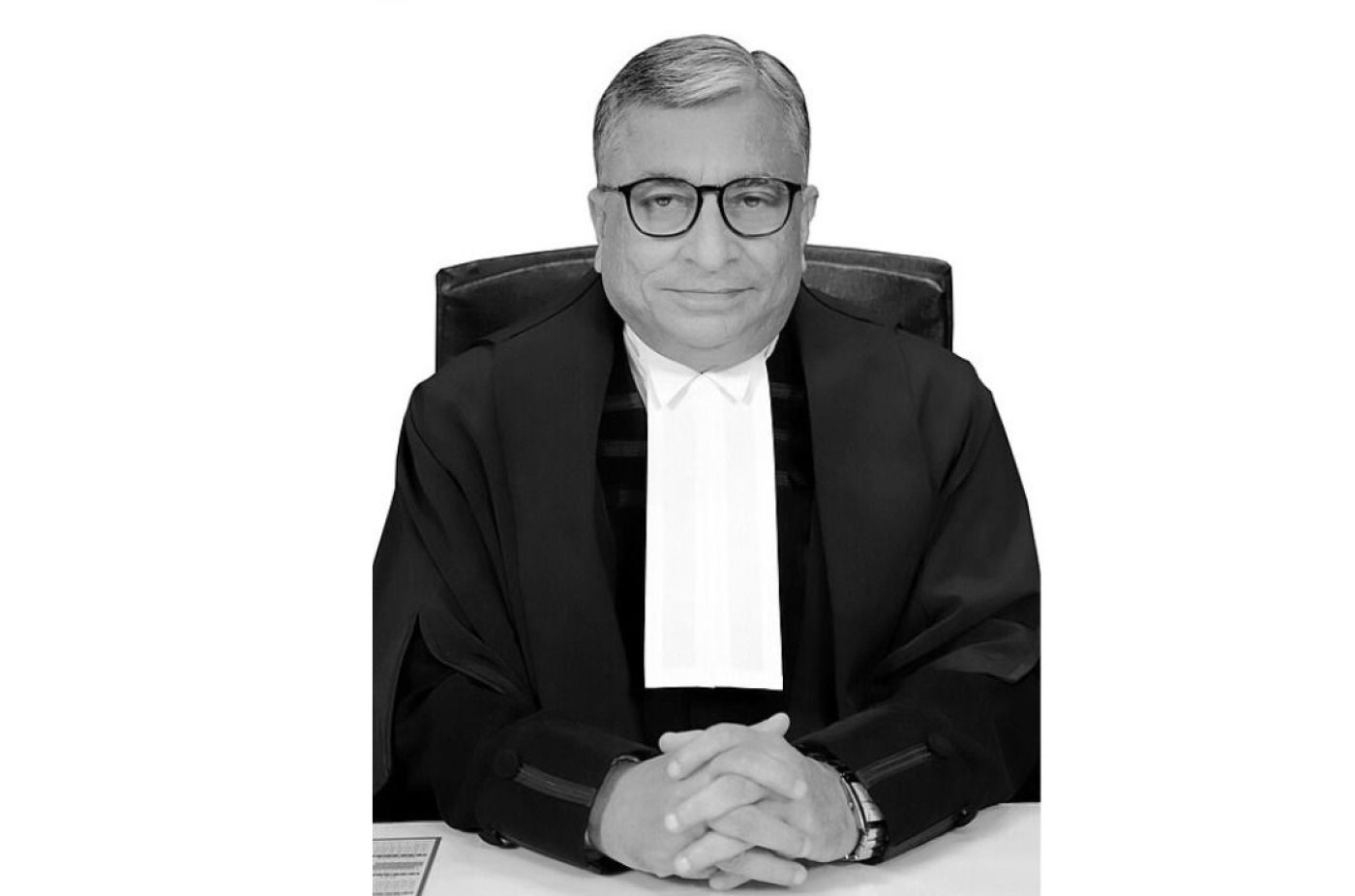
New Delhi: In September 2026, Vantara, the private animal sanctuary owned by billionaire Anant Ambani, announced the appointment of former Supreme Court judge Krishna Murari to its newly constituted Governing Council, describing him as bringing “extensive experience in law, governance and institutional oversight”.
The council, chaired by former secretary general of the Convention on International Trade in Endangered Species of Wild Fauna and Flora (CITES), John Scanlon, is Vantara’s “peak governing body”. It will oversee its conservation, rescue and rehabilitation work, compliance with Indian law and international agreements, and future applications to import wildlife, following an internal due-diligence process.
Vantara’s Governing Council was appointed alongside an announcement that animal imports would pause until June 2027, after which the Council would play a key role in approving future imports. On September 22, an open letter signed by 27 international conservation and animal welfare organisations urged Vantara to permanently end all wild animal imports.
Murari’s appointment to this Council follows a series of judicial proceedings in which he was involved, helping establish the legal and institutional framework through which Vantara acquired animals, obtained recognition as a zoo and, ultimately, became a principal destination for elephant transfers overseen by a High-Powered Committee (HPC).
The Judge & Vantara’s Legal Path
In August 2022, a bench of which Murari was a member upheld the union government’s 2020 Voluntary Disclosure Scheme for owners of exotic animals who voluntarily disclosed possession of prohibited live species. As Himal Southasian noted, “by 2020, an unknown number of exotics had been housed in Jamnagar”; around the same time, Greens applied to the Central Zoo Authority (CZA) for permission to operate as a zoo.
Eight days later, another bench comprising Justices Murari and Dinesh Maheshwari dismissed a challenge to the CZA’s permission for Greens Zoological Rescue and Rehabilitation Centre—one of Vantara’s constituent bodies—to operate as a private zoo and rescue centre.
Two months earlier, in June 2022, the Karnataka High Court had upheld the legal transfer of four captive elephants to the Radhe Krishna Temple Elephant Welfare Trust (RKTEWT), another Vantara constituent body. The High Court noted that sections 40(2A) and 43 of the Wild Life Protection Act permitted private individuals to have ownership over live elephants while prohibiting their sale or commercial transaction.
In August 2022, a three-judge Supreme Court bench consisting of then Chief Justice N V Ramana, Justice Hima Kohli and Justice Krishna Murari declined to interfere with the Karnataka High Court order.
But Murari’s most consequential intervention came in March 2023, during his final months on the Supreme Court.
The Tripura High Court created the HPC in November 2022 to examine the proposed transfer of 23 elephants from Tripura and Arunachal Pradesh to RKTEWT. Its mandate was initially limited to those states.
RKTEWT subsequently approached the Supreme Court, arguing that it faced repeated litigation over elephant transfers, including petitions before the high courts of Madras, Tripura and Gauhati, and that it needed a final determination.
In an eight-page order, Murari’s bench praised the Tripura High Court’s “reasoned and detailed judgment” and expanded the HPC’s “jurisdiction and scope … throughout the territory of India.”
The committee was thereby empowered to deal with applications, disputes and grievances concerning the transfer of elephants to rehabilitation centres and zoos across India.
Its mandate later became central to moving elephants from different parts of the country to Vantara. As an award-winning investigation in Himal Southasian would note later, “With that, any complaint about an elephant in extremis anywhere in the country [went] to the HPC—which, activists told [Himal], usually [directed] the animal to Jamnagar.”
The Institution Murari Is Now Joining
The HPC’s eventual report strongly endorsed Vantara’s suitability, concluding, among other things, that the 23 elephants had not been obtained through commercial transactions and that Jamnagar’s climate was suitable for elephants.
In the more than three years since the Supreme Court gave the HPC a pan-India mandate, it has approved a succession of elephant transfers to Vantara, while details of its decisions and the precise process for approving transfers have largely remained outside the public record.
Wildlife activists have raised questions about transfers involving missing microchips, ownership documentation and DNA testing. Responding to Himal’s questions, a counsel for the HPC said, “HPC is indeed duty-bound to the Hon’ble Supreme Court of India; however, it is under no obligation to answer any media inquiries.”
In April 2023, a month after Murari’s bench expanded the HPC’s jurisdiction, 20 elephants were transported from Arunachal Pradesh’s Namsai district to Jamnagar in a convoy of 49 vehicles, following an HPC recommendation. The Centre for Research on Animal Rights (CRAR) said it was difficult to assess the transfer because the HPC’s proceedings, documentation, report and orders had not been made public.
In May 2024, an injured and abused cow elephant, Pratima, and her calf were detained by the Assam forest department while being transported to Vantara. Wildlife activist Rohit Choudhury wrote to the HPC, questioning why local treatment options had not been considered for an elephant he described as severely unfit to undertake a 3,000-km journey during peak summer while nursing her calf.
In August 2025, Prime Minister Narendra Modi inaugurated Vantara. A month later, a Special Investigation Team appointed by the Supreme Court found no statutory irregularities at the facility, despite concerns (here, here and here) about wildlife trafficking raised by investigative media and the CITES Secretariat.
Murari has now joined the institution whose interests he repeatedly encountered as a judge.
Vantara has not made public the specific terms of Murari’s appointment.
Vantara did not respond to a detailed questionnaire sent by Article 14. We also sought a response from Justice Murari’s office, which had not responded as of publication. We will update this story if either responds.
‘Justice must be seen to be done’
The possibility of judges taking post-retirement positions has long raised concerns about how their pre-retirement decisions may be perceived. Legal academics have described this as creating “an economy of influence that is weakening the [judicial] institution’s effectiveness”.
Article 124(7) of the Constitution bars retired Supreme Court judges from pleading or acting “in any court or before any authority within the territory of India”, but does not prohibit private employment. Justice K Chandru, a former judge of the Madras High Court, told Article 14 that the Constituent Assembly had focused on preventing retired judges from appearing before courts or authorities and had not anticipated judges taking up “private employment or political posts”.
The absence of such a prohibition has led to longstanding calls for a ‘cooling-off’ period before retired judges take up new positions. But for Chandru, the issue goes beyond whether a post-retirement appointment is legally permissible.
Appointments such as Murari’s to Vantara’s Governing Council, he said, can be questioned on “ethical and moral grounds”.
“We can draw an inference based on what a common, reasonable person on the street might think about a judge hearing an entity’s case and then joining their services upon retirement,” he said.
Dr G Mohan Gopal, a former director of the National Judicial Academy of the Supreme Court and former director (Vice-Chancellor) of National Law School of India University, Bengaluru, said public perception was central to the issue. “Justice must not merely be done, but it also must be seen to be done,” he said, quoting the opening lines of The Restatement of Judicial Values, a document adopted by a full court meeting of the Supreme Court in 1997.
The Restatement says higher-judiciary judges must reaffirm public faith in judicial impartiality and avoid acts committed either “in official or personal capacity” that erode that perception.
“I think what we must realise is the operative principle which is that public faith in judicial impartiality is at stake,” Gopal said. He disagreed that a fixed ‘cooling-off’ period would necessarily resolve the problem.
“Once you become a judge, especially of the highest court in the country, you should not do anything that raises even a shadow of a question on your judicial impartiality,” said Gopal. “So even after they retire, their actions should not raise questions about their impartiality.”
That concern is particularly relevant here because Vantara’s Governing Council is intended to function as an independent oversight body, including on legal compliance. Gopal distinguished a former judge supporting a civil-society organisation or publicly advocating for animal rights from joining the internal governing structure of a powerful private corporation.
“Impartiality must be that you are not partial in favour of the powerful, that you are there to correct or compensate powerlessness,” he said. “So a judge can, after they retire, lend their heft to balance the scales of justice. But one should not lend their heft to imbalance the scales of justice.”
Chandru suggested safeguards for post-judicial appointments to private entities, drawing on Section 12 of the Arbitration and Conciliation Act , which allows challenges to an arbitrator’s appointment over relationships or interests that raise “justifiable doubts” about independence and impartiality.
He also suggested incorporating safeguards on post-judicial employment into the Judicial Standards and Accountability Bill, introduced in the Lok Sabha in 2010 but still pending. The Bill seeks to mandate asset declarations, establish judicial standards and set procedures for removing Supreme Court and High Court judges.
“More than a conflict of interest even, it is a question of having an arm’s-length relationship,” Gopal said. “If [Vantara] wanted an internal advisor, more appropriate would have been a senior practising advocate. Retired judges should only stand on behalf of the people.”
The Opaque Path To Vantara
More than three years after the Supreme Court gave the HPC a pan-India mandate, details of the number and nature of transfers it has approved remain largely outside the public record. The committee’s decisions have also raised questions about transparency, documentation, and the welfare of elephants transferred to Vantara.
In April 2023, a month after Justice Murari’s bench expanded the HPC’s jurisdiction, 20 elephants were transported from Arunachal Pradesh’s Namsai district to Jamnagar in a convoy of 49 vehicles, following an HPC recommendation.
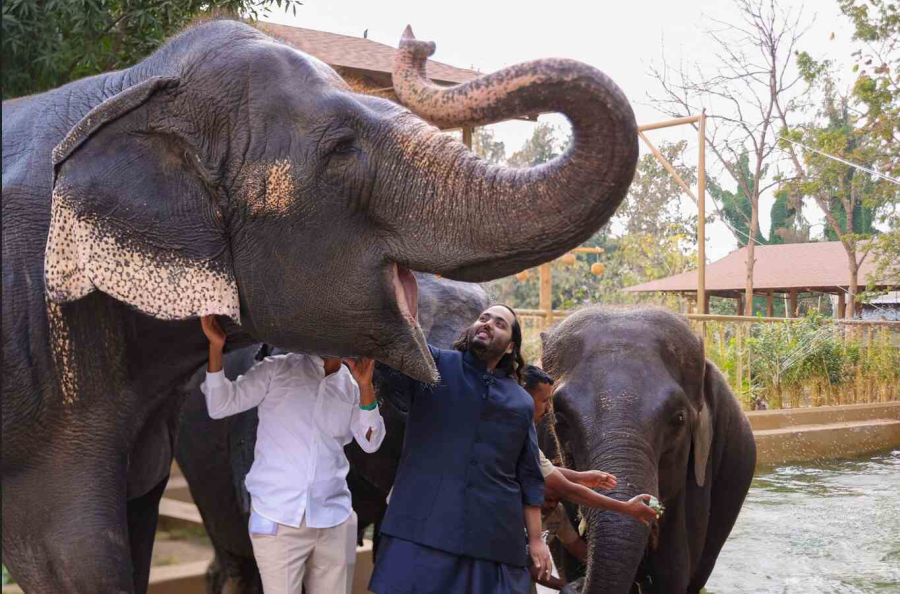
The Centre for Research on Animal Rights (CRAR) said it was difficult to assess the transfer because the HPC’s proceedings, documentation, report and orders had not been made public. It called for deeper scrutiny of transfers from Arunachal Pradesh, including maternity DNA testing and greater participation by wildlife experts from the Northeast.
In June 2023, Arunachal Times reported that only one of the elephant names recommended by the HPC matched those for which the forest department had subsequently issued transportation clearance—and that elephant had a different microchip number. Himal Southasian later reported that two of the 20 elephants transferred were not microchipped, a process used to identify and track captive elephants.
The following year, questions arose over another transfer. In May 2024, an injured and abused cow elephant, Pratima, and her calf were detained by the Assam forest department while being transported to Vantara.
Wildlife activist Rohit Choudhury wrote to the HPC, questioning why local treatment options had not been considered for an elephant he described as severely unfit to undertake a 3,000-km journey during peak summer while nursing her calf. He also raised concerns about the absence of DNA testing.
The concerns have persisted alongside further transfers to Vantara. In January 2025, videos (here and here) showed at least 21 elephants being transported in animal ambulances from Arunachal Pradesh through Assam. Vantara said the rescue operation had been approved by the HPC, entrusted by the Supreme Court, and carried out with the full consent of the animals’ current owners.
These transfers have kept questions about the HPC’s transparency and decision-making alive, even as Vantara’s institutional legitimacy has grown.
(Sushovan Patnaik is a journalist and lawyer.)
Get exclusive access to new databases, expert analyses, weekly newsletters, book excerpts and new ideas on democracy, law and society in India. Subscribe to Article 14.