
Handawar, Jammu and Kashmir: For nearly five months every year, when the summer sun settled harshly over Handwara’s fields and orchards, 51-year-old Abdul Rashid Bhat’s mornings began beneath the shade of a towering chinar tree outside his home in Ganapora village in Kashmir’s Kupwara district.
Before leaving to tend his apple orchards, Bhat would spread a small mat under the massive canopy, sip salted noon chai and eat breakfast as neighbours stopped to exchange greetings on their way to nearby fields.
The chinar's branches stretched so wide that, by afternoon, labourers returning from farms rested beneath. Children climbed its roots and played in the dust around its trunk.
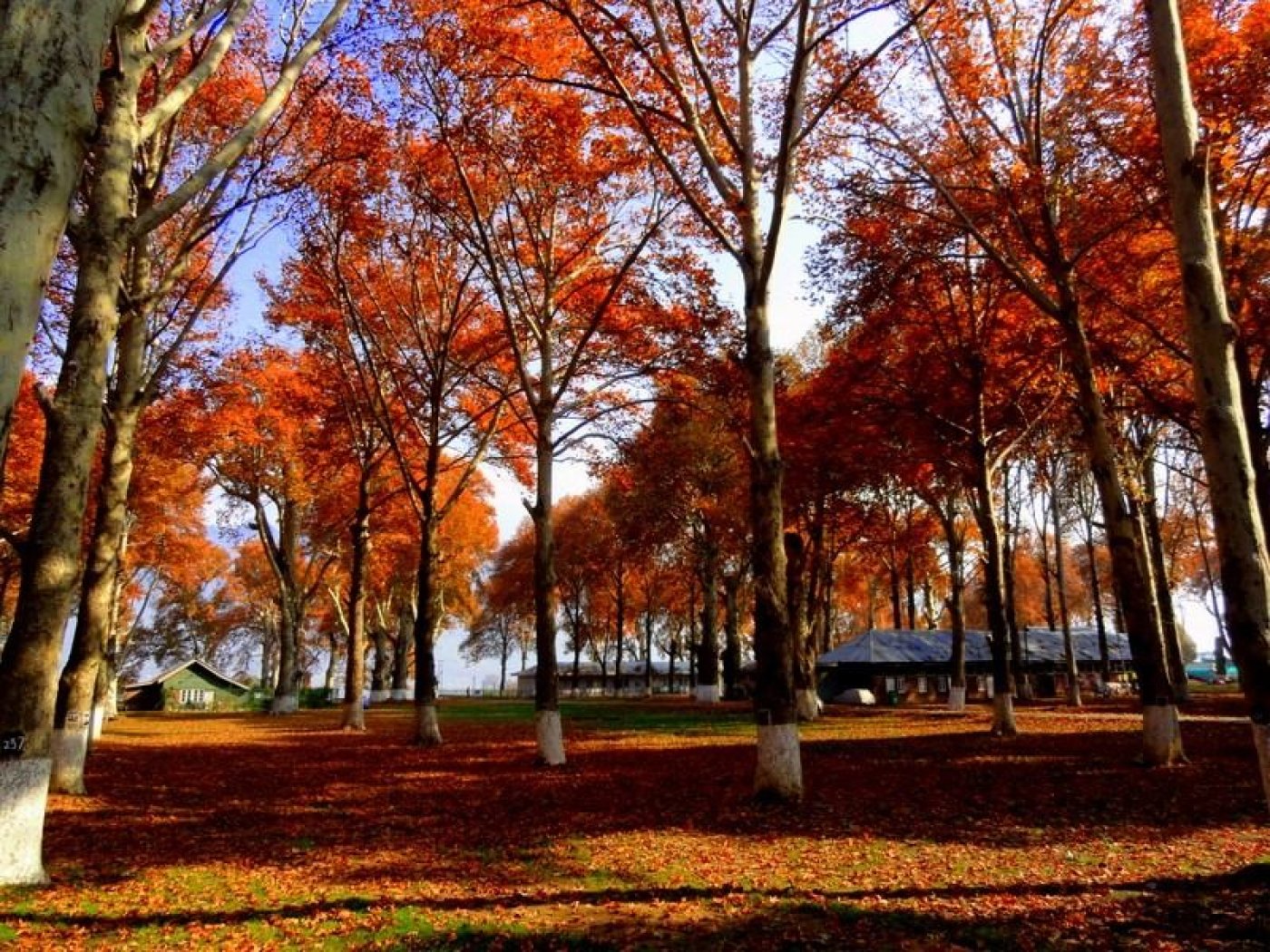
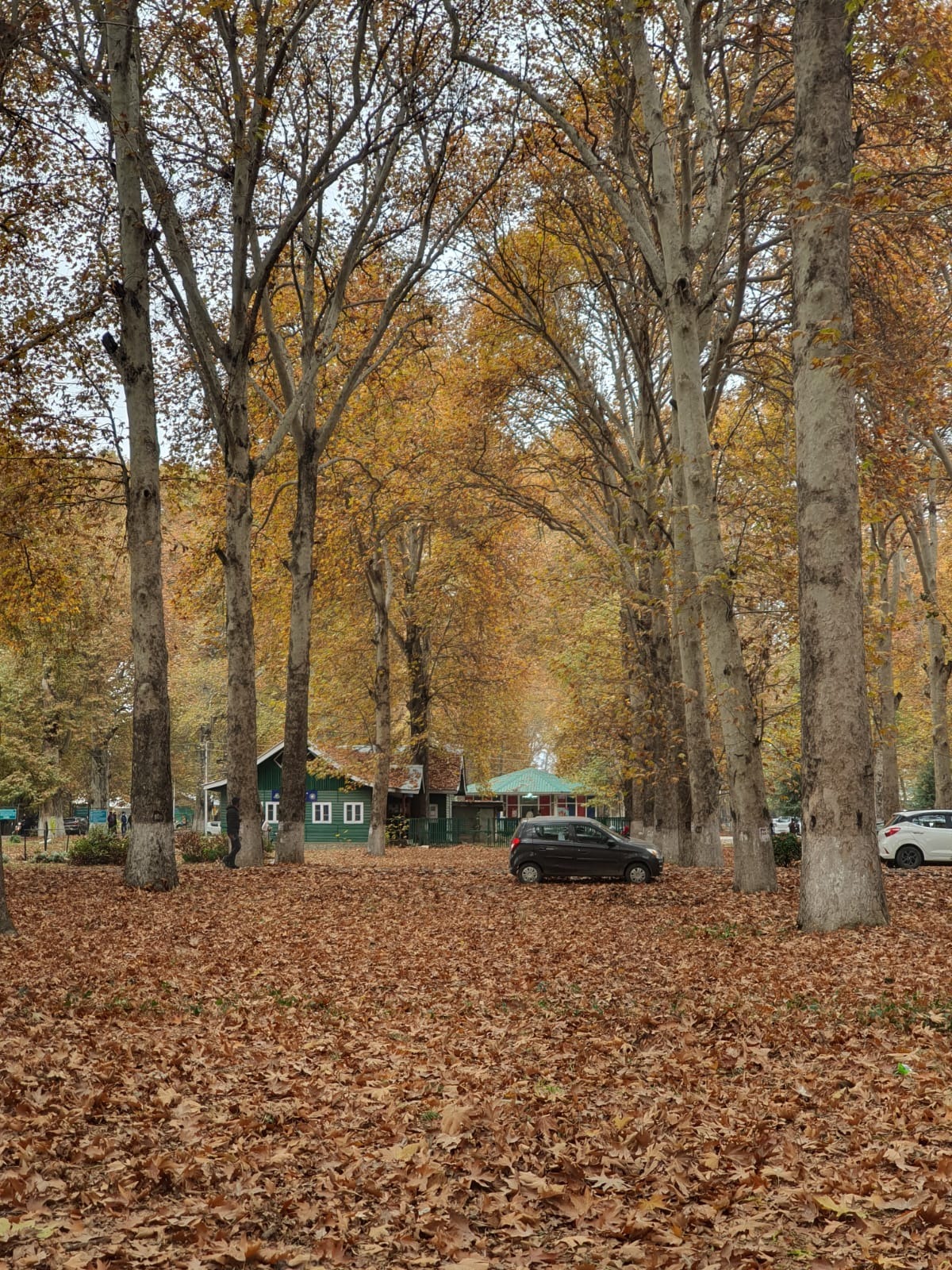
During paddy season, farmers in the neighbourhood lunched in its shade. In autumn, its crimson leaves blanketed the nearby fields where Bhat’s grandchildren chased each other before school.
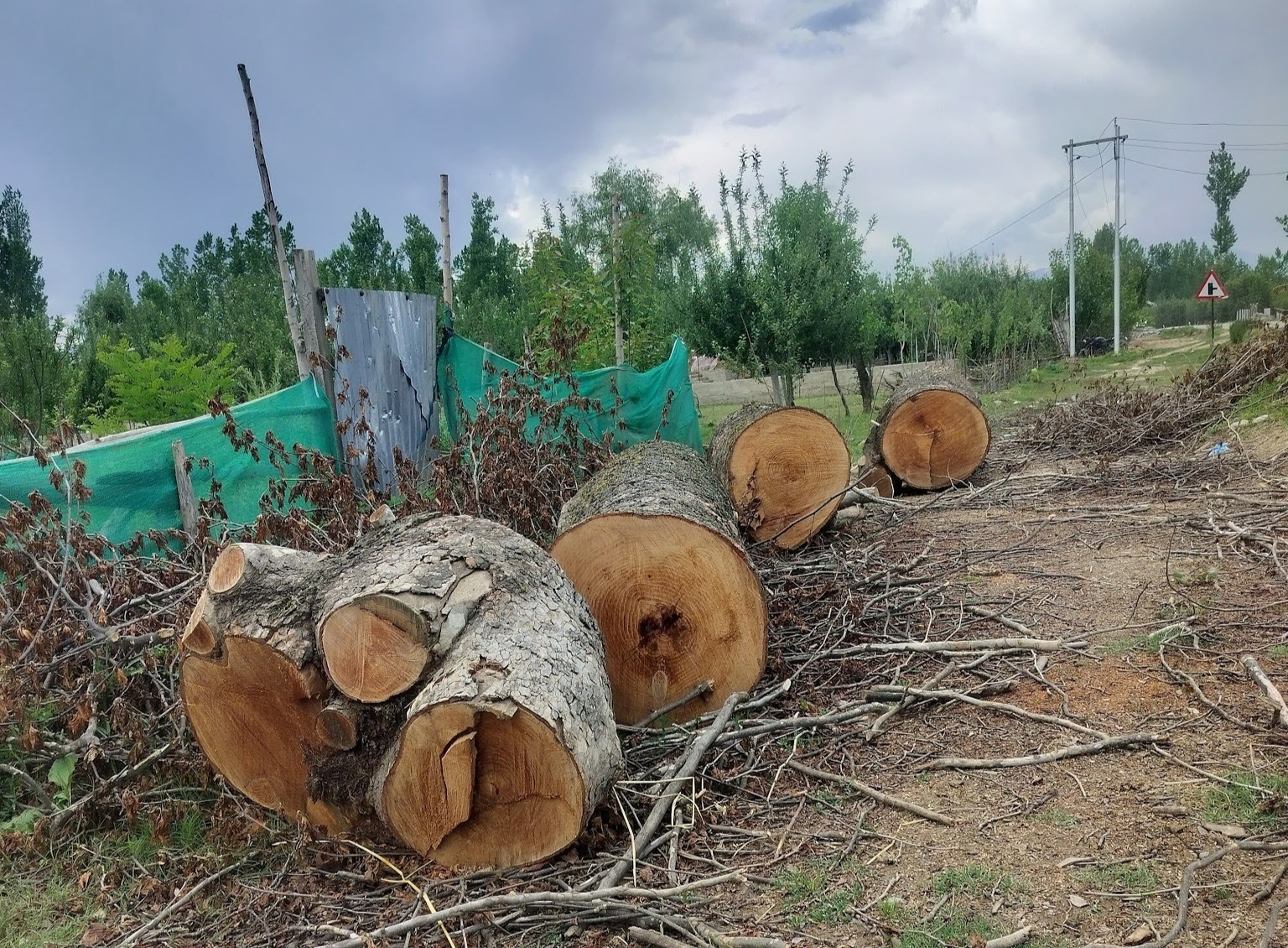
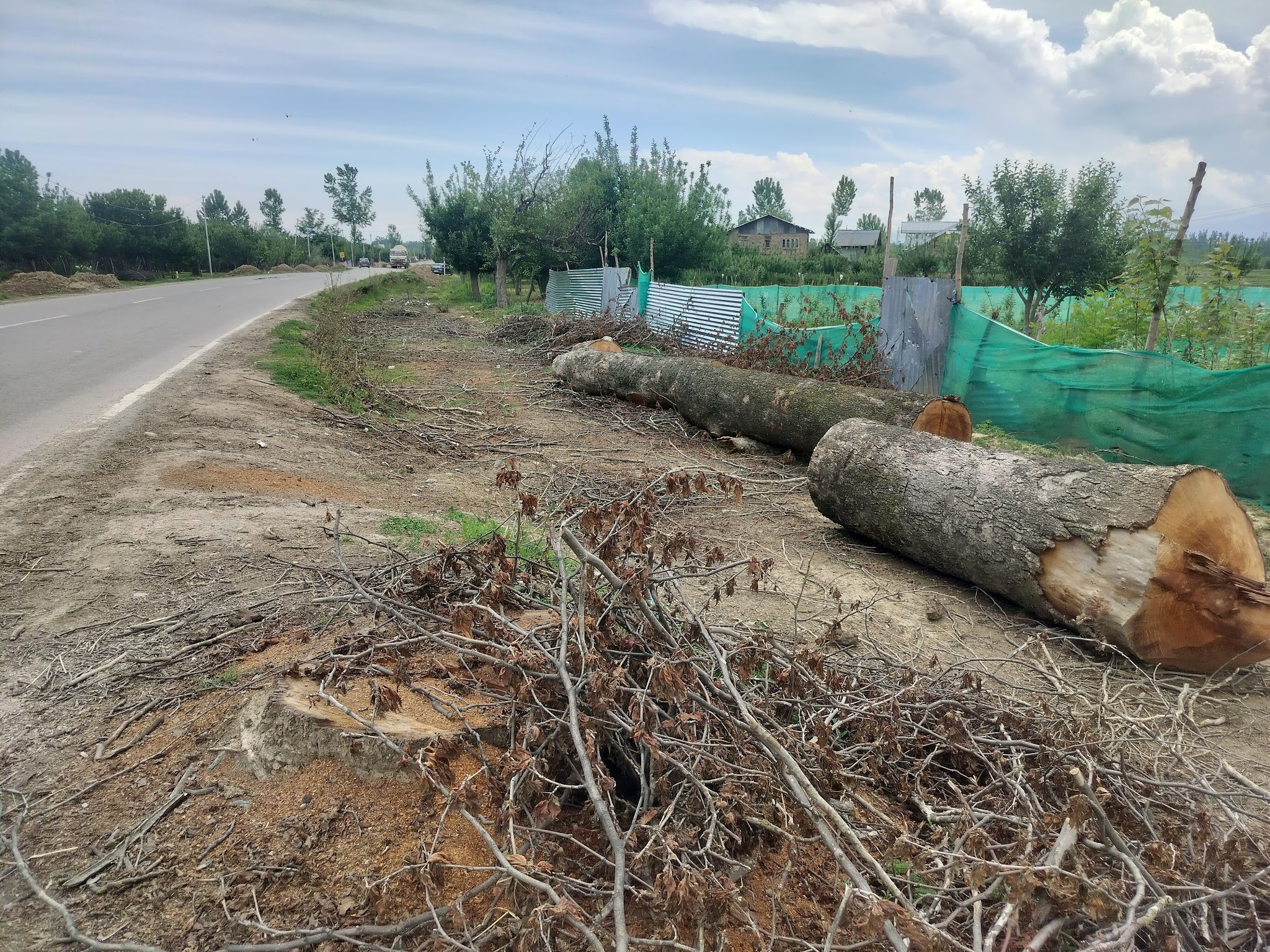
But on 23 April 2026, everything changed. The machines arrived to widen the 126 km National Highway 701, connecting Baramulla to Tangdhar in north Kashmir. By evening, the chinar lay in pieces on the side of the road.
For families like Abdul Rashid Bhat’s, the question is not only environmental. It is deeply personal.
“When they cut it, it felt like our home itself had become empty,” Bhat told Article 14, standing beside the stump. “For us, this tree was not a decoration. It was part of our daily life.”
For decades, the chinar had shaped the rhythm of his days. In Kashmir’s increasingly warmer summers, its shade acted like a natural shelter for nearly half the year.
“From spring till autumn, we lived under it,” he said. “I drank tea there almost every morning before going to the orchards. After work, we sat there again in the evening breeze. The tree carried our memories.”
Bhat said the absence feels physical, when sunlight falls directly on his fields.
“The heat has increased already,” he said quietly. “But more than heat, it is the silence that hurts.”
Ecological Crisis
The felling of the 30 foot tall Handwara chinar near Ganapora bus stop was one of thousands felled over the last five years, their destruction coming at a time of unprecedented ecological stress.
Temperatures in Kashmir have been steadily climbing for decades, with an annual increase of nearly 0.02°C each year, while extreme summer heat has become more frequent across the Valley.
In 2025, Srinagar recorded some of its hottest days in recent history—including 37.4°C in July and an average June temperature nearly three degrees above normal, making it the hottest June in almost five decades.
The felling of chinars is the latest flashpoint in a growing debate over Kashmir’s development model and the cost at which it is unfolding.
Videos showing workers cutting the tree during the highway expansion work spread rapidly across social media, triggering outrage among residents, environmental activists and opposition leaders.
But for many Kashmiris, the anger extends beyond a single tree.
Over the past two decades, Kashmir has witnessed a steady decline in several traditional tree species.
Chinars, a symbol of Kashmir, are culturally important to the people of the region. They are found across the Valley’s Mughal gardens, shrine complexes, villages and highways, with major clusters in Srinagar’s Naseem Bagh, Shalimar and along older road corridors.
Over the years, hundreds of these centuries-old trees have disappeared due to highway widening projects, rapid urban expansion, “smart city” works, railway and road construction, illegal felling, disease and official neglect.
Environmentalists and residents have repeatedly alleged that authorities, including the Jammu and Kashmir (J&K) administration, the forest department, the National Highways Authority of India and agencies executing centrally funded infrastructure projects, have prioritised development over conservation.
The chinar carries formal recognition as the Royal Tree under section 36 of the Jammu and Kashmir Land Revenue Act 1939 and protection under the Jammu and Kashmir Preservation of Specified Trees Act, 1969, which prohibits its felling without government permission.
Yet, activists say enforcement remains weak and accountability unclear.
The issue has triggered public outrage (here and here), especially after reports emerged in early 2025 of alleged felling and heavy pruning of nearly 500-year-old chinars in Anantnag’s Rani Bagh.
Environmental groups and citizens have repeatedly raised concerns saying official responses have largely focused on geo-tagging, census exercises and plantation promises rather than concrete protection policies. Environmentalists argue that there has been no sustained legislative intervention or comprehensive conservation policy matching the scale of the crisis.
Political leaders such as National Conference MLA Bashir Ahmad Shah Veeri and the Peoples Democratic Party’s Iltija Mufti have criticised the felling of chinars, with Mufti posting on X, in February 2025, “On even days the Jammu and Kashmir government geotags Chinar trees, promoting conservation, but on odd days 500-year-old Chinar trees symbolising history and the very passage of time itself are felled. Infuriating and puzzling.”
Falling Numbers
According to a 2021 report from Kashmir’s Forest Department, the Valley had over 42,000 chinar trees in the 1970s.
The J&K Forest Research Institute’s chinar census data showed Kashmir was home to around 40,000 chinar trees in 2021.
According to Dr Syed Tariq, the coordinator of the J&K government’s “Tree Aadhaar” chinar geo-tagging mission, “the total number of chinar trees in Jammu and Kashmir is somewhere between 32,000 to 33,000.”
This means that the Valley lost up to 8,000 chinar trees in the last five years.
Plans linked to a road in Ganderbal district threatens 58 chinars.
Data from the National Highways Authority of India showed that over 110,000 private trees, including apples, walnuts, mulberrys, and chinars, were cut down during construction of the Srinagar Ring Road between 2018 and 2021.
Walnut cultivation area has also slightly reduced in recent years, while mulberry trees linked to Kashmir’s once-thriving sericulture industry face climate stress, frost damage and declining cultivation across parts of the Valley.
Article 14 has previously reported on the effects of climate change on Kashmir’s apple farmers.
Environmental activists say the destruction reflects a dangerous pattern in which ecological safeguards exist largely on paper while heritage trees continue to fall under administrative approvals.
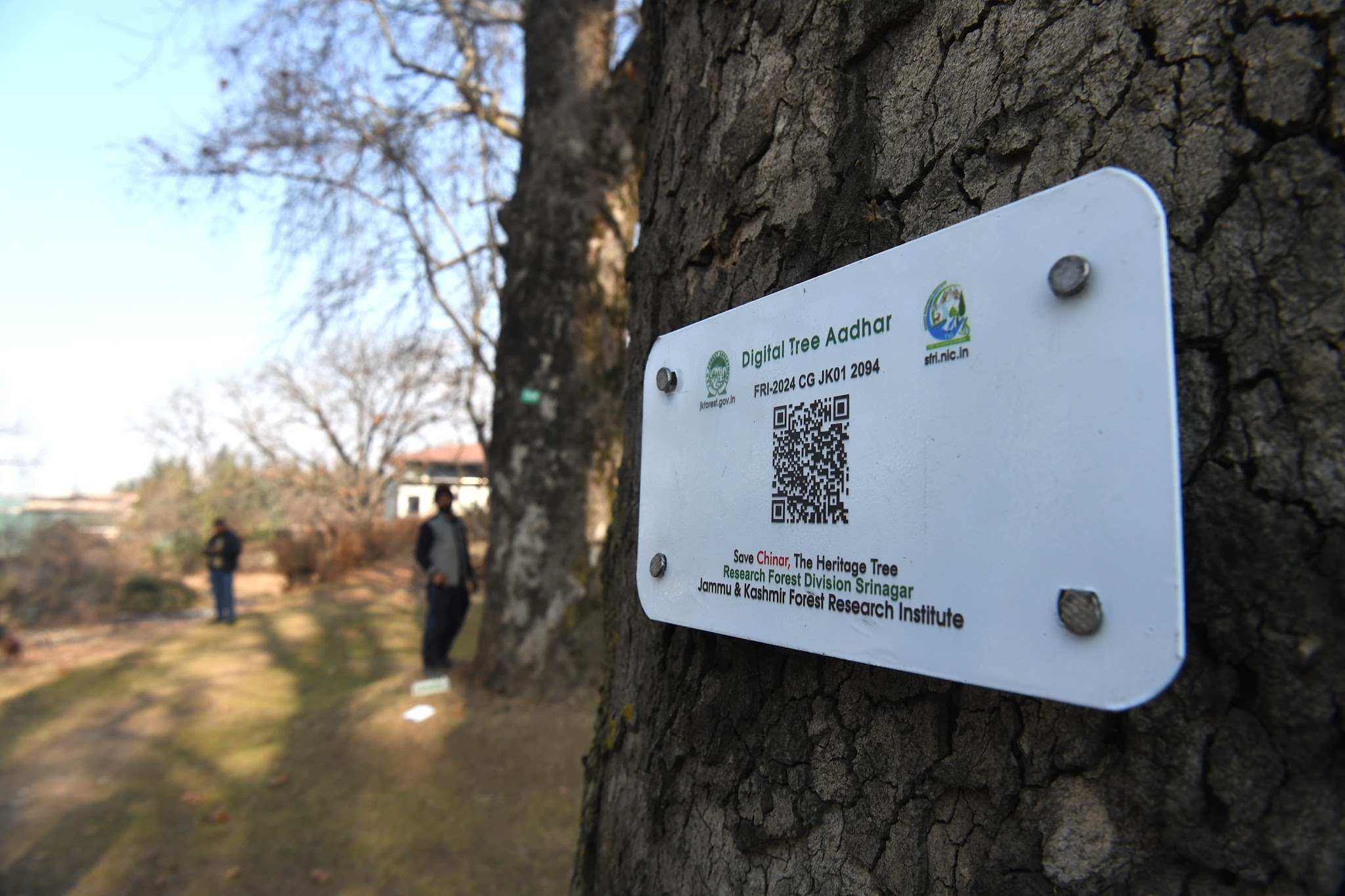
The controversy has also exposed a contradiction at the centre of the J&K government’s conservation efforts. Even as authorities publicly promote (here and here) a large-scale geo-tagging initiative aimed at digitally preserving Kashmir’s chinars through QR-coded identification plates, residents say many of the same protected trees continue to be cut in the name of development.
It Starts With Pruning
Some of the oldest surviving chinars, known locally as boouni, in Kashmir are believed to be over 500 years old.
In autumn, the Valley transforms into shades of red, amber and gold as chinar leaves begin to fall, drawing tourists from across India and abroad.
“Without the chinar, Kashmir would not feel like Kashmir,” said environmental activist Raja Muzaffar Bhat. “These trees are not separate from our identity. They are woven into our social and cultural life.”
Even pruning requires official approval. Yet, activists say the law is routinely bypassed.
Raja Muzaffar Bhat alleged that authorities are increasingly using “pruning permissions” as a legal route to remove entire heritage trees.
“Entire trees are being destroyed under the excuse of pruning,” said Raja Muzaffar Bhat. “Authorities talk about conservation publicly, but on the ground development projects are consuming these heritage trees at an alarming pace.”
Raja Muzaffar Bhat said the process often unfolded in stages.
First, he alleged, local officials permit heavy lopping or branch cutting, citing safety concerns, road expansion or nearby construction activity. Once major branches are removed, the weakened tree is then declared unsafe or obstructive, eventually paving the way for its complete felling.
“It was heartbreaking to watch the Handwara chinar being cut,” he said. “Had Jammu and Kashmir introduced a proper tree transplantation act years ago, many of these trees could have been relocated instead of destroyed.”
Development & Ecological Loss
The Handwara incident is not isolated.
In April 2026, on the outskirts of Srinagar, dozens of mulberry trees were cut during road construction works along the Bagh-e-Mehtab–Kralpora stretch.
In Anantnag district, several chinars were felled during infrastructure projects last year, prompting widespread criticism. In 2023, more than 234 trees were removed from the Amar Singh College campus in Srinagar, leading the National Green Tribunal to seek explanations from authorities.
Urban expansion across Kashmir has accelerated significantly after the abrogation of Article 370 in 2019, with the government pushing large-scale highway upgrades, ring roads and tourism infrastructure projects aimed at improving connectivity and attracting investment.
A government official from Srinagar, who asked to remain anonymous, said such projects were essential for economic growth and modernisation.
But environmental experts say ecological considerations are often treated as secondary concerns, with the destruction of trees accelerating nationwide, in cities, forests and along highways, at a time of climate change.
“The issue is not whether development should happen,” said Mohd Altaf, a Kupwara-based activist. “The real question is whether development is being planned sustainably.”
He said mature trees like chinars provide critical ecological services that cannot easily be replaced.
“A centuries-old tree moderates temperatures, supports biodiversity, stores carbon and protects soil moisture,” said Altaf. “Planting small saplings elsewhere cannot compensate for the ecological role of mature heritage trees.”
The Valley has witnessed declining snowfall, unusually dry winters, prolonged heat, declining rainfall, fewer rainy days, post-monsoon precipitation, contributing to prolonged dry spells and drought-like conditions in Kashmir.
In 2025, Kashmir recorded nearly an 80% precipitation deficit during January and February.
Article 14 has previously reported how global warming, heatwaves, receding glaciers, drying rivers, power cuts and falling harvests have affected Kashmir.
“In earlier times, roads remained cool because they were lined with trees,” said 42-year-old schoolteacher Shabnam Jan from Pulwama. “Now roads are wider but unbearable during summer afternoons.”
Near Srinagar’s outskirts, shopkeeper Ghulam Nabi Dar said the cutting of roadside trees has changed local weather conditions.
“There is more dust, more direct sunlight and less cool air,” he said. “Birds have disappeared too. Earlier, mornings felt alive.”
The Promise Of ‘Digital Protection’
In 2025, J&K authorities launched what they described as a landmark conservation initiative—geo-tagging every chinar tree in the Valley through QR-coded identification plates.
The project aimed to create a digital database containing each tree’s location, age and physical characteristics.
Officials promoted the initiative as a technological solution to prevent illegal felling and improve monitoring.
“We are digitally protecting chinar trees,” scientist Syed Tariq, who heads the project, told the media earlier this year.
According to officials, nearly 29,000 chinar trees have been geo-tagged.
For many Kashmiris, however, the geo-tagging campaign now appears increasingly symbolic.
“What is the purpose of attaching QR codes if the same trees continue to be felled for road projects?” asked Fayaz Ahmad, a Srinagar-based environmental researcher.
Ahmad said authorities have not publicly disclosed how many geo-tagged trees have been cut for development projects.
“There is no transparency,” he said. “People are asking simple questions: who authorised these cuttings, were environmental alternatives explored, and were public consultations conducted?”
He added that Kashmir’s environmental governance increasingly appears focused on optics rather than accountability.
“The state wants to showcase technology-driven conservation,” Ahmad said. “But conservation cannot exist only in photographs, government press releases and tourism campaigns.”
A Tree Saved
In many Kashmiri villages, chinars function as public spaces as much as ecological assets.
Near Anantnag’s Mattan area, villagers still gather beneath a centuries-old chinar beside a local shrine for evening discussions during summer months.
“It is our meeting place,” said 55-year-old Bashir Ahmad Wani, a farmer from the village. “People sit there after work, children play nearby and travellers rest under its shade.”
Last year, the tree was marked during preliminary planning for road expansion.
“We protested because this tree belongs to the whole village,” Wani said. “It is not only wood. It holds our memories.”
Residents eventually persuaded authorities to slightly alter the proposed alignment, temporarily saving the tree.
But anxiety remains.
“Every time a new project begins, we fear another old tree will disappear,” Wani said.
For younger Kashmiris too, the destruction represents something larger than environmental decline.
“Our grandparents told stories under these trees,” said 23-year-old university student Insha Mushtaq from Srinagar. “Every Kashmiri family has memories connected to chinars — weddings, picnics, childhood photographs.”
“When these trees disappear, Kashmir slowly starts losing its character,” she added.
A Missing Policy
Environmental activists argue that many trees could have been saved had J&K adopted stronger transplantation policies for heritage trees.
Several Indian cities now relocate mature trees during infrastructure projects rather than cutting them entirely.
But J&K lacks a tree transplantation law.
“Authorities often claim transplantation is too expensive or technically difficult,” said Nadeem Qadri, an environmental activist. “But ecological destruction also carries long-term economic and environmental costs.”
Qadri said environmental impact assessments in Kashmir are often conducted as bureaucratic formalities rather than serious ecological studies.
“There is very little transparency or public participation,” he said. “Communities usually learn about tree removal only when machines arrive.”
He also criticised compensatory plantation drives, arguing that replacing mature trees with decorative saplings creates a false impression of environmental recovery.
“A two-foot sapling cannot replace a 300-year-old chinar,” Qadri said. “The ecological value is incomparable.”
Official Silence
Despite mounting criticism, authorities have issued little detailed explanation regarding recent incidents of tree felling.
No official has clarified whether the Handwara chinar had been geo-tagged, whether environmental clearances were conducted or whether alternative alignments were considered before its removal.
That silence has fuelled public distrust.
“The government cannot celebrate chinars as symbols of Kashmir in tourism advertisements while simultaneously allowing them to disappear,” said Nazir Ahmad, 48, an environment activist.
‘It Felt Like Losing Someone’
Back in Ganapora village, Abdul Rashid Bhat still walks each evening to the empty patch where the giant chinar once stood.
Only a massive stump remains now beside the widened highway.
Without the tree’s shade, sunlight falls harshly across the courtyard where his family once spent summer afternoons.
“The place feels abandoned,” Bhat said softly.
Sometimes, he said, he still catches himself carrying tea outside in the mornings, before remembering the tree is gone.
(Seerat-un-Nisa is a Kashmir-based freelance journalist who covers environment, climate change, women's empowerment, and education.)
Get exclusive access to new databases, expert analyses, weekly newsletters, book excerpts and new ideas on democracy, law and society in India. Subscribe to Article 14.