
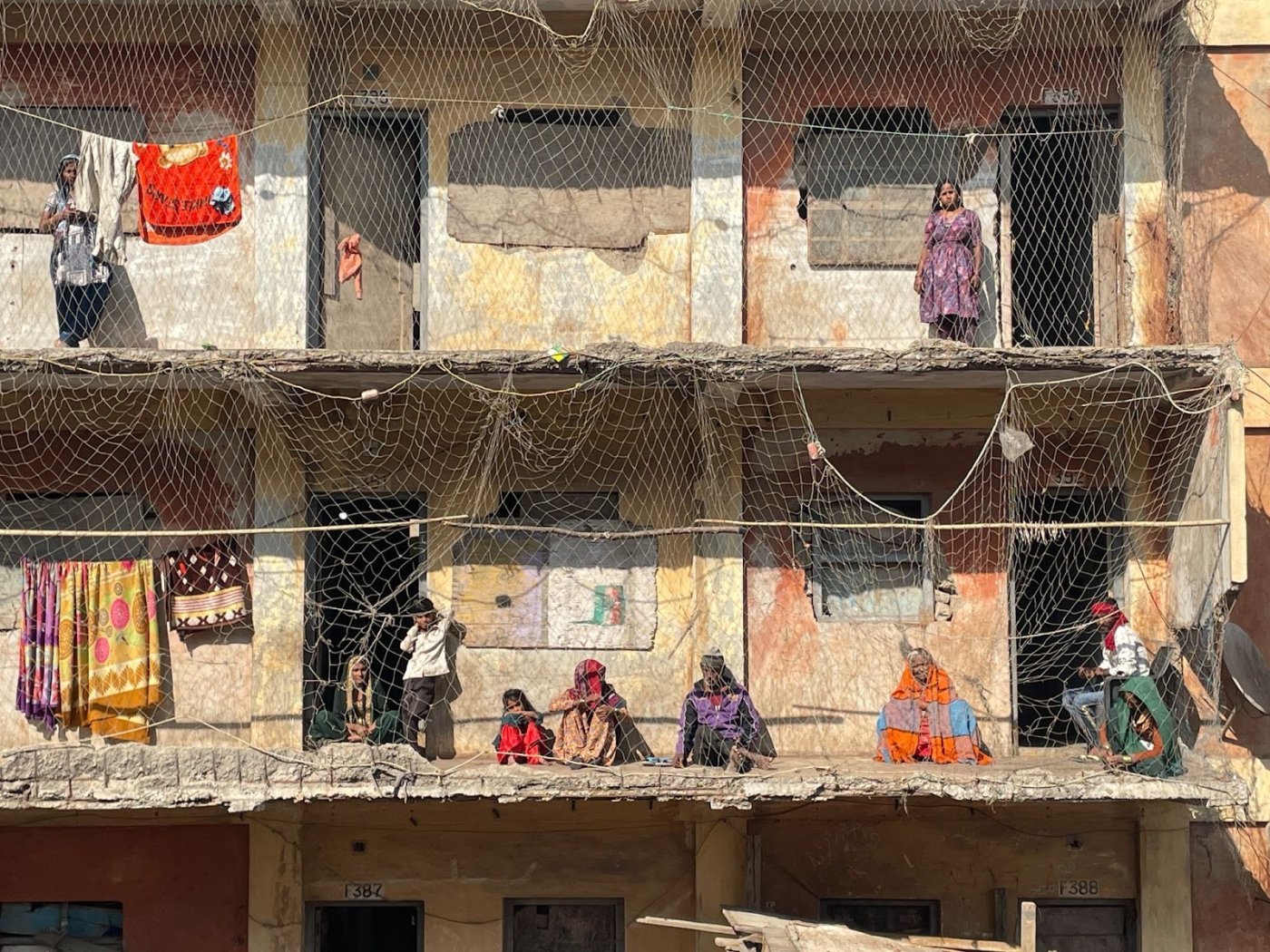
Kachchh, Gujarat: “Please don’t demolish our houses. Just drop a bomb and kill all of us.”
Hasan Koreja, 35, watched as hundreds of policemen and port authorities with construction machinery demolished houses belonging to Muslim fisherfolk in Deendayal Port, in the northwestern Gujarat port town of Kandla.
It was a rainy morning in September 2024, and Koreja, from the Muslim Wagher community that fishes in Kandla’s creek system, had been out fishing at night when he got a call about the impending demolition.
“I left nets worth Rs 3 lakh to rush home to save our children who were sleeping,” he said.
Over the next two days, backhoe excavators demolished approximately 700 houses in the New Kandla Thermal Colony.
“We were given only 5-10 minutes to gather our belongings,” said Hussain Ismail Parith, a medium-built man in his 50s. “What could we collect in five minutes? We just managed to save some food.”
All their belongings were destroyed, and the houses were reduced to heaps of rubble.
Om Prakash Dadlani, the public relations officer of the Deendayal Port Authority (DPA), said three demolition drives were conducted over the last year, vacating 137 acres of land. Article 14 visited two of these three sites where a total of approximately 1,400 houses, mostly belonging to Muslims, were demolished.
Asked why these houses were demolished, Dadlani said, “It was land owned by the port. If someone encroaches into your home, won’t you get rid of them?”
‘I Was Born Here’
The nearly 4,000 people viewed as encroachers by the port authority have lived and fished in the region for over 150 years, long before the port was built. The first jetty in Kandla was developed in 1931 by Maharao Khengarji of the princely state of Kachchh, and the British colonial government.
After India gained independence, when Karachi port passed to Pakistan, the Indian government decided to develop Kandla as a major port on the western coast.
“I was born here,” said 68-year-old Jakub Parith, “and my father worked as a labourer to build the port.” He said their families lived on the stretch of coast near what is now Oil Jetty 7, until they were relocated 4 to 5 km away when port construction picked up in the 1980s.
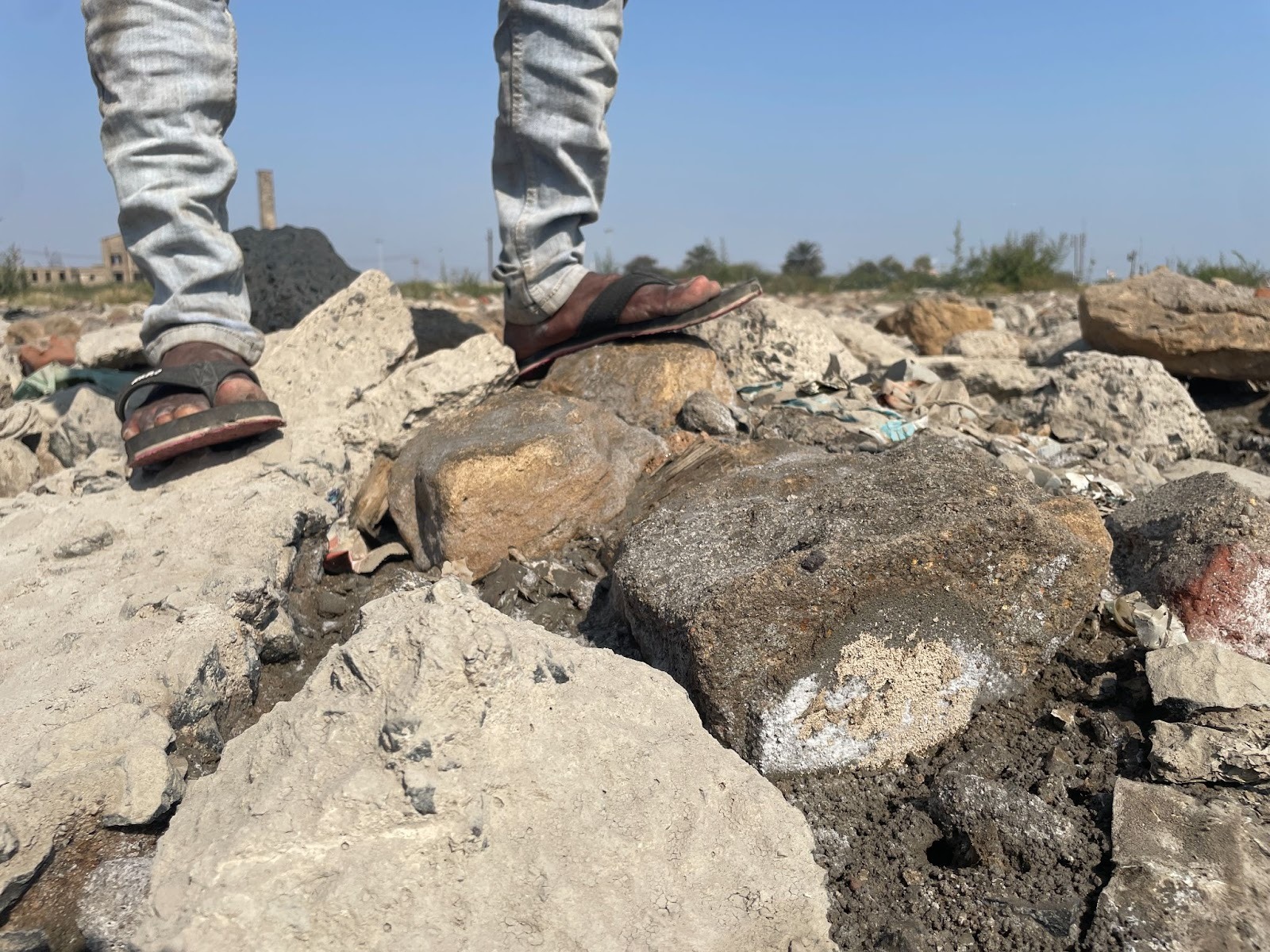
Over the decades, as the port grew and became one of India’s 12 major ports, the fishing communities found themselves caught in a never-ending cycle of displacement. Modernisation of these ports and other coastal infrastructure works form the crux of the union government’s Sagarmala project that envisions port-led economic growth to revolutionise India’s maritime sector.
As of 2025, over a quarter of the 839 projects under the programme had been completed, and the programme has now been advanced to Sagarmala 2.0.
These projects have put tremendous pressure on India's coast, threatening the displacement of coastal communities and destroying delicate coastal ecology. Terraqueous environments where land and water interact are important spaces for coastal communities, but these are now transformed by ports.
On the one hand, construction, dredging, and toxic effluents damage marine ecosystems near port areas; on the other, port infrastructure erodes coastal areas, destroying settlements.
Coastal communities that have been living on the coast for centuries generally have no formal land ownership. The commons where they live and work are considered wastelands or government-owned land.
The Coastal Regulation Zone (CRZ) notification of 1991 recognised the presence and rights of traditional coastal communities, but did not provide any socio-economic safeguards.
The CRZ notification under the Environment (Protection) Act, 1986, aims to protect fragile coastal ecosystems and regulate construction in coastal-sensitive areas. It does not define displacement of communities, prescribe compensation or mandate rehabilitation.
The CRZ has also been diluted on more than 30 occasions, aiding the Indian government’s long-standing push to capitalise the coast through development projects. In addition, the government passed the Major Ports Authority Act in 2021, giving the 12 major ports more authority over areas under their jurisdiction.
With no legal land ownership, the communities are now pushing for a new legislation to formally recognise their rights over the coast, access to the sea and its resources and their collective rights over stretches of coastal land where they have traditionally worked, in the same way that the Forest Rights Act of 2006 did for tribal communities’ rights over forest land and resources.
Ports As The Authority
Barely 10 minutes away from the Thermal Colony in Kandla is the Mitha Port colony. On Google Maps, it still looks like an active neighbourhood with rows and rows of houses, a mosque on one side and a temple on the other.
On the ground, all that is left are piles of bricks and cement. The temple, the mosque and a still-functioning school are the only reminders of the neighbourhood’s existence.
“We have been living here for more than 100 years, before the port was even there,” said Gani Harun Maman, 51. “My father studied in this school, I studied here, and so did my son and now my grandson.”
Gani opened a thick pink folder of electricity bills, land documents and old books detailing the history of Mitha Port.
“This land is not even Kandla Port’s,” he said, “It was leased to United Salt Works before Independence, by the king of Kachchh. Now, it is owned by the state government. Why is the port doing demolitions on land that does not even belong to them?”
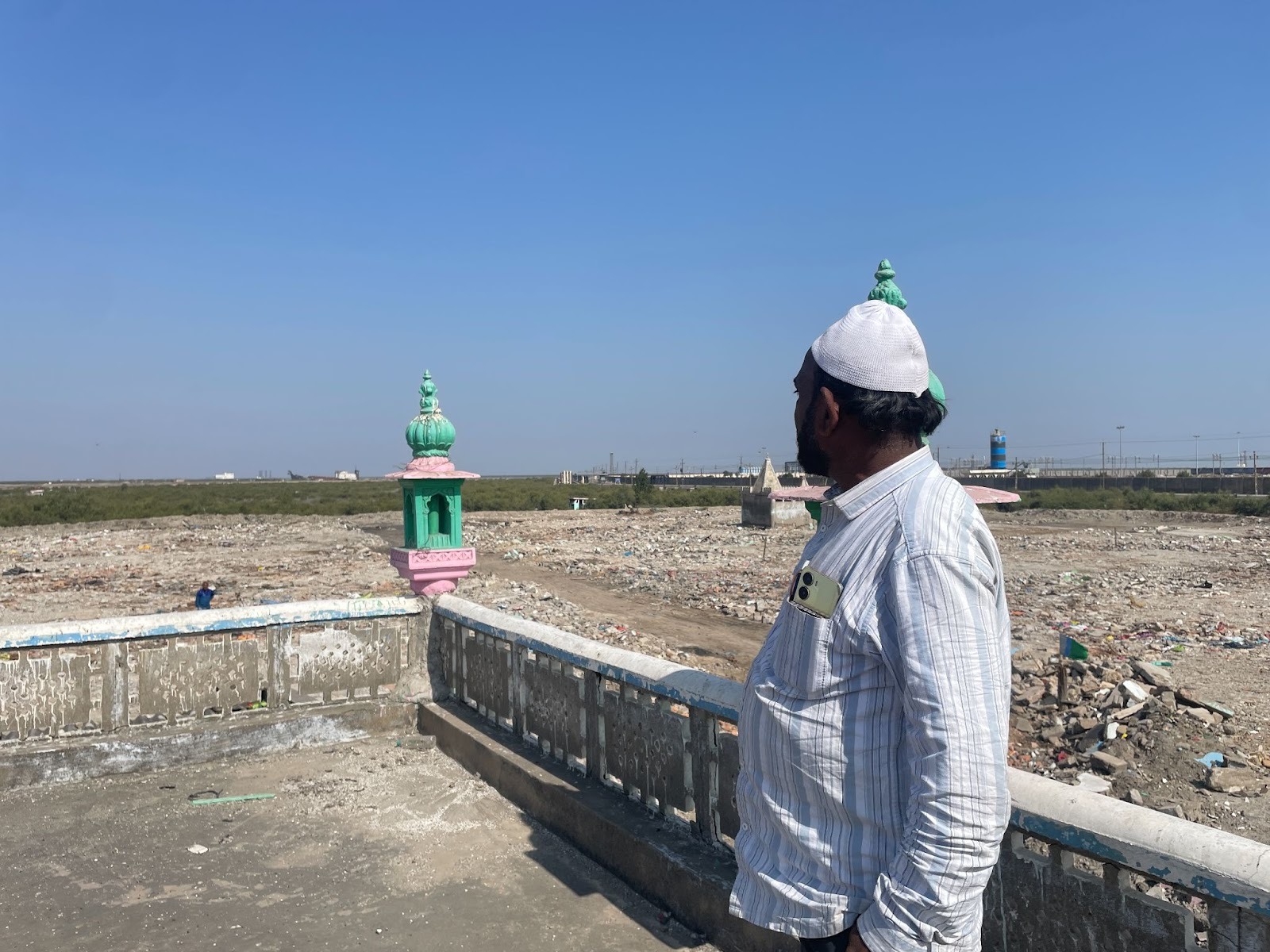
Residents of Mitha Port colony received an eviction notice in March 2025. The very next day, Gani said, they filed a case in the Gujarat High Court. A hearing was scheduled for 9 December. The day before the hearing, around 500 police personnel, with equipment from the Deendayal Port Authority, demolished the houses.
“We may have received a stay on the 9th, but they destroyed everything before the court even heard our case,” said Gani, one of the petitioners. On 9 December, the port asked the court for more time to file a reply.
Asked if the port would provide any rehabilitation or compensation to those whose houses were demolished, Dadlani, the public relations officer, said the port’s land policy does not require them to do so.
Land within the area of India’s major ports, such as Kandla, is governed by the Major Port Authorities Act of 2021, which converted port trusts into port authorities and gave them complete control over the land within their limits.
The 2021 law enables the creation of a board empowered to issue regulations governing the use of port assets, including land, without complying with municipal or government regulations. The law makes no provisions regarding displacement, resettlement or livelihood protection.
After the demolition of the New Kandla Thermal Colony, around 700 families moved into a nearby dilapidated staff quarters with broken walls and roofs, and no toilets, water supply, or electricity.
“It took us two weeks to clear out all the stones and rubbish in the rooms and to make them livable,” said 40-year-old Raima Bano Siddique. “Still, it is scary living here. A couple of times, small parts of the roof have fallen, injuring our children.”
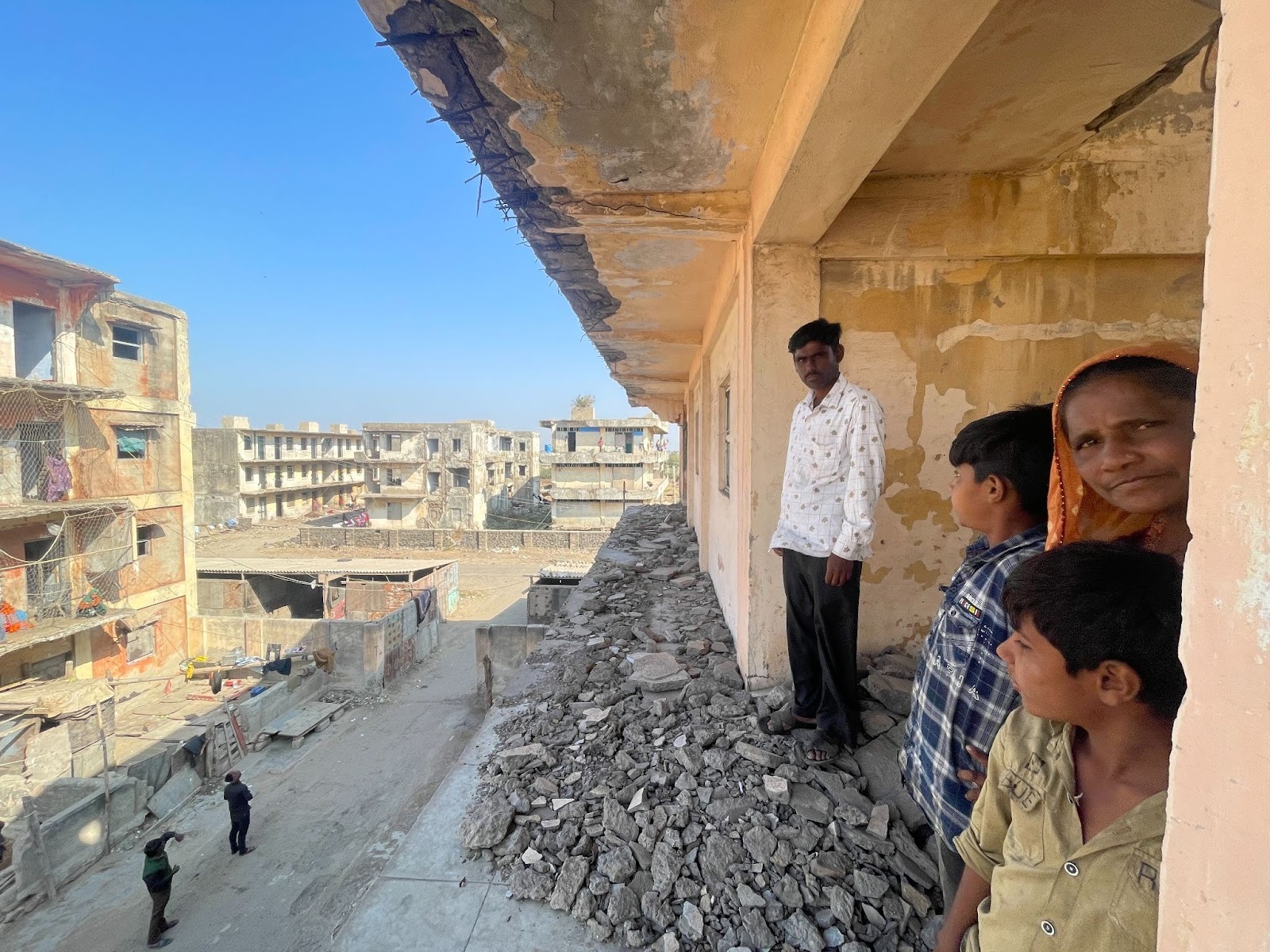
Now, these homes are set to be demolished, too. Residents heard that 26 buildings would be demolished. Eight were razed in 2025. “We don’t know when our buildings will be demolished, but it could be any day,” said 40-year-old Umar Parith.
Almost 50% (Rs 2.84 lakh crore) of the Rs 6 lakh crore cost estimation under the Sagarmala programme is for 239 port modernisation projects, of which 120 are complete. This involves constructing new ports and modernising existing ones.
Since the programme's launch in 2014, multiple legislative changes have given ports greater autonomy and authority. In 2019, an amendment to the CRZ notification removed ‘no development zones’ in port limits, allowing port activities in sensitive intertidal areas.
The 2021 legislation also allowed the port authority to lease out land for commercial or real estate purposes, without informing the public or seeking any approvals from local or state agencies.
This is part of the central government’s efforts to convert major ports into a ‘landlord’ model, in which private players take over the operational aspects of the port, while the port authority serves as a regulator and landlord. This has allowed the government to shift its focus from running ports to capitalising on coastal land.
While none of the 12 major ports is owned by private companies, the government has engaged companies in public-private partnerships for specific projects, berths, or terminals.
For example, Adani Ports and Special Economic Zone Limited (APSEZ Ltd) has operated the Tuna Tekra terminal owned by the DPA since 2015. In 2024, it signed another contract with the authority to operate a berth in the port in Kandla.
Under the Sagarmala programme, the union government prioritises such partnerships. Non-major ports, which largely fall under the purview of state maritime boards, are mostly owned by private companies. Of the 217 such ports, only 66 handle cargo, and they are seeing a surge in volume.
Almost half of the traffic in India comes to these ports, and 45% of this traffic is handled by only two ports—Sikka (owned by Reliance) and Mundra (owned by Adani)—both along the coast of the Gulf of Kachchh.
An analysis by India Infrastructure Research found that 18 new non-major ports were under construction across the coastal states in 2021.
The Economics Of Ecosensitive Land
The amount of land the DPA owns has long been a point of contention. As per the 2016 Sagarmala master plan, the total available land with the port is over 2 lakh acres, of which only 22,042 acres or 10% is “usable” land.
The rest, the plan says, is “tidal affected area”. The area depicted in the master plan as port limits includes the entire Kandla creek system and a significant portion of the gulf.
In a 2018 case before the National Green Tribunal, the port authority (then a trust) said there is no clear demarcation between port land and state government land along 100 km of the boundary between the two.
The port in Kandla is at the beginning of the north-western coast of the Gulf of Kachchh, home to 70% of Gujarat’s mangroves. The state’s mangrove ecosystem is the second-largest in the country, after the Sundarbans.
The Gulf also has 42 islands on the southern coast, 34 of which have coral reefs. This biodiverse creek system has been the source of livelihood for fishing communities and an important grazing area for the indigenous Kharai camels.
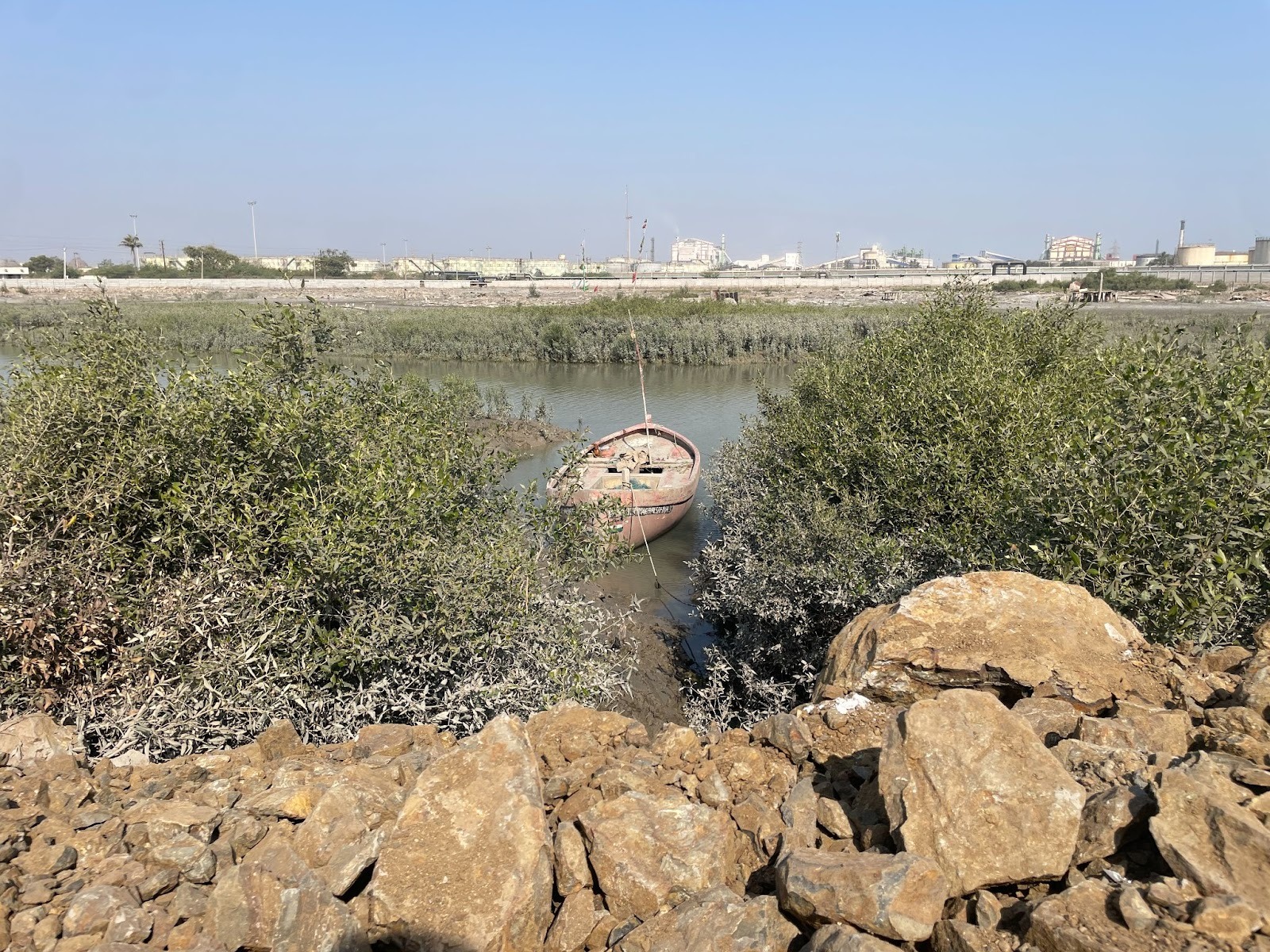
For the port, however, this land is incredibly profitable. As per its 2024-25 accounts, managing land and buildings took up 5.4% of Deendayal Port’s expenses, while the rentals from those estates accounted for 13% of its total income. A key part of this income also comes from leasing land for salt manufacturing, which it has been doing for over five decades.
The case in the NGT was filed by the Kachchh Camel Breeders Association against the destruction of mangroves by salt companies on leased port land. A sub-committee was formed in 2018 and its report said that the area, due to its mangrove cover, falls under CRZ-I, a categorisation for areas that are environmentally most critical.
The report said activities by salt companies had destroyed 750 acres of mangroves. In its order, the tribunal underscored the need to protect mangroves and to ensure the free flow of water in the creek. It directed the state’s coastal zone management authority to take immediate action in case of violation of any CRZ norms and directed the port authority to restore the mangroves.
The order remains largely unimplemented, with salt manufacturing continuing unabated, and no adequate measures have been taken to restore the mangroves.
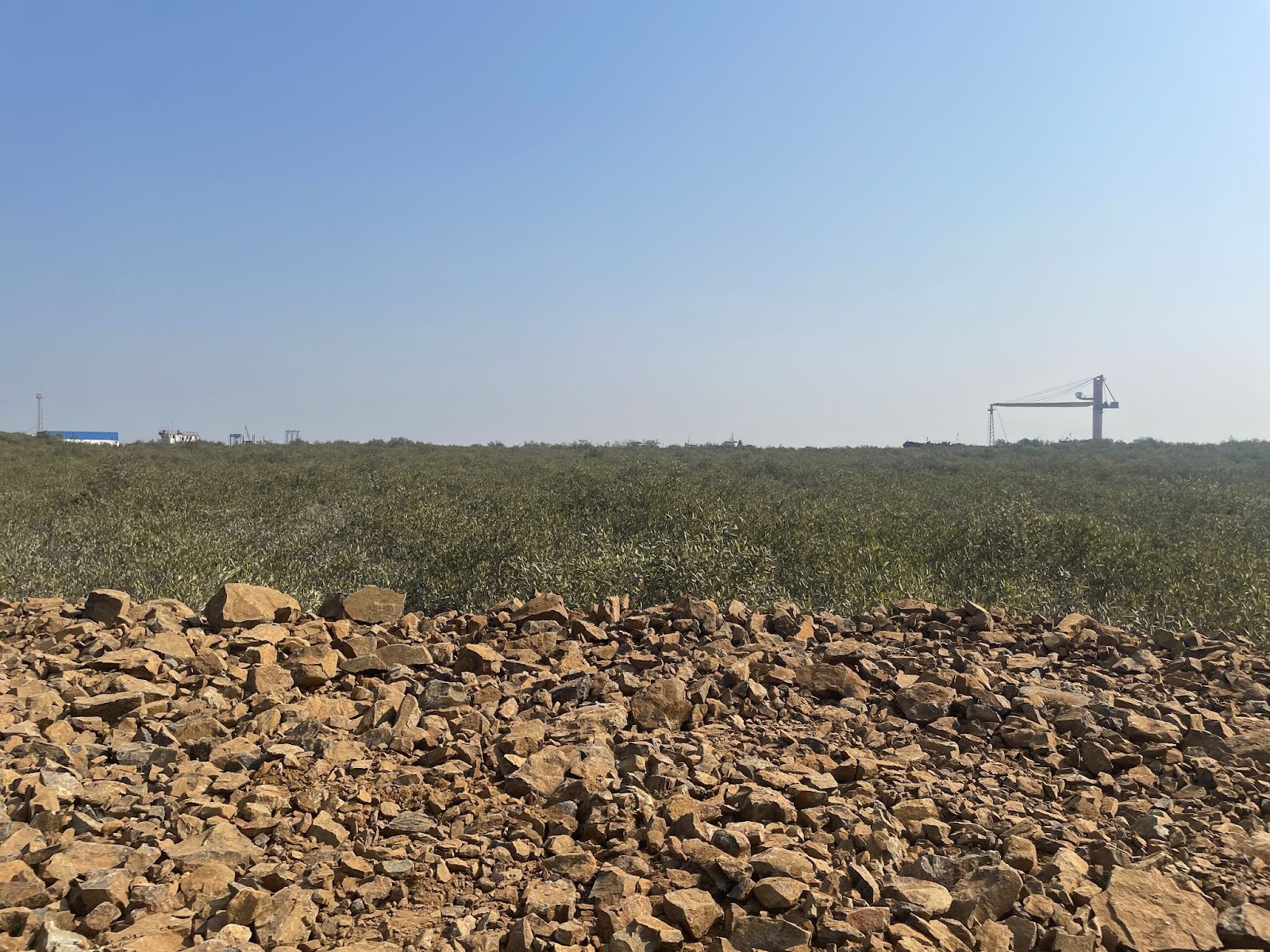
When Article 14 visited the port area, a mangrove forest next to the demolished houses of the Thermal Colony was being covered in stones. Hundreds of mangrove trees were being buried to reclaim and flatten the marshy land.
We have sought a response from the port’s public relations officer about this reclamation. We will update the story when we receive one.
The Demand For A Coastal Rights Act
In Thermal Colony, the demolition did not just displace the community but also destroyed their livelihood, tide-dependent fishing. The fishers would venture into the creeks when the tide was high and return in a few hours with their catch. On average, families earned around Rs 50,000 per month.
Since the demolition, fishing activities have come to a complete stop because the state’s fisheries department has stopped issuing permission tokens. “They have stopped giving us tokens for over a year now,” said Hussain. Until then, the fisherfolk had to upload copies of their Aadhaar card, Marine Fishers Card, boat documents, and bank passbook on an online portal to apply for an eight-day permit.
“We had to stop issuing tokens because that centre was denotified,” said Sangeeta Bharadiya, assistant director of fisheries, Bhuj. “There was some issue because it was the Deendayal Port’s land, so the state government denotified three centres in the area. No one can fish there now.”
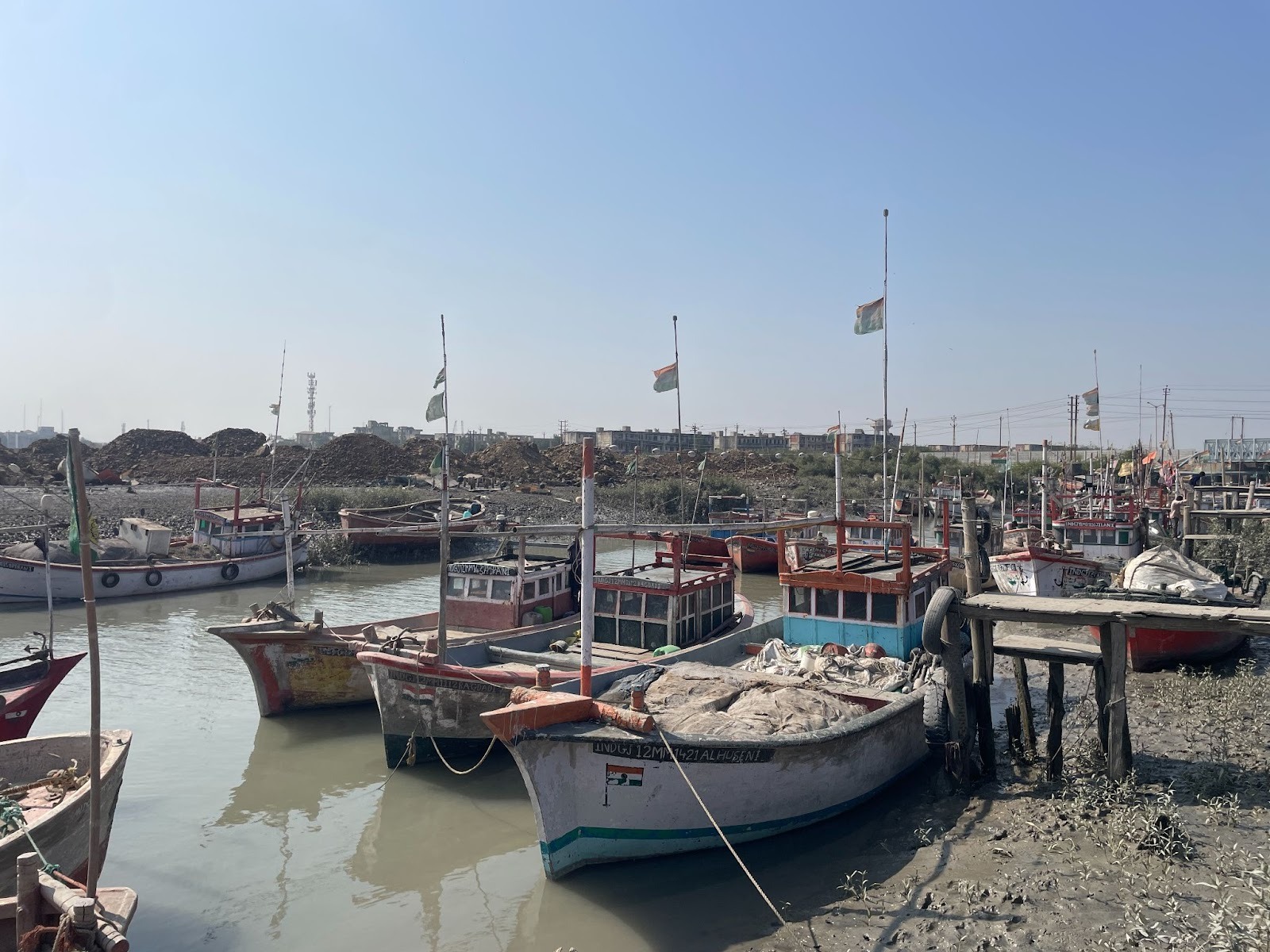
A couple of times, Hasan Koreja tried to fish at night, evading the police, so that he could feed his children. “... but they caught me and asked me to pay a Rs 2,000 fine,” Koreja said. “I don’t have money to buy food, how am I supposed to get money for a fine?”
With growing alienation from the land and coastal resources that sustain their livelihoods, coastal communities across the country are coming together to push for a Coastal Rights Act, modelled on the Forest Rights Act of 2006. The National Fishworkers Forum has been conducting state-level consultations in coastal states to understand fishers' demands and develop a comprehensive list of demands.
The demand is not a new one, said Siddharth Chakravarthy, fisheries researcher and a council member of the National Platform for Small-Scale Fishworkers. Chakravarthy said the demand arises from the simultaneous dilution of coastal protection laws and the pushing of large development projects along the coast.
The CRZ notification, the only legislation that addresses coastal protection, delineates land within 500 metres of the High Tide Line into zones, restricting and regulating specific activities within each zone. In 1996, the Supreme Court, while hearing a public interest litigation against shrimp aquaculture, said that the right of the fisherfolk and farmers living in the coastal areas to make a living cannot be denied to them.
Soon after, successive governments diluted the CRZ. Between 1991 and 2006, there were over 25 dilutions to the notification. In 2005, the government established the MS Swaminathan Committee to review the notification and tried to replace the CRZ with a Coastal Management Zone (CMZ) notification.
That proposed notification prompted massive rallies and protests by fishing communities. In 2009, the environment ministry conducted consultations with community members to strengthen the CRZ of 1991. This was when the implementation of the Forests Rights Act had begun. Community members seized the moment to support the idea of a similar coastal rights law.
A draft bill was written in 2009, but it received little support from within the community or the government.
The progress of the Sagarmala project, the repeated dilution of CRZ norms and the sidelining of democratic processes have resurfaced the demand, said Chakravarthy.
“It has come back in a new language, with a new framing and responding to the new economic processes that are happening,” he said. “Ports and displacement of fisher-people from that kind of coastal development has become a big aspect.”
Seeking An Ideal CRA
Struggles by India’s fishing communities since the 1980s have led to several policy changes, including seasonal bans on fishing and the CRZ notification.
However, the communities’ rights over the coastal land where they live and work have remained unaddressed, said Ujwala Patil, a leader of the Maharashtra Macchimar Kruti Samiti and a member of the executive committee of the National Fishworkers Forum, both unions of fishing communities.
“I have seen how communities displaced due to the expansion of the port in Mumbai are still struggling to survive, three decades later,” Patil said.
“With more of these projects being announced, we will see a similar fate for coastal communities everywhere. Hence, we are demanding a law that will formalise our rights on the sea and the coast and give us titles over the land.”
The demand is for legislation that recognises the rights of coastal communities, like the Scheduled Tribes and Other Traditional Forest Dwellers (Recognition of Forest Rights) Act, 2006 did for India’s forest-dwelling indigenous communities. Drafting the law, however, has proved to be challenging.
Unlike the FRA, a coastal rights act would have a land and a sea element, with no clear demarcation of what a homestead and a workplace look like, as these may all overlap in one area, said Chakravarthy.
Moreover, one cannot define the coast as a specific type of land, said Sridhar Raghavan, a doctoral research scholar at IIT Delhi. “Under the FRA, forest is defined as any land that is owned by the forest department,” said Raghavan. “The coast does not have any such simple categorisation.”
Some coastal land is owned by the state government as revenue land, and other stretches may be categorised as wasteland. “Each state has a different categorisation of revenue land. This is the complexity with the CRA,” said Raghavan.
One of the main reasons why the 2009 draft bill did not receive popular support was the way it defined fishers. It limited its scope to “traditional fishers” who use traditional boats and non-mechanised gear, and to those involved in traditional fish processing work.
This definition was criticised as limiting, as even within a single village people use a range of craft and gear along a gradient of mechanisation. One set of fishers may shift between different kinds of fishing and equipment too.
Over time, greater clarity has emerged in defining the community, said Raghavan. “These communities derive their identity from the coastal and ocean ecology, and that sense of belonging has to be recognised,” he said.
Each section of the coast has features suitable for specific kinds of fishing. For example, all the fishers in Kandla have smaller motorised boats that can only navigate creeks.
As a solution for the displaced fisherfolk, the port authorities suggested that they move to the coastline in Kukadsar, around 100 km away. The coast there, however, has no creek system, and the fishers said their boats would not be able to handle the strong winds and waves of the open Gulf.
The CRA has to be drafted with these nuances of interaction with the coast in mind, said Jones T Spartegus, a doctoral researcher.
“The coast has a multi-diverse ecology that includes multi-diverse people,” said Spartegus. “We are asking for a law to protect this coastal ecology—this land and water ecology.”
(Shreya Raman is an independent journalist and currently a resident at the Climate Change Media Hub at the Asian College of Journalism.)
Get exclusive access to new databases, expert analyses, weekly newsletters, book excerpts and new ideas on democracy, law and society in India. Subscribe to Article 14.