
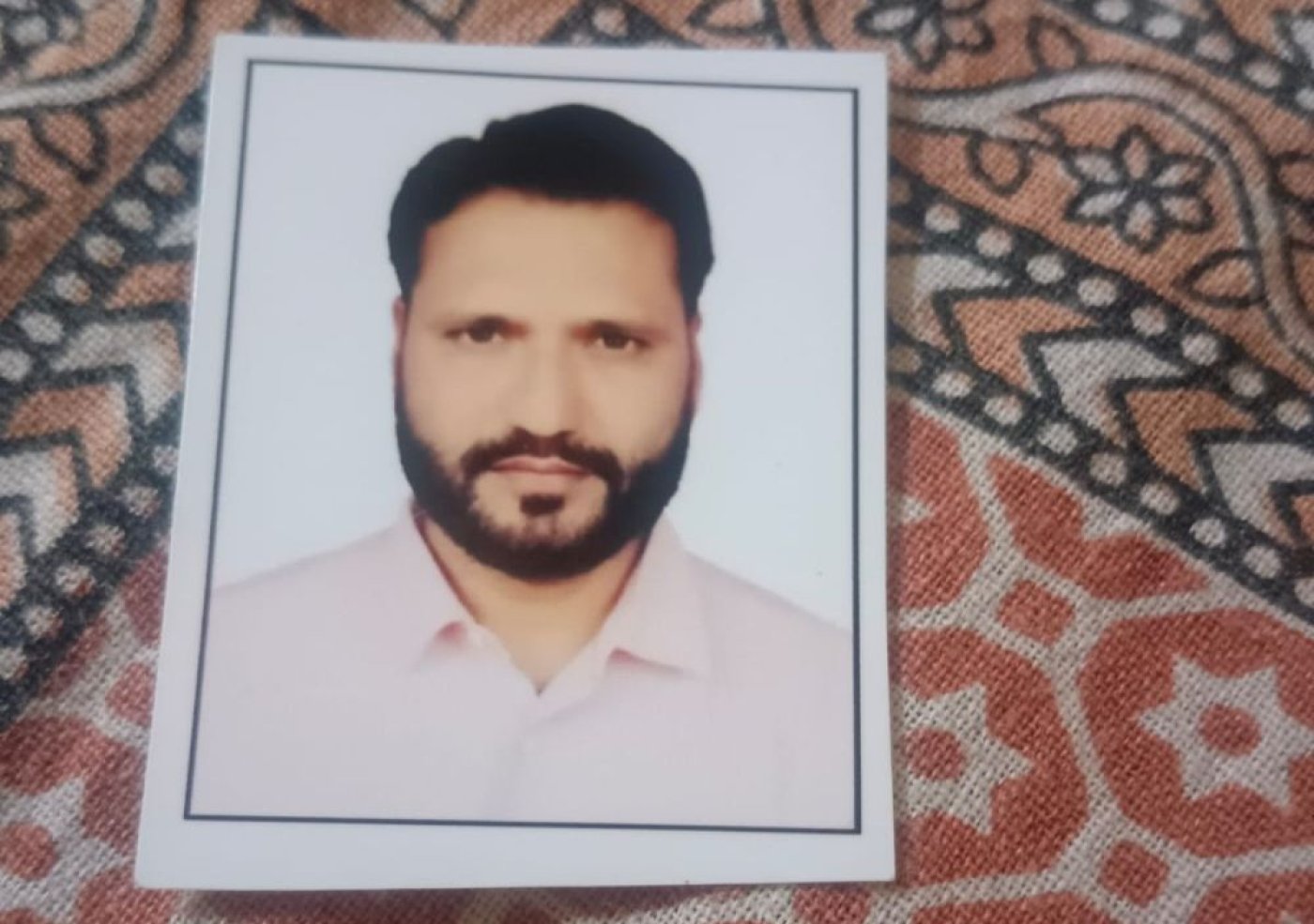
New Delhi: A coerced confession. A false claim of video evidence. A 54-day wait to arrest a riot “mastermind”. Phone messages, never retrieved, with an unnamed “boss” as proof of conspiracy.
These were some of the grounds on which the Supreme Court struck down a 351-day preventive detention—under a law that allows no bail—of a man the police accused of being the “principal architect” of riots in the western Uttar Pradesh (UP) town of Sambhal in November 2024.
Yet Afroz, a property dealer and businessman whom the Allahabad High Court previously noted regularly paid income tax, spent 585 days in jail before being released late on the night of 29 September from the Moradabad district jail.
In quashing Mulla Afroz's detention under the National Security Act (NSA) 1980, the Supreme Court on 29 September 2026 found the detention order “not preventive but punitive” and said the police used the NSA “to subvert the orders granting bail”. The Allahabad High Court previously noted that Afroz was a property dealer and businessman who regularly paid income tax.
The Allahabad High Court initially granted regular bail to Mulla Afroz on 9 September 2025, in one of the primary cases linked to the Sambhal violence. Exactly 34 days later, on 13 October 2025, the Sambhal district magistrate invoked the NSA to keep him detained without trial.
Although Afroz secured regular bail in all six criminal cases by June 2026, he remained imprisoned solely because of the preventive detention order.
A Supreme Court bench of Justices Dipankar Datta and Sheel Nagu imposed costs of Rs 10 lakh on the state of UP because he had “suffered considerable loss of liberty”. It ordered payment to Afroz within a month.
The Court also said that the UP government could not pass an NSA detention order based on an extra-judicial confession extracted while Afroz was in police custody, sending a message to officials who routinely treat preventive detention as an instrument for indefinite incarceration.
In July 2023, an Article 14 investigation of nine years of data found that NSA detenus spent 314 days or 76% of their maximum detention period of a year, in jail before hearings were completed in the Allahabad High Court.
The investigation found that even those whose cases were quashed spent an average of 306 days in jail. Afroz’s detention before release exceeded that figure. These detentions, along with arrests and incarceration by the police after criminal complaints, offences, or mere suspicion, almost—if not completely—frustrated an important legal check: the habeas corpus (literally, produce the body) petition.
Afroz had already spent 269 days in jail, and then the NSA was imposed, adding 351 days he spent under NSA detention—for a case that the Supreme Court said was “resting upon such irrelevant allegations”.
The Genesis
Afroz’s case traces back to the violence that broke out in Sambhal on 24 November 2024, after a court-ordered survey of the historic Shahi Jama Masjid mosque.
Following protests by local Muslims, violence erupted amid an internet shutdown. At least four people were reportedly killed, with their families alleging police firing. Police then cracked down, and at least six FIRs were registered against Afroz.
Yet Afroz was not named in the first FIR, Case Crime No. 333 of 2024, registered on 24 November after the deaths. The Supreme Court noted that he was arrested only 54 days later, on 17 January 2025, and was subsequently taken into custody in connection with the other FIRs.
Afroz’s lawyers said he was kept in “illegal custody” between 17 and 18 January, subjected to custodial torture and forced to make an extra-judicial confession before the police. His petition argued that until then there was “no direct, circumstantial or electronic evidence against the Petitioner”.
The Allahabad High Court granted Afroz regular bail on 9 September 2025. Exactly 34 days later, on 13 October 2025, while he remained in judicial custody in the other cases, the Sambhal district magistrate invoked section 3(2) of the NSA to detain him preventively on the ground that his detention was necessary to prevent him from acting in a manner “prejudicial to the security of the State or the maintenance of public order”.
The Advisory Board subsequently upheld the detention, and the state government confirmed it on 28 November 2025 for a further 12 months. By June 2026, Afroz had secured bail in all six criminal cases, but remained in prison under the NSA.
Afroz’s lawyers, Vikas Srivastava and Chandan Srivastava, then filed a habeas corpus petition before the Allahabad High Court. They argued, among other things, that the detention order and grounds of detention had not been properly served on Afroz, violating Article 22(5) of the Constitution and section 8 of the NSA, which require the grounds of preventive detention to be communicated to the detainee and an opportunity provided to challenge them.
The high court dismissed the petition on 8 June 2026, holding that the detaining authority’s “subjective satisfaction” was justified and that it had supplied the relevant documents and grounds of detention.
Afroz then appealed to the Supreme Court.
In its 29 September 2026 judgment, the Supreme Court overturned that decision, finding that the detention was illegally exercised.
Confessions Not Enough To Detain
The judgment opened not with the facts but with an in memoriam for the Court’s law clerk, Ritwik Deswal, who died four days before his 27th birthday. The unusual and moving passage sets the tone for what follows: a judgment acutely conscious of the human cost of incarceration.
In quashing the NSA detention order, the Supreme Court did more than grant relief to Afroz. It settled an important question of law: whether a confessional statement made to the police could, by itself, provide the basis for preventive detention. In doing so, it overruled a full bench decision of the Madras High Court that had answered the question in the affirmative.
The Court examined its own earlier decisions in Aruna Kumari vs Govt. of A.P. (1988) and Senthamilselvi vs State of T.N. (2006), which appeared to support the use of confessional statements in preventive detention proceedings.
But neither case had directly considered whether a detention order could be based on a confession. So, the Court held that the observations concerning confessions were obiter dicta—observations not necessary to decide those cases—and not the ratio decidendi, or binding reason for the decisions. They could not be treated as authority for the proposition that a confessional statement could itself sustain preventive detention.
The Court also overruled the Madras High Court's full-bench decision in Suman v. State (1986), which held that confessions made to the police could be considered relevant material for preventive detention.
Afroz had consistently maintained before both the high court and the Supreme Court that he had been tortured and threatened with death, and that his confession was extracted under that compulsion.
The Supreme Court noted that the state authorities had not refuted this allegation in their reply affidavit, nor provided a satisfactory answer in their written submissions. The confession, therefore, could not be treated as voluntary.
The bench then examined section 23 of the Bharatiya Sakshya Adhiniyam, the successor to section 25 of the former Indian Evidence Act, which bars confessions made to a police officer or while in police custody as evidence against an accused.
Read alongside Article 20(3) of the Constitution, which protects against self-incrimination, the Court reasoned that if criminal law treats a police confession as inherently suspect for determining guilt, an even higher degree of scrutiny is required before using the same statement to justify detention without trial.
The Court therefore held that a confessional statement made before a police officer cannot, by itself and without independent material supporting it, form the basis of preventive detention.
“To permit such a course,” the Court said, “would be to allow a detention order to rest upon a foundation which the law itself regards with suspicion and excludes from evidentiary consideration.”
Evidentiary Failures
The confessional statement was not the only ground on which the Supreme Court quashed Afroz’s NSA detention. It examined the independent material cited by the state and found it either unavailable on the record or too flimsy to sustain the required satisfaction for preventive detention.
The detention order described CCTV footage and video recordings as the “sheet anchor” of the case. The state claimed that the footage identified 95 accused persons and established Afroz as the principal architect of the riots. Yet none of the CCTV footage or recordings formed part of the 22 documents the detaining authority relied upon. They were neither supplied to Afroz nor produced before the Allahabad High Court or the Supreme Court.
The Court held that reliance on material that was neither supplied to the detenu nor disclosed to any court could not be sustained. It also questioned why, if the recordings so clearly identified Afroz as the “mastermind” of the violence on 24 November 2024, the investigating authorities had waited 54 days to arrest him. The UP authorities offered no satisfactory explanation.
The material concerning Afroz’s mobile-phone communications presented another contradiction. The detention order cited messages between Afroz and an unnamed person identified as “boss” as evidence of a criminal conspiracy. But the same order stated that Afroz had erased all data from his recovered phone and that the messages had not been retrieved.
The source of the alleged communications was therefore unexplained. The Court found that the contradiction raised “serious doubts regarding the very existence of the material”.
The detaining authority’s reliance on the chargesheet as “confirming” Afroz’s involvement also failed to withstand scrutiny. A chargesheet records the investigating agency’s conclusion that there is sufficient material to prosecute; it is not a finding of guilt. The Court found the state’s reasoning—that the chargesheet confirmed Afroz’s participation in the violence— as one which failed to “furnish a cogent ground”.
Punishment By Preventive Detention
The Supreme Court’s other significant finding concerned the relationship between Afroz’s NSA detention and the bail orders that preceded and followed it.
Afroz was granted bail in Case Crime No. 340 of 2024 on 9 September 2025, more than a month before the NSA order was passed on 13 October. By June 2026, he had secured bail in all six criminal cases but remained in custody under the NSA.
Drawing on Vijay Narain Singh vs State of Bihar (1984) and Annu @ Aniket vs Union of India (2025), the Court held that the detention was “not preventive but punitive” and that the NSA had been used to “subvert the orders granting bail”.
The Court found that the effect was to use preventive detention to keep Afroz imprisoned after ordinary criminal courts had granted him liberty. Preventive detention, an extraordinary power intended to prevent future harm, had instead become a means of continuing his incarceration.
The Court’s concern echoes its observations in Ameena Begum vs State of Telangana (2023), where it said preventive detention was “conceived as an extraordinary measure by the Framers of our Constitution” but had “been rendered ordinary with its reckless invocation over the years”.
The Court also imposed costs of ₹10 lakh on the state of Uttar Pradesh, payable to Afroz within a month, noting that he had “suffered considerable loss of liberty” despite having secured bail in every criminal case arising from the Sambhal violence.
The timing made the finding particularly significant. Afroz had spent almost the entire 12-month period of NSA detention in prison by the time the Supreme Court quashed the order. The Rs 10-lakh payment therefore came alongside the Court’s finding that his liberty had been substantially lost under a legally unsustainable order.
(Sabah Gurmat is an independent journalist and writer based in New Delhi.)
Get exclusive access to new databases, expert analyses, weekly newsletters, book excerpts and new ideas on democracy, law and society in India. Subscribe to Article 14.