
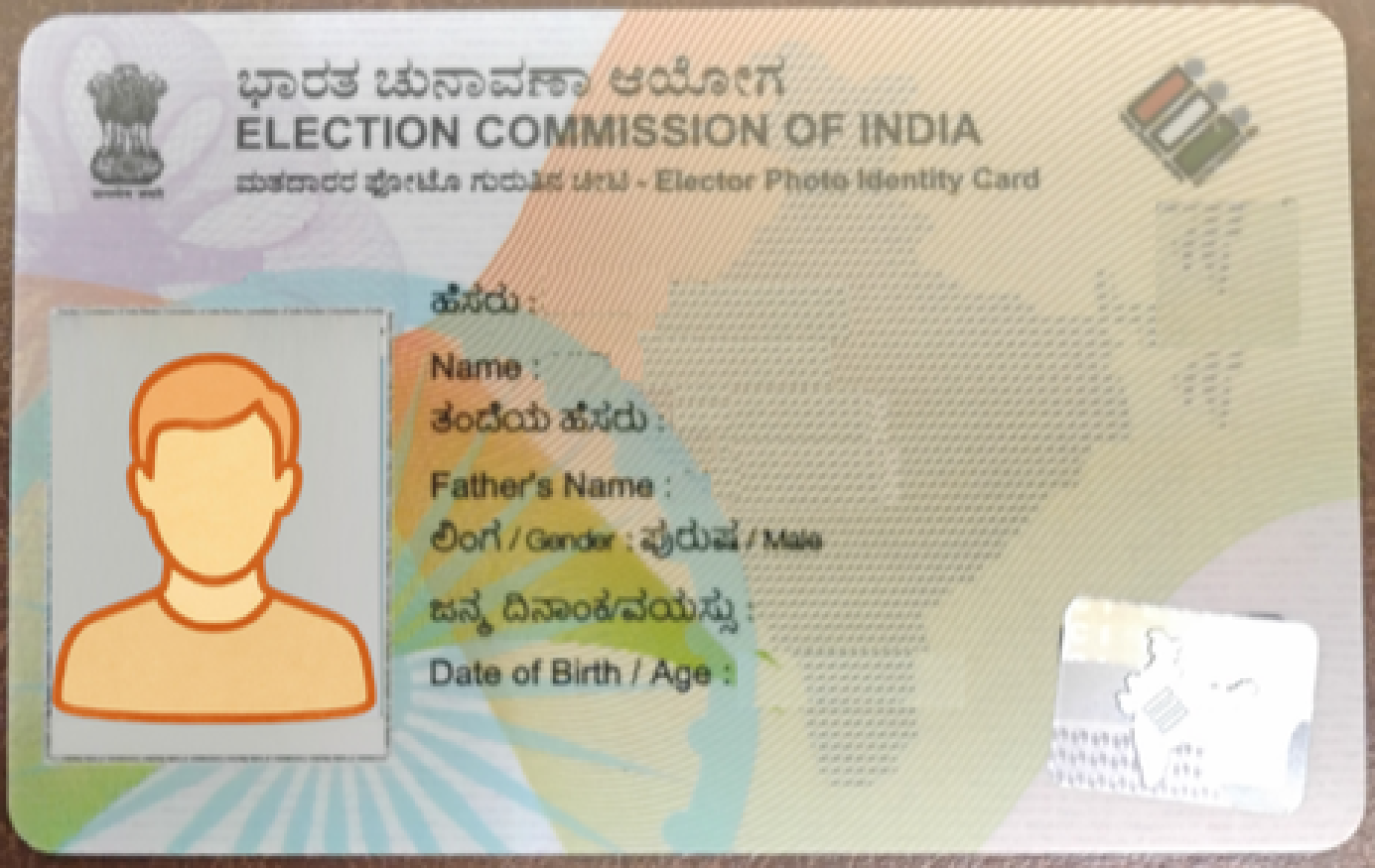
Bengaluru: Every year, thousands of single mothers in India sit across a desk from a government official, facing the same problem.
The form in front of them has a column for the father's name.
They leave it blank or explain that there is no father in the picture. And then the trouble begins—questions, delays, rejections, repeat visits.
In 2015, the Supreme Court of India ruled in ABC vs State (NCT of Delhi) that an unwed mother could be recognised as the sole legal guardian of her child without disclosing the father's identity. In February 2026, the Bombay High Court extended that logic to school records.
The law, in other words, has moved on. The forms have not.
A child without proper documents cannot enrol in school, cannot access government health schemes or apply for scholarships. For single mothers already struggling financially, every extra trip to a government office means lost wages and lost time.
The numbers give a sense of the scale. Female-headed households make up nearly 11% of all households in India, according to the National Sample Survey. These are among the poorest and most vulnerable households in the country.
Adding a documentation barrier on top of that is not a small inconvenience—it cuts families off from the very schemes designed to help them.
India's courts have stepped in, case by case, but court victories only help one family at a time. The forms remain unchanged.
In The Name Of The Father
India has no single law that demands a father's name on every document.
In practice, the requirement appears across almost every record that matters. India had over 13 million single-mother households according to a 2019 report by the United Nations agency, UN Women—a number that has only grown since.
For most of them, routine paperwork carries an extra burden.
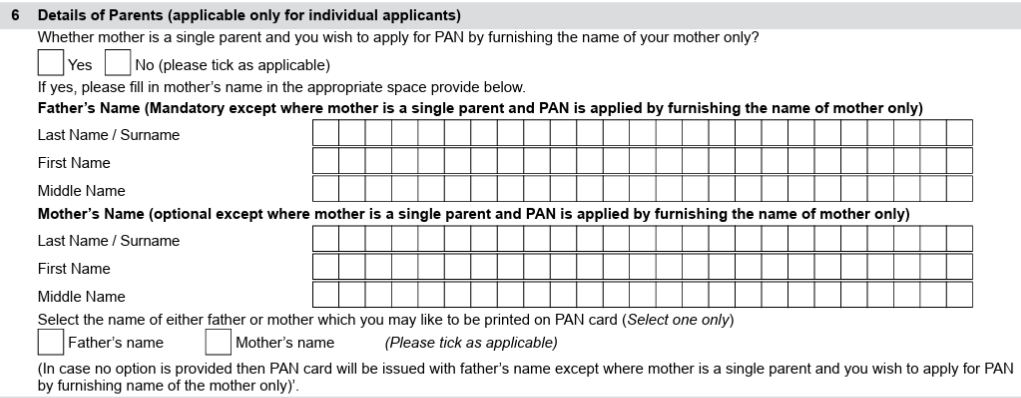
A PAN card application requires the filling out of form 49A, which demands the father's name for applicants, with a narrow exception only for those whose mother is a single parent.
Passport rules were amended in 2016 to require only one parent's name—father, mother or legal guardian. Yet single mothers still report being informally asked for the father's name at Passport Seva Kendras, despite the legal change.
Birth certificates, though governed by state rules under the Registration of Births and Deaths Act, 1969, have traditionally expected the father's name, and officials on the ground often treat expectation as a requirement.
The problem extends to birth registration, too. In 2021, the Kerala High Court ruled that requiring a single mother who conceived through IVF to provide a father's name on the birth registration form violated her fundamental rights of privacy, liberty and dignity.
The court directed the Kerala government to create separate birth registration forms for single mothers—forms that do not contain any field for the father's name.
School and board examination records follow the same logic. Registration forms for matriculation and board certificates routinely require the father's name, with the mother's treated as supplementary.
Property documents and bank account procedures list the father's name as a primary identifier in legal registration.
Some change is visible at the edges.
Maharashtra has moved toward placing the mother's name first across revenue and education documents for children born after May 2024. But that is one state, one year.
When A Form Becomes A Problem
Documented cases are difficult to find—not because the problem is rare, but because most women navigate these obstacles quietly. Friction occurs at a clerk's desk or a school admissions counter. It leaves no paper trail and rarely reaches a courtroom.
What reaches the courts tells its own story. In ABC vs State, the Supreme Court noted that forcing an unwed mother to disclose the father's identity caused her significant hardship—serious enough that lower courts had put her through multiple rounds of litigation before the matter was settled.
The woman in that case had the resources and determination to fight all the way to the Supreme Court. Most women do not.
The Bombay High Court case decided in February 2026 makes the stakes even clearer. The petitioner was a rape survivor from Beed district, Maharashtra. Her daughter—now 12 years old—had her biological father's name, surname and caste recorded in her school documents.
The father, identified through DNA testing as the accused in the sexual assault case, had no role in the child's life. A 2022 settlement had granted the mother permanent and exclusive custody.
Yet when the mother approached school authorities to correct her daughter's records, she was turned away.
The school cited rule 26.4 of the Maharashtra Secondary School Code, which permits corrections only for 'obvious mistakes'—a provision the Bombay High Court ruled applied directly to this case, where a rape survivor's child had been recorded under her abuser's name.
This is the nature of the problem. It does not generate statistics. A mother who is turned away at a school admission counter, or who makes four trips to a government office to complete paperwork that should have taken one, does not file a report.
She absorbs the cost—in time, in money and in dignity.
What The Courts Have Said
The clearest early legal intervention came in 2015. In ABC vs State, the Supreme Court was hearing the case of a single Christian woman who wanted to be recognised as the sole guardian of her child without revealing the father's identity.
Lower courts had insisted the father must be notified. The Supreme Court disagreed.
The court held that an unwed mother is the natural guardian of her child and that compelling her to disclose the father's identity violated her right to privacy and dignity under Article 21 of the Constitution.
Denying her guardianship without that disclosure was also a breach of her right to equality under Article 14. The judgment was unambiguous: a mother's fundamental rights cannot depend on naming a man.
More than a decade later, courts are still making the same argument.
On 2 February 2026, a division bench of Justices Vibha Kankanwadi and Hiten Venegavkar of the Bombay High Court's Aurangabad bench ruled in XYZ (Minor) & Anr. vs State of Maharashtra & Ors that a child raised solely by a mother cannot be compelled to carry the absent father's name, surname or caste in school records.
The court directed school authorities to update the 12-year-old's records to reflect her mother's name, surname and caste.
Taken together, these rulings establish a clear legal position: A mother is a complete legal identity. A child's citizenship does not require a father's name.
Gap Between Law & Bureaucracy
The courts have done their part. The bureaucracy has not.
The Delhi High Court held that a father's name cannot be insisted upon in passport applications for children of single mothers—yet the standard passport application form continues to list the father's name as the primary field.
The Supreme Court established in 2015 that a mother is a complete legal guardian—yet the PAN card form still treats the father's name as mandatory, with the single-parent exception buried in a footnote.
CBSE board examination registration forms continue to require the father's name as a default field.
These forms are owned by specific institutions—the ministry of external affairs, the income tax department, the Central Board of Secondary Education—each of which would need to actively decide to change them.
That decision requires political will, administrative effort and a recognition that the current design causes harm. So far, that recognition has not translated into action at the institutional level.
Maharashtra's 2024 move to allow a mother's name as primary identifier in school records shows that change is possible when a government chooses to act.
The Bombay High Court's February 2026 ruling reinforces it. But both remain islands—one state, specific categories of documents—while the union government forms stay untouched.
Children Who Turn Invisible
A child's documents are not bureaucratic formality. They are the entry point to almost everything the state offers—school admission, government-run national health insurance, mid-day meal schemes, scholarship applications, and bank accounts under a prime ministerial scheme.
Without them, a child does not officially exist in the systems designed to support them.
When those documents require a father's name that cannot or will not be provided, the delay is not merely inconvenient. Each visit to a government office that ends without resolution is a day a parent loses from work. Each form returned incomplete is another week a child waits to start school.
For families with the fewest resources, that friction compounds quickly.
The children most affected are often already the most vulnerable—those in female-headed households, which account for nearly 11% of all households in India, according to Census 2011.
The 12-year-old girl in the Bombay High Court case had to go to the High Court to correct a school record. Most children in her situation do not have that option.
Why This Still Matters
A column on a form seems like a small thing. But a column that assumes every child has a father who can be named—and that a child's identity flows from that name—is not a neutral administrative choice.
That column is a statement about who the state recognises as a complete person and who it does not.
India's courts have spent a decade establishing that a mother is a complete legal identity. That a child does not need a father's name to exist in law. That privacy, dignity and equality under Articles 14 and 21 are not conditional on family structure.
Until the forms catch up, the State is asking single mothers and their children to prove—every time they sit across a government desk—that their family is real enough to be counted.
(Preeti Singh is a writer and data analyst based in Bengaluru.)
Get exclusive access to new databases, expert analyses, weekly newsletters, book excerpts and new ideas on democracy, law and society in India. Subscribe to Article 14.