
Delhi: If you're a Muslim living in India right now, this month so far must feel like a grinding down of your dignity and safety.
A police officer was transferred for saying “Inshallah”, two journalists were allegedly beaten in a South Delhi police station, and the attack intensified after the cops realised they were Muslim, a century-old mosque in Uttar Pradesh was razed within days of a court ruling, a YouTuber criticising the chief minister for the demolition was slapped with a criminal case, Muslim homes were demolished in Assam, Muslim officers were allegedly excluded from official events, and Bengali-speaking Muslims are continuously picked up and deported to Bangladesh despite evidence of them being Indian.
None of this is surprising given how deeply entrenched Islamophobia has become since 2014. There was a time when Hindu mobs lynched Muslims so routinely that the newspapers couldn't keep up, eventually growing tired of reporting them entirely. Violence, vilification, social shunning, economic boycotts, and the weaponisation of the law to terrorise a community have all been thoroughly normalised.
Yet, even after this relentless descent since Mohammad Akhlaq’s lynching in 2015, and knowing how grim the reality is, it was still jarring to witness it all piling up together in a fortnight.
From a police station to the borderlands, the message sent to India's largest minority is unmistakable: citizenship, dignity, and professional standing remain deeply precarious.
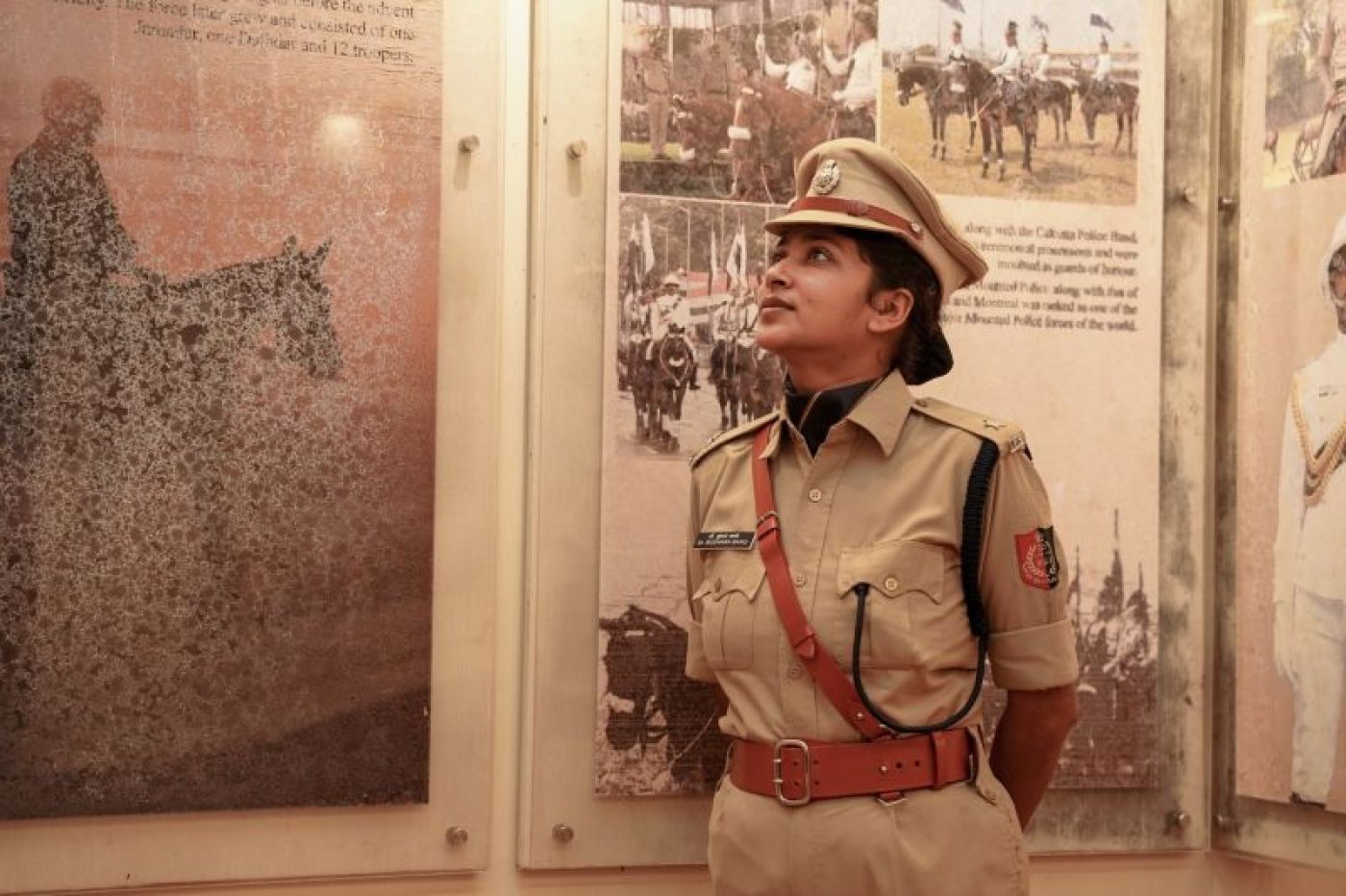
Take the case of Bushra Bano, an IPS officer in West Bengal who was transferred from her post as additional superintendent of police in Kharagpur to deputy commandant of the 4th battalion of the state armed police after a complaint by a right-wing group.
Officer Bushra’s crime? In a motivational video encouraging students from underprivileged backgrounds to try out for the civil services, she used common Arabic phrases like “Inshallah”, “Assalamu Alaikum” and “Jazakallah.”
“God willing” (“Inshallah”) is used to express the intention to do something in the future, peace be upon you” (“Assalamu Alaikum”), a standard greeting, and “May God reward you” (“Jazakallah”) is used to say thank you.
That was it. That was the entire offence.
The video was entirely independent and unrelated to official duties.
The sheer petty vindictiveness of the backlash, the malice, and the determination to terrorise a minority community are breathtaking.
It tells every Muslim professional, every Muslim in uniform, that your identity is a liability and can get your career derailed overnight.
Meanwhile, it is completely fine for then-Chief Justice of India DY Chandrachud to host Prime Minister Narendra Modi at his home for Ganpati festival prayers, for the Prime Minister to inaugurate the Ram Temple in Ayodhya, and for the national broadcaster to air these religious ceremonies live—seamlessly erasing the line between the judiciary and the executive, and the temple and the State.
In The Month Of September
Here’s what’s played out across the country over the last two weeks alone.
In Delhi, two Muslim women journalists became the story.
Following a run-in with the police, Shaheen and Nafisa Khan alleged they were forced to go to a police station where they were slapped and beaten, and the attack only intensified after it came out that they were Muslim.
While the police have denied it, the two women have demanded the release of the CCTV footage from the police station, staking their freedom and reputation on it.
In Uttar Pradesh, a century-old mosque was demolished under the cover of pre-dawn darkness on 5 September.
The brazen rush to demolish the mosque in the Saharanpur collectorate, on the pretext that it was an unauthorised encroachment on government land, barely three days after a favourable district court ruling and before higher legal recourse could be meaningfully pursued by the mosque’s management, exposes the compulsive haste to destroy minority heritage.
The discovery of bricks inscribed with the year 1909, alongside an old well lined with thin Lakhauri bricks estimated by archaeologists to be roughly 200 years old, shattered the official claim of a modern encroachment.
But if you question the majoritarian administration, you're looking at jail.
After former journalist and political analyst Huda Zariwala criticised the Saharanpur mosque demolition as a criminal act and openly criticised chief minister Yogi Adityanath, a local advocate swiftly filed a police complaint
She was equally swiftly arrested, booked for outraging religious feelings, and spent two days behind bars.
Two days after the mosque was demolished in UP, nearly 1,500 km away in Goalpara, Assam, the administration mirrored the same vindictive playbook by unleashing bulldozers on the poor Muslim homes built on their private land, giving them 24-hour notice.
The Gauhati High Court found the government’s actions to be prima facie “illegal”, “unauthorised”, and a “misuse" of the emergency disaster law.
The administration's pretext for the demolition was that the land was designated as agricultural and the owners had allegedly constructed residential structures without converting the land use, but the High Court noted that under State law, no special permission is required to build a small dwelling on up to one bigha (around a third of an acre in Assam) of agricultural land.
In neighbouring West Bengal, where the BJP came to power for the first time this May, TMC MP Mahua Moitra has alleged that senior Muslim IAS and IPS officers in West Bengal were excluded from official events during Union Home Minister Amit Shah’s visits to the state because of their religion, and has raised the matter with the UN Special Rapporteur on Minority Issues and the National Commission for Minorities.
And then there is a surreal, Kafkaesque cruelty at play: the arbitrary practice of pushing Bengali-speaking Muslims across the border into Bangladesh under the suspicion of being illegal immigrants, bypassing due process.
Families are torn apart overnight, only for the judiciary to later scramble after the damage is done. There are now multiple instances where courts have ordered that wrongfully deported citizens be traced and brought back.
A chilling case in point is that of Jalil Akhtar, whose name appears both on the 2002 and 2016 electoral rolls made after special intensive revisions (SIR) of the rolls.
Yet, as Alt News documented in this report, the family’s frantic pleas were met with a chilling admission from local police: since the BJP had come to power in West Bengal, law enforcement was under relentless, systemic pressure to show numbers and deport Muslims by any means necessary.
After spending 87 days in custody, 66-year-old Akhtar was granted bail by an additional chief judicial magistrate who said it was an “unfortunate case” and that Akhtar had all valid legal documents to prove he is an Indian national.
Who will give Akhtar three months of his life back, or compensate him for allegedly being picked up at gunpoint by the police and taken away without even being allowed to wear his kurta, or the attempt to send him to Bangladesh?
What struck me while reading the Alt News report was when the reporter asked the inspector-in-charge if Akhtar was arrested at gunpoint. He denied it, sarcastically responding: “A lathi is enough for us to arrest a 66-year-old. We don’t need a gun for it. As for the family’s allegation, tell them that we used a Bofors cannon to take Jalil Akhtar into custody.”
As if police excess is anything novel in India. Now, in light of his release and the total absence of any legal grounds for ever detaining him, that arrogant sarcasm is all the more galling.
(Betwa Sharma is managing editor of Article 14.)
Get exclusive access to new databases, expert analyses, weekly newsletters, book excerpts and new ideas on democracy, law and society in India. Subscribe to Article 14.