
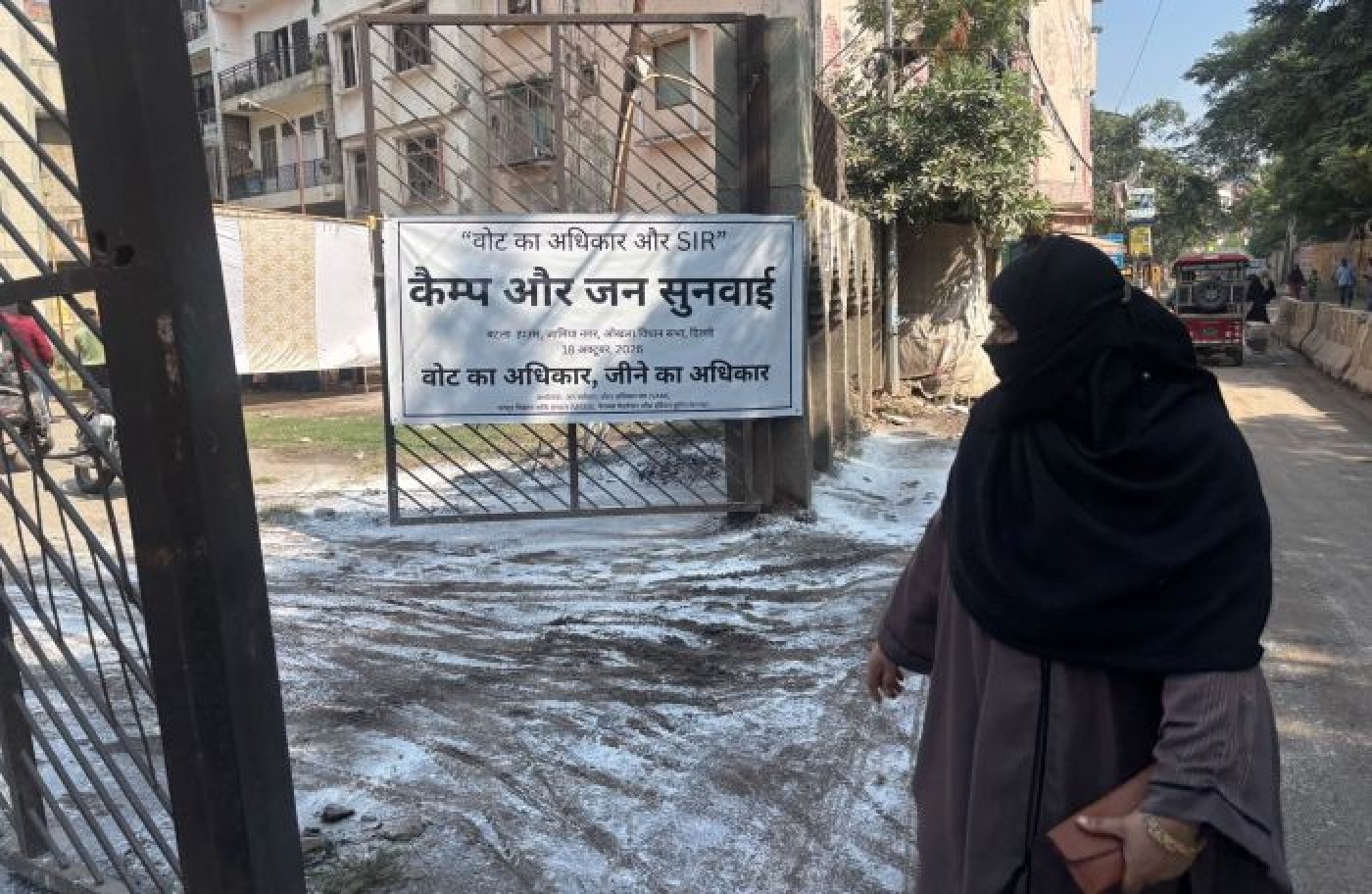
New Delhi: Mohammad Ashraf, 47, has voted in every municipal, state, and national election since he turned 18, including in the 2025 Delhi assembly elections. But Ashraf, a resident of Okhla, found his name missing in the draft electoral rolls published for the national capital on 31 August 2026.
At a camp organised by multiple citizen-led grassroots social groups on 18 October, Ashraf, who works at an electronic repair shop, was told the only way to get back on the voter roll was by filling Form 6, a form meant for first-time voters.
The Election Commission of India (EC) announced a special drive on 1 October 2026 to re-enrol deleted voters in the special intensive revision, an exercise to update India’s voter rolls, by using Form 6.
So far, the SIR has excluded 130 million voters, including those with voter cards and a proven voting history.
The EC has also told the Delhi High Court that Form 6 can restore deleted voters.
But Form 6 includes a section requiring applicants to explicitly declare that they are applying to be a voter “for the first time”.
The declaration is equivalent to swearing an oath, and many critics of the exercise, including former Election Commissioner S Y Quraishi, say it can trigger criminal charges.
“Form 6 can’t be filled by a deleted voter. It’s only for NEW voters. All those who have been forced to fill it have committed [a] criminal offence carrying [a] 1 yr prison [sentence],” Quraishi posted on X. Deleted voters on the ground, like Ashraf, feel deeply unsettled about filling a form that says at the top: ‘Application Form for New Voters’.
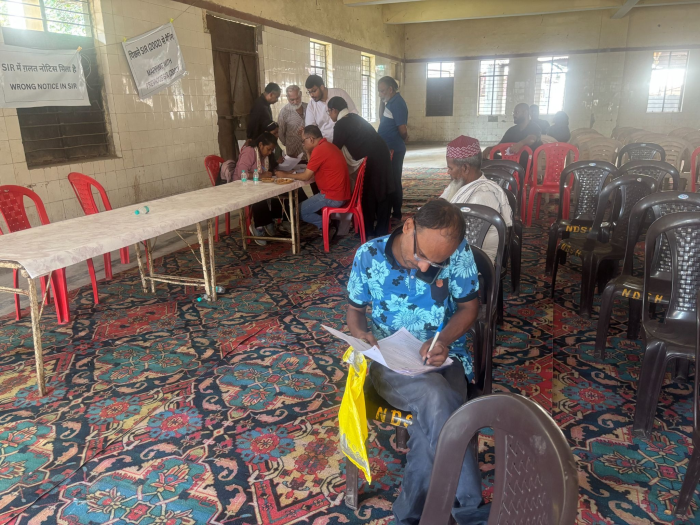
Ashraf filled out the form reluctantly when he noticed point number three in the declaration section: “I am applying for inclusion in the Electoral Roll for the first time, and my name is not included in any Assembly Constituency/ Parliamentary Constituency.”
“To be brought back on the list, I have to declare that I have never voted in my life even though I’ve been voting for decades,” said Ashraf.
"I’ve been standing here since morning, tortured in the heat, and now I am filling this form. It feels like I am voting for the first time even though I have voted all my life,” he said. “It feels really strange.”Volunteers on the ground said they understand the discomfort people feel when filling out Form 6 if they aren’t new voters.
“They can do literally nothing else because the Election Commission too has given no other option,” said Tarun Tyagi, a volunteer, helping people like Ashraf fill the form. “If they don’t sign the declaration, the form won’t be accepted.”
An Illegal, Futile Exercise
In the weeks since The Indian Express revealed dissent within the three-member EC, headed by Gyanesh Kumar, and public protests and widespread outrage over voter deletions have raised questions about the transparency and legality of the special intensive revision (SIR), the Commission has sought to facilitate the re-enrolment of voters whose names were deleted.
We have previously reported that many affected voters are poor and marginalised and lack the documents needed to establish links between themselves, their parents, or their grandparents and earlier electoral rolls; in Delhi, where one in three voters were deleted, the 2002 roll.
Even though the EC announced a special drive, saying deleted voters will be re-enrolled using Form 6, attempts at such re-enrolment have been underway since September, ahead of 1 October.
Amid growing outrage over the process, which grew as the ECI began surreptitiously restoring deleted politicians and bureaucrats because of logical discrepancies or because they could not be mapped to the 2002 rolls, Delhi’s chief electoral officer (CEO), in September, held such camps in homeless shelters to facilitate re-enrolment.
But these Form 6s include an additional SIR-linked declaration requiring applicants to state whether they, their parents, or their grandparents appeared in the 2002 electoral roll.
The Indian Express investigation revealed that two election commissioners had questioned the legality of the modified form. At the time, Quraishi told Article 14, “How can you have two Form 6s?”
The Supreme Court has neither approved nor disapproved the modified Form 6.
We have previously reported that submitting Form 6 under the additional declaration was futile, offering the appearance of an opportunity to re-enrol while still leaving applicants without the documents needed to connect to the 2002 roll.
After the outrage over excluding eligible voters and those with an established voting history, the ECI removed the SIR-linked declaration in states and union territories where the electoral roll revision exercise has been completed.
However, Delhi, where the SIR is still underway, requires voters to link to the 2002 roll and to identify themselves as new voters.
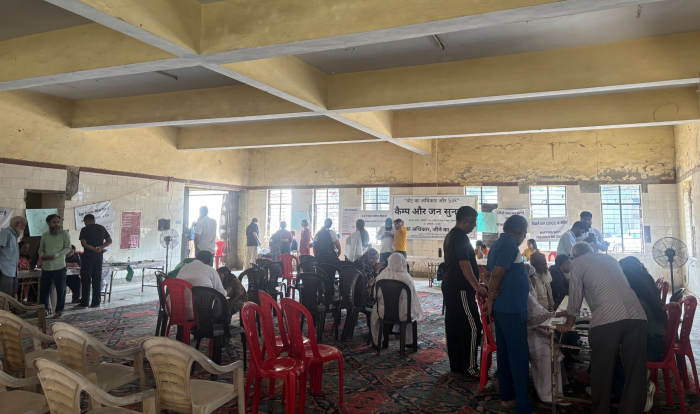
"This has honestly been very confusing for us too,” said Khush Vachhrajani of Voter Adhikaar Manch, one of the groups organising camps to help deleted voters.
“A day before the camp, we decided that we would continue asking people to fill the annexure that requires them to show their connection to the 2002 SIR since it's only been dropped for the states with SIR completed,” said Vachhrajani.
Speaking on condition of anonymity, booth-level officers (BLOs) in south-east Delhi told Article 14 they aren’t sure whether people would make it to the final electoral roll.
“We have very little in our hands,” one said.
4.77 million of Delhi’s 14.51 million electors were left out of the draft roll, marked as absent, shifted, dead, or duplicate, or those whose verification forms were not received.
As per a press release by the Delhi Chief Electoral Officer (CEO) on 16 October, over 230,000 Form 6s have been received for enrollment in the electoral rolls since the start of the claims and objections period.
According to The Hindu, not even 1% of the 450,000 Form 6s submitted so far have been processed. The last date to apply for inclusion is 30 October.
In Maharashtra, the Chief Electoral Officer (CEO) has written to the Election Commission, requesting an amendment to Form 6 to drop the declaration that they're first-time voters.
Gautam Bhatia, a constitutional law scholar and lawyer in Delhi, said a false declaration would be a legal offence punishable under Section 31 of the Representation of the People Act, 1950, with imprisonment for up to one year, a fine, or both.
Despite criticism, the judiciary has backed the use of Form 6 to re-enrol deleted voters.
When a deleted voter approached the Delhi High Court with concerns about using Form 6, the court told the excluded voter that the EC had suggested filling Form 6 for re-inclusion, and so the apprehension was “misplaced”, reported Bar and Bench.
Bhatia said that he was “very surprised the Court said this”.
“One of the most basic principles of law is that a representation by a statutory authority does not override the explicit words of a statutory instrument,” said Bhatia.
“At best, the ECI's representation can be taken as a promise not to prosecute, but what if a subsequent ECI changes its mind?” he said. “The sanctity of the rule of law is completely undermined if statutory authorities are basically given discretion to decide when to apply the law or not.”
‘I Still Have Voter Slips From Past Elections’
For many Indians, their voting history is deeply personal and precious, across social and economic classes and backgrounds.
Shaikh Salauddin, a well-known gig industry organiser and trade unionist from Hyderabad, said, “My entire voter history has been erased simply because of this.”
Salauddin, 40, who said he had voted in four national and state elections, said, “I don’t want to give up my right to vote and so did what I could to be on the electoral roll. But that doesn’t make it okay that all my past voting record is being neglected.”
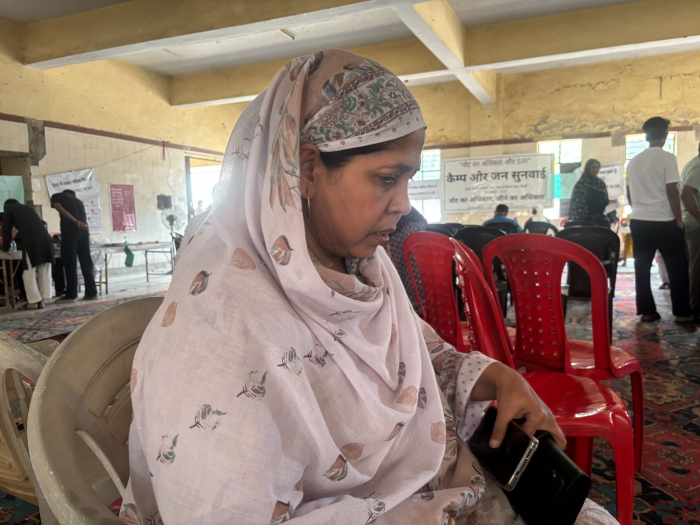
After filling Form 6, a 45-year-old homemaker and mother of two, Parveen Begum, realised she was essentially applying for a new voter ID.
“But I still have all these voter slips from past elections,” she said. “Does that not count for anything? This is very wrong.”S R Ansari, 76, walked into the camp organised at Okhla’s Bharat Ghar to ask about deleting his 47-year-old son from the voter roll.
Ansari, who uses a stick to walk, sat with volunteers who explained that his son, who lives in Dubai but is an Indian citizen and voter, must fill Form 6.
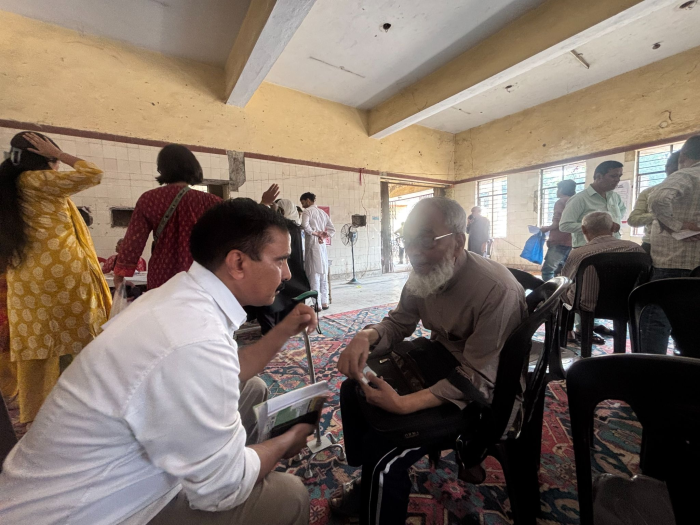
Ansari’s right hand shook constantly from various illnesses, yet he managed to note what he could on his phone.
“I will go and share this with my son now,” he said.Still, not everyone was ready to fill Form 6.
“I have been a voter since 1996,” said Mohammed Naemuddin, 48, who runs an automotive business in Delhi. “Why should I claim to be a new voter just to get back on the voter list?”
“I will see what other options I have,” he said. “If nothing, I’ll just go to court.”
A New Declaration
While the EC hasn’t yet announced any amendment to Form 6, volunteer groups are preparing their own self-declaration forms to attach to Form 6, saying applicants who have voted before shouldn't be penalised for falsely declaring they are first-time voters.
The form requires applicants to provide their EPIC number, explicitly state that they’ve voted before, and list the elections they have voted in.
"Since Form 6 is asking applicants to sign an oath saying they're first-time voters, when many of them are in fact not, we have prepared a different self-declaration form," said Vachhrajani of Voter Adhikar Manch.
“The self-declaration form also states that the applicant had to sign Form 6 as there was no other option, but that they are not first-time voters,” said Vachhrajani. The BLOs in Okhla said they forwarded the forms to the ERO (electoral registration officer) with the new declaration and will see if it is accepted.
Other BLOs are trying to find their own solutions to the problem of false declarations. “I am asking all deleted voters to attach copies of their previous voter IDs with their Form 6s, so that it’s clear that they aren’t new voters,” said a BLO in Northeast Delhi, who requested anonymity. “But none of us will know if their applications are actually accepted or not until the final voter roll is out.”
The BLO said some of the deleted voters aren’t educated and cannot understand why they need to attach so many documents with their Form 6.
“Many of them are daily wage labourers,” said the BLO. “First they don’t understand how they were deleted from the electoral roll, then they don’t understand why we are making them fill a form for new voters, and then they don’t understand why we are asking for their old voter records.”
(Fatima Khan is an independent journalist based in Delhi.)
Get exclusive access to new databases, expert analyses, weekly newsletters, book excerpts and new ideas on democracy, law and society in India. Subscribe to Article 14.