

New Delhi & Cambridge (UK): In January 2021, two Protected Areas in the Andaman & Nicobar Islands—Galathea Bay Wildlife Sanctuary and the Megapode Sanctuary—were denotified (here and here) to make way for a mega infrastructure project on Great Nicobar Island. The decision, justified by coercing scientists to toe the government line, will denude one of India’s most pristine landscapes, including the only known nesting site in India of the leatherback sea turtle.
The Standing Committee of the National Board for Wildlife (SC-NBWL), which recommended the denotifications, does not have statutory authority to de-notify Protected Areas. A 13 November 2000 Supreme Court order prohibits any dereservation or denotification of forest land, wildlife sanctuaries, or national parks without the Court's prior approval.
In responses to right-to-information (RTI) queries filed by the first author with the ministry of environment, forests and climate change (MoEFCC) said on 7 November 2025 that “no information is available in this regard”, indicating that no such approval was obtained.
The denotification of the Kachhua Wildlife Sanctuary in Varanasi, Uttar Pradesh, a 7 km stretch of the Ganga River, is another case in point. Home to freshwater turtle species, including Nilssonia gangetica, and the Gangetic dolphin, it was cleared for inland waterways and tourism, following a similar sequence, with no record of prior approval from the Supreme Court.
The first part of this investigation showed how the SC-NBWL has, since 2014, approved an overwhelming majority—97%—of projects placed before it in and around India’s Protected Areas, with limited evidence of detailed scrutiny in the minutes of its internal meetings.
A closer examination of the committee’s records—minutes of 58 meetings, along with responses obtained through a series of RTIs filed with the MoEFCC—indicate that the functioning of the SC-NBWL departs from its statutory mandate and established conservation framework.
This second and concluding part examines how most—if not all—of the committee’s decisions regarding diversions are inconsistent with the Wild Life (Protection) Act (WPA), 1972, and many binding Supreme Court orders, such as the Godavarman order of 2000 on rationalisation, denotification and diversion of boundaries, lafarge order of 2011 governing Protected Areas over 25 years.
Acting Beyond Its Authority
Most approvals for diversions granted by the SC‑NBWL violate the 1972 WPA, as we reported in the first part of the investigation.
The statute is explicit: any activity in a Protected Area, and any NBWL intervention or decision, must be for the “improvement and better management of wildlife”.
The SC‑NBWL minutes offer no credible explanation of how the destruction, submergence, or fragmentation of habitat by mining, dams, highways, or railway lines advances that objective.
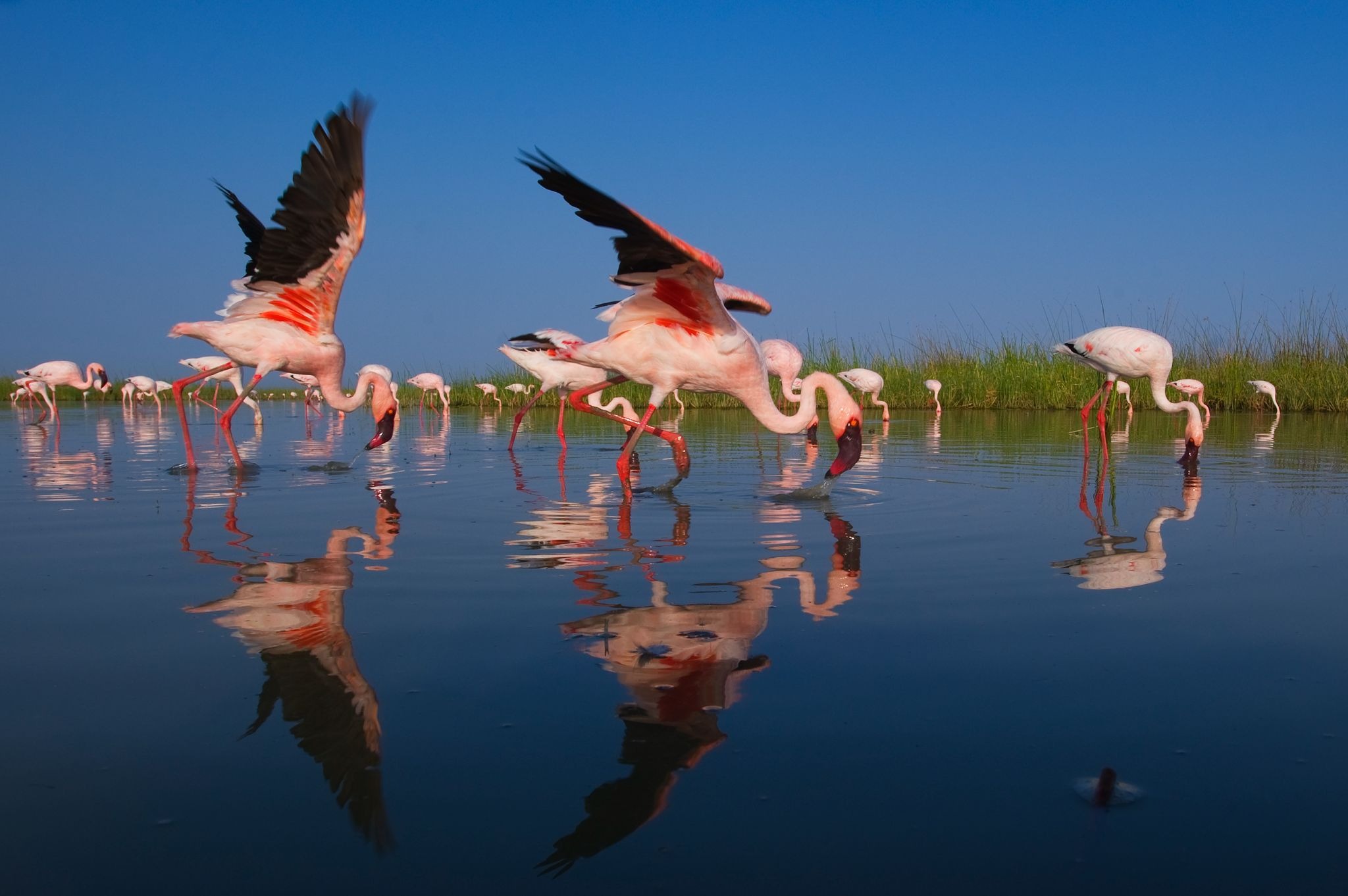
Many such approvals have been justified on grounds of “public utility”, to “support development activities” or for “developing tourism infrastructure”, as in the case of the “diversion” of 46.6 hectares of forest land from Kutch Wildlife Sanctuary. These are grounds that fall outside the committee’s statutory mandate.
The NBWL, and by extension its Standing Committee, is a creature of the statute and must function, experts have noted, within the limits prescribed by law. In routinely granting such approvals, it is acting beyond its statutory authority.
By permitting projects without credible ecological scrutiny, the SC‑NBWL undermines the precautionary principle and the doctrine of intergenerational equity recognised by the Supreme Court, as well as the constitutional duty of the State under Article 48A to safeguard the country’s forests and wildlife.
According to our analysis, the committee's record suggests it is prioritising short‑term development over long‑term ecological integrity.
Rubber-Stamp Conservation
The SC‑NBWL has been almost singularly focused on providing clearances, while sidelining its core conservation duties, including rigorously assessing the ecological impact of projects on wildlife and their habitats.
The committee’s own record suggests this responsibility is ignored: across 2,121 approvals, it does not acknowledge substantive ecological harm in a single case. Equally striking is the absence of recorded dissent from within the committee, including from the lone independent member.
In contrast to the pre‑2014 period, when dissenting opinions were documented, the current Committee’s decisions reflect near‑unanimity, suggesting a process that is perfunctory and far less deliberative. The shift from open dissent to near‑total silence inside the Board mirrors the broader marginalisation of independent scientific opinion in the siting and clearance of projects.
The working of the SC‑NBWL is opaque.
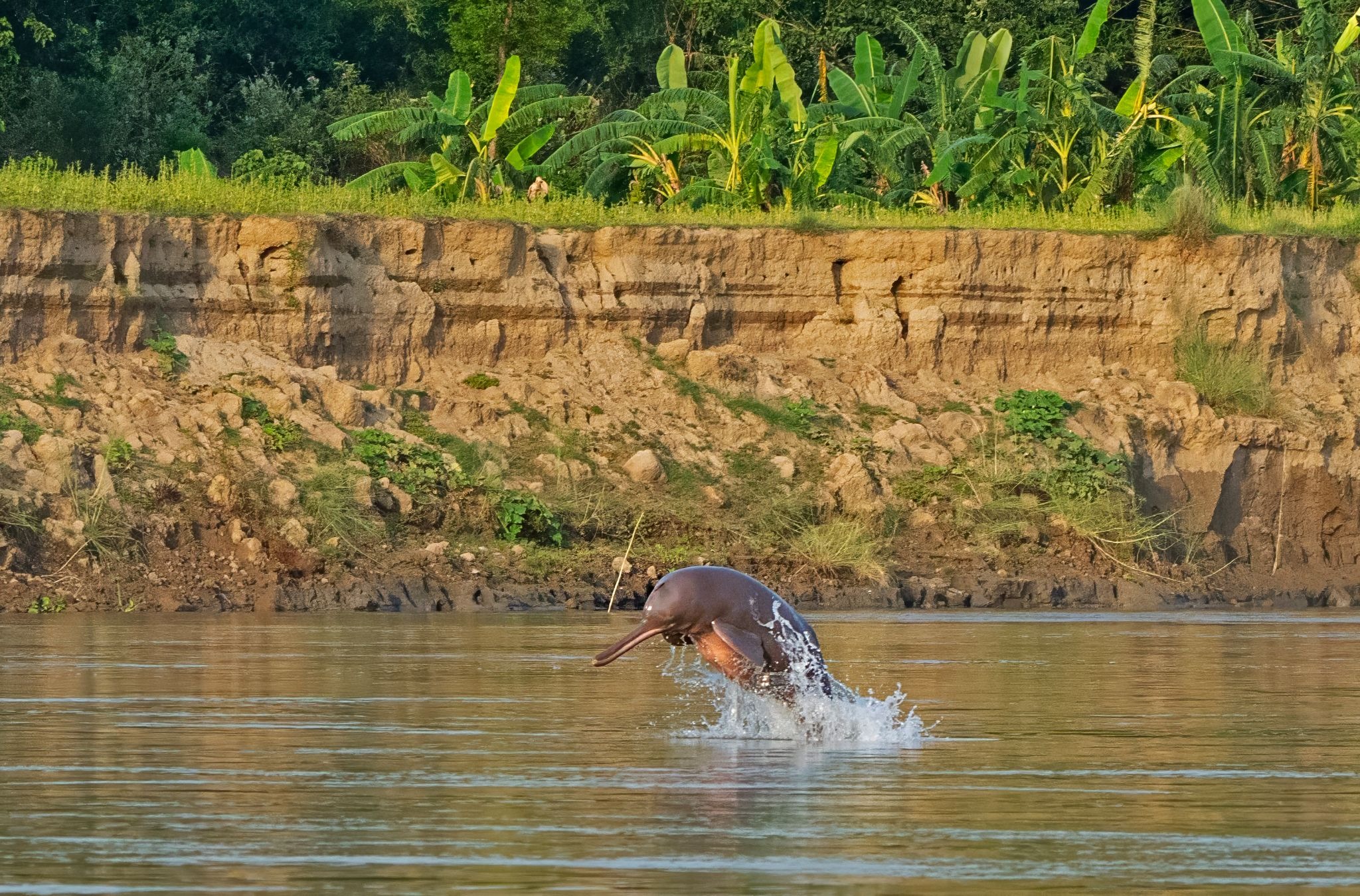
In several instances, the minutes do not provide basic project details, including the name of the Protected Area in which a project is proposed. In one such case, the records refer to a riverine sanctuary where dredging was permitted to facilitate vessel navigation, but do not identify the site. Based on available information, this appears to be the Vikramshila Gangetic Dolphin Sanctuary in Bihar.
Dredging, increased vessel traffic and associated disturbance adversely affect Gangetic dolphins. Some estimates indicate that populations in this stretch declined by nearly 20% over a two-year period following the introduction of inland waterways.
‘No Information’
At its 86th meeting in October 2025, the Standing Committee considered a “rationalisation” proposal for the 262 sq km Pamed Wildlife Sanctuary in Chhattisgarh to establish a Central Reserve Police Force jungle warfare college and a battalion camping site.
The minutes do not specify the extent of the proposed boundary change, stating only that it is required for “security, administration and development measures.” The record does not indicate how these considerations relate to the statutory objective of improving and better managing wildlife.
The National Board for Wildlife is also required to review the status of wildlife conservation and prepare biennial status reports. No such reports are available in the public domain.
In response to an RTI application seeking these reports, the MoEFCC stated: “No information is available in this regard.”
The Illusion
The absence of such reports appears to be deliberate, enabling the continued projection of misleading claims about the extent and condition of Protected Areas.
In response to a question in the Rajya Sabha in November 2024, Kirti Vardhan Singh, the minister of state, the MoEFCC stated that 5.4% of India’s geographical area falls under Protected Areas.
However, this figure is a gross overestimation, as land diverted from national parks or sanctuaries for dams, mining, highways and other development projects is not deducted from the notified area and continues to be reflected as part of the Protected Area.
This inaction persists despite the SC‑NBWL’s own decision at a 2011 meeting to map all diversions within Protected Areas using a Geographic Information System (GIS)—a technology that captures, manages, analyses, and maps spatial data—to introduce a category of “functional” Protected Areas to demarcate diverted land and reflect their actual ecological status.
This also goes against a 2011 Supreme Court order in the Lafarge case, which required the creation and regular updating of a mapping database for forest land, Protected Areas, their Eco-Sensitive Zones and key wildlife corridors.
Instead of ensuring compliance with this order, which would support informed decision‑making and conservation safeguards, the SC‑NBWL has focused on diverting, willy‑nilly, land in Protected Areas.
Consequently, diverted areas continue to be counted within the official boundaries of Protected Areas, concealing the steady erosion of habitat. The failure is compounded by the absence of compensatory land, a precondition for handing over forests for development.
According to the MoEFCC’s “land‑for‑land and tree‑for‑tree” principle, reiterated in the December 2023 consolidated guidelines under the Forest (Conservation) Act Amendment (FCAA), any diversion of forest land must be offset by equivalent non‑forest land.
National Parks and Wildlife Sanctuaries consist almost entirely of notified forest land, and even those not formally notified would qualify as “forest” under the Supreme Court’s 1996 Godavarman order, which defined the term "forest" in India, applying the Forest (Conservation) Act, 1980 to any area fitting the dictionary meaning of a forest, regardless of ownership or classification.
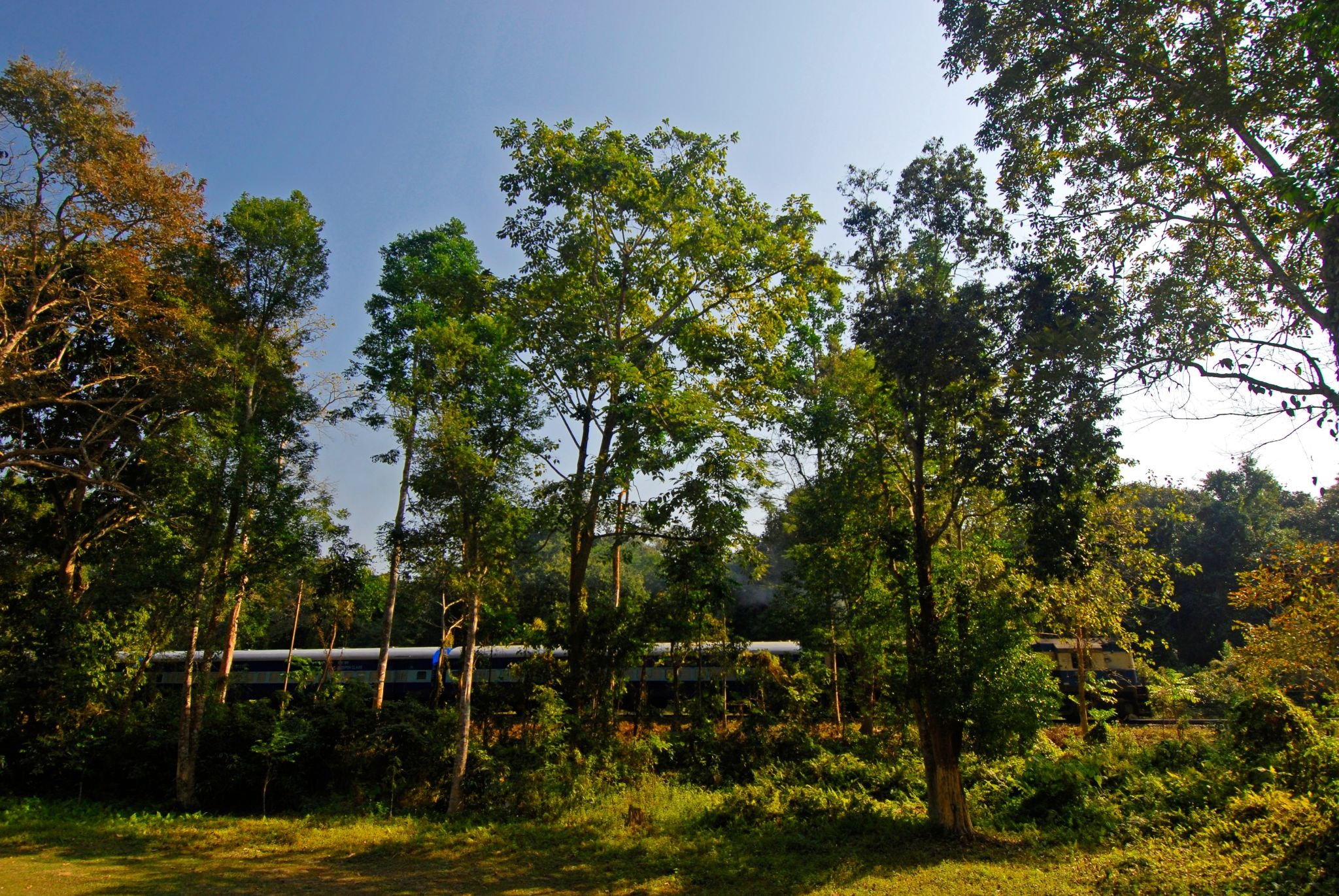
Compensatory land in such cases is mandatory and non‑negotiable, but the SC‑NBWL minutes do not record any cumulative accounting of habitat loss nor any evidence of equivalent land being added to offset denotified or diverted Protected Areas.
Missing Data, Missing Accountability
Responses from the MoEFCC, sought through RTI applications and subsequent appeals, seeking details of such compensatory land additions, have been dismissed with the standard response “no information available”, confirming the lack of any such exercise. The result is that Protected Area coverage is diminishing drastically, but continues to be officially cited as 5.4%.
No consolidated official data exists on the total number of approvals or the area diverted from Protected Areas—an anomaly in itself.
Independent analyses, however, provide glimpses of scale. In three meetings in 2020, the SC‑NBWL allowed for diversion of 1,792 hectares; while between January and June 2021, it approved the denotification or deletion, diversion or rationalisation of over 14,000 hectares of land under Protected Areas, according to an analysis by the Legal Initiative for Forest and Environment, an advocacy group based in New Delhi.
Data from meetings held between February and June 2025 reveal that over 3,457 hectares of land and forests from Protected Areas and their eco‑sensitive zones were “diverted” to other uses.
Project proponents granted wildlife clearance are required to provide equivalent non-forest land as compensatory afforestation, along with payment of compensatory afforestation funds for afforesting the land and the Net Present Value of the diverted forest land, as per applicable rules.
However, in response to RTI applications and subsequent appeals, the MoEFCC stated that it has no “available information” on whether such payments were received. It is therefore unclear whether these dues were collected from project proponents.
Shaky Legal Foundations
Under the 1972 WPA, the NBWL—not the MoEFCC—has the authority to constitute the Standing Committee and delegate powers to it. Available records indicate that the present Standing Committee was constituted through an administrative decision of the MoEFCC.
An RTI application, followed by an appeal, sought details on whether a meeting of the NBWL had been convened or whether approval of its members had been obtained in writing, as in 2010, for the constitution of the Standing Committee. The MoEFCC said no “information is available in this regard” again in its reply to the RTI, indicating that it had no documentation to show that this statutory procedure had been followed.
The Standing Committee functions under bare, perfunctory rules—with little detail on due process to be followed in decision making regarding approvals—framed in 2003. These do not provide for voting on project proposals that would ensure a more democratic and transparent process.
Records of the 24th meeting in 2011 show that, in the case of the 1,750 MW Demwe hydro‑electric project in Arunachal Pradesh, during the 24th meeting of the SC‑NBWL in 2011, the chair recorded a decision differing from the committee’s view which was adopted as the decision of the SC NBWL.
In 2013, the Standing Committee constituted a core committee to review procedures and draft revised rules, including provisions on voting, transparency, accountability, and a more detailed evaluation. These rules are not reflected in the committee's current operational record.
Undermining The Law
The SC-NBWL’s statutory mandate is to safeguard wildlife and its habitats and to advise on the management of Protected Areas.
The committee’s records show a high rate of approvals for projects involving the diversion of land within Protected Areas and their Eco-Sensitive Zones, alongside instances where statutory procedures, court orders, and reporting requirements are not reflected in the records.
These include the denotification of Protected Areas in Great Nicobar, boundary “rationalisation” proposals, the absence of publicly available biennial status reports, and the lack of information on compensatory land and payments in response to RTIs. The minutes also record limited detail on project impacts and do not consistently document ecological assessments or alternatives.
The SC-NBWL, as it stands today, is a body with a dubious legal footing, whose composition is burdened by inherent conflicts of interest, and which operates in an opaque, undemocratic manner with little to no accountability. For all practical purposes, the Standing Committee has become the de facto NBWL, despite the law requiring it to function under the “superintendence, direction and control” of the full Board.
Taken together, the records indicate departures from statutory requirements under the WPA 1972 and from directions issued by the Supreme Court relating to Protected Areas and forest land.
The SC-NBWL’s statutory mandate is to safeguard wildlife and its habitats and to function as an independent body empowered to act as a check on powerful commercial and development interests.
However, it can hardly be expected to restrain State power if it effectively functions as an extension of the State itself—rubber-stamping approvals that fragment, destroy and erode India’s last refuges of wildlife in furtherance of the government’s agenda of ‘ease of doing business’ and growth at all costs.
Second of a two-part series. You can read Part 1 here.
(Prakriti Srivastava is the former principal chief conservator of forests, Kerala, and Prerna Singh Bindra is a former member of the National Board for Wildlife, and its Standing Committee.)
Get exclusive access to new databases, expert analyses, weekly newsletters, book excerpts and new ideas on democracy, law and society in India. Subscribe to Article 14.