
Delhi: On 27 July 2026, a sessions court in Madhya Pradesh acquitted all 11 Muslim men accused of rioting and arson during the Ram Navami violence of April 2022 in the south-western district of Khargone, after they had spent between 462 and 827 days in jail.
Eight of 13 prosecution witnesses identified no one; the sole implicating eyewitness was contradicted by her own family; no identification parade was ever held; and forensic tests found no trace of petrol on the seized material.
Two of them, the investigating officer and the man who printed the scene photographs, saw nothing themselves; and the father and brother of the sole implicating eyewitness said the rioters were masked.
The judgment, delivered on 27 July by fourth additional sessions Judge Mukesh Nath at the Sessions Court, Khargone (Mandleshwar), is an audit of an investigation that could not explain how its accused were chosen.
This article is based principally on the Hindi judgment of 27 July and an English translation arranged by this author, and publicly accessible High Court bail orders.
In Khargone, the State moved from riot to accusation in two days. It took the trial more than four years to ask how the accused had been identified.
The chronology is exact.
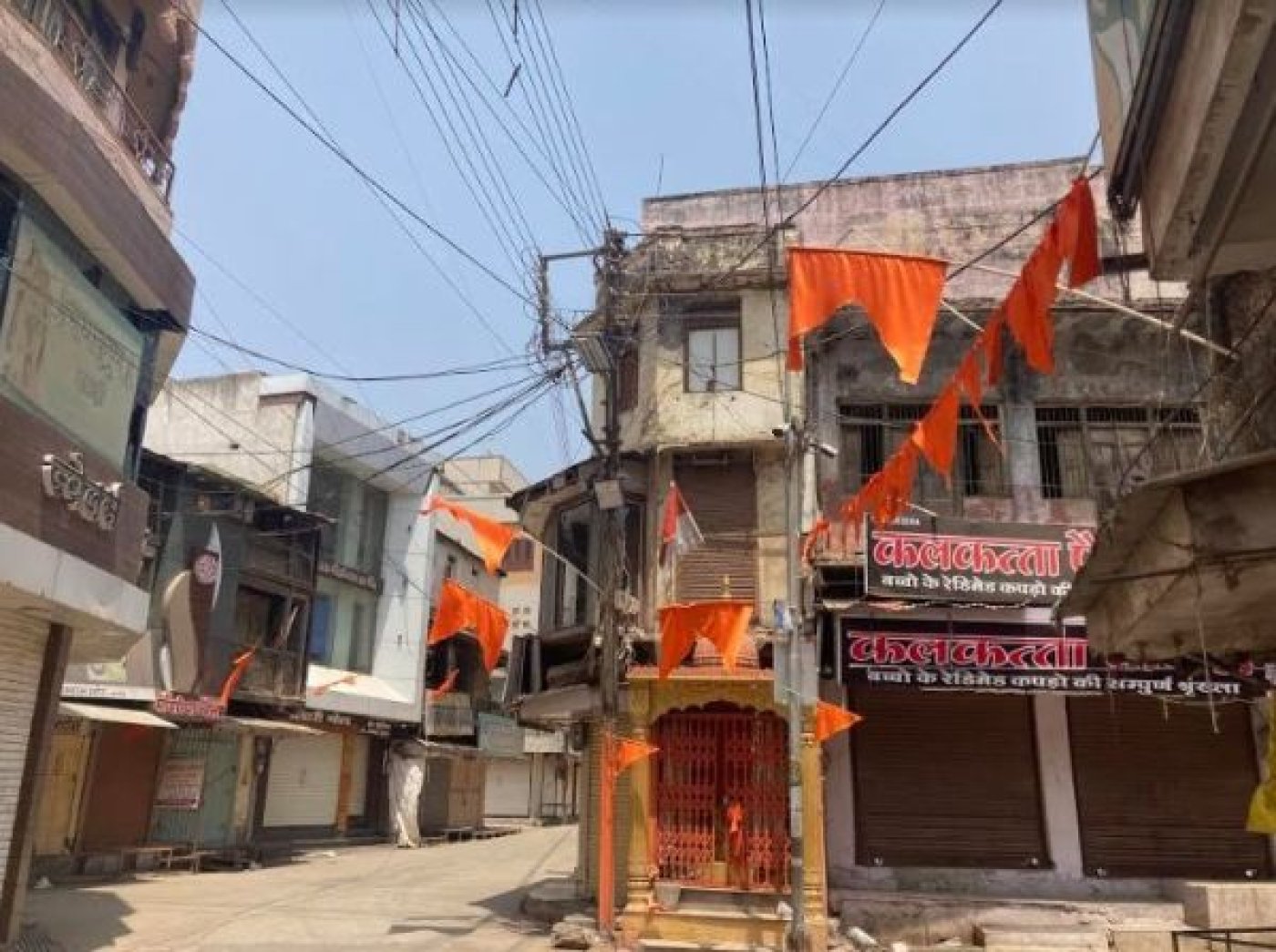
Communal violence broke out during the Ram Navami procession in Khargone on 10 April 2022, after stones were thrown near Talab Chowk.
One person died and at least 24 were injured; houses were burnt; a curfew followed.
Six written complaints and the first information report came on 12 April 2022. Five men were arrested that day and six more the next.
On 27 July 2026, the fourth additional sessions judge, Khargone at Mandleshwar, acquitted all 11 in State of Madhya Pradesh vs Ibadat, on charges of rioting, mischief by fire, house-trespass and offences under the Explosive Substances Act, 1908.
Every one of them had spent more than a year in jail.
Two, including a man of about 70, had spent 827 days.
The Crime And The Accused
The court found the violence itself proved beyond doubt. Windows were smashed, doors burnt, motorcycles reduced to ash; losses ran into lakhs.
What collapsed was the second and harder question: whether these 11 men were the perpetrators.
Why could the system identify and imprison 11 men within days, yet take more than four years to establish that it could not explain how several of them had entered the case at all?
A prosecution must prove two propositions.
First, that a crime occurred.
Second, that the persons before the court committed it.
Evidence of the first cannot fill a gap in the second. Proof that a mob existed is not proof that a named individual stood inside it.
The distinction becomes critical in communal violence. Investigators face crowds, burnt property, frightened witnesses and pressure to make arrests. But criminal liability belongs to individuals. The complaints in this case described the attackers as “Muslim rioters”.
An investigation’s entire work lies in the passage from that communal noun to a named, provable individual.
Skip that passage, and the criminal law begins punishing a community’s description rather than a person’s act.
The unlawful assembly doctrine distributes liability for a common object, but only after membership of the assembly is proved against each accused.
Section 149 attributes acts; it does not supply identities.
Once identification fails, there is nothing for the section to attach to.
The failure wounds the victims first. Their homes and vehicles were attacked; one of their neighbours died. They were entitled to an investigation capable of identifying the offenders and
sustaining a conviction.
Arrests unsupported by evidence leave the original crime unsolved.
How Did These Names Enter The Case?
The prosecution examined 13 witnesses.
Two, the investigating officer and the man who printed the scene photographs, were never offered as eyewitnesses and could add nothing on identity. Of the 11 who were presented as eyewitnesses, eight, including most of the complainants, identified nobody and attributed no act to anyone. Declared hostile, these eight yielded nothing under leading questions. The prosecution asked the court to declare each of them hostile, and the court did, permitting the public prosecutor to cross-examine his own witnesses; even then, the eight yielded nothing under leading questions.
Hostility in the witness box does not by itself prove fabrication in the police station; riot witnesses may be intimidated, confused or reluctant.
It does mean that reliable corroboration was indispensable. There was none.
The case narrowed to one family.
The father, Dinesh Jain, told the court he watched a mob of about 50 from a distance of 500 to 600 metres, and from behind. He could not say who burnt his door, who threw stones, who looted.
The prosecutor himself elicited from him that the rioters’ faces were covered with cloth.
The son saw four or five masked men and recognised none. Only the daughter claimed to recognise all 11 accused by face.
Her claim could not survive the file.
Her name appears as an eyewitness in none of the six complaints or the FIR. Her police statement was recorded 51 days after the incident, with no explanation for the delay. No test identification parade was ever held; she identified the accused for the first time from the dock.
The court, invoking Vadivelu Thevar vs The State of Madras (1957), accepted that a sole witness can sustain a conviction, but only a wholly reliable one.
This testimony, it held, was neither natural, nor satisfactory, nor credible.
The science says the court was right to be sceptical.
The National Academies’ review of eyewitness identification in the United States, Identifying the Culprit (2014), found that recognition degrades with distance, stress, delay and suggestion, and that procedures controlled by investigators can either test a memory or contaminate it. Identifying the Culprit (2014), a report of the National Research Council of the United States' National Academies, was produced by a committee co-chaired by a vision scientist and a federal judge. Its conclusions rest on the biology of perception and memory, not on any one country's policing.
Large viewing distances, duress and heightened emotion degrade what a witness takes in. Memory is then "highly malleable", reconstructed and distorted over time. And the very procedures police use to test a memory can instead contaminate it. The report's first prescriptions are blind, documented, video-recorded identification procedures.
A properly run parade guarantees nothing. Its absence guarantees that the recognition was never tested at all.
Then the deeper defect.
The FIR named six men. The judgment records that no substantive evidence explained how the remaining five entered the case. Nor could the prosecution explain how 11 individuals were picked out of a crowd of roughly 50.
The forensic report completed the collapse: the seized bottle fragments and ash carried no residue of petrol, diesel or kerosene. That finding did not disprove arson; it dissolved the specific allegation of petrol bombs on which the Explosive Substances Act charges, and their sanction, rested.
The photographs lacked certification under section 65B of the Indian Evidence Act, 1872 and no accused was visible in any of them.
These are failures in suspect selection, identification, corroboration and forensic reconstruction.
Read together, they are an audit of the investigation, and the audit found the file empty at its centre. The question the judgment could not answer is the one the system must: what contemporaneous information led the police to each name?
Custody On A Provisional Story
The custody table records the cost of waiting.
Ibadat Ali and Sheryar spent 827 days each; Shabbir and Mushtaq, 567; Azam, 529; Faizal, 468; Sadiq, Abdullah and Saheb, 466; Imran and Rajik, 462.
Charges were framed only in December 2022.
Evidence began in August 2023, 16 months after the arrests.
The bail record, so far as it is publicly traceable, shows how that time accumulated.
In July 2022, the Madhya Pradesh High Court rejected the first applications of Ibadat, Shabbir and Azam, treating the gravity of the violence, the written complaints, the witness statements and the seizure material as prima facie grounds for continued custody.
Sheryar’s application failed in April 2023 on similar reasoning.
Shabbir and Mushtaq obtained bail on 30 October 2023, after witnesses had turned hostile and the Supreme Court had granted bail to a co-accused.
Ibadat’s third application was nonetheless rejected by the High Court in October 2023, because he was named in the FIR and other victims were yet to testify. He walked out only in July 2024, 827 days after his arrest, at the age of about 68.
The orders describe a mechanism, not a conspiracy.
A bail court takes the prosecution narrative provisionally; it cannot conduct the trial. But that is precisely what makes the early file decisive.
A narrative accepted provisionally in July 2022 preserved custody through 2023, long before cross-examination could touch it. What sufficed for a prima facie assessment could not survive the witness box.
The men served the sentence first and received scrutiny afterwards.
Malcolm Feeley’s study of American lower criminal courts, The Process is the Punishment (1979), explained how penalties accumulate before any verdict: custody, bail litigation, repeated appearances, legal expenses, stigma.
The point is not that every acquittal exposes an illegitimate prosecution. It is that the process imposes punishments no verdict can reverse. An acquittal restores legal status.
It cannot return the wage, the shop, the schooling of children, or two monsoons of a septuagenarian’s life.
Nor is Khargone an aberration.
Undertrials make up about 76% of India’s prison population, the India Justice Report 2025 records.
In Hussainara Khatoon vs Home Secretary, State of Bihar (1979), the Supreme Court made speedy trial part of the fair procedure Article 21 demands.
Satender Kumar Antil vs Central Bureau of Investigation (2022) reiterated that “punishment begins after conviction” and that jail pending trial is the exception.
Khargone measures the distance between those principles and the time it took to test one identification.
Acquittal Without An Audit
An acquittal means guilt was not proved beyond reasonable doubt. It does not automatically establish police malice, fabrication, or “wrongful prosecution” in its legal sense, and the trial court made no such finding.
The defects it recorded demand an institutional explanation, not a presumption of malice.
But no organ of the system is obliged to supply that explanation. Who authorised the addition of five men never named in the FIR? Did any supervisory officer review the identification evidence?
Did the prosecution independently test the delayed statement, the missing parade and the absence of individual roles before obtaining sanction under the Explosive Substances Act and pressing the charges for four years?
Could custody have been shortened once the complainants themselves failed to identify anyone?
Will the State appeal? Nothing on record yet says.
Will the violence itself now be credibly reinvestigated, for the victims’ sake?
Compensation has no automatic route either.
Indian law contains no general statute compensating the acquitted.
The Law Commission’s Report No. 277 (2018), prompted by the Delhi High Court in Babloo Chauhan vs State (NCT of Delhi) (2017), proposed a statutory remedy for wrongful prosecution grounded in demonstrable misconduct, not acquittal alone.
It remains unenacted.
Rudul Sah vs State of Bihar (1983), Bhim Singh vs State of Jammu and Kashmir (1985) and Nilabati Behera vs State of Orissa (1993) let constitutional courts award public-law compensation for proved violations of fundamental rights.
The remedy is episodic, and a failed prosecution is not, without more, an unlawful one.
The acquittal of Khargone falls into the gap the Law Commission mapped seven years ago.
The Bulldozer Announced The Verdict First
The prosecution did not unfold in isolation.
The State had announced its certainty long before any court tested it.
On 11 April 2022, hours after the violence, the administration in the state governed by the Bharatiya Janata Party (BJP) demolished about 16 houses and 29 shops, following the chief minister’s instructions.
Contemporary reports and a subsequent fact-finding inquiry indicated that the properties were overwhelmingly Muslim-owned, though at least a few Hindu-owned properties may also have been affected.
Home Minister Narottam Mishra promised to turn the homes “from where stones were pelted” into “a pile of stones”.
Residents said no notices came; the administration later described the drive as encroachment removal.
Among the razed homes was that of Hasina Fakhroo, a widow whose house had been constructed under the Pradhan Mantri Awas Yojana-Urban.
The government had released ₹2.5 lakh towards its construction, while the family contributed about ₹1 lakh from its savings. Scheme records showed that the house was geotagged five times and photographed at successive stages of construction. The final instalment of ₹50,000 was credited on 4 April 2022. Three days later, the administration issued a notice alleging that the structure stood on encroached government land; on 11 April, it was demolished. The district administration maintained that the subsidy had been sanctioned for a different plot. The episode nevertheless exposed an extraordinary administrative failure: the State had funded, monitored and certified the progress of a house before another branch of the same State declared its location illegal.
Challenges to the drive remain pending before the Madhya Pradesh High Court.
Whether any property of these 11 men was demolished is not established, and the criminal trial and the demolition drive must not be conflated.
What joins them is a single official theory of guilt: acted on by bulldozer within a day, by arrest within two, and disproved, as against these men, after more than four years.
In November 2024, the Supreme Court held that punishing an undertrial by demolishing his property is impermissible in our constitutional scheme, and prescribed notice, hearing, a reasoned order and time for judicial challenge.
The benchmark arrived too late for Khargone, and its enforcement has since been left to case-by-case litigation.
But it names the vice precisely: the executive adjudged a guilt that the judiciary, given time and evidence, could not find.
Communal riots are chaotic. Witnesses may be terrified; evidence disappears quickly; victims deserve effective prosecution.
Precisely for those reasons, investigators must preserve video, separate witnesses, run reliable identification procedures and collect forensics at once.
The seriousness of the offence raises the standard of investigation. It does not lower it.
With more than 20 prosecutions arising from the same violence reportedly still pending in Khargone’s courts - the available figures do not disclose how many of these involve Muslim or Hindu accused - the defects exposed in this trial acquire importance beyond these 11 accused.
This acquittal is not the closing of a file. It is the first audit of many.
(V. Venkatesan is Contributing Editor at Supreme Court Observer. The views are his own.)
Get exclusive access to new databases, expert analyses, weekly newsletters, book excerpts and new ideas on democracy, law and society in India. Subscribe to Article 14.