
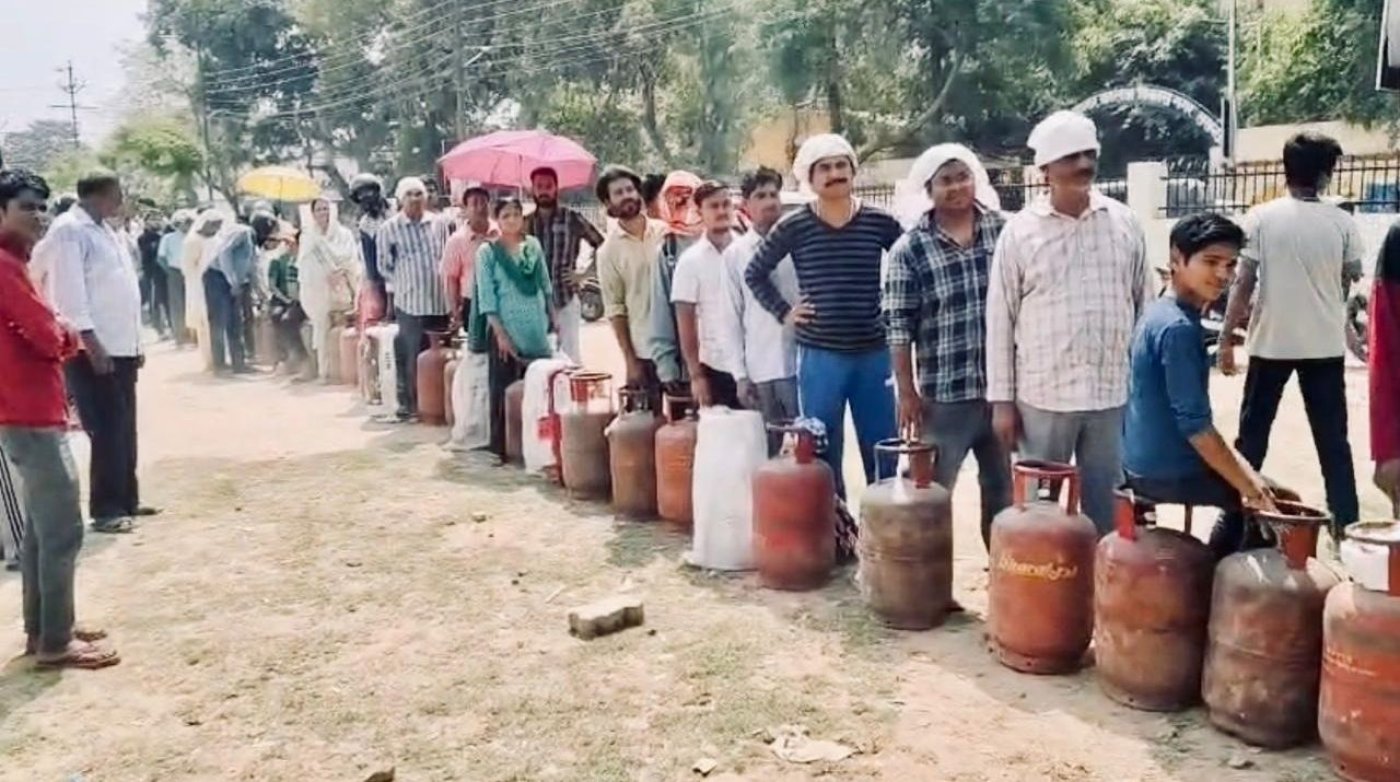
New Delhi: On the same days that confused and worried people stood for hours in long queues in many parts of India with empty cylinders, as booking online or on the phone became impossible, restaurants and small eateries were cutting back menus or shutting their kitchens altogether because they couldn’t get commercial LPG.
For households with just a few days of cooking gas left, the shortage means relentless anxiety: how will they prepare food if the conflict that has followed attacks on Iran by the United States and Israel drags on, West Asia remains unsafe, and LPG supplies don’t come through the Strait of Hormuz for weeks if not months?
For many small businesses, that means lost income and uncertain days ahead.
While all this was unfolding, the Prime Minister was out campaigning for a state election in Tamil Nadu.
Narendra Modi has said that people should not panic over the cooking gas shortage or “pay attention to rumours” and to “spread only correct and verified information”, that the disruption linked to the West Asia conflict affected global energy supplies, and that India would “navigate” the situation just as it did during the Covid-19 pandemic.
He said nothing about why there was no warning about the impending shortage, and why the government was so unprepared to deal with it.
While a 66-year-old man died standing in line for a gas cylinder in Punjab, a grim reminder of the people who died under the strain of the Modi government’s poorly planned and executed demonetisation in 2016, the BJP launched a coordinated social media campaign by sending out identical tweets saying cylinders were being delivered and all was well.
It is typical for this government to mislead, deny and obfuscate, and just as typical for the mainstream media to be too afraid to demand accountability.
Had the UPA government and former Prime Minister Manmohan Singh been caught off guard, unprepared, and failed to warn citizens, the media would have torn them apart.
While the government may have planned for shocks to crude oil supplies, no one seems to have thought about another fuel India imports in large quantities: cooking gas.
India imports 60% of its LPG, and 90% of that passes through the Strait of Hormuz.
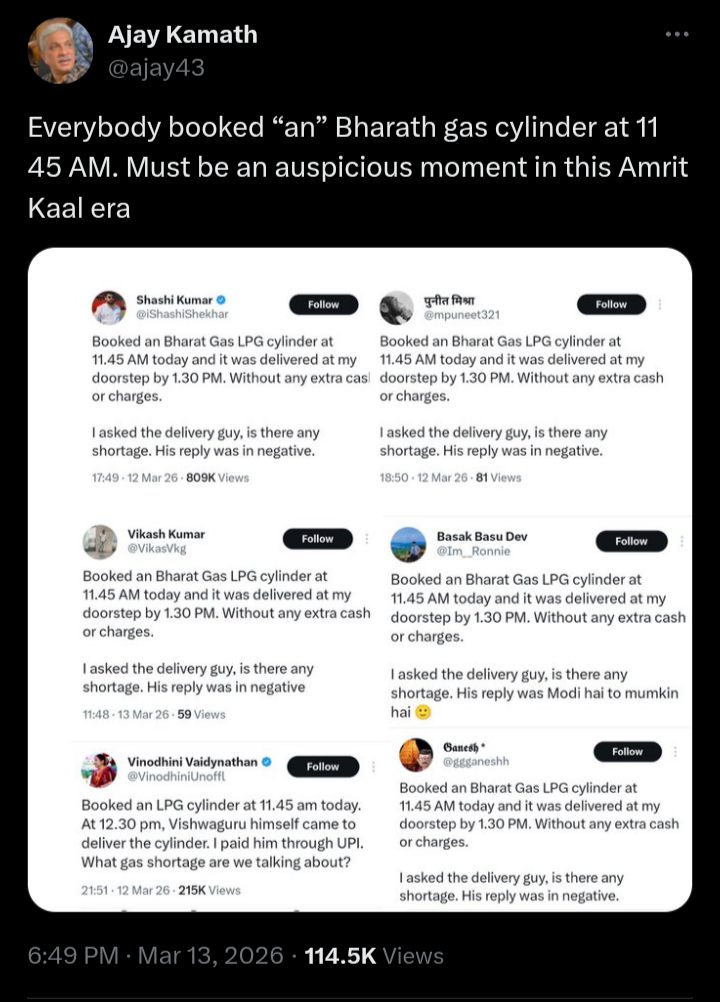
What is frustrating is not just the shortage, but the way the government has spoken about it. Even as signs of tightening supply became clear, official messaging continued to stress that household LPG supply was safe and that there was “no need to panic”.
It was only after hoteliers and restaurant owners began speaking out as their businesses started to close that the government was finally forced to acknowledge the problem and take action.
The Essential Commodities Act of 1955 was invoked, with refineries asked to increase LPG production, but why wasn’t this done earlier? Why didn’t the government speak openly about the risks until business owners, big and small, brought the problem to light? Why did it take this long to even acknowledge the problem?
Of course, managing a crisis isn’t easy.
Governments worry that speaking too soon could spark panic buying and worsen shortages. That’s understandable. But transparency matters just as much, because the official line often feels completely out of step with what people are actually living through.
Meanwhile, as lines wound through many parts of the country, a BJP spokesperson bizarrely blamed the opposition.
“Karnataka was incidentally the first state from where reports of LPG shortages began to surface,” tweeted Amit Malviya. “Soon after, similar news emerged from West Bengal. Media reports now suggest that Samajwadi Party leaders in Uttar Pradesh are hoarding gas cylinders.”
At a time when the country stands united, Opposition leaders appear more focused on creating inconvenience for common citizens than showing responsibility,” said Malviya.
This writer knows people who have waited hours with their empty cylinders only to return home worried and without a refill, and a small restaurant owner who has closed his kitchen and is worried about losing his cook, who he says is really very good.
Meanwhile, while the government crackdown makes it harder to get gas through unofficial sources, the small business owner's question was simple: if you block alternatives and have no solution, what are we supposed to do? Lose our income and livelihoods?
As the cost of LPG increased by Rs 60 for domestic and Rs 114 for commercial cylinders amid the current global crisis, this Times of India piece from 2022 noted how unaffordable LPG already was: in 2021-22, 21 million households with LPG connections did not buy a single refill. And 30 million bought just two in the entire year.
The pattern of denial, obfuscation, arrogance, high-handedness and indifference to people suffering feels familiar.
During the 2016 demonetisation, the government promised to wipe out black money, but two years later, it was clear that almost all the banned notes had returned to banks.
People had stood in hours-long queues to exchange or deposit their old Rs 500 and Rs 1,000 notes at banks and ATMs, and to withdraw new cash. Lives were thrown into chaos as people struggled to get cash for their daily needs; small businesses, daily wage workers, and farmers saw their incomes vanish.
People had suffered terribly for nothing, yet the government offered no explanation or apology, and the media didn’t demand any accountability for the nightmare that citizens had endured.
Now let’s look at the Covid-19 pandemic, which Modi mentioned in his election campaign speech while briefly talking about the cooking gas shortage: “During the COVID pandemic, 140 crore Indians showed the world how mature our nation is. I am confident that as a nation, we will navigate every situation successfully.”
The Modi government repeatedly insisted that India’s health system was handling the pandemic and that official death toll numbers were reliable, but people experienced a very different reality.
Hospitals were overwhelmed, families couldn’t get the care they needed, crematoriums and burial grounds were unable to cope, while journalists and media outlets reporting the truth were often punished, intimidated and silenced.
On top of that, millions faced preventable hardships such as the poorly planned and cruel lockdown that left migrant workers stranded in cities, forcing many to walk hundreds of kilometres to reach their villages.
Later data showed India had millions of excess deaths far beyond the official toll, yet the government dismissed independent estimates and international reports, downplaying and concealing the true scale of the tragedy and how badly the country had been hit.
And so, after his government undercounted deaths and misled people about the severity of Covid-19, Modi’s claim that India can overcome the current LPG shortage just as it did the pandemic rings hollow if not a little perverse.
The only thing they have in common is the stark difference between what the government said and the reality on the ground.
The government is trying to boost LPG production, release additional kerosene, and allow the use of coal for commercial purposes.
But for many people standing in line, with online bookings failing repeatedly and businesses shutting down, the biggest frustration is the sense that this shortage crept up on them without warning, and that the government is still unwilling to clearly say how serious it might get.
(Betwa Sharma is managing editor of Article 14.)
Get exclusive access to new databases, expert analyses, weekly newsletters, book excerpts and new ideas on democracy, law and society in India. Subscribe to Article 14.