
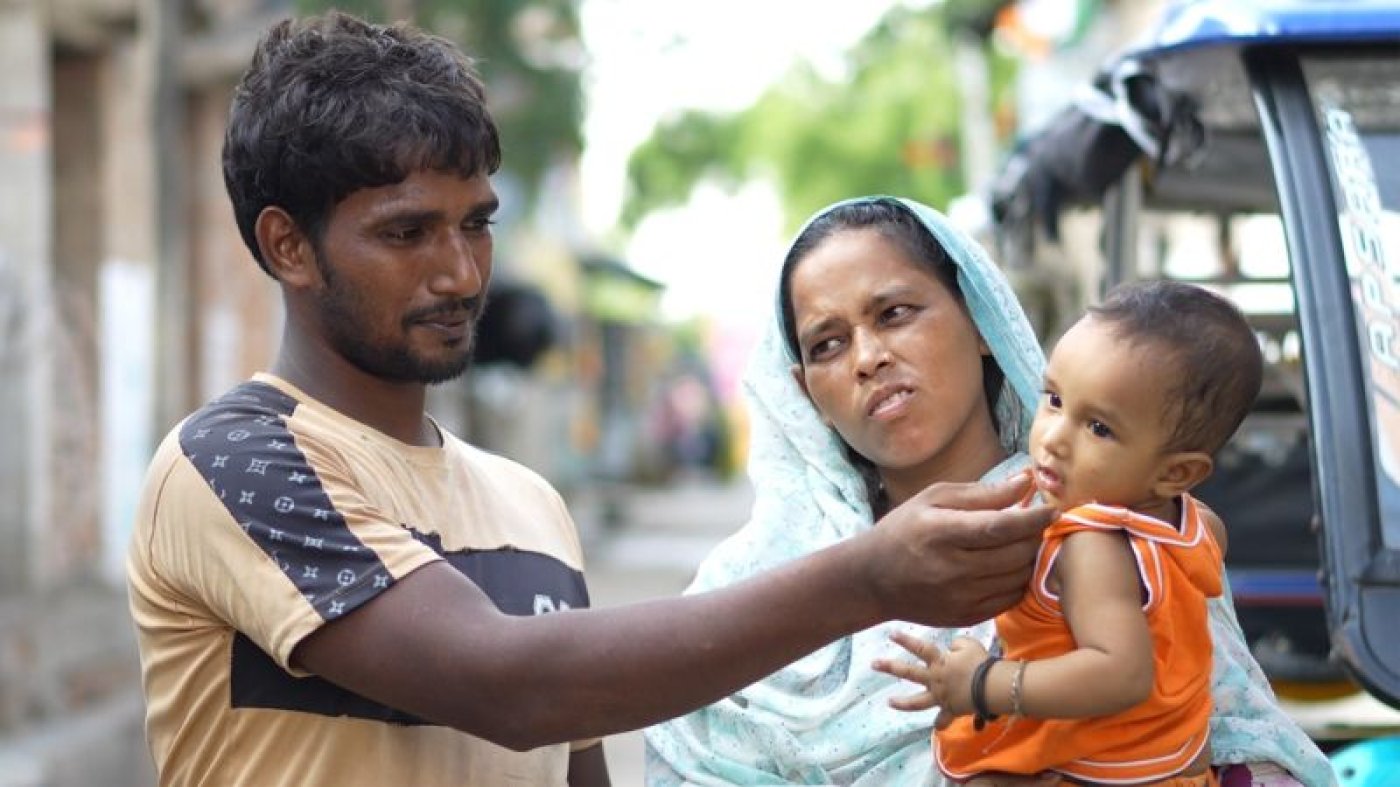
Kolkata: Dozens of flashlights illuminated the darkness at 10.30 pm on 8 July 2026 when Sweety Bibi and her two sons, 17 and 7, reached their home in southwestern West Bengal.
Outside their brick-and-clay home with a tiled roof, relatives and neighbours waited. About a kilometre away, a similar crowd had gathered at another home, waiting for Danish Sekh.
It was a homecoming worth celebrating.
Sweety, Danish and the two boys had returned after spending a year in Bangladesh, deported from India for what courts later suggested may have been no fault of their own.
Danish's wife, Sunali Khatun, had been deported with them. But she and her 8-year-old son had been allowed to return six months earlier, leaving her to endure months of anxiety over her husband's fate.
“May it never happen to anyone else,” Sunali told Article 14 in December 2025.
The ordeal haunted Sunali. She was plagued by nightmares of wandering through forests in Bangladesh without food or water, days passing without seeing another human being.
When the families reunited on 8 July 2026, they were still struggling to comprehend the events of the previous year.
Sweety was tired and angry when Article 14 spoke to her. “Isn’t it absurd that someone can just be picked up and thrown out of the country purely on a whim?” she said. “I still can’t believe this really happened.”
The courts would later question how the deportations were carried out. Detained by Delhi police on 21 June 2025 as suspected Bangladeshi migrants, the six were expelled from India within days despite insisting they were residents of West Bengal.
Their families were not informed. Authorities did not verify their citizenship claims before deportation. Official records identified them as residents of a Bangladeshi village that neither they nor subsequent inquiries could locate.
Snatched From A Delhi Slum
Sunali’s village, Paikar in West Bengal's Birbhum district, lies nearly 300 km north of Kolkata and about 15 km from the Jharkhand border. Home to around 3,000 households, it has prospered in recent decades on remittances from migrant workers who left for cities across northern, western, and southern India.
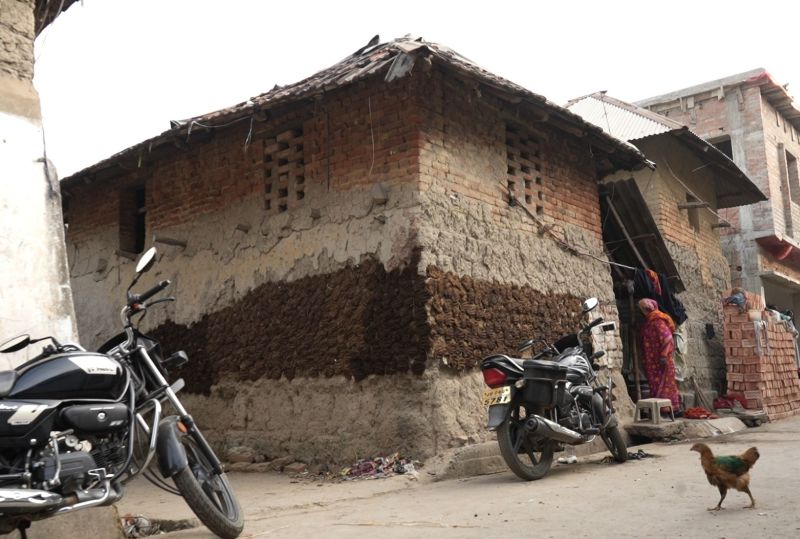
On 18 June 2025, Sunali, 26, her husband Danish, 28, and their son Sabir, 8, were in their shanty in Bangali Basti, a slum in Delhi's Rohini neighbourhood, about 1,300 km from Paikar, when police arrived looking for undocumented Bangladeshi migrants. Officers picked up Danish along with many others.
From a neighbouring shanty, police picked up Sweety Bibi, 33, and her two sons, Kurban, 16, and Imam, 6. Two days later, as Sunali went to the police station to inquire about her husband, she and her son were detained as well.
The families survived on low-paying jobs as domestic workers, ragpickers and daily-wage labourers. They were produced before the Foreigners Regional Registration Office (FRRO) in R K Puram.
The FRRO issued deportation orders on 26 June 2025. A day or two later—none of them is certain of the exact date—they were taken to Assam and pushed across the border into Bangladesh, without informing their families.
Relatives in Birbhum learnt of the deportations only after receiving word from Bangladesh.
The Courts Intervene
After the families approached the Calcutta High Court, a division bench on 26 September 2025 ordered the union government to bring them back immediately. The court termed their detention and deportation “illegal”.
The Centre challenged the order in the Supreme Court, which orally observed that the deportees should first be returned to India; questions over their citizenship could be resolved later.
When the court was informed that Sunali, lodged in a Bangladesh jail, was in an advanced stage of pregnancy, the Centre agreed to bring her and her minor son back on “humanitarian grounds” to verify their citizenship. Sunali and Sabir returned in December 2025. Shortly thereafter, she gave birth to a son.
Finally, on 22 May 2026, the union government told the Supreme Court that it would also bring back Danish, Sweety and her two sons for citizenship verification, “keeping in view the peculiar facts and circumstances of the case”. The government said the decision should not be treated as a precedent.
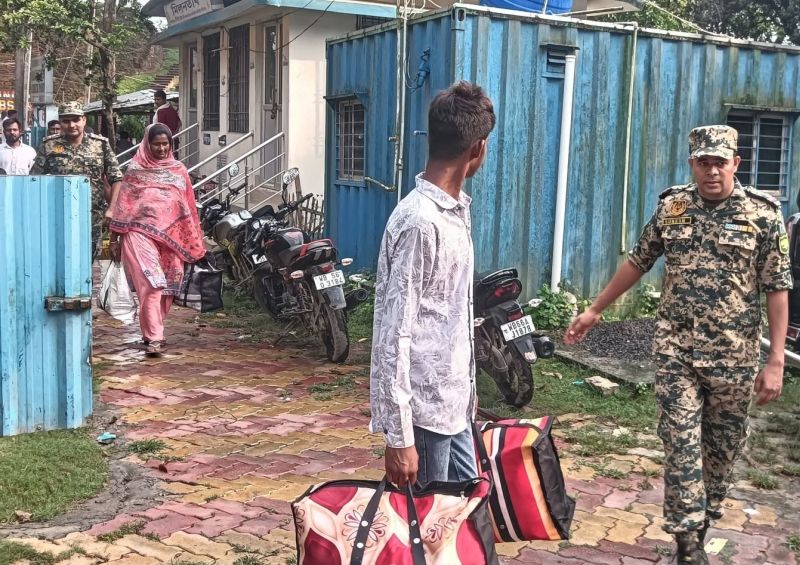
When Danish returned with Sweety and her sons on 8 July 2026, sorrow and joy filled both homes in Paikar. Danish saw his newborn son for the first time. Sweety's 10-year-old son, Imran—missed by the Delhi Police during the June 2025 sweep because he had stepped out to a grocery shop—was reunited with his mother and brothers after a year apart.
Yet the families remain haunted by a question that, they say, should have been resolved before they were ever deported.
Sweety told Article 14 the day after her return that they repeatedly urged the Delhi Police officer questioning them to contact officials in their native village in Birbhum and verify their claims.
"But he seemed desperate to deport us," she said. "Maybe he was looking for a good promotion."
A Flawed Deportation
A ministry of home affairs guideline issued on 2 May 2025 states that when a person detained as a suspected Bangladeshi or Myanmar national claims to be a resident of another Indian state, authorities must contact that state for verification. The verification process is to be completed within 30 days. Only if no report is received within that period can deportation proceed.
In the case of Sunali, Danish, Sweety and the three children, the deportation order was issued just five days after their detention.
The order identified all six as residents of "Molargangchepuarpaar village, Post Office: Depusarpaar, Bagerhat, Bangladesh"—a place none of them had ever heard of. Article 14 could find no trace of such a village through inquiries in Bangladesh.
Sunali's father, Bhodu Sekh, said Delhi Police never contacted West Bengal authorities.
“When we learned from others in Delhi that Sunali, Danish and Sabir had been picked up and taken to K N Katju Marg police station, we went to Paikar police station with all our documents,” Sekh Sheikh said.
In court, he submitted land records dating back to 1952, among other documents, to establish the family's Indian citizenship.
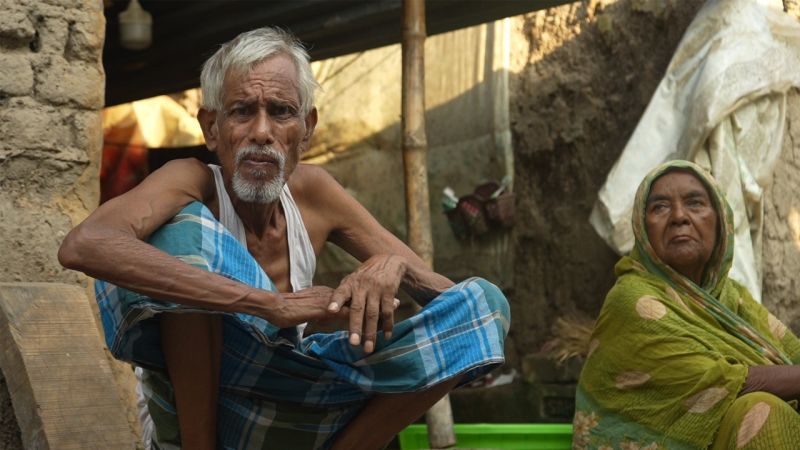
The Paikar police conducted their own inquiries and confirmed that the family were village residents. The Calcutta High Court noted in its 26 September order that their report, emailed to the KN Katju Marg police station, received no response.
The division bench identified multiple shortcomings in the inquiry, including inconsistencies in the investigation records. While section 9 of the Foreigners Act, 1946 places the burden on an individual to prove they are not a foreigner, the court said that provision did not allow the State to “pick up a person at random, knock at his/her door and tell him that he is a foreigner”.
Authorities, the court said, must first possess some material basis to suspect that a person is a foreign national.
“Suspicion, however high, cannot be a substitute for actual proof,” the court observed.
‘Run—Or Get Shot’
Late on 27 or 28 June 2025—none of them remembers the exact date—the six were taken out of a police vehicle and left at the edge of a forest.
Sunali, who grew up near forested stretches in Birbhum, said she had never seen darkness like it. They did not know where they were. The Border Security Force personnel who brought them there ordered them to run into the forest. They refused.
“The BSF personnel said, ‘run, or get shot’,” Danish recalled.
They ran.
A man, two women and three children, carrying no food, money or identity papers. Everything had been taken away before they were expelled.
“The police took away everything before throwing us out,” said Sunali.
The terrain was uneven, muddy and overgrown. They spent the first night near the forest's edge, too frightened to venture deeper into the darkness. At daybreak, they began walking in search of a village. Days passed without finding a single habitation.
"After four or five days, we realised we were circling in the same areas," said Danish.
A Circular Ordeal
By then, exhaustion and hunger had set in. Sweety and Sunali worried most about Sabir and Imam, who cried constantly from hunger. All they had was river water.
Finally, after six or seven days, they stumbled upon a village. Residents gave them food and water. Only then did they learn they were in Kurigram district of Bangladesh and had been pushed across the border from Assam.
A local panchayat member informed Border Guards Bangladesh (BGB), which took them to a border outpost and sheltered them overnight.
The following day, BGB personnel told them they would have to try crossing back into India through another forested stretch. They were instructed to keep running and not stop—even if Indian border guards ordered them to.
They ran.
The ground was slippery. They kept falling, getting up and running again. At some point, BSF personnel heard them and shouted: "Halt!"
The six kept running.
Moments later, armed BSF personnel stood in front of them with guns pointed at them. “They beat us black and blue,” said Danish. They were forced back into Bangladesh and handed over to the BGB once again.
This time, some BGB personnel advised them to travel to Dhaka and look for work. They followed the advice.
For about a week, they survived in the Bangladeshi capital. Sweety and Sunali washed dishes at an eatery. Danish worked as a mason's helper. At night, they slept in a warehouse.
A commercial vehicle driver then suggested they move to Chapainawabganj, a district bordering West Bengal, where they might find a way back into India.
They moved to Alinagar village.
Sweety and Sunali helped with household work. Danish and Kurban picked up odd jobs. But on 20 August 2025, the Chapainawabganj police tracked them down and arrested them as illegal Indian immigrants.
A court sent all six to jail.
The Battle To Bring Them Back
As families in Birbhum pursued their legal battle, they also sought help inside Bangladesh.
The breakthrough came through West Bengal's ruling Trinamool Congress.
More than three decades ago, Faruk Ali had lived in Kashimnagar village within Paikar police station limits. In 1993, he moved to Chapainawabganj, where the rest of his family had settled after Bangladesh's creation.
TMC Rajya Sabha member of Parliament Samirul Islam arranged for Paikar resident Mofijul Sheikh to travel to Bangladesh and meet Ali.
The six needed a Bangladeshi citizen willing to stand surety for their bail. Ali agreed. As a result, all six were released on bail on 1 December 2025.
After Sunali and Sabir returned to India later that month, the remaining four moved into Ali's home in Chapainawabganj. Before returning, Mofijul Sheikh left them money to help them survive.
Life there was largely an exercise in waiting.
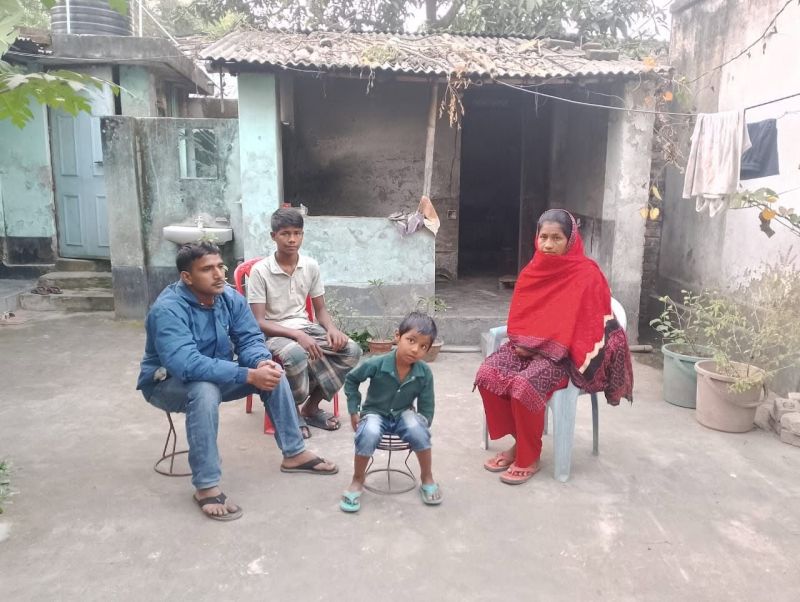
They were not allowed to work. Police checked on them regularly. Occasionally they helped Ali's family or neighbours with small tasks and received a little pocket money in return.
“The neighbours were truly helpful,” Sweety recalled. “They checked on us if we needed anything. They gave us rice and vegetables on several occasions.”
She remains deeply grateful, she said.
Ali telephoned on the night of 8 July 2026 to make sure they had reached home safely. A neighbour called the next morning. The families say they would never have made it back without Samirul Islam's intervention.
"We could not have fought this battle on our own," said Sunali. "Even for the battle ahead, we are depending on him."
The Battle Ahead: Proving Citizenship
Proving citizenship is the family’s next battle.
They were neither the first nor the last West Bengal residents to be deported as suspected Bangladeshis.
In mid-2025, Amir Sheikh from Malda; a young couple, Fazar and Taslima, from Nadia district; Nazimuddin Mondal from Murshidabad; and Minarul Sekh and Mustafa Kamal Sheikh from Purba Bardhaman district were pushed into Bangladesh and later brought back.
As recently as July 2026, Sahida Fakir, a 40-year-old resident of North 24 Parganas district, was detained in Mumbai and deported to Bangladesh within five days. As of mid-August, she remained stranded there.
“This exposes how the deportation process has been full of flaws,” said Kirity Roy, secretary of a human-rights organisation called Banglar Manobadhikar Suraksha Mancha (MASUM). “First, push-back itself is an informal approach. This is creating scope for deportation without basic verification.”
Many of those who were later brought back by the BSF did not have to separately establish citizenship. Most returned after videos of them stranded in Bangladesh went viral in West Bengal, triggering political controversy.
The case of Sunali, Danish and Sweety, however, has taken a different course. They returned through court orders, and their citizenship remains formally under scrutiny.
The Predicament
During a hearing in December 2025, Supreme Court Justice Joymalya Bagchi observed that if Sunali could establish that she was the daughter of Bhodu Sekh, that would be sufficient to prove her Indian citizenship.
Sunali's parents, Bhodu Sekh and Jyotsna Bibi, appear in the 2002 electoral roll for Murarai assembly constituency. Both names survived the Special Intensive Revision (SIR) of West Bengal's electoral rolls in 2025-26. Sunali's Aadhaar card identifies Bhodu Sekh as her father. But she has no birth certificate.
Having moved to Delhi at a young age, she enrolled as a voter there. The family says they can no longer locate her name on Delhi's electoral rolls and believe it has been deleted.
Sweety faces a similar predicament. She has lived in Delhi since 2000-01, but her name too has disappeared from the capital's voter rolls. Her father, Saitul Sekh, remains on the electoral roll in Jharkhand's Pakur constituency. Her mother, Lazina Bibi, appeared on electoral rolls in West Bengal and Jharkhand between 1995 and 2012.
Following West Bengal's recent SIR exercise, however, Lazina’s name was placed in the "under adjudication" category. She has appealed before a tribunal, but with more than two million appeals pending, the process could take years.
Danish's family possesses land records dating back to the 1970s. He has an Aadhaar card and a school-leaving certificate, but no birth certificate.
Whether these documents will be sufficient to establish the citizenship of Sunali, Sweety and Danish—and, by extension, that of their children—remains unclear.
After a year in exile, the families are back in Paikar. But the question that should have been answered before they were deported remains unanswered: are they Indian citizens?
This reportage was supported by The Reporters’ Collective Investigative Journalism Fellowship.
(Snighdhendu Bhattacharya is an independent journalist and author based in Kolkata)
Get exclusive access to new databases, expert analyses, weekly newsletters, book excerpts and new ideas on democracy, law and society in India. Subscribe to Article 14.