
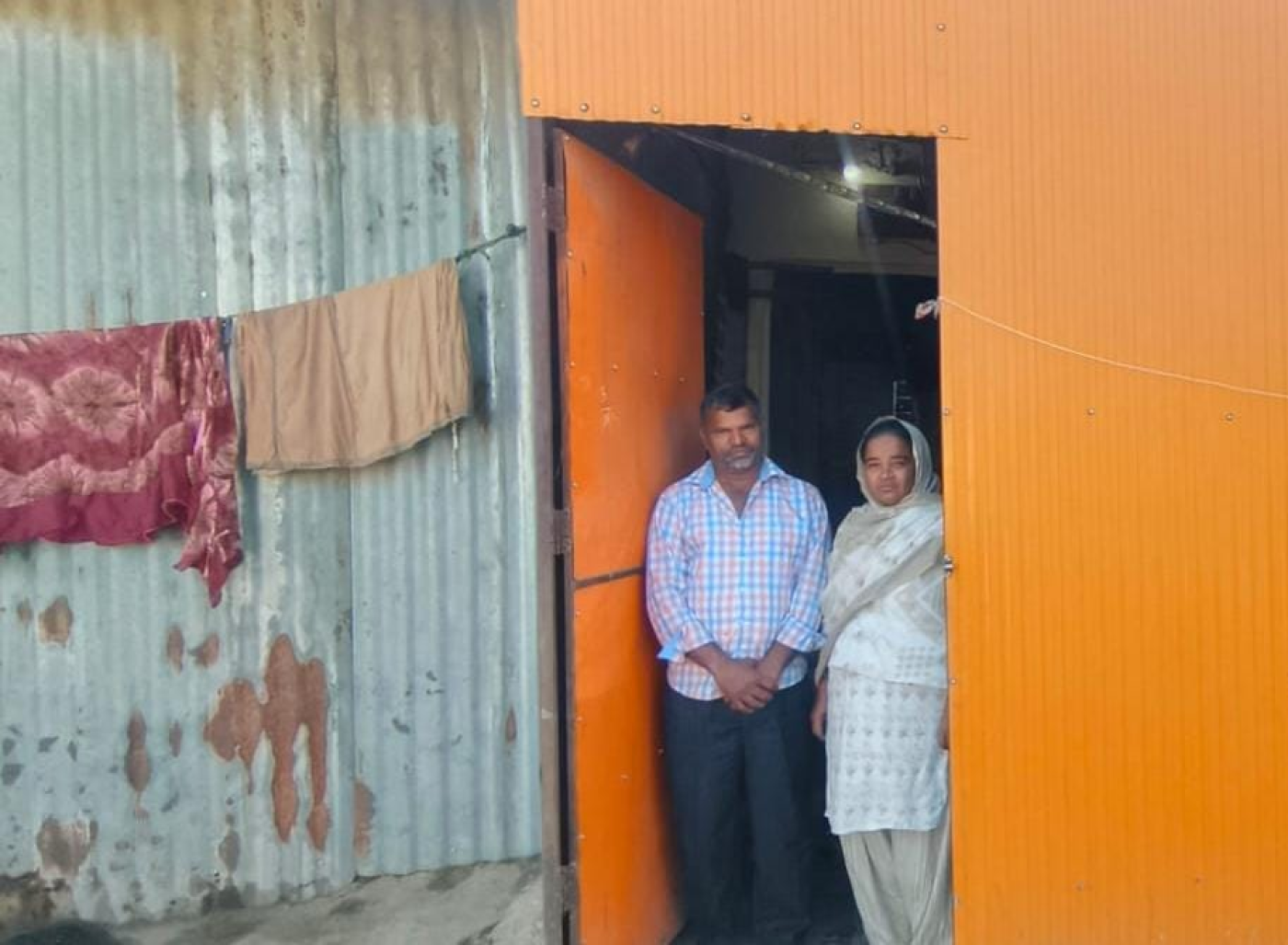
Mumbai: Rahim Khan never flinched.
Not when relatives, worried about rising anti-Muslim feeling, prodded him to move to a Muslim-majority neighbourhood, not when the neighbouring city of Jamner burned with communal tension, not when he heard rumours in 2024 that a Dalit man had been attacked a few kilometers away after a Hindu mob mistook him for a Muslim cattle thief.
Through it all, Khan, a 50-year-old mild-mannered soya bean farmer, stayed put in his Hindu-majority village of Betawad Khurd in northern Maharashtra, driven by the belief that it was going to remain untouched by the hatred that gripped the world beyond it.
Betawad Khurd was, after all, the place where generations of his family had lived. The village of 600 Hindu households—and just four Muslim—was his ancestral home; the people, his family.
“We had been here for at least 150 years now,” he told Article 14 over a phone call. “It never mattered, just how long we had been there for because the villagers never let it feel like this was a Hindu-majority village.”
That belief sustained him all his life.
In August 2025, his life changed.
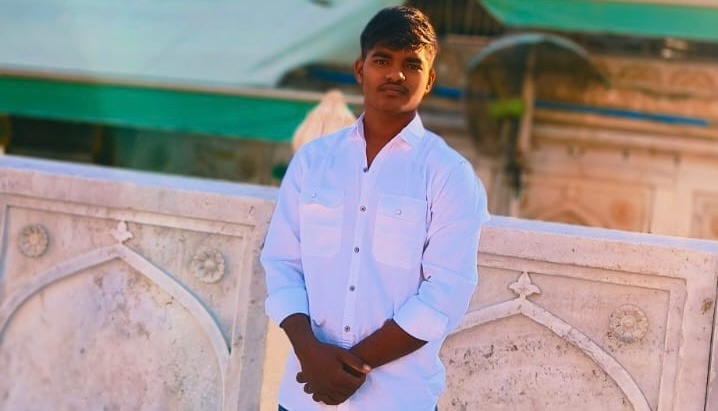
On 11 August, his 20-year-old son Suleman Khan Pathan, an aspiring policeman, was lynched by a group of Hindu men, including some of his closest friends from the same village. The murder occurred at the village bus stand, just where the village began.
Many watched, but no one came to the rescue of the amiable young man who had grown up with almost exclusively Hindu friends and celebrated Hindu festivals with them.
Something inside Khan snapped.
Three weeks ago, about 100 days after his only son was beaten to death by a mob that comprised those who knew him and one of his closest friends, Khan and his wife left Betawad Khurd forever, heading to the neighbouring district of Buldhana.
In doing so, Khan became the latest reiteration of a pattern (here, here and here) evident across areas that experienced hate crimes: Muslim victims forced to abandon homes in search of safety; peaceful, mixed faith co-existence shattering, as victims rushed to the safety of community ghettos.
A Hard Decision
The decision to move out didn’t come easy to Khan and his wife, Tabassum.
“In happy times and sad, the first ones we turned to were the villagers,” Khan said, wistfully looking at the village, lying beyond his three-acre farm on a video call with this author.
Each time the outside world, beyond his village, reared its head with images of communal hate, or Islamophobic rhetoric and hate crimes targeting Muslims, Khan would drown it out by looking around at the Hindus who he surrounded himself with.
When Khan was injured on the farm, bleeding profusely, his Hindu friends and neighbours rushed him to a nearby hospital. Even the doctor couldn’t believe the camaraderie between the two communities, said Khan, with a smile.
“When he saw Hindus bringing me, an injured Muslim, to the hospital, he thought I had been attacked by those Hindus,” said Khan, his voice breaking on the phone call. “I had to tell him they were my friends”
His friends helped him raise money for his treatment, and Khan said they had saved his life.
Or all the times that Jalgaon district, known for communal riots (here, here and here) witnessed tensions and violence, but Khan and his family remained insulated. “There was never any sign of these tensions in the village,” he said.
Hindus and Muslims would mark occasions together. “It didn’t matter if it was Eid or Diwali, we would all be in each other’s homes all the time,” Khan said. “We would feed them, they would feed us, even during ceremonies like pitru paksha.”
Months before the lynching, Khan’s daughter was getting married. The wedding was held outside the village, and many could not have travelled. So, Khan organised a separate vegetarian feast, only for the villagers, and about 1,000 villagers attended.
But in August, when he needed them, no one showed up, he said.
Many saw the mob methodically battering his son Suleman, then taking turns to beat Khan, his wife Tabassum, even his daughter, Muskaan.
That’s when Khan realised that the world beyond had now infiltrated his village.
Heartbreak After Heartbreak
According to the police chargesheet filed in the Jamner sessions court, Suleman was with a minor Hindu girl in a café in Jamner town, when a group of Hindus barged in, dragged him out of the café and kidnapped him, metres away from the Jamner police station.
The group, consisting of members of the far-right Shiv Pratisthan Hindusthan, were incensed at the friendship between a Muslim boy and a Hindu girl. Its founder, Manohar Bhide, now known as Sambhaji Bhide, had in 2023 asked his followers to mow down Muslim men who engage in what he called love jihad, an unproven conspiracy theory that claims Muslim men seek to lure Hindu women into conversion.
Over the next five hours, more men joined in, stripped, kicked and battered Suleman, including with wooden sticks and iron rods. Four of the accused charged with Suleman’s death were from the same village.
One of them, Abhishek Rajput, was one of Suleman’s closest friends, someone Suleman called his “jaan”, as Article 14 reported in August.
Eventually, the mob brought him to the village, and started beating him at the bus stand, just metres from his home, at which point Khan, his father, wife and daughter intervened.
That moment brought home a bitter realisation for Khan. “At least 50-odd people gathered around us, while the mob attacked my son, and his entire family,” he said. “Not one person intervened, or tried to rescue us.”
In the days after the murder, Khan defended the villagers to his family.
“Khan would tell us that the villagers must be scared, since the mob had sticks and rods and were threatening villagers to not support the family,” said his son-in-law Mehboob.
In the days to come, some Hindu villagers even came and expressed regret at what had happened. “They felt terrible that they couldn’t help out,” Khan recalled. For a while, he felt reassured.
Then, last month, the four villagers accused of killing Suleman, received bail from a local court, only because the Jamner police did not file the chargesheet within the mandatory 90-day deadline, with the family accusing the police of complicity.
As Article 14 reported in November 2025, the annual Dussehra march in Jamner on 1 October was led by some of the police officials investigating the lynching, including the former investigation officer.
Thousands of Shiv Pratisthan members marched through the streets of Jamner with tridents, swords and lathis. In some videos of the event, processionists break into Islamophobic slogans. One of them: Durga ban tu Kali ban, kabhi na burkhe wali ban (Become Durga, or Kali, but never become a Muslim woman).
Prime Minister Narendra Modi had once called Shiv Pratisthan’s founder, Manohar Bhide, “param aadarniya guru”—prime respected guru. Bhide has long been close to senior Bharatiya Janata Party (BJP) and Shiv Sena figures, including Maharashtra’s chief minister and deputy chief minister.
For the family, the prospect of having to cross paths with their son’s killers was unnerving.
Face to Face With His Son’s Killers
Then, finally, it happened.
Days after they were released, Khan came face-to-face with one of the four accused, Ranjan Matade, 48.
He had known Matade all his life, as the brother of a classmate in school.
But now, seeing him across the street made Khan feel angry and helpless.
Then, last week, in court, Khan saw the other three accused who had been released. “They stood less than a foot away from me, and kept giving me side-eyed glances,” he said. “Main kuch nahi kar paaya. Alif se bey tak nahi bol paaya (I could do nothing, couldn’t even utter a letter.)”
With their release, he started hearing whispers in the villager that made him feel helpless. “Villagers came and told me that people close to the accused were boasting about their release. ‘Humne uske bete ko maara, lekin woh kuch nahi kar paaya,’” he heard them say. We killed his son, but he could do nothing.
For Khan, it was one betrayal after another.
It felt like the village that he held close, the village he thought was cut-off from the outside world, was slipping away.
Late last month came another reminder.
Time To Leave
His wife and him were sipping chai on a winter afternoon when she suddenly started choking, unable to breath, unable to even speak. Khan rushed her to the hospital.
She was overwhelmed by memories of Suleman and his suffering before he died. The doctor told Khan his wife had suffered a panic attack.
Khan realised why. The spot where the family found Suleman, right outside their house, was the one they kept passing each time they left home. Each time, the lynching came alive in their memories. Being in the village he loved so dearly all his life, was now taking a toll.
“Had he been attacked somewhere else, we could have lived in this house,” he said. “But it happened right here—all those men stripped him and he was lying right outside our home, naked, and bruised. How do we forget that?” he asked.
That’s when Khan was convinced, with some prodding by his relatives, that he had to move out of the village.
“His wife’s health also brought home the realisation that if there was a medical emergency, his family was far away and there wouldn’t be anyone to take them to the hospital,” said Mehboob.
“Before the lynching, he would tell us that the villagers would be there to help out,” said Mehboob. “But now, there is no guarantee that they will stand by us.”
A Pattern Is Evident
The Khan family’s move out of the village, though rooted in the dynamics of the family and the case, form a part of a pattern seen across sites of such hate crimes—the rupture of harmonious co-existence and a move towards ghettoisation.
In May 2017, in an Uttar Pradesh village called Soi, 60-year-old Ghulam Mohammed was lynched by a mob consisting of men from the right-wing Hindu Yuva Vahini for suspecting his support in a Muslim boy eloping with a Hindu girl from a neighbouring village.
Mohammed’s family had lived in the village for generations, but when the couple eloped, Hindu villagers blamed Mohammed, even celebrating the release of his killers from jail. Mohammed’s family could not bear to see it, and left the village forever months after the lynching.
Similarly, the family of Mohamed Aklaq, the 52-year-old whose lynching in the Bisada village of Dadri in Uttar Pradesh in September 2015 made national headlines, were forced to leave their village soon after the incident. Rumours that the family had stored and eaten beef galvanised Hindus from the village, where Akhlaq’s family had lived for generations.
After the murder, Hindu villagers had grown hostile towards Akhlaq’s family. Of the 30-odd Muslim families in the village, at least eight reportedly moved out after the lynching.
The departure of the victims’ families is not just a personal tragedy—it reflects a broader pattern seen after communal violence, said Nidah Kaiser PhD, a researcher at the University of London, who has studied multiple sites of anti-Muslim hate crimes.
Kaiser visited sites of anti-Muslim hate crimes as part of her field work for her doctoral research on vigilantism and the law.
“One direct impact of communal violence is ghettoisation and segregation,” said Kaiser. “The reality for most Muslims is that such a move (to Muslim-majority areas) provides a safe space for them. When such a hate crime occurs in a mixed faith village, the other faith groups often turn against the victims.”
In Betawad Khurd, Khan experienced this phenomenon first hand in the weeks after Suleman’s lynching. When word spread that the family was moving out, a few Hindu villagers came to them with what he said were feeble appeals to stay.
But the day he was moving, everything seemed different.
“When our belongings were being loaded onto a small truck, many villagers came and stood, watching us load,” said Khan. “Not one of them helped us, not one of them stopped us.”
(Kunal Purohit is an independent journalist and author of the book H-Pop: The Secretive World of Hindutva Popstars.)
Get exclusive access to new databases, expert analyses, weekly newsletters, book excerpts and new ideas on democracy, law and society in India. Subscribe to Article 14.