
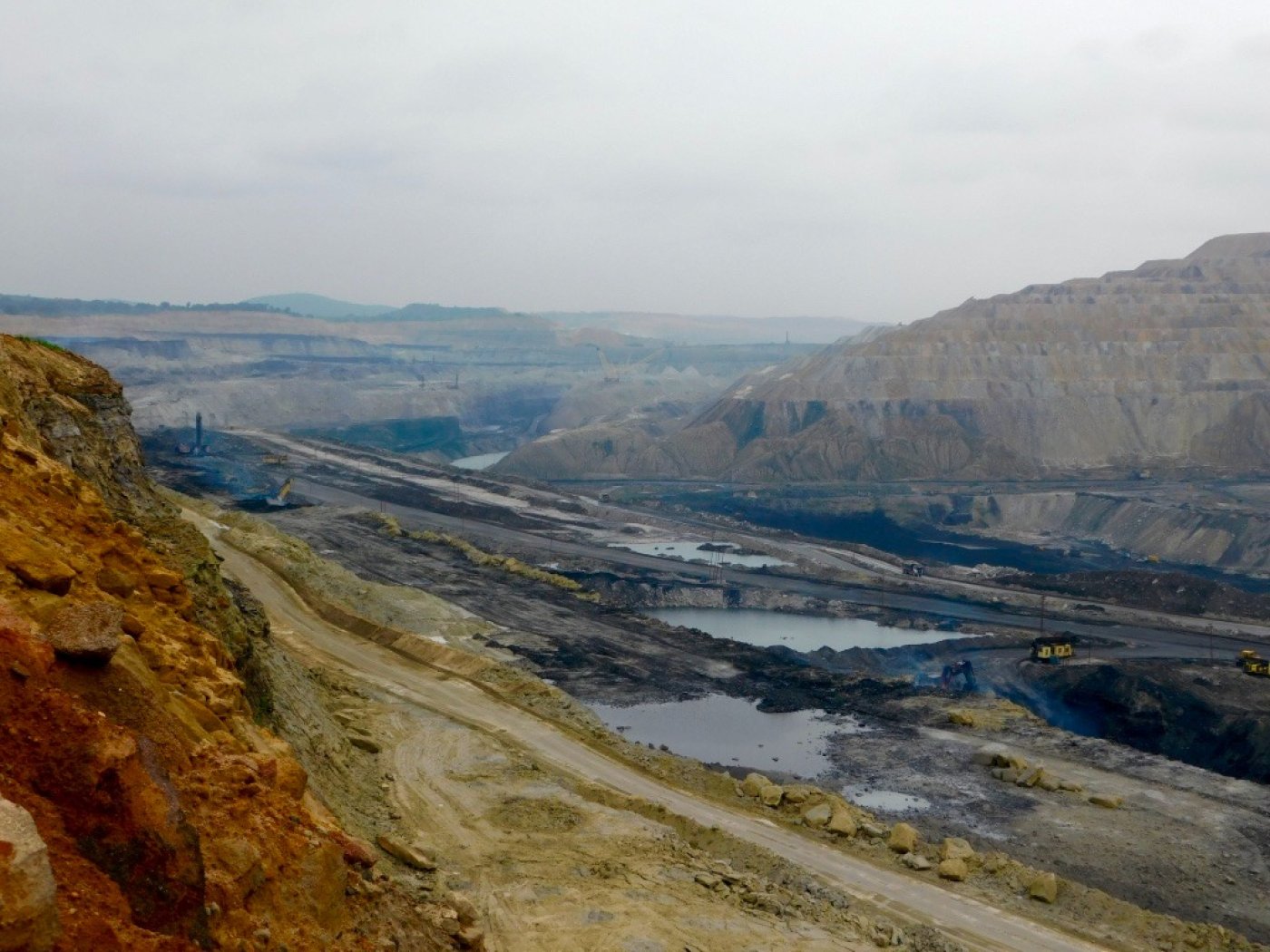
Singrauli, Madhya Pradesh: In 2021, Rajendra Prasad Basor, a resident of Medhauli village, which falls in Ward 10 of Singrauli Municipal Corporation in north-eastern Madhya Pradesh, was surprised to get a document from Northern Coalfields Limited (NCL), the wholly owned subsidiary of the public sector undertaking Coal India Limited (CIL) that manages the mine that has for years been encroaching on the very boundaries of Medhauli.
Ward 10 is one of several wards—around a quarter of the town is expected to be demolished—in the coal town that is scheduled to be subsumed for the expansion of Jayant and Dudhichua, two opencast coal mines run by NCL.
After years of waiting, Basor expected to receive, based on compensation rates he had been promised in 2017, around Rs. 800,000 for his five decimals (0.05 acres) of land.
To his dismay, the new document announced that his compensation—and that of everyone else in the village—would be reduced by 20% to Rs. 6,00,847. The reason was that compensation had been recalculated after a second land survey in 2020.
“NCL mapped our village in 2011 and did a ground verification in 2017,” said Basor. “And now in 2021, they are saying that their own verification was wrong. How is this fair?”
Officials at NCL used a conveniently timed reduction in official land prices by the Congress state government to reduce compensation for the entire town.
The land acquisition was originally notified by the Gazette in 2010 under the Coal Bearing Areas (Acquisition and Development) Act (CBA), 1957.
In 2017, the ministry of law and justice, under the Bharatiya Janata Party-led government, issued an order saying that if compensation had not yet been determined, compensation would be calculated under the 2013 Right to Fair Compensation and Transparency in Land Acquisition, Rehabilitation and Resettlement Act (LARR).
LARR was drafted to match market rates—from two to four times the value of land notified by the state—and promised higher compensation to landowners than the CBA.
NCL had not announced compensation for the acquisition at the time, so it was obliged to do so under LARR, due to which landowners like Basor were promised higher compensation in 2017 than they would have received under the CBA.
Despite having issued one round of compensation notifications, when the then chief minister Kamal Nath, of the Congress Party government, reduced the notified value of land across the state by 20% in 2019 to reportedly boost construction and real estate transactions, NCL seized the opportunity.
It reduced compensation in 2020 using a resurvey that was not mandated by either LARR or CBA, at the request of the general manager of NCL—ostensibly to address corruption allegations in compensation—but which resulted in lower compensation for rightful beneficiaries across the board.
Multiple landowners who are set to lose their land in the mine expansion showed Article 14 documentary evidence that Northern Coalfields issued fresh compensation notices from 2020 onwards that reduced their compensation award by 20% after initially announcing higher compensation rates in 2017.
There is no provision in the land acquisition laws that foresees a situation in which a state abruptly drops its guideline rates, as occurred in Madhya Pradesh, nor any rule preventing a company from redefining compensation awards once announced. Yet, if the guideline rates had increased, it is unlikely they would have increased the compensation in the resurvey.
"It is in the coal company’s interest to apply the more limited compensation,” said Vasudha Chhotray, professor of politics and development at the University of East Anglia Norwich, who studies coal mines in Odisha. “It is in the peoples' interest to get the highest compensation.” This, however, is not an equal negotiation ground, she added.
Itay Noy, a social anthropologist at University College London, studies coal extraction and compensation politics in Jharkhand. “I definitely haven’t come across any significant instances of [acquisition of] urban lands, in urban areas, for mining,” he said. “So, to me that is also relatively novel compared to the quite vast literature and scholarship but also popular public facing pieces about dispossession, most of which I think are in relation to rural communities.”
Rajesh Singh, who runs a truck conglomerate, represents an association of around 25,000 people of Singrauli who are, among other things, protesting the change in compensation rate.
“This is the first time in the history of Coal India Limited that residential and commercial spaces are being resettled,” said Singh.
He alleged that CIL had been given the mandate to create an acquisition model that can be replicated across India.
Article 14 sought comment from the general manager and public relations officer of NCL via email and WhatsApp on 10 March 2026, and from the district collector of Singrauli via email on 11 March. There was no reply. We will update this story if there is a response.
Despite protests and complaints by residents, the acquisition process continues.
Acquisition For A Fading Mine
The acquisition in Singrauli is unique. Large-scale urban displacement for development projects has largely been restricted to hydroelectricity projects, such as the town of Tehri for the Tehri Dam or Harsud for the Narmada Valley Project. Both predate the LARR and are not entwined with the CBA Act, as Singrauli is.
Even as global temperatures have risen by 1.55 degrees Celsius, India continues to work to expand its coal base to meet its energy security and development agenda.
While entities such as the World Bank engage with CIL and the ministry of coal to effect a just transition in coal mining districts, the future of energy in India remains dependent on the expansion of coal.
Equally concerning is that the Jayant mine is set to be exhausted as early as March 2034, according to its Mine Closure Plan, in less than eight years.
“We do not really see progressive coal mine closures in any linear way on the ground,” said Chhotray, explaining that mines do not tend to remain closed. “Some may be only temporarily closed. It depends on economic and technical assessments by companies.”
As coal subsidiaries plan for the energy transition and mine closures, they have had to balance multiple global and domestic pressures. Noy said, “I think there are significant downward pressures by CIL to cut down [expenditure] wherever possible, increase productivity, and increase profits. A lot of these subsidiaries have been operating at a loss for quite some time now.”
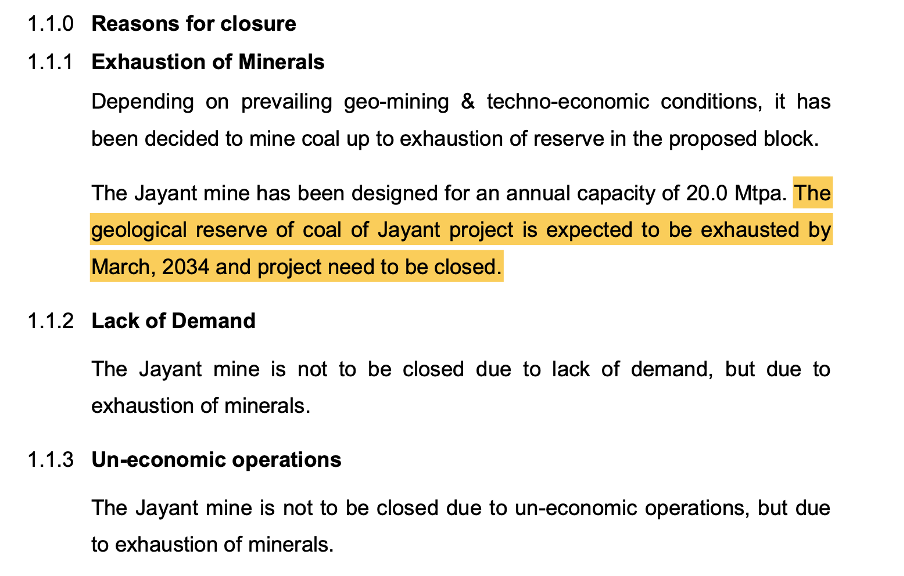
The urgency, according to NCL, is that if they do not expand the mine, the National Thermal Power Corporation (NTPC) power plant in the southern part of the city will no longer be able to function, as the powerplant is dependent on coal from the mines in the area.
According to NCL’s annual report for 2024-2025, their profits were already declining, yet they had taken on a mine expansion that was not economically feasible.
“This mine expansion is not compatible with our national or local goals for a just transition to other energy sources, nor is it compatible from an economic growth perspective,” said Sugandha Srivastav, a lecturer in environmental economics at the University of Oxford, who has co-authored a study comparing the relative merits of the CBA and the 2013 LARR.
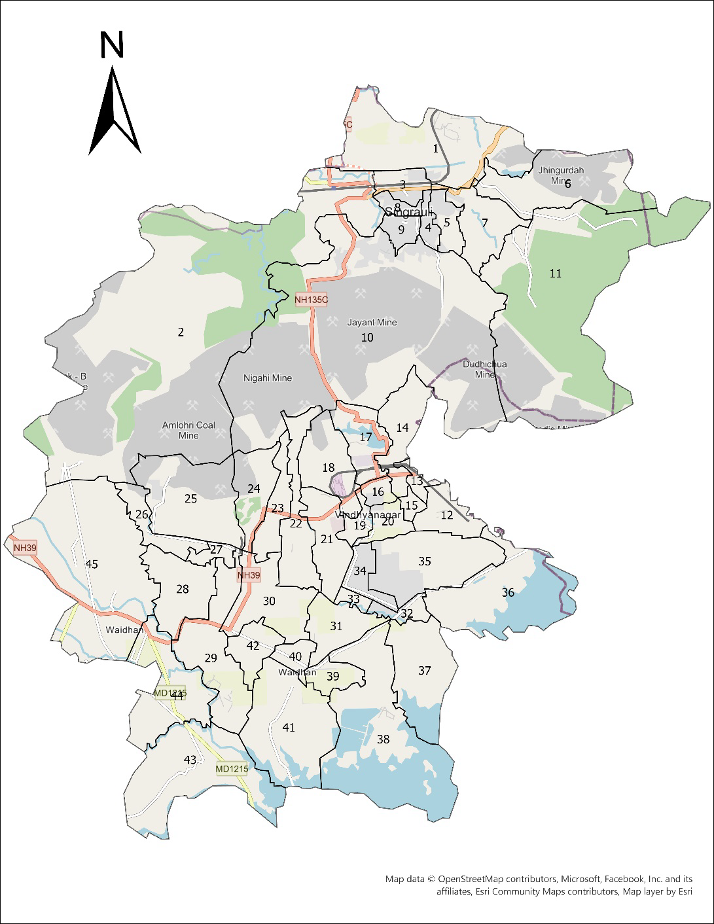
Under The Shadow Of Mine Expansion
Singrauli, which is the namesake and headquarters of the district it is in, houses the headquarters of Northern Coalfields Limited, while Waidhan, about 25 km away, is home to its municipal council, collectorate, police headquarters, and the largest thermal power plant in India.
Once a resettlement town for communities that had been dispossessed by a dam and the surrounding coal mines, Singrauli, with a population of around 2.2 lakh in 2011, is now home to small business owners and workers who moved there for the ancillary industries supporting the coal mines.
Wards 3 to 10 house 50,000 residents and have over 22,000 residential and commercial buildings, which have been condemned for the expansion.
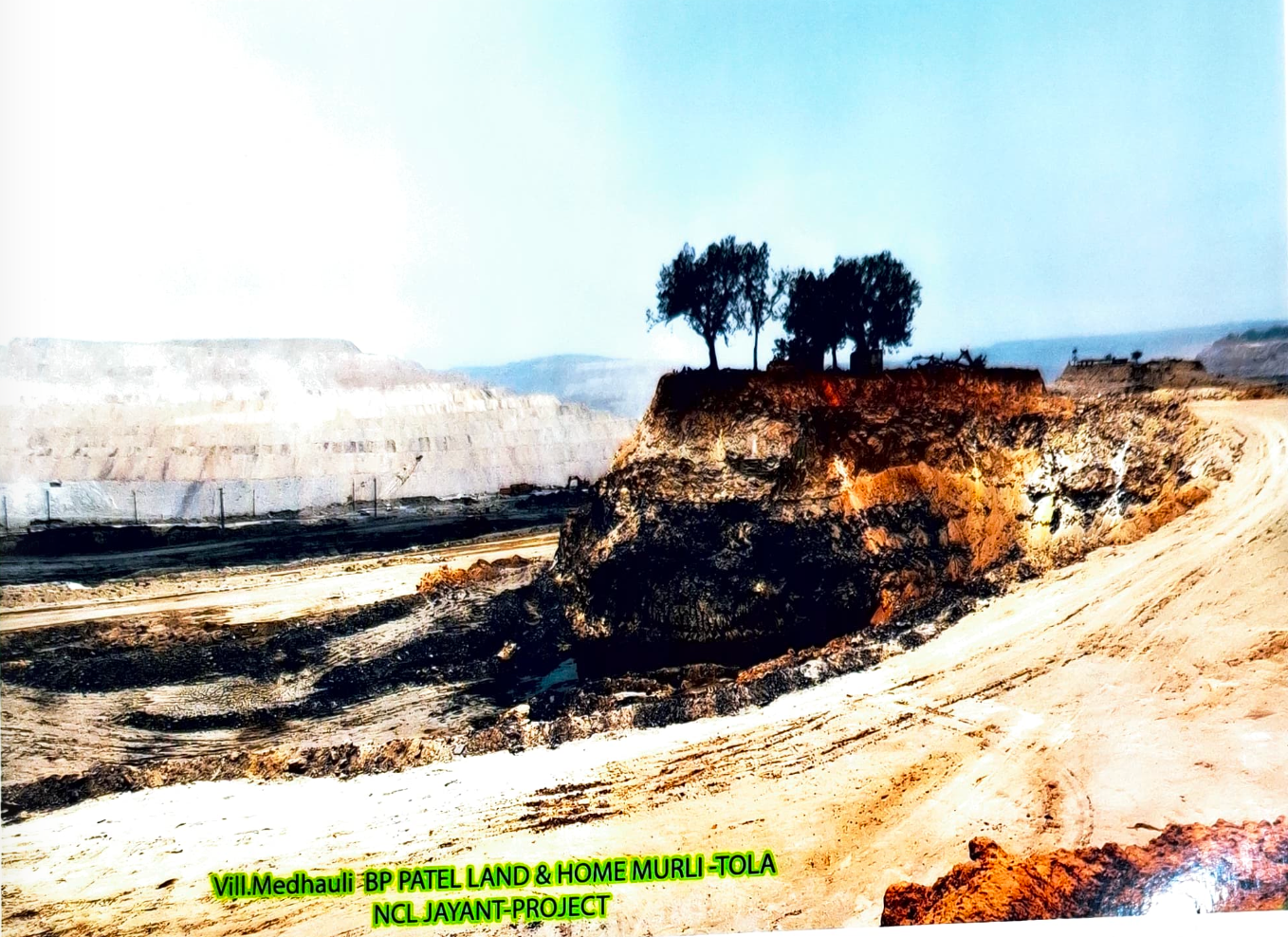
Singrauli’s municipal corporation is the second richest in Madhya Pradesh after Indore, owing entirely to the coal mines and thermal power plant that surround it. Yet, Medhauli, a Scheduled Caste-dominated village within the limits of the Nagar Nigam, has missed out on the development in the town of Singrauli for decades.
Basic rules such as a minimum safety distance to be maintained from the mine have not been applied here. The village is on the very edge of Jayant opencast mine, with one house, belonging to Balendra Patel notably on an outcrop beside the mine itself.
Satellite images (Google Earth and Sentinel) show the expansion of the coal mine Jayant, at the bottom of the pictures) into Ward 10 that includes Medhauli, a village in the Singrauli Nagar Nigam zone, from 2006 (left) to 2025 (right)/ PARSA KESHVARAZ ALAMDARI
Land Acquisition And Guideline Rates
Under the CBA Act, acquisition rates are low, pegged to land rates declared by the government, which are well below market rates. The CBA Act does not require the state to seek consent from landowners, given the national interest implications of coal as a source of energy.
All an acquiring coal company—in this case, NCL—had to do was to notify the area as set to be acquired through a gazette of the central government and start surveys under Section 4, declare acquisition under Section 9, and pay compensation under Section 13, the last of which is determined as per the tenets of the the colonial era Land Acquisition Act of 1894.
The trouble, for NCL at least, started with the passing of the 2013 LARR Act. In one stroke, the central government had increased compensation for acquisition to approximate market rates: four times the price of the guideline rate for rural areas, and twice for urban areas.
A guideline rate, also called the collector rate or circle rate, depending on the state, is the government-notified price of land. It varies by what the land is being used for—commercial, industrial or residential buildings, or irrigated or unirrigated agricultural land.
Stamp duties during property transactions are collected based on the guideline rate. Market rates, which represent the actual value of the land transaction, are typically higher than guideline rates.
Real estate interests often lean on the government to keep the guideline rates low so that they can maximise profit. People whose land is being acquired by the government, however, prefer higher guideline rates.
When the new acquisition act came into effect, this meant NCL’s compensation for land acquisition would also increase.
This is where the effort to make sure that people got as little compensation as possible began.
Avoiding Guideline Rates
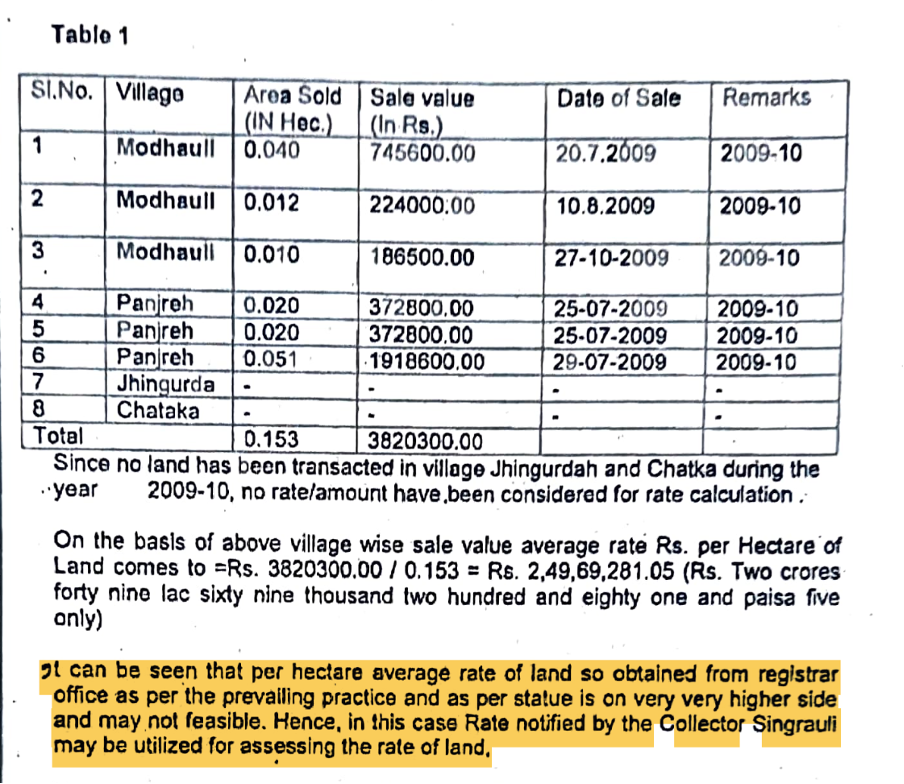
A 2012 document from NCL’s noting sheets on the fixing of rates for land in Medhauli, obtained via a right to information (RTI) request by a Singrauli activist, reflects the dilemma NCL would find itself in after acquisition costs soared under the LARR.
NCL had appointed a committee to determine compensation to people in villages at the borders of Singrauli town, under section 13(5) of the CBA Act. It was using the market value of the land at the time of the notification of acquisition in 2010 as a calculation guideline.
The NCL-appointed committee decided that the rates were “on very very higher side and may not feasible”.
It decided instead to apply lower guideline rates instead. This is in keeping with NCL’s duty to itself to minimise project expenses.
In any event, NCL would not be able to go forward with just the collector rates for a simple reason: the passing of the LARR the following year.
The new acquisition act added safeguards for landowners and those who lived off the land alike.
It introduced concepts like having the state seek the consent of all stakeholders before it acquired land and introduced the requirement of a social impact assessment.
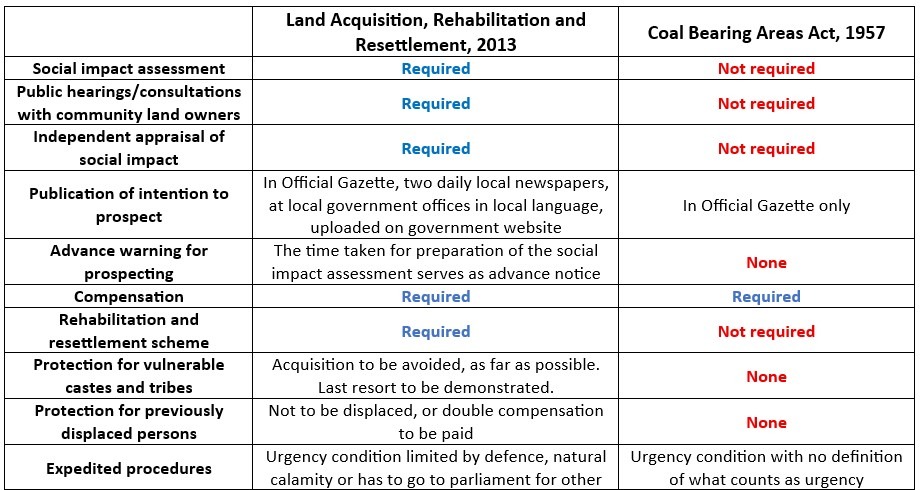
None of these safeguards applied to Singrauli, since the land was being acquired under the CBA Act. The only part of LARR that NCL had to apply was the compensation mechanism according to the act: twice the market rate of land, as calculated by average sales deeds in the area.
Paying twice the guideline rate, as NCL indicated in 2012, was also beyond its capacity.
The 2015-2016 annual report of NCL reiterates this concern, saying, “High cost of R&R [rehabilitation and resettlement] for land to be acquired in wake of the provisions of RFCTLARR Act 2013 may make new/expansion projects unviable…”
Multiple CIL subsidiaries were in the process of acquiring land under the CBA Act, and they too would be affected by the introduction of the new law.
The ministry of coal swung into action and asked the ministry of law and justice to clarify how and when the CBA Act would be applicable.
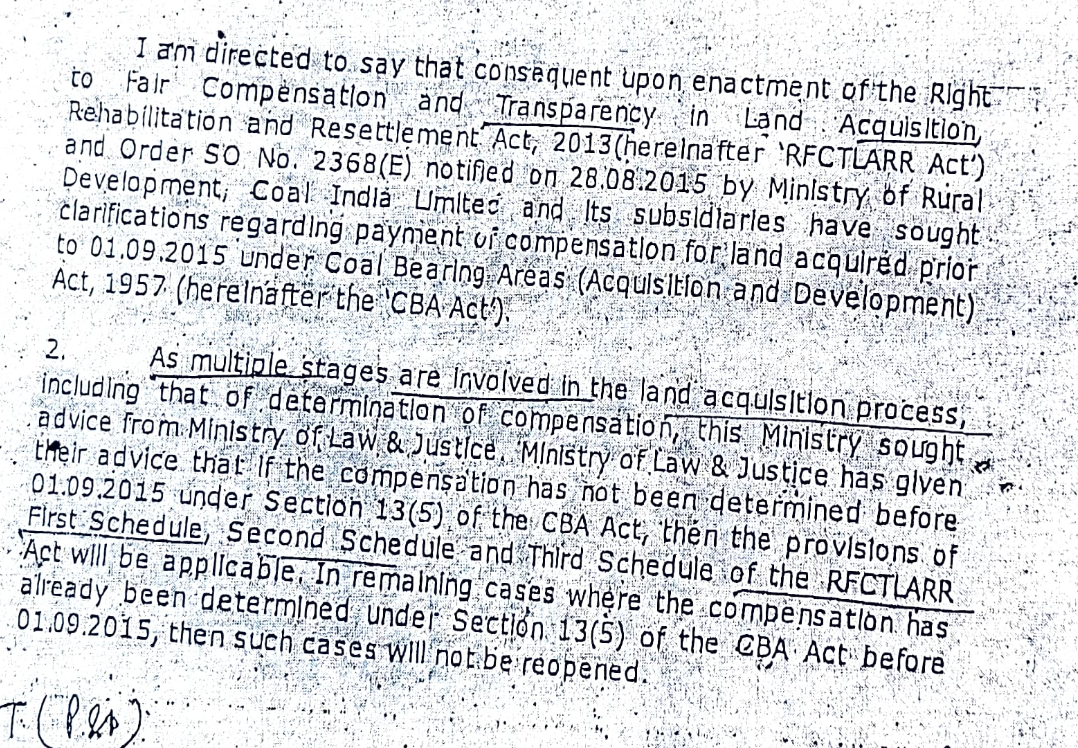
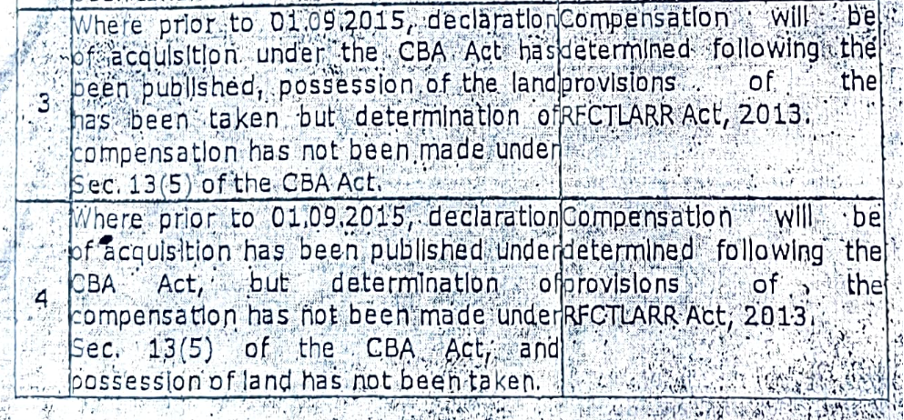
On 4 August, 2017, the ministry of coal wrote to CIL, copying all its subsidiaries, that on 30 June, 2017, the law ministry had issued an executive order that said if compensation had not yet been determined under section 13 (5) of the CBA Act, LARR’s tenets would apply.

Singrauli was still at the stage of section 9 of acquisition under the CBA Act, with compensation yet to be determined, therefore the new, higher calculations would apply.
Calculating Compensation
Despite its misgivings of high compensation rates, NCL had no option but to comply. In 2015, it conducted extensive surveys of land in the area, with the purpose of estimating compensation. In 2017, it issued notices of compensation awards, with payments calculated according to the 2013 LARR.
With market value considerations added, compensation rates immediately increased, going up by as much as 17% for some beneficiaries, according to documents landowners shared with Article 14.
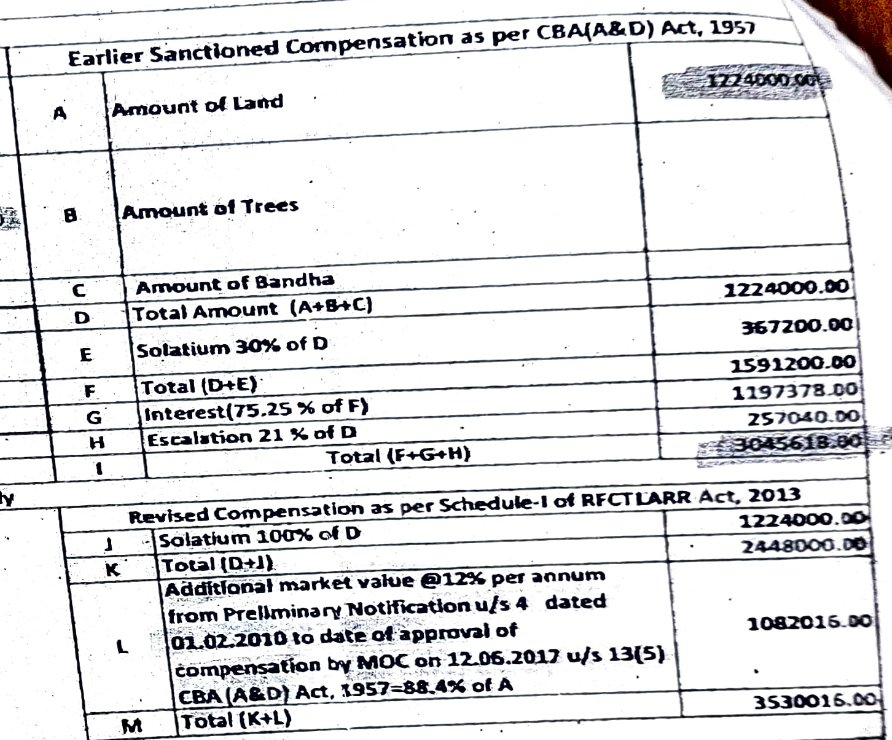
This would not last.
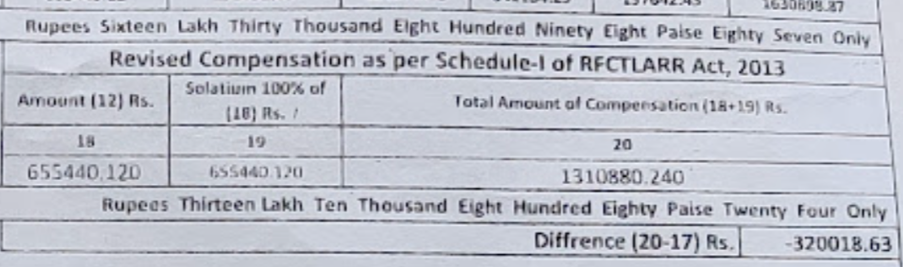
In 2020, beneficiaries across Singrauli were dismayed to be handed new notices of compensation awards. NCL had done a new survey and had recalculated the amount they would be paid. This time, payments went down by 20%.
“We are already dying from living here and NCL is now killing us,” Kes Kumari Basor, another resident of Medhauli, said. “They want us to break our houses and only then will they give us compensation. And that too is reduced.”
Akhilesh Basor, 30, added, “NCL says it has made the mistake in the survey, but we have to deal with the cost. They treat us as if we are the criminals—and because NCL is like the government here, we have to bear it.”
Guideline Rates Changed
This drop in compensation was based on two events.
One was slightly less than routine—the revision of guideline rates by the district collector (DC) of Singrauli district in 2019-20, following an order by then chief minister Kamal Nath, who reduced guideline rates across the state by 20%.
Every year, the state of Madhya Pradesh publishes guideline rates for all districts. Guideline rates often tend to increase, reflecting standard inflation in land prices and sales, and the desire of the government to have a greater share of taxes in property transactions.
In almost all of Singrauli’s wards, as in the rest of the state, the guideline rate of various land types dropped by 19% to 20% instead.
At the same time, there was increasing pressure in Hindi newspapers (here and here) on ongoing fraudulent cases of people buying land condemned to be acquired in benami—or proxy transactions—building large structures on them, and then claiming compensation worth lakhs or crores from NCL.
NCL decided to take action. In a letter to the DC in February 2020, the general manager of NCL noted that there were individuals who had built structures on land after the declaration of acquisition but before the declaration of compensation.
Land transactions had been frozen by the declaration of acquisition under Section 9 and the awards of 2017-18 should also have indicated a final settlement of the matter.
However, NCL’s general manager asked the DC for assistance in conducting a resurvey of the area, specifically asking for help to identify three groups of people: house owners whose houses were built on land that did not belong to them, people whose houses had been built after Section 9 was declared in 2011, and people whose houses were half-built, where nobody could stay in them.
A week later, the DC notified 17 teams to conduct the new survey, with officials drawn from the Public Works Department, patwaris—village-level accountants— from the DC’s office, and NCL.
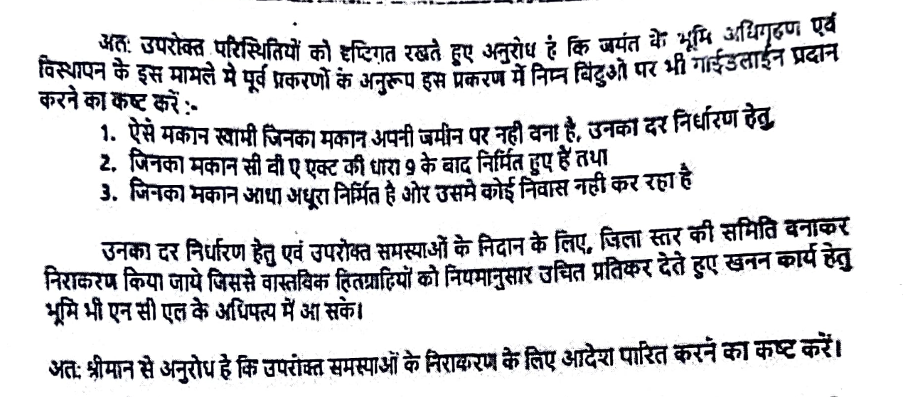
While NCL took six years, from 2011 to 2017, to announce the first round of compensation, it took a mere 10 months to issue notices of revised compensation by December 2020.
To their shock and dismay, original landholders who had not built new houses on their land after acquisition were notified, found their compensation reduced by 20%.
It is not the stated contention of NCL anywhere in the public domain that people whose compensations were revised were fraudsters or had intended in any way to unduly deprive NCL.
Yet without stating a specific reason, NCL recalculated all compensation awards based on guideline rates that had changed in 2019-20, well after the fixed cut-off date of 2015, by which the first compensation awards had been calculated.
Fighting Back
From the most vulnerable Scheduled Tribe landowners in Medhauli to monied tycoons running ancillary businesses for the mines, people have submitted complaints to NCL and the DC, based on the rights given to them under Section 8 of the CBA Act.
Article 14 has seen multiple copies of these complaints. None of them has been addressed.
The 2016-2017 annual report of NCL indicates internal questions on the uniformity of the compensation procedures across CIL projects, with the company’s statutory auditor saying, “The Company has uniform treatment of land acquisition entries as well as interest on delayed payment of land compensation to the Project Affected Persons (PAPs).”
Meanwhile, NCL’s 2023-2024 annual report notes that the Comptroller and Auditor General flagged NCL for compensation discrepancies.
Abhyuday Singh, a landlord from Singrauli who is organising protests to demand interest be paid on delayed compensation, said he would return to his hometown and abandon his business altogether.
“What is the point of staying here and waiting for the pollution to kill us,” he said.
One of Rajesh Singh’s, the head of the Singrauli residents’ association, demands is that residents of Singrauli who stay on rent and are not landowners—a significant part of the population of the migrant town—also be considered under the provisions of LARR that apply to stakeholders who do not own land.
“People want to give their land, get better housing elsewhere, away from the pollution of the coal mine,” said Singh, echoed by other residents of Singrauli.
But they want to do it at a fair value.
(Mridula Chari is an award-winning independent journalist from Mumbai and Denise Fernandes is an Assistant Professor of Global Environmental Politics, Whitman College, U.S.A.)
Get exclusive access to new databases, expert analyses, weekly newsletters, book excerpts and new ideas on democracy, law and society in India. Subscribe to Article 14.