
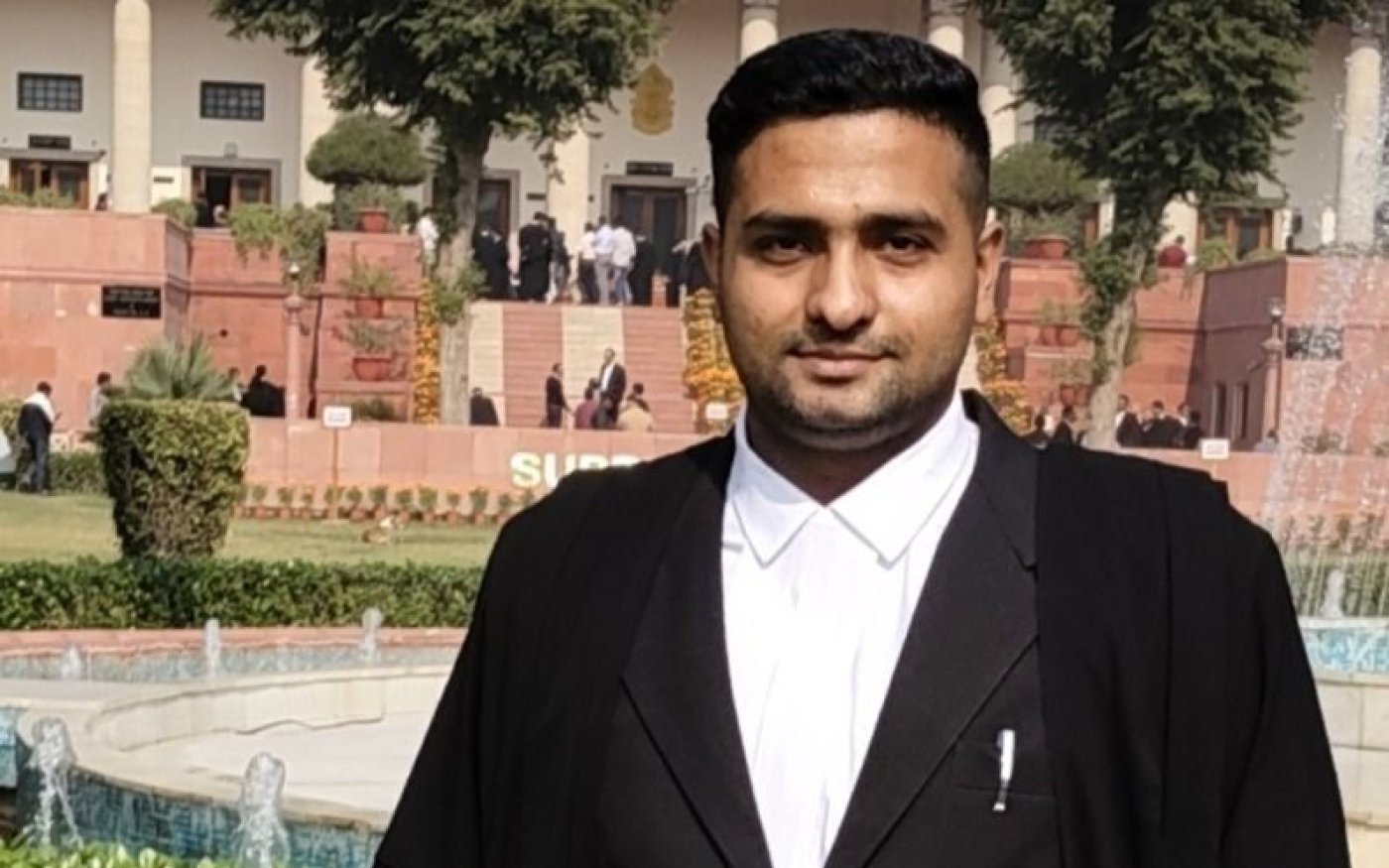
Indore: “They (Police) are public servants, not kings. This (Interim order) is a response to those who say courts do nothing against the police.”
These were the words of 24-year-old advocate Asad Ali Warsi, whose intervention application, claiming the police had used the same two witnesses in over 150 cases, prompted the Supreme Court, on 13 January, to order the removal of Indramani Patel, station house officer (SHO) of Chandan Nagar police station, Indore, in Madhya Pradesh (MP).
In its interim order, the Supreme Court held that Patel had “resorted to/allowed repeated use of the same witnesses in support of the police version of alleged crimes.”
The court observed that using stock witnesses “goes to the very root of fairness and impartiality of investigation” and is an “anathema to a country governed by the rule of law.”
The court also remarked that Patel appeared to be “rogue”.
The issue of police use of stock witnesses arose in November 2025, when a 58-year-old resident of Chandan Nagar in west Indore, Anwar Hussain, sought bail from the Supreme Court after being accused of selling subsidised rice on the black market.
Opposing the bail plea, the police submitted an affidavit claiming that eight criminal cases have been filed or are pending against Hussain.
His counsel pointed out that in at least four of those cases, including one under Section 376 of the IPC—punishment for rape—the accused was not involved at all.
When confronted, the police admitted the error, stating that the confusion arose because the accused and his father shared the same name, and that the data was “computer-generated”.
A Supreme Court Bench of Justices Ahsanuddin Amanullah and Sandeep Mehta rejected this explanation, calling it a “lame excuse”.
The court issued show-cause notices to two senior police officers: Dishesh Agrawal, additional deputy commissioner of Indore Police, and Patel, the SHO, for “patent falsities stated before this Court in a case where the life and liberty of a citizen is concerned”.
Misuse Of Power
During the hearing, another significant development emerged.
On 25 November 2025, Indore resident Warsi filed an intervention application with the Supreme Court, alleging that during the SHO's tenure, two people—Salman Kureshi and Aamir Rangrez—had been named as witnesses in 165 cases.
Explaining the intent behind filing the intervention application, Warsi told Article 14, “It was at this very Chandan Nagar police station that a false case was registered against me in September 2024.”
Warsi said that on the night of 1 September 2024, while returning home from his uncle's house, he was stopped by the police. He alleged that the policemen were demanding a bribe.
Warsi said that when he refused to pay the bribe, the police registered a case against him under Sections 170 (arrest to prevent commission of cognizable offences), 126 (security for keeping the peace) and 135(3) (keeping the peace or maintaining good behaviour) of the Bharatiya Nagarik Suraksha Sanhita, 2023.
“Because of this, my studies suffered, and my reputation in society was damaged,” said Warsi. “The police falsely accused me of being intoxicated and registered a case against me, which was later dismissed.”
The charges against Warsi were dismissed in December 2024 by the assistant police commissioner-cum-executive magistrate for a “lack of sufficient evidence”.
Warsi believes this is not an isolated incident and that police officials in the state systematically misuse their statutory powers to oppress innocent citizens for personal gain.
Documenting The Misconduct
Over the course of one and a half months, Warsi collected data from online court records and cases that had been disposed of.
He initially identified 165 FIRs involving the same set of stock witnesses.
With more scrutiny, he said, this number rose to more than 200. According to Warsi, a witness called Salman Qureshi was named in 215 FIRs.
Article 14 has accessed the list of cases provided by Warsi.
When asked how he identified the pattern, Warsi declined to disclose his method.
“That is my secret. I won’t be able to reveal how I found it,” he said. “I just watched and observed.”
The Supreme Court described Warsi’s accusation as “a serious issue which relates to the basic and core issue of conduct of the police under the ostensible authority of the position held by them, which has a direct bearing on the confidence of the public.”
Following this, the Court made the additional deputy commissioner of police, the SHO and the police commissioner of Indore respondents in the case.
In its interim order dated 13 January, the court directed that any interference by the SHO at any police station would make the police commissioner of Indore personally responsible and answerable to the court.
Warsi said his legal journey involved significant personal risk.
In the early stages, he faced both indirect threats and inducements to withdraw the case.
“I consider this an achievement because when I first filed the petition, there was a lot of pressure. I reported the threats to the commissioner,” said Warsi. “After that, they stopped.”
Despite his relatives warning him that an “enmity with the police would not be good,” Warsi persisted. He views the Supreme Court’s order as a signal that accountability is possible.
“People get scared and don’t raise their voice, and that encourages this,” Warsi added.
Following the Supreme Court’s order, SHO Patel was removed from his post. Confirming the development, additional commissioner of police (law and order), Indore, Amit Singh said, “After the Supreme Court’s order, his attendance has been marked in the line (temporarily removed from his station). An inquiry is being conducted, and further departmental action will be taken on the basis of the findings.”
However, this is not the only case in which serious questions have been raised about the MP Police's operations.
In the past two years, 329 FIRs have been registered against police personnel in the state, the MP government informed the state assembly in a written reply on 2 December.
According to the government, charge sheets were filed against police personnel in 259 cases; 61 cases were still under investigation; seven cases were cancelled by courts; and in two cases, courts granted stays to the accused police officers.
‘Suspicious’ Prosecutions’
Courts have also had to step in to censure the MP police in other cases over the last few months.
In December 2025, a single bench of the Madhya Pradesh High Court summoned the principal secretary of the state’s home department and expressed concern over compliance with the Bharatiya Nagarik Suraksha Sanhita (BNSS), 2023, particularly its provisions governing search and seizure.
On 5 December 2025, while granting bail to 18-year-old Sohanlal, a resident of Pratapgarh district in south-east Rajasthan, who goes by a single name, the High Court observed, “Looking at the incident, this court finds that the entire case of the prosecution is rather suspicious.”
Sohanlal had been arrested on 29 August 2025 by police in Malhargarh in MP who claimed that he was in possession of 2.7 kg of opium and booked him under Sections 8 (prohibition of certain operations), 18 (punishment for offences relating to opium poppy and opium) and 29 (punishment for abetment and criminal conspiracy) of the Narcotic Drugs and Psychotropic Substances (NDPS) Act, 1985.
He was produced before a court the following day and sent to judicial custody.
According to his 24-year-old brother, Khartararam Gulecha, Sohanlal had been travelling from his hometown to Mandsaur in MP, just 32 km away, on 28 August, to visit the famous Pashupatinath Temple.
He said that the family only learnt about the arrest on 30 August. By then, Sohanlal had already been sent to jail.
“He wanted to become an officer and was planning to start preparing for the UPSC,” Gulecha said. “But after spending nearly three months in jail in a false case, his mental health has deteriorated. He has completely withdrawn.”
Gulecha said when they visited Sohanlal in jail, he told them that he was travelling home by bus on 29 August when, around 11:30 am, he was forced off the vehicle by the police and then taken to an unknown location, where he claimed they assaulted him.

Sohanlal claimed that the police demanded Rs 12,00,000 from him and threatened to implicate him in a serious case if he failed to pay.
“I am a student. Where would I get such a big amount from?” Sohanlal said.
He added that when he refused to pay, he was beaten again and later taken to Malhargarh police station around 5 pm, where the case was registered against him.
With no prior criminal record, the family initially approached several authorities, including the Human Rights Commission and senior state officials, seeking an inquiry. When they received no response, they moved to the High Court.
Officers Suspended
The case against Sohanlal began to unravel during the bail proceedings.
Himanshu Thakur, Sohanlal’s lawyer, said that contradictions in the police’s own charge sheet became central to the defence. The police claimed that Sohanlal was arrested in the evening, but CCTV footage showed him being taken away in the morning.
“The footage also showed several individuals and a Scorpio vehicle involved in the operation. Despite this, the investigating officer declined to identify the persons visible on camera, even though similar-looking persons were later shown as police personnel at the time of the arrest,” Thakur added.
On 9 December 2025, Mandsaur’s superintendent of police, Vinod Kumar Meena, informed the court that the individuals seen in the CCTV footage were police personnel posted at Malhargarh police station and that six officers had been suspended on 6 December 2025.
Justice Subodh Abhyankar in his ruling said the state police had “conveniently forgotten” the necessity of recording searches and seizures.
Mandsaur superintendent of police, Vinod Kumar Meena, rejected allegations that the case was false.
Speaking to Article 14, he said that the narcotic substance had indeed been recovered from Sohanlal’s possession.
“This case is not planted. There were some procedural lapses, which we accepted before the court,” Meena said. “Due to these lapses, we have taken action, including the suspension of officers.”
He added that steps would be taken to prevent such occurrences in the future.
Violations Of Life And Liberty
The Raja Dubey case from Indore adds another troubling layer to the growing record of police misconduct in MP.
On 26 November 2025, Raja Dubey, a 32-year-old engineer and son of a real estate developer accused in a Protection of Children from Sexual Offences case, was picked up by Chandan Nagar police and detained for nearly 30 hours without any registered offence.
Following this, Dubey’s brother-in-law, Akash Tiwari, filed a habeas corpus petition before the Indore Bench of the High Court of Madhya Pradesh.
Habeas corpus is a legal remedy that allows individuals to challenge unlawful detentions.
During the hearing, the High Court held Dubey’s detention to be a “gross violation of the fundamental right to life of a citizen guaranteed under Article 21 of the Constitution.”
During the proceedings, SHO Patel admitted that Dubey had been detained despite no criminal case being registered against him, and claimed that Dubey had been detained because his father had allegedly committed a serious offence.
The court directed the police commissioner to file a response detailing the departmental and criminal action proposed against the SHO.
However, before the police commissioner could submit the response, Dubey sought a change of counsel and then withdrew the petition.
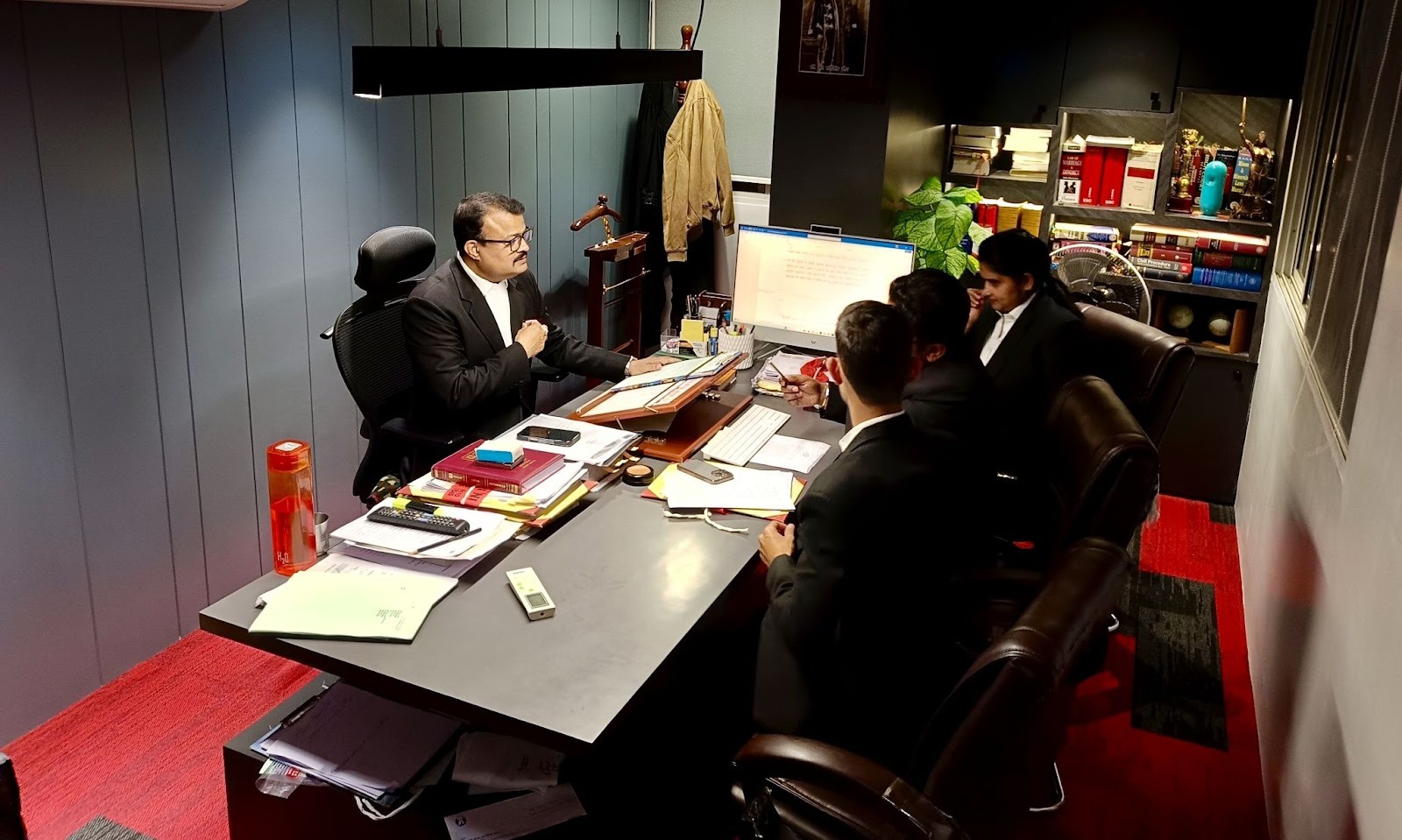
Questioning the withdrawal of the petition, Dubey’s former advocate Neeraj Soni said, “This withdrawal raised public questions about whether such a grave violation of fundamental rights should be dealt with so ordinarily.”
Dubey was released late on the night of 27 November, but Soni noted that a habeas corpus petition is not merely about physical custody.
“This was not a private dispute that could be settled quietly,” he said. “It was a matter between the state and the Constitution.”
According to Soni, Dubey received multiple phone calls, allegedly from the police officers, pressuring him to drop the case.
On the next hearing date, Soni said, an assistant commissioner of police, along with 15 to 20 police personnel in plain clothes, were present in the court premises.
Soni alleged that this pressure was intended to have him replaced as the advocate in the case. A local news report also indicated sustained police efforts to get the petition withdrawn.
Soni said preparatory work is underway for a public interest litigation, possibly before the Supreme Court, focusing on illegal detention, custodial coercion, denial of CCTV access and police assault.
Calling for an independent statutory agency to investigate crimes by police personnel, Soni said, “Today, a citizen has to complain to the same police station or officers sitting next door. You are effectively asking the victim to fight the institution that violated their rights.”
(Adnan Ali is a multimedia journalist who reports on human rights and environmental issues.)
Get exclusive access to new databases, expert analyses, weekly newsletters, book excerpts and new ideas on democracy, law and society in India. Subscribe to Article 14.