
New Delhi: Young people in India have cried, tried, and failed. When mass-produced and reproduced images of police force from 20 July spread across the country, it seemed that the courts and the opposition would take notice, and that the police might, however belatedly, be made to provide accountability.
Amnesty International’s Evidence Lab verified pellet-firing shotguns, tear-gas launchers and batons that the police used against the Cockroach Janta Party’s march.
Yet, on 10 October, the regime of violence and impunity returned with a vengeance. Around 7,000 people were reportedly detained in Delhi that weekend, and the UN human rights office called for the release of anyone arbitrarily held.
Students, lawyers and journalists have since described beatings while in custody, held in remote locations far from central Delhi, and several women have reported sexual harassment and assault by officers.
The response of the Delhi police to the protests reveals how autocratic policing operates: through physical force, mass detention, and eventually, the criminalisation of those who demand accountability.
In this article, we argue that the police excesses are a re-enactment of the Hindutva autocratic avatar of policing, where the victim becomes the aggressor.
The ‘Unmaking’ Of The Victim
In a study on police violence, one of us (Kaiser) describes the “unmaking” of the victim: the legal and bureaucratic route by which a person who has been physically attacked and harmed is denied recognition as such and recast, instead, as an offender. The pattern will be familiar to anyone who has seen an Indian police station handle criminal complaints.
The police delay or refuse to file first information reports (FIRs), audit testimonies, and eventually file a counter-case against the victim’s family, all to pressure them to ‘settle’.
On 10 October, the forms of police violence that were telecast nationally showed how the police and paramilitary forces intercepted protesters at locations across central Delhi, threw them into buses and vans, and took them to far-off makeshift detention centres. The detention vans had rectangular cells separated by prison-like bars, built to contain and mass-transport demonstrators.
Later, as reported in the media, the vans had blacked-out windows with blinders to prevent people outside from looking in, and cages inside that resembled prison cells more than a police van. In the days that followed, protesters and journalists made further allegations of custodial assault and sexual violence by the forces.
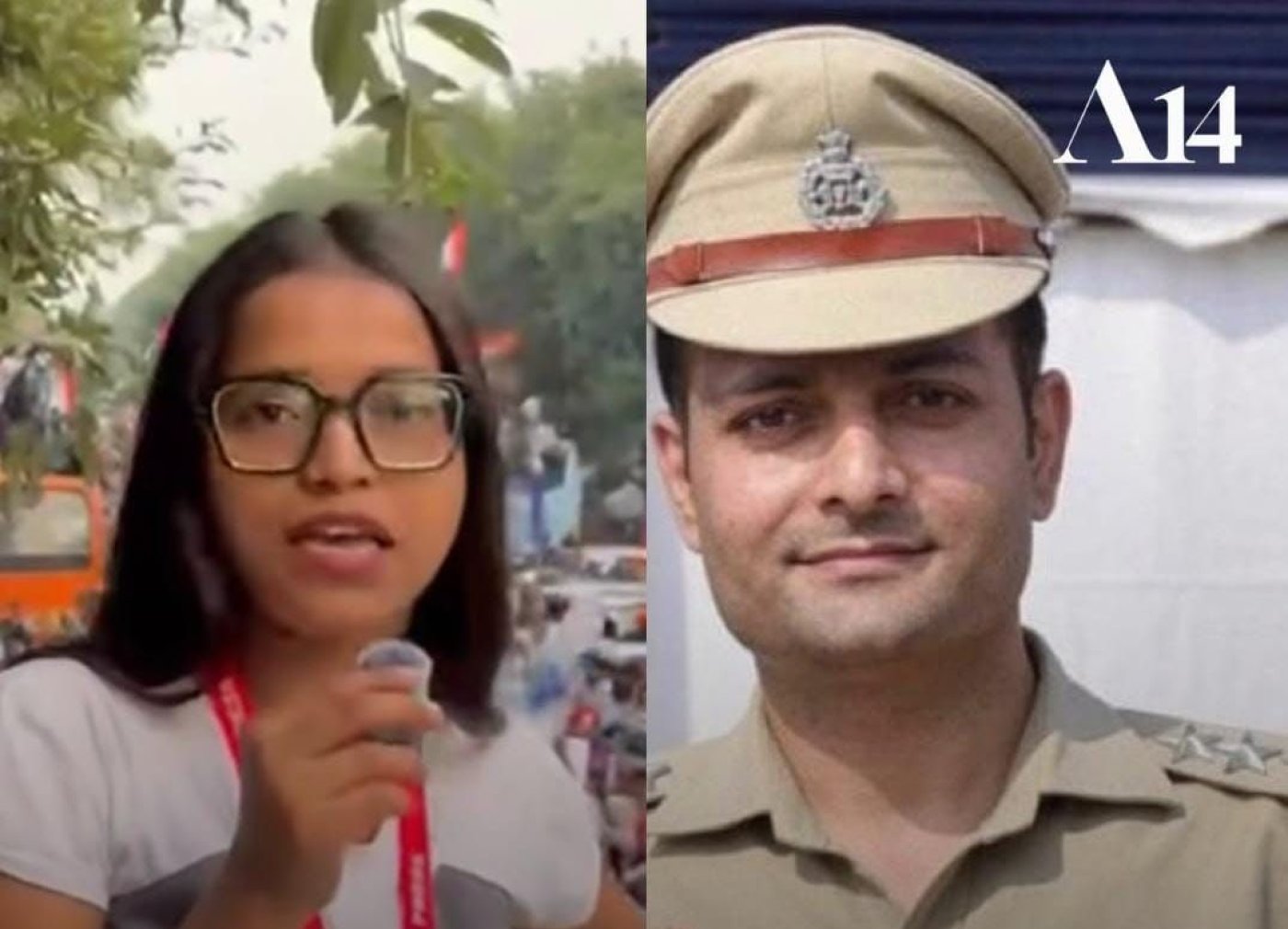
Consider what happened to independent journalist Rosy.
On 3 October, as police detained protesters near Jantar Mantar, she was one of three women journalists who complained of sexual harassment by assistant commissioner of police (ACP) Vivek Bhagat.
From Complaint To Crime
After journalists protested outside Parliament Street police station and the leader of the opposition, Rahul Gandhi, publicly criticised the police for not filing an FIR, the Delhi Police sent the complaints to the Crime Branch for an impartial inquiry.
A police official reportedly told journalists at The Hindu there was no evidence to substantiate the assault allegation. Meanwhile, the police said a viral “CCTV” image of the incident was AI-generated and arrested the Haryana man who circulated it.
An FIR is meant to establish the complaint and gather evidence through a preliminary investigation. Here, the police moved against the image’s circulator before an FIR was registered on a woman journalist’s sexual violence complaint. This is lawfare on steroids.
On 13 October, 10 days after the incident, the Parliament Street police station registered an FIR against Rosy and others at the ACP’s complaint. It alleges that she made casteist remarks after seeing officer Bhagat’s nameplate, obstructed him in his duty, and, with colleagues, later called him a sexual predator outside the police station and online. The FIR invokes the Scheduled Castes and Scheduled Tribes (Prevention of Atrocities) Act 1989, along with sections 221, 356(2) and 3(5) of the Bharatiya Nyaya Sanhita, which cover obstruction, defamation and common intention.
The FIR does not record her accusations against the officer or deem them worthy of investigation. Rosy now faces an atrocities case, and, according to her petition, no FIR was registered on her complaint when the case against her was registered. She has asked the Delhi High Court to quash the FIR, alleging retaliation.
On 15 October, the Supreme Court restrained the Delhi Police from taking coercive action against her, while the High Court, on 16 October, declined to stay the investigation.
Since the SC/ST Act is a crucial safeguard against caste-based humiliation and violence, it is important to be wary of the narrative of ‘misuse.’ Our point is a different one.
An Autocratic Avataar Of Policing
Anthropologist Sandhya Fuchs has shown how the State and dominant society defeat the Act through hegemonic narratives. Delhi police’s counter-blast SC/ST case enacts that same narrative and, in doing so, defeats the constitutional statute’s core intent.
But this case matters for its political optics and the symbolic work police procedure performs. As in previous cases, the counter-case against Rosy does not aim to secure a conviction. Its aim is to intimidate her and other protesters and their families, consume their resources, and weaken their public standing.
The criminal allegation against her has a chilling effect on women countrywide, and on other protesters who dare to challenge police violence, since it shifts attention away from the initial violence or sexual assault to the supposed criminality of the victims themselves.
Taken together, these repressive actions reveal the autocratic avatar of policing, in which the suppression of dissent is accompanied by an attempt to control the legal and political meaning of the violence itself.
The police are the institution that carried out the excessive force. They are also the institution responsible for investigating it, and have thereby become an instrument for criminalising those who report the violence they endured.
(Dr Nidah Kaiser is a postdoctoral researcher at King’s College, London. Prannv Dhawan is a lawyer and CJP spokesperson. Sabah Gurmat is an independent journalist in Delhi.)
Get exclusive access to new databases, expert analyses, weekly newsletters, book excerpts and new ideas on democracy, law and society in India. Subscribe to Article 14.