
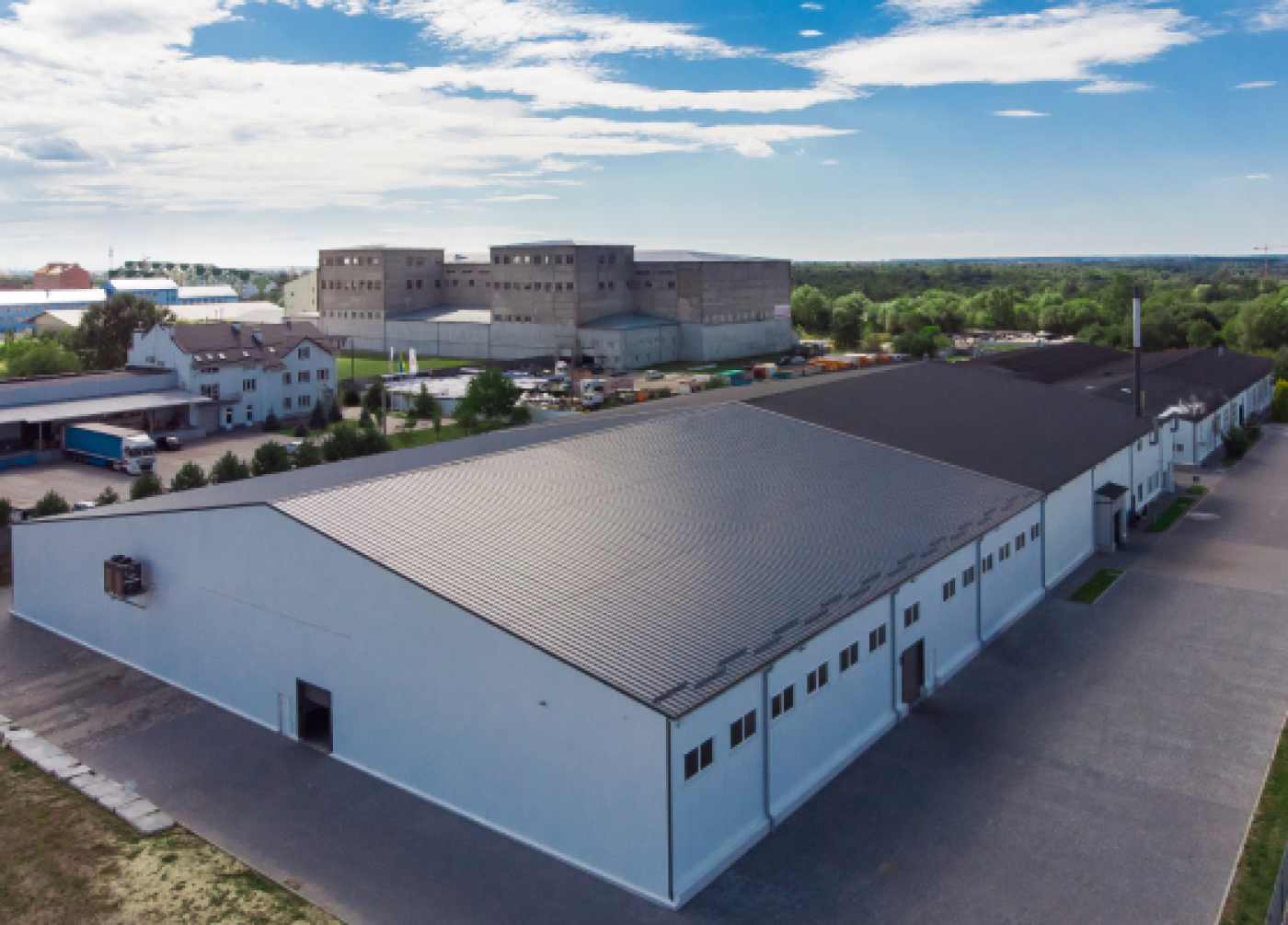
New Delhi: In early 2014, the union environment ministry told the automotive giant Maruti Suzuki that it could not construct a large industrial building without first obtaining environment clearance.
Three months later, the Delhi High Court agreed.
Yet by the end of that year, the Narendra Modi government had rewritten the rules, exempting industrial sheds from the requirement to obtain prior environment clearance.
Previously unreported government, company and legal records reviewed by Article 14 show that the policy reversal followed months of lobbying by some of the world's largest automobile manufacturers, including Volkswagen, Mercedes-Benz and Maruti Suzuki, with Volkswagen's case aided by interventions from senior Indian government officials and diplomats.
The exemption, introduced through an amendment to the Environment Impact Assessment (EIA) Notification in December 2014, survived for nearly a decade before the Kerala High Court struck it down in 2024.
When the environment ministry revived the exemption in a modified form in January 2025, the Supreme Court in August 2025 questioned the logic of excluding large industrial buildings from environmental scrutiny.
The current position is that industrial sheds, educational institutions, and other projects that were previously exempt from obtaining Environment Clearance are now required to obtain prior ECs. Volkswagen itself filed an application seeking EC for expanding its plant at Chakan in December 2025.
Yet, documents reviewed by Article 14 reveal how the government of Prime Minister Narendra Modi abandoned, under sustained pressure from industry, a legal interpretation that had been affirmed by both its own environment ministry and the Delhi High Court.
The lobbying was unusual because a handful of automobile companies bypassed the Society of Indian Automobile Manufacturers and directly lobbied the union environment ministry for 10 months. Their efforts, backed by government officials and a member of Parliament (MP), persuaded the ministry to rewrite a legal position that the Delhi High Court had already settled, effectively circumventing the court's interpretation.
These lobbying efforts were, therefore, questionable and dubious even if not illegal.
When the environment ministry amended the EIA notification on 22 December 2014, granting the auto industry what it sought, it neither explained its decision nor disclosed the lobbying that preceded it.
The notification stated that “no objections or suggestions have been received” in response to a draft issued in September 2014, despite the ministry having received representations from companies, individuals and conservation groups.
“If auto companies did reach out to the ministry before the final notification was issued, those objections should have been disclosed,” Debadityo Sinha senior resident fellow at the Vidhi Centre for Legal Policy, a think tank, told Article 14. “If they were not, the matter is questionable and warrants investigation.”
Sinha said the union government’s 2014 Pre-Legislative Consultation Policy required ministries to disclose stakeholder feedback and publish summaries of representations received.
While public comments on draft notifications are legitimate, he said any private representations seeking to dilute the law, acted upon without disclosure or explanation, would amount to “a serious failure of regulatory integrity” and a breach of the government’s constitutional duty to protect the environment.
Why Environmental Clearance
Large industrial buildings are subject to prior environmental clearance in India because their impacts extend far beyond the structure itself.
Industrial buildings covering tens of thousands of square metres can involve tree felling, changes in land use, increased groundwater extraction, waste generation, traffic and pressure on local infrastructure.
The clearance process requires developers to assess these impacts, obtain statutory approvals, and publicly disclose information.
Exempting industrial sheds effectively removes this layer of scrutiny, allowing large industrial facilities to be built without prior environmental assessment, despite their potential impacts on land, water, biodiversity, and surrounding communities.
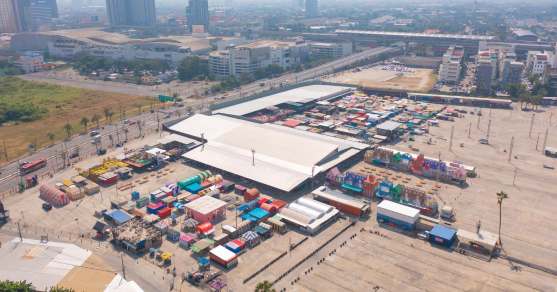
Months before the environment ministry amended the EIA notification to exempt industrial sheds, it was conducting an internal review of a request from Maruti Suzuki.
In a letter dated 25 February 2014, Deepak Jain, general manager (environment management) at Maruti Suzuki India Ltd, asked the ministry to affirm the company’s view that automobile plants and the industrial sheds used to manufacture vehicles fell outside the ambit of the 2006 EIA notification and therefore required no prior environmental clearance.
An internal note by senior environment ministry official Shashi Shekhar, written between 25 February and 11 March 2014, said the confusion appeared to stem from an earlier proposal to exempt industrial sheds from environmental clearance requirements, a proposal the ministry had subsequently dropped.
While the automobile sector itself was exempt, he noted, the construction of industrial sheds still required prior clearance.
Following internal discussions, another senior environment ministry official, Lalit Kapur, informed Maruti Suzuki that environmental clearance remained mandatory.
“Any construction beyond built-up area 20,000 sq mtrs attracts EIA notification 2006,” he wrote, adding that prior clearance had to be obtained from the state environment impact assessment authority.
Breaking The Law
Maruti Suzuki’s request for clarification came as it faced regulatory action in Haryana for constructing a vehicle-testing facility without prior environmental clearance, a fact the company did not mention in its letter to the ministry.
Although the company later applied for clearance, state authorities initiated legal proceedings over the violation while considering its application. A favourable interpretation from the ministry would have bolstered Maruti Suzuki’s defence.
In early 2014, Maruti Suzuki approached the Delhi High Court against the environment ministry and Haryana authorities. Appearing for the company, senior advocate Mukul Rohatgi argued that only projects specifically listed in the EIA schedule required prior clearance, implying that automobile facilities were exempt.
In a judgment delivered on 26 May 2014, the court disagreed, holding that the EIA notification “applies to all projects with a built-up area > 20,000 sq. mts. irrespective of the nature of the project or activity”. It also directed Haryana authorities to consider Maruti Suzuki's application for an ex post facto clearance.
Although the court said the case should not be treated as a precedent, the ruling clarified that industrial sheds “greater than or equal to 20,000 sq m” required prior environmental clearance.
But instead of settling the issue, the following months saw sustained lobbying by automobile and other industries to change the rules.
Lobbying To Change The Law
Less than a month after the Delhi High Court's judgment, Volkswagen India executives Mahesh Kodumudi, president and managing director, and Pankaj Gupta, head of external affairs and corporate social responsibility, wrote to environment minister Prakash Javadekar on 23 June 2014.
They urged the ministry to clarify that environmental clearance was required only for projects specifically listed under the EIA notification and not for “every construction of industrial projects”.
The executives described the clearance process as “lengthy”, taking three to four months, and said Volkswagen's Chakan plant near Pune—commissioned in 2009 with an investment of Rs 3,800 crore and then the largest investment by a German company in India—had not required environmental clearance when it was built.
But the Maharashtra Industrial Development Corporation (MIDC) was refusing to approve new construction at the plant without one.
Kodumudi and Gupta said they had approached the minister because pollution control board officials had told them that, unless the environment ministry issued a clarification, Volkswagen would need environmental clearance for its expansion project.
Lobbying Grows
Over the next few months, Javadekar and his officials received at least six more letters supporting Volkswagen's position. In November 2014, Gupta again urged the ministry to explicitly exempt factories from environmental clearance requirements.
In a brief conversation with Article 14 in June 2026, Gupta estimated that the proposed expansion of the Chakan plant involved an investment of about Rs 1,500 crore. He later asked this reporter to contact Volkswagen's current communications team for details, saying he could no longer recall the specifics.
Questions sent over email in late June to the Volkswagen India’s communications team did not elicit a response.
Volkswagen's case was also taken up by other arms of the government.
On 28 August 2014, P S Gangadhar, an official at the Indian embassy in Berlin, informed the ministry that Bernhard Steinruke of the Indo-German Chamber of Commerce had raised the company's difficulties with the embassy.
“Volkswagen is the single largest FDI by any German company so far in India,” Gangadhar wrote. “Its perception of the business climate carries influence both at the regional and global level and will impact investments from other German companies into India.”
Officials from the Department of Industrial Policy and Promotion, including Atul Chaturvedi and D V Prasad, also wrote to the ministry seeking an early resolution of Volkswagen's problem, explaining that the matter was being pursued under the Foreign Investment Implementation Agency, chaired by the secretary of the Department of Industrial Policy and Promotion.
An Industry-Wide Campaign
By late 2014, what began as Volkswagen's request had evolved into a broader campaign involving automobile companies, firms from other sectors, industry associations and Shivaji Adhalrao Patil, MP of Chakan, the parliamentary constituency in question.
Among the companies that sought similar exemptions were the Indian subsidiaries of Schindler and Perkins, as well as Indian firms Forbes Marshall and Cosmo Films, all of which rely on large industrial buildings for their operations.
In a July 2014 letter to environment minister Prakash Javadekar, Patil wrote that a Maharashtra government order requiring environmental clearance for projects above 20,000 sq m had stalled 15 projects worth about Rs 16,000 crore and put nearly Rs 10,000 crore in foreign investment at risk. The projects included Mercedes-Benz, Hero Daimler, Tata Autocomp, Schindler and Bharat Heavy Electricals Ltd.
Patil urged the ministry to clarify that industrial projects exceeding 20,000 sq m did not require environmental clearance.
In an interview with Article 14 in June 2026, Patil said Mercedes-Benz had approached him after receiving a notice from the Maharashtra Pollution Control Board for constructing an industrial shed without environmental clearance. “They panicked,” he said, adding that he took up the issue with Javadekar along with similar concerns raised by other companies.
Patil's letter appears to have drawn the minister's attention. Javadekar marked it “IMP” and “Discuss”, directing senior officials to examine the matter.
Patil, who said it was his responsibility to represent industries in his constituency, said all 15 projects eventually received relief after the government amended the EIA notification and exempted industrial sheds from prior environmental clearance.
Questions emailed by Article 14 to the Mercedes-Benz’s communications team in India about multiple aspects of this issue did not yield a response.
Modi Govt Changes Its Position
All these lobbying efforts eventually persuaded the environment ministry to amend the EIA notification in line with industry demands, according to internal government records.
The process, however, took several months.
On 6 August 2014, senior ministry official Ajay Tyagi prepared a note summarising the representations received by environment minister Prakash Javadekar.
The companies argued that since the EIA notification did not explicitly mention "industrial sheds", they should not be presumed to require prior environmental clearance.
Tyagi also noted that the Delhi High Court, in the Maruti Suzuki case, had clearly held that the EIA notification applied to all projects with a built-up area exceeding 20,000 sq m, irrespective of the nature of the activity.
Tyagi then proposed the solution that would eventually shape the amended notification. "In case the government's intention is to exclude industrial sheds from the purview of item 8 (a), EIA Notification 2006 needs to be amended," he wrote. Item 8 (a) governs building and construction projects.
A Further Loosening
Tyagi's proposal, approved by senior officials and Javadekar, formed the basis of a draft notification issued for public consultation in September 2014.
The draft specified the categories of building projects that would require environmental clearance, including residential and commercial buildings, hotels, hospitals, hostels, office blocks and information technology parks.
Industry, however, remained dissatisfied.
Volkswagen, Maruti Suzuki, Mercedes-Benz, Tata Motors, Schindler, Perkins and others sought an explicit exemption for industrial buildings in the final notification. This was Maruti Suzuki’s third attempt at communicating the same issue to the environment ministry during the year.
Questions emailed by Article 14 to the company’s communications team in late June did not yield a response.
Internal ministry records and court documents indicate that these representations prompted officials to alter the language of the September draft and adopt wording preferred by industry in the final notification issued in December 2014.
Article 14 sought comment from union environment minister Bhupender Yadav and Prakash Javadekar, the former environment minister who approved the final notification in late June, but there was no response.
While companies secured the exemption they had sought, civil society groups strongly opposed the decision, ensuring that the exclusion of industrial sheds and educational institutions from environmental clearance requirements would be subject to judicial scrutiny in the years that followed.
Critic 1: The Kerala High Court
In January 2016, the Kerala High Court heard a petition filed by One Earth One Life, an environmental NGO, challenging the December 2014 notification. The petition raised two principal objections: first, that the final notification differed substantially from the draft placed before the public; and second, that it incorrectly stated that no objections or suggestions had been received during the consultation process.
A division bench led by Chief Justice A J Desai agreed. In its judgment delivered on 6 March 2024, the court held that the final notification differed significantly from the draft and that this change was unlawful.
“...there is a vast difference in the final notification, by which certain buildings are exempted from getting environmental clearance certificates,” the court observed. “People at large were not aware about (sic) the intention of the authority to modify the draft notification and therefore, in our considered opinion, there is a breach of section 23 of the General Clauses Act, 1897.”
In an affidavit filed before the court, the environment ministry apologised for the “typographical error” in the notification, which stated that no objections or suggestions had been received within the stipulated 60-day period.
Sharath Kumar Pallerla, a ministry official, stated in the affidavit that most comments received on the draft notification concerned Note 1, which specified the categories of projects covered by the EIA notification. The ministry, he said, “upon examining the comments”, decided “to widen the ambit of such projects and exclude limited projects” from the notification.
In effect, the affidavit described how industrial sheds were exempted from the EIA notification during the rule-making process. The Kerala High Court subsequently held that this change had been made unlawfully.
Critic 2: The Supreme Court
Within a year of the Kerala High Court's judgment, the environment ministry again exempted industrial sheds and certain other projects from the EIA notification through an amendment issued in January 2025.
Soon after, Vanashakti, an environmental organisation, challenged the amendment in the Supreme Court.
D Stalin, a director of Vanashakti, said exempting industrial sheds undermined the very rationale of prior environmental clearance.
“The very need for a mandatory prior EC meant that the precautionary principle applied. This concept itself was sought to be demolished,” Stalin told Article 14. “The need for feasibility studies, EIA reports, and statutory clearances was being bypassed... Crucial details like tree census, the geological nature of the land, presence of wildlife and biodiversity—nothing was being considered.”
In August 2025, the Supreme Court appeared to agree.
A bench led by Chief Justice B R Gavai observed that, “It cannot be gainsaid that if any construction activity for an area of more than 20,000 square meter is to be carried out, it will naturally have an effect on the environment and ecology, even if the building is for industrial shed or for educational purpose, including hostels etc.”
The bench further held that there was “neither any rational nexus with the object to be achieved by excluding such buildings from the rigours of the notification”.
“We, therefore, see no reason to discriminate the other buildings with the buildings constructed for industrial or educational purposes,” the court said.
(Akshay Deshmane is an independent investigative reporter based in New Delhi.)
Get exclusive access to new databases, expert analyses, weekly newsletters, book excerpts and new ideas on democracy, law and society in India. Subscribe to Article 14.