
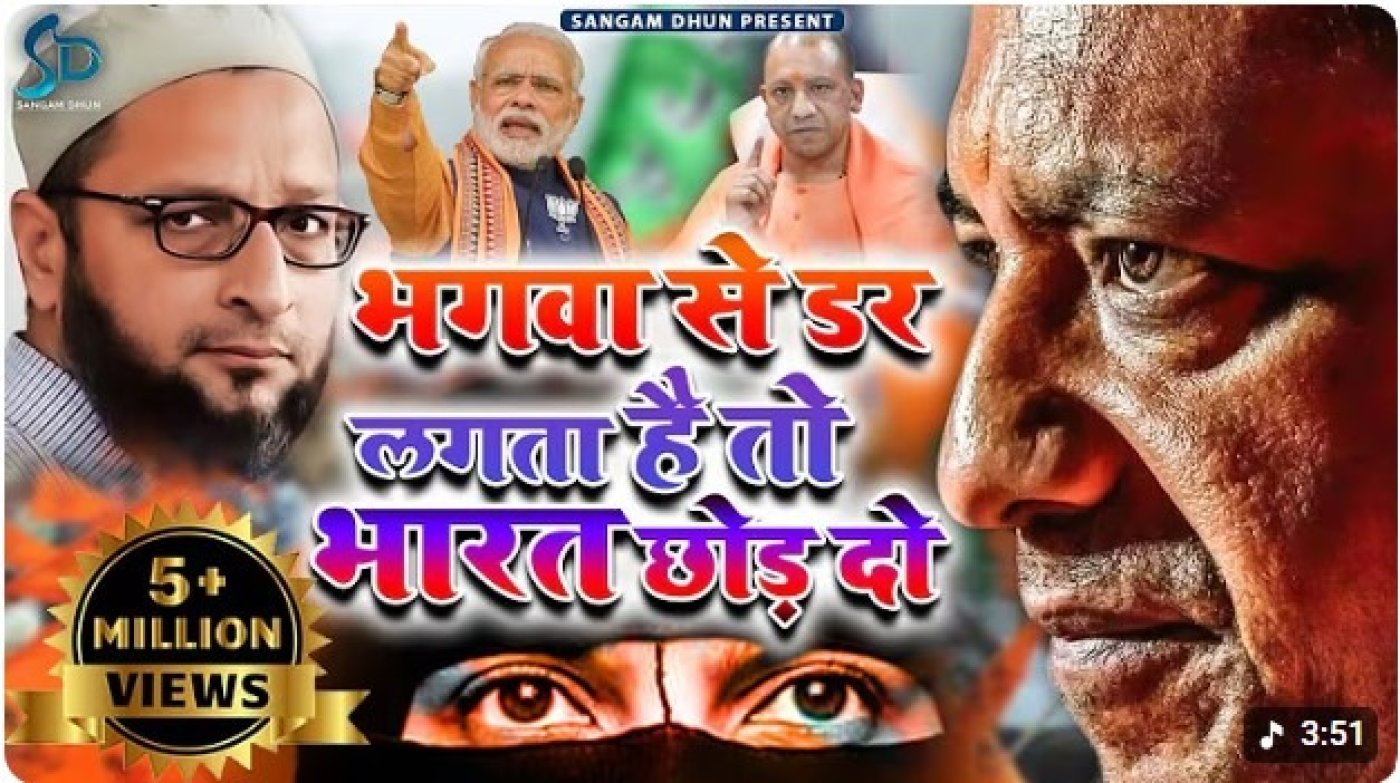
Mumbai: The first time I heard about Hindutva pop music was in rural Jharkhand, seven years ago.
I saw firsthand how Hindutva beliefs, the most rabid of them, were being dressed up with catchy tunes and rhymes and packaged as songs.
These songs, blaring through walls of loudspeakers atop open trucks, exhorting Hindus to seek revenge from Muslims for historical wrongs by boycotting them and even seeking their extermination, would be played in villages and towns in Jharkhand, and later, in Uttar Pradesh, especially on Ram Navami.
But each time I would return home to Mumbai, no one would have heard of these songs.
By last year, the very songs I would hear in rural India were now playing outside the international airport in Mumbai on the occasion of Ram Navami.
Not just in Ram Navami, these songs are now a staple in other festivals of Mumbai like Navratri—where elite Indians, who can afford to shell out thousands for a ticket, are thrilled to dance to songs extolling Hindu supremacy—as well as Ganeshotsav, where traditional bands have replaced devotional numbers and popular chartbusters with Hindutva pop.
Why just festivals? The 2023 Cricket World Cup, held in India, saw a song calling for Hindus to ‘slay their enemies’ being played during the crucial India-Pakistan match, no less. Crowds swooned and sang along.
When the Devendra Fadnavis-led Maharashtra government was sworn in in 2024, the official ceremony saw a singer performing a Hindutva pop song that asks for temples to be established in Varanasi and Kashi in place of historic mosques in both cities, with the likes of Mukesh Ambani, Shah Rukh Khan, and Salman Khan in the audience, looking on.
How did this brand of music grow, from the hinterlands of India to become the soundtrack of all things New India?
We finally seem to have an answer: Big Tech.
Tracking The Hate
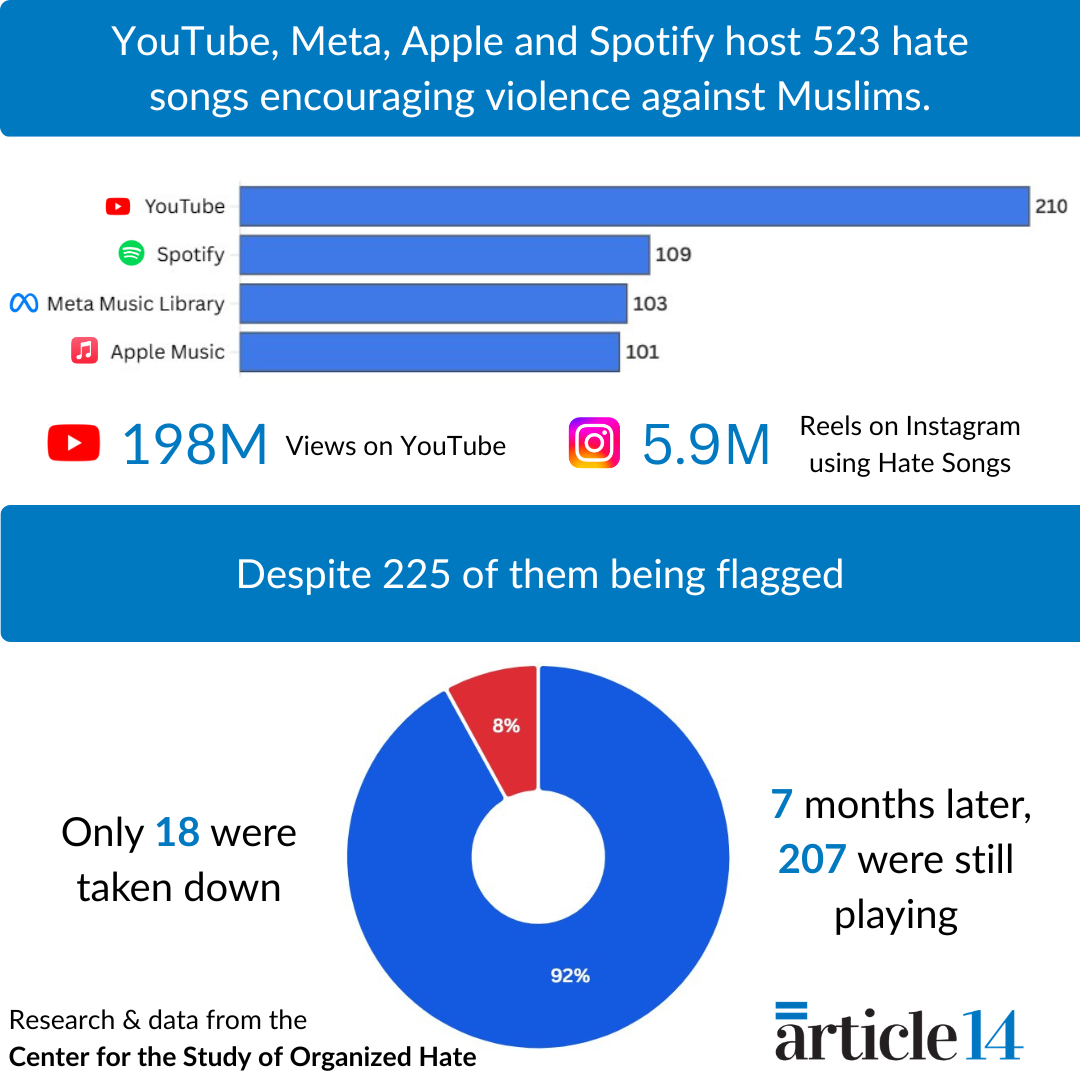
For over a year, I have been working with a small team of researchers at the Washington DC-based Center for the Study for Organised Hate (CSOH), in tracking the role that Big Tech played in the growth of Hindutva pop music. The results demonstrate the role that four platforms alone—YouTube, Meta, Spotify and Apple Music—have played in disseminating and amplifying these songs.
Our study found a total of 523 songs threatening religious minorities, especially Muslims, with violence, abusing and dehumanising them, existed across these four platforms. Big Tech allowed such songs to reach wide audiences—on YouTube alone, we found 210 songs—half of which called for violence against Muslims—that had reached an audience of 198 million viewers. For context, YouTube has approximately 500 million users in India. On Instagram, owned by Meta, users had created over 5.9 million Reels using H-Pop songs. Each Reel’s reach could span from a few hundred to millions, we found.
Big Tech wasn’t merely offering them a platform to peddle their—mainly anti-Muslim—hatred; it was also funding them for doing so.
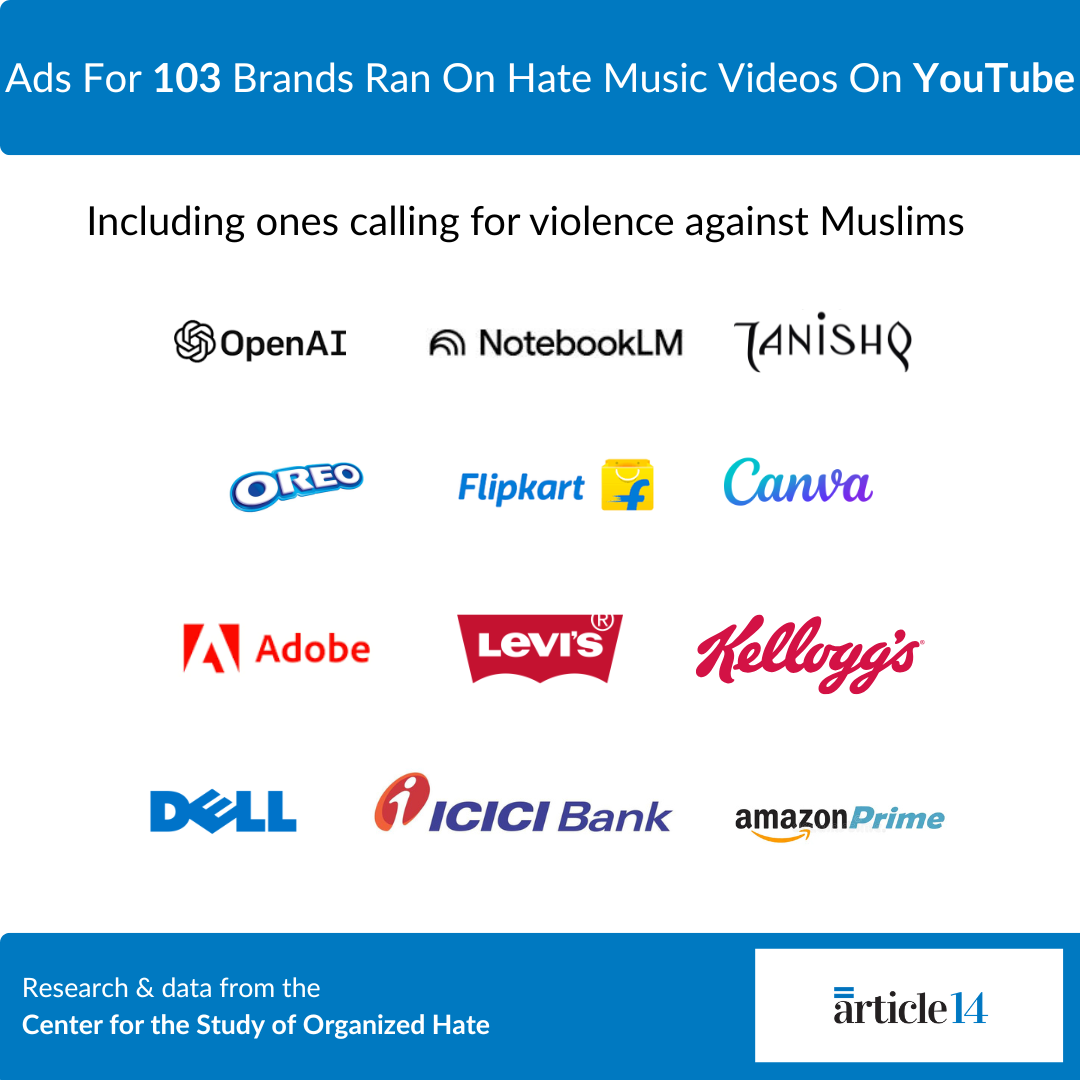
We found that YouTube had, for instance, allowed these channels to be monetised, meaning H-Pop artists could earn a share of the revenue YouTube generated from advertising on these songs. 86% of the songs on YouTube that call for violence against Muslims and Christians displayed advertisements, from among 103 brands. The list is long and includes companies like OpenAI’s ChatGPT, Google’s NotebookLM, Amazon Prime, Canva, and Opera Browser. YouTube even allowed these hate music creators to raise money directly from viewers by allowing them a feature named “Super Thanks”, where users merely needed to click to contribute anywhere between a few rupees to as much as Rs 10,000.
One of the biggest channels in this business was one called Mayur Music, which hosts 25 H-Pop songs, including one that praises Israel’s genocide against Palestine and calls for an encore in India, as well as a song that urges Hindu men to marry Muslim women as a form of retribution. YouTube had awarded this channel a Silver Creator award, a photo of which the channel proudly displayed on its page.
Meta, where 103 hate songs existed, had also allowed 20 out of the 30 H-Pop singers we analysed to earn money through advertisements as well as a ‘performance bonus’ that Meta rewards creators with for audience engagement.
Policies ‘Only On Paper’
On their part, Big Tech platforms have taken some steps. For instance, except for Apple Music, all other platforms we studied had clear policies that offered no space for hate music. YouTube had deleted the account of one of the most prolific H-Pop singers, a man named Sandeep Acharya, famous for his abusive and denigrating Islamophobic rhetoric, at least three times.
But the policies, largely, remained only on paper. Hate and violent speech, evidently, flourished. Of the 523 songs we found violating these norms, half were songs that called for violence against Muslims, and the remaining used hateful, discriminatory language against them. Even Acharya was back with a new account each time, and other users were freely posting videos of his deleted songs.
Assuming, as unlikely as it was, that the platforms didn’t know about these songs, we individually reported 225 of the 523 songs to the platforms as ‘hate speech,’ asking them to act against them. Six months later, only 18 songs had been removed.
Having spent time with hate music creators, artists and producers, I can vouch for the fact that Big Tech is the backbone on which the hate music ecosystem exists. These artists are hugely dependent on social media monetisation as well as royalties from audio streaming platforms. Big Tech also helps them in other ways—their social media following gives H-pop stars offline gigs and concerts, including those from Hindu right-wing outfits. In fact, concert organisers offer artists variable pay packets depending on their follower counts.
If Big Tech wanted to, they could have easily curbed the spread of hate music—they have the policies and tools to do so.
Instead, they have been actively censoring and taking down content from Indians when they highlight overcrowded trains or the harms of data centres, let alone criticism of the government of Prime Minister Narendra Modi.
H-Pop enjoys the backing of those in power. By amplifying and funding it, Big Tech in India has picked a side: it has chosen to side with hate.
(Kunal Purohit is an independent journalist and the author of the book H-Pop: The Secretive World of Hindutva Popstars.)
Get exclusive access to new databases, expert analyses, weekly newsletters, book excerpts and new ideas on democracy, law and society in India. Subscribe to Article 14.