
New Delhi: The National Film Awards are dying a slow death.
If the double honour for The Kerala Story at the 2023 edition of the awards left anyone in doubt, then the diagnosis has been confirmed by the triple honour for another propaganda exercise, Article 370, at the National Awards 2024 announced this month.
(Note: due to pandemic-linked delays, the National Awards are running late, which is why the awards for films certified in 2024 have only just been declared.)
The Kerala Story was a tacky right-wing project perpetuating the Islamophobic theory of “love jihad”, which claims that Muslim men are part of an international conspiracy to seduce and/or marry Hindu women, convert them to Islam and alter India’s demographic composition.
The film initially generated a storm with its teaser featuring the heroine declaring that she is one of “32,000 women” who have been “converted and buried in the deserts of Syria and Yemen”. She added: “There is a dangerous game being played in Kerala to turn normal girls into dangerous terrorists.”
When the film's team was fact-checked (here and here) by journalists and on social media, they failed to provide proof of this number. The Supreme Court later ordered them to acknowledge this lack of proof in a disclaimer at the start of the film. Accordingly, the text preceding The Kerala Story states that there is “no authentic data to back up the suggestion that the figure of conversion is 32,000 or any other established figure.”
None of this deterred Prime Minister Narendra Modi from endorsing The Kerala Story while campaigning for the Karnataka Assembly elections in 2023. The National Awards jury too was clearly unruffled by the film’s blatant dishonesty and mischievous intent. Instead, they chose it for the Best Direction and Best Cinematography awards.
More Sophisticated
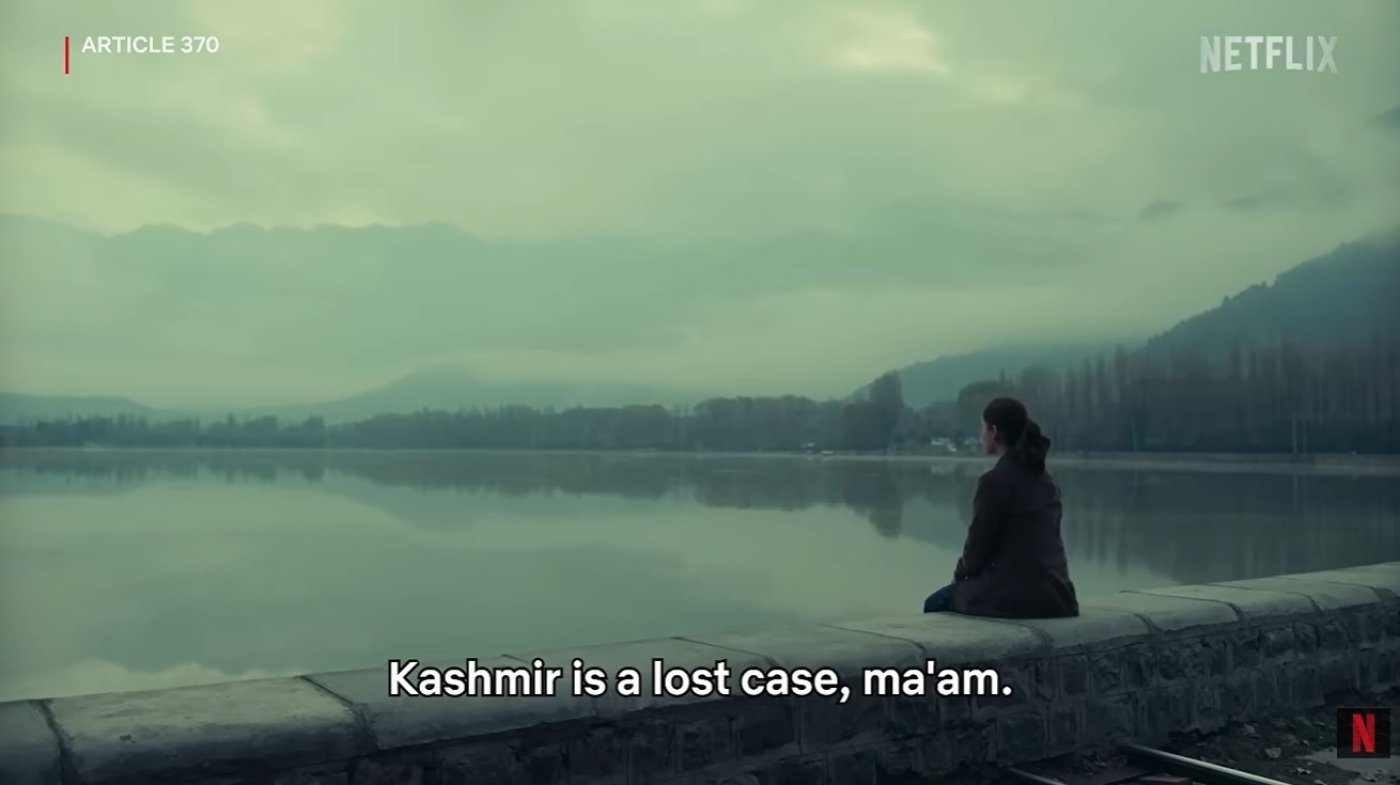
Article 370 is more sophisticated than The Kerala Story, though no less transparent, while serving as a government mouthpiece for the 2019 revocation of Jammu and Kashmir’s special status under Article 370 of the Constitution. The film has been picked for three National Awards: Best Feature Film, Best Actress, and Best Music Direction.
This goes beyond the usual debates that are inevitable around awards everywhere in the world, more so those related to creative fields like cinema about which the masses have strong views. Such as the one I recall from the 1990s when Karisma Kapoor was named Best Supporting Actress for her laboured acting in Yash Chopra’s Dil Toh Pagal Hai (Hindi) in 1997.
When Mithun Chakraborty won the Best Actor Award for Budhhadeb Dasgupta’s 1992 film Tahader Katha (Bengali), I was a student who had not yet begun to closely track these awards, but I remember a newspaper mentioning that there were some accusations of the jury being biased towards Hindi, since three out of the four main acting awards went to artistes whose work is primarily in Hindi cinema—this was the year Dimple Kapadia won Best Actress for Rudaali and Sunny Deol got the Best Supporting Actor Award for Damini.
The National Film Awards, like all other film awards, have never been and will never be free of such discussions. However, what we have witnessed in the Modi era is not merely a series of debatable decisions, but an outright erosion of credibility. Awards are now routinely given to individuals and works that do undisguised PR for this government, or distort history, or further majoritarianism, while inciting animosity towards religious minorities.
What Isn’t Subjective
Two years prior to The Kerala Story’s wins, for instance, actor-turned-director R Madhavan’s Rocketry: The Nambi Effect won the National Award for Best Feature Film. Madhavan’s gushing hosannas (here and here) to Modi over the years are a matter of public record.
Equally relevant in this context is the film's content. Rocketry, which was made in both Tamil and Hindi, is based on the true story of the rocket scientist S. Nambi Narayanan of the Indian Space Research Organisation (ISRO), who faced allegations of espionage in the 1990s but was subsequently cleared by the CBI and Supreme Court.
That it is an average, silly film is a subjective opinion, which the jury may well contest. What is not subjective is its erasure of Prime Minister Jawaharlal Nehru of the Indian National Congress, who set up ISRO, and whose pioneering role in India’s space programme is indisputable.
I will leave you with this passage from my review of the film published on Firstpost at the time of its release: “Rocketry tries to understate its political leanings. That it has leanings is evident, nevertheless, since it extends from the 1960s to the 2010s, skips any mention of past Prime Ministers, yet features a long passage overlaid with the present Prime Minister’s voice towards the end.”
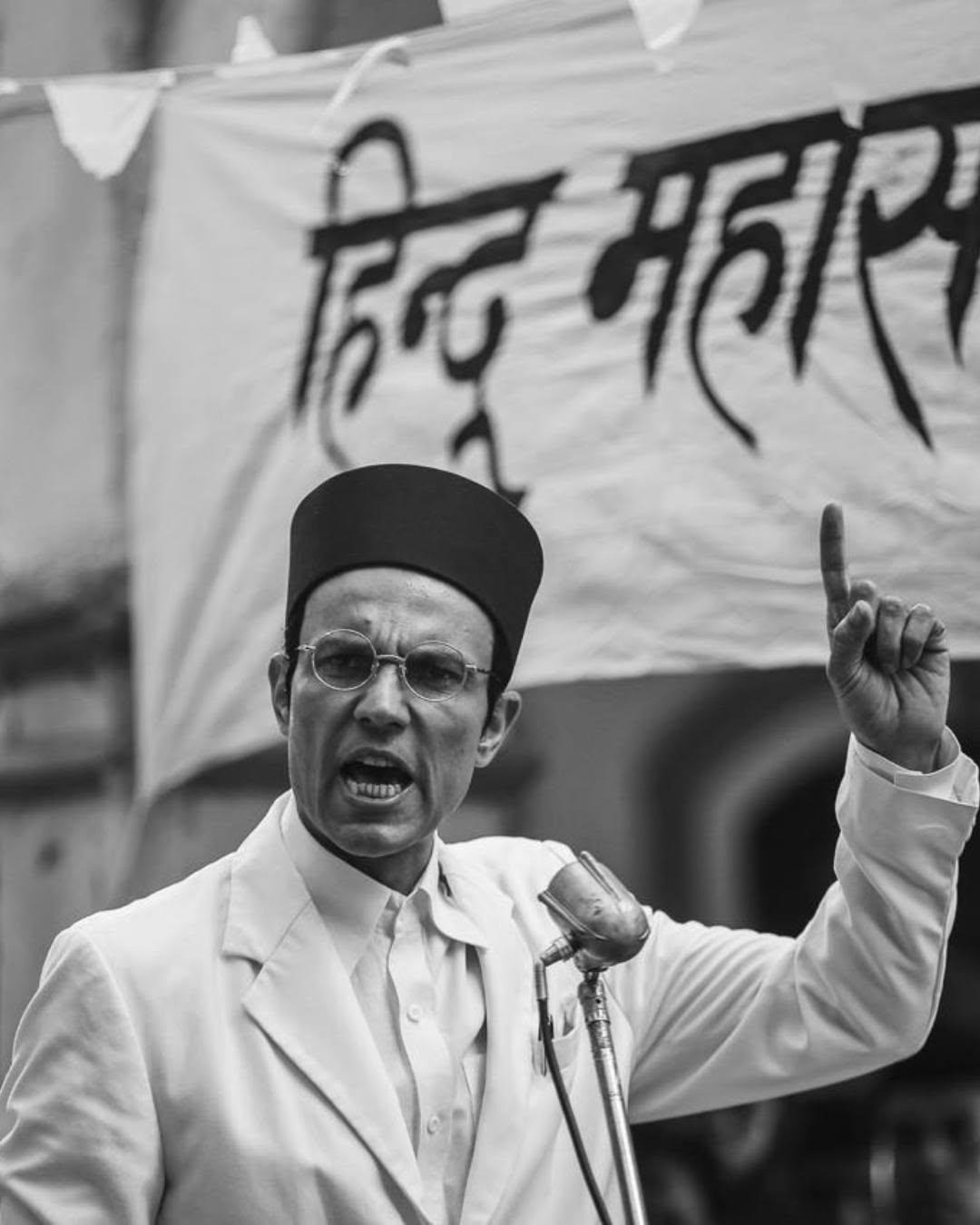
The winner of 2024’s Best Debut Film of a Director, Randeep Hooda’s Swatantrya Veer Savarkar (Hindi), serves several purposes in the ongoing Hindutva-isation of India. For one, it is a hagiography of the Hindutva ideologue Vinayak Damodar Savarkar, who was charged with being a co-conspirator in Mahatma Gandhi’s assassination but later acquitted.
Considering that the British colonisers imprisoned Savarkar, he wrote mercy petitions to the colonial government, changed his views on India’s independence upon his release, and opposed the Congress’ Quit India Movement, it is natural to assume that the chief villains of this film would either be officers of the British Empire or Congress politicians.
Wrong assumption.
Cinema In Govt Service
While the Congress is no doubt portrayed as a dubious organisation shepherded by a dubious Gandhi in the film, the most evil element in Hooda’s retelling of Savarkar’s life is a person who belongs to neither of these groups, but to the community identified by the Hindu right-wing as its prime enemy and primary target: a Muslim jailer, whose brutality makes the British on screen seem benign in comparison.
The post-2014 National Awards are littered with cinema created in service of this government, the BJP, and Hindutva. Aditya Dhar, who co-wrote and co-produced Article 370, for example, won his first Best Director National Award for 2019’s Uri: The Surgical Strike, a polished sample of aggressive nationalist bravado. That film also starred Yami Gautam Dhar, who has just won her first Best Actress National Award for Article 370. (Aside: Aditya and Yami are married.)
Uri was about India’s retaliation against Pakistan following an attack on an Indian Army base in Jammu & Kashmir. It featured a character modelled on India’s current National Security Advisor, Ajit Doval, played by the then BJP Member of Parliament, Paresh Rawal, who got to deliver this line encapsulating the muscular nationalism advocated by the Indian right-wing: “Yeh naya Hindustan hai, yeh ghar mein ghusega bhi aur maarega bhi.” (This is the new India. This India will not only enter your home, we will also kill you.) The line was repeated in the insidiously Islamophobic, almost comically pro-Modi Dhurandhar franchise, released in two parts in 2025 and 2026, that was written and directed by Aditya, and featured a cameo by Yami.
These ideologically driven selections, combined with a growing penchant for mediocrity, have significantly affected public perception of the National Awards. Add to that a visible pro-Hindi slant in the Best Actor and Best Actress categories, and the result has been some absurd choices in 2023 and 2024.
The thespian Urvashi played the joint lead in the Malayalam film Ullozhukku, for which she received 2023’s Best Supporting Actress Award, while the Best Actress Award went to the Hindi film star Rani Mukerji, an otherwise fine actor, for her overwrought performance in Mrs Chatterjee vs Norway. The veteran Tamil actor M.S. Bhaskar won a Best Supporting Actor Award for playing the joint lead in Parking, while the Best Actor Award went to Shah Rukh Khan for over-acting in Jawan.
Talent, Overshadowed
The consequent declining respect for the National Awards is tragic for two reasons.
First, the glaring right-wing agenda has begun to overshadow occasional gems that still get a nod on this high-profile platform. Cases in point are Mithya, which scored three awards including Best Kannada Feature Film 2024, and Feminichi Fathima, which took the Best Malayalam Feature Film spot.

Second, the National Awards are the only national-level awards in India guaranteed to recognise low-profile films in languages in which very few films are made each year, due to the mandate to select a Best Feature Film in each language listed in Schedule VIII of the Indian Constitution, except for some additional languages.
Corporate-run, glitzy, star-studded awards in India are not invested in giving space to films in Tulu, Garhwali, Bodo, Khasi, Konkani or any language that does not come from India’s moneyed film industries in different parts of the country.
The mandate remains. So does my joy as a cinephile for every genuine talent on whom the spotlight falls at the National Awards purely for the quality of their work and not as a reward for services rendered to the government or the Right at large. But that joy is tempered with sadness because these talents are now compelled to share their big day with vehicles of propaganda, outright lies, hate and divisiveness.
(Vetticad is an award-winning journalist who specialises in the intersection of cinema with feminist and other socio-political concerns. She is the author of The Adventures of an Intrepid Film Critic.)
Get exclusive access to new databases, expert analyses, weekly newsletters, book excerpts and new ideas on democracy, law and society in India. Subscribe to Article 14.