
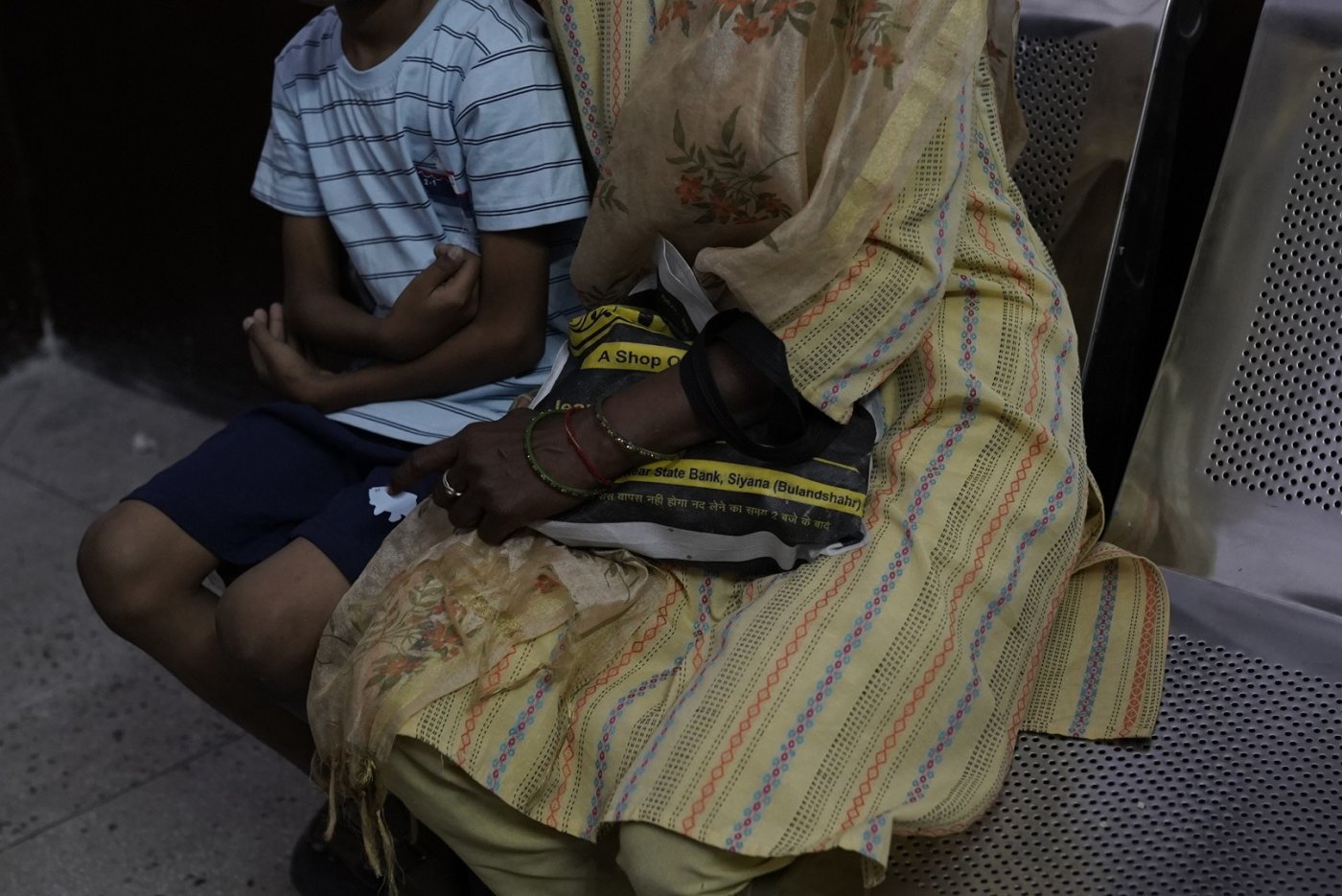
Meerut, New Delhi, Manesar: A*, 32, sat patiently in the long queue outside the antiretroviral therapy centre at the Lala Lajpat Rai Medical College Hospital in Meerut.
The old building has wide corridors, crowded waiting halls and walls covered with posters on HIV prevention, contraception and treatment. A has been coming here every few months for 12 years. She is nervous every time she comes here, but always smiles and greets nurses, staff and counsellors with a bowed namaste.
Her 12-year-old son sat on her lap.
It was May, the middle of summer. Temperatures had exceeded 40 deg C across much of north India. The heat inside the hospital was less punishing than outside, but it still clung to her faded kurta and dupatta, as ceiling fans whirled overhead, inadequate to calm an irritable child.
Her voice is almost like a whisper when she talks, hard to pick up on the recorder. Her hair is oiled and braided carefully, not a strand out of place. She often clutches her son’s hand when a doctor or a nurse passes by.
She had travelled nearly two-and-a-half hours from the city of Bulandshahr using rickshaws, buses and shared tempos. Once she collected her medicines, she would begin the journey home before dark.
A hurriedly grabbed her things—an old polythene bag with stacks of medical files and reports, a frayed cloth purse and a water bottle. She walked quickly and did not make eye contact.
A was here for antiretroviral therapy, or ART—a cocktail of medicines that allows people with HIV to live longer, healthier lives. ART does not cure HIV, but it suppresses the virus so effectively that people living with HIV can lead long, healthy lives and prevent transmission.
Twelve years ago, she had never heard of HIV.
‘Cursed Inheritance’
What A remembered were weeks of illness. Her body ached constantly. She suffered repeated bouts of diarrhoea and could barely eat. Hospital tests eventually revealed that she was HIV positive.
Doctors explained how HIV spreads—through sexual contact, infected needles, blood transfusions and from mother to child.
Her son was tested; he, too, was HIV positive.
By then, A believed her husband had left behind what she called a cursed inheritance. “Humein usne sirf yeh shraap diya, aur kuch nahin,” (he left us only this curse, nothing else), she said. Her husband and A married as teenagers. They had a daughter first, and later a son, fulfilling his family's wishes. He drank heavily, and over time, the drinking worsened.
In drunken rages, A said, he would shout, hit her and beat the children. He boasted about visiting sex workers. He worked as a labourer but gradually lost the ability to hold a steady job. She hesitates while talking about her husband, but then finally exhales and lets it all out in the open.
Then, one morning, he disappeared. “Chhod diya usne mujhe aur gayab ho gaya,” she said. He abandoned me and disappeared.
She never saw him again, and she never filed a police complaint.
“The police didn't seem interested anyway,” she said.
Only later, sitting inside the hospital, did she begin piecing together what may have happened. Perhaps he had HIV, and perhaps he knew that. She suspected he may also have used drugs, but she did not know.
Her daughter tested negative, but her son did not. Today, both mother and son take ART medication every day.
“When I became pregnant, nobody knew about this disease,” A said. “I am not padhi-likhi (educated). I never went to school, so I didn't know about this disease and its impact.”
The Hidden Connection
A's story is not unusual.
According to the National AIDS Control Organisation (NACO), more than 1.13 million adult women in India live with HIV.
The UNAIDS 2025 Global AIDS Update says nearly one in four married women living with HIV experience intimate partner violence, as A did.
Research from ART centres places the figure even higher.
One study found that 50.3% of women living with HIV reported intimate partner violence. Three-fourths reported physical violence, and one-fourth reported sexual violence.
For many women, HIV and domestic violence become intertwined.
Previous studies (here and here) in India have found that women experiencing violence are at greater risk of contracting HIV. Men may conceal extramarital relationships, sexual history, or drug use. Women frequently learn of their HIV status only after years of illness.
By then, some have already transmitted the virus to their children. Others find themselves blamed for the disease.
A said her husband's family turned against her after his disappearance.
“My in-laws' behaviour immediately changed,” she said. “They kicked me out and blamed me for the HIV.”
She now lives with her parents and extended family in a village called Shahpur in Bulandshahr district.
“Yes, everyone in the family knows about my disease, but they continue to support me,” said A. “I don't know why my in-laws reacted that way.”
‘Did He Ever Beat You?’
Treatment at government ART centres is free. Patients register, meet counsellors and collect medicines.
When A first arrived at the Meerut hospital, a counsellor asked her a question: “Did he ever beat you up?”
She broke down immediately, as her son sat quietly in her lap.
The question reflects a reality that HIV counsellors, community health workers and activists say they encounter repeatedly.
“We try so hard,” said Ritul Saxena of the UP Network of Positive People.
Saxena oversees counsellors and community health liaisons across Meerut, Bulandshahr, Muzaffarnagar and Shamli.
Uttar Pradesh has one of the highest numbers of women living with HIV in the country, with 71,486 women estimated to be living with the virus, according to NACO's HIV Estimates 2025. The state also recorded the highest number of pregnant women living with HIV—2,101—underscoring the continuing challenge of preventing mother-to-child transmission.
Research by public health scholar Dr Reshmi Mukerji in West Bengal documented more vulnerability. Seeking help for domestic violence often risked exposing a woman's HIV status—to police officers, neighbours or family members—potentially inviting further discrimination, social isolation and abuse.
“We've gone to some of our clients' homes hoping to talk some sense into them and diffuse tensions with the in-laws,” said Saxena. “Often, we are sternly told to back off because it's a private matter.”
Gauri Aditya, a counsellor at the Meerut ART centre, said women living with HIV frequently need support that extends beyond medical treatment.
“If there were an interlinked network to provide women with legal and shelter aid due to their HIV status, things would be better,” said Aditya.
“I could just tell the clients, 'Go to that room and speak to the person there.' We could handle things with discretion and sensitivity,” said Aditya. “The clients who come here seeking help don't have the resources to independently file cases against their in-laws.”
The Women Who Held The System Together
Every month, S*, who works at the ART in Muzaffarnagar, travels from village to village, reminding women to take their medicines.
She accompanies patients to hospitals, tracks those who have stopped treatment and tries to persuade families not to abandon women after an HIV diagnosis.
She is what the public health system calls a community health liaison, one of the workers who connected patients to ART centres.
Many of the women she had met were not merely managing HIV but also surviving violence.
Some had been beaten after disclosing their status. Others had been abandoned by husbands or expelled from their marital homes. Several concealed their medicines from family members.
“I know I am not supposed to give out my personal number, but I do. What support system do these women have against terrible in-laws and husbands?” said S. “I hear them out, but I am also concerned about them missing their next dose by accident.”
The West Bengal study quoted also found that women sometimes forgot to take life-saving antiretroviral medicines after episodes of violence at home.
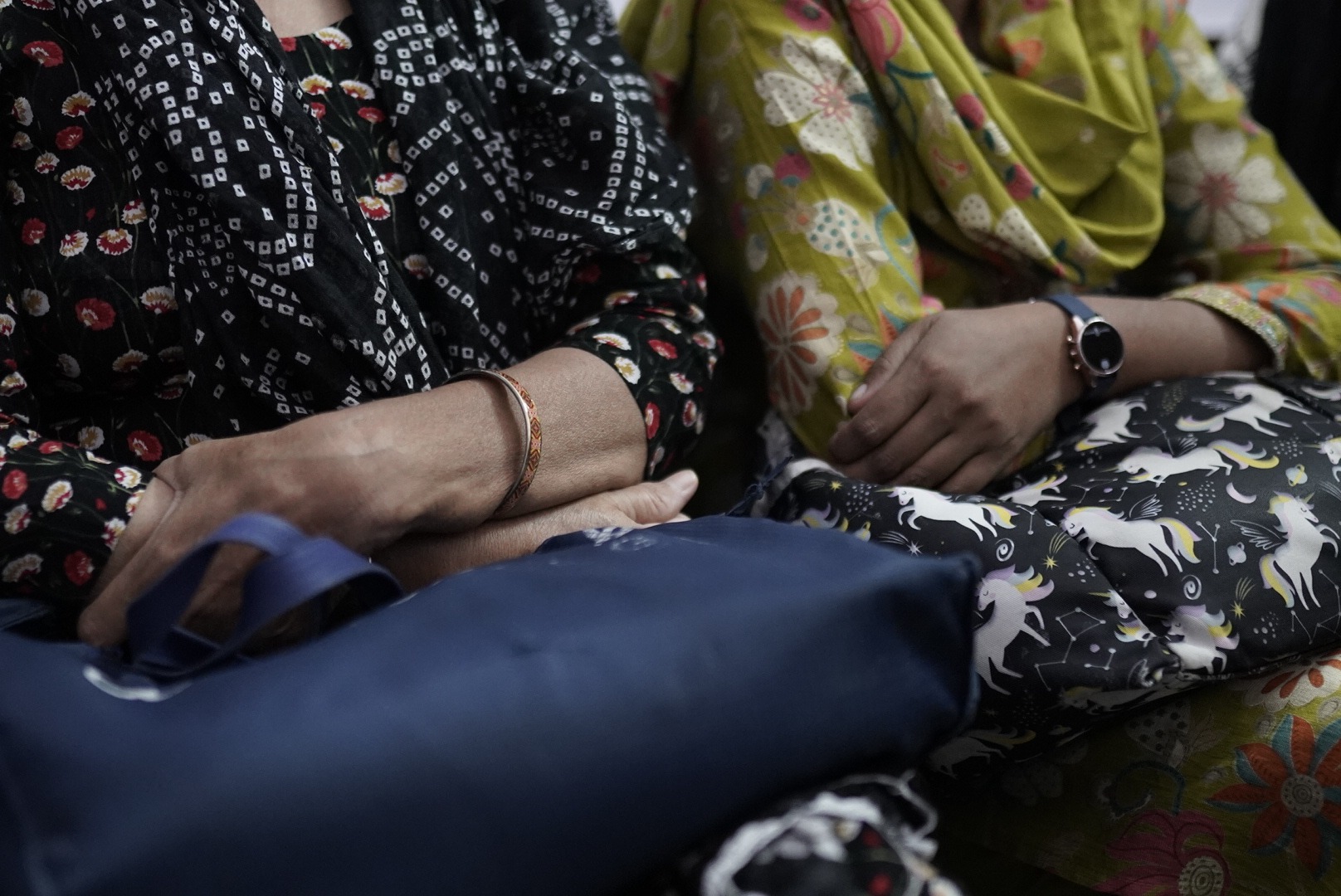
Some husbands refused to allow women to travel to hospitals. Others controlled money for transport or objected to repeated visits to ART centres.
Women who returned to their parents' homes often found themselves dependent on relatives for food, transport and childcare.
S said many women quietly accepted abuse because they feared losing financial support.
“If she leaves, where will she go?” she said.
A Gap In The System
Counsellors at ART centres said they frequently encountered women experiencing domestic violence. Yet few formal mechanisms existed to help them.
For many women, the violence remained invisible to the healthcare system. Their HIV was treated, not the abuse against them.
‘I Carry The Shame’
P* lived with HIV for several years before telling members of her family.
She feared blame, isolation and being held responsible for an illness she had not brought into the marriage.
Many women interviewed for this story described HIV as a second burden atop violence, abandonment or economic dependence.
Some said they were blamed by their husbands. Others were blamed by in-laws. Several described feeling responsible for bringing dishonour to the family.
“I am the one carrying this dishonour,” one woman said, speaking on condition of anonymity.
For women with little education or independent income, leaving an abusive marriage often means returning to parents who themselves struggled financially.
Some remain with violent husbands because they had nowhere else to go. Others stay because of their children.
The Missing Link
India's HIV programme has been widely credited (here and here) with expanding access to treatment and reducing AIDS-related deaths.
Government ART centres provide medicines free of cost, testing has expanded, and life expectancy among people living with HIV has improved significantly.
Yet activists and counsellors said the programme has paid insufficient attention to gender-based violence.
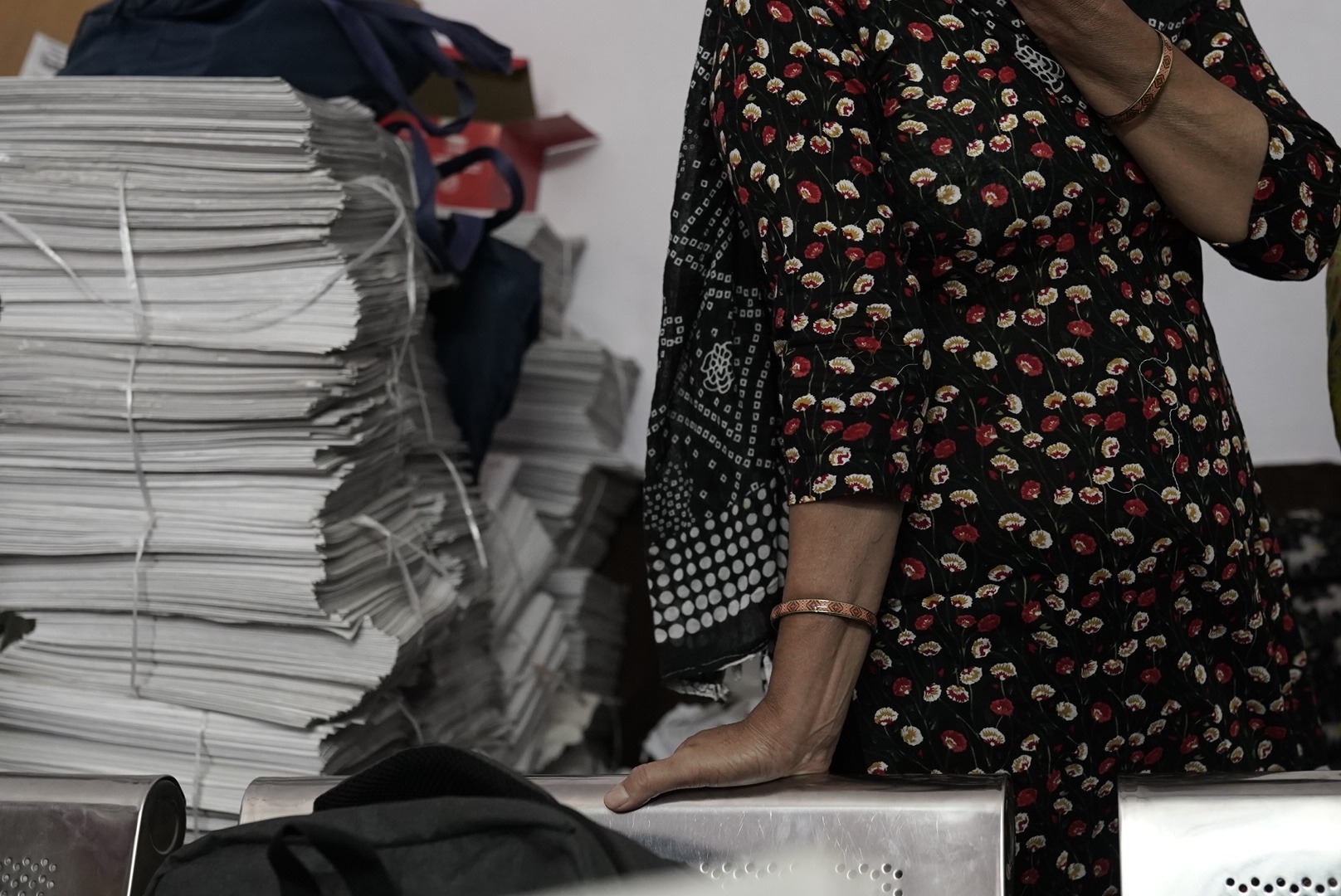
Women frequently arrived at ART centres after years of abuse, and many had little control over sexual relationships, finances or healthcare decisions. Some discovered their HIV status only after becoming seriously ill, and others learned of it during pregnancy.
The connection between domestic violence and HIV has long been recognised by researchers (here and here), but counsellors said the two systems largely continued to operate separately.
A woman facing violence might need legal assistance, shelter, counselling and financial support. Instead, she often receives only medicines.
As S travelled from one village to another, she encountered the same question: How could women protect themselves from a disease they had little power to prevent?
‘He Called Me A Slut’
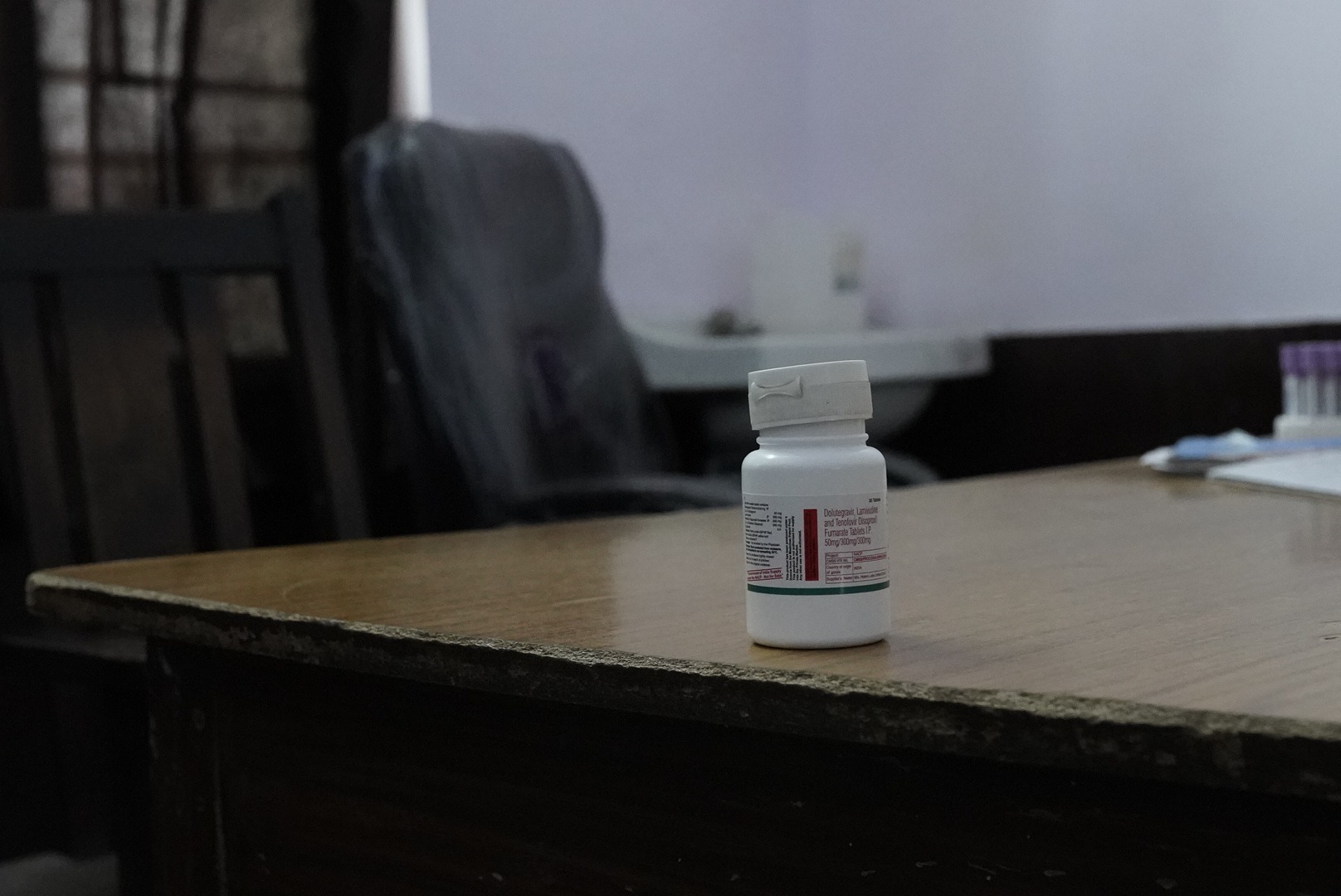
When R*, 42, arrived for her appointment, her face covered by a blue dupatta, she seemed agitated and nervous, carefully transferring her antiretroviral medicines into an old bottle labelled "calcium supplements".
The label was deliberate because her son did not know she was HIV-positive.
For nearly 18 years, R had hidden her medicines inside her home, fearful that her diagnosis would become known beyond her husband.
She believed she contracted HIV after a blood transfusion during a botched abortion procedure. Her husband tested negative. But the diagnosis did not end her troubles.
“My son doesn’t know about my disease, and my husband tested negative,” said R. “He’s the only person who knows the whole truth, but sometimes when we fight, and things get aggressive, he is very quick to call me a slut for having HIV.”
The insults were familiar to counsellors and community workers. For many women, as we said before, an HIV diagnosis becomes another instrument of abuse, the disclosure itself triggering further discrimination, social isolation and abuse.
“Things at home can get tense, in-laws often forbid women from stepping out for long hours,” said S. “But every skipped dosage of medication can increase the viral load, decline the CD4 count and be very tough on the body.
“Sometimes it’s bad weather, family responsibilities, or violent episodes at home that lead women to skip medication or skip their scheduled trip to ART centres. We can’t intervene without their consent, so we feel helpless too.”
Women facing violence often find that the healthcare system can address only one of their problems. Counsellors can listen, community workers can call, and doctors can prescribe medicines.
But there is little access to legal aid, shelter homes, financial assistance or specialised services for women whose HIV status has become intertwined with domestic abuse.
As one counsellor put it, women often received treatment for the virus but not for the violence.
‘I Carry The Dishonour’
S discovered that she was HIV-positive in the middle of her separation from her husband. By then, her marriage had already begun to collapse.
She said her husband and in-laws had subjected her to years of abuse, much of it centred on her inability to conceive. She was repeatedly told that she was too weak to bear children and too weak to perform household chores.
Her husband took medicines regularly but never told her why. Once, he told her the tablets were for his taakat—his strength.
As her health deteriorated, her in-laws decided they could no longer care for her and sent her back to her mother's home. The illness, meanwhile, persisted.
S had previously worked as a medical assistant in hospitals, but she had never heard of symptoms such as hers. She visited several doctors and received repeated courses of antibiotics.
“One doctor pointed out that my stomach and pelvic ultrasound reports were normal, so why was I unable to get pregnant or even get better from this sickness?” she recalled.
The doctor ordered further tests.
A counsellor delivered the diagnosis in front of her family.
“I didn't understand how this could happen to me,” she said, breaking down.
Today, as a community health liaison, S said she had encountered many women whose husbands concealed their HIV status or lied about their sexual history.
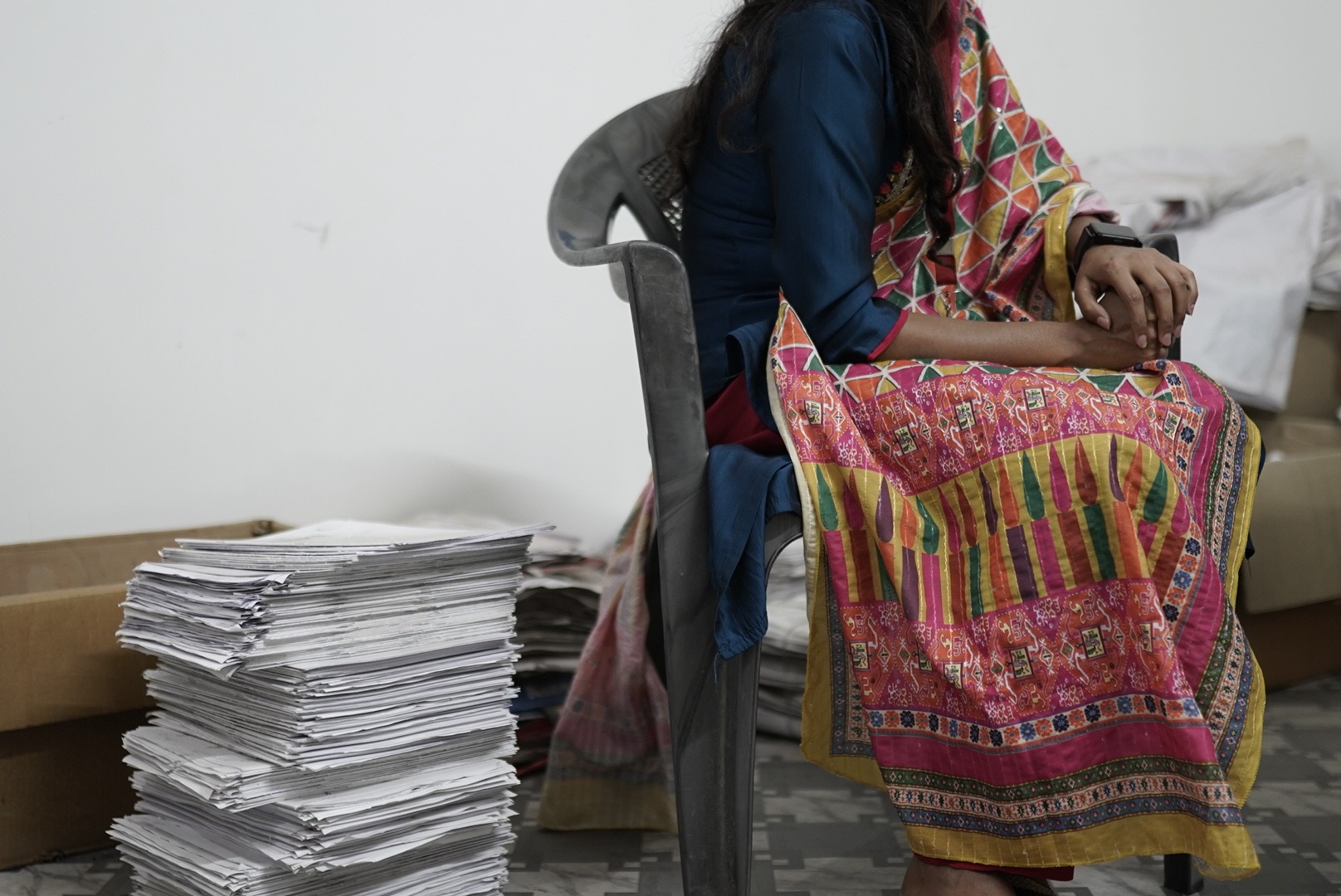
She recognised patterns that once seemed incomprehensible in her own life.
“I could blame my ex-husband, but who would believe me?” she said. “I am the one carrying this dishonour.”
The fear of stigma continued to shape her future.
“Who would marry a woman like me?” said S. “He’s the only man I have ever been intimate with. My kidneys are also damaged as a result of my HIV diagnosis. I will need to be on medical treatment for the rest of my life. If I marry again, I need a partner who is compassionate enough to understand my illness.”
Unlike her former husband, S had never lived outside Muzaffarnagar.
She knew the town's lanes by heart. She could walk from her former marital home to her mother's house with her eyes closed.
Even after the violence and abandonment, part of her still loved him.
“He would tell me I was his entire world,” she said. “He would block the door during fights, promise me gold and jewellery, and then disappear when his family members physically abused me.”
On the day their divorce was finalised, he entered the courtroom, signed the papers and left.
“He did not even look at me,” she said.
‘I Will Carry This Secret To My Deathbed’
On the days her husband travelled to meet his alleged mistress, M, 45, made the long journey from Manesar, Haryana to the ART centre at AIIMS in New Delhi.
The trip involved shared rickshaws, buses and the Metro.
She sat in the crowded waiting hall beneath slowly turning ceiling fans and HIV-awareness posters while staff called out names for blood tests and consultations. After collecting a one- or two-month supply of medicines, she immediately began the journey home, anxious that her husband might decide to return for dinner.
M said she contracted HIV from her husband several years into their marriage. She alleged that he regularly visited sex workers before beginning a relationship with another woman in Gurgaon.
Soon afterwards, she began suffering from recurring fever, weakness, headaches, joint pain and diarrhoea. Home remedies and over-the-counter medicines offered no relief. When doctors ordered extensive blood tests, her low CD4 count prompted further testing.
The HIV test came back positive.
Only then, she said, did her husband admit that he had resumed his relationship with his mistress.
“I was shocked. It felt like somebody had slapped me,” said M. “He kept saying he made a mistake, but I knew I couldn't trust him anymore.”
She said her husband frequently beat her and threatened to throw her out of the house. Their 18-year-old son often stood between them during arguments.
Neither her son nor her married daughter knew about her diagnosis. They believed their parents fought because of their father's extramarital relationship.
“I feel too ashamed to tell my children,” said M. “What if they think I am some sort of sex worker or that I have brought dishonour upon the family?”
When she first fell ill, she confided only in relatives who were doctors. They reviewed her reports, explained the seriousness of the illness and helped her begin antiretroviral treatment.
Would she consider leaving her husband?
“I am so old, where will I go?” she asked.
“I will carry this secret to my deathbed,” said M. “If I let my children know about the disease, it could affect their marriage prospects. Society already looks down upon my husband for cheating on me. They’ll look down upon me for the disease, too.”
Leaving Home
For some women, leaving an abusive marriage means losing their children.
N*, 45, walked out of her marital home 12 years ago and never returned. Today, she works with a community-based organisation in Delhi, supporting people living with HIV who have experienced violence and stigma.
Her husband, she said, drank heavily, routinely beat her and visited sex workers. When her health began deteriorating, and she became too weak to perform household chores, her in-laws blamed her instead.
Tests at the All India Institute of Medical Sciences in New Delhi revealed that both she and her husband were HIV-positive.
Only N, however, carried the blame.
“Everyone in the family knew what my husband was up to. No one questioned him,” she said. “No one asked him how he could ruin his wife’s life with this disease. They used to treat me like an untouchable person in my own home.”
N began ART immediately. Her husband refused treatment and died from AIDS-related complications within months.
After his death, relations with her in-laws worsened. She eventually left the house.
“My sons still live with my in-laws, and they don’t want to see me ever,” said N quietly. “I have accepted that they will never understand my decision to leave.”
Activists said community support had become even more important as global HIV funding faced growing uncertainty.
The closure of several USAID-supported programmes following funding cuts ordered by US President Donald Trump affected HIV prevention and outreach programmes in many countries.
UNAIDS has warned that reductions in international support could weaken community-led initiatives, peer networks and outreach programmes that often provide crucial support to vulnerable women.
‘I Have Changed A Lot Now’
S now divides her treatment for HIV and kidney disease between hospitals in Uttar Pradesh and Rishikesh.
The delayed diagnosis had damaged her kidneys.
“I would think about how much I still loved my ex-husband, and who would have given him the disease,” she said.
At the same time, responsibility for her ageing mother increasingly fell on her shoulders. Eventually, she said, her body told her it had endured enough.
When she joined the local government hospital as a community health liaison, she began counselling women whose lives increasingly resembled her own. She needed the job and the money, and she wanted to stop thinking about her former husband.
Today, her work takes her through the lanes of Muzaffarnagar, knocking on the doors of women living with HIV, asking whether they have taken their medicines and if things at home are stable.
She and her former husband still occasionally cross paths in the neighbourhood. He never looks at her.
“It’s okay,” she said, adjusting her glasses. “I have changed a lot now.”
*Names withheld on request.
(Jaishree Kumar is an independent journalist and documentary filmmaker based in New Delhi.)
Get exclusive access to new databases, expert analyses, weekly newsletters, book excerpts and new ideas on democracy, law and society in India. Subscribe to Article 14.