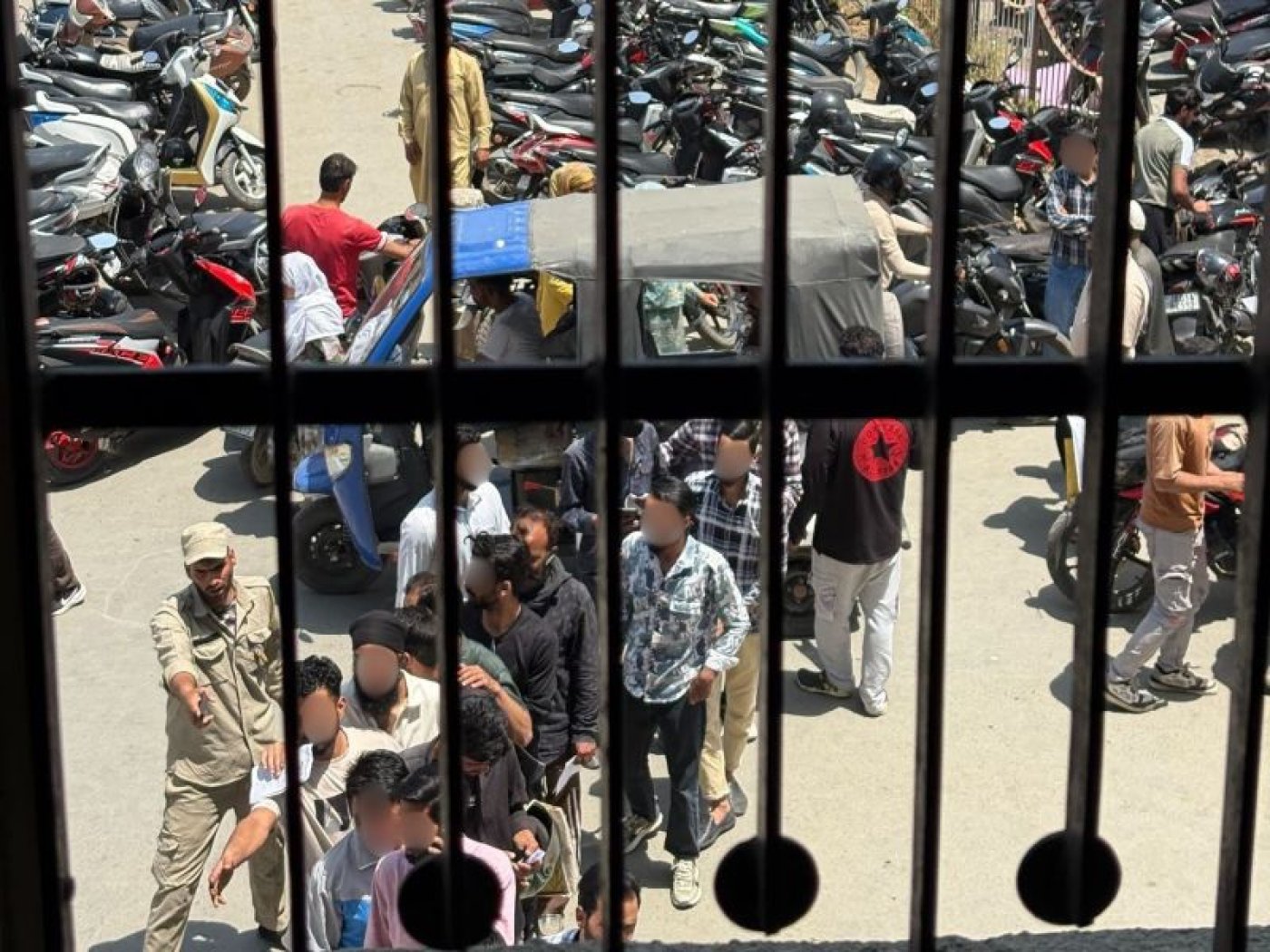
Srinagar, Jammu & Kashmir (J&K): A line of patients waited outside, fanning themselves with their registration cards in the summer heat. A security guard beckoned to the young man at the front, who was led through the crowded corridor into the de-addiction clinic.
Inside, three psychiatrists stood around a table beneath a fluorescent examination light.
“I'm supposed to attend a wedding next week,” the young man in a blue pinstriped shirt said. “Can you prescribe my medicine for two more weeks?”
The doctors exchanged knowing glances. They had heard the request many times before. They refused and asked him to leave.
The next patient shuffled in, his head trembling. Unshaven and dishevelled, he struggled to speak. A doctor steadied him in his chair and shone a torch into his eyes. His constricted pupils suggested recent morphine use.
He needed a prescription to collect medication from the hospital pharmacy.
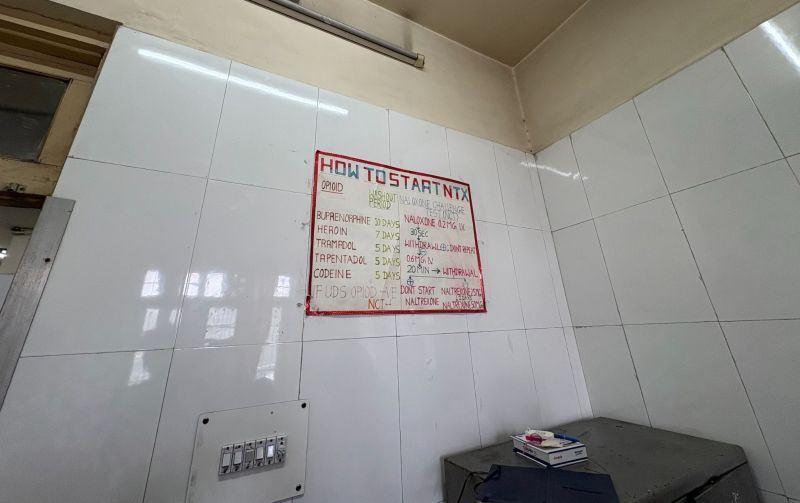
For patients dependent on opioids, doctors commonly prescribe buprenorphine, an opioid substitution medicine that suppresses withdrawal symptoms and cravings, allowing treatment to begin. Since it is itself an opioid, it is tightly regulated, and patients are usually given no more than a week's supply.
“These medicines are prone to misuse,” one doctor, who requested anonymity because he was not authorised to speak to the media, told Article 14. “Patients increase their dose without telling us and run out of tablets. Then they come back and try to manipulate us.”
The man—suffering a morphine-related relapse—had earlier been treated for heroin addiction. Doctors said he was one of many patients who relapsed around Eid-ul-Adha, when the outpatient department at Srinagar's Institute of Mental Health and Neurosciences (IMHANS), J&K's largest de-addiction centre, sees a seasonal spike in admissions amid the region's worsening substance abuse crisis.
Experts said the crisis had deepened over the years, driven by the psychological scars of decades of conflict, unemployment rates (here and here) that are nearly twice the national average, and J&K's proximity to the Line of Control (LoC), through which drugs are trafficked into the Valley, according to a senior police officer who requested anonymity.
“We had already increased his dosage to three tablets a day,” another doctor said of the patient. “Yet he relapsed.”
Doctors said many patients were seeking immediate relief rather than committing to the longer, more comprehensive treatment needed for recovery.
As the government's crackdown disrupted the supply of narcotics and withdrawal symptoms intensified, de-addiction centres such as Srinagar's IMHANS saw a surge of patients seeking emergency care. Some, doctors said, also tried to obtain opioid substitution medicines through deception.
Surge In Drug-Related Visits
Kashmir now has one of the highest rates of opiate use in India, surpassing even Punjab on a per capita basis. A 2022 study by the Department of Psychiatry at Government Medical College, Srinagar, estimated that 2.23% of J&K's population used opiates.
That is almost double Punjab's 1.2% prevalence, according to a 2015 survey by the All India Institute of Medical Sciences (AIIMS), Delhi.
According to data from a 2023 parliamentary report by the Standing Committee on Social Justice and Empowerment, around 13.5 lakh people (of whom 1.68 lakh were aged between 10 and 17), nearly 8% of J&K’s population, were affected by substance abuse.
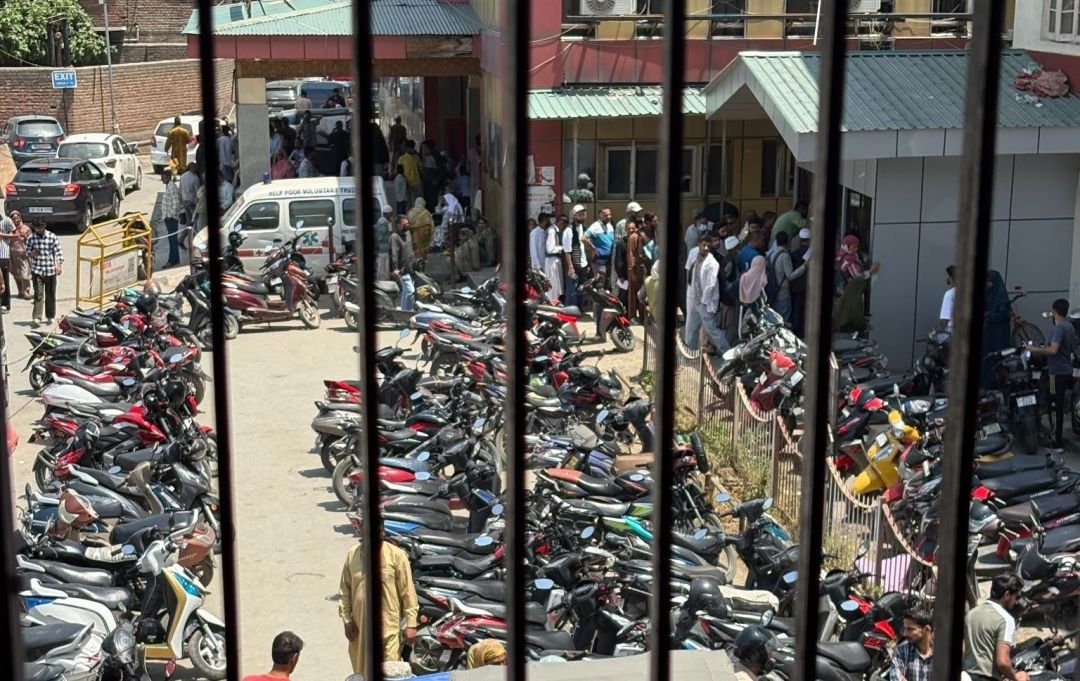
The impact is perhaps most visible at Kashmir Valley's leading de-addiction centres.
As the J&K government's unprecedented anti-drug campaign disrupted drug supply through arrests of alleged traffickers and the confiscation of homes and even apple orchards linked to those accused of peddling narcotics, clinics have been inundated with patients seeking treatment.
“A drug like heroin used to cost Rs 2,000 per gm in Kashmir until a few years ago,” said Dr Sajid Muhammad Wani, assistant professor of the department of psychiatry at IMHANS.
“Now it costs Rs 15,000 and is not even easily available in the wake of the clampdown,” said Dr Wani. “At the same time, the tablets that we give to these patients cost Rs 500. This is one reason that patients come here as they’re unable to afford drugs anymore.”
To understand the impact of the latest crackdown, Article 14 spent several days inside the outpatient department and admission wards of IMHANS, where doctors said they now treat more than 10,000 patients every month.
Last month, the J&K government said that 58,138 patients visited the OPD during the first 50 days of the ongoing Nasha Mukt Abhiyaan (drug-free campaign), the 100-day government campaign aimed at mitigating the drug threat in J&K.
For comparison, only 489 patients visited the OPD between April 2016 and March 2017 around a decade ago. That is a rise of almost 11,800%.
Inside A Deaddiction Centre
During the outpatient sessions at the de-addiction clinic, Article 14 observed that about half the patients sought prescriptions before their scheduled appointments. Doctors routinely turned them away, asking them to return on the appointed date.
Most were relapse cases. Only a handful were first-time patients, whose details doctors carefully entered into a register.
“On an average Monday, only 10 to 15 of the roughly 800 patients we see are new cases,” said Dr Wani.
During one consultation, a man in his late thirties produced an Aadhaar card when asked to confirm his identity.
The doctor studied the photograph before looking back at him. “I don't think that's you,” she said.
The card showed a clean-shaven teenager. The man sitting before her, with greying stubble and a flattened nose, looked decades older.
When challenged, he stumbled through an explanation. The doctors called security, and he was escorted out.
"He was trying to obtain a prescription under a false identity," a doctor, who requested anonymity, told Article 14. "He would likely have returned later using his real identity to collect another prescription."
The clinic also witnessed the physical toll of prolonged drug use.
One man in his twenties rolled up his trousers, revealing legs covered in infected sores, crusted with dried blood and pus.
“People inject heroin until they can no longer find a vein,” Dr Wani said. “Then they begin injecting into muscle, which causes severe infections. In the worst cases, the tissue dies, and we have no option but to amputate.”
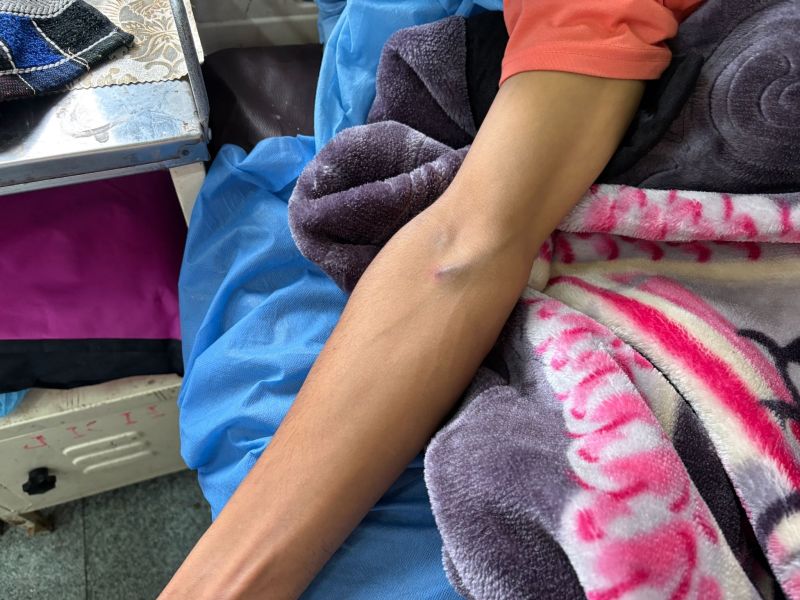
Dr Wani said he could recall performing at least “four to five” such amputations in the last few years. “Mostly, the fingers and hands were severed,” he added.
Many of the patients had contracted diseases such as Hepatitis C from sharing needles. A 2023 study found a 72% prevalence of Hepatitis C among intravenous drug users in Kashmir.
The Crackdown
Heroin is by far the most commonly used opioid in Kashmir. The 2022 survey by IMHANS found that 95% of people dependent on opioids in J&K used heroin, with nearly 33,000 syringes being used by the users to inject heroin every day.
The scale of the trade was underscored by the J&K Police's recent seizure of 12 kg of heroin, which they estimated to be worth Rs 120 crore, during the ongoing anti-drug crackdown.
Launching the Nasha Mukt Abhiyaan in April, J&K Lieutenant Governor Manoj Sinha said substance abuse had "reached a level where isolated enforcement action would no longer suffice, and a mass public movement had become necessary".
The problem, he said, had spread beyond a handful of neighbourhoods to become a major social challenge, affecting “educational institutions, local communities and family structures.”
The J&K campaign is a far more aggressive version of the union government’s nationwide anti-narcotics drive launched by the union ministry of social justice and empowerment in August 2020.
Specialised police teams have since fanned out across Kashmir, seizing the assets of alleged drug traffickers. Authorities have demolished about 63 houses and attached more than 331 properties belonging to people accused of peddling narcotics.
On 2 August 2026, J&K lieutenant governor Manoj Sinha said more than 2,600 people had been arrested in narcotics-related cases, and police had registered over 2300 FIRs.
Authorities also raided hundreds of pharmacies for alleged violations linked to the sale of controlled drugs, with 120 facing punitive action against their licences.
Police said they had recommended the cancellation of 124 passports linked to alleged drug trafficking. The crackdown has also extended to the streets, with officers stopping motorists and conducting on-the-spot urine tests for narcotics. Further, authorities cancelled around 370 driving licenses and 750 vehicle registrations in connection to the supply of narcotics.
Controlling The Rush
On the second floor of IMHANS, counselling psychologist Muhammad Saleem sat at a desktop, headphones on, answering distress calls from across Kashmir.
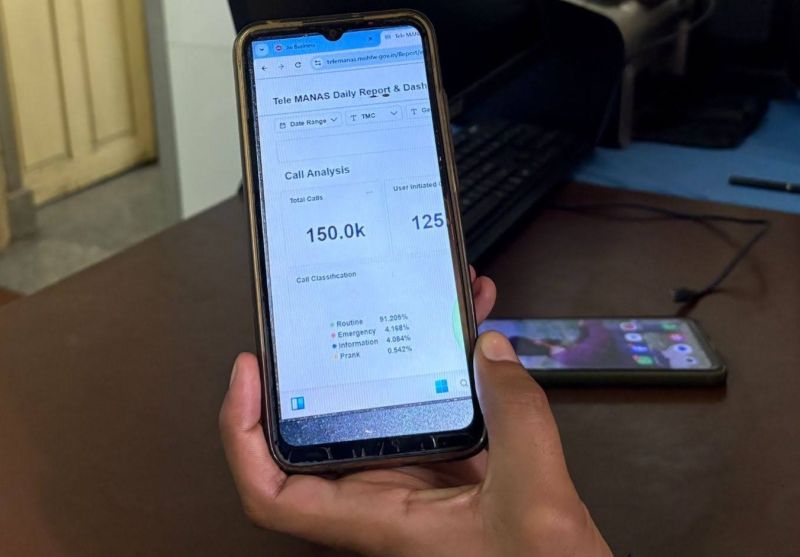
The volume of calls to the national mental health helpline from J&K has exploded—from about 2,000 calls a month in 2022 to nearly 150,000 a month by April 2026—fielded by district centers across the region, he said, about a third of which are related to substance abuse.
“Relapses are often triggered by intense emotions—elation, guilt or sadness,” Saleem said. “Eid is a particularly high-risk period. That's when our patient load goes through the roof.”
Patients are typically admitted when their withdrawal symptoms become unmanageable. Treatment begins with buprenorphine, an opioid substitution medicine, along with intravenous fluids.
“Although buprenorphine is meant to help patients overcome heroin dependence, some become dependent on it instead,” Saleem said. “Once detoxification is complete, doctors start them on naltrexone.”
Naltrexone helps prevent relapse by blocking the euphoric effects of opioids, reducing cravings.
“It is the medication that helps sustain recovery,” Saleem said. “But before we prescribe it, patients must give a written undertaking that they will not use opioids while taking it. If they relapse, it can be life-threatening.”
The Human Toll
M*, a 28-year-old computer graduate from north Kashmir, had been admitted to IMHANS several times before. He was back again after another relapse.
His addiction, he said, began after the death of a childhood friend a decade ago.
In April 2016, allegations that an Indian Army soldier had molested a local girl in Handwara triggered widespread protests. As demonstrations escalated, security forces opened fire, killing 19-year-old Nayeem Qadir Bhat, the first cricketer from Kupwara district to be selected for an all-India coaching camp.
M said the killing profoundly affected him and marked the beginning of his descent into addiction.
The event made national headlines in 2016 (here, here, and here), but the consequences of the tragedy a decade later went unnoticed.
“When I heard about his death, I was shocked beyond words,” said M, seated on a bed inside IMHANS.
“It’s from nursery class that we both were together,” he said. “For two months, I refused to go home. I stayed at a friend's place. We would take part in the protests and hurl stones at the security forces.”
The Link To Political Conflict
M's story illustrates how Kashmir's drug crisis is intertwined with the region's decades-long political conflict and its enduring psychological toll.
He said the killing of his childhood friend left him deeply traumatised.
“One day, my friends introduced me to heroin,” M said. “They told me it would help me cope with the trauma.” He began smoking the drug by heating it on aluminium foil and inhaling the fumes.
Alarmed by his addiction, his family withdrew him from college in Handwara and sent him to Pune to complete his graduation.
Away from Kashmir, M rebuilt his life. He completed his degree and even landed cameo roles in Bollywood films, including Kesari, Indu Sarkar and Baaghi 2.
But when he returned home in 2019, the prolonged lockdowns that followed the abrogation of Article 370 revived memories of the shutdowns he associated with his earlier trauma.
“Then, one day in 2020, I started taking tapal,” he said, referring to tapentadol, a prescription opioid. A 2025 study published in the Indian Journal of Social Psychiatry estimated that 16% of drug users in Kashmir consume the drug.
After his latest relapse, M was readmitted to IMHANS, where doctors treated him with a combination of buprenorphine and naloxone.
Doctors said his experience reflects a broader pattern: detoxification alone is often not enough.
“Patients stay here for a few weeks, complete detoxification and begin to think they have recovered,” said Dr Wani. “But in reality, they haven't.”
‘I Want My Old Life Back’
Zoya Mir, a clinical psychologist who runs the Srinagar-based mental health clinic Psychlite, said the absence of a structured rehabilitation policy leaves a critical gap in treatment because hospitals are equipped to manage detoxification, not long-term recovery.
“To address the unhealthy coping mechanisms that drive addiction, patients also need interventions such as skills training, motivation and capacity building,” said Mir. “That support has to continue for at least three or four months. Hospitals alone cannot provide it. They are already overburdened.”
“Kashmir lacks community-based interventions outside the health system,” she added.
M's experience reflects that gap. To access sustained rehabilitation, he had to travel to New Delhi—an option beyond the reach of many patients.
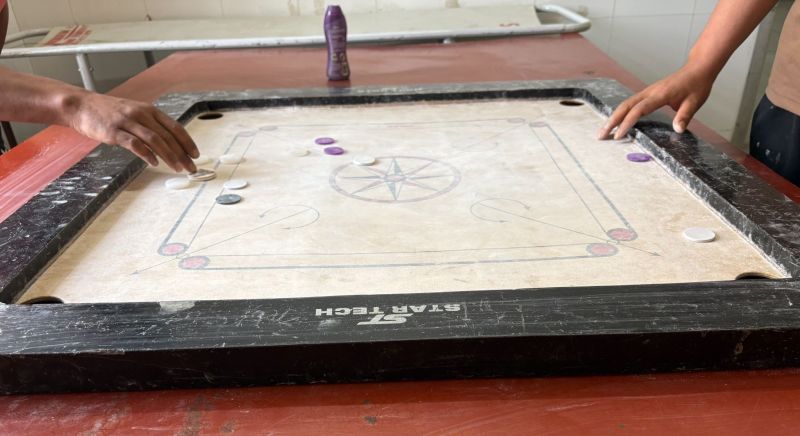
Back at IMHANS, M leaned over a carrom board and struck a coin cleanly into the corner pocket. He smiled.
“I genuinely want my old life back,” he said. “I'm still glad age is on my side. I want to work in Bollywood again.”
*Name changed to protect identity
(Shakir Mir is a freelance journalist based in Srinagar, writing on health, politics, conflict, heritage and books.)
Get exclusive access to new databases, expert analyses, weekly newsletters, book excerpts and new ideas on democracy, law and society in India. Subscribe to Article 14.