
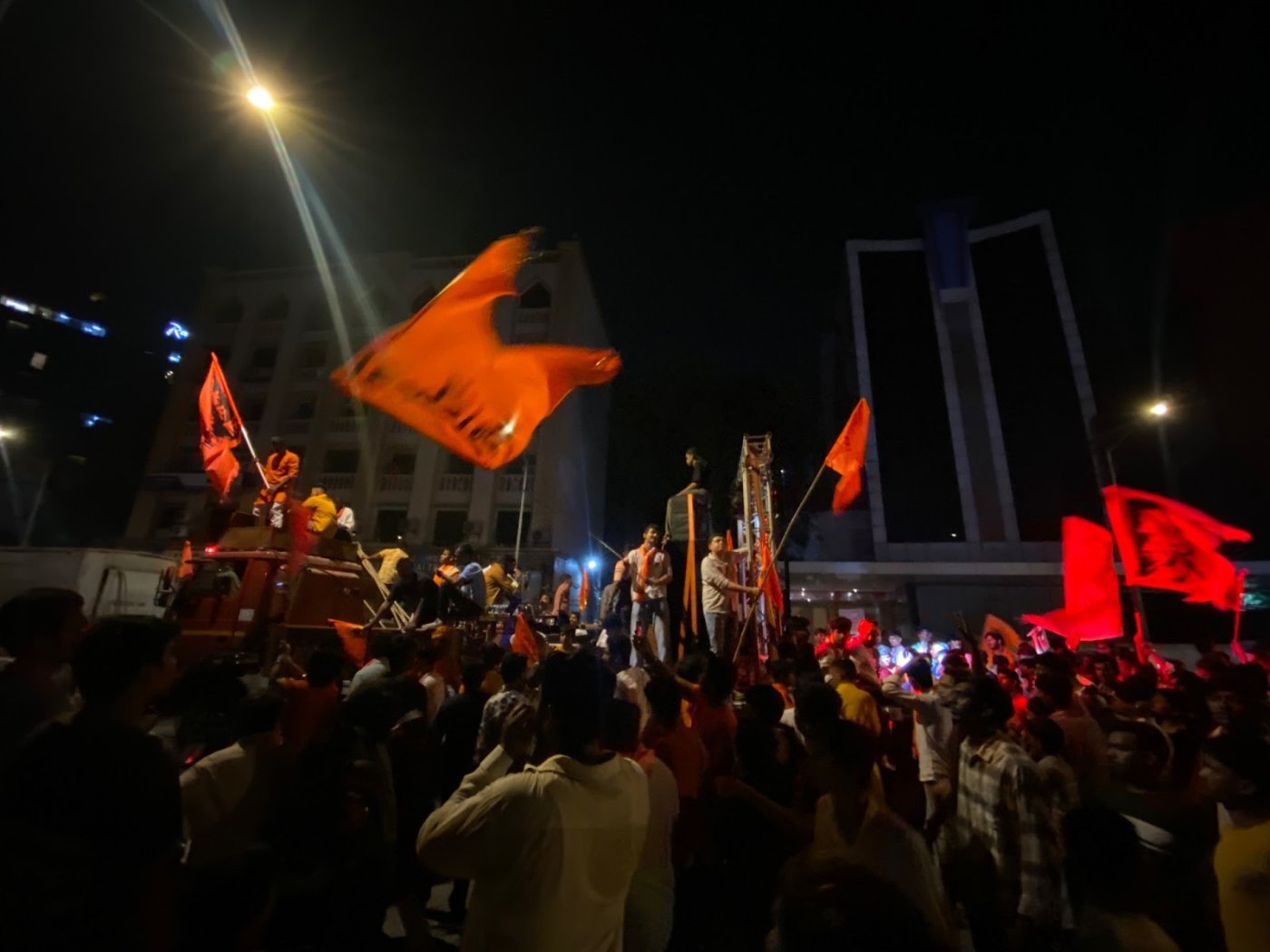
Mumbai: Each week, for the last three years, a group of men in their 20s and 30s would assemble in the eastern Mumbai suburb of Ghatkopar and tick items off a checklist:
Had any of them spotted a Muslim man with a Hindu girl?
Had there been any new case of ‘love jihad’ that had reached their ears?
What were the updates on the old ones they had fought?
The men would then pool their intelligence: reports from ‘sleeper cells’, consisting of unnamed Hindutva sympathisers spread across localities, social media posts or just about anything else that would have alerted them to more cases of inter-faith relationships between Muslim men and Hindu women.
For these men, fighting love jihad—the unproven conspiracy theory espoused by Hindutva outfits about Muslim men luring Hindu women into a relationship in a bid to convert them to Islam—is akin to a full-time job.
Leading them is 40-year-old Bajrang Dal vigilante, Omprakash Yadav, a teacher at a private school in Mumbai, who spends as much time breaking up couples as he does teaching students.
“I finish teaching in the afternoon, and soon afterwards, I am on the task, either on the ground or on the phone, coordinating with workers,” Yadav said.
Much of his time is spent going in and out of police stations, pressing police men to lodge complaints against Muslim men for eloping with Hindu women.
Convincing The Police
Elsewhere in Mumbai, 22-year-old A*, a Bajrang Dal volunteer, is scrolling through Instagram posts and stories uploaded by young men and women.
“If we find any posts from Hindu women or Muslim men showing them to be in an interfaith relationship with each other, we start tracking them,” said A. “We first gather intelligence about such couples, then contact their families, and convince them to oppose such relationships.”
For both Yadav and A, convincing the cops to act against such couples was an arduous task.
“Most times, the police wouldn’t budge and say they can’t break up two consenting adults,” Yadav said. So, Yadav and his men spent time convincing officials—or often tricking them—into booking the couple.
“One time, we convinced an eloped Hindu woman’s family to lodge a complaint accusing her of theft,” he remembered, laughing. It worked—the police traced the couple and the family ‘counselled’ the woman into breaking up with her Muslim partner, whom she wanted to marry.
For years, they had not been able to get the police to back them. This week, they believe, that has changed forever.
Paying heed to their repeated reminders, the Maharashtra legislature on 17 March 2026 approved a bill that seeks to criminalise ‘unauthorised’ religious conversions that are meant to clamp down upon interfaith marriages involving conversions.
‘Where Is The Data?’
The Maharashtra Freedom of Religion Act, 2026, prescribes up to 7 years’ imprisonment and fines up to Rs 5 lakh for conversions deemed to involve “allurement, coercion, force, misrepresentation or promise of marriage”, while requiring a 60-day prior notice to authorities, inviting objections and possible police inquiry, and a post-conversion declaration within three weeks—failing which the conversion is rendered void.
Unlike similar laws passed by other states, Maharashtra’s anti-conversion law gives police officials the power to initiate suo motu action against religious conversions they suspect have been carried out in contravention of the act’s rules.
Civil society organisations in the state opposed the law.
In March, 35 civil society outfits came together in Mumbai and publicly criticised the legislation, warning that it erodes women’s autonomy over religious and personal choices and tramples upon the constitutionally-granted freedom to practice and propagate religion and change faith.
“The government has not even told us what the necessity of the law is. Are there any forced conversions taking place?” said Lara Jesani, a lawyer and member of the People’s Union For Civil Liberties (PUCL)’s Maharashtra chapter, one of the 35 outfits opposing the law.
“Where is the data for it?” said Jesani. “This is not something that has been publicly revealed or disclosed to us.”
Yet, this is what Yadav and Hindutva outfits across the state have been rooting for and pressuring the government to do for years.
A Law As A Weapon
Their advocacy has taken several forms—from vigilante action, and often, violence, against interfaith couples to mass rallies, protests and marches demanding such a law. Dozens of such rallies were held across different districts of Maharashtra, all to press home the point: Muslim men were targeting Hindu women, love jihad was real, and the only way to counter this was a new law.
These protests and marches have seen speakers—including senior Bharatiya Janata Party (BJP) leaders—dish out hate speech and threats of violence (here, here, here and here) against Muslims for allegedly trying to lure Hindu women and convert them to Islam.
At one of the first such rallies in January 2023, Telangana BJP legislator T Raja Singh warned the BJP governments at the centre and state that the 'spark’ among Hindus could become a ‘volcano’ if the government does not bring in a law to curb ‘love jihad’.
“We are not those Hindus who look on and go to sleep. If a landya raises his head, this is the Hindu who knows how to crush that raised head of the landya,” he had said, using a derogatory slur to refer to Muslims.
Singh resigned from the BJP two years later, in May 2025.
Three-time BJP legislator Nitesh Rane has, on multiple occasions, threatened to attack Muslims himself and encouraged other Hindus to beat them, without fear of the law, and has alleged that a global Islamic conspiracy was trying to turn India into a Muslim nation through love jihad.
The police, on court orders, filed 19 first information reports (FIRs) filed against Rane in the last three years alone for hate speech at rallies. Rane became Maharashtra’s minister of fisheries and ports in December 2024. None of the cases has reached trial.
In January 2025, Article 14 reported that the police had never questioned or acted against three-time Maharashtra MLA Nitesh Rane, thereby violating Supreme Court orders to act against hate speech.
For many, the demand’s progression—from rallies marked by hate speeches to being enacted as a law in Maharashtra’s legislature—is symbolic of the state turning into a Hindutva stronghold.
On the streets of Maharashtra, the fight for the law began in 2022, when two things coincided: the BJP clawed back into power in alliance with a faction of Shiv Sena leaders led by Eknath Shinde after a vertical split within the Sena.
Even as the BJP, back in power after two and a half years, was looking to cement its base in the state, an opportunity came in November 2022.
The Opportunity
The nation was gripped by the gruesome details of how a 28-year-old man had murdered, chopped and then, over weeks, dispersed the pieces of his 27-year-old girlfriend. The man, Aaftab Poonawala, was Muslim, his girlfriend, Shraddha Walkar, was Hindu and hailed from Mumbai.
For Yadav, the Bajrang Dal security head, the news confirmed his beliefs.
“Till then, we would see these stray cases of love jihad and fight it at that level,” Yadav said. “But after that case, the fight against love jihad became a movement.”
Many Hindutva vigilantes that Article14 spoke to, in Mumbai and in rural Maharashtra, confirmed that they got specific instructions “from the very top”, to organise protests around Walkar’s killing.
Yadav, himself, organised about five protests in Ghatkopar alone.
A month and a half later, in late January, the small protests gave way to one of the biggest the city had seen: Hindutva outfits booked the historic Shivaji Park—tens of thousands poured in, with saffron scarves, saffron caps and banners that spelt out their intent.
In news reports, some banners were visible—‘Abdul Ho Ya Aftab, Sab Ne Padhi Hai Ek Kitaab’, Be It Abdul Or Aftab, They Have All Read The Same Book. The stage was set—the lettering in bold on the stage said ‘Love Jihad Land Jihad-Mukt Mumbai’.
The star speaker for the day was Raja Singh, who warned the BJP governments at the Centre and State that Hindu anger could erupt “like a volcano” if it did not bring in a law to curb love jihad.
The Protests
Soon after, large-scale protests rolled out across the state.
In district after district, Hindutva outfits that had cropped up overnight—often leaderless, umbrella groups—led these rallies. One group, called ‘Sakal Hindu Samaj’—the name borrowed from Hindutva ideologue Vinayak Damodar Savarkar’s poem, ‘Tumhi Aamhi Sakal Hindu Bandhu’, ‘You And I, Hindu Brothers’—organised most of them.
Leading many of these were prominent BJP leaders, including MLA Nitesh Rane, at a time when his father, Narayan Rane, was a minister in the Modi government’s cabinet as minister of micro, small and medium enterprises.
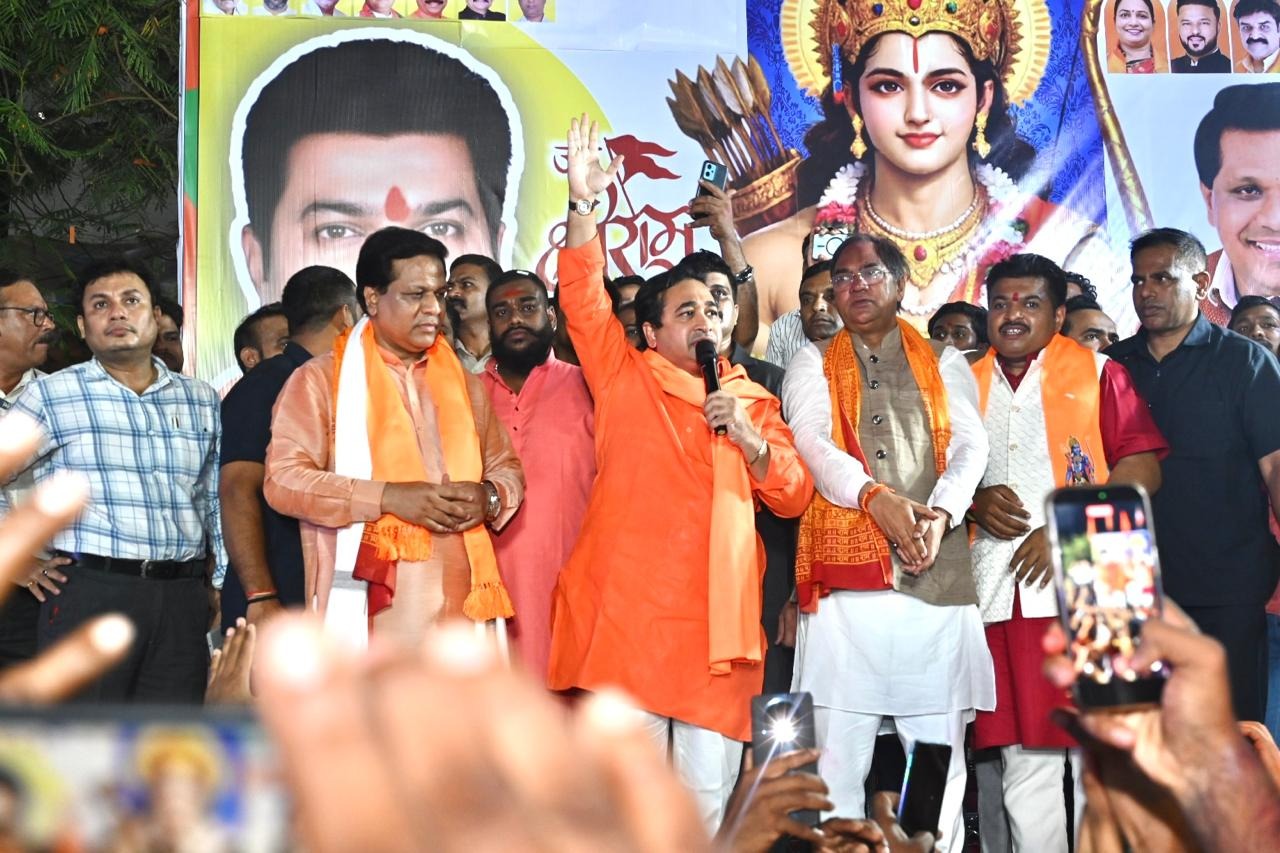
Through 2023 and 2024, Nitish Rane, in his speeches, insinuated an Islamic conspiracy was afoot—“by jihadis to make this country an Islamic rashtra” through love jihad, where “they capture and fox Hindu girls and finish off their lives”.
Nitish Rane asked Hindus to “go ahead and do what you want” to fight “jihadis” without worrying about the consequences and advocated an economic boycott of Muslims.
In November 2024, chief minister Devendra Fadnavis picked Nitish Rane to be part of his cabinet. In an interview with Article14 In January 2025, Nitish Rane, now cabinet minister for ports and fisheries, alleged a “million girls” were trapped by love jihad, with “unregistered cases in lakhs” in Maharashtra alone.
The answer to this, he had said, was a law the government was drafting. “We will bring in a law against religious conversions,” said Nitish Rane. “It is something we have promised in our manifesto, and we always deliver on our manifesto promises.”
In March 2023, Maharashtra’s then women and child development minister Mangal Prabhat Lodha said in the state legislature that there were over 100,000 love jihad cases in Maharashtra.
However, a right to information request filed by a Maharashtra Samajwadi Party MLA Rais Shaikh, before the Maharashtra government’s Interfaith Marriage Family Coordination Committee, set up by Lodha to investigate love jihad cases, revealed the committee got only 402 complaints in a year.
Fourteen months later, on 16 March 2026, the Maharashtra legislature approved the bill.
The Celebration
Among Hindutva outfits on the ground, the new law is both a validation of their work and a cause for celebration.
In the northwestern suburb of Malad, Hindutva outfits were busy preparing for their annual Ram Navami Shobha Yatra, when Article 14 visited them.
The yatra snakes through the Malvani area and has a contentious past. In 2022 and 2023, the yatra had led to violence between the Hindu processionists and Muslim residents of the locality.
M*, 53, a Bajrang Dal activist, ramped up efforts this year in Malvani against "love jihad”. He credited an alliance of Hindutva outfits for years of campaigning on the issue.
The 2023 Hindi film The Kerala Story supercharged their work, M said. It depicted thousands of Kerala women allegedly converted to Islam and sent to fight for ISIS—a narrative critics panned as exaggerated "WhatsApp forwards" (here and here), forcing producers to remove the claims from the trailer.
M organized free screenings for Hindu women upon its release. In March 2026, Hindutva groups held more for the sequel.
“Since then, Hindu men and women started coming forward and reporting any such Hindu-Muslim relationships they saw around them,” he said. “Even if someone saw social media posts by such a couple, they would forward it to us to follow-up.”
Which is why, M and his fellow-Bajrang Dal vigilantes had been brainstorming about how the new law should be celebrated. Their eureka moment was a tableau in the upcoming yatra, depicting love jihad in action.
On the day of Ram Navami, their design was gory but unmistakeable, displayed in a video from the event: a fridge, with a dismembered body of a woman displayed inside and blood dripping out.
“This is to show where women will end up in pieces,” said M, “If they trust Muslim men.”
*Names withheld on request.
(Kunal Purohit is an independent journalist and the author of the book H-Pop: The Secretive World of Hindutva Popstars.)
Get exclusive access to new databases, expert analyses, weekly newsletters, book excerpts and new ideas on democracy, law and society in India. Subscribe to Article 14.