
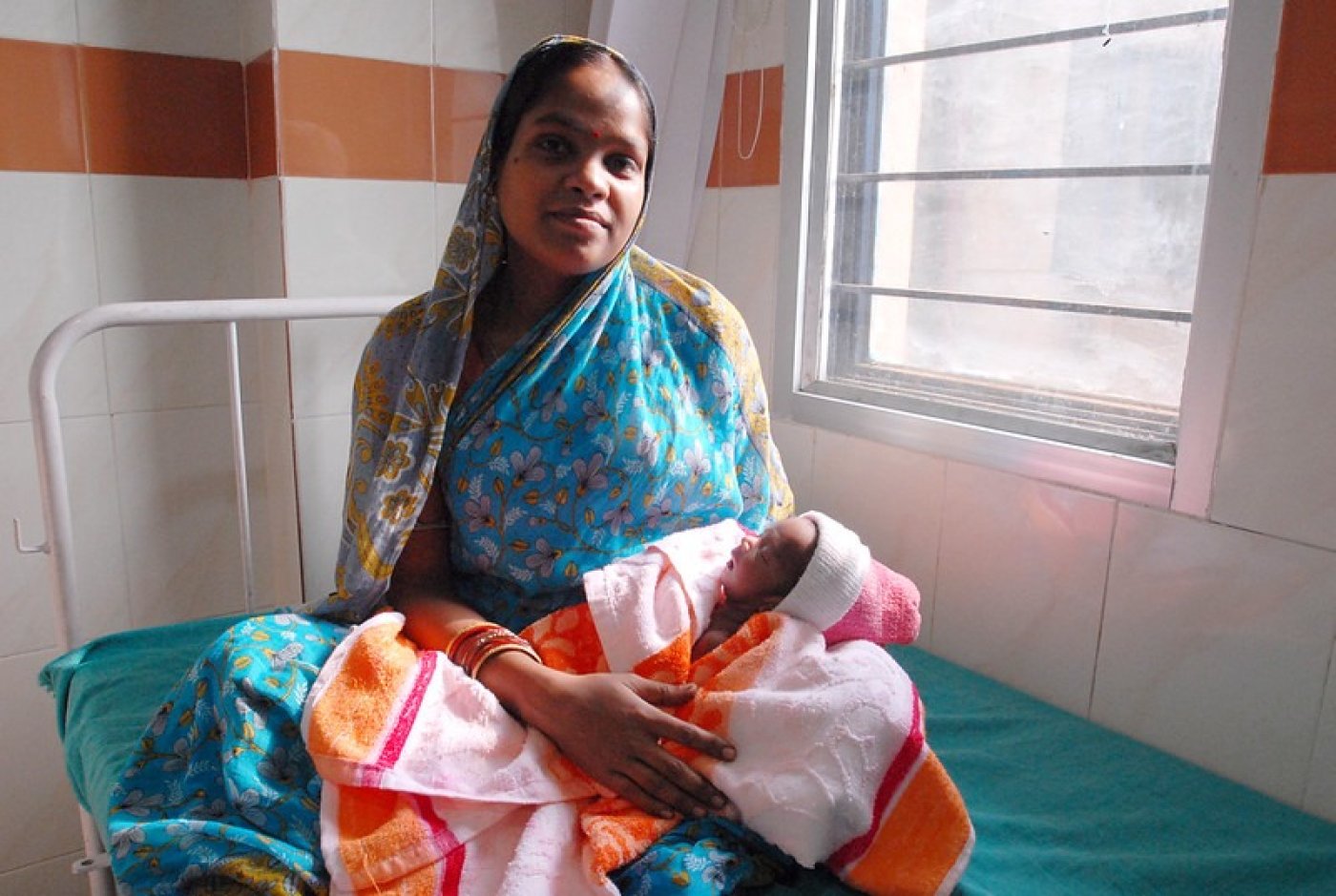
Bengaluru: A few months into her pregnancy, R*, an ASHA worker from Kanpur, Uttar Pradesh, realised that motherhood would not bring rest, security, or paid leave.
It would simply mean working longer hours while hoping her payments arrived on time.
ASHA workers, or Accredited Social Health Activists, and anganwadi workers in government-run creches are the backbone of India’s public healthcare system.
Recruited from the communities they serve, they conduct home visits, track pregnancies, ensure vaccinations, and often serve as the only health link between a village and the state.
There are approximately 1 million ASHA workers and 1.3 million anganwadi workers across India. Neither the central nor the state governments pay ASHA workers a fixed salary. They receive an honorarium set by the union government, topped up by states and performance incentives, ranging from Rs 2,000 to Rs 10,000, depending on the tasks assigned.
They get no maternity benefits or health insurance, nor do they have access to a provident fund.
Asked if she received maternity benefits during or after her pregnancy, R was confused.
“What is maternity benefit?” she said.
After six years as a community health worker, conducting surveys, assisting pregnant women, ensuring vaccinations, and accompanying expectant mothers to hospitals, R said no such support had ever existed in her experience.
"There is nothing like maternity benefits. The government provides no incentive for this," said R. "You have to work until the end of your pregnancy. If you don't work, you don't get paid. You take leave entirely at your own risk."
‘What Will Happen If You Write This?’
Even training sessions offered no respite. Pregnant ASHA workers were expected to attend without exception. And the pressure did not end after childbirth. “After delivery, too, it is incentive-based work. If you don't come, you don't get paid,” said R.
The uncertainty extended beyond maternity. "Salary does not come on time," she said. "We have protested many times over wages and delayed payments."
At one point during the conversation, R paused and asked quietly: "What will happen if you write this?"
There was frustration in her voice. She said ASHA workers had repeatedly raised concerns about low honorarium and delayed payments, but little had changed.
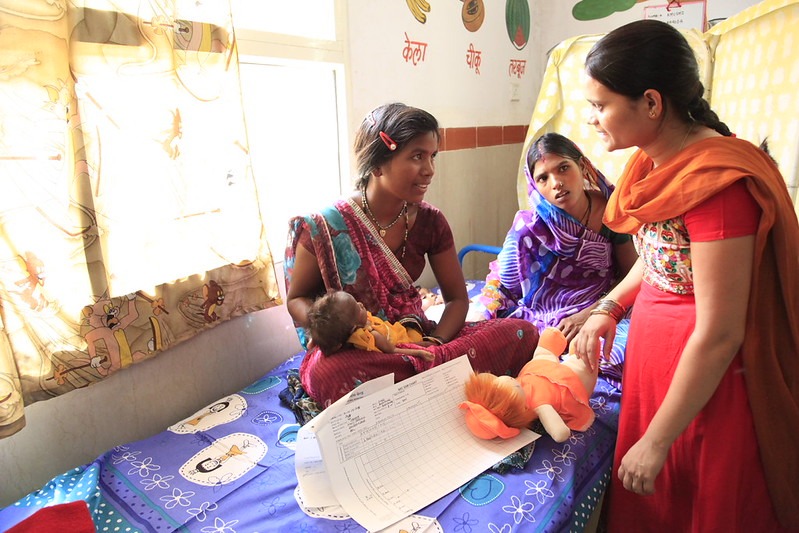
Her experience suggests that while maternity benefits are recognised under the law, awareness of these entitlements and access to them remain uneven for many frontline healthcare workers.
On 17 March 2026, the Supreme Court, in Hamsaanandini Nanduri vs Union of India, struck down a provision that denied maternity leave to adoptive mothers whose children were older than three months at the time of adoption.
The bench of Justices J B Pardiwala and R Mahadevan held that the restriction violated Articles 14 and 21 of the Constitution—the right to equality and the right to life and dignity.
The judgment recognises the right of adoptive mothers under The Maternity Benefits Act 1961. It also highlights the scope and purpose of the Act.
What The Law Promises
India's maternity benefit framework has been built over decades.
The Maternity Benefit Act mandated paid leave for eligible women employees. A 2017 amendment increased paid leave for biological mothers from 12 to 26 weeks for the first two children and extended benefits to adoptive and surrogate mothers with conditions.
The Supreme Court elevated maternity leave from a statutory right to a constitutional one in K Umadevi vs Government of Tamil Nadu, holding that it was connected to dignity, health, privacy and reproductive liberty under Article 21.
The court’s order drew on international frameworks—the Universal Declaration of Human Rights and the International Labour Organisation’s Maternity Protection Convention 2000, which place maternity benefits within a broader spectrum of reproductive rights.
The Loophole The Court Fixed
The March 2026 judgment addressed a specific flaw. Section 60(4) of the Code on Social Security 2020 restricted maternity benefits for adoptive mothers to cases where the child was below three months of age at the time of adoption.
The problem was practical and fundamental. India's adoption process, governed by the Central Adoption Resource Authority, involves multiple stages: declaring a child legally free for adoption, matching with a family, and undergoing reconsideration periods under the Juvenile Justice Act and the Adoption Regulations, 2022.
The court noted that this process takes at least two to three months—meaning that by the time adoption is complete, the child is almost always older than three months. The provision was, in the Court's words, made useless.
The bench emphasised that the purpose of maternity leave is not just physical recovery but bonding, caregiving and emotional adjustment needs that are identical whether a child arrives through birth or adoption. The Court directed that maternity benefits must now extend to all adoptive mothers regardless of the child's age and urged the union government to consider paternity leave as a shared caregiving responsibility.
But the question is whether such judicial corrections reach the women who need them most, or whether they remain confined to the narrow category of formal-sector employees the law already protects.
The Motherhood Penalty
The discrimination women face is not unique to India—it is a global pattern. Research shows that the motherhood penalty can strike before a woman even becomes pregnant.
Women are penalised during job hunting for the mere risk of future pregnancy. Fatherhood, by contrast, is often rewarded; men tend to receive promotions and wage increases after becoming fathers.
As the ILO has documented, motherhood brings a wage penalty that can persist throughout a woman's entire working life. Career breaks around childbirth contribute directly to the wage gap between mothers and fathers.
The tension between work and motherhood is not new, and it is not confined to India's informal sector. Indra Nooyi, former CEO of PepsiCo, once said plainly: “I don't think women can have it all. The career clock and the biological clock are in total conflict with each other.”
If a woman running a Fortune 500 company felt that conflict, the question is what it means for a woman with no job security, no paid leave and no one keeping her seat warm while she recovers from childbirth.
The Persistent Gap
The World Bank’s Women, Business and the Law 2026 report highlights a persistent gap between legal protections and their implementation. While many countries have enacted laws intended to support women's economic participation, enforcement mechanisms remain inadequate, limiting the effectiveness of these protections in practice.
For women, the productive and reproductive years coincide entirely. The absence of childcare and maternity protection does not just create inconvenience; it pushes women out of the workforce permanently.
In India, the consequences are clear in the numbers. The official female labour force participation rate rose to 31.7% from 27.8%, but remains far short of Prime Minister Narendra Modi's 2047 Viksit Bharat vision of 70%.
According to the ILO, 708 million women worldwide are outside the labour force due to unpaid caregiving responsibilities. India's women make up a significant share of that number. Indian women's participation in the workforce will take at least two decades to catch up with the G20 countries.
According to a 2024 Indiaspend analysis, 93.5% of women workers in India cannot access maternity benefits. The reason is structural. The Maternity Benefit Act applies only to establishments with 10 or more workers. Over 85% of women are employed in establishments smaller than that. They are excluded by design.
Section 5 of the Act adds a further barrier: a woman must have worked for at least 80 days in the 12 months before delivery to be eligible. For women in casual, seasonal or gig work, whose employment is irregular, this threshold is frequently impossible to meet.
A Deeper Exclusion
The exclusion runs deeper still.
A 2025 field study across semi-urban and rural parts of Andhra Pradesh and Telangana, surveying 120 women workers in agriculture, domestic service, and small manufacturing, found that 72% were unaware of maternity benefit schemes and 80% continued working during pregnancy for financial reasons.
About 65% returned to work within two weeks of delivery, often in physically demanding roles. The state's flagship scheme, the Pradhan Mantri Matru Vandana Yojana, reached only 20% of the eligible women surveyed. The rest were turned away due to documentation barriers, Aadhaar mismatches, and bureaucratic delays.
The exclusion is even sharper in the gig economy.
A delivery worker was denied maternity leave on the grounds that she was an independent contractor. Forced to take unpaid leave during pregnancy, she later found her account deactivated. She challenged this, arguing that her working conditions amounted to employment in substance. A labour court ruled in her favour, but the ruling has not brought systemic change.
As more women enter platform-based work, maternity protection remains structurally out of reach.
The Women Who Deliver
The very obvious contradiction involves the women that the state itself employs to deliver its welfare schemes.
A 2025 analysis from the Vidhi Centre for Legal Policy, a think tank, has documented that ASHA workers under the National Health Mission and anganwadi workers under the Integrated Child Development Services scheme are classified not as employees but as honorary volunteers.
The State classifies these workers as volunteers to avoid its employer obligations. It is the mechanism by which the State extracts formal work through an informal, gendered framework while denying the workers any of the protections formal employment would require.
When ASHA workers become pregnant, they continue working through delivery and return immediately after. The State that depends on their reproductive care fails to recognise their own reproductive needs.
As Vidhi's analysis puts it, this isn’t just an implementation failure, but a deeper structural inconsistency in the behaviour of the State.
What Other Countries Have Done
The contrast with other countries is striking.
Countries such as Costa Rica and Mongolia have extended maternity protection to workers beyond the formal sector through a combination of public funding and social insurance. India's ASHA workers, despite being the backbone of community healthcare, continue to fall through the cracks of the existing system.
Norway offers 49 weeks of paid maternity leave at full pay. Sweden provides 480 days of shared parental leave, split between both parents. Affordable childcare in Sweden means both parents can return to work after leave, without one partner almost always the mother permanently dropping out.
When The Law Applies & Still Fails
Even for the small minority of women covered under the law, access to maternity benefits is far from guaranteed. Legal entitlement routinely collapses when women try to use it.
A Bengaluru-based software engineer was terminated from her job weeks before her scheduled maternity leave despite consistently strong performance reviews. A court found the dismissal illegal under Section 12 of the Maternity Benefit Act, ordering reinstatement and compensation of Rs 5 lakh.
In another case, an HR executive at a Mumbai firm was denied paid leave on the grounds that company policy required four years of service—a condition that directly contradicts the Act. The court ruled that statutory rights cannot be overridden by company policy.
These are not isolated cases. Despite the law's existence, women continue to face unequal treatment during the hiring process because of their reproductive age or pregnancy.
A woman in Nainital was denied joining as a nursing officer at a government hospital because her medical certificate stated she was 13 weeks pregnant and “temporarily unfit for joining.” The court held that denying a woman employment on the grounds of pregnancy is discriminatory and violates Articles 14, 16 and 21 of the Constitution.
Penalties In Many Forms
The penalties women pay for motherhood take many forms.
According to the Aon Voice of Women Study 2024, women returning from maternity leave are moved into roles they did not choose, receive lower performance ratings, and experience negative pay consequences that accumulate quietly and are rarely challenged.
Evidence suggests that employer-funded maternity benefits can lead firms to become more selective in hiring women of childbearing age.
When women do return from leave, they are often told their post no longer exists.
A woman at Ciena India's Gurugram office was reportedly forced to resign on her first day back from maternity leave—HR cited a 5% workforce reduction as justification. This approach works particularly well against women who are unaware of their legal rights.
This is not a problem unique to India. It is a global pattern. A Meta employee, 34 weeks pregnant, was laid off just before her maternity leave was due to begin. In another case, a woman was laid off twice. Once during her first pregnancy and again during her second.
Courts have increasingly had to intervene to correct violations that employers routinely commit, repeatedly reminding employers of obligations that should require no reminder.
The Supreme Court's March 2026 judgment is a meaningful correction. It recognises that motherhood extends beyond biology. It removes an arbitrary restriction that denied most adoptive mothers a benefit they were nominally entitled to.
But the deeper problem is not a loophole in the law. It is the structure of the law itself, built around a formal employer-employee relationship that, by design, excludes the majority of working women in India.
A construction worker, a domestic worker, an ASHA worker, a gig worker—none of them is covered. India has a maternity law. It simply does not apply to most mothers.
(Preeti Singh is a writer and data analyst based in Bengaluru.)
Get exclusive access to new databases, expert analyses, weekly newsletters, book excerpts and new ideas on democracy, law and society in India. Subscribe to Article 14.