
New Delhi and Cambridge (UK): Between 2014 and July 2026, the Standing Committee of the National Board for Wildlife (SC-NBWL), India’s apex body mandated to safeguard wildlife and its habitats, approved projects affecting at least 99,000 hectares within Protected Areas, their Eco-Sensitive Zones (ESZs) and wildlife corridors, our analysis of the minutes of 61 of its meetings found.
That is an area about a third larger than Singapore.
Of this, about 73,774 hectares lie inside Protected Areas and 25,731 hectares in ESZs. The Standing Committee that approved these diversions may itself be illegally constituted: the Wild Life (Protection) Act, 1972 (WLPA), provides for the NBWL to constitute it, but the central government constituted it.
Defence and security projects accounted for the largest share of approvals by area, about 28,800 hectares, most of it in the geologically volatile Eastern and Western Himalayas. Strategic requirements rightly merit special consideration, but they cannot override ecological realities, fragile mountain geomorphology or severe risks to human life.
Multiple studies and the Supreme Court’s own High Power Committee have found that unscientific slope cutting, heavy blasting and muck disposal have directly fuelled land subsidence, as witnessed in Joshimath, and a surge in fatal landslides (here and here), causing heavy economic losses and loss of life.
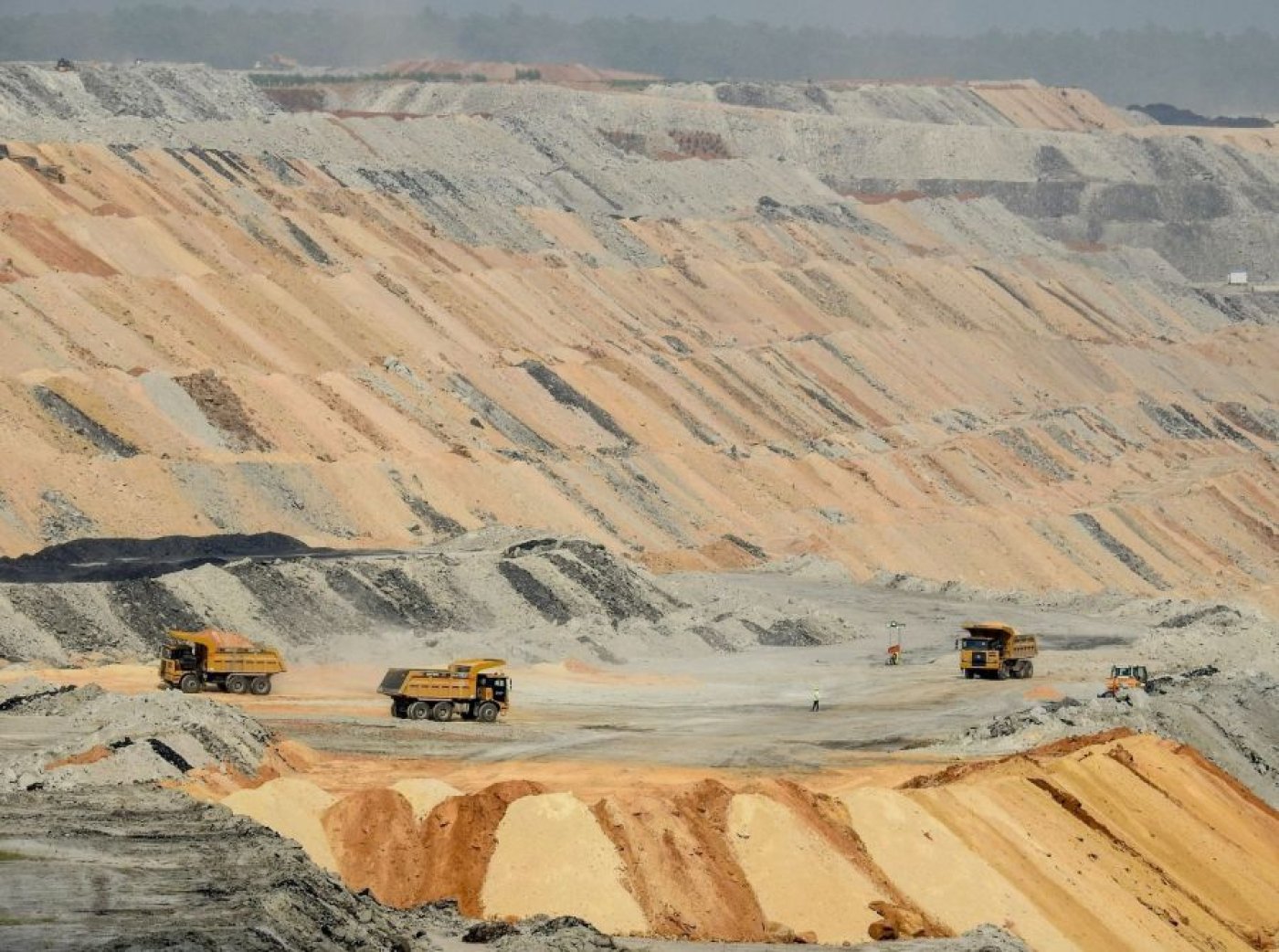
Mining ranks second, with roughly 26,700 hectares cleared for coal, iron ore, bauxite and riverbed quarrying, inflicting permanent, irrecoverable damage on forest canopies and water tables.
Close behind, at about 26,400 hectares, are dams, irrigation and hydroelectric projects, which involve heavy construction, massive blasting and the permanent submergence of vital valley habitats.
Together, these three sectors account for the vast majority of intrusions into India’s Protected Areas and Eco-Sensitive Zones.
300 Proposals, No Area On Record
These large-scale diversions lack basic transparency. The meeting minutes do not consistently record the area involved or, at times, even the nature of the activity.
Of the approximately 2,400 proposals we analysed, at least 300 do not state the extent of forest land being diverted. These unquantified clearances span every major sector: highways, transmission lines, thermal and hydroelectric projects, mines, cement plants, oil and gas infrastructure, irrigation works, railways, and residential and commercial developments.
In some cases, the minutes do not mention the sanctioned activity at all. In one instance, the records show a 467.45-hectare diversion without stating its purpose, while also leaving it unclear whether the land lies inside Maharashtra’s Tadoba-Andhari Tiger Reserve or in a connecting tiger corridor. Details of the project proponent suggest that the clearance is likely for mining.
Despite these omissions, the minutes record no questions, concerns or deliberations about the missing figures. This uncritical rubber-stamping violates the SC-NBWL's institutional duty as an apex expert body statutorily mandated to rigorously assess proposed activities and exercise informed judgement before permitting any intrusion into India’s protected wildlife habitats.
By repeatedly leaving out the area involved, the minutes obscure the physical footprint of SC-NBWL clearances. The figures cited in this report are conservative estimates, not totals, and the true scale of habitat loss under the SC-NBWL’s clearance regime remains unknown.
Defying The Law It Must Uphold
Our earlier investigations for Article 14 (here, here and here) exposed a rubber-stamp approval regime: the SC-NBWL sanctioned 97% of all proposals seeking to divert habitat inside Protected Areas and Eco-Sensitive Zones.
It recommended altering, shrinking or outright erasing Protected Areas in 35 instances, most egregiously denotifying Galathea Bay in Great Nicobar, the most critical nesting site in the northern Indian Ocean for the giant leatherback sea turtle.
About 68,367 hectares were lost through denotifications and boundary alterations of Protected Areas. Of the 76,192 hectares proposed to be added in lieu of denotified or “rationalised” Protected Areas, only about 51,350 hectares have actually been notified. The efficacy of this is questionable, as the added land does not necessarily provide ecologically equivalent habitat.
Crucially, virtually all of these clearances, denotifications and boundary alterations disregarded the WLPA and binding Supreme Court orders.
This investigation quantifies the area of India’s most vital wildlife habitats—Protected Areas and Eco-Sensitive Zones—that the body mandated to protect them has cleared for diversion.
The NBWL is India’s apex statutory body tasked with safeguarding wildlife. Its Standing Committee, drawn directly from the Board, serves as its executive arm and carries out its core conservation functions.
The SC-NBWL’s regulatory authority over activities in ESZs derives from the Supreme Court’s directive in the Goa Foundation case (2006).
Under the WLPA, the NBWL may carry out, or cause to be carried out, impact assessments of projects and activities on wildlife or its habitat. The Act permits the destruction or damage of habitat inside a sanctuary or national park only when it is necessary for the improvement and better management of wildlife there (sections 29 and 35(6)).
Indeed, the WLPA makes it the NBWL’s duty “to promote the conservation and development of wildlife and forests by such measures as it thinks fit”, not to destroy wildlife and its habitats.
Our analysis indicates that hardly any clearance was benign. Projects proposed—and approved—include mines, hydel projects, highway and railway expansion, ports, transmission lines, tourism infrastructure, residential complexes, colleges, ropeways, golf courses, ghats and temples.
India’s Unprotected Protected Areas
The 73,774 hectares cleared inside Protected Areas themselves amount to almost three times the area of Gujarat’s Gir National Park.
Spanning a broad range of ecoregions across just 5.4% of India’s land area, the Protected Area network has played a pivotal role in preventing any documented species extinction in India over the past 70 years.
This safety net is rapidly fraying as the SC-NBWL routinely approves industrial intrusion inside Protected Areas and their ecological buffer zones.
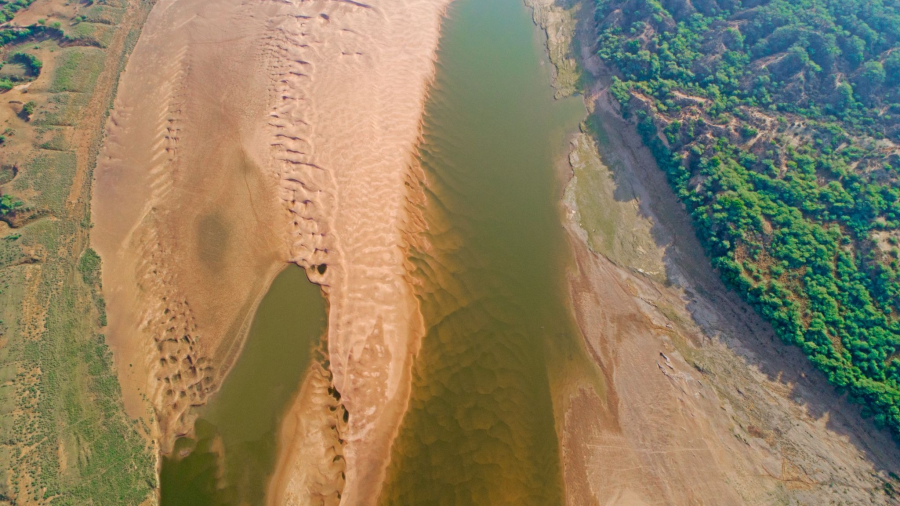
In May 2022, for instance, it cleared five proposals covering five stages of the Kota Super Thermal Power Station, totalling 771 hectares within the National Chambal Sanctuary and its ESZ. The clearances imperil the critically endangered gharial, the red-crowned roof turtle and the Gangetic dolphin that this riverine ecosystem shelters.
The Committee appears to have ignored studies flagging the plant’s failure to comply with particulate matter norms notified by the ministry of environment, forest and climate change (MoEFCC) itself.
Flamingo City, Cut Up Piece By Piece
A careful reading of the minutes reveals multiple proposals affecting the same Protected Area or adjoining, ecologically connected sanctuaries.
These include Gujarat’s Kachchh Desert Wildlife Sanctuary in the Great Rann and the Wild Ass Sanctuary in the Little Rann. Both belong to a wider mosaic of saline desert, mudflats and seasonal wetlands, shaped by monsoon runoff and seawater inflows.
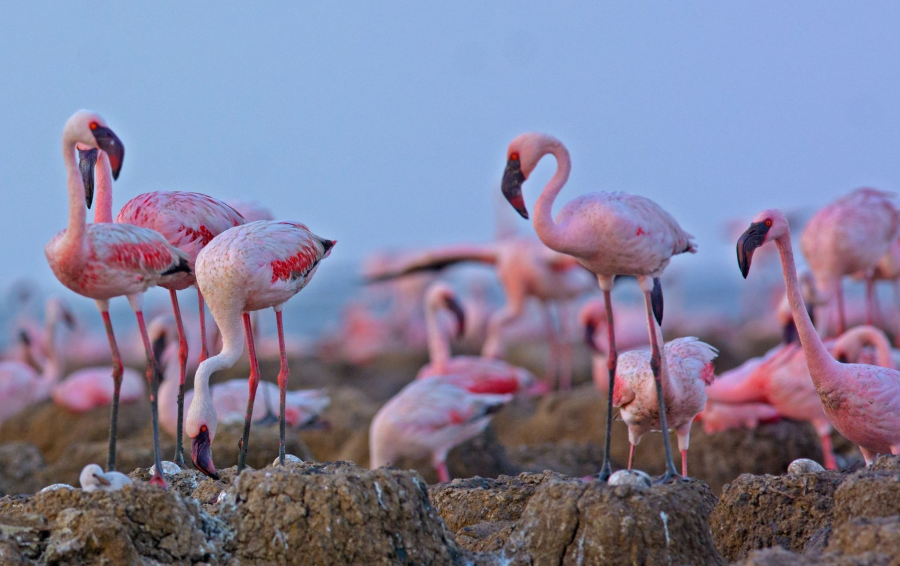
Besides sustaining desert-adapted species such as the wolf, the Indian wild ass, the fox and the very rare caracal, this landscape’s seasonal hydrology supports the spectacular “Flamingo City”, so named by the ornithologist Salim Ali for the hundreds of thousands of flamingos that breed there.
Despite this ecological interdependence, the SC-NBWL has cleared about 790 hectares in the two sanctuaries for roads, canals and transmission lines through 16 proposals over the years.
It did so despite its own expert committee’s warning that road embankments and canals obstruct natural water flows, threaten the benthic food web, and risk permanently abandoning India’s—and Asia’s—largest breeding site for flamingos.
Kutch illustrates a wider pattern across Protected Areas, ESZs and wildlife corridors: repeated approvals within the same landscape are assessed individually rather than for their cumulative impact. By evaluating proposals piecemeal across separate meetings, the Committee routinely ignores their combined ecological toll, allowing India’s Protected Areas to be progressively fragmented and destroyed.
Transmission lines cleared through these landscapes pose a particular threat. Across Protected Areas and ESZs, including those in Kutch, the SC-NBWL has granted at least 200 distinct approvals for power transmission and distribution lines.
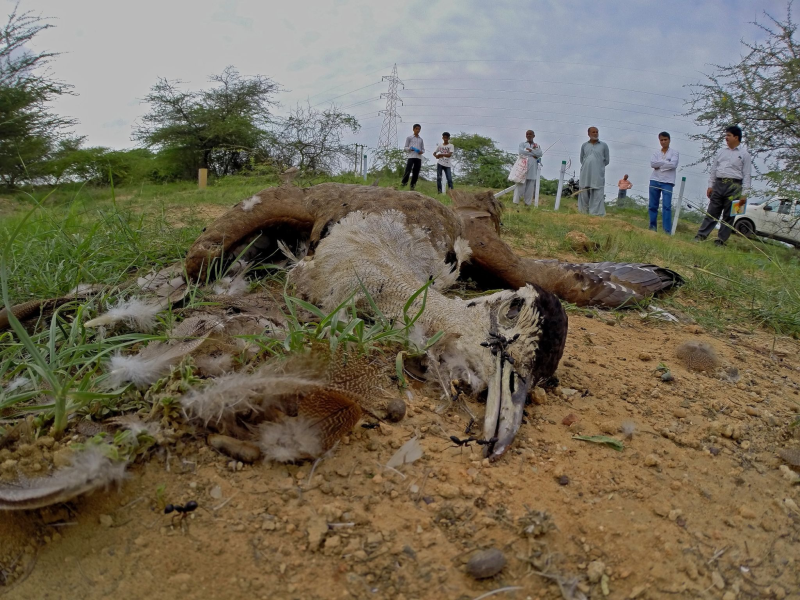
Power lines turn wildlife habitats into death traps. An estimated 100,000 birds die every year from collisions with them in Rajasthan’s Thar region alone, according to a Wildlife Institute of India study, and about 30,000 in Kutch’s Abdasa region. Among the victims is the critically endangered great Indian bustard.
Save The Tiger, Clear Its Home
Tiger reserves and corridors fare no better.
Among the SC-NBWL’s largest single clearances is an 8,300-hectare uranium exploration footprint inside Amrabad Tiger Reserve, a vital sanctuary for tigers, leopards, sloth bears and over 80 mammal species. Although the clearance currently permits only exploration, confirmed deposits almost invariably pave the way for mining.
Dams and irrigation projects have also been allowed to consume tiger habitat on a devastating scale. The best-known is the Ken-Betwa river-linking project, whose Daudhan reservoir will submerge 5,455 hectares of Panna Tiger Reserve, including 4,141 hectares of its “sacrosanct” core. It is hardly an exception.
At its 91st meeting on 9 July 2026, the SC-NBWL recommended approval for the Mej Barrage, with a total footprint of 2,751.78 hectares. Of this, 1,366.83 hectares fall within Ramgarh Vishdhari Tiger Reserve and the rest in its immediate proximity, ravaging the vital corridor linking it to Ranthambore Tiger Reserve.
In Jharkhand, the North Koel reservoir projects would inundate 1,007 hectares of pristine forest and require the felling of 344,644 trees in Palamau, one of India’s nine original tiger reserves.
Tiger reserves have also been truncated. Residential complexes have been allowed within Dudhwa's buffer zone in Uttar Pradesh, while 480 hectares in Kanha’s Eco-Sensitive Zone were cleared for mining.
Cutting The Tiger’s Lifelines
The SC-NBWL has also approved several proposals in wildlife corridors, severing vital arteries of India’s wildlife landscapes. Among them is the Central Indian Tiger Landscape, a globally vital stronghold for the big cat’s long-term survival.
The migratory corridors linking Maharashtra’s Tadoba-Andhari Tiger Reserve with Telangana’s Kawal, Maharashtra’s Tipeshwar and Kanhargaon, and Chhattisgarh’s Indravati illustrate the damage.
Approved projects here include canals, irrigation projects, highway and railway expansion, and open-cast coal mines, collectively covering over 1,800 hectares and practically severing this vital link.
This is particularly worrying for reserves with sparse tiger populations, such as Kawal and Indravati, which depend on connected habitats to receive dispersing tigers from source populations in Maharashtra.
Sanctioning widespread habitat diversion across these pinch-points is trapping wildlife in isolated forest islands, driving tigers—and other wildlife such as elephants, leopards and bears—into severe genetic bottlenecks, worsening human-wildlife conflict and risking local extinction.
This collapse of landscape connectivity is compounded by the Board’s dismantling of another vital safeguard: Eco-Sensitive Zones.
Buffer Zones That No Longer Buffer
In ESZs, the SC-NBWL allowed the diversion of 25,731 hectares, more than twice the area of the entire union territory of Chandigarh. These clearances undercut the very purpose of ESZs: to act as “shock absorbers” around national parks and sanctuaries by restricting and regulating damaging activities.
Gujarat’s Barda Wildlife Sanctuary, for instance, was created as secondary habitat for the world’s only population of Asiatic lions, one of Project Lion’s primary objectives.
Barda is essential for lions dispersing from an overcrowded Gir, making contiguous, protected buffer zones fundamental to preventing severe genetic bottlenecks. Even so, in August 2014, the SC-NBWL cleared five limestone-mining leases within Barda’s ESZ, four of which together cover 82.59 hectares; the meeting minutes do not mention the area of the fifth.
By approving heavy extractive activity on the sanctuary’s immediate periphery, the SC-NBWL severs the connecting landscape, undercuts the government’s own public conservation commitments and compromises the Asiatic lion’s very survival.
ESZ safeguards assume particular importance where they overlap with elephant reserves, which lack the statutory protection afforded to national parks and sanctuaries.
But rather than use this safeguard to protect critical elephant habitat, the Standing Committee has repeatedly allowed diversions, for instance, clearing 61.73 hectares for a four-lane expressway that will cut through the Rayala Elephant Reserve and the ESZ of Koundinya Wildlife Sanctuary, Andhra Pradesh.
In Assam’s Dehing Patkai Elephant Reserve, the SC-NBWL went a step further, endorsing illegal coal mining through a retrospective approval.
A proposal at an April 2020 meeting sought 98.59 hectares of Saleki forest for coal mining, but according to a ministry inspection report, mining was already underway on part of the land without the requisite forest clearance. The forest department has fined the agency concerned for illegal mining within an elephant reserve.
Instead of withholding its recommendation because of these violations, the SC-NBWL recommended approval for 57.20 hectares of the already-mined land, turning wildlife scrutiny into a route to regularise illegal mining and destruction in a landscape designated for elephant conservation.
Mining To ‘Protect’ A River
In several instances, approvals for damaging activities have been couched as benign, even good for ecology.
The SC-NBWL cleared a proposal to extract riverbed minerals across 468 hectares, equivalent to over 650 football fields, along the Nandhaur River, barely 3 km from Nandhaur Wildlife Sanctuary, part of the greater Corbett landscape. The stated justification: sand and boulder mining would “protect adjoining forest and habitat” and “channelise” the river course.
Sanctioning industrial extraction across such a large area turns ecological science on its head. Far from protecting habitats, mechanical instream quarrying accelerates riverbed incision, destabilises riverbanks, strips spawning grounds and collapses local water tables.
The clearance also cuts through a vital tiger and elephant corridor connecting the Nandhaur Wildlife Sanctuary in Uttarakhand to the Pilibhit Tiger Reserve in Uttar Pradesh. Heavy machinery, diesel dumpers, excavator fleets and labour camps compound the damage through noise, air pollution and ground disturbance, disrupting wildlife movement and behaviour, while extraction directly damages aquatic habitats.
The SC-NBWL’s framing of destructive extraction as habitat protection smacks of regulatory gaslighting, especially since the National Green Tribunal had banned unregulated quarrying along the Nandhaur River because of its proximity to the sanctuary.
Methodological note: The 99,000-hectare estimate is derived from areas recorded in SC-NBWL meeting minutes available on the MoEFCC’s PARIVESH portal. Though every effort has been made to be accurate, there may be some margin of error, given the ambiguity, scale and opacity of the data. The estimate remains conservative, as numerous proposals do not record the area of protected land or eco-sensitive zone diverted or affected.
Yashita Gupta assisted with data collection.
(Prakriti Srivastava is the former principal chief conservator of forests, Kerala, and as deputy inspector general of wildlife in the union environment ministry handled the National Board for Wildlife and its Standing Committee. Prerna Singh Bindra is a former member of the National Board for Wildlife and its Standing Committee and the author of The Vanishing: India’s Wildlife Crisis. She recently completed her PhD at the University of Cambridge.)
Get exclusive access to new databases, expert analyses, weekly newsletters, book excerpts and new ideas on democracy, law and society in India. Subscribe to Article 14.