
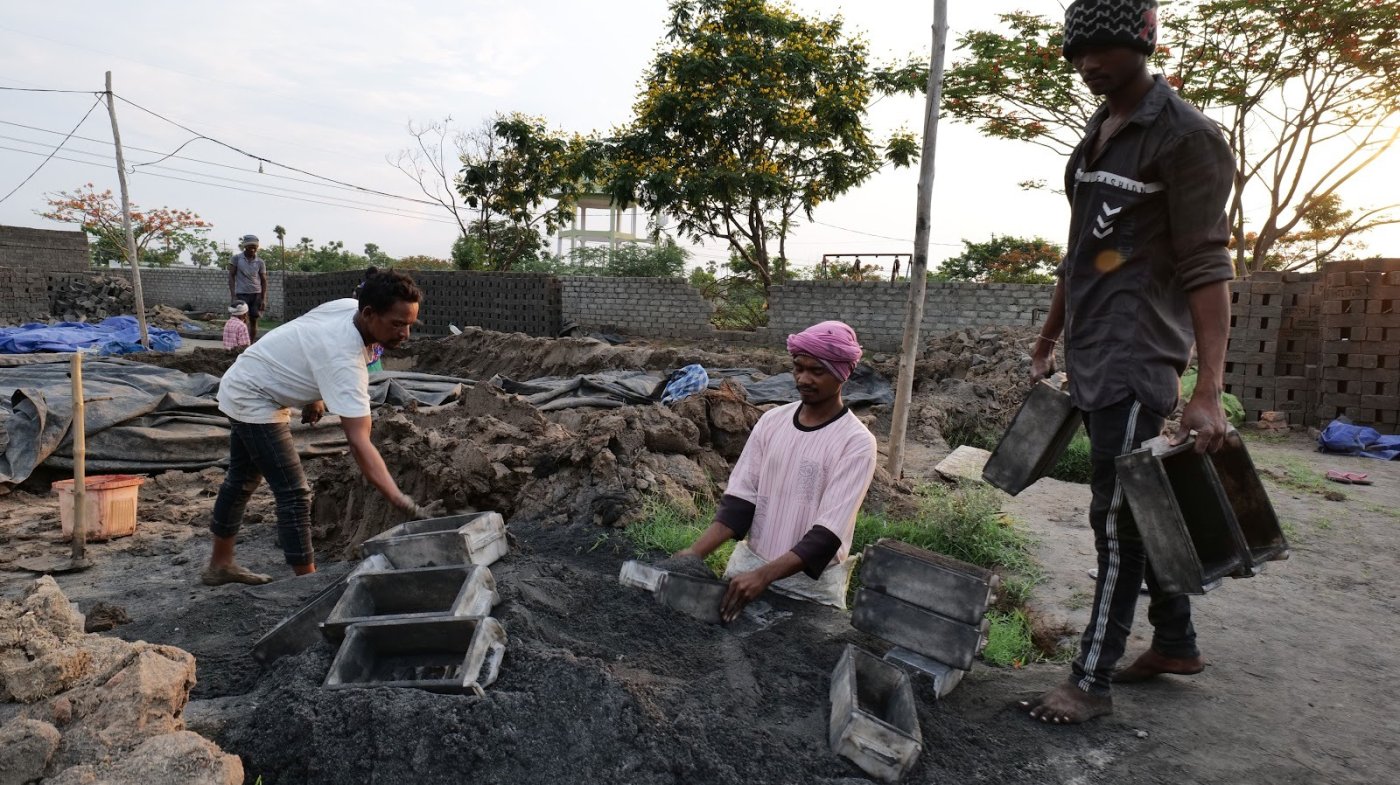
Bengaluru: ‘Chotu’ and ‘Bittu’ were paid Rs 50 for five to six hours of domestic labour—Rs 450 below Jharkhand’s legal minimum wage, which is Rs 502 per day for unskilled work under the State’s notified minimum wage rates.
Both (one is an Adivasi) washed utensils, cleaned floors and toilets, and dusted. They could only sit on the floor, explicitly told that chairs and tables were not meant for them—a fact the homeowner, a businesswoman, freely acknowledged to us in an urban living room in Jamshedpur, Jharkhand, with the casualness usually reserved for comments about traffic or humidity.
When we questioned the arrangement, the homeowner responded with an indifferent shrug and said that “they were not equals”. The workers were not allowed to enter the kitchen; the homeowner added that if they did, the entire kitchen would be washed afterwards.
Quitting was not an option. Their labour was bound to a Rs 25,000 loan taken for a child’s medical treatment, to be liquidated through compulsory labour rather than lawful remuneration—a textbook marker of bonded labour, often called modern slavery, under Indian law.
It was significant that this conversation did not unfold at a brick kiln or a farm—sites where large numbers of Adivasi workers engage in seasonal and circular labour migration outside their home villages, predominantly in informal and precarious employment.
That it did amid the soft furnishings of upper-middle-class domestic comfort, indicates how such illegality is normalised, something that political scientist Sujit Kumar, PhD, has frequently explored in his work on Adivasi politics.
Kumar argued in this 2018 paper for a shift in how Adivasis are understood in public policy and social analysis: not as passive recipients of welfare, but as political subjects, citizens and agents rather than victims or administrative “beneficiaries”.
The gap between what is prohibited in law and what is reproduced in everyday life frames the inquiry that follows: Why does “unfreedom”, as we call it, persist so stubbornly for millions of some of India’s most dispossessed communities, even when it has been explicitly abolished and widely understood as unconstitutional?
Empirical research consistently shows that Adivasi or scheduled tribe communities occupy the lowest position in India’s social and economic hierarchy, often faring worse than scheduled castes—the lowest on the Hindu hierarchy—across core indicators of deprivation.
Nationally representative data reveal that Adivasis endure higher poverty, lower literacy, worse health outcomes, and deeper livelihood insecurity, reflecting not only caste exclusion but also land alienation, displacement, and geographic marginalisation.
A disaggregated analysis based on the National Family Health Survey (NFHS) shows that scheduled tribes record the highest levels of multidimensional poverty and undernutrition among all social groups.
The Xaxa Committee Report of 2014 characterises this condition as one of “structural marginality”, rooted in dispossession, insecure land and forest rights, and administrative invisibility rather than ritual hierarchy alone.
Bonded Labour Persists
Bonded labour—also known as debt bondage—means work extracted through a loan or advance that cannot realistically be repaid, turning debt into a tool of control.
Forced labour and human trafficking are barred by Article 23 of the Constitution, which also makes it illegal under Article 21, the right to life with dignity. The Supreme Court has consistently held that labour compelled by economic dependence is forced labour, as in Bandhua Mukti Morcha vs Union of India & Others (1983).
Yet it persists: the 2011 Census identified over 180,000 bonded labourers in India, and official government data show that approximately 297,000 bonded labourers have been rescued and rehabilitated between 1978 and 2025, a fraction of the 18.4 million the union government pledged to free by 2030.
Prosecutions and convictions under the Bonded Labour System (Abolition) Act, 1976, remain low and uneven across states, indicating persistent structural and institutional barriers to its enforcement.
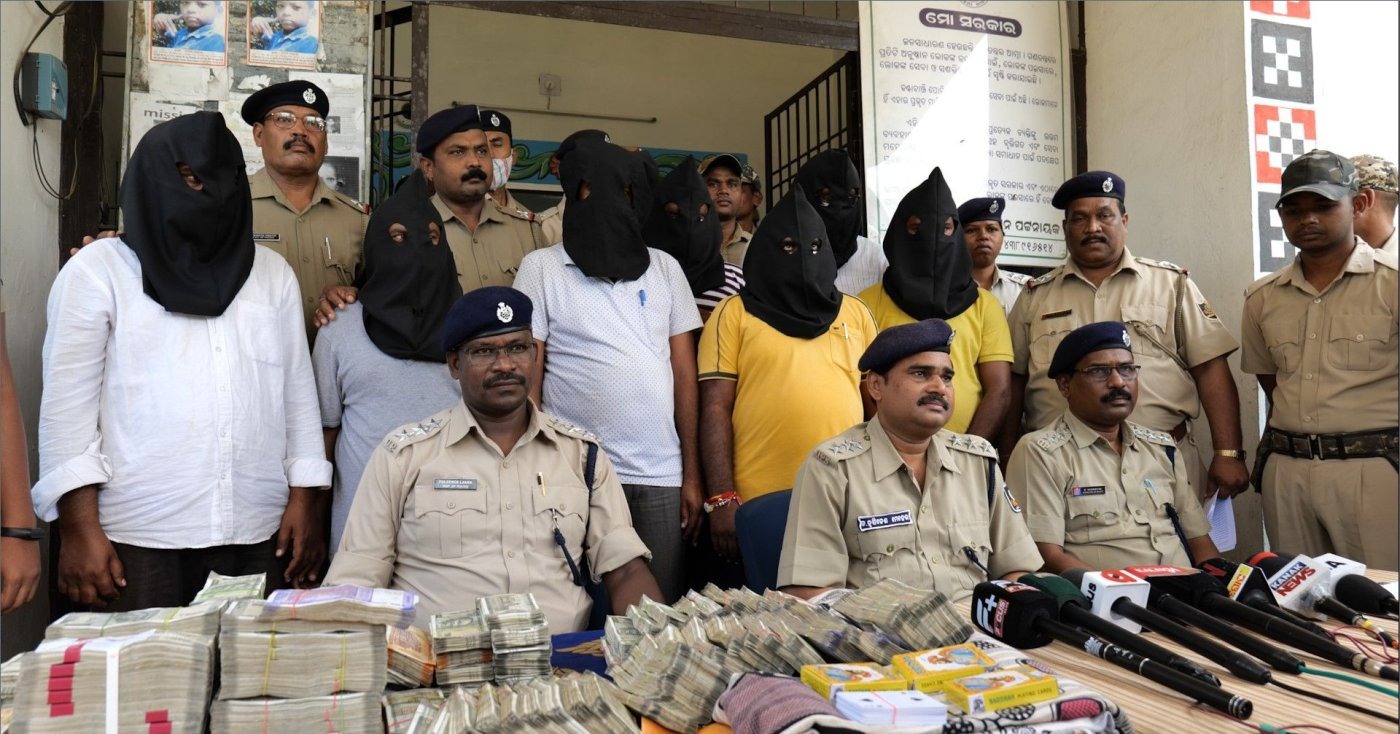
Bondage persists most often in forms that evade easy detection and legal scrutiny: embedded in informal labour markets, reframed as assistance, defended as custom, and sustained through everyday hierarchies that render coercion ordinary rather than exceptional.
India does not have a contemporary census of bonded labour. The most frequently cited national estimate remains the National Commission on Rural Labour (1978), which estimated 2.62 million bonded labourers, with agriculture dominating the picture.
More recent global estimates, while not directly comparable, point to persistence rather than disappearance, for instance, the ILO’s 2017 global estimates and the ILO–Walk Free–IOM 2022 estimates, as well as the Global Slavery Index. These datasets differ in method and scope, but they converge on a grim point: debt bondage remains one of the most widespread forms of unfreedom.
Bondage’s Grip On Adivasis
Adivasis are uniquely vulnerable to bondage for three reasons:
- First, land loss and displacement hollow out livelihood security and push households into distress work
- Second, exclusion from formal credit makes “advances” from contractors and employers feel like the only option, turning loans into labour-binding devices
- Third, administrative invisibility and social deference, fear of retaliation, everyday stigma, and weak enforcement keep bondage off the books even when it is widely known.
This is also why bonded labour belongs in the broader conversation about modern slavery.
A useful starting point is Article 14’s 2023 series on modern slavery, including this piece: “On India’s 77th Independence Day… millions of migrant workers live as modern slaves”.
Across agriculture, brick kilns, construction, mining and domestic work, Adivasi households often enter labour markets from a position of dispossession.
Land alienation through colonial and postcolonial settlement regimes, forest governance, and development-induced displacement removes the buffer that lets households refuse exploitative terms.
The Xaxa Committee report documents how displacement, weak protection of customary rights, and insecure livelihoods shape tribal precarity in contemporary India.
Jan Breman’s research over more than half a century on unfree labour argues that bondage in India often thrives inside informal capitalism, not outside it, where subcontracting, casualisation, and the erasure of employer responsibility make coercion cheap.
The Ordinariness Of Bondage
Media reporting and court filings over the past year show how routine the arrangements of bondage within informal capitalism remain in India.
In Karnataka, a February 2026 rescue freed 34 workers (including children) from a brick kiln in Bagalkot district, after allegations of confinement and abuse, The News Minute website reported in February 2026, describing threats, wages withheld, and restricted movement—classic signs of debt bondage.
In Maharashtra, another February 2026 operation in Beed district reportedly rescued 11 migrant workers and four minors from a sugarcane farm after families reported them missing; a first information report (FIR), the first step in a criminal investigation, was registered under the Bonded Labour Act and other provisions, the Times of India reported in February 2026..
Meanwhile, habeas corpus petitions to have detainees produced before a judge continue to be filed for brick kiln workers in northern India, indicating that “illegal detention” remains part of the bonded labour repertoire in some settings. For instance, in Sanjiv vs State of Haryana (Punjab & Haryana High Court (2025), the petitioners alleged workers were kept at a kiln without wages.
Such cases are not outliers; they are a window into what is usually hidden.
Law & Practice: The Gap
The 1976 Act criminalised bonded labour, extinguished bonded debt, and placed responsibility on district administrations to identify, release and rehabilitate workers. The Supreme Court has repeatedly treated bonded labour as a constitutional violation, most famously in Bandhua Mukti Morcha vs Union of India (1984), which held that the absence of complaints cannot be taken as proof that bondage does not exist.
More recently, in October 2024, the Supreme Court again emphasised the centrality of rehabilitation, warning that release without effective support simply pushes workers from one site of bondage to another.
The judges discussed “effective rehabilitation” and the civic duty to prevent re-trafficking into unfree labour.
Policy design has also evolved.
The Central Sector Scheme for Rehabilitation of Bonded Labourers (2021) enhanced assistance amounts and reaffirmed district-level vigilance and surveys.
Yet investigative reporting continues to show delays and administrative hurdles that blunt the scheme’s intent. See, for example, Scroll (June 2025) and IndiaSpend (June 2025).
Reproducing Bondage
In Jharkhand, displacement and chronic agrarian insecurity drive distress migration among Santhal, Munda and Oraon communities, as Shah’s research has shown. Recruitment into brick kilns across states often involves lump-sum advances that bind entire families for a season.
Restrictions on movement, arbitrary deductions, withheld wages, and document seizure are repeatedly reported in rescue accounts and civil society investigations.
Scholarly accounts of this migration-bondage nexus include Alpa Shah’s analyses of land alienation and labour migration in Jharkhand.
In parts of western and southern Odisha, bondage often takes an agrarian form: seasonal advances in lean months, repaid through labour at sowing and harvest. Wages slip below statutory minimums, interest calculations remain opaque, and debt rolls over from year to year. Children enter work early to keep households afloat, which means vulnerability is inherited.
But it would be, as we said, a mistake to imagine bondage only at remote worksites.
The living-room story that opens this article signals something more unsettling: the social reproduction of unfreedom, such as when employers treat workers as “not equals”.
What Abolition Requires
Bondage among Adivasi workers endures not for want of statutes, but because those statutes must function inside an economy that continues to prize informality and pay dividends to hierarchy. Between 490 to 550 million Indians are employed by the informal economy, according to 2025 government data, the latest available.
Rescue operations and compensation are necessary, sometimes lifesaving, but they arrive late in the story, treating the injury after the wound has already been inflicted.
Abolition, in any meaningful sense, has to begin upstream: with livelihood security anchored in land and forest rights; with affordable, non-predatory credit that breaks the lender’s grip; with labour standards that actually bite in the informal sectors where most exploitation lives; and with public institution's workers can enter without humiliation or fear.
Until those conditions exist, bondage will remain what it has quietly become in contemporary India: an everyday unfreedom, deniable in official files, yet spoken without discomfort in living rooms.
(Daniya Shah is a doctoral fellow, and Neil Tannen is the head of the department of political science at St Joseph’s University, Bengaluru.)
Get exclusive access to new databases, expert analyses, weekly newsletters, book excerpts and new ideas on democracy, law and society in India. Subscribe to Article 14.