
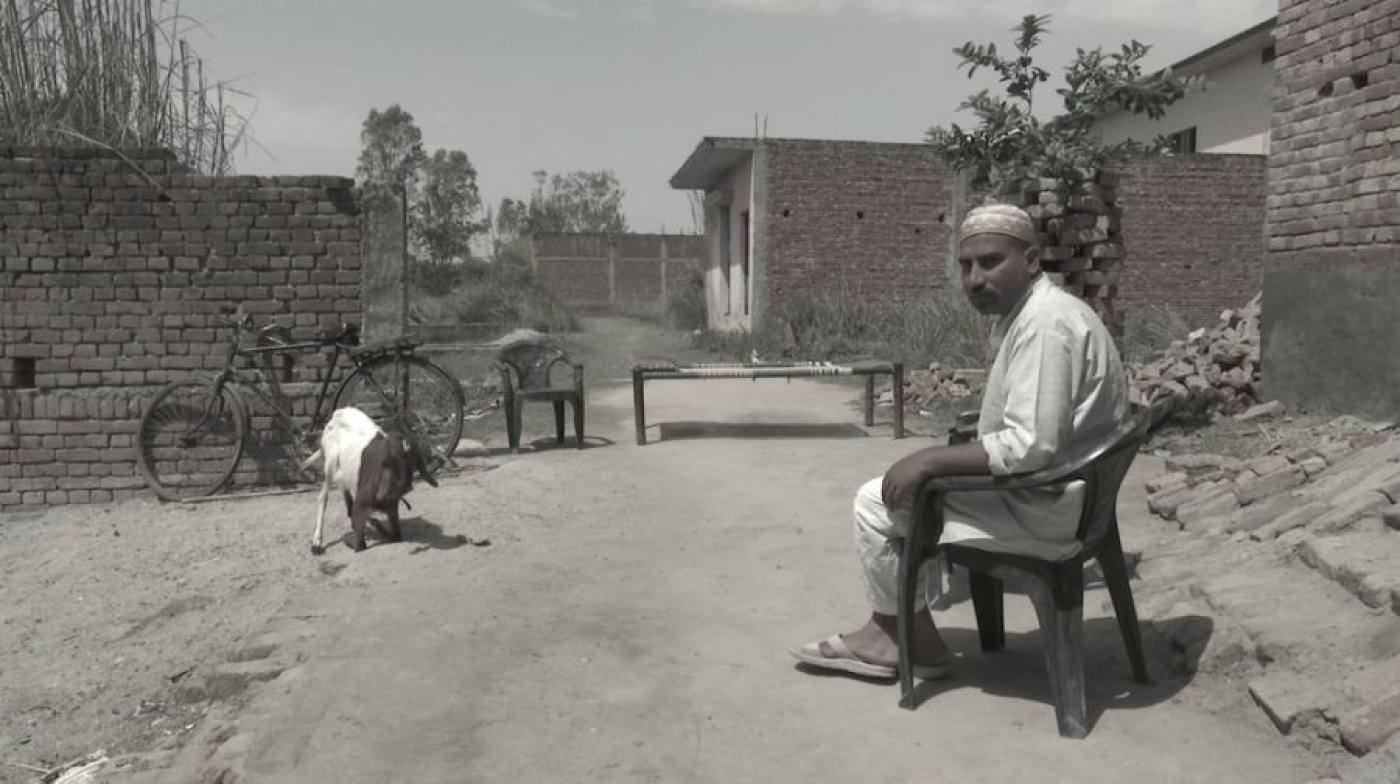
Bengaluru: On 17 September 2026, the Central Board of Film Certification (CBFC, or the Censor Board) objected to a screening of filmmaker and producer Lalit Vachani’s Prisoner No. 626710 is Present scheduled at the Indian Institute of Information Technology (IIIT), Hyderabad.
The post carried a veiled threat against organisers, saying “authorities at IIIT may take note for necessary action”. The CBFC’s involvement in an on-campus screening was unprecedented.
Until now, pressure on such screenings has largely come from student groups, administrators, and local authorities, but the CBFC has never gotten involved so openly as it did in IIIT Hyderabad.
The CBFC’s extraordinary intervention came days after a 14 September screening of the same film organised at the National Law School of India University (NLSIU) was postponed and eventually cancelled after the Akhil Bharatiya Vidyarthi Parishad (ABVP, the student wing of the RSS) objected.
Prisoner No. 626710 is Present follows activist/scholar Umar Khalid’s incarceration for his alleged role in the 2020 Delhi riots, charged under the Unlawful Activities (Prevention) Act 1967.
With his trial yet to begin and his bail application continuously deferred, Khalid recently completed six years in prison as an undertrial. Vachani’s film, which mainly features interviews with two of Khalid’s closest confidantes, Banojyostna Lahiri and Shuddhabhrata Sengupta, presents a widely shared argument and evidence (here and here) that Khalid’s incarceration is politically motivated.
Whether the CBFC, tasked with certifying films made for ‘public exhibition’ under the Cinematograph Act, 1952, has jurisdiction over screenings in private venues, campuses, or film festivals, remains debated (here and here).
Film censorship in theatrical releases and OTT platforms—most recently, the removal of Honey Trehan’s Satluj from Zee5 within 48 hrs—has been on the rise. In February 2025, Article 14 reported how self-censorship and extra-judicial pressure to conform to unwritten restrictions are now routine across India, as writers, directors, producers, and streaming platforms fall into line.
Those who resist face attacks from virtual mobs and censor cuts or indefinite delays. A once-swift appeals process has been dismantled, and judicial recourse is now uncertain.
However, the incident at IIIT Hyderabad signals a new dawn for censorship in India, film industry representatives said, as it enters private spaces. Cultural centres, film festivals and campuses, once safe havens for ‘controversial’ films—are more riddled with doubt than ever.
“I am neither shocked by the demand made by the censor board, nor surprised by IIIT Hyderabad caving in to the pressure,” director Anurag Kashyap told Article 14 in response to the incident, also adding that the CBFC had no jurisdiction over non-profit private screenings.
“We’ve already been living in fascist times, wearing a T-shirt of democracy,” said Kashyap.
Satluj (2026) actor Geetika Vidya Ohlyan was disappointed and dismayed after reading about the cancelled screening. “[It feels like a] complete stifling of voices that disagree with the State,” she said.
Venues Close Their Doors
Lalit Vachani, 62, is no stranger to screening his politically critical works across India’s prestigious venues. He has offered rigorous insight into the Rashtriya Swayamsevak Sangh (RSS) through his films, The Boy in The Branch (1993) and The Men in the Tree (2002)
He began to notice a shift, he said, after reaching out to venues for Prisoner around August 2024, following a successful screening on Facebook.
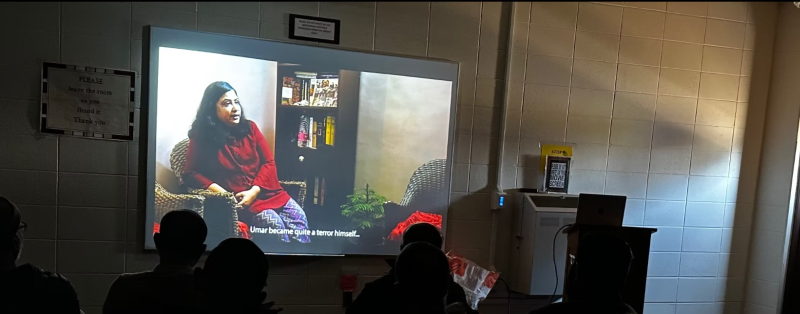
At first, a renowned central Delhi space which had earlier screened Vachani’s works hesitated. After some back-and-forth, they agreed to a private screening. When he wanted to share photos of the screening on social media, they requested him not to mention the venue.
“Since then, there’s been no response to my other films: Encountering Hate (profiling anti-Muslim hate crimes in Uttar Pradesh) and Battle Royale (on Trinamool member of Parliament Mahua Moitra’s 2024 election campaign),” Vachani told Article 14 over a video call.
The incident in Delhi was one among the dozen experiences Vachani has had with screening spaces and festival organisers in the last few years. A film festival he didn’t wish to name obscured the titles of his films on its schedule after the festival director became apprehensive about Vachani’s critical works on the RSS.
“The pamphlet read ‘Encountering H—’ by LV, and B—le Royale by LV. The reason given to me was that a ‘100 years of RSS’ event was being organised next door,” says Vachani. Similarly, a screening in a private university on the outskirts of Bengaluru was made ‘by invitation only’, after an incident the week before. “The ABVP stormed a discussion on a book set in Kashmir.”
As the climate of fear and self-censorship spreads, the blowback, filmmakers and others said, can take many forms, including vandalism, bureaucratic harassment, and faculty members facing disciplinary action.
Trehan’s Troubles
Honey Trehan’s Satluj (erstwhile title: Panjab ‘95) was locked in arguably the longest battle between an Indian film and the Censor Board, spanning almost four years (you can read an interview that Trehan gave Article 14 here).
During this period, Trehan held more than a dozen private screenings, showing his film to journalists, lawyers, activists, religious groups and others. However, three days before a private screening organised for industry peers on 7 August 2025 in Mumbai, two police officials reached the venue and asked owners to cancel the screening.
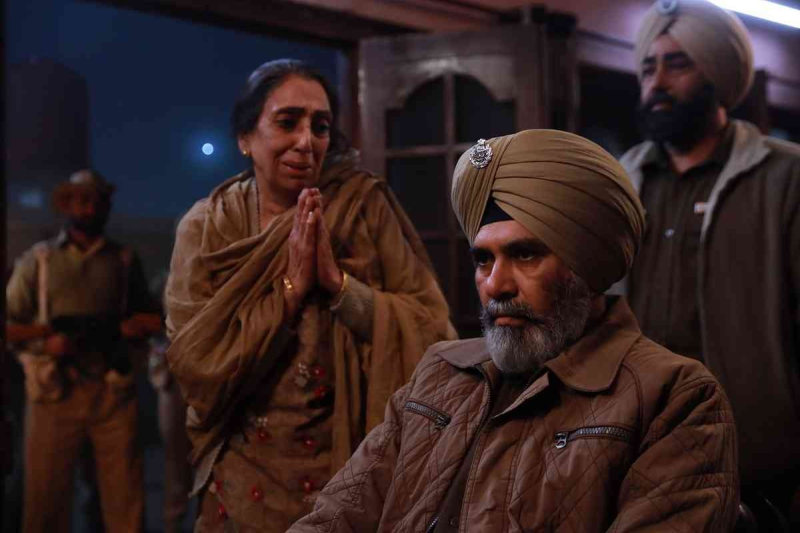
Trehan refused to comment for this story, but an industry professional aware of the incident said, “The owners were told if they went ahead, any potential law and order situation would be their responsibility.” The source confirmed Trehan was summoned by the Mumbai police, where he was told to stop the private screenings owing to “orders from above”.
The film did eventually get a brief streaming release on Zee5 on 3 July 2026. Less than 48 hrs later, the channel took the film down after an order was sent to them under section 69A of the Information Technology (IT) Act, 2000, which allows the government to block content under specific circumstances.
Days later, the film was removed from the streaming service’s library outside India too. An Inter-Departmental committee (IDC)—comprising members from different ministries like home affairs, law & justice and external affairs—was set up, which upheld the government’s order to block the film’s release citing that it threatens “India’s national sovereignty and public order.”
The IDC's words are borrowed verbatim from section 69A of the Information Technology Act, 2000, and section 5B(1) of the Cinematograph Act 1952, which the CBFC cites to refuse certification to films submitted for theatrical exhibition.
The blocking only worked in theory, as pirated versions began circulating on peer-to-peer websites and were uploaded on social media, such as X and YouTube. NGOs held screenings of the films across Punjab in gurudwaras and villages. Given the sheer volume of private screenings, especially in Punjab, the screenings couldn’t be stopped—and inadvertently became spaces of resistance against censorship.
A Worsening Situation
Vachani and Trehan’s experiences raise a larger question: has this climate of caution always existed, or has it worsened in recent years?
Few can attest to the severity of India’s censorship regime better than filmmaker Anand Patwardhan. After fighting and winning multiple court cases to make his initially banned films available to the public, the 76-year-old said things had worsened.
“Disruptions existed earlier too, but they’ve increased since 2014,” he said.
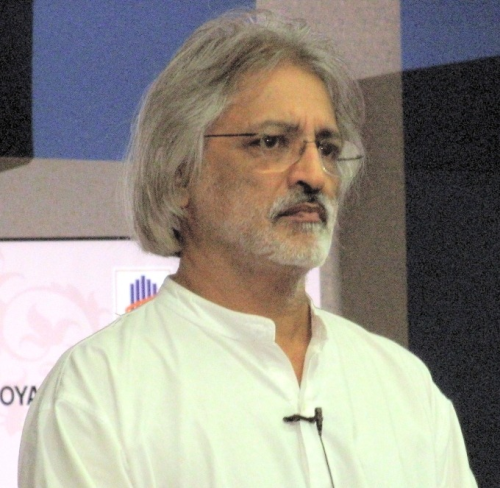
Patwardhan was able to fight and win cases against the Censor Board partly because the system was relatively more transparent and offered higher forums of redress, including the Film Certification Appellate Tribunal (FCAT), where filmmakers could challenge CBFC decisions. The tribunal was dissolved in 2021.
“If a film with a censor certificate is being screened and someone disrupts it, those stopping the screening are committing a crime,” said Patwardhan. “Cops should curtail activities that prevent the screening. In many places, they’ve done the opposite.”
While a censor certificate is not mandatory for private screenings, it appears to have become an excuse to prevent or discourage films from being shown.
Dibakar Banerjee’s experience illustrates the system’s arbitrariness. He directed Tees, commissioned by Netflix, which follows three generations of a Muslim family. The film was put on indefinite hold in 2024, apparently because of its political commentary, although it was never submitted for a censor certificate.
Banerjee nevertheless screened it at several private venues across India, including the Dharamshala International Film Festival. “I haven’t faced any problems,” he said. “But I’ve observed in the last 7-8 months festivals shying away from films on the disenfranchised.”
Vachani’s Encountering Hate, by contrast, was due to be screened at a film institute. The film examines three cases involving the lynching or flogging of Muslim men. After a period of silence, a faculty member asked for its censor certificate—an unusual request for a private screening.
“I think it was a way to excuse themselves from having to screen the film,” Vachani said.
Censorship At Institutional Scale
If filmmakers face uncertainty around individual screenings, Indian film festivals are confronting it at an institutional scale.
Thirty-one films scheduled for the International Documentary & Short Film Festival of Kerala (IDSFFK) 2026 are still awaiting clearance. The Kerala State Chalachitra Academy says the ministry of information & broadcasting (MIB) has refused censor exemptions—a document required for films to be screened in India without a censor certificate.
The MIB disputes this, saying it has not denied permissions and that some films remain under review.
Film programmer Monica Wahi contends that, despite the best intentions, self-censorship has permeated most Indian festivals. Wahi, who programs children's sections at festivals, said she had observed a rise in censor-exemption denials.
“It was difficult to predict what might not be given exemption; it could be an arbitrary process,” she said.
Article 14 has seen paperwork showing that the MIB has introduced new fields in applications for censor exemptions, seeking details such as the ‘certificate in the country of origin’ and the ‘source of funding for the festival’. Festival programmers say such requirements did not exist earlier.
The result, they argue, is that festivals are put in a vulnerable position and forced to bow. “It was easy to say festivals should stand up to censorship. But to operate, they had to abide by the law of the land,” Wahi said. “So, what power did they really have?”
Responding to questions about the opacity surrounding refusals of censor exemptions, CBFC chairman Shashi Shekhar Vempati declined to comment, saying exemptions were the MIB’s purview.
Asked about the CBFC’s powers to regulate screenings on university campuses, Vempati did not respond to repeated messages. Emails to MIB officials and CBFC CEO Rajendra Singh also went unanswered. We will update this story if they respond.
Dwaipayan Banerjee, co-founder of the Kolkata People’s Film Collective, says denial of censor exemptions has been used to target festivals such as IDSFFK since 2019.
“It was crucial to protect the remaining spaces,” he said. “Because state-run festivals like MIFF (Mumbai International Film Festival) and IFFI (International Film Festival of India)—once prestigious—were now entirely saffronised.”
Critics have also pointed to what they see as interference in the programming of state-run festivals. Patwardhan’s Reason (2018), which won the prestigious IDFA (International Documentary Film Festival Amsterdam) that year, was denied selection by the MIFF jury.
Censoring Comedy
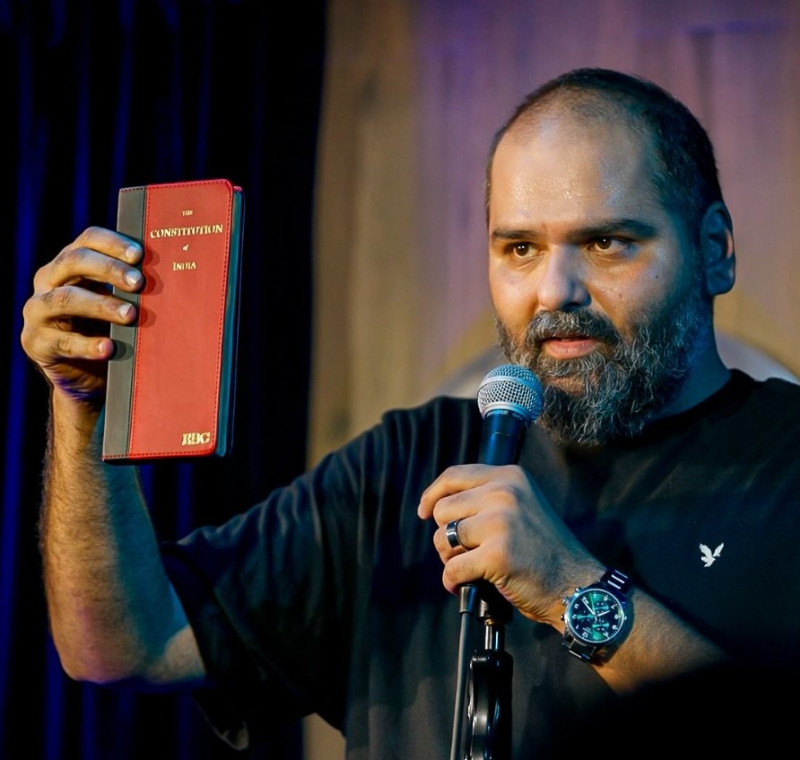
The climate of intimidation has extended beyond film. In August 2026, stand-up comic Kunal Kamra was forced to change the venue of a performance in Bengaluru after a fringe group threatened him.
Kamra’s lawyer, Arti Raghavan, has been at the forefront of civil liberties battles in recent years. She said the CBFC’s assertion that it could restrict Vachani’s documentary at IIIT Hyderabad was legally questionable.
“‘Public exhibition’ was not a concept defined in the Cinematograph Act,” she told Article 14. “The law couldn’t be deployed in a manner that benefited the authority in question.”
Raghavan said there needed to be an “across-the-board prescription” of guidelines so institutions knew what they could and could not regulate. Otherwise, she said, the CBFC risked appearing to act selectively when it objected to the content of Vachani’s film.
She also argued that judicial intervention needed to go beyond simply striking down “unlawful actions” by institutions such as the CBFC. Courts, she said, needed to impose costs when authorities exceeded their jurisdiction.
Legal recourse was available to institutions and individuals, but Raghavan said the difficulty and expense of pursuing it had discouraged people from asserting their rights.
“They’d made it so difficult to secure and enforce one’s rights,” she said. “It became expensive to file a petition, and courts didn’t take authorities to task for this kind of ‘bulldozer justice’ being meted out. There was no justification for vandalising a venue.”
Raghavan said courts had, to some extent, contributed to this culture of lawlessness by relying on what she called “mild scriptures” rather than imposing monetary costs on authorities. The result, she said, was that authorities were encouraged to act beyond their powers while civilians were discouraged from asserting their rights.
The Uncertainty Is The Censorship
Censorship takes forms beyond a direct order from a government body.
A venue ‘postponing’ a screening with an apology on its social media handles, a festival saying it is ‘awaiting clearance’ until the day of the scheduled screening, an administrator abruptly asking for a censor certificate for a film due to play on a campus, or an organiser quietly dropping a film without explanation—none of it is necessarily spelt out.
The overall uncertainty around the censor regime crystallises in an anecdote recounted by Vachani about a screening of Prisoner held in Delhi. A man was confronted for taking photographs of audience members.
“When asked if he worked at the venue, he said he was a sevak (volunteer) and had been instructed by police officials to do this.”
Why audience members of a film needed to be documented is unclear. But the episode captures the anxiety surrounding India’s private screening spaces, where the possibility of intervention can itself become a form of control.
(Tatsam Mukherjee is a film critic and culture journalist based out of Bengaluru.)
Get exclusive access to new databases, expert analyses, weekly newsletters, book excerpts and new ideas on democracy, law and society in India. Subscribe to Article 14.